

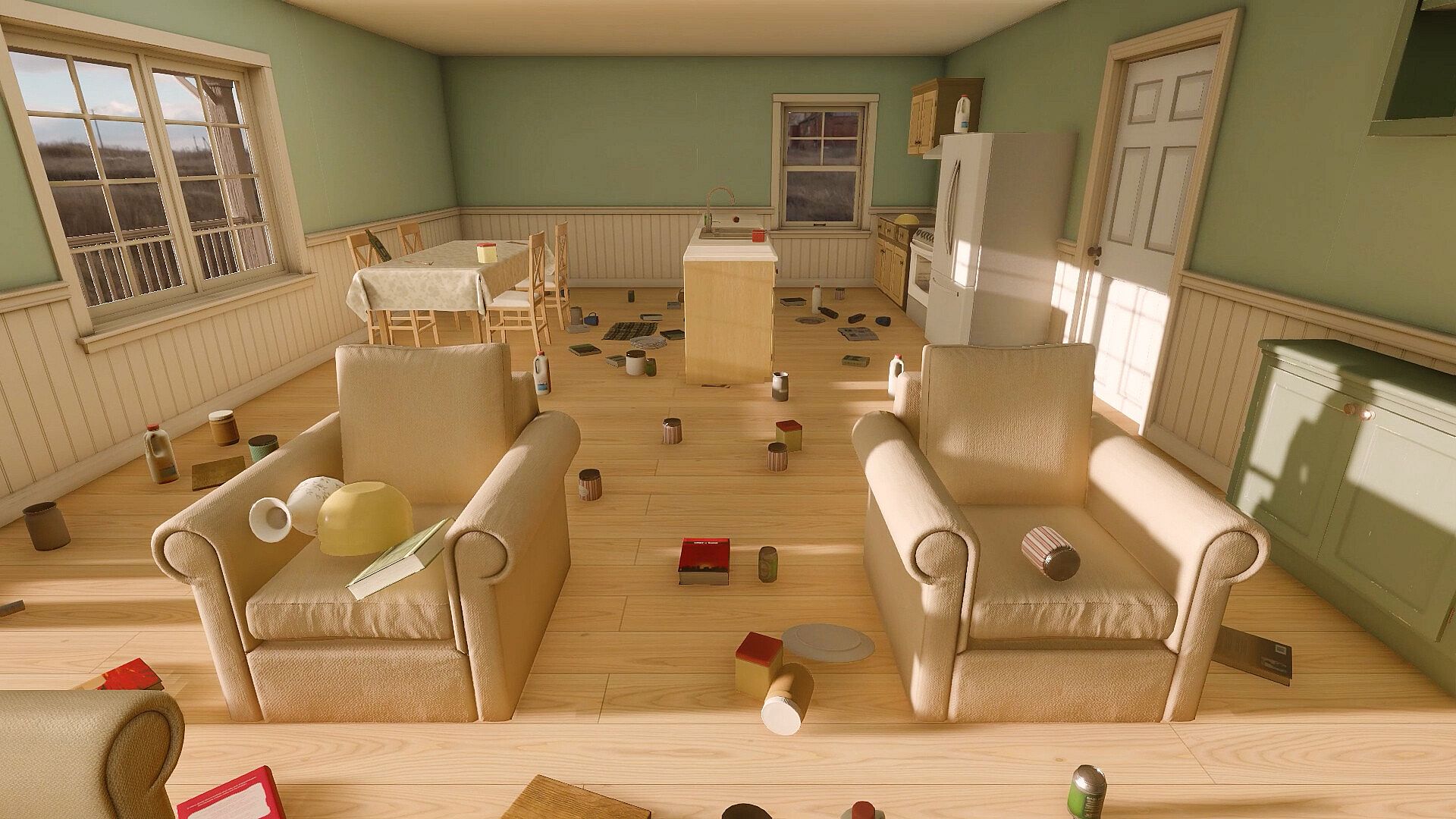
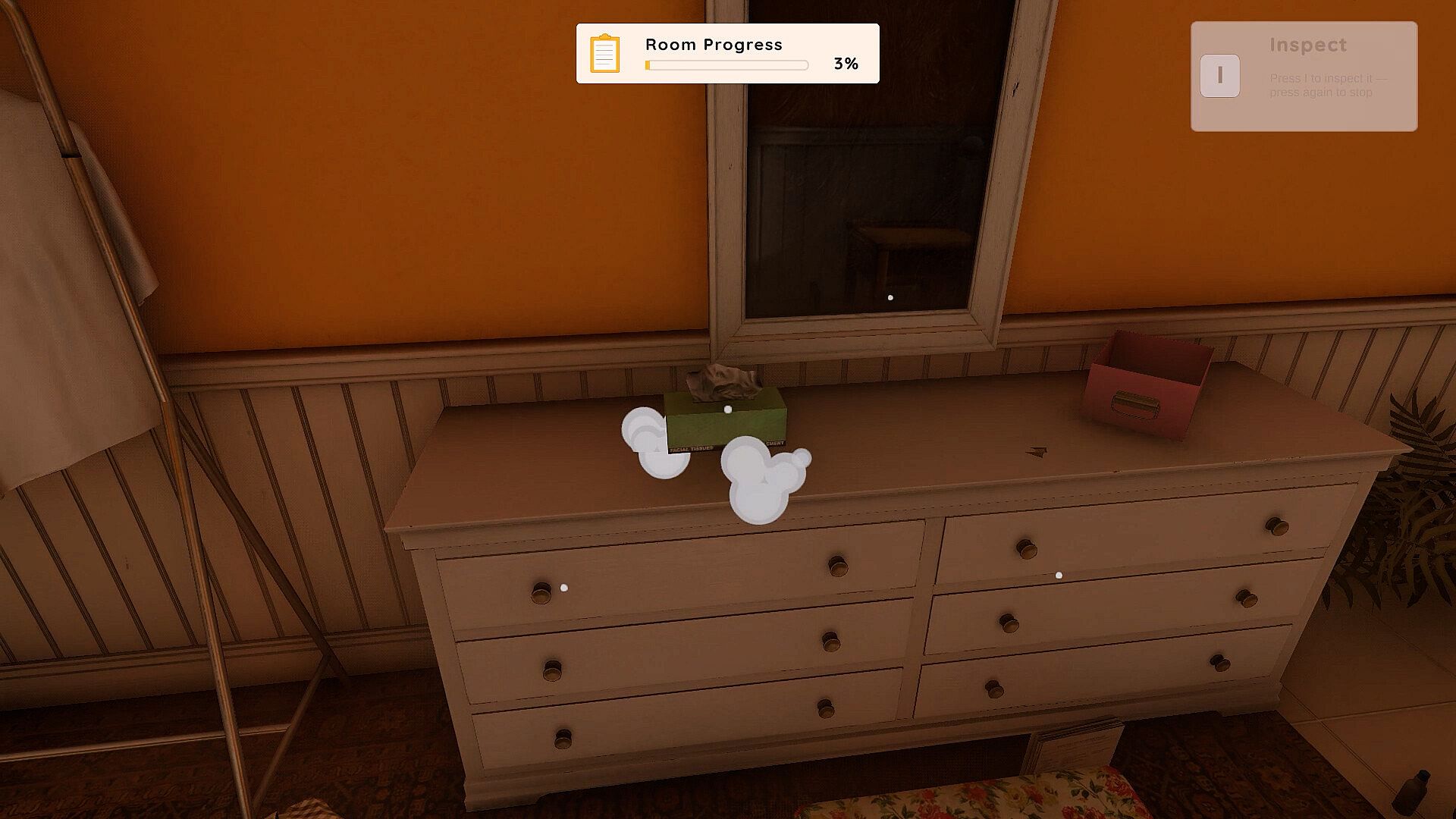
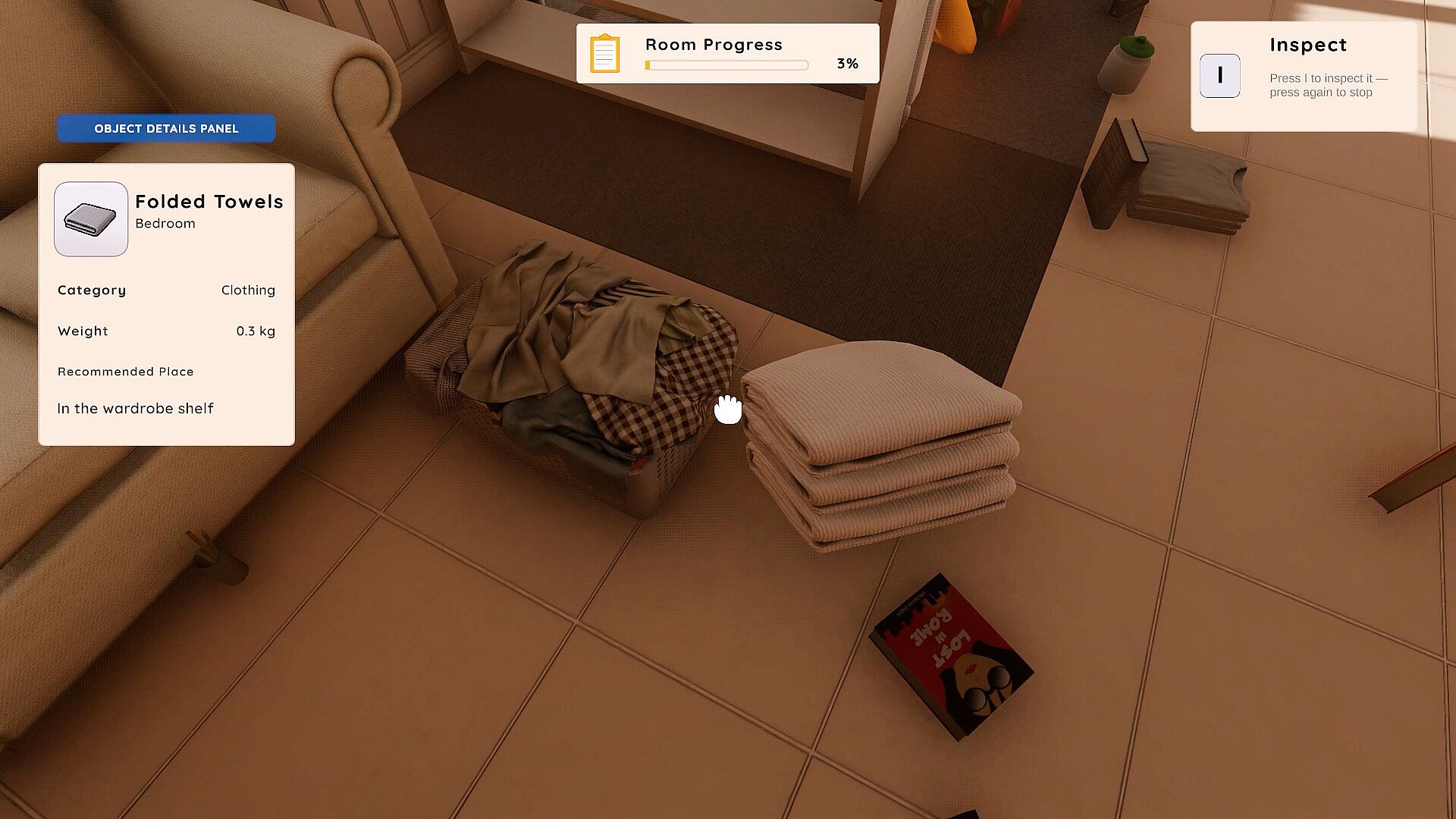
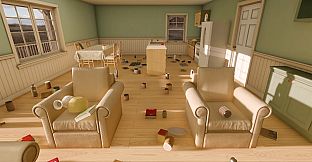
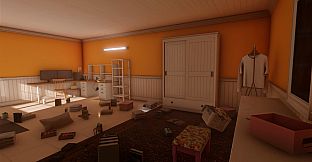
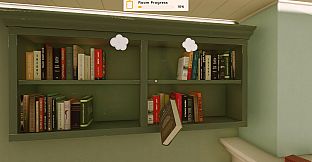
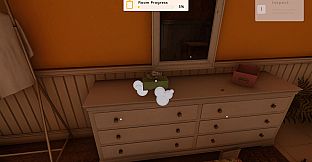
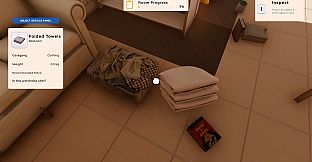
Home Reset: Organizing Simulator is a first-person casual simulation game built around the simple pleasure of restoring order to cluttered spaces. Players step into messy rooms and methodically pick up scattered objects, decide on their placement, and shape each area into a clean and personal environment on PC.
Gameplay
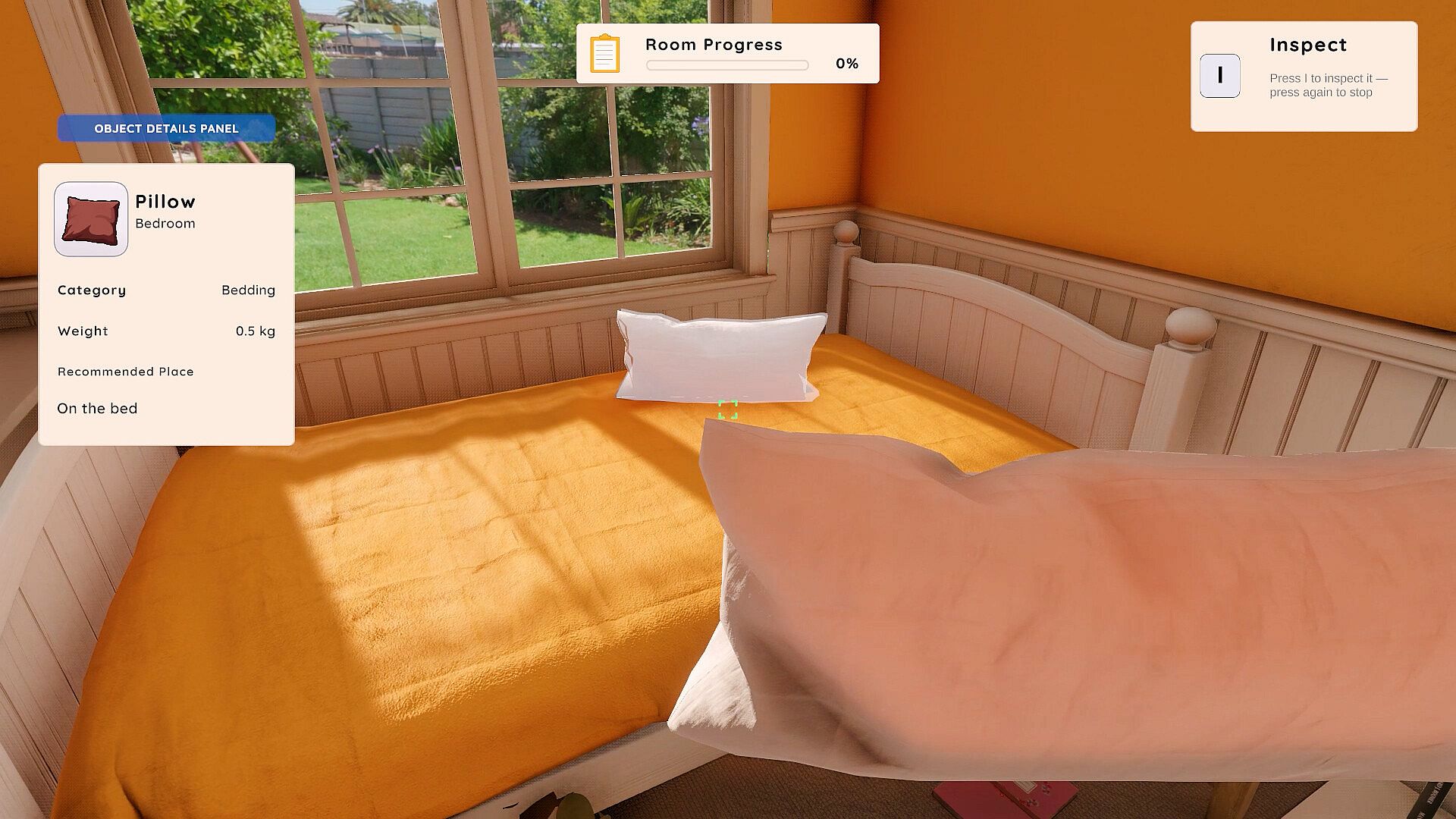
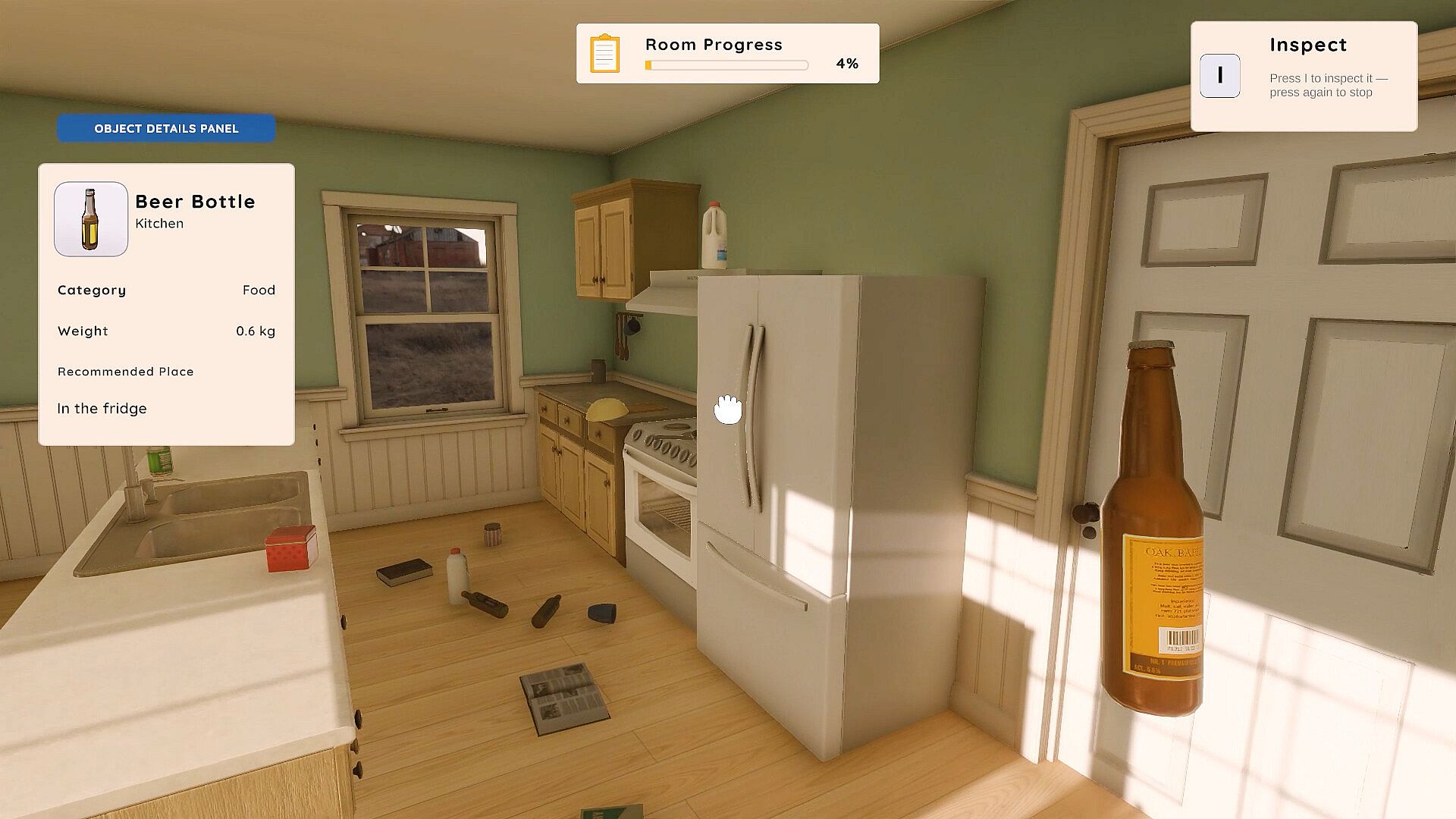
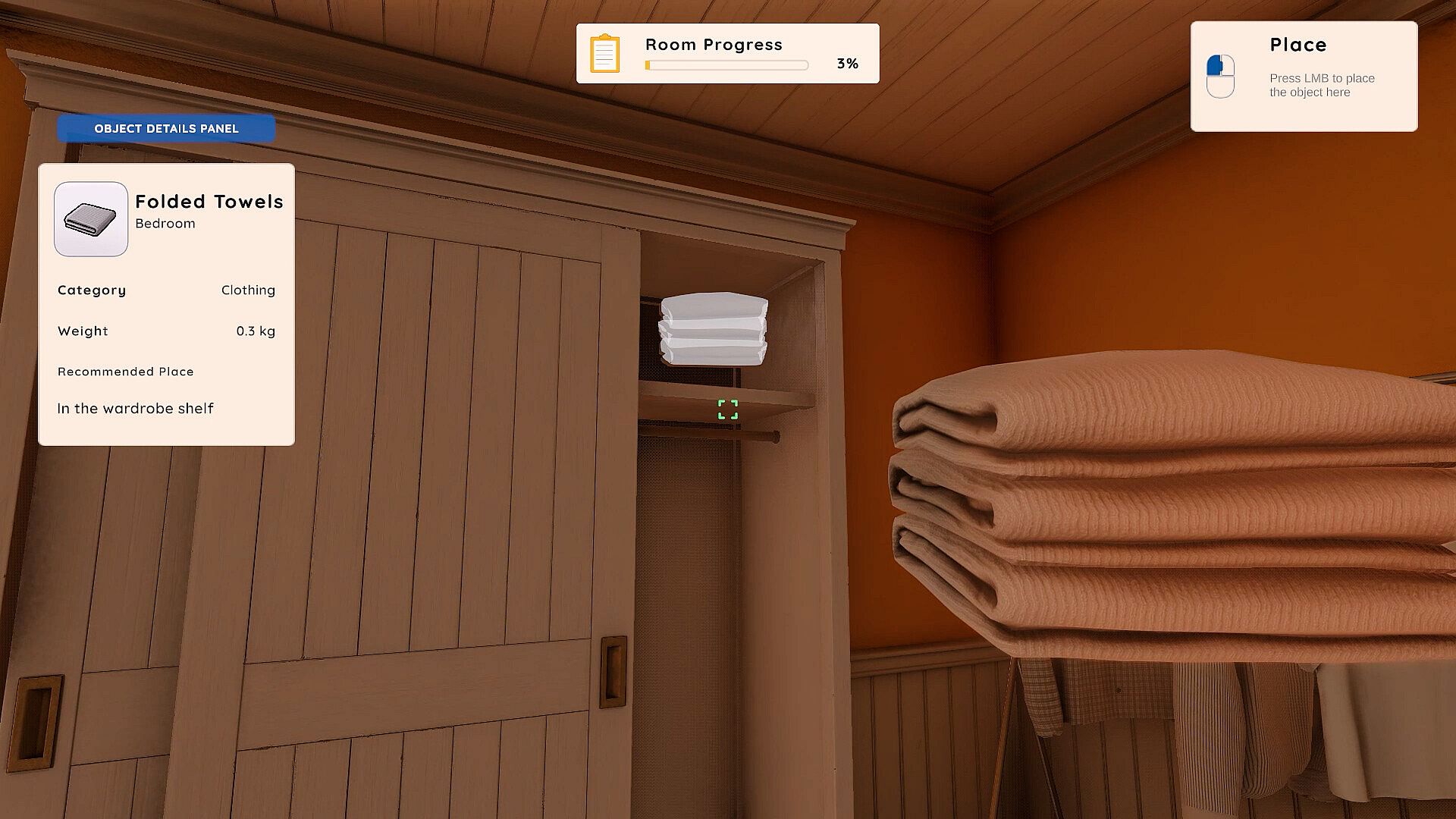
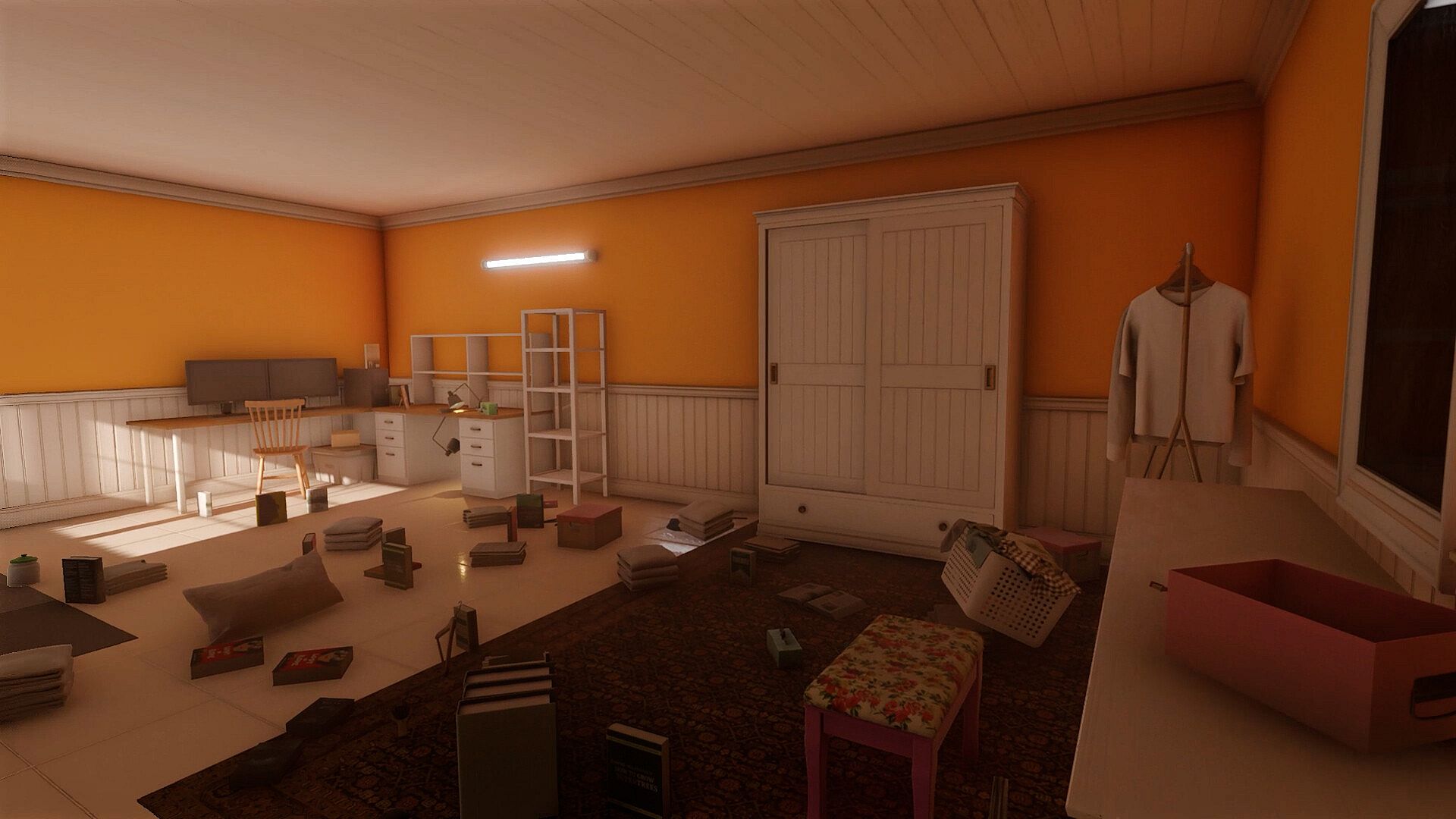
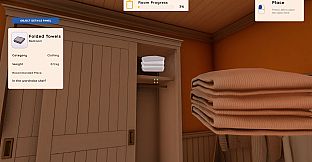
The core loop centers on exploration and placement. Every room starts filled with items tossed across floors, surfaces, and inside furniture. Players move through the space, interact with individual objects, and choose where each one fits best. Drawers and cabinets can be opened to reveal additional items or storage spots, while objects can be rotated freely to achieve the desired arrangement.
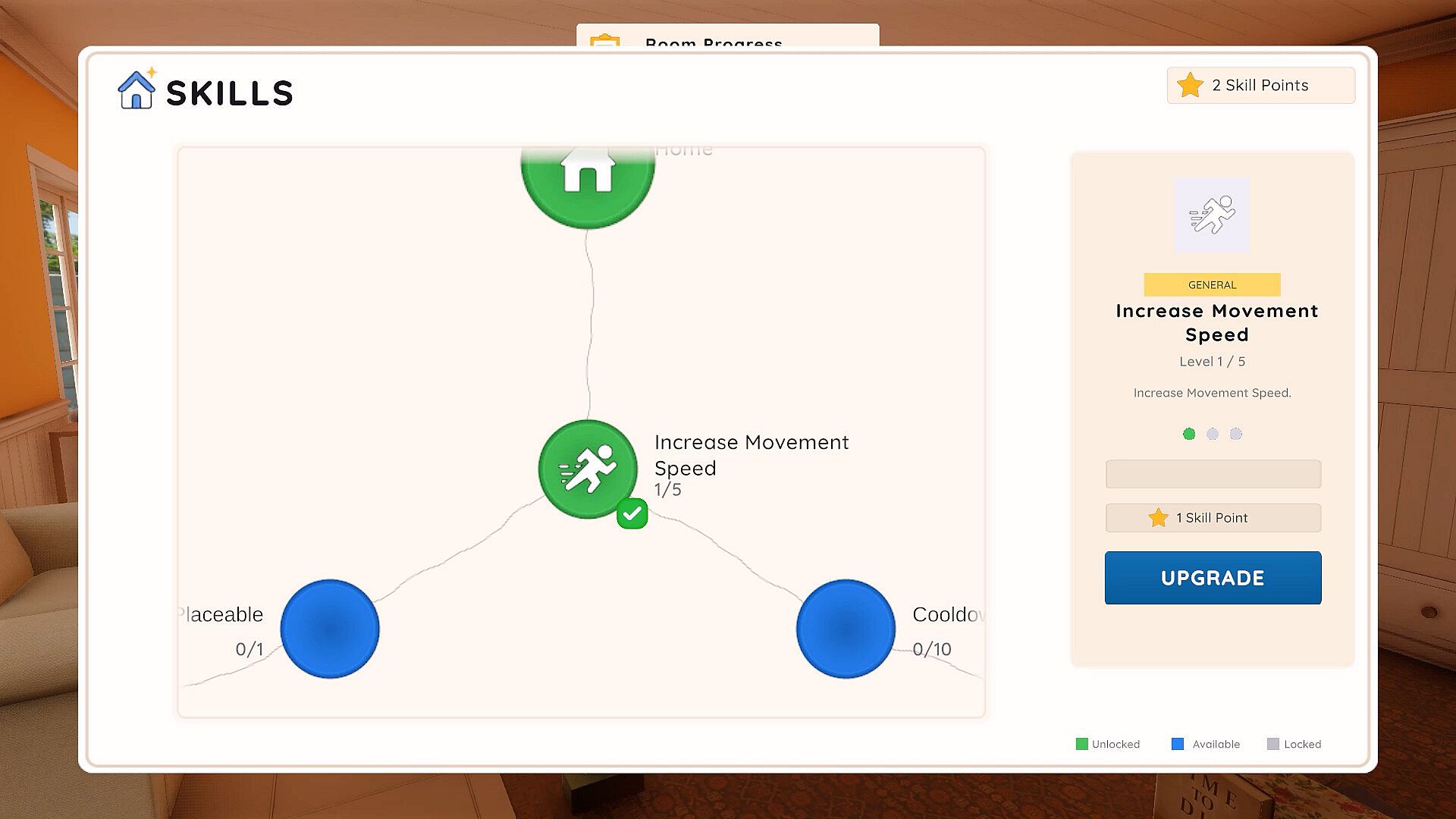
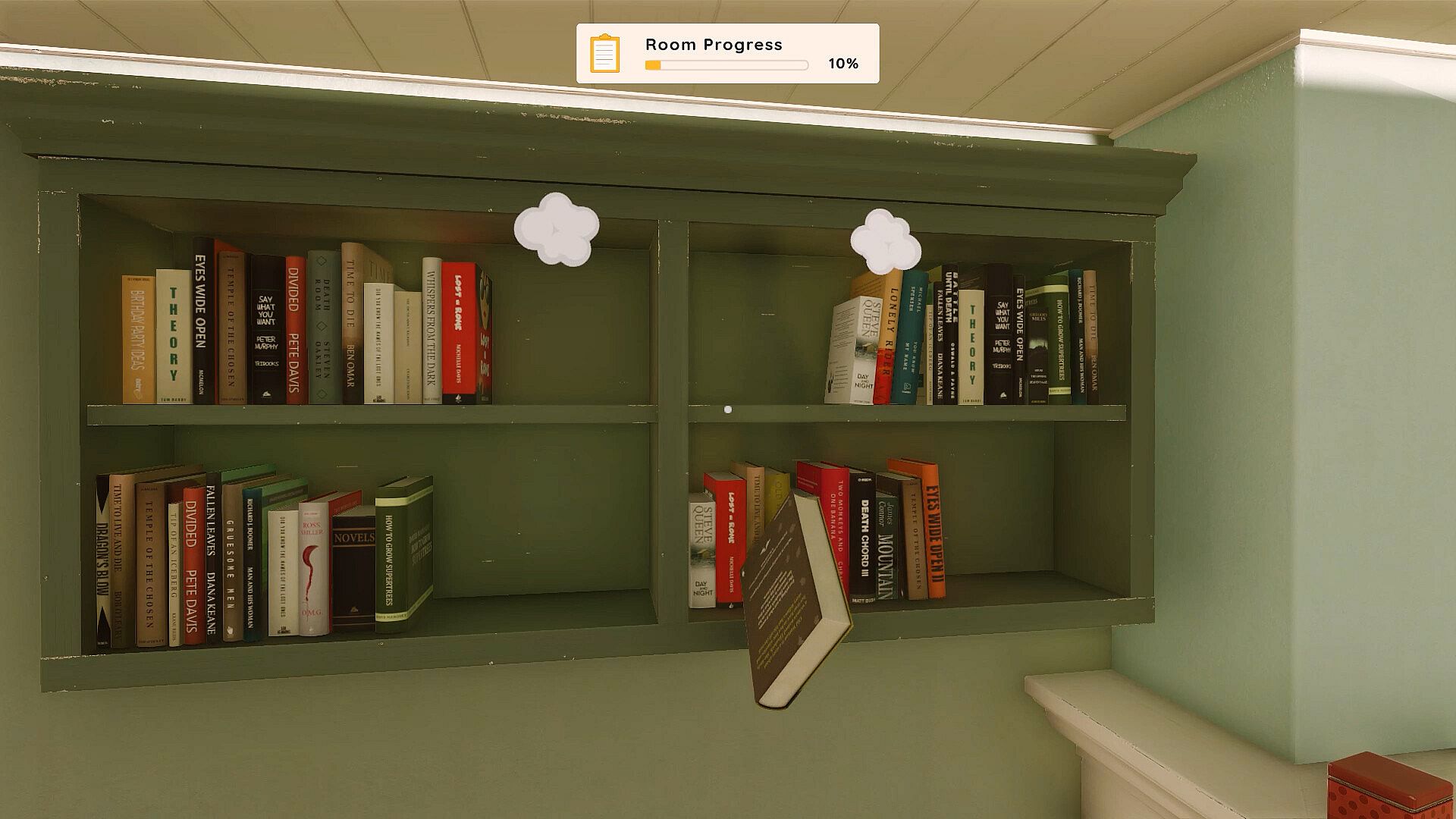
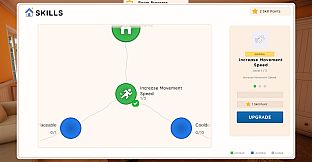
Progression introduces practical upgrades that streamline the process. Early on, carrying capacity is limited, but later abilities allow multiple items to be handled at once and interactions to occur from farther away. These tools reduce repetition without removing the hands-on feel of deciding exact positions. The physics-based handling keeps movements natural, so placing a lamp on a side table or tucking books into a shelf feels deliberate and satisfying.
Freedom defines the experience. There are no timers, scores, or required layouts. Some players focus on neat, symmetrical arrangements, while others experiment with creative groupings or leave certain areas intentionally lived-in. Hidden items tucked behind furniture or inside containers reward thorough searching, and every choice contributes to the final look of the home.
Game Modes
The game operates entirely in a single-player format with no competitive or cooperative elements. Sessions run at the player's own speed, allowing breaks between rooms or extended focused play. The absence of strict objectives means each playthrough can emphasize different priorities, such as completing one house fully before moving on or revisiting earlier spaces to refine details.
Progression carries across sessions through a save system that preserves unlocked abilities and completed rooms. This structure supports both short visits to tidy a single area and longer sessions aimed at transforming an entire property. No separate challenge modes or variants exist beyond the main organizing experience.
Progression and Abilities
Unlocks arrive naturally as rooms are cleared. Initial limitations on how many objects can be carried or how far interactions reach give way to expanded options that make larger spaces more manageable. These improvements build a sense of mastery while preserving the tactile satisfaction of manual placement.
Exploration encourages attention to detail. Opening every drawer or checking behind larger pieces of furniture often uncovers overlooked items that complete a room's transformation. The ability to rotate objects in any direction supports precise positioning, whether aligning items symmetrically or creating balanced visual groupings.
Is It Worth Playing?
This title suits players who enjoy slow-paced, meditative activities focused on organization and customization. The lack of pressure or failure states makes it accessible for short sessions or extended relaxation. Those who appreciate the satisfaction of turning chaos into order will find consistent appeal in the freedom to arrange spaces exactly as desired.
Because the game emphasizes personal expression over prescribed goals, it rewards repeated visits to the same houses for different results. The steady introduction of helpful abilities keeps the process engaging without overwhelming newcomers. For anyone seeking a peaceful PC simulation centered on tidying and creative placement, the experience delivers a consistent and low-stress loop.