

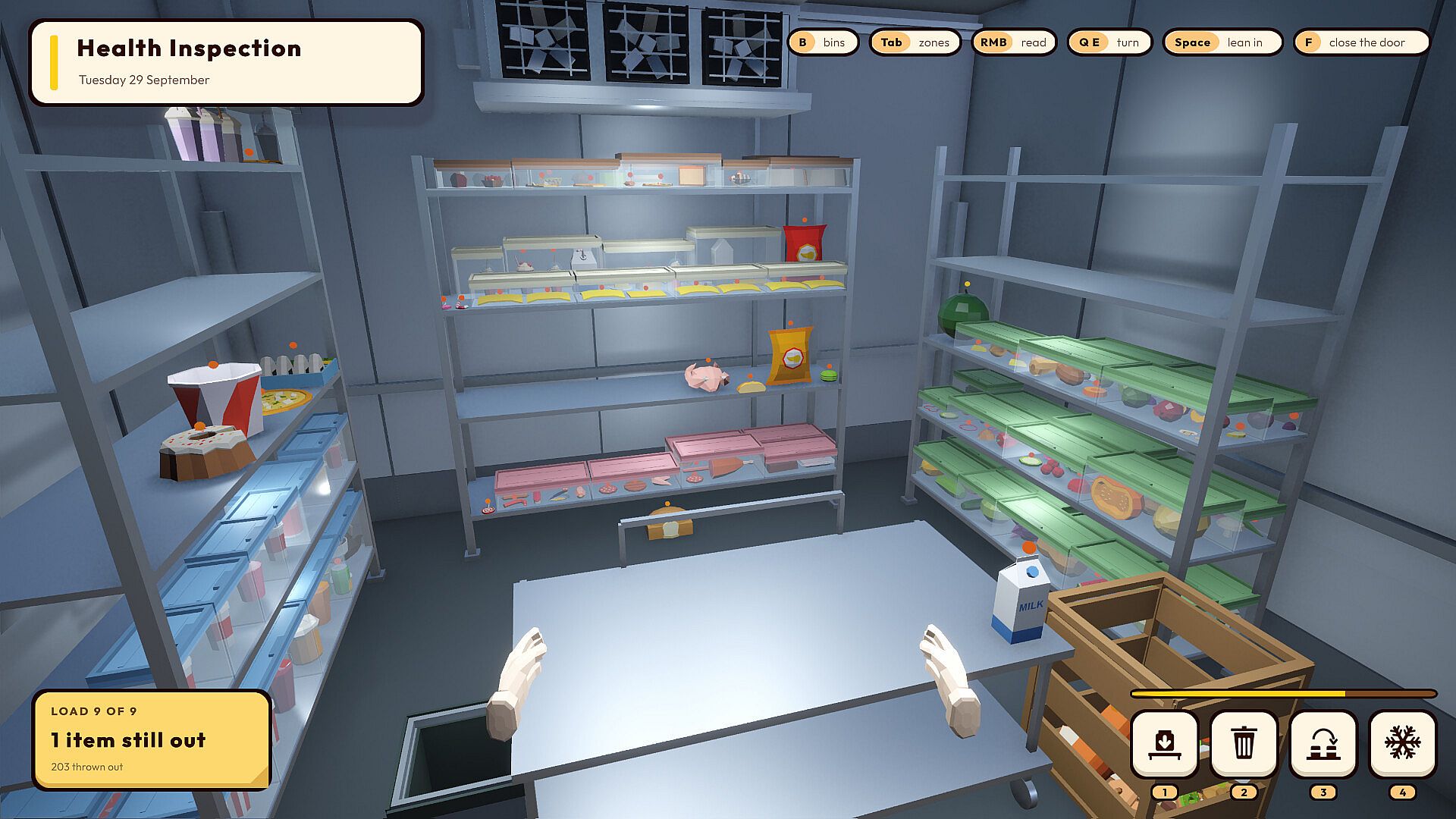
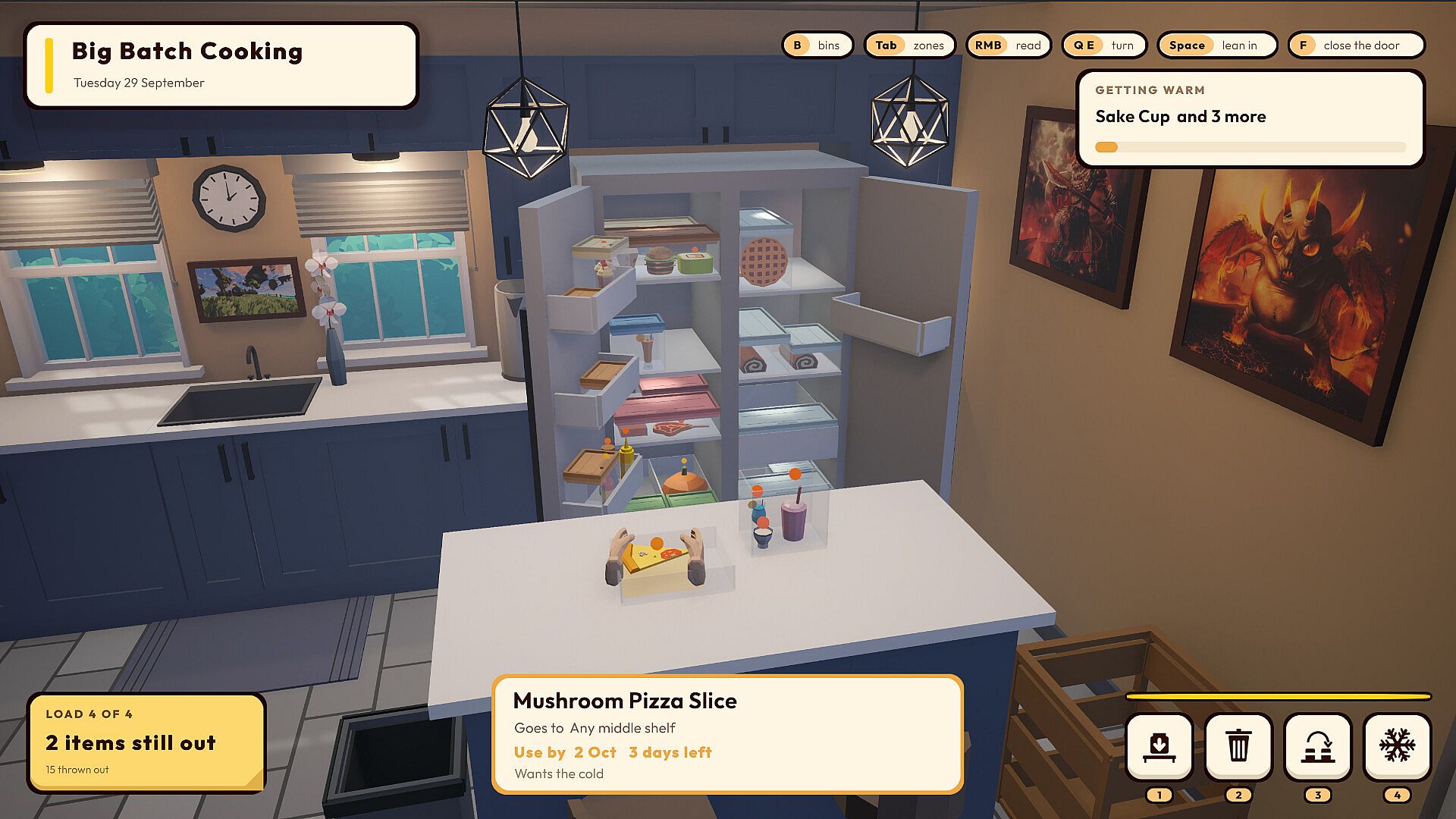
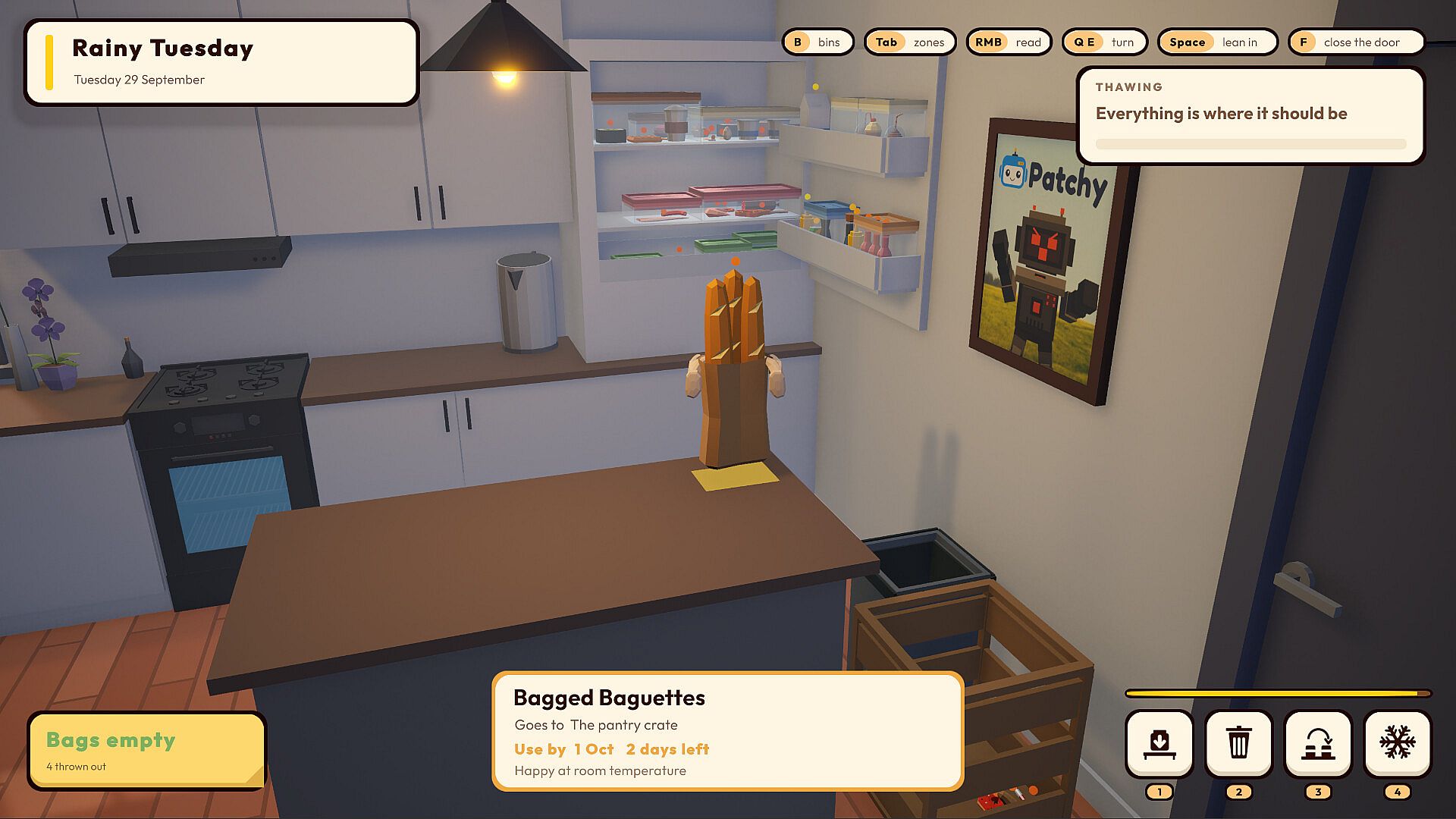
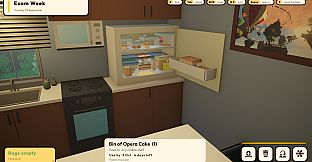
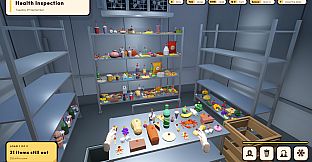
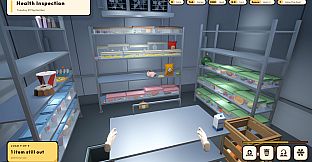
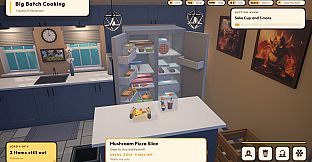
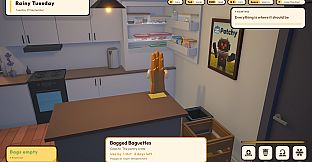
Fridge Organizer is a casual simulation game focused on the precise task of stocking and arranging food items in realistic refrigerator setups. Players handle deliveries by placing groceries according to strict rules for food safety and efficiency, such as keeping dairy on upper shelves, meat on lower ones to prevent drips, and produce in crispers. The core loop emphasizes first-in-first-out rotation, where older items move forward so newer stock stays at the back, and every placement scores based on correct positioning and expiration management.
Gameplay
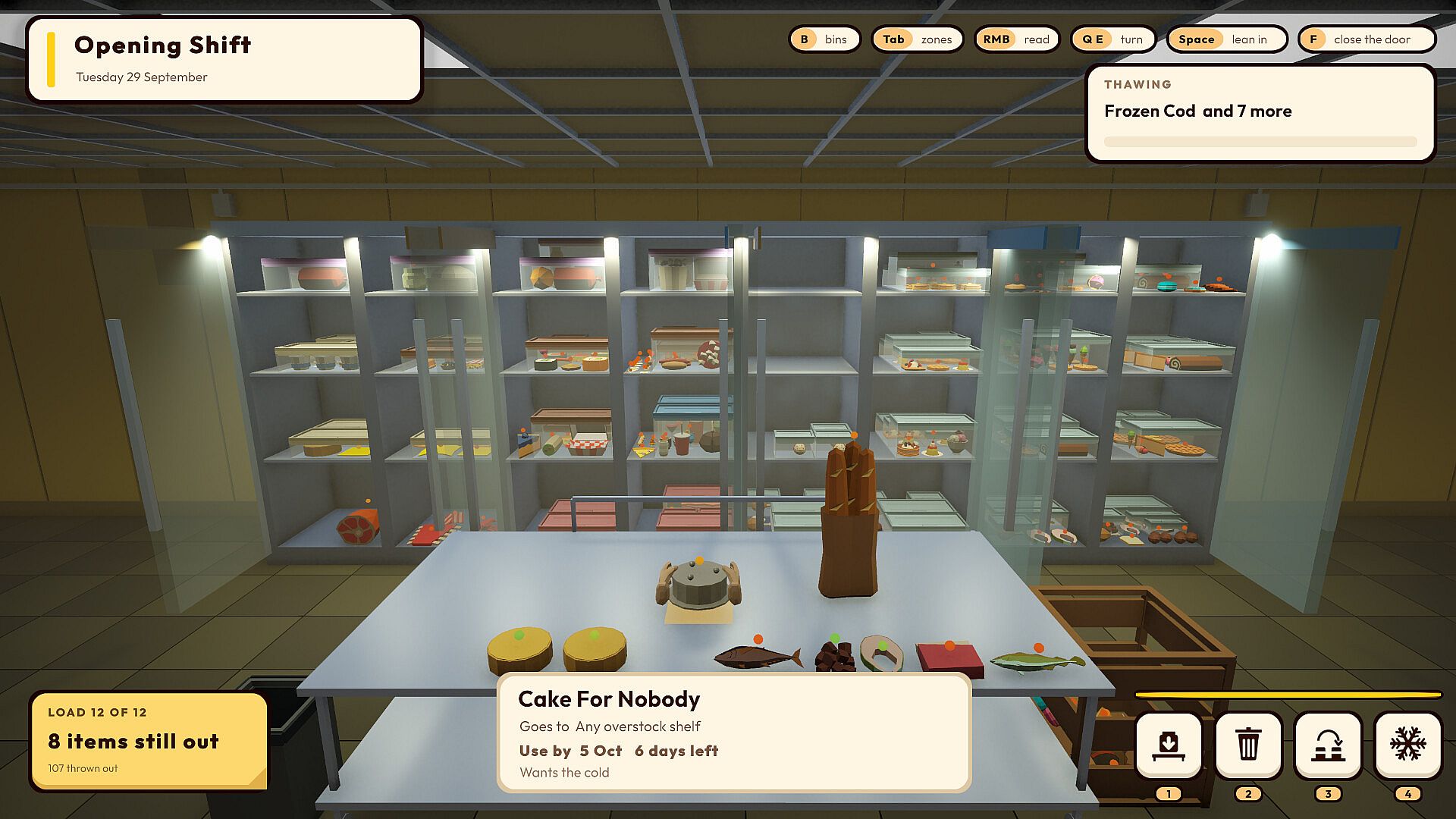
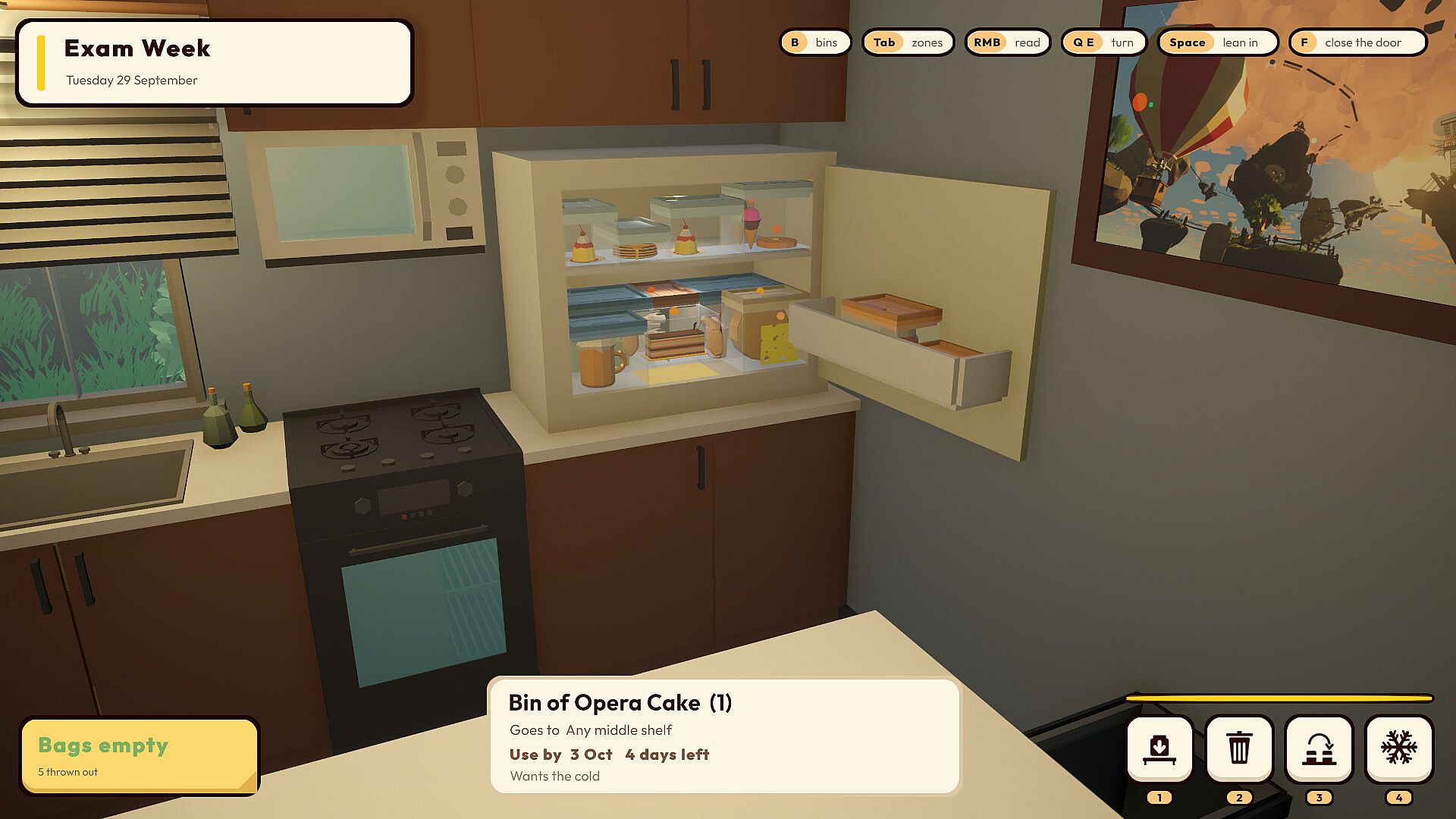
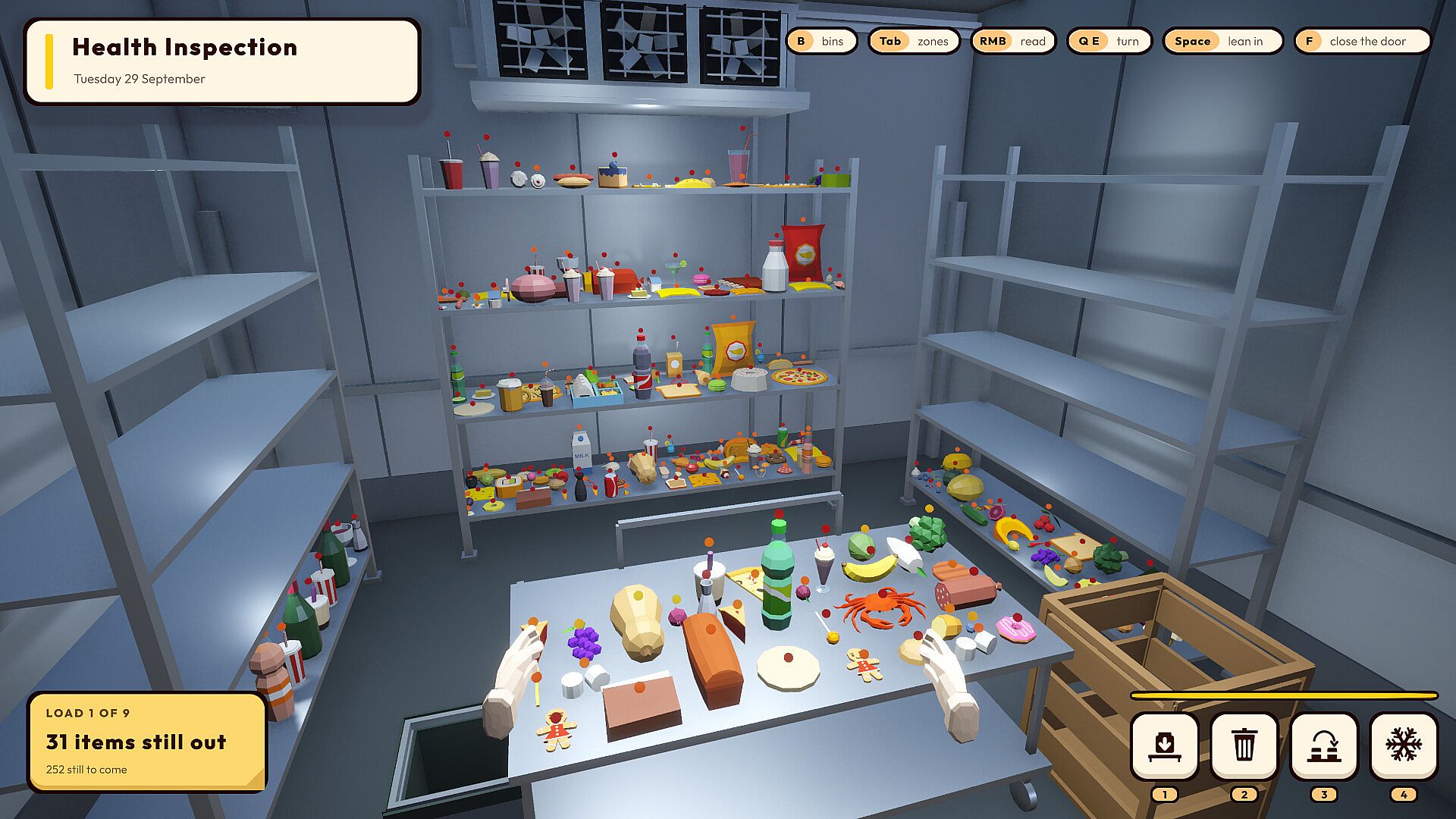
The gameplay centers on methodical organization within time limits. Players pick up items from a counter and slot them into designated fridge sections while monitoring expiration dates that advance in real time. Pressing a key highlights the proper shelf for the held item, reinforcing accurate placement without guesswork. Frozen goods must stay in freezers, and thawing items require attention to maintain quality. Abilities assist during missions: one instantly stores a single item, another clears expired stock to free space, and a third halts the clock briefly while resetting thaw timers across all foods. These tools encourage strategic use rather than constant rushing, rewarding careful planning over speed alone. Missions grow in complexity with larger loads and stricter rules, testing spatial awareness and adherence to kitchen protocols.
Game Modes
The game delivers its content through a campaign of forty-eight missions spread across six distinct kitchen environments. Each environment presents unique fridge layouts and delivery scales. Early missions involve compact dorm setups with basic two-shelf units and door bins. Later ones expand to apartment models with added crispers, family side-by-side units featuring multiple door compartments, basement chest and upright freezers, restaurant walk-in coolers handling bulk deliveries, and a final backroom area with oversized loads plus unexpected extra stock. Progression follows these environments in sequence, introducing tighter space constraints and additional food safety requirements as players advance. No separate multiplayer or endless modes exist; the focus remains on completing the mission list in single-player sessions.
Environments and Progression
Environments serve as the primary structure for variety. The dorm fridge offers forgiving space for learning basic rules. The apartment fridge adds crispers and extra bins alongside stricter rotation demands. Family models introduce side-by-side configurations with four door bins. Basement freezers shift emphasis to frozen storage logistics. Restaurant walk-ins bring high-volume deliveries typical of commercial kitchens. The backroom caps the experience with the largest item counts and irregular stock that challenges even experienced organizers. Each mission within these settings scores performance on placement accuracy, expiration handling, and overall neatness, encouraging repeated attempts to refine results.
Is It Worth Playing?
Fridge Organizer suits players who enjoy deliberate, low-pressure simulation tasks centered on organization and realism. Its single-player campaign provides a complete set of missions without requiring ongoing updates or additional purchases at launch. The mechanics reward attention to detail and food-handling logic drawn from real kitchen practices, delivering steady satisfaction from well-arranged shelves. Since the title launches in November 2026 with no prior player feedback available, those drawn to cozy casual experiences focused on methodical sorting will find the described systems align closely with that preference. Individuals seeking fast action or competitive elements may prefer other genres instead.