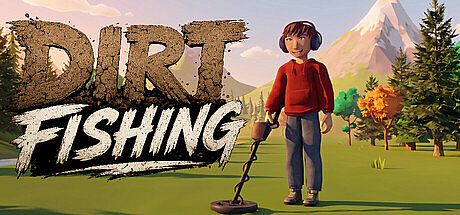


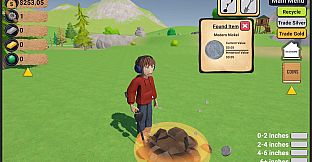
Dirt Fishing is a simulation game centered on treasure hunting and metal detecting. Players step into the shoes of fifteen-year-old Ethan, who begins with basic tools and a goal inspired by his grandfather to uncover buried history through patience and effort.
Gameplay
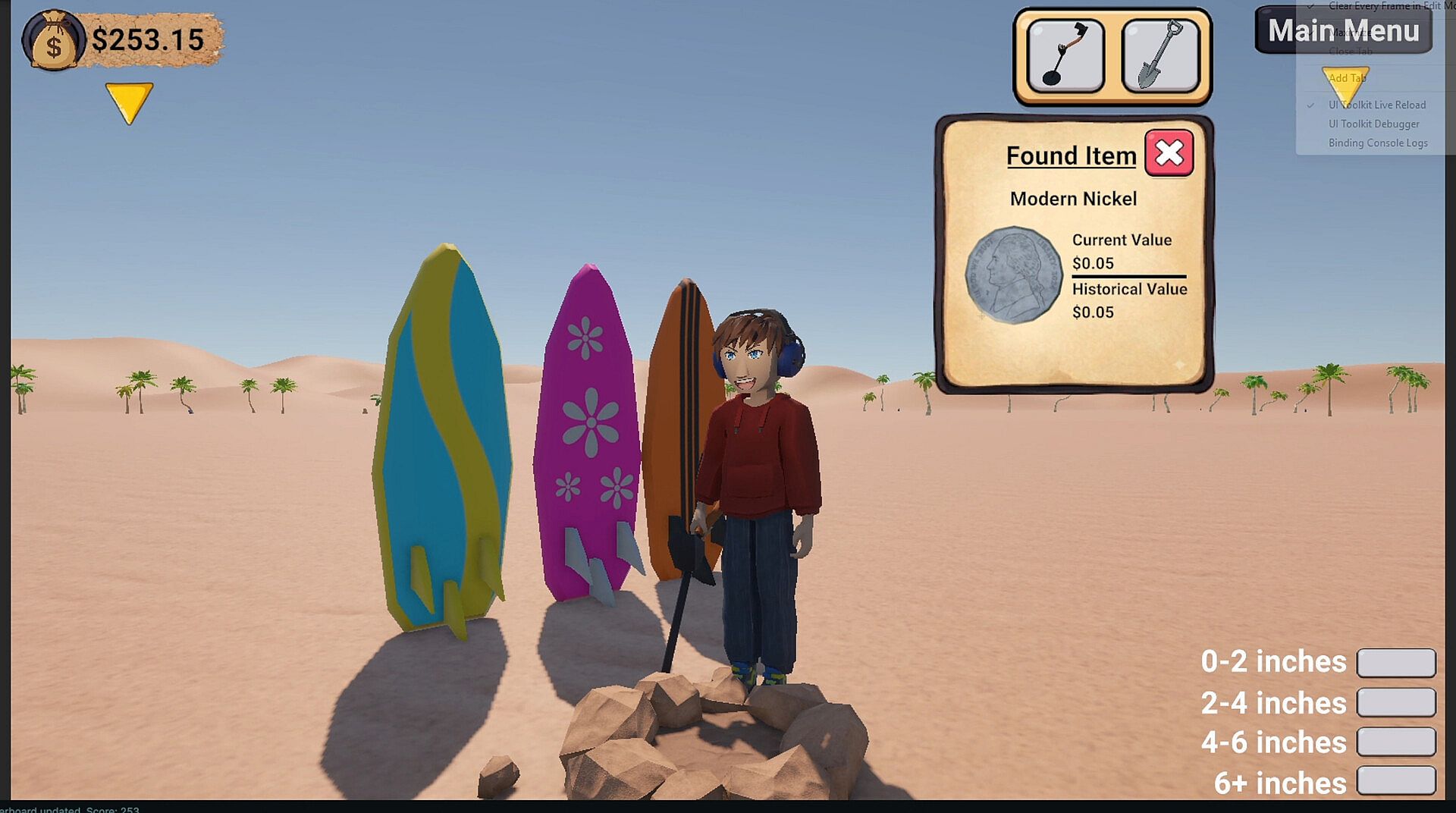
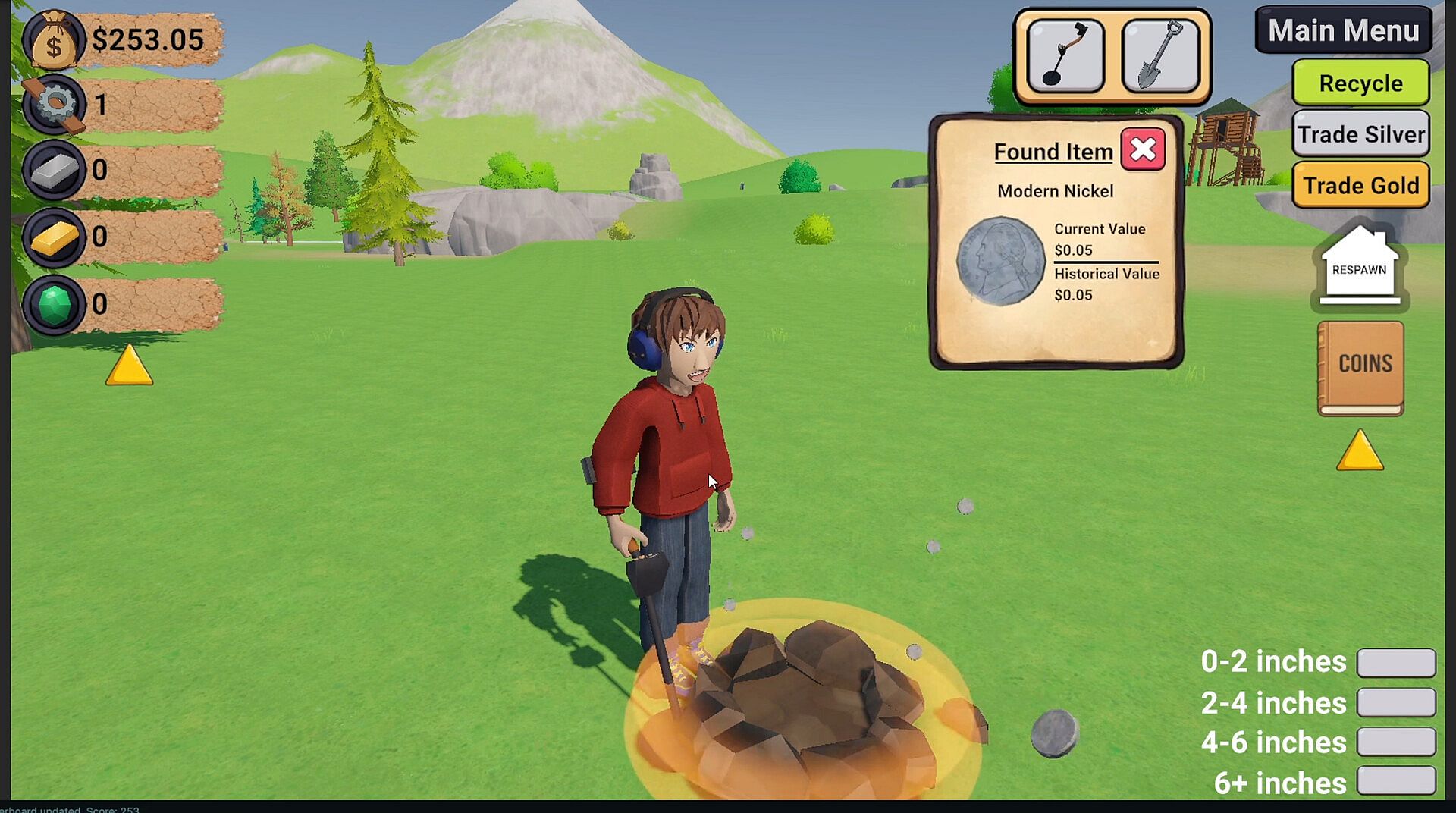
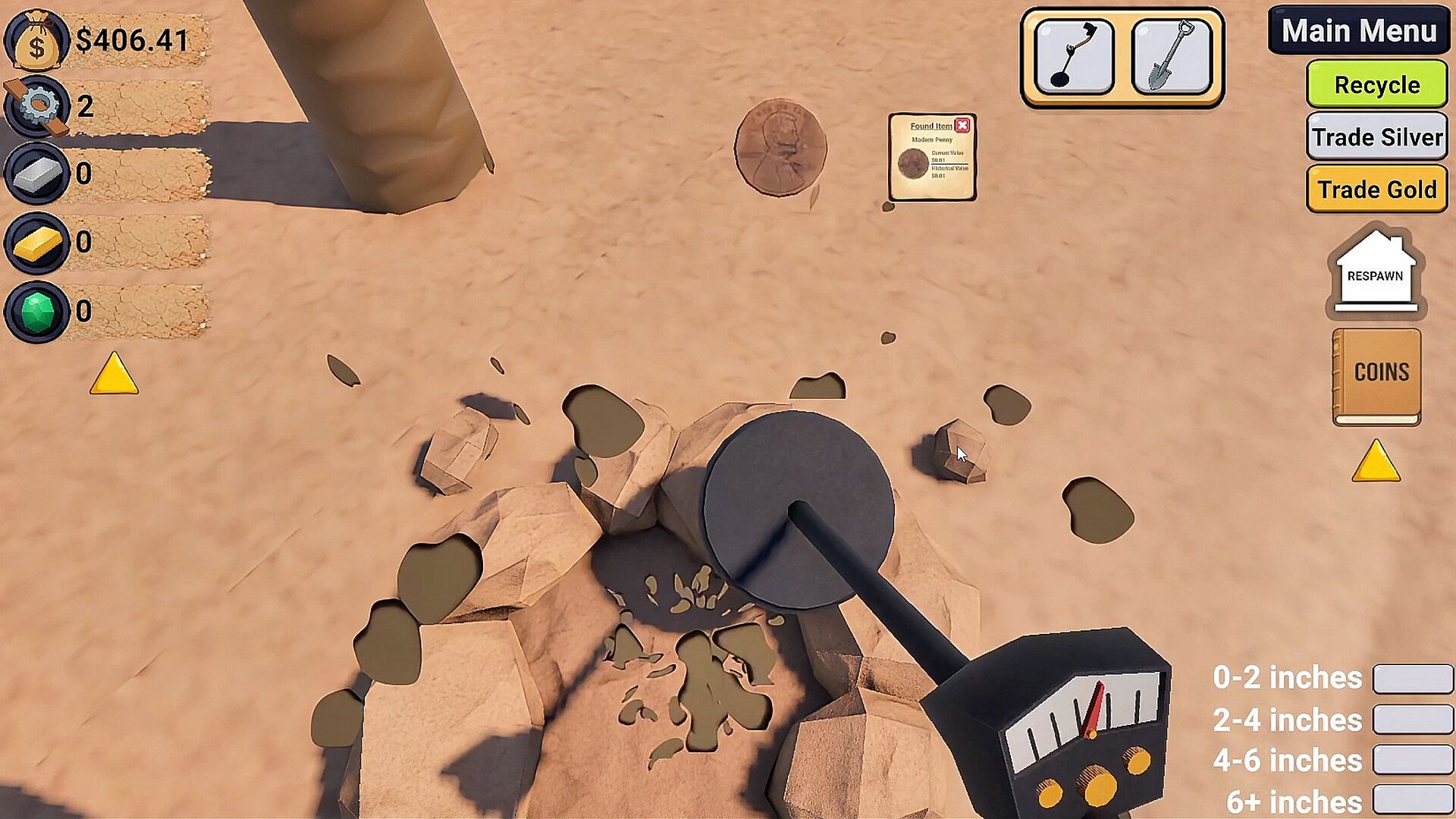
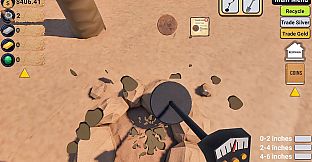
The core loop revolves around using a metal detector to scan the ground in search of hidden objects. The detector signals proximity through increasing beep frequency, guiding the player to the exact spot. Once located, the shovel comes into play to excavate the item, with deeper burials offering higher rewards in value and rarity. Discoveries range from everyday scrap and junk to silver, gold, and historical relics, each adding to personal earnings and a growing collection. Movement speed can receive temporary boosts from energy drinks scattered across the environments, helping cover more ground efficiently during longer sessions.
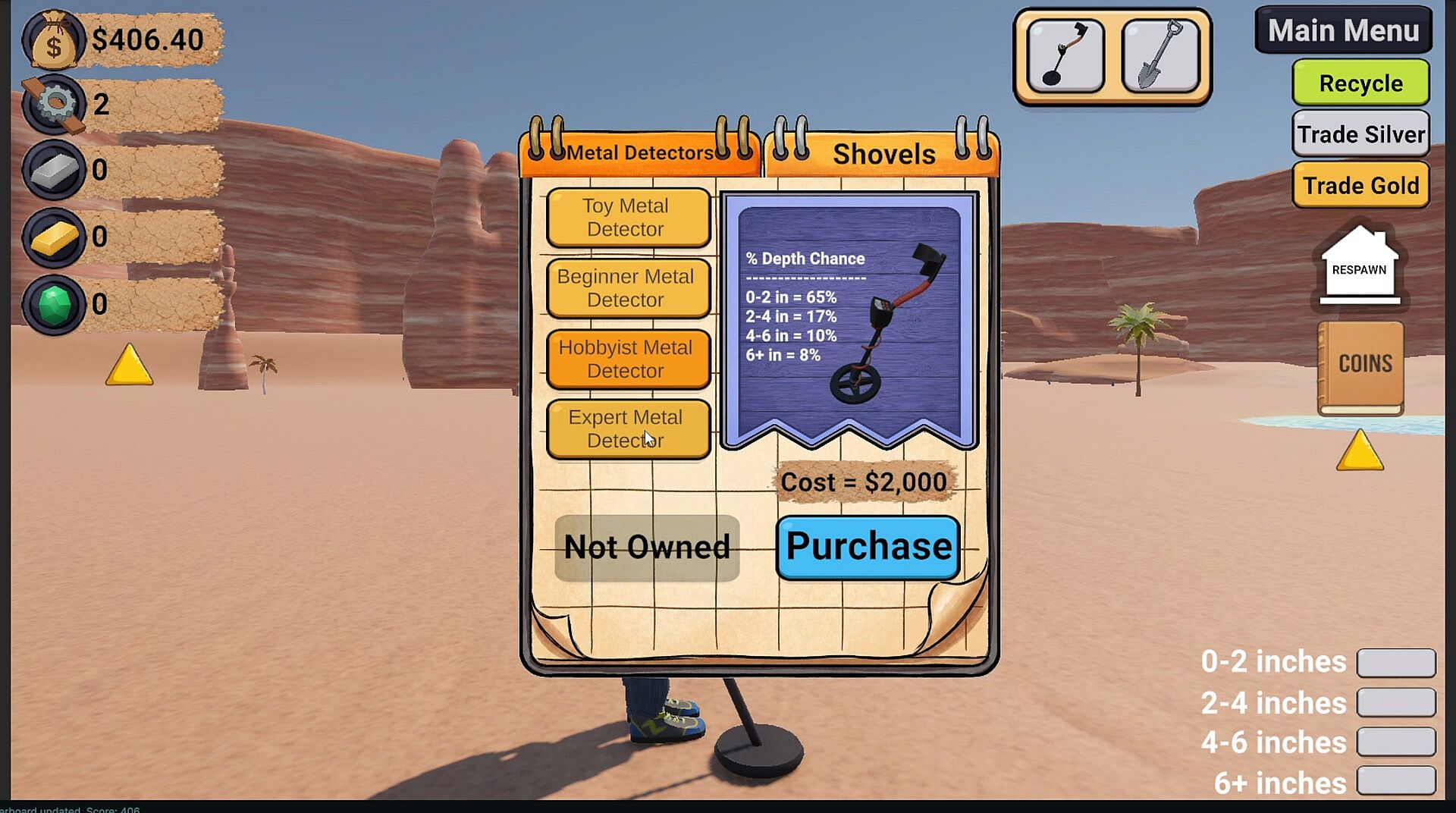
Equipment upgrades form a key progression system. Sales of found items generate funds for better metal detectors that reach greater depths and detect higher-value targets. Shovels improve in speed and efficiency, reducing the effort needed per dig. This cycle of search, recovery, and reinvestment drives steady advancement toward more challenging finds.
Game Modes
Dirt Fishing operates as a single-player simulation experience focused on exploration and collection. The primary activities include scanning locations with the detector, excavating targets, and managing inventory through sales and upgrades. Three distinct environments provide variety: forests with dense undergrowth, beaches along shorelines, and deserts with open sands. Each setting presents unique opportunities for different item types while maintaining the same detection and digging mechanics.
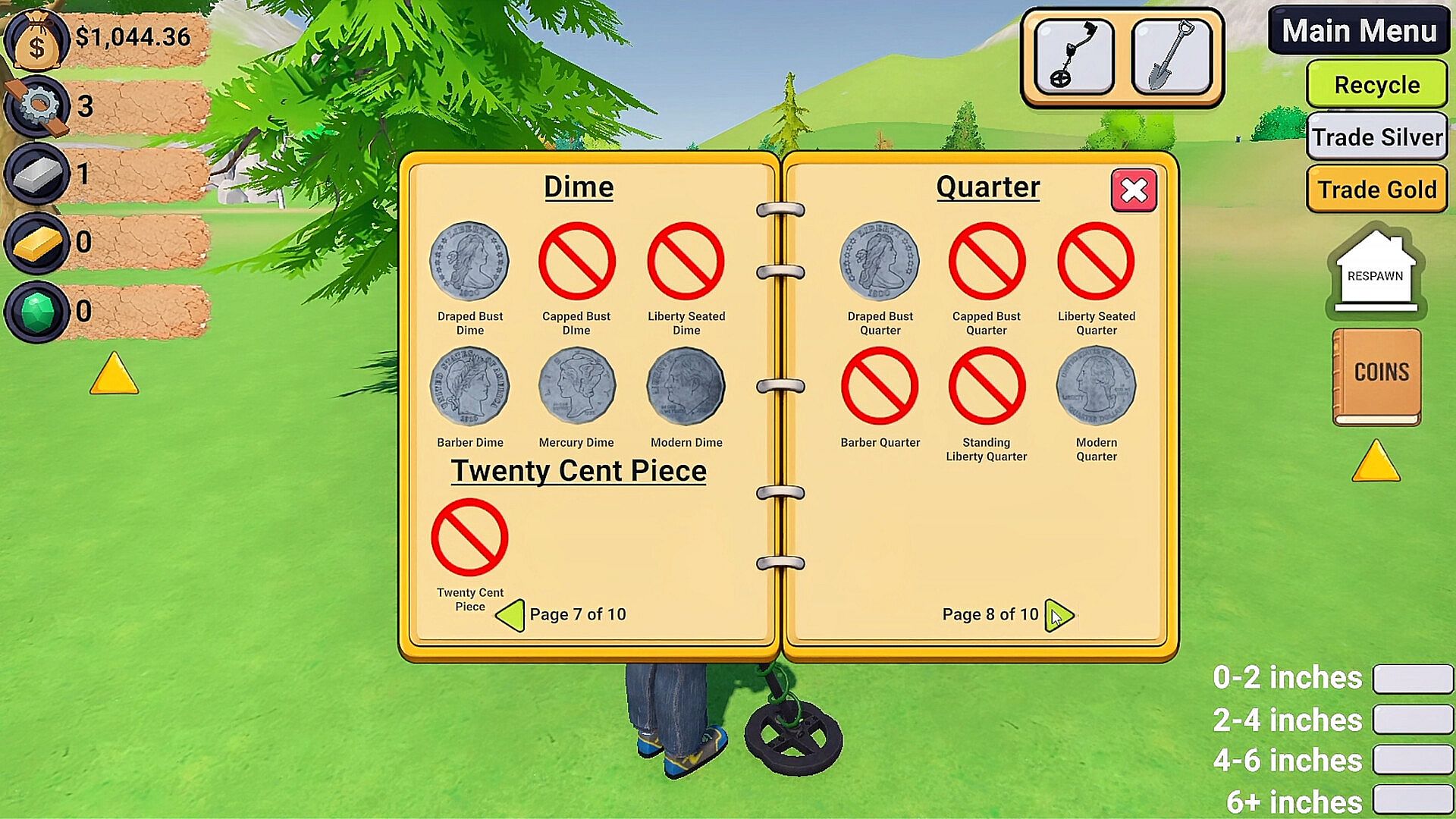
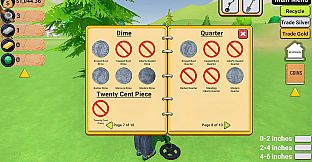
Progression ties directly into collection goals, such as gathering specific numbers of relics or completing sets of historical U.S. coins. The simulation emphasizes steady accumulation over time rather than competitive or timed elements, allowing players to pace their sessions according to personal preference.
Exploration and Collection
Three environments expand the scope of each outing. The forest offers shaded areas with potential for varied relics, the beach provides coastal finds that may include metallic debris from the water's edge, and the desert delivers arid expanses where deeper or rarer metals might lie undisturbed. Items unearthed contribute to a personal museum-style collection that tracks progress across categories like coins, precious metals, and historical artifacts.
Deeper burials increase the likelihood of premium discoveries, encouraging careful scanning and methodical digging. The collection system rewards persistence, with each new entry building toward broader completion milestones that unlock no additional mechanics but provide a sense of tangible achievement.
Is It Worth Playing?
Dirt Fishing suits players who enjoy methodical simulation gameplay centered on detection, excavation, and gradual equipment improvement. The experience rewards consistent effort through expanding collections and financial growth, culminating in the challenge of reaching one hundred relics for the Legendary Treasure Hunter title. After that milestone, the game continues with further coin completion, full equipment upgrades, and leaderboard competition based on total earnings and relics recovered.
Those drawn to relaxed, single-player treasure hunting simulations without multiplayer or story-heavy elements will find a focused loop that emphasizes exploration across the three environments. The absence of complex combat or narrative branches keeps attention on the core detecting and digging systems, making it a straightforward choice for fans of patient collection mechanics on PC.