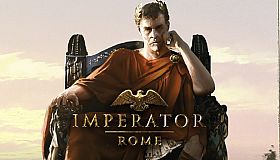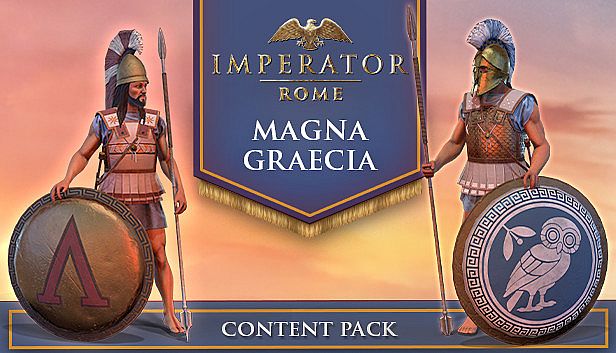













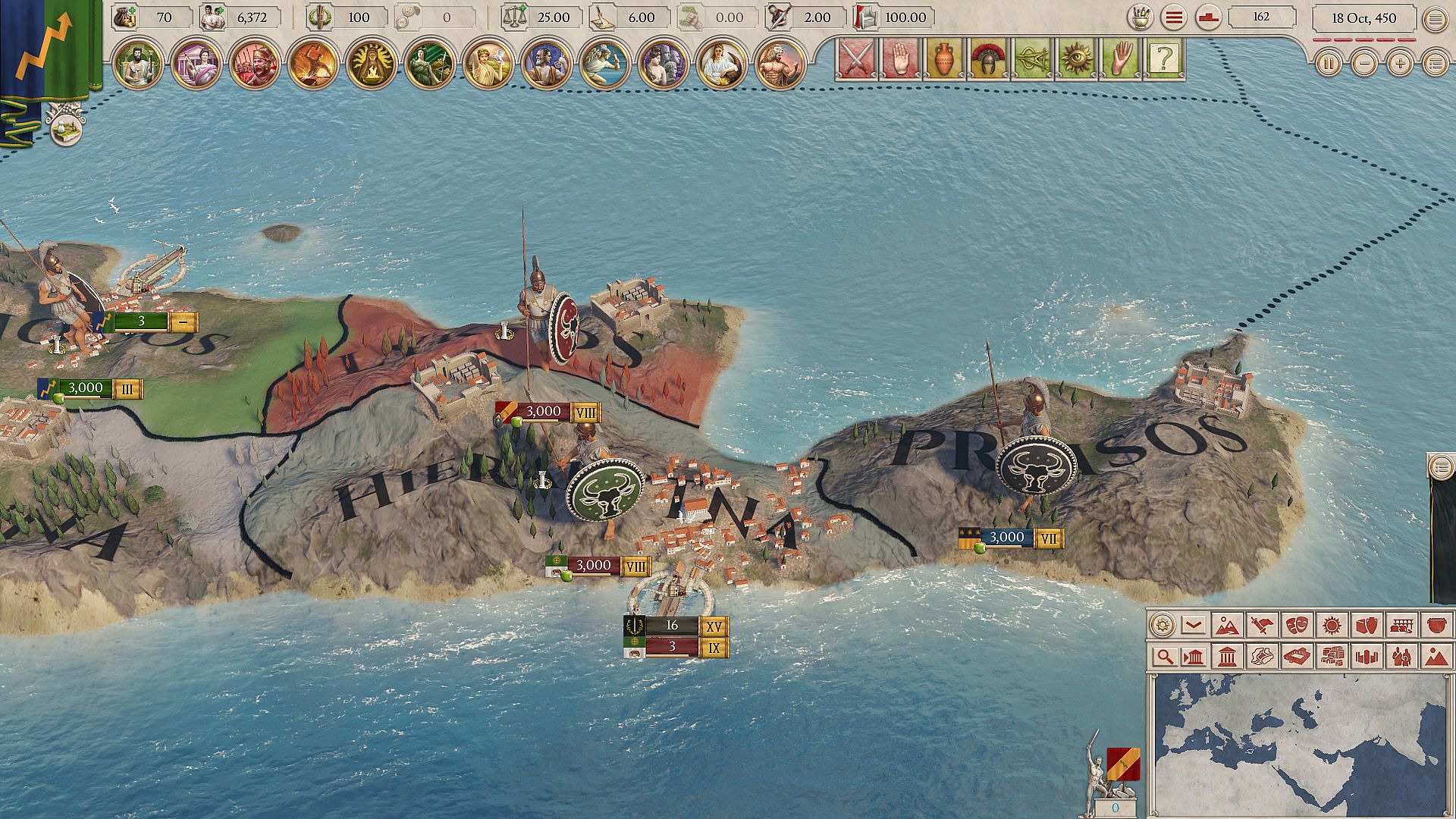
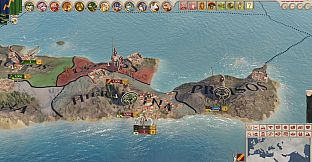
Imperator: Rome is a strategy simulation game set in the ancient Mediterranean world during the rise of Rome and the aftermath of Alexander the Great's empire. The Magna Graecia content pack expands options for players interested in Greek city states by adding targeted content for Athens, Sparta, and Syracuse amid expanding Roman and Carthaginian influence.
Gameplay
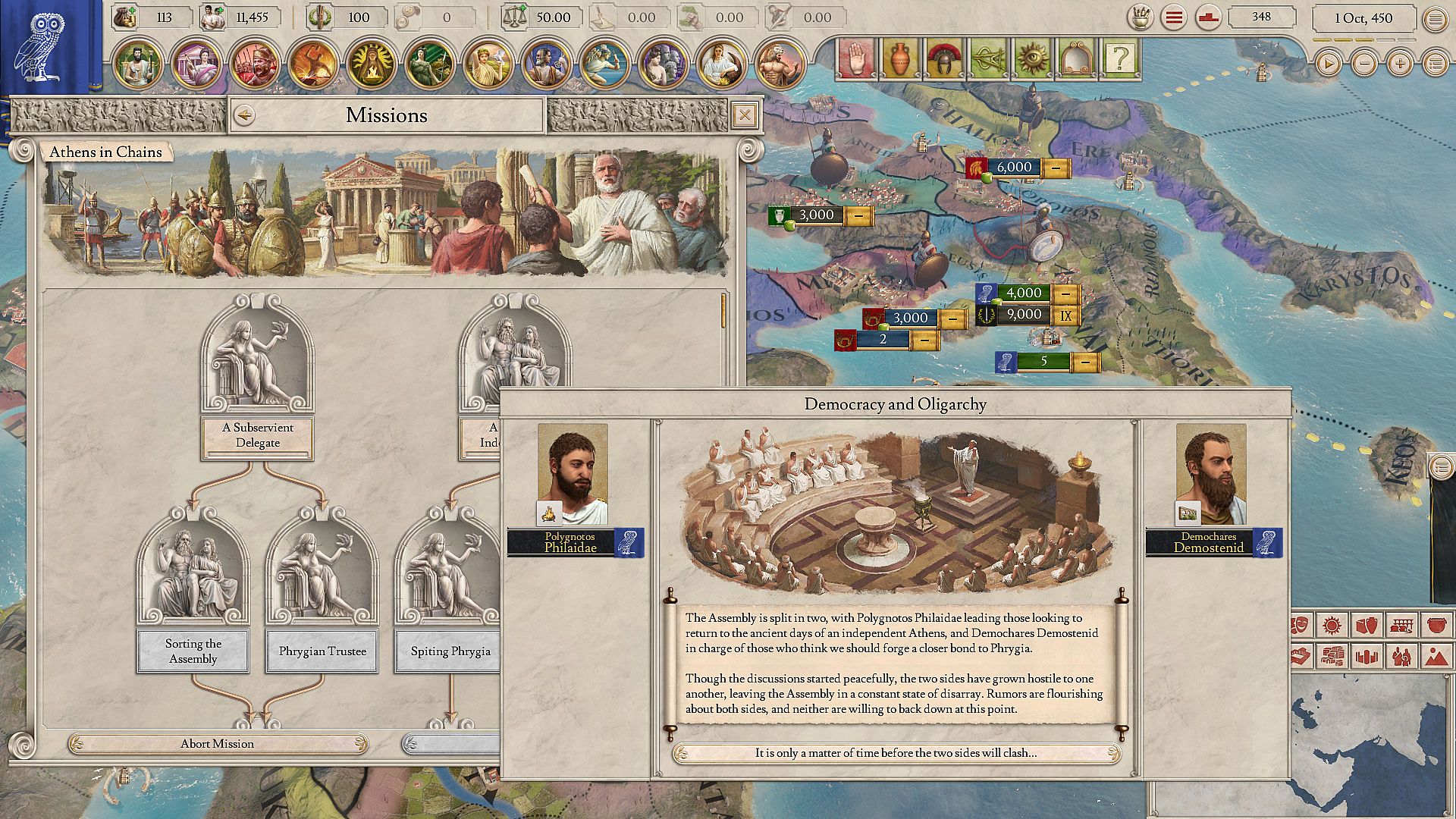
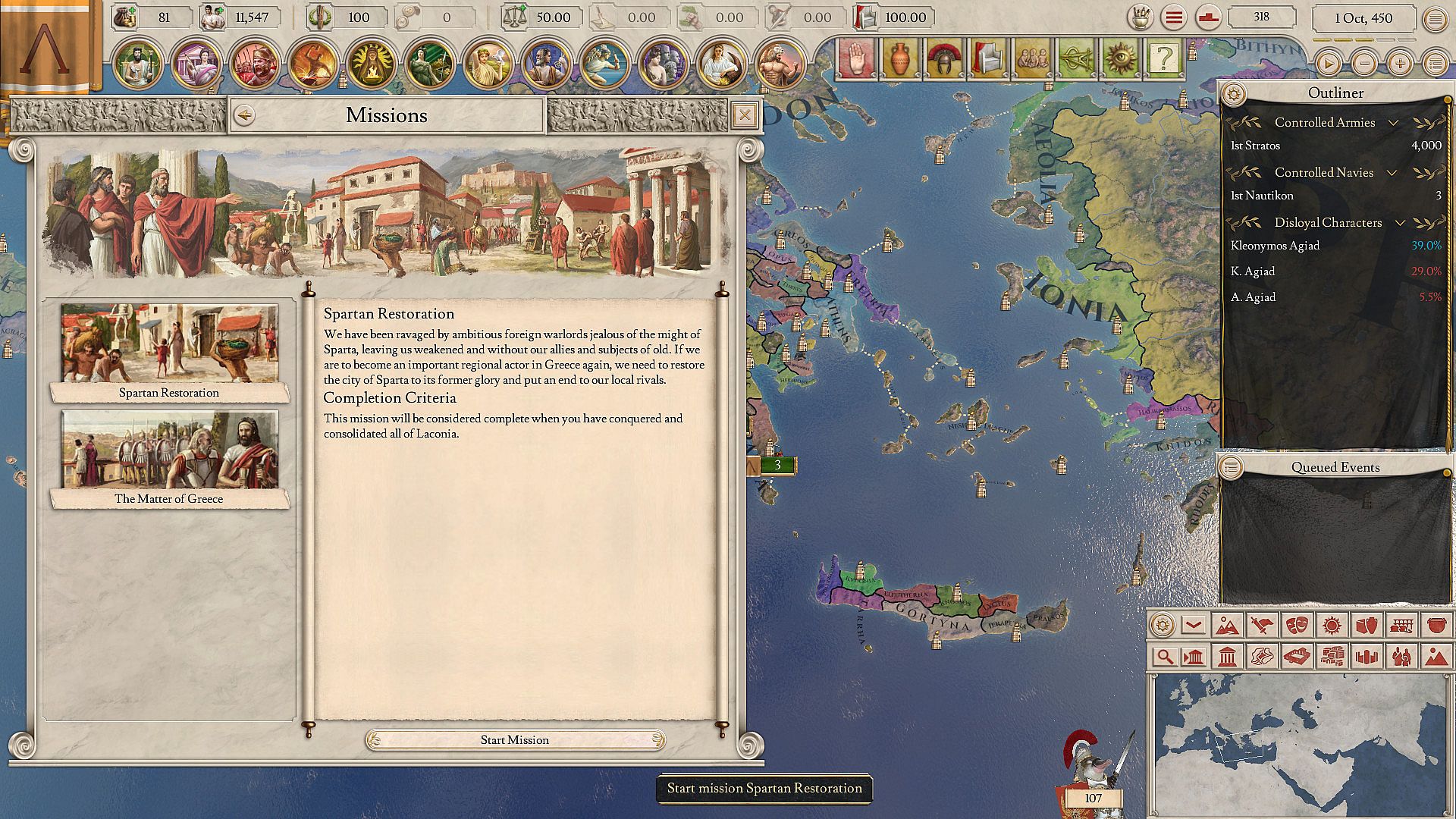
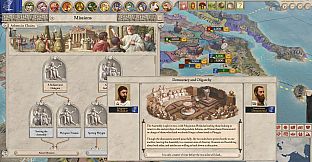
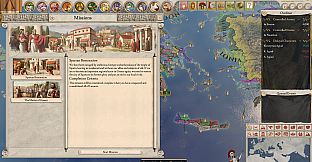
The core loop centers on managing a nation's population, economy, military, and religion across a detailed map of the ancient world. Players guide their chosen state through conquest, diplomacy, and internal development while balancing resources and stability. Mission trees provide structured goals that reward expansion and cultural focus, with the Magna Graecia pack introducing dedicated trees for Athens, Sparta, and Syracuse that emphasize independence and regional dominance.
Religion plays a central role through the pantheon system. The content pack adds twelve new Greek deities linked to historical holy sites, allowing deeper customization of state worship. Rulers can pursue apotheosis, where a popular leader or ancestor is declared a god and added to the pantheon. Accumulating enough such figures opens the Imperial Cult government form, shifting how authority and legitimacy function within the state.
Players collect sacred treasures, historical and divine relics with Hellenistic themes, and place them in holy sites for bonuses. Capturing these artifacts becomes possible when sacking enemy holy sites or capitals. Additional unit models for the featured Greek states and new music tracks enhance the visual and audio presentation during campaigns.
Game Modes
Imperator: Rome operates as a single-player grand strategy experience with no separate multiplayer servers or competitive modes. Players select from numerous starting nations and time periods to pursue different objectives, such as building a dominant empire, maintaining city-state independence, or navigating alliances against larger powers. The Magna Graecia content pack encourages playthroughs focused on the Greek world, where mission trees guide interactions with Rome's growth and Carthage's threats.
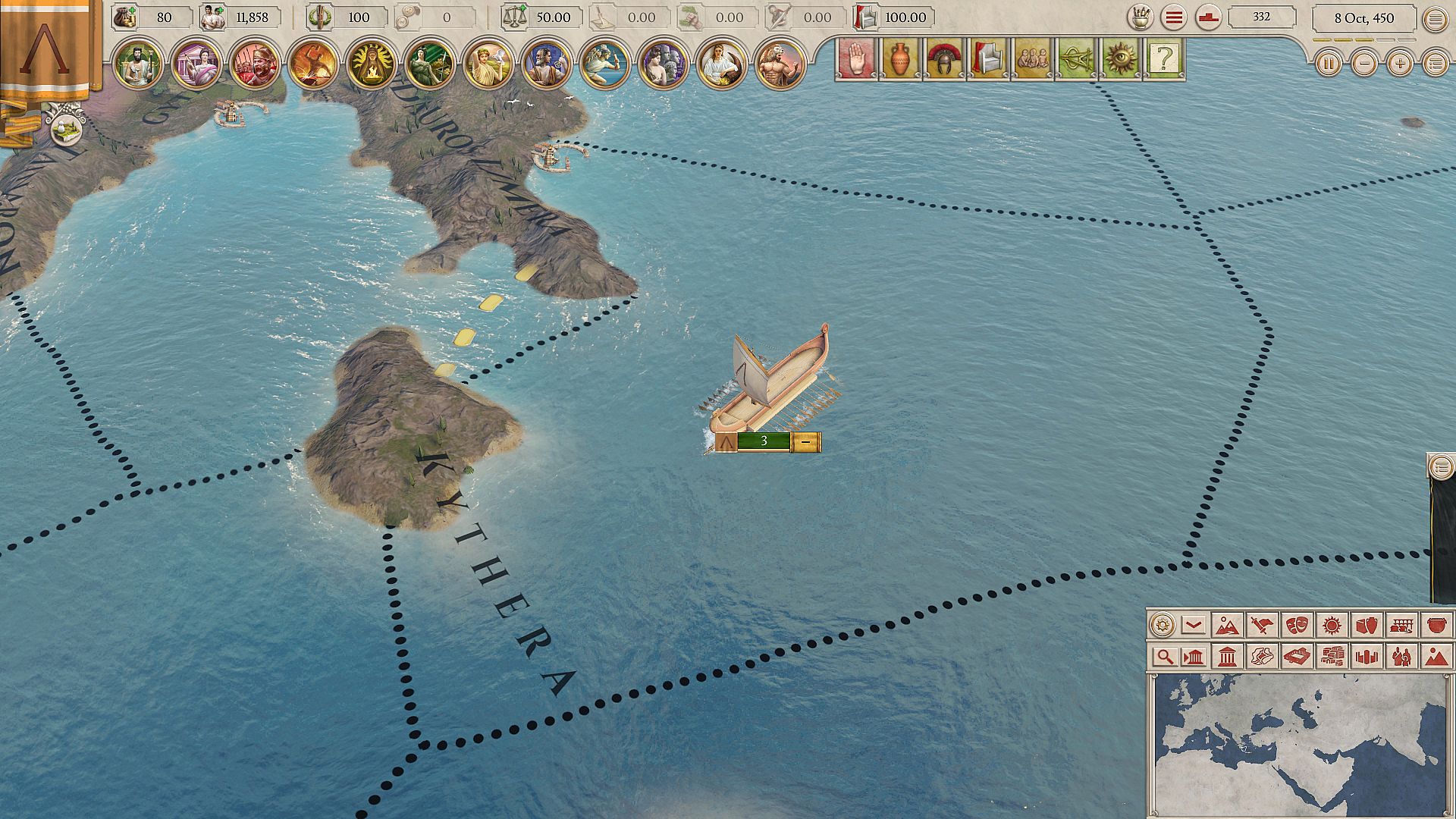
Campaigns support ironman mode for those seeking a permanent record of progress without reloads. Different nation starts alter available mechanics and goals, with the added Greek content providing fresh paths for Athens, Sparta, and Syracuse that highlight naval power, hoplite traditions, and Sicilian ambitions respectively.
Key Mechanics and Features
Population management tracks culture, happiness, and assimilation, directly affecting manpower and unrest. Trade and building systems support economic growth, while military reforms allow customization of armies and fleets. The apotheosis and sacred treasures additions integrate into these systems by providing new religious and prestige options that influence stability and expansion.
Diplomacy and warfare remain intertwined, with the pack's missions offering specific interactions that reward defending Greek autonomy. Holy sites serve as focal points for both spiritual and strategic value, tying into the new deities and artifacts.
Current State and Updates
The game received a major 2.0 update in 2024 alongside the Heirs of Alexander content, which refined military systems and added further mission trees. Ongoing patches continue to address balance and performance. The Magna Graecia pack remains compatible and contributes unique content to campaigns centered on the Hellenistic period.
Is It Worth Playing?
Recent Steam reviews show strong positivity following the 2.0 update, with players noting improved depth in military and mission systems. The title suits those who enjoy detailed grand strategy with historical themes and long-term empire building. The Magna Graecia content pack particularly appeals to players drawn to Greek city states and religious mechanics, offering focused missions and new options that enhance replayability for that region.
Those seeking quick sessions or action-oriented gameplay may find the pace deliberate and management-heavy. With patches still arriving years after launch, the game maintains active support for its community. It delivers a solid experience for fans of Paradox-style simulations who appreciate the blend of conquest, culture, and ruler legacies introduced or expanded by this content pack.