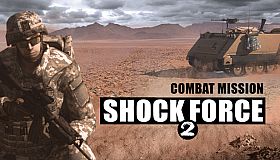



















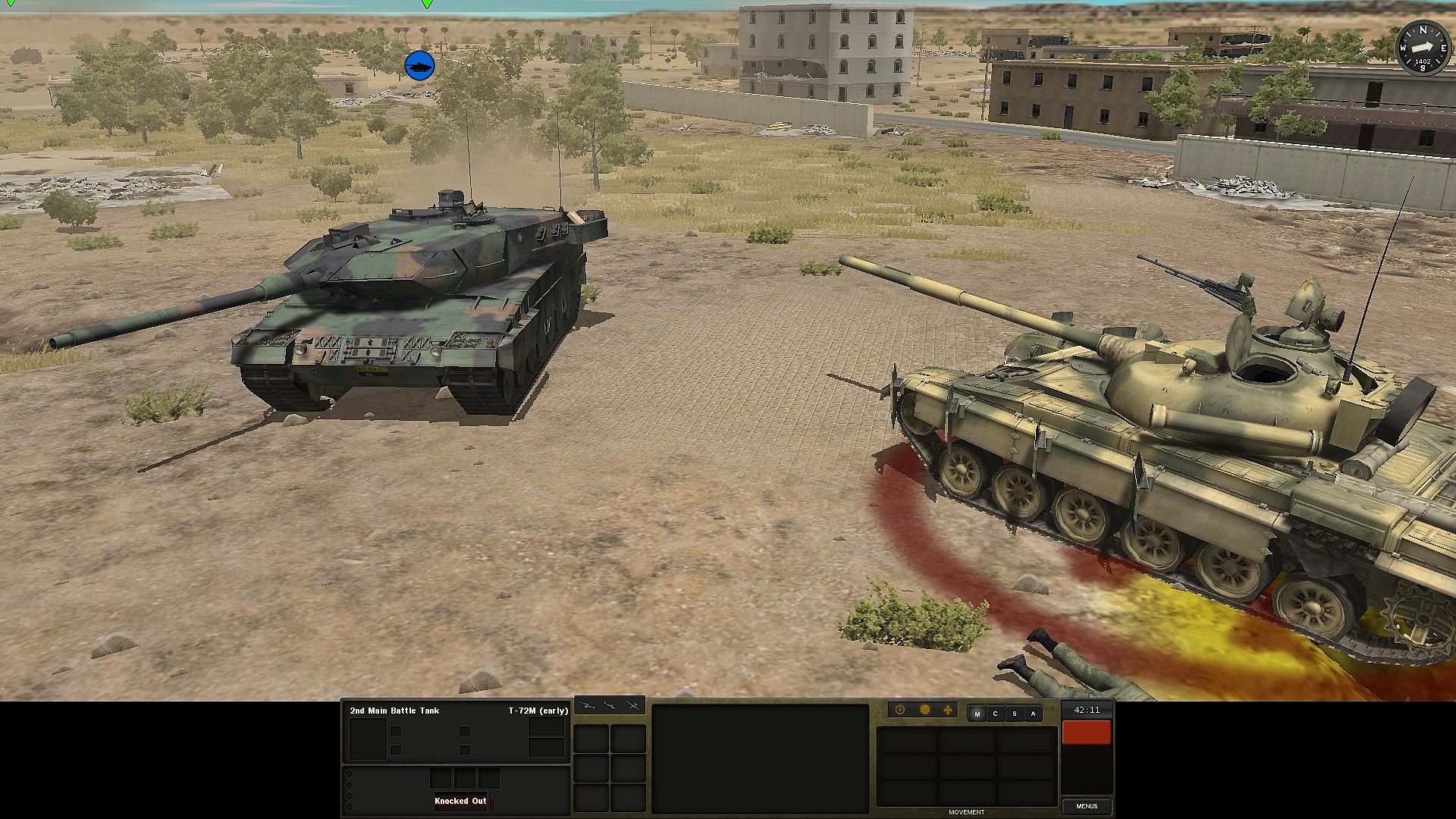
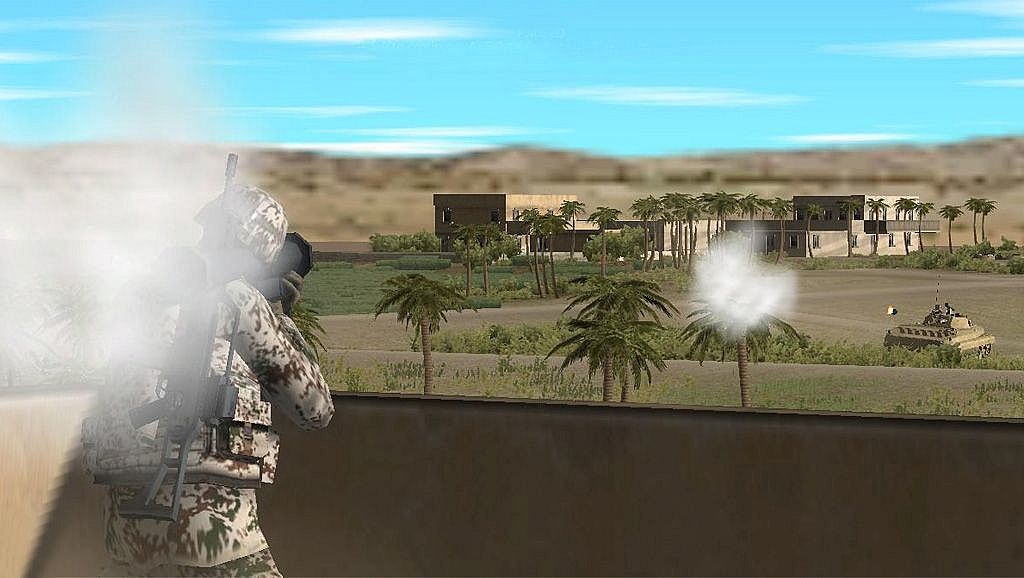
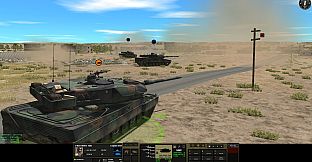
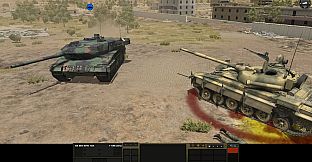
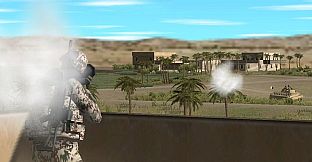
Combat Mission Shock Force 2: NATO Forces is a strategy simulation game set in contemporary land warfare on PC. Players command detailed military formations in realistic tactical engagements that emphasize planning, unit coordination, and adaptation to varied terrain and enemy responses.
Gameplay
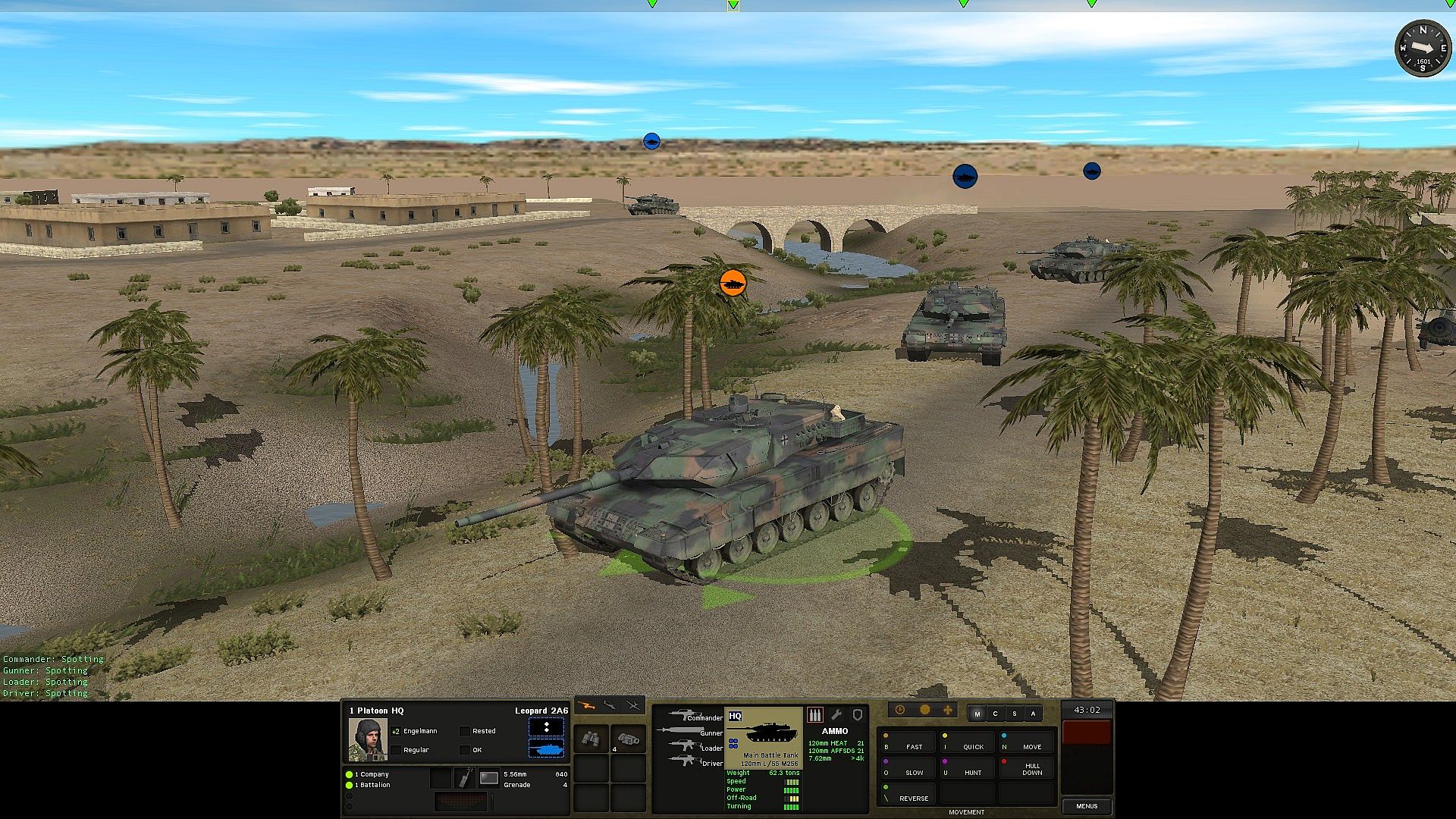
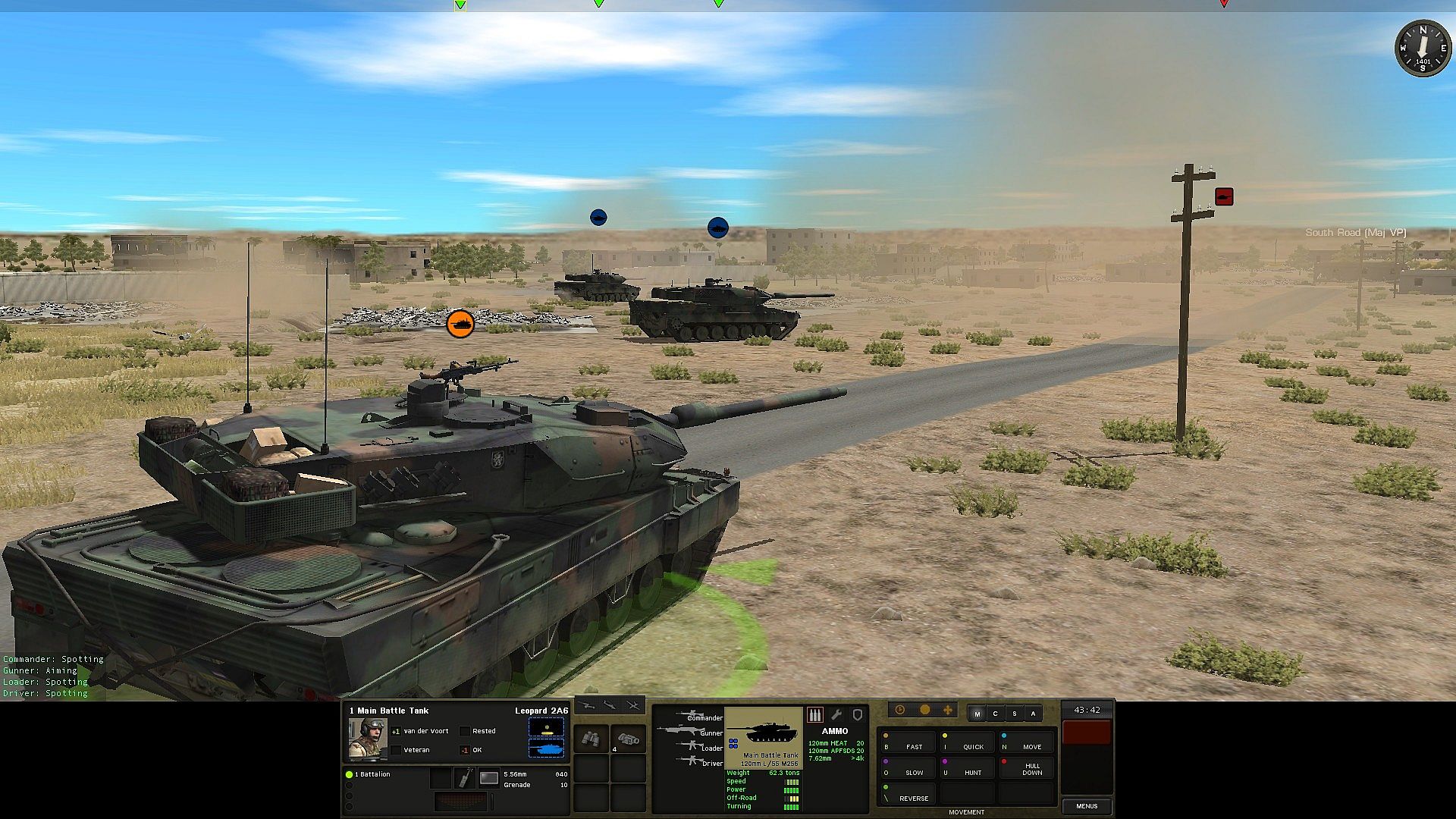
The core experience centers on controlling battalions and companies from three distinct NATO nations, each with its own organizational structure, vehicle lineup, and doctrinal approach. German forces include Panzer and Panzergrenadier units supported by Leopard tanks and Marder infantry fighting vehicles, while Canadian options range from tank squadrons to mechanized infantry battalions equipped with LAV variants and Leopard tanks. Dutch formations feature CV90 and YPR vehicles alongside Leopard 2A6 tanks and engineer support. These differences require players to adjust movement patterns, fire support integration, and engagement distances rather than applying a single set of tactics across all sides.
Infantry weapons, heavy machine guns, anti-tank missiles, mortars, and artillery pieces are modeled with specific performance characteristics for each nation. German troops rely on G36 rifles and Panzerfaust launchers, Canadian units use C7 and C8 carbines with Carl Gustav recoilless rifles, and Dutch soldiers carry C7A1 rifles plus Spike missiles. Vehicle crews and dismounted teams interact through line-of-sight rules, suppression effects, and ammunition management that reward careful positioning and timing of support fire.
Additional Syrian vehicles such as the ZSU-23-4 Shilka and various technicals expand defensive options, while new air support assets for both sides allow coordinated strikes that influence ground maneuvers. The simulation tracks individual soldier and vehicle states, including morale, fatigue, and damage, creating outcomes that emerge from the interaction of these systems rather than scripted events.
Game Modes
Three single-nation campaigns place players in command of German, Canadian, or Dutch forces across linked missions that test combined-arms coordination against Syrian opposition. Each campaign incorporates the unique equipment and formation types of its featured army while presenting objectives that range from defensive stands to deliberate advances.
Twenty-four standalone scenarios offer self-contained battles that highlight specific force mixes or terrain challenges. These can be played from either side and vary in scale from company-level actions to larger battalion engagements. Numerous Quick Battle maps provide customizable starting conditions where players select forces, map size, and victory conditions to create repeatable encounters.
The available content supports repeated playthroughs because each scenario and campaign map responds to different orders and force compositions, producing varied results based on how players employ their available assets.
NATO Formations and Equipment
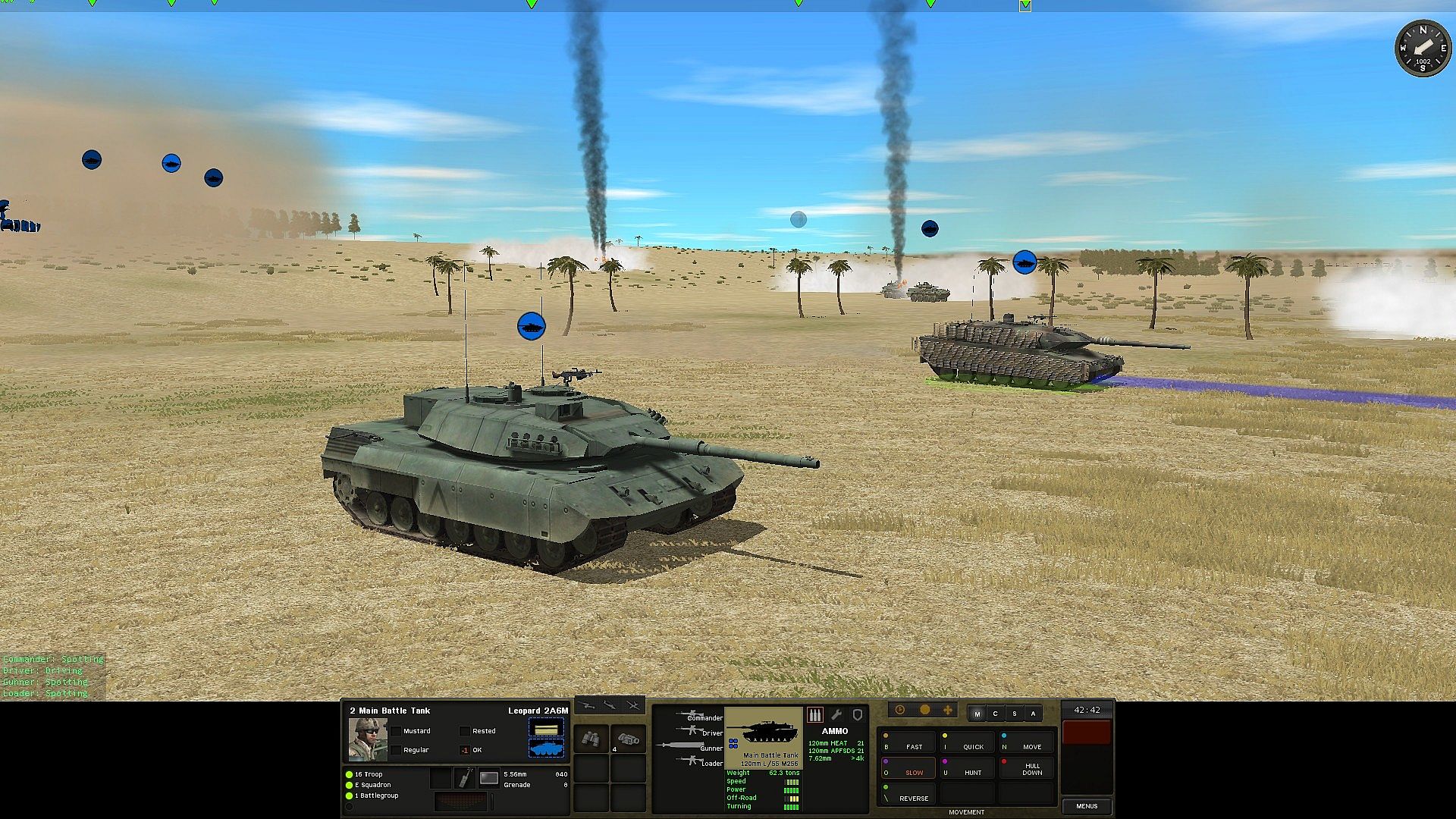
German Heer options include Panzer Battalions with Leopard 2A6 tanks, Panzergrenadier Battalions mounted in Marder vehicles, and specialized Aufklärung or Panzerpioneer companies. Canadian Army selections feature Tank Squadrons with Leopard 2A6 M tanks, Mech Infantry Battalions using LAV III variants, and Independent Engineer Companies. Dutch Army formations encompass Tank Battalions, Mech Battalions, and both heavy and medium Manoeuvre Battalions supported by CV9035NL and YPR 765 vehicles.
Artillery and air assets differ by nation as well. German players can call on PZH 2000 howitzers and Tornado aircraft, Canadian forces have access to M777 howitzers and CF-188 jets, while Dutch units include PzH 2000 and AH-64 Apache Longbow helicopters. These support elements integrate into the ground battle through timing and targeting restrictions that reflect real coordination requirements.
Syrian Additions
The module expands Syrian capabilities with the ZSU-23-4 Shilka self-propelled anti-aircraft gun, Zil-131 trucks, and pickup trucks armed with ZU-23-2 cannons. Air support options now include Mi-24D and Mi-24P helicopters along with MiG-21BIS, MiG-23, SU-17M, SU-22, SU-24M2, and SU-25 fixed-wing aircraft. These additions allow Syrian defenders to contest air superiority and provide mobile fire support that challenges NATO advances.
Is It Worth Playing?
This module suits players who value detailed simulation of modern combined-arms tactics and are willing to study national differences in equipment and organization. The three campaigns and twenty-four scenarios deliver substantial single-player content that rewards repeated attempts with different approaches. Quick Battle maps extend replayability for those who prefer creating their own matchups.
Available player feedback on major distribution platforms remains limited, with a small number of reviews posted since the 2020 release. Those reviews and coverage from specialized strategy sites consistently highlight the depth of the unit modeling and the need for precise planning. The game continues to receive support through community-created content, though no major seasonal updates or expansions have been released in recent years.
Prospective buyers should expect a steep learning curve and slower pace compared with faster-paced strategy titles. Those already familiar with the Combat Mission series or seeking realistic portrayals of contemporary NATO forces will find the most direct match for their interests. New players may benefit from starting with smaller scenarios before attempting full campaigns.