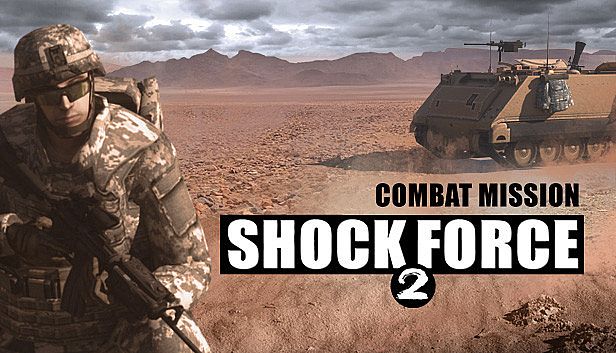
























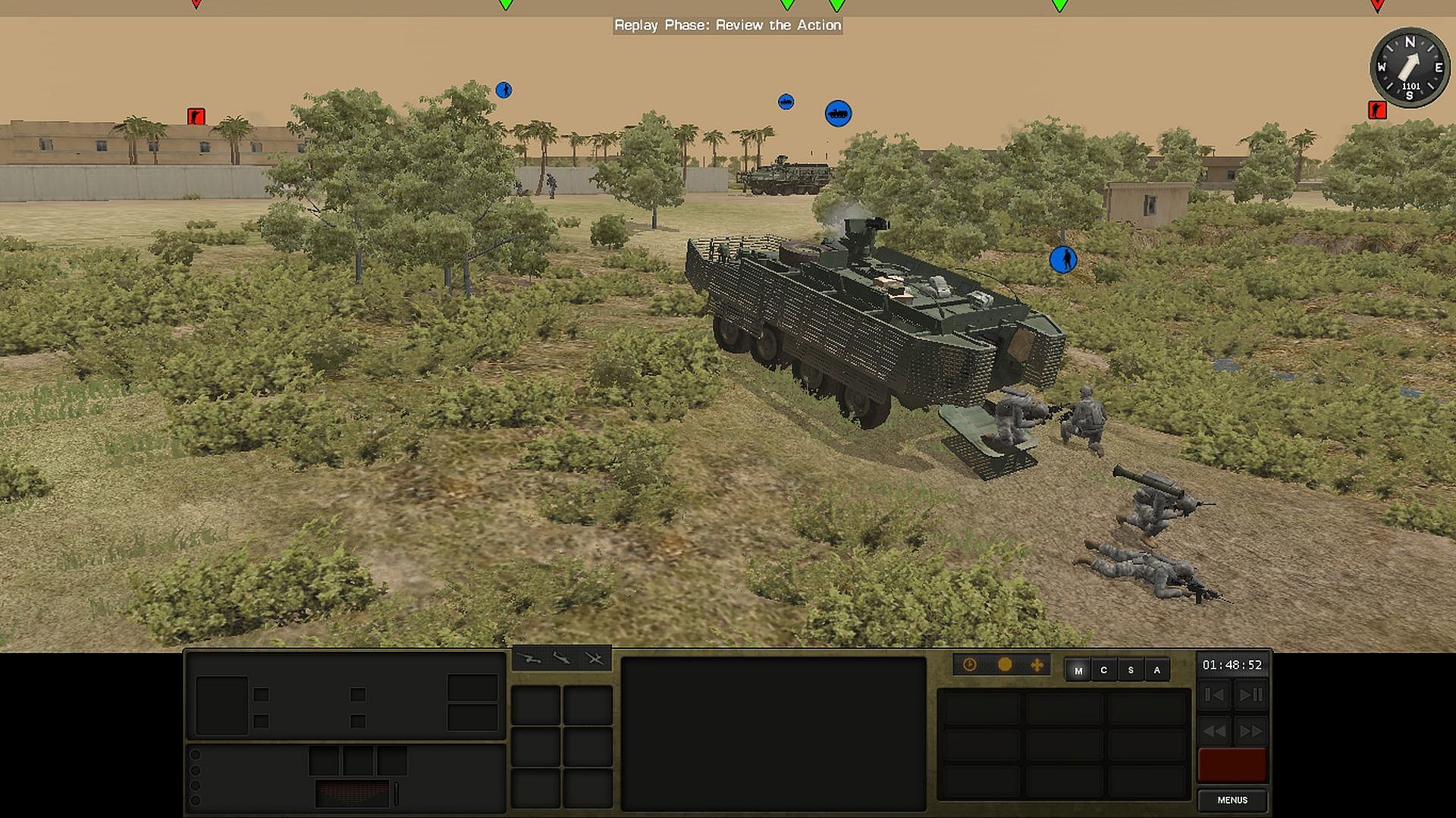
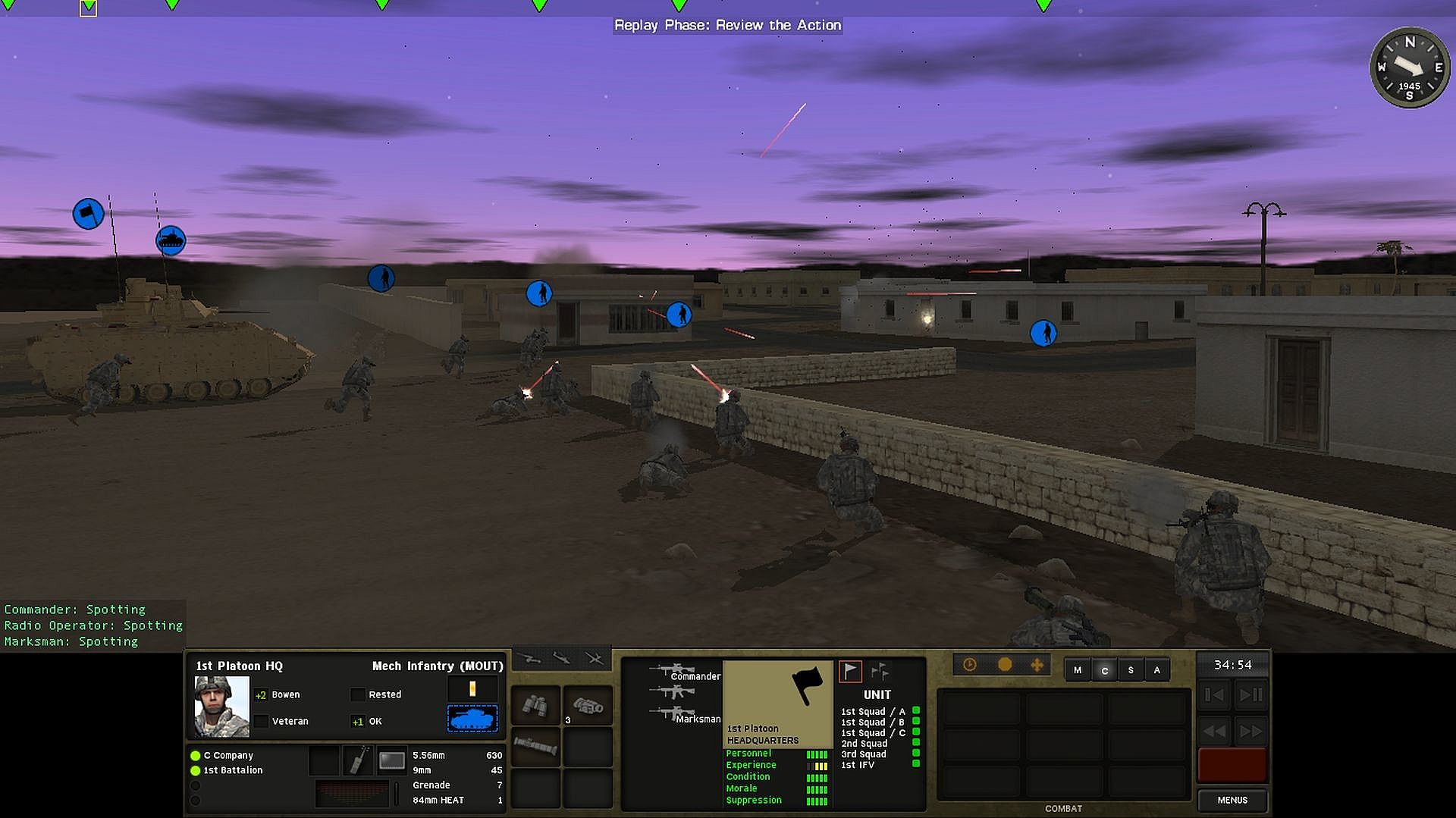
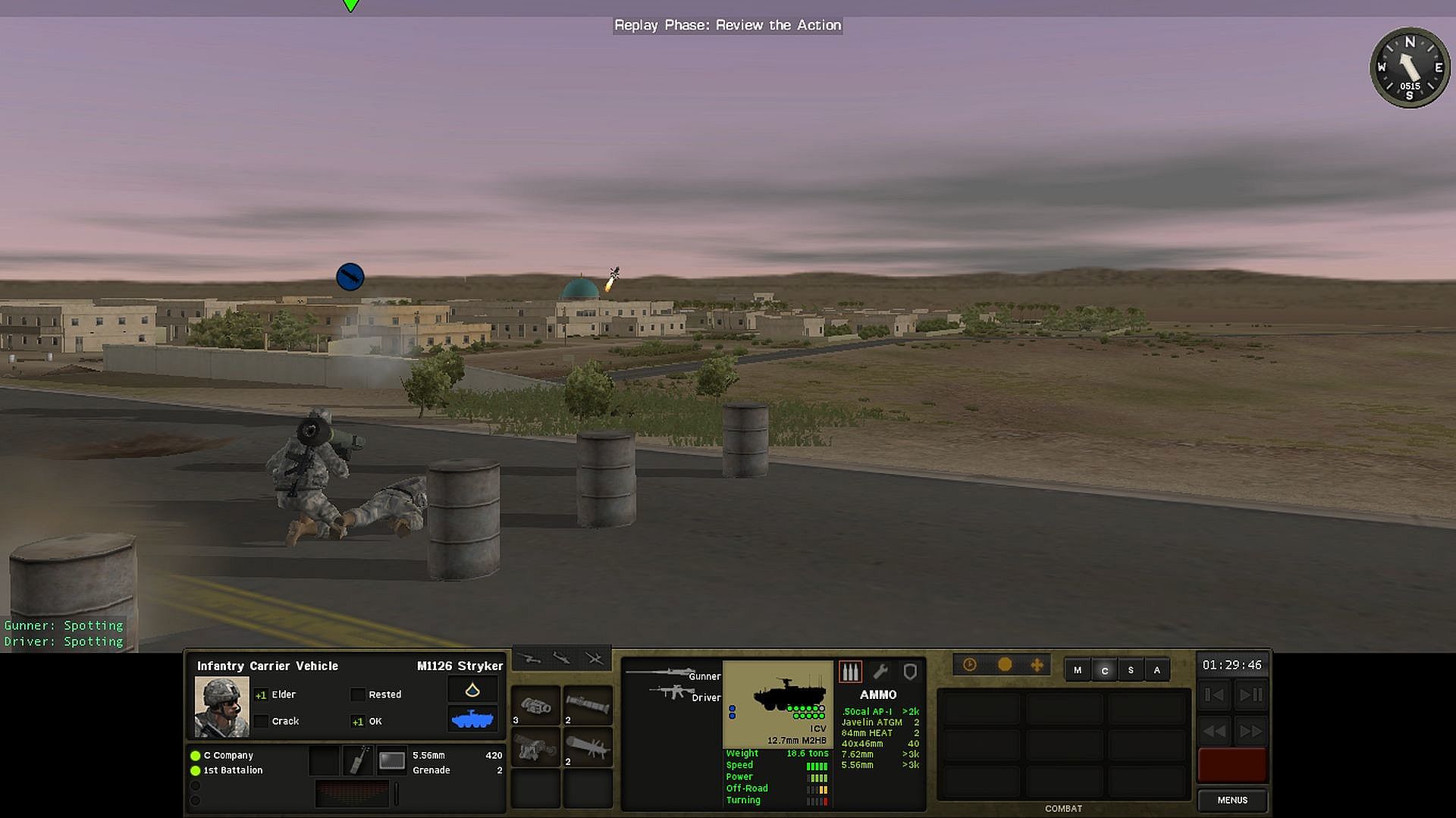
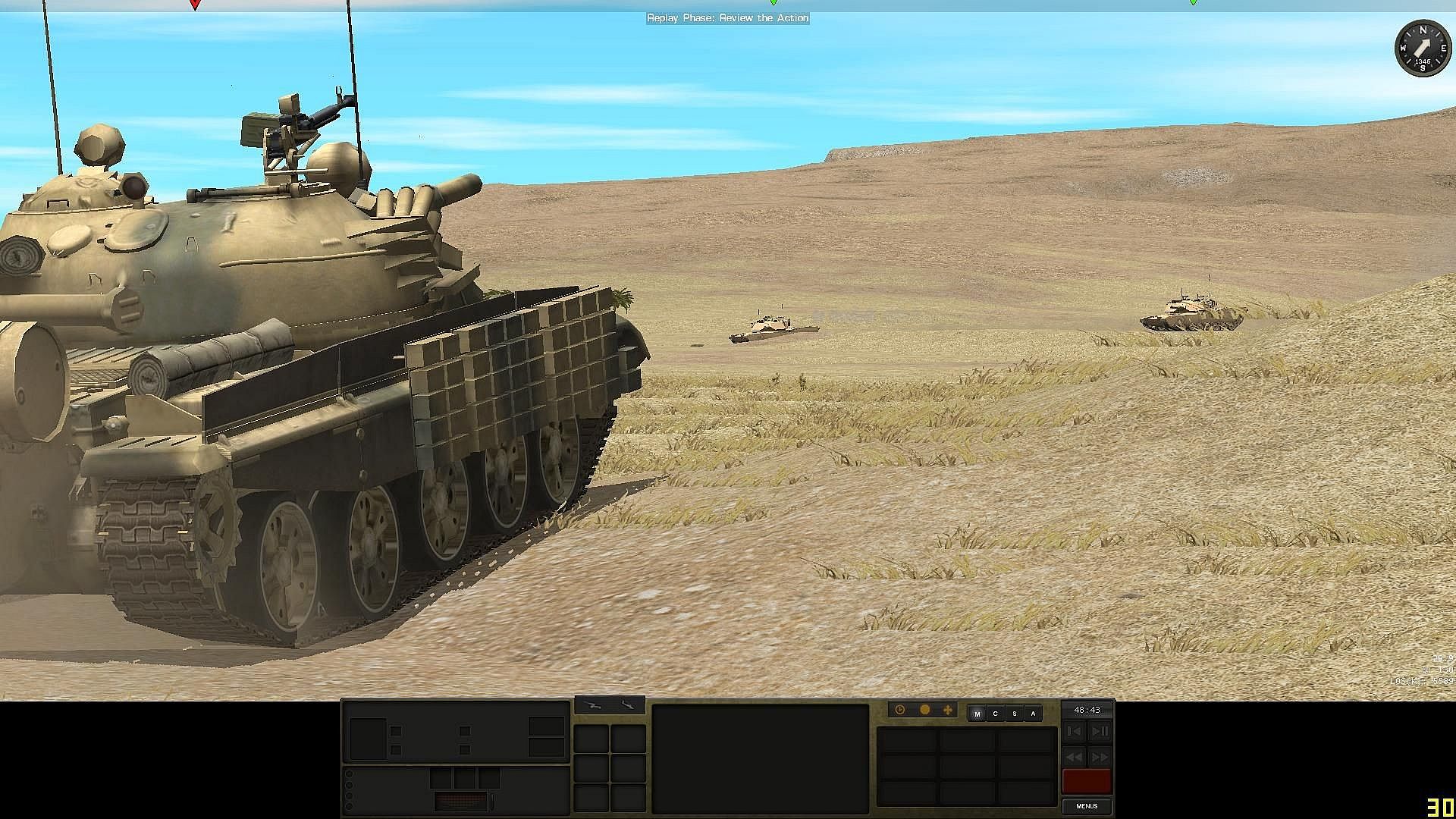
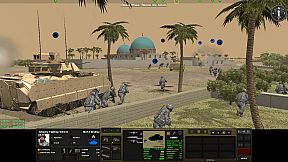
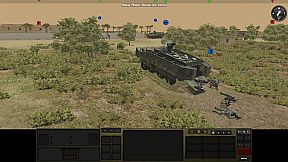
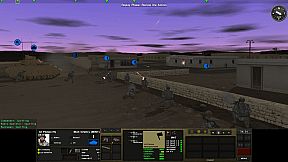
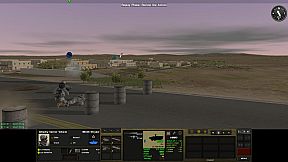
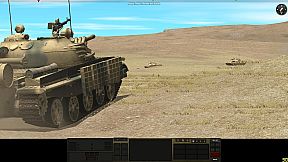
Combat Mission Shock Force 2 is a tactical wargame and simulation that places players in command of modern military forces during a hypothetical conflict in Syria. Developed as the latest entry in the long-running Combat Mission series, it focuses on battalion-level engagements between United States units and Syrian forces in an arid environment. The game emphasizes realistic modeling of units, terrain, and battlefield conditions rather than arcade-style action.
Gameplay
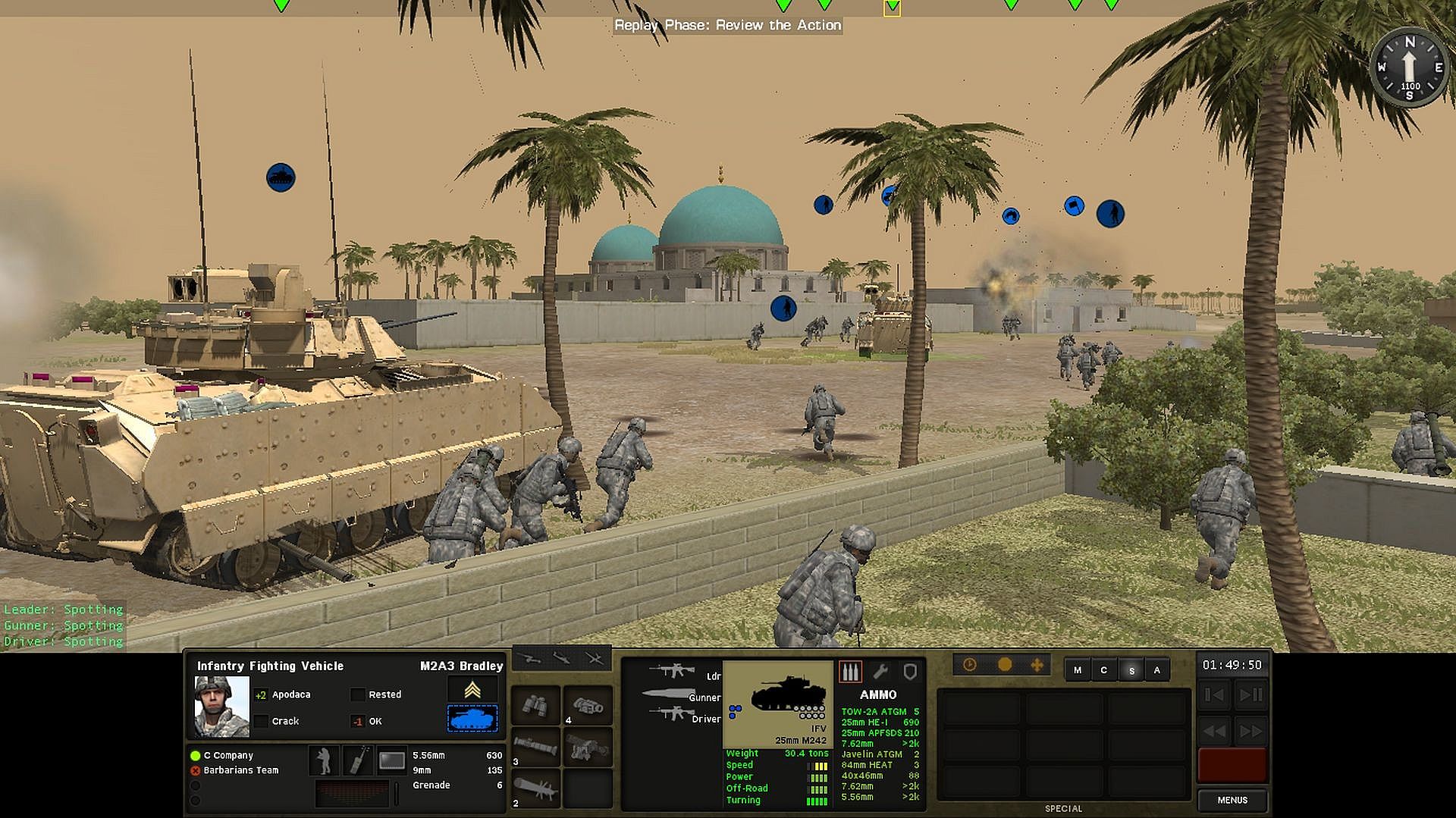
Core gameplay revolves around issuing orders to individual vehicles, teams, and squads in a true 3D environment. Units operate at a 1:1 scale with detailed 3D models that include articulated suspensions and animated features. Combat incorporates real-world physics for ballistics, armor penetration, and damage to specific vehicle subsystems. Weather, lighting, and ground conditions dynamically affect visibility, mobility, and weapon performance across dry sunny conditions or muddy stormy nights.
Soft factors such as morale, experience, and leadership influence individual soldiers and entire units. These elements determine how troops react under fire or in stressful situations. Relative spotting ensures each soldier maintains a unique view of the battlefield, contributing to realistic fog of war. Command and control systems manage information flow between units, while line of sight and line of fire calculations remain separate. Soldier posture affects spotting, cover, and engagement ability, and buildings feature simulated doors, windows, and floors for detailed urban fighting.
Advanced tactical AI models psychological states and individual qualities, producing genuine battlefield behavior without arbitrary hit points or precalculated tables. Formations match real-world organizations for both the United States Army and Syrian Army, including irregular forces, spies, IEDs, and VBIEDs. On-map mortars, mortar vehicles, drones, and anti-aircraft elements add layers to modern asymmetric threats.
Game Modes
Players complete missions through a combination of objectives in either Real Time mode or the WeGo hybrid turn-based system. WeGo lets commanders plan 60 seconds of actions before simultaneous execution, with options to review turns afterward. Both modes support single-player campaigns and scenarios as well as head-to-head play via PBEM, hotseat on one computer, or TCP/IP connections over LAN or the internet.
The Task Force Thunder campaign serves as the primary single-player experience alongside a smaller training campaign. Twenty standalone scenarios provide additional structured challenges. The Quick Battle system offers high replayability by letting players select or randomize forces, maps, and conditions for custom engagements. A full-featured editor supports creation of new maps, scenarios, and campaigns for personal use or sharing.
Units and Environment
United States forces include Stryker Brigade Combat Teams and Heavy Brigade Combat Teams equipped with 41 vehicles and 35 small arms and crew weapons. Syrian Army units feature infantry, mechanized, and armored formations in matching detail. Expansive maps use 1-meter resolution to support both close-quarters and long-range actions across complex terrain that includes waterways and bridges.
Lighting conditions vary by time of day and year, altering combat effectiveness. Terrain and weather interact with unit capabilities in ways that reward careful planning. The simulation tracks crew responsibilities, vision blocks, and sensors to produce authentic performance differences between vehicle types.
Is It Worth Playing?
Combat Mission Shock Force 2 delivers a highly detailed tactical simulation suited to players who value authenticity in modern warfare strategy. It supports both solo campaigns and multiplayer matches through established systems like PBEM. The game launched in 2020 and maintains Very Positive reception on its primary platform, with 80 percent of 619 user reviews rated positively. Those seeking realistic command of combined arms forces in asymmetric conflicts will find substantial depth in its mechanics and scenarios. Newcomers may face a learning curve due to the emphasis on planning and simulation accuracy, yet the hybrid play options and editor provide accessible entry points alongside long-term replay value.