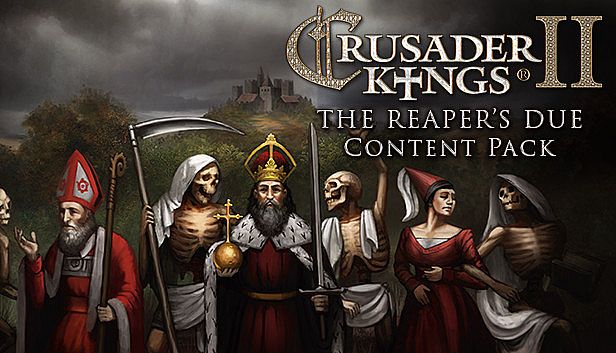











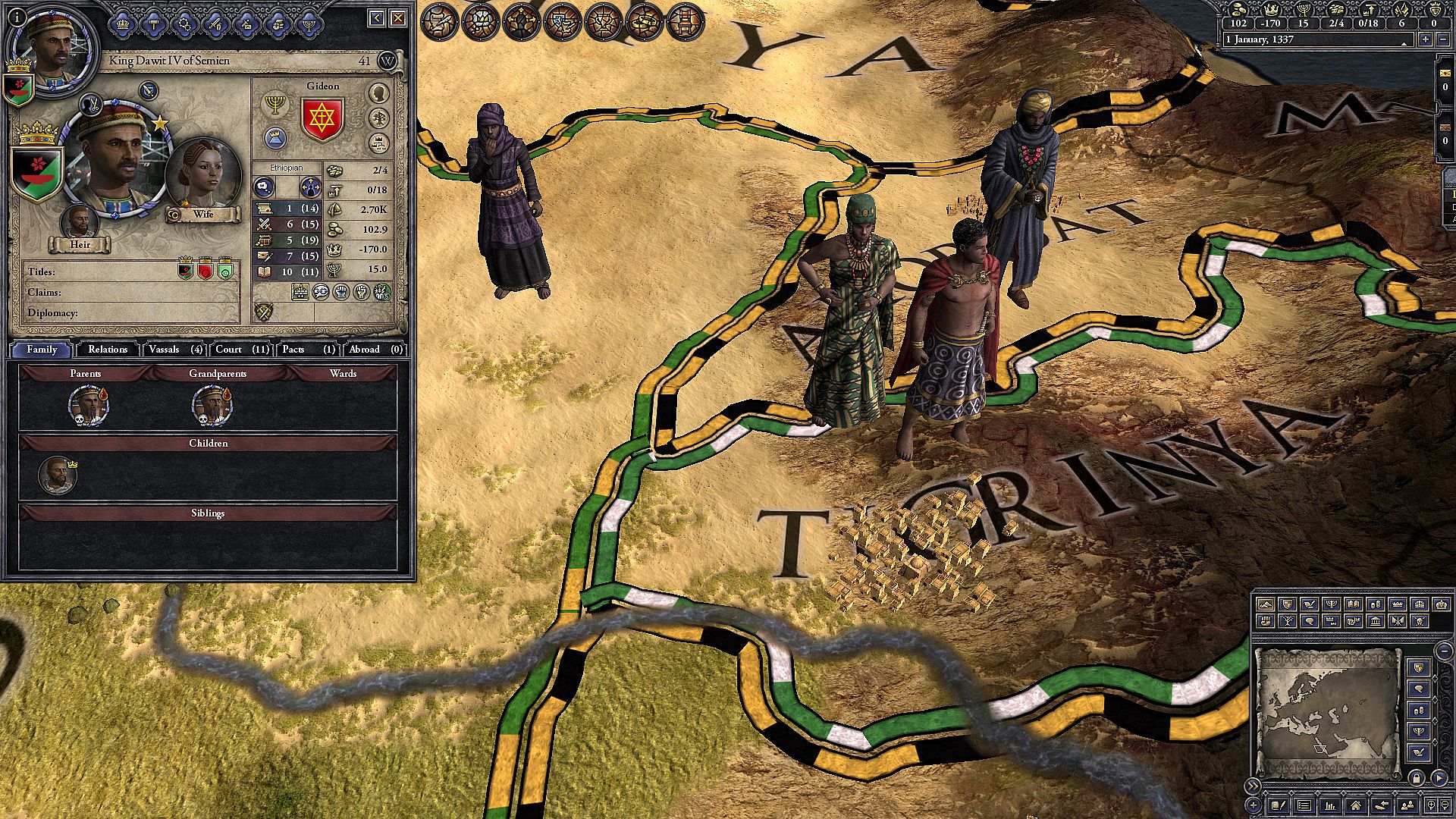
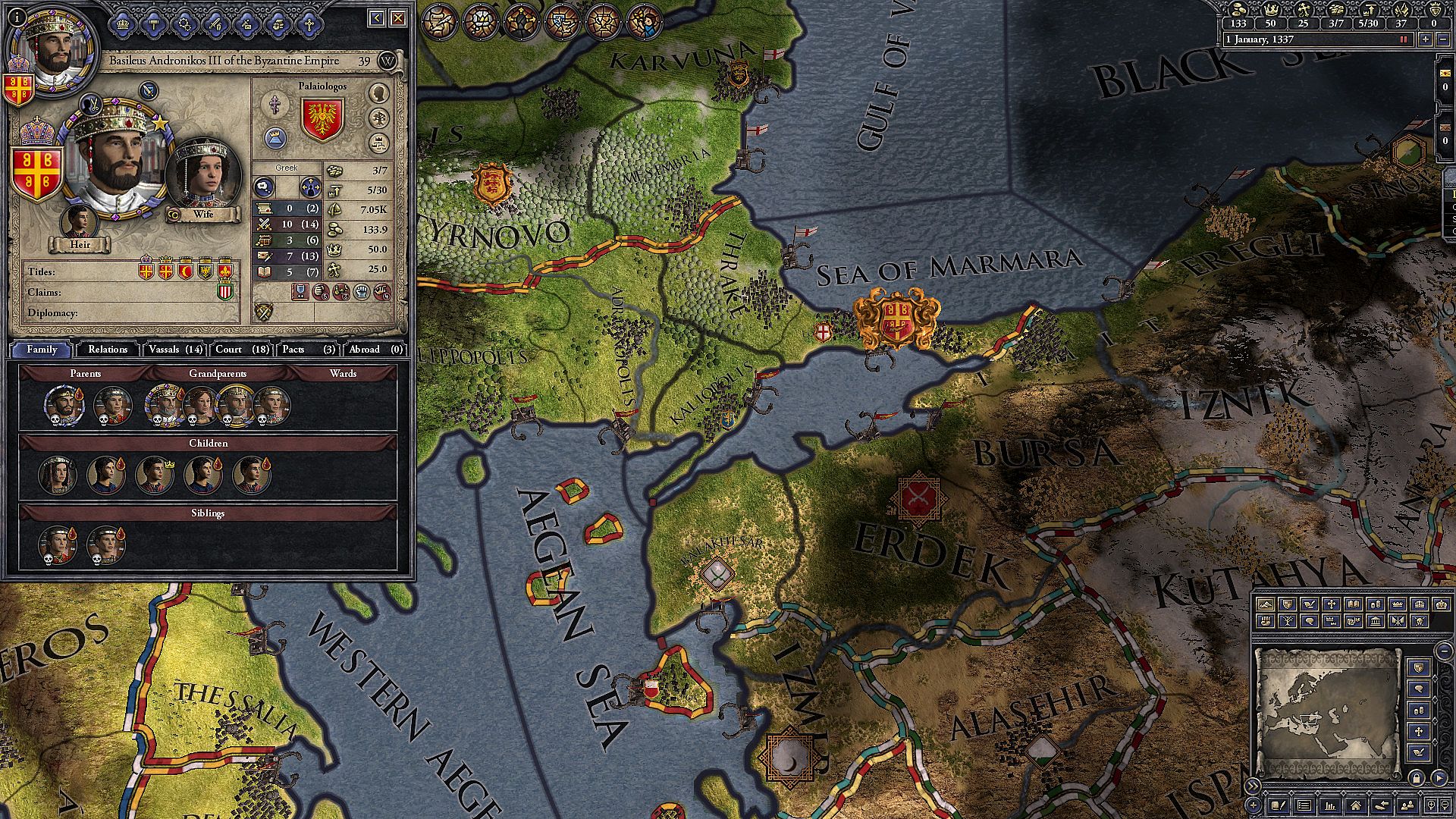
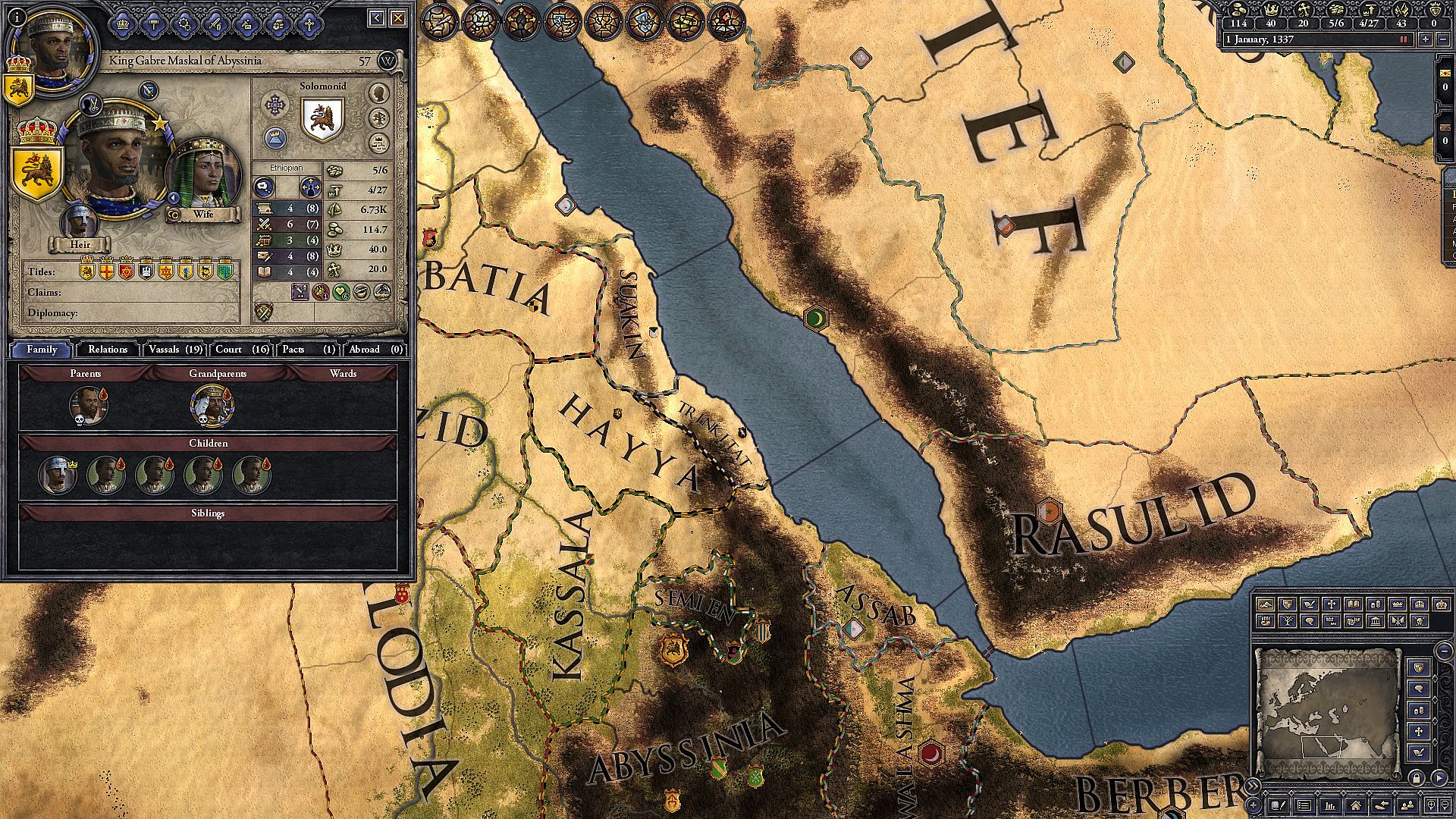
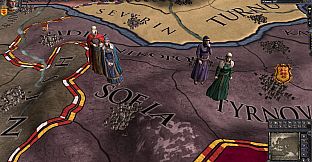
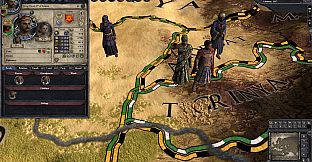
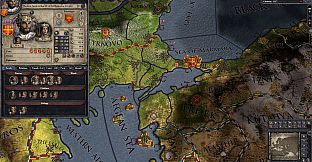
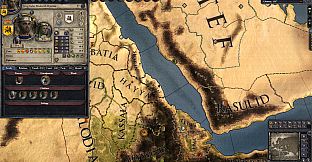
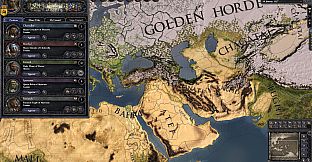
Crusader Kings II: The Reaper's Due Content Pack adds visual customization options to the core grand strategy experience of Crusader Kings II. This strategy, RPG, and simulation title for PC places players in control of medieval dynasties across centuries of European and surrounding history. The pack specifically introduces new character portraits for east African provinces along with clothing styles drawn from the late Byzantine Empire. Fifteen additional models appear for Eastern and African councilors, allowing rulers to better represent diverse regions in their courts.
Gameplay
Players manage a dynasty through generations, balancing personal character attributes such as diplomacy, martial skill, stewardship, intrigue, and learning. These traits influence decisions in governance, warfare, and court life while shaping how vassals and family members respond. Succession laws determine inheritance, often leading to complex family politics and the need to secure alliances through marriage or strategic titles. Province development, technology advancement, and religious authority form ongoing priorities that affect long-term stability and expansion.
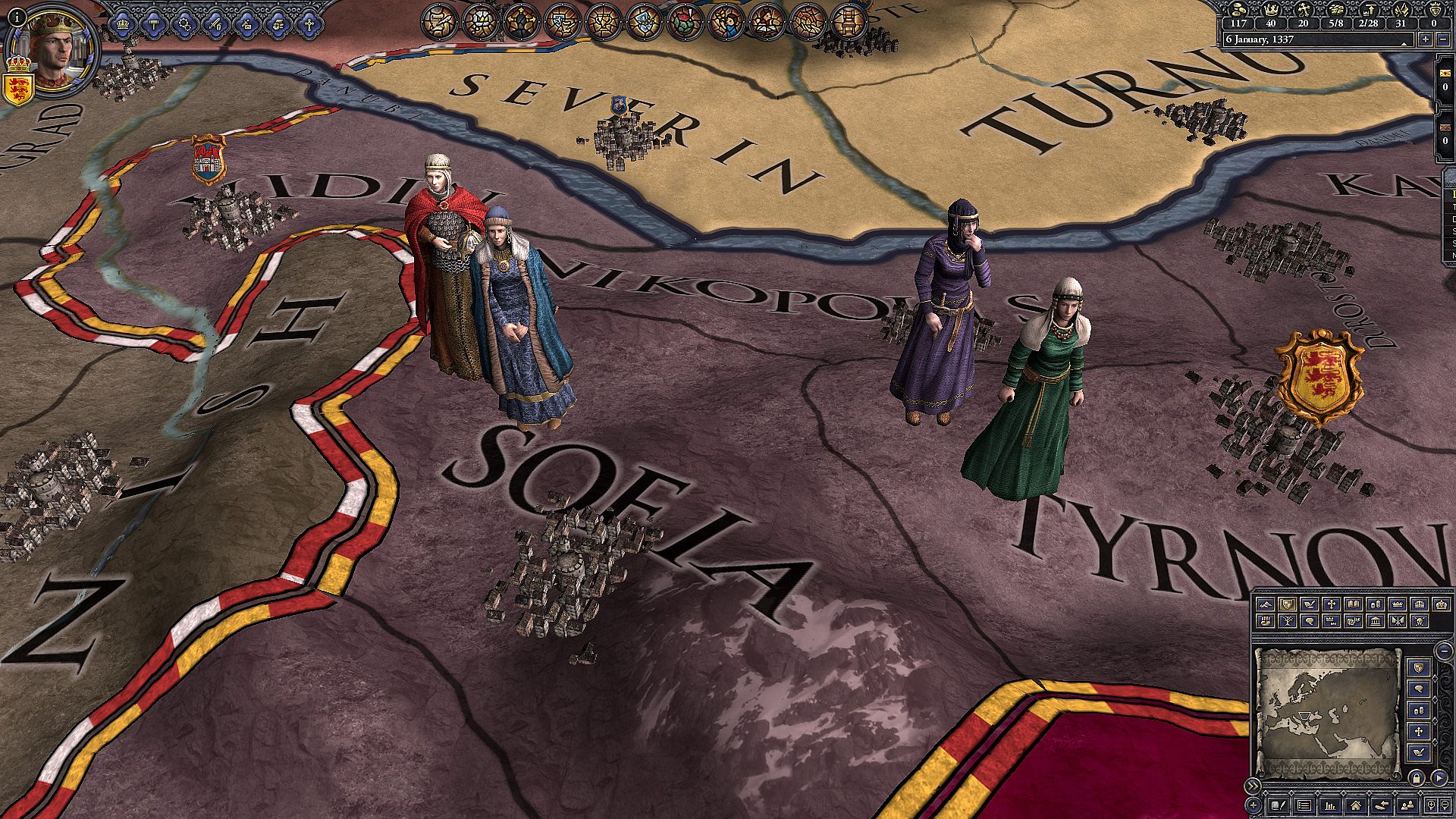
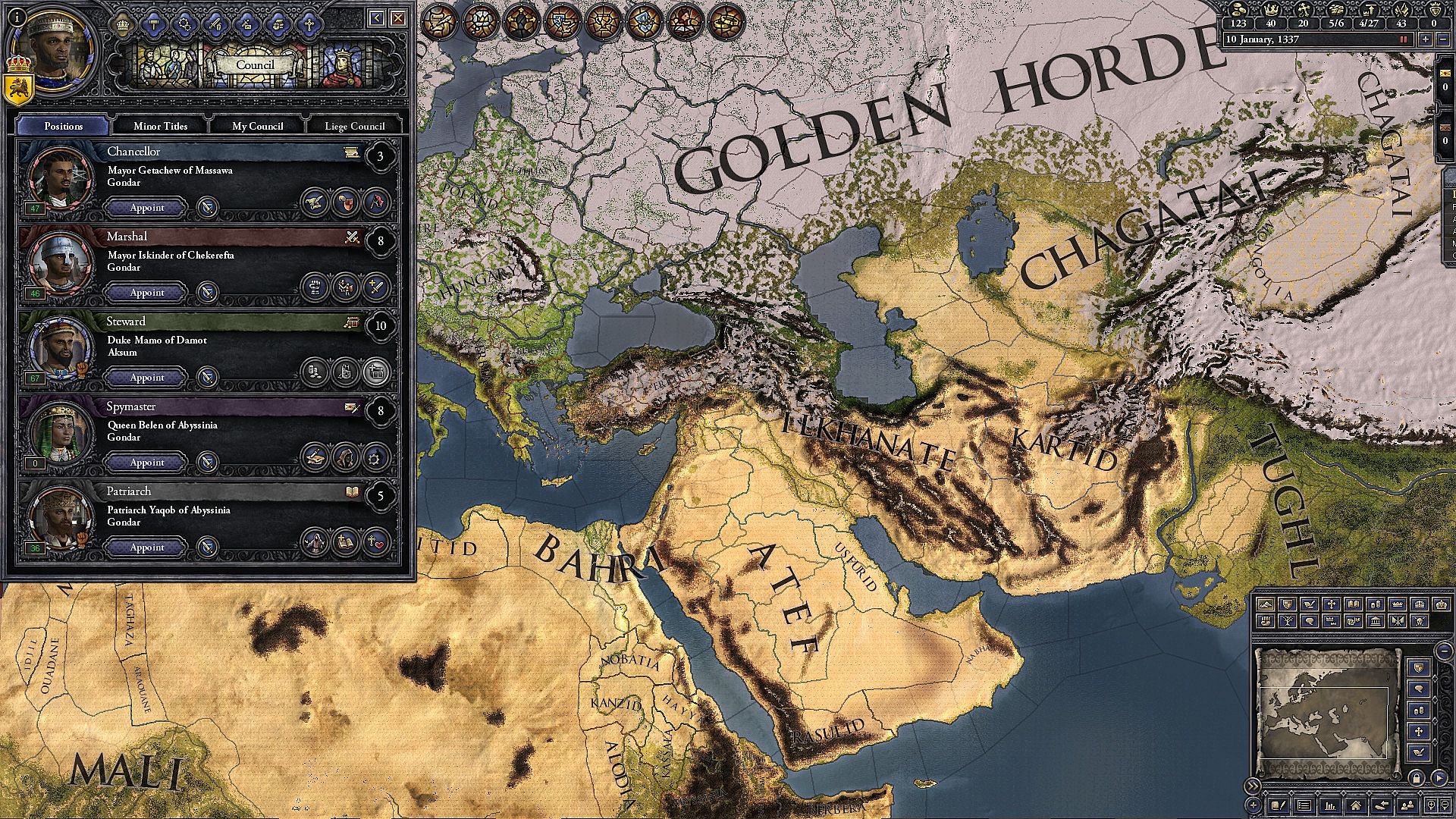
Court interactions drive much of the depth, with council positions assigned to capable characters who carry out tasks like fabricating claims or training troops. Events tied to health, plots, and rivalries create branching outcomes based on decisions and hidden factors. The addition of East African portraits and late Byzantine clothing helps differentiate characters from those regions, while the new councilor models provide visual variety during diplomatic and administrative scenes.
Game Modes
The experience centers on single-player sessions where one dynasty is guided from a chosen start date through historical periods up to the mid-15th century. Different starting characters and realms allow varied approaches, from consolidating power in fragmented areas to navigating larger empires. Multiplayer supports competitive or cooperative play with others managing their own dynasties in the same world.
Progression occurs through continuous management rather than discrete levels, with success measured by dynasty prestige, territorial control, and survival across generations. The content pack integrates directly into these sessions by updating visuals for relevant characters without altering core rules or objectives.
Visual Enhancements and Regional Focus
East African portrait options bring distinct facial features and attire suited to provinces in that area, improving representation during campaigns involving trade routes or distant holdings. The late Byzantine clothing pack supplies period-appropriate garments for characters tied to the Eastern Roman legacy, adding authenticity to interactions around Constantinople and its successors. Eastern female models and African female and male model packs expand the range of councilor appearances, making administrative appointments more visually consistent with cultural backgrounds.
These elements layer onto the existing character system, where genetics, culture, and religion already influence appearance and behavior. Rulers focused on African or Byzantine spheres benefit from the added detail during events, marriages, and council meetings.
Is It Worth Playing?
The base game remains available at no cost and continues to receive players years after release, with strong overall reception reflected in tens of thousands of reviews. The content pack itself carries mixed feedback from a smaller number of users, primarily due to its limited scope as a cosmetic addition. Those building campaigns in East Africa or the Byzantine sphere gain the most from the new portraits, clothing, and models, which enhance visual consistency without changing mechanics.
Players who enjoy long-term dynasty simulation, character-driven decisions, and historical sandbox play will find the core systems rewarding. The pack serves as a targeted upgrade for visual variety rather than a transformative expansion, making it a consideration mainly for owners already invested in the base title and interested in those specific cultural representations.