







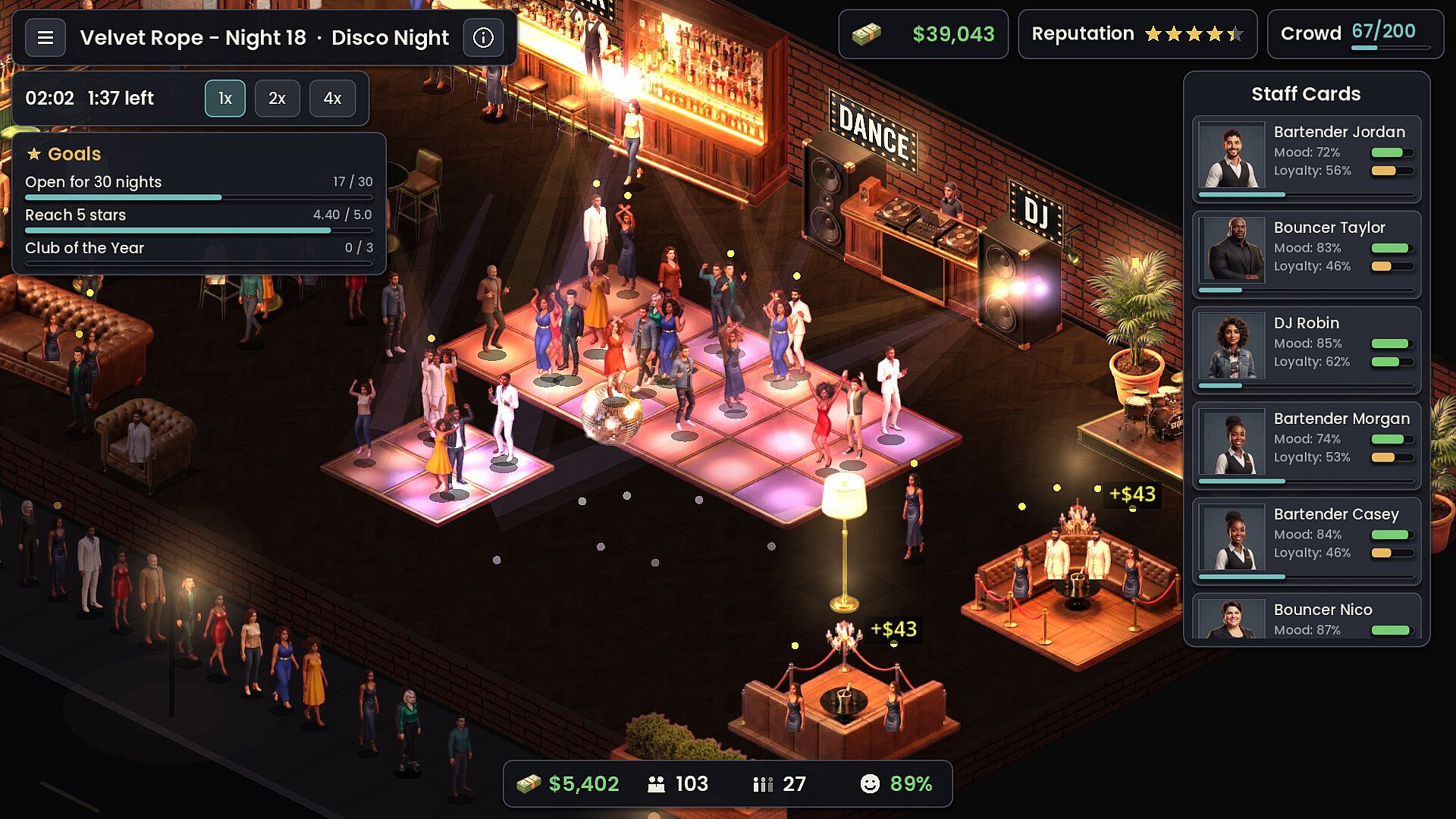




Velvet Rope: Nightclub Manager is a strategy and simulation game that puts players in charge of building and operating a nightclub from the ground up on PC. The experience blends isometric construction with real-time management of nightly operations, staff dynamics, and customer flow to grow a modest venue into the city's premier destination.
Gameplay
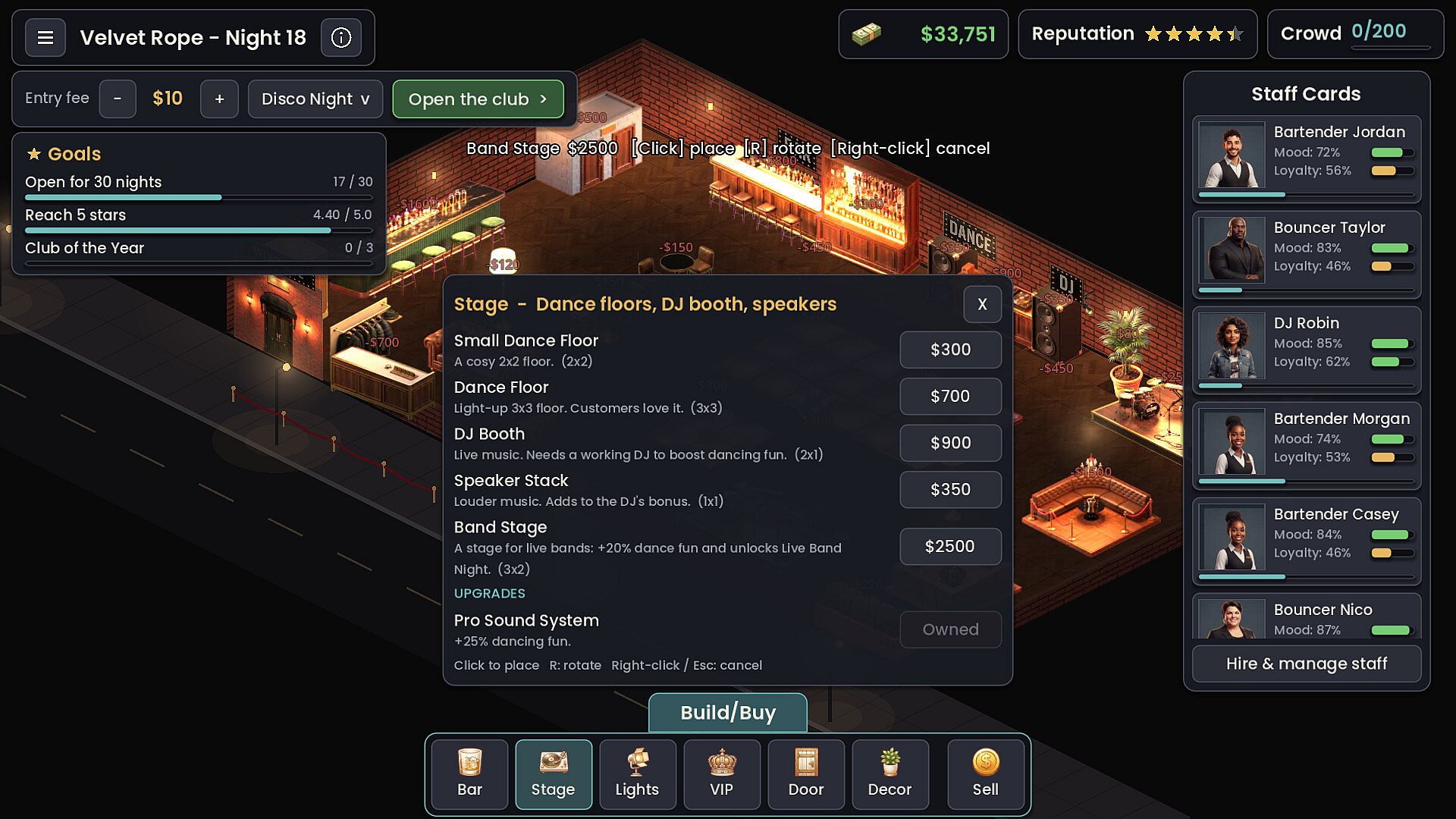
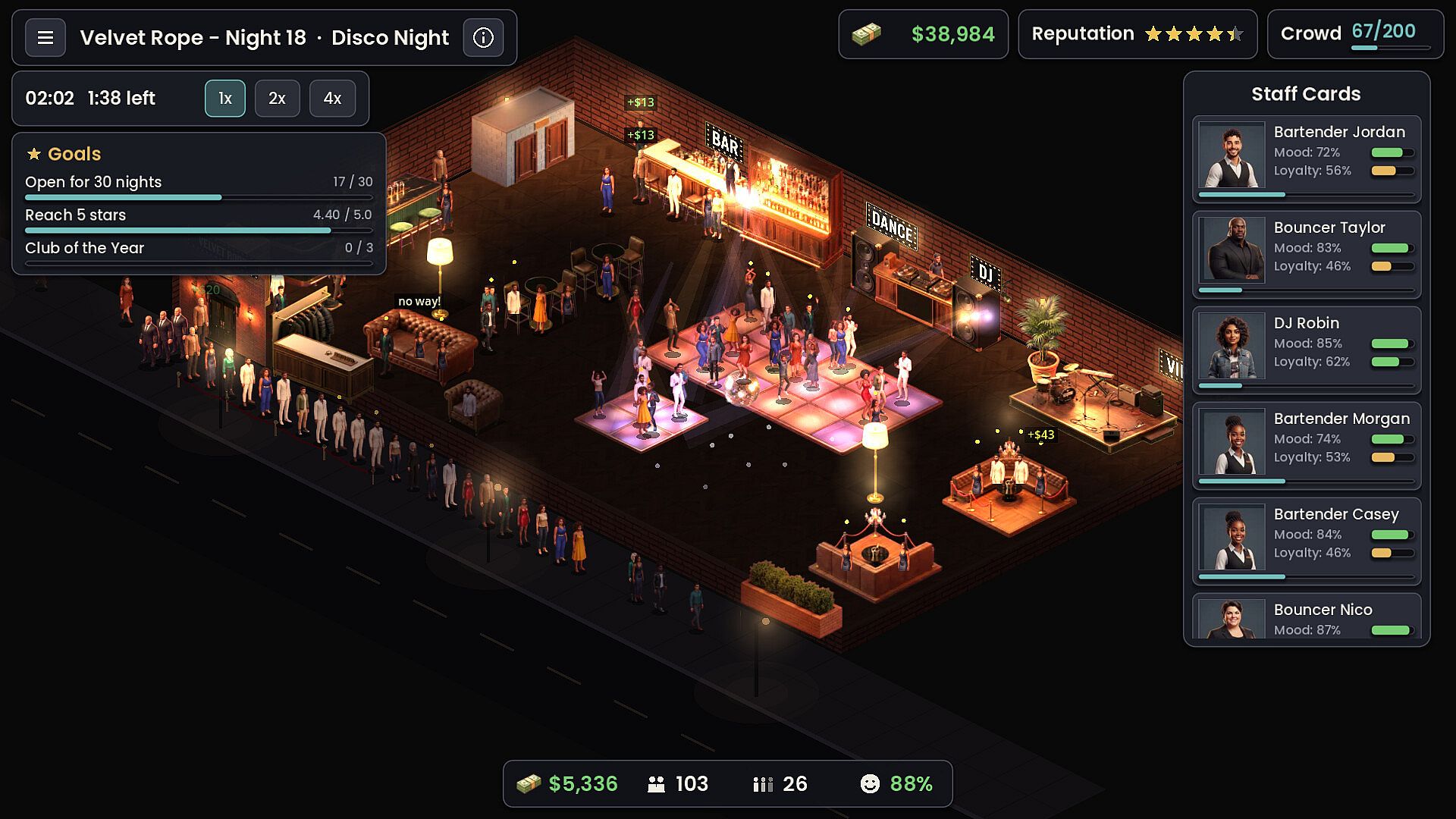
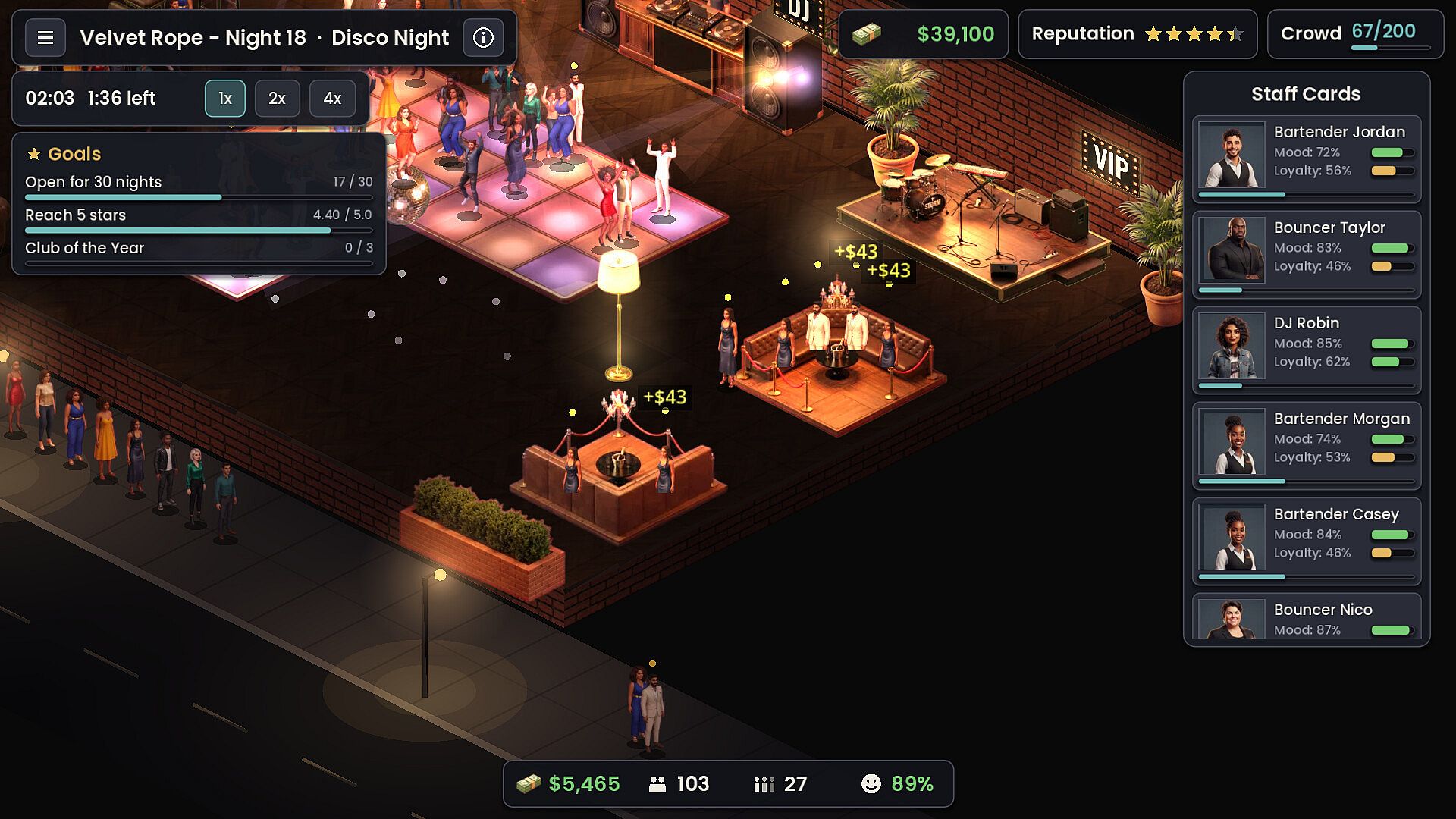
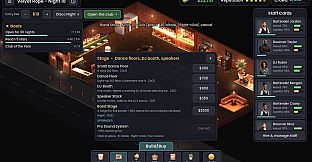
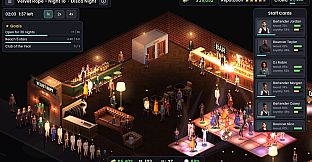
Players begin with a basic setup consisting of one bar, a dance floor, a toilet block, a bartender, and a bouncer. The core loop centers on expanding and customizing the space on an isometric grid. Furniture and fixtures such as additional bars, dance floors, a DJ booth, a live band stage, VIP booths, sofas, and a photo booth can be placed and rotated freely to optimize layout and guest movement.
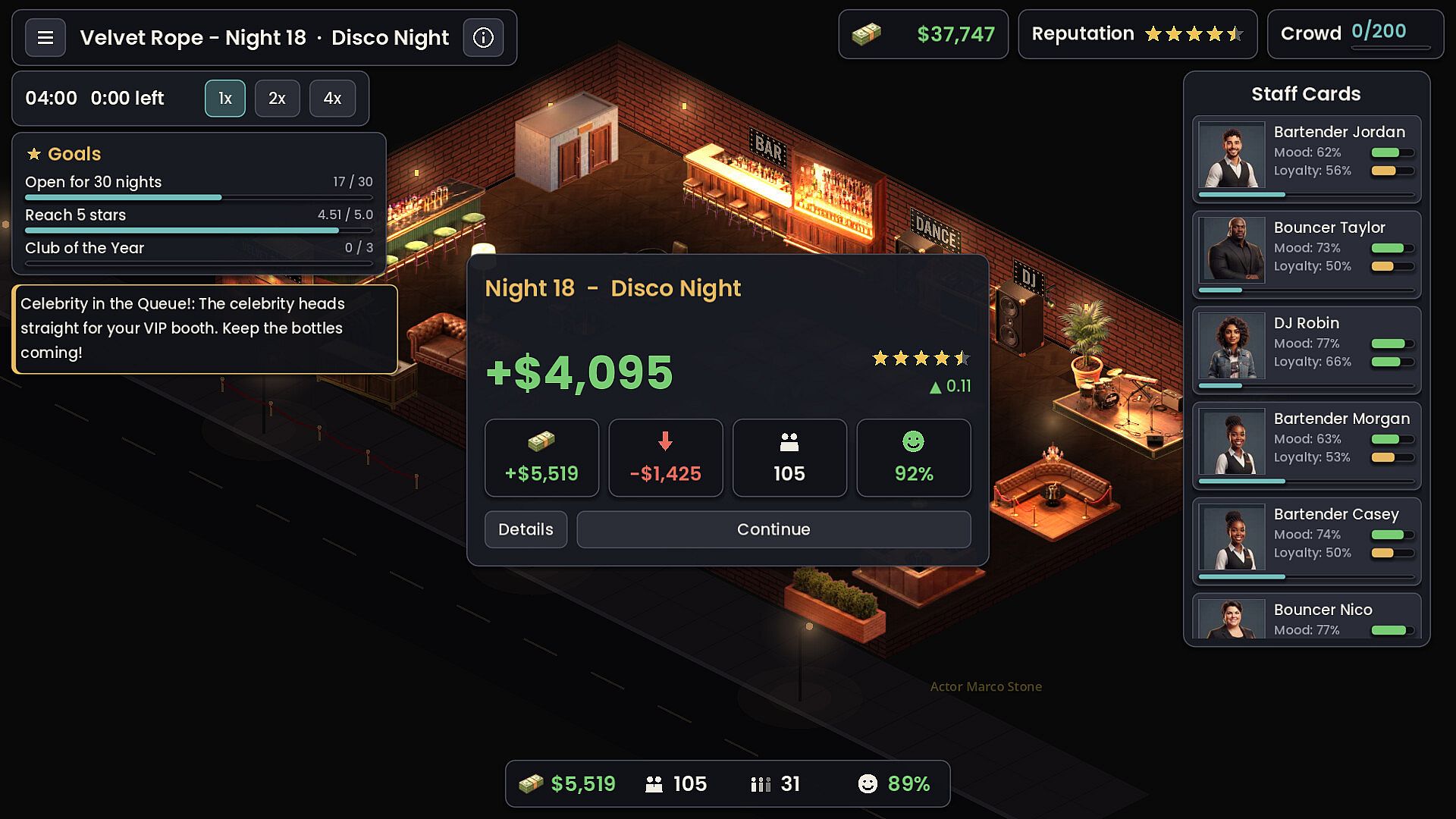
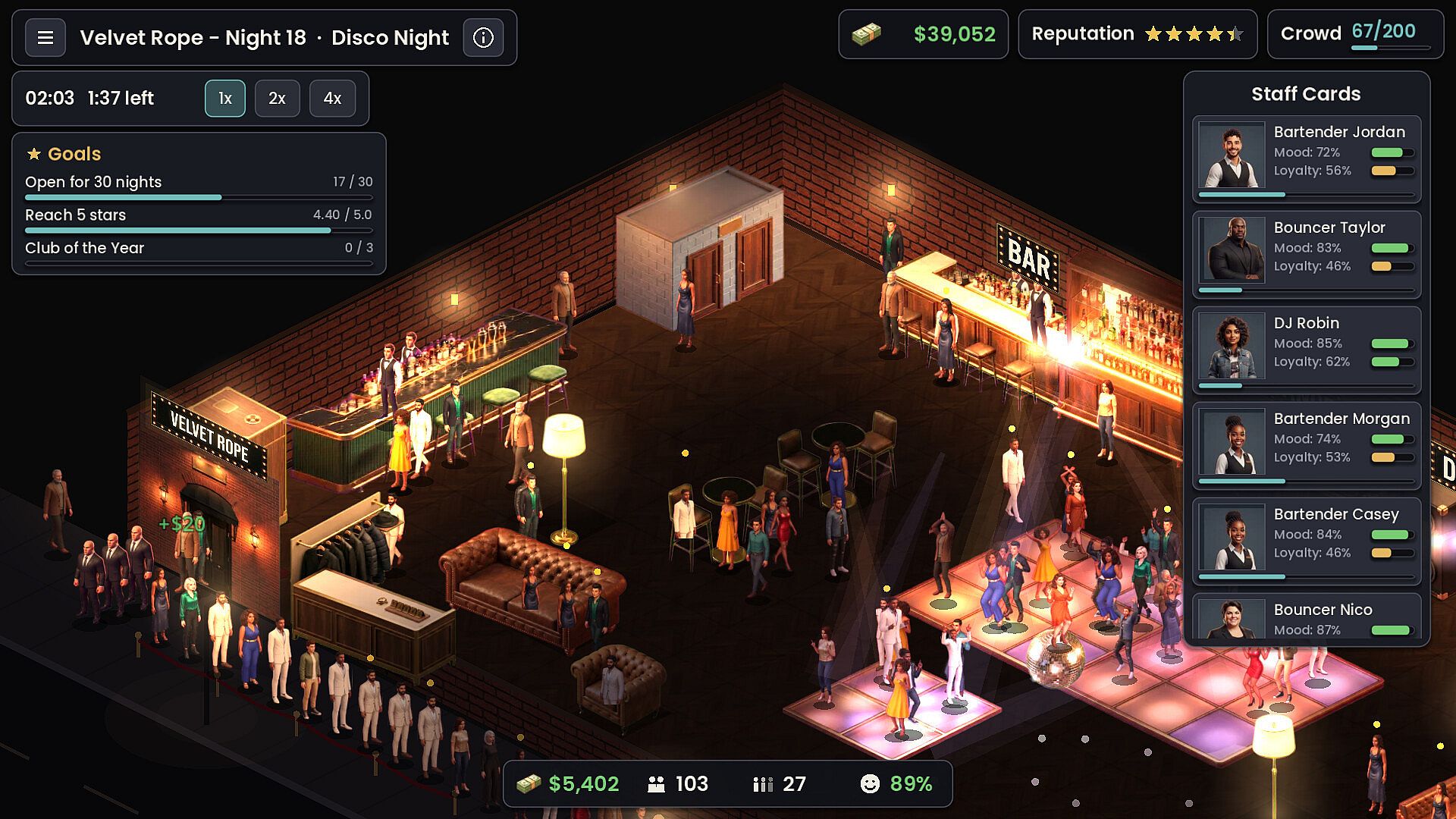
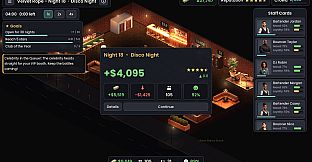
When space runs out, the club expands by breaking through to adjacent properties or claiming an old warehouse. Each night runs on a compressed five-minute cycle during which guests arrive at the velvet rope, pay entry, then engage in dancing, drinking, socializing on sofas, or using facilities before departing. Managers monitor revenue, queue length, and overall crowd mood in real time, with options to accelerate time or pause to address bottlenecks.
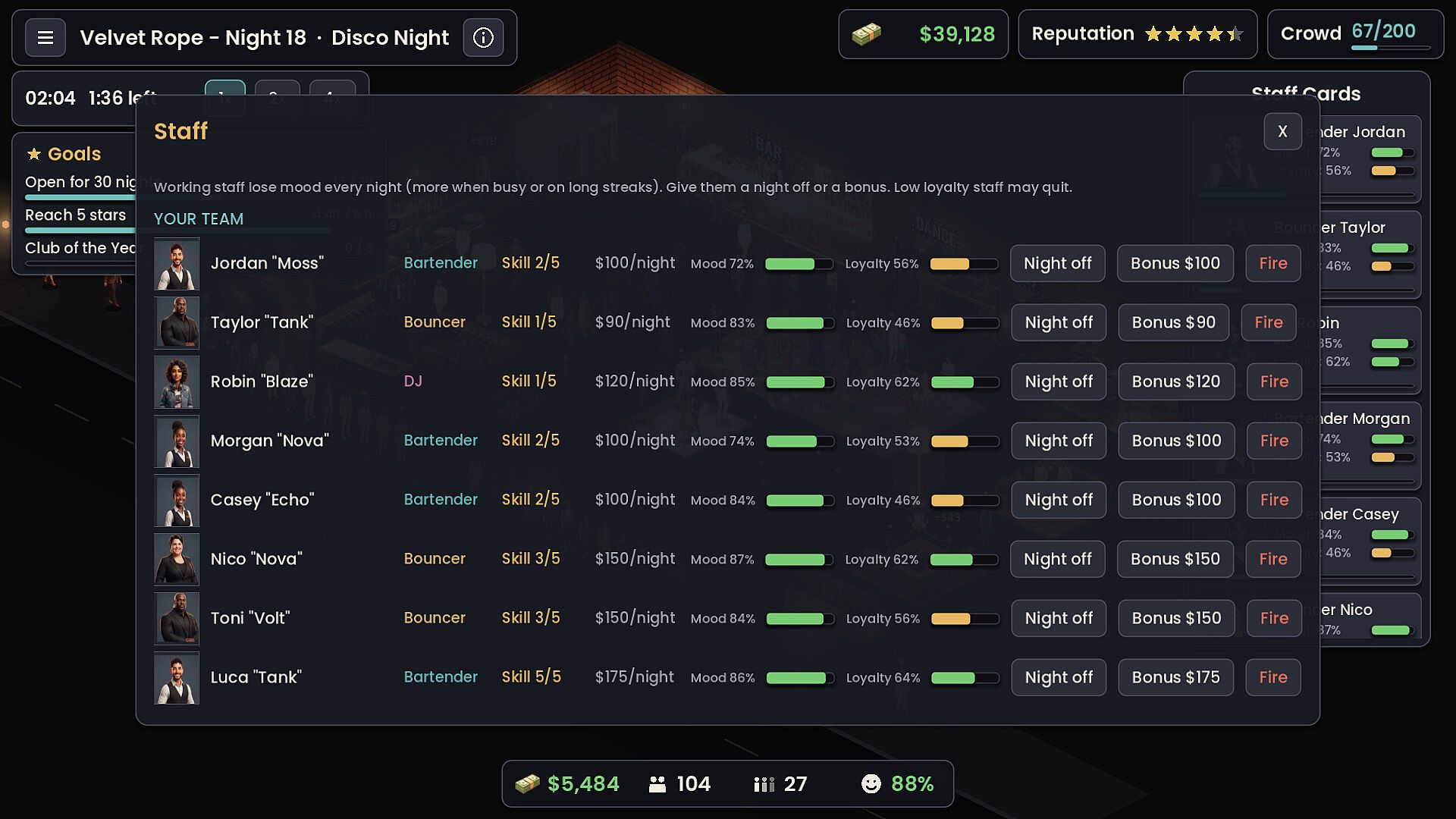
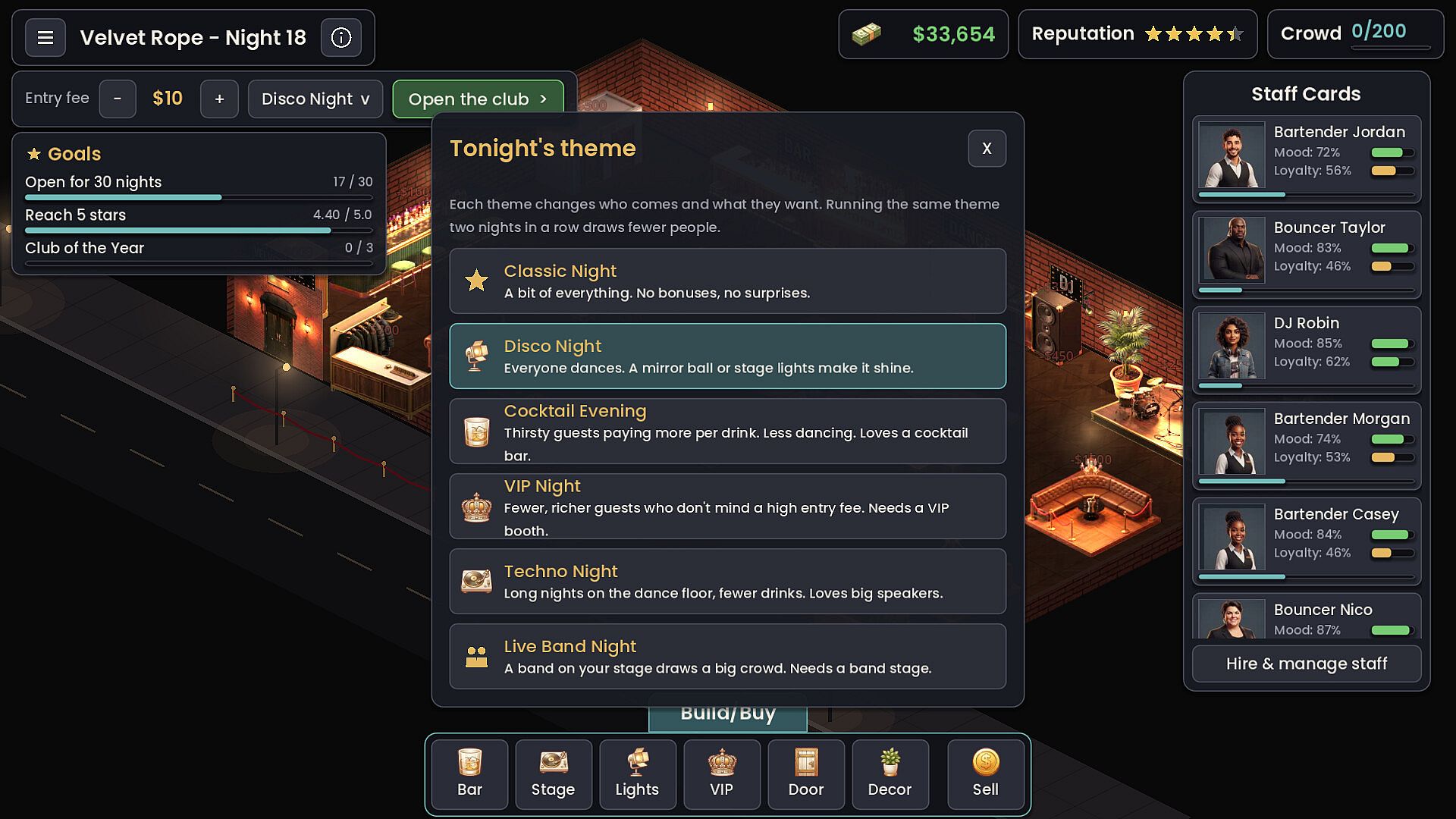
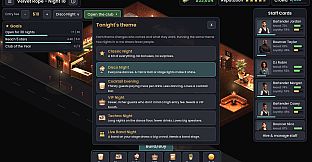
Staff management adds another layer. Bartenders, DJs, and bouncers possess individual skill, mood, and loyalty ratings. Overworked employees slow down and risk quitting, so players must schedule nights off, issue bonuses, and recruit stronger talent as reputation improves. Theme nights introduce variety by attracting distinct crowds with specific preferences, requiring tailored setups and preventing repetition of the same theme on consecutive evenings.
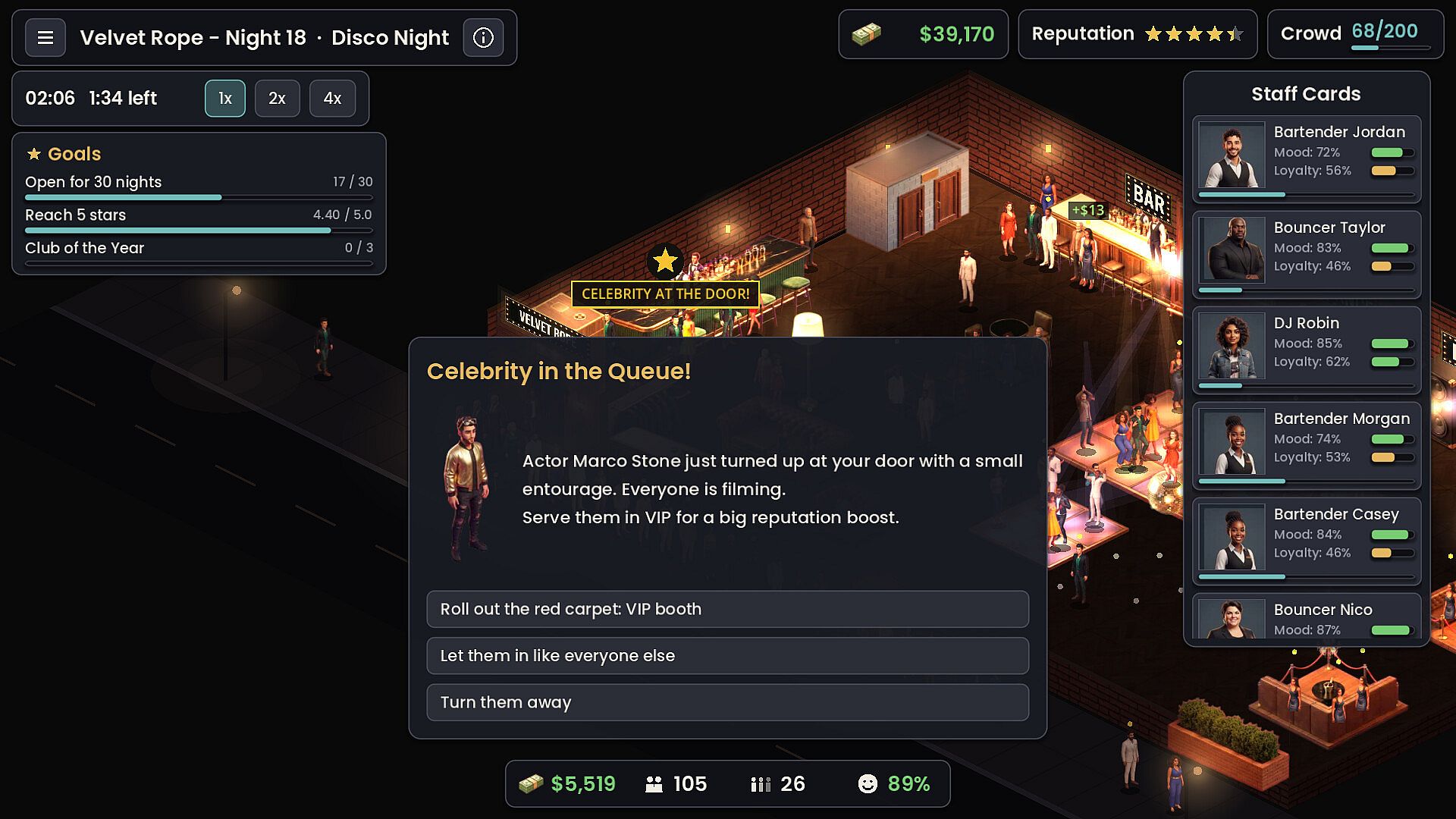
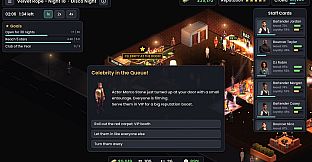
Door events introduce unpredictable challenges, from demands for protection money and sudden fights to high-profile arrivals like pop stars or music critics. Outcomes depend on bouncer effectiveness and the club's growing reputation, with each decision carrying tangible costs.
Game Modes
The game offers three difficulty levels that adjust the pace of growth, staff demands, and event frequency while preserving the same core systems. A guided tutorial covers the first night to introduce building, staffing, and nightly flow. Three separate save slots support multiple playthroughs or experimentation with different expansion strategies.
Progression revolves around 22 goals that unlock new furniture pieces, upgrades, and themes, culminating in the Club of the Year objective. Six distinct theme nights each draw unique guest types and spending patterns, encouraging players to adapt layouts and staffing accordingly. Eleven scripted door events further shape each run through branching consequences tied to reputation and security choices.
Building and Expansion
Construction uses 20 distinct furniture items alongside nine upgrades and two major club expansions. The warm lounge aesthetic features brick walls, brass accents, velvet furnishings, and realistic lighting without any neon elements. Every placement decision influences guest paths, satisfaction, and revenue potential on the grid-based floor plan.
Expansion opportunities reward careful financial management, as early earnings fund larger venues that support bigger crowds and more complex theme nights. The isometric perspective allows precise control over room orientation and traffic flow, turning layout planning into a central strategic element.
Is It Worth Playing?
This single-player simulation suits players who enjoy methodical building combined with ongoing operational oversight. The short nightly cycles keep sessions focused, while staff mood and loyalty systems add meaningful long-term decisions. Those drawn to management sims with clear progression goals and light event variety will find a self-contained experience that rewards attention to detail over rapid action.
The three difficulty options and multiple save slots provide flexibility for different play styles, from relaxed growth to tighter resource constraints. With no multiplayer elements or ongoing seasonal content, the game delivers a complete, offline package centered on transforming a small club into a top venue through consistent management choices.











