


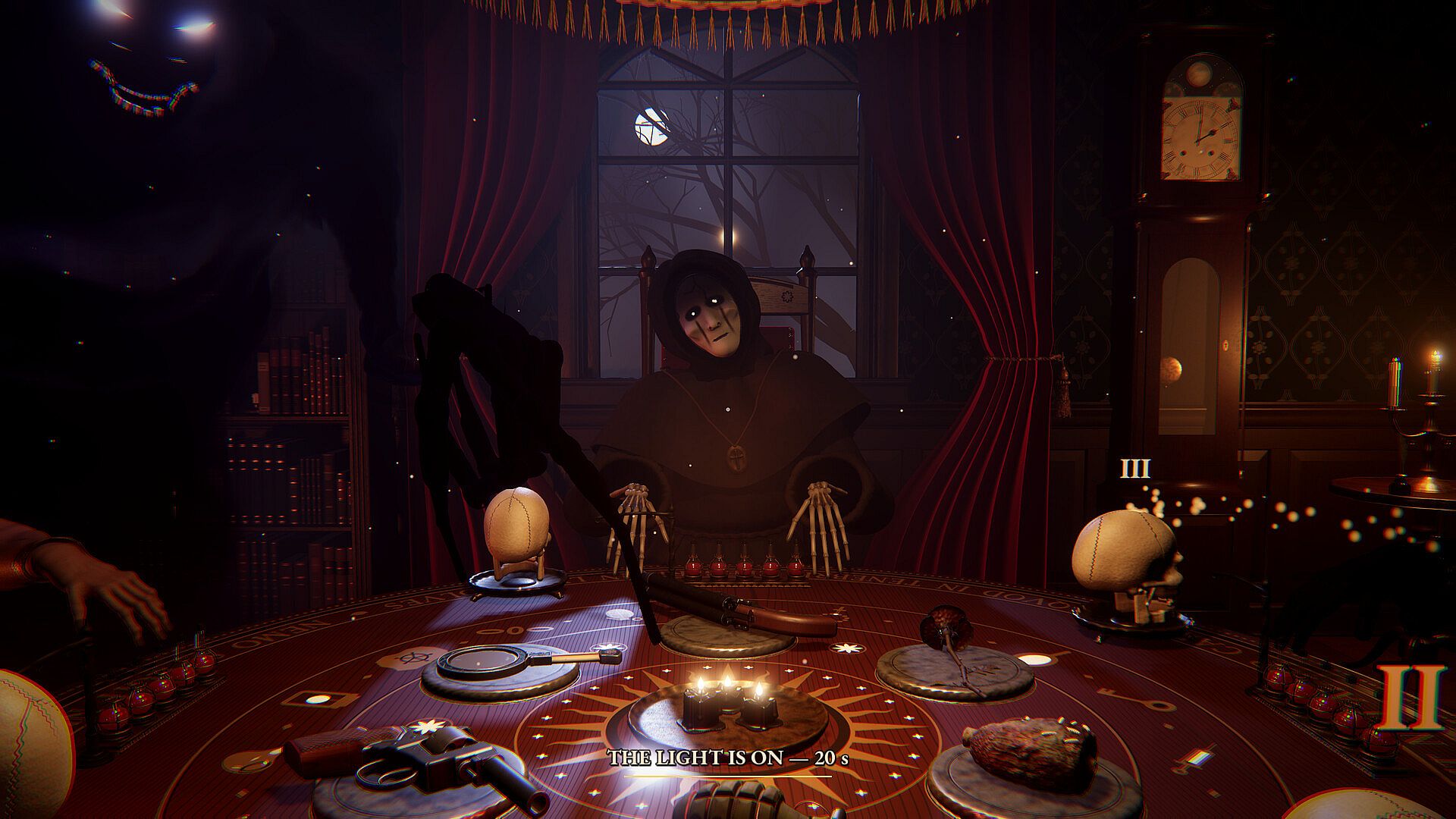

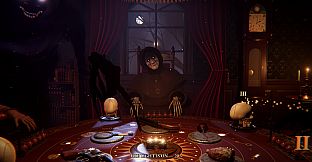
The Third Seal is a first-person psychological horror strategy game set entirely around a table in a Victorian parlor. Players compete in tense duels that blend deduction, bluffing, and risk management, with the goal of claiming three seals while eliminating opponents through clever object selection and misdirection.
Gameplay
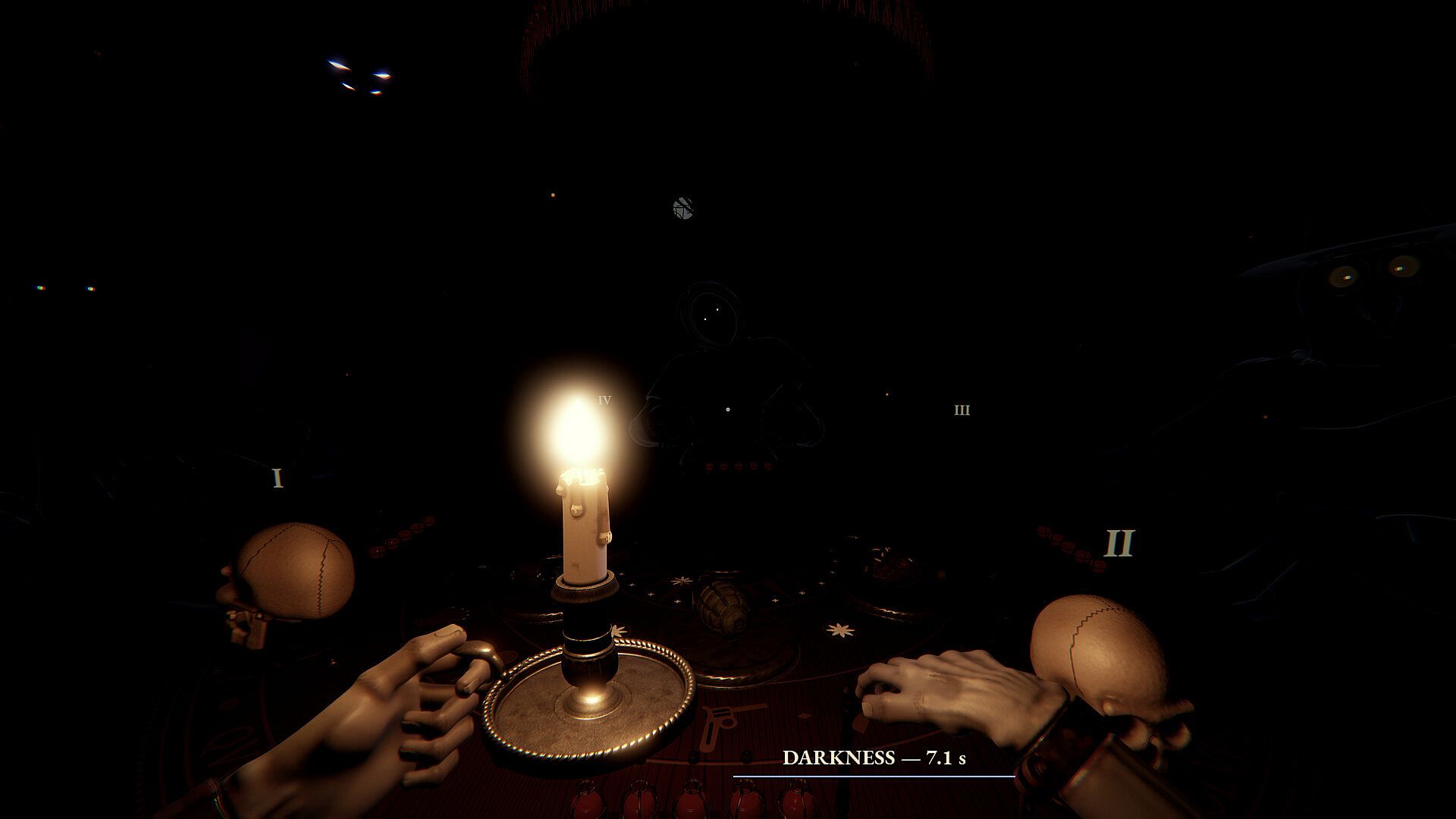
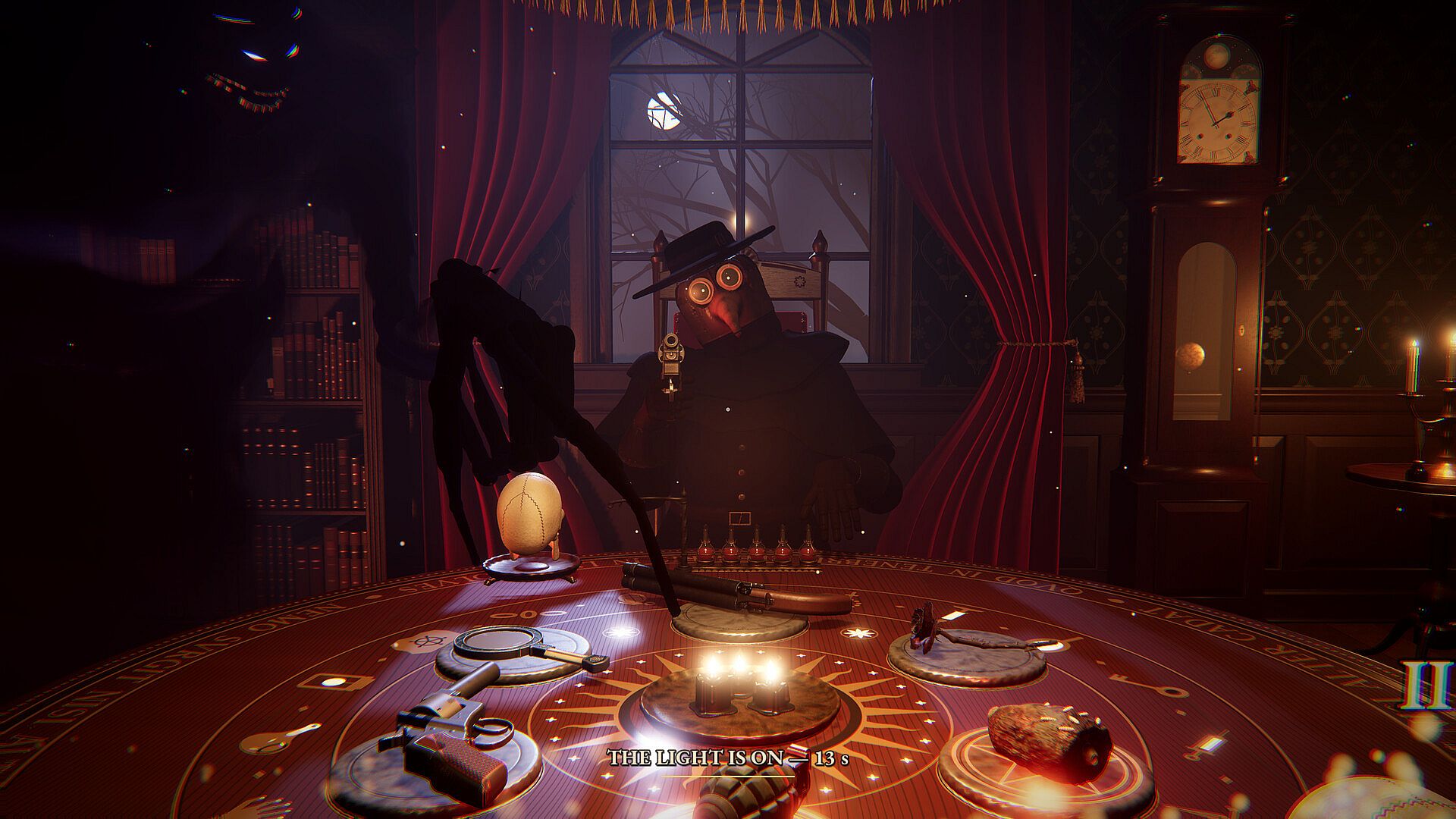
Each round unfolds in distinct light and dark phases. In the light, participants examine the objects on the table and decide when they have seen enough by touching their skull. Once all players signal readiness, the Entity extinguishes the light. In darkness, each person secretly grabs one item and may point it at another player if the object requires targeting. When light returns, the effects resolve in sequence, revealing who acted against whom.
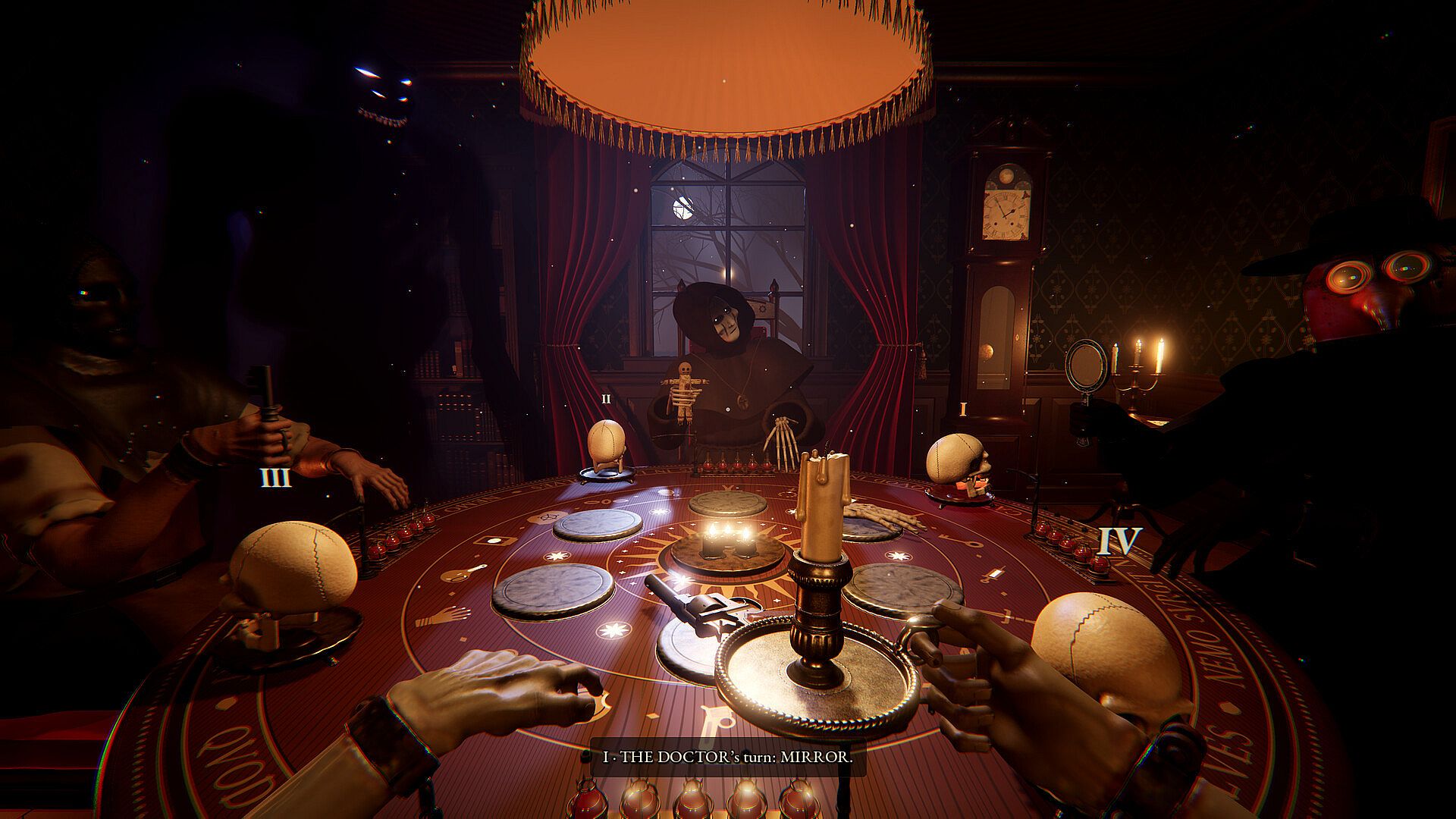
Objects carry unique risks and benefits. The revolver functions more as a psychological threat than a reliable weapon, often backfiring on the holder. The knife damages everyone who grabbed it. Other items include a grenade that explodes in multiple hands, a sweet treat claimed by the first grabber, a candle that reveals selections, and an eye in a jar that obscures information for the next round. Blood vials track health, and the last player standing claims a seal before the next duel begins.
Deception forms the core of success. Players read eye movements and feints, especially in online sessions where gaze direction remains visible even in darkness. The Entity, a shadowy figure with four burning eyes, enforces variable rules each round and claims those who fall. Masks such as the plague doctor, monk, executioner, and convict provide visual identity without revealing personal details.
Game Modes
Matches support one to four participants. Solo play pits the player against AI opponents that fill remaining seats, allowing practice of object mechanics and basic bluffing. Online sessions connect friends through direct invites, with AI completing any unfilled positions to maintain consistent table dynamics. All action remains seated in the parlor, emphasizing psychological pressure over movement or exploration.
Victory requires three seals. Each duel continues until only one player remains, after which a new round starts with refreshed objects and potentially altered rules from the Entity. The structure rewards repeated play to anticipate patterns and refine reading opponents.
Atmosphere and Tension
The setting reinforces isolation and inevitability. Rain falls outside while a grandfather clock marks time until it stops in darkness, leaving only breathing sounds. The Entity lurks in the corner, advancing when unobserved and enforcing penalties such as mandatory bleeding. This environment turns every glance and hesitation into potential information or vulnerability.
Objects and rules shift focus from direct confrontation to mental warfare. Success depends on predicting what others will reach for and positioning oneself to benefit from their choices or force unfavorable grabs.
Is It Worth Playing?
The Third Seal targets players who enjoy short, intense sessions built around deduction and social manipulation rather than reflexes or long campaigns. Its compact format suits quick matches or extended evenings of repeated duels. The blend of hidden information, shared risk objects, and AI support makes it accessible for solo learning while scaling to group play. Those drawn to psychological horror with strategic depth will find the core loop rewarding, particularly when facing human opponents who adapt to patterns and feints. The game remains in a pre-release state with no confirmed post-launch updates or additional content at this time.