


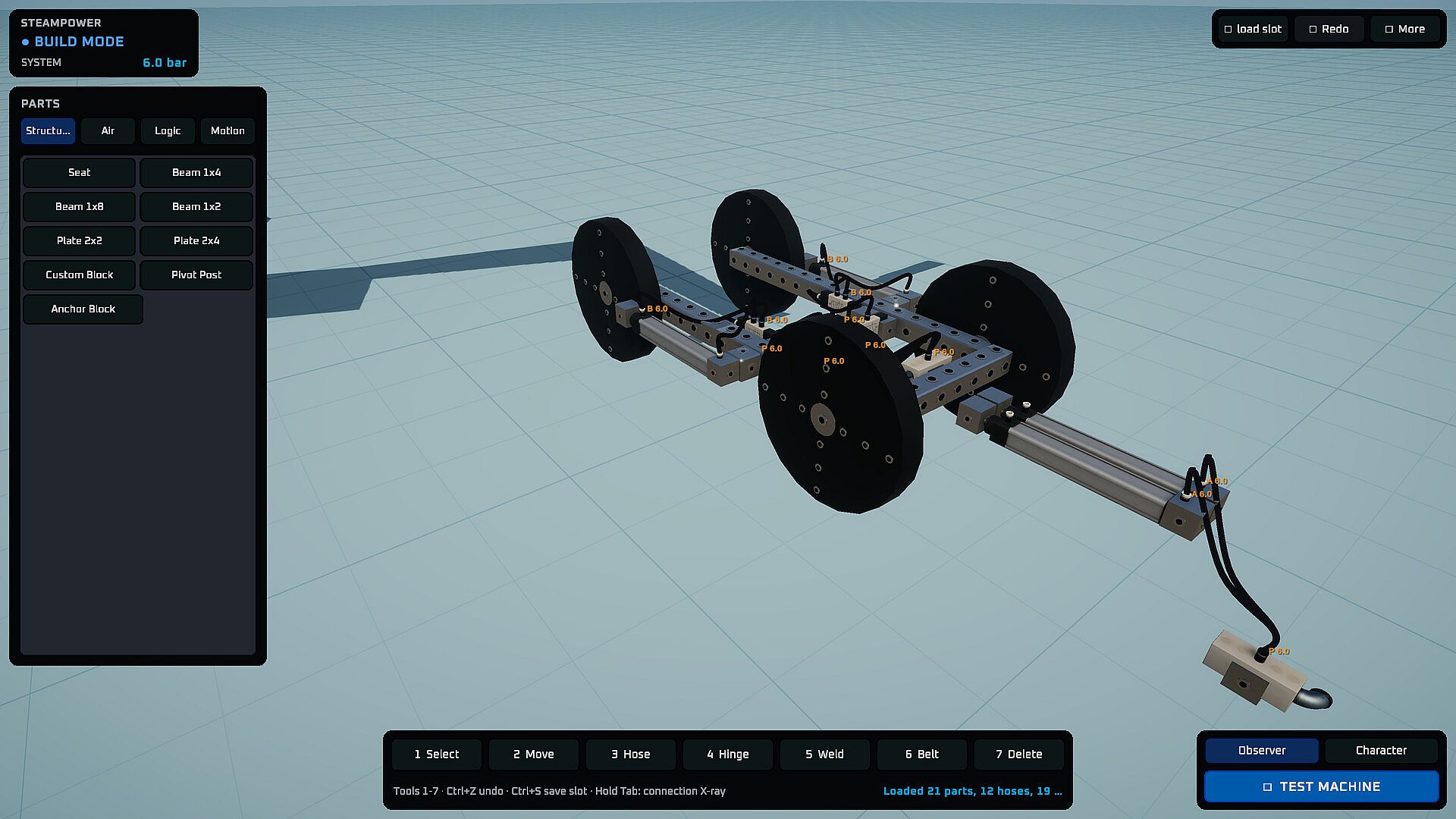
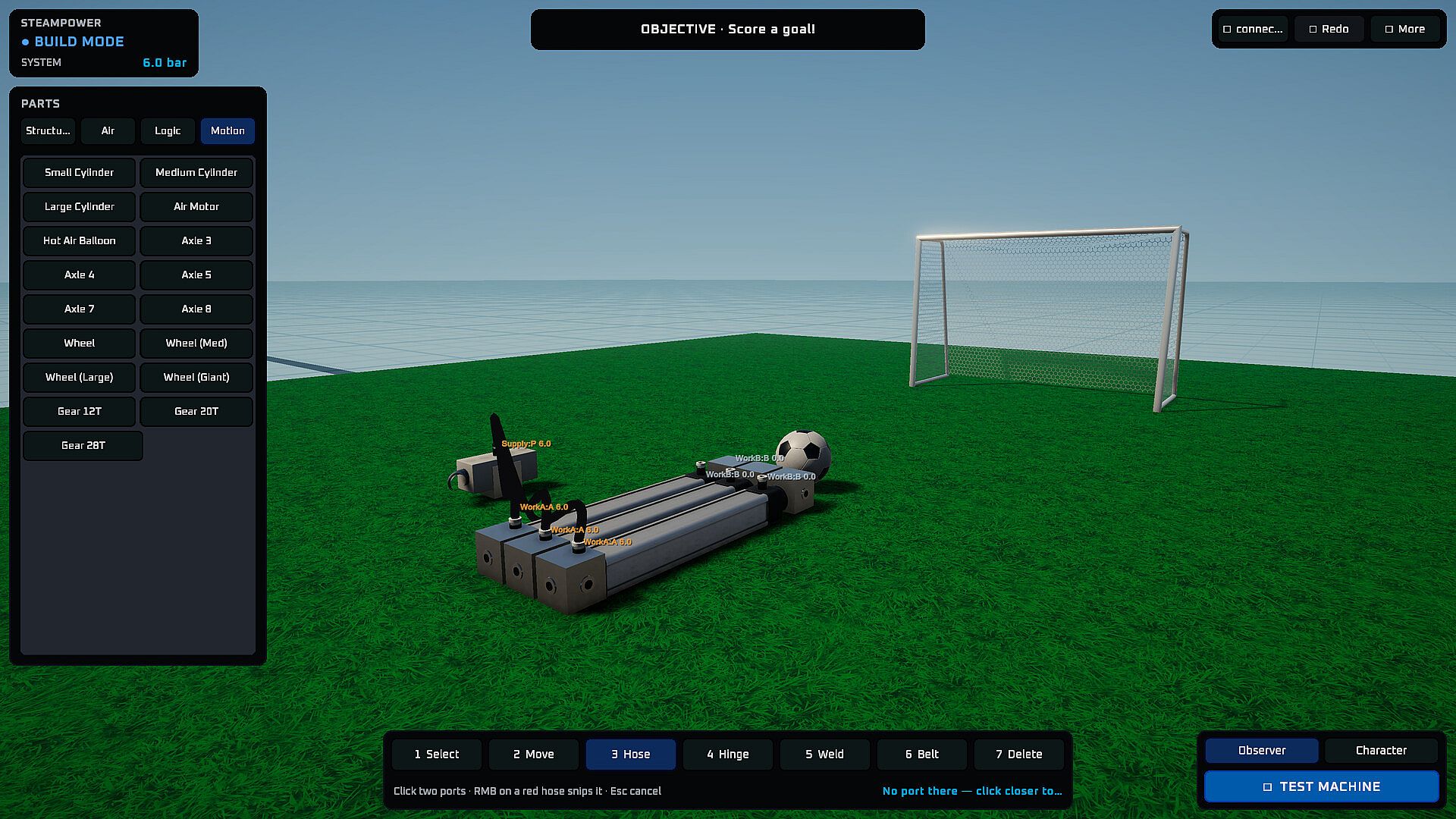
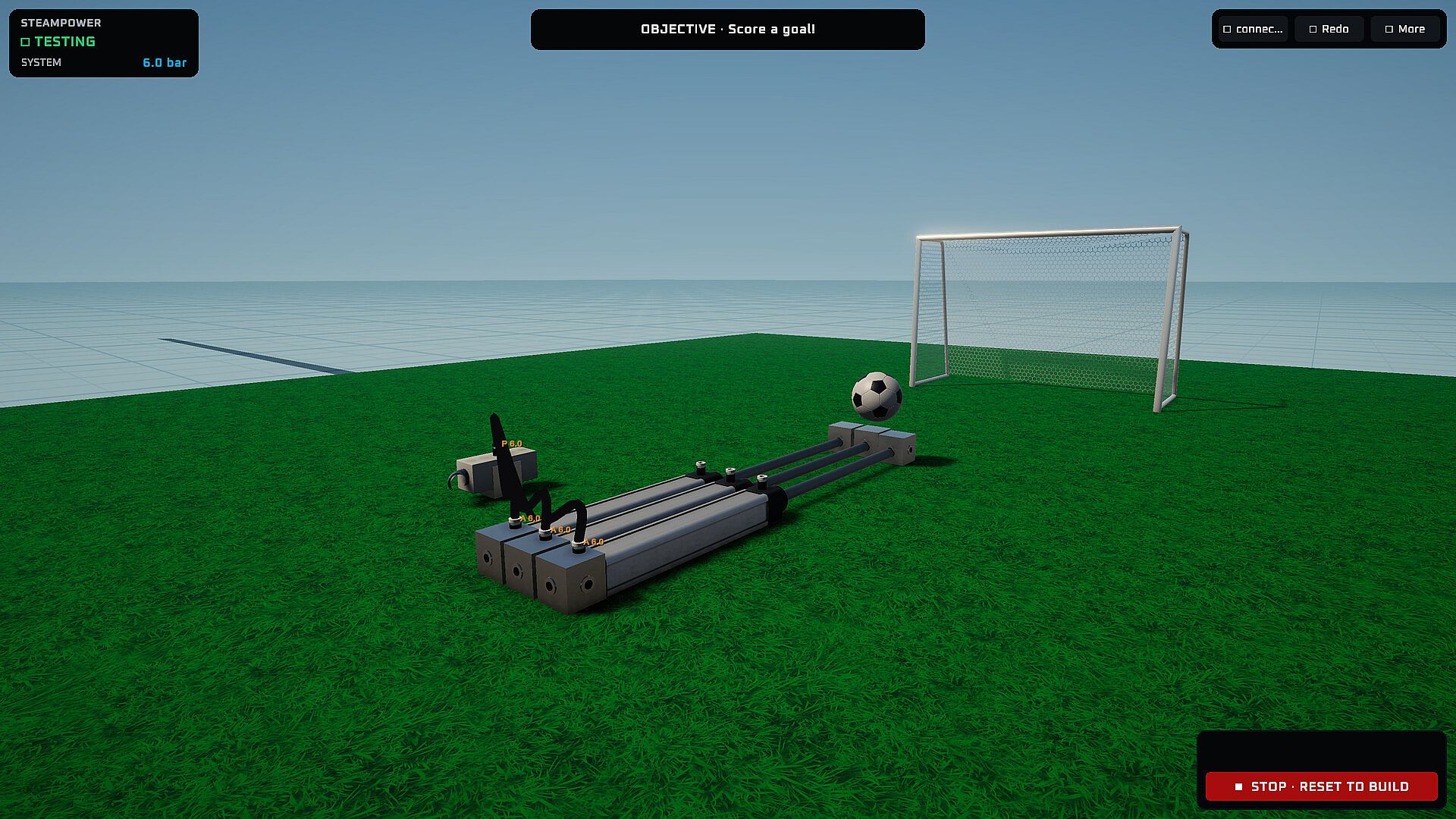
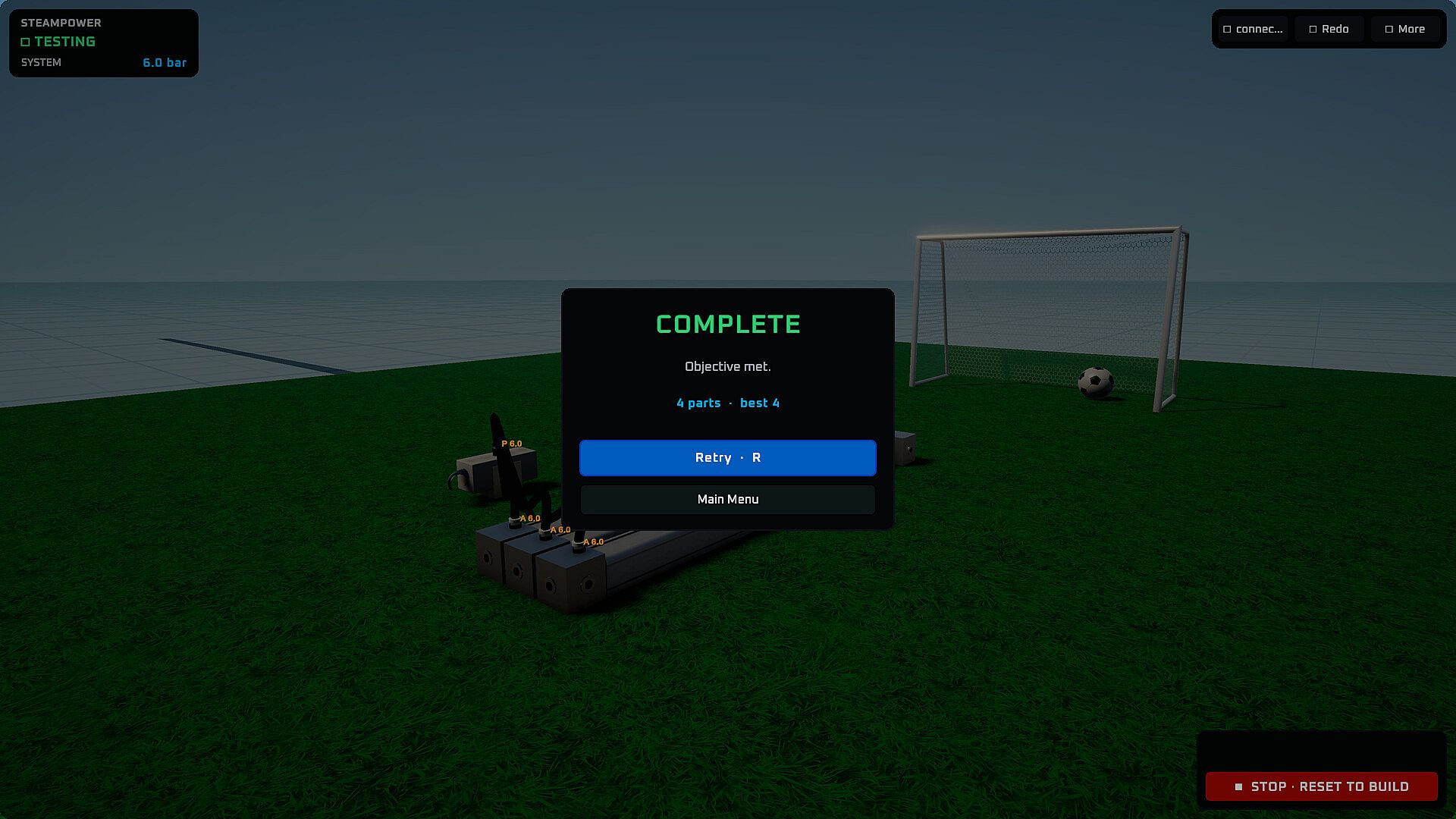
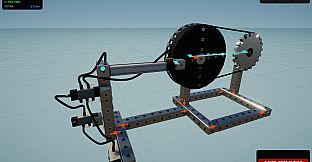
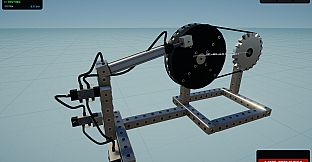
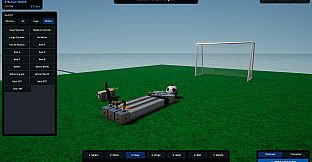
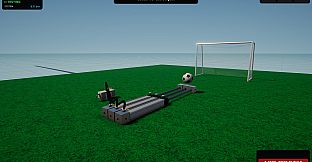
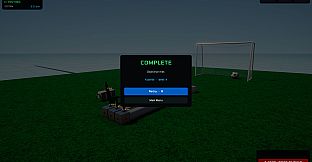
Pressure Works is an indie simulation game centered on building functional machines in a sandbox environment powered by authentic pneumatic physics. Players construct contraptions on a grid-based system where every hose connection and valve adjustment produces real mechanical outcomes rather than scripted animations.
Gameplay
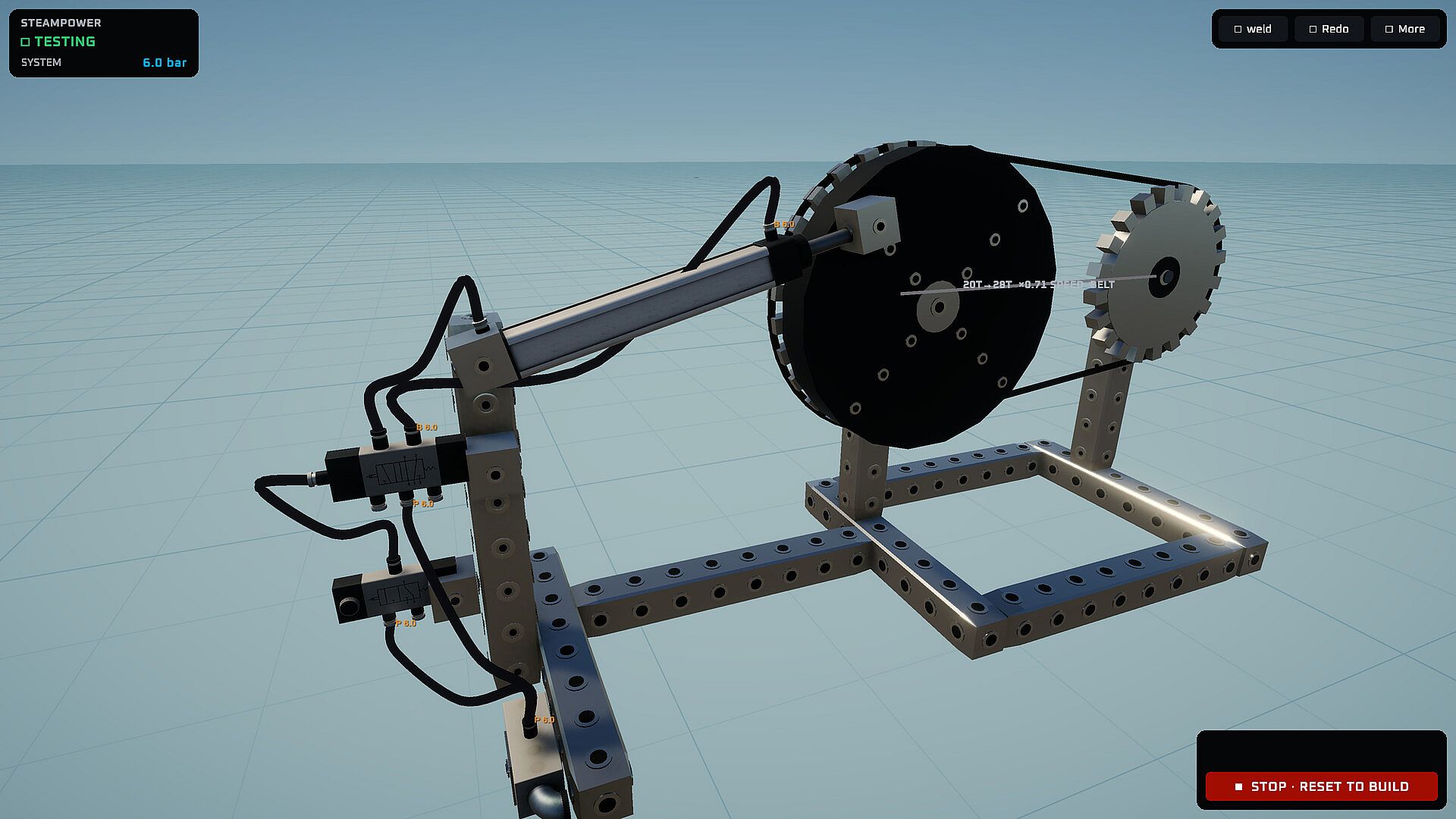
The core loop revolves around placing components on a snapping grid and routing hoses to create pressure networks. Opening a valve sends air through the system, causing cylinders to extend, motors to rotate, and assembled structures to perform intended movements. Failures trace directly back to the plumbing layout, turning troubleshooting into an integral part of the experience.
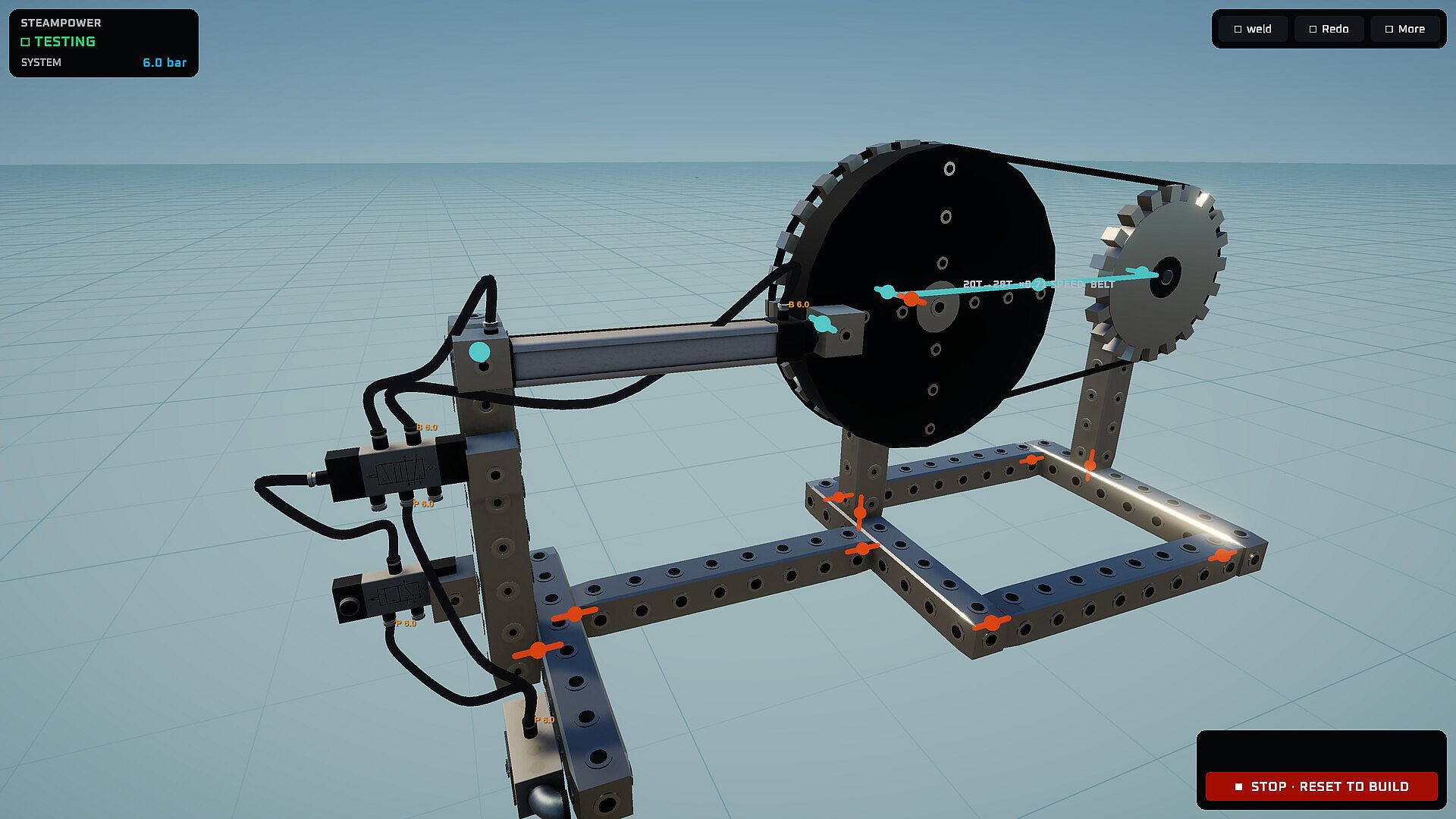
Air serves dual purposes as both power source and control signal. Directional valves, latches, and logic gates such as AND, OR, and NOT allow construction of timers, oscillators, and sequencing circuits entirely from pneumatic elements. Regulators cap pressure levels, flow restrictors slow cylinder strokes, and air tanks isolate sections of a network. Gauges mounted at distant points reveal pressure drops or blockages without direct inspection.
Structural elements connect via pins that create either rigid joints or free hinges. Gears mesh according to tooth geometry, and belts transmit motion across distances, so reductions in gearing increase torque at the cost of speed. Heavy loads can stall pistons, and entire machines behave as rigid bodies linked by joints, preserving structural integrity during operation.
Game Modes
Sandbox mode provides unrestricted space and parts for open-ended experimentation. Players pursue any idea without timers or resource limits.
Puzzles restrict available parts and impose budgets, requiring efficient solutions to specific mechanical challenges. These constraints highlight the depth of the simulation.
Time trials involve building a vehicle, piloting it through a course, and competing against author times or personal ghosts for medals.
Challenges track open-ended performance metrics such as maximum tower height, launch distance, or successful transport of fragile cargo without damage.
Building and Driving Mechanics
Beams, plates, blocks, axles, and wheels assemble with pins that enforce physical connections. Cross-pins create welds while round pins permit rotation. Once complete, machines support first-person operation where the builder takes a seat and controls the finished device directly.
Steam and air share the same underlying simulation, enabling hybrid systems that blend force generation with logic control. Colored light nodes extend creative options for those interested in more complex signaling.
Save slots, named blueprints, and full undo-redo support streamline iteration. Sub-assemblies copy to a clipboard as shareable codes that paste into other sessions or other players' worlds, allowing reusable components like crank engines to appear across multiple builds.
Is It Worth Playing?
Pressure Works suits players who enjoy detailed mechanical simulation and iterative problem solving over fast-paced action. The emphasis on realistic cause-and-effect in every hose and joint rewards careful planning and experimentation. Those drawn to casual building games with genuine physics will find the sandbox and puzzle modes particularly engaging, while time trials and challenges add measurable goals for repeated play. The ability to share blueprints supports ongoing creativity within the community. Availability on PC makes it accessible for anyone with an interest in pneumatic engineering concepts translated into interactive form.