




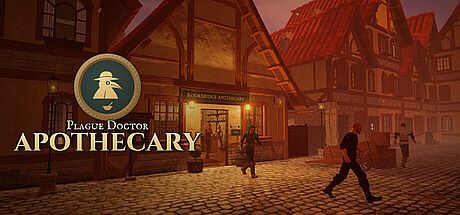


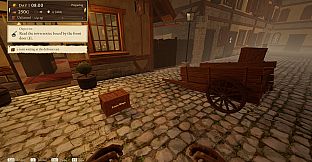
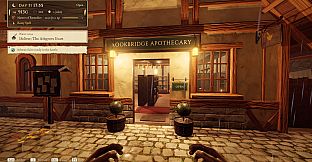

Plague Doctor: Apothecary is an indie simulation game set in the fog-shrouded town of Rookbridge. Players inherit a remedy shop on Cinder Lane and handle every aspect of running an apothecary, from sourcing ingredients to serving townsfolk with specific ailments. The experience centers on hands-on crafting, inventory management, customer consultations, and gradual shop expansion in a single-player environment.
Gameplay
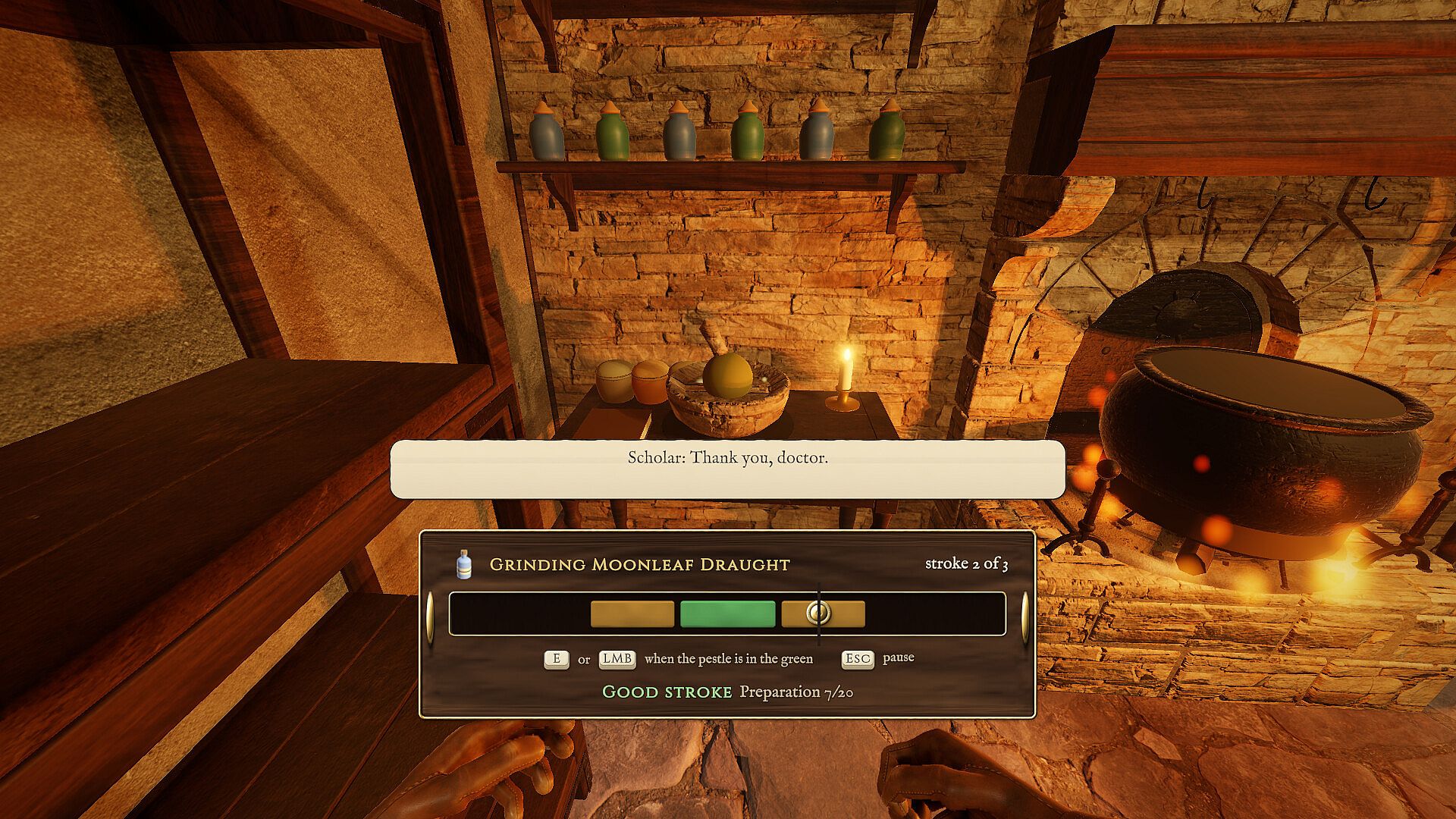
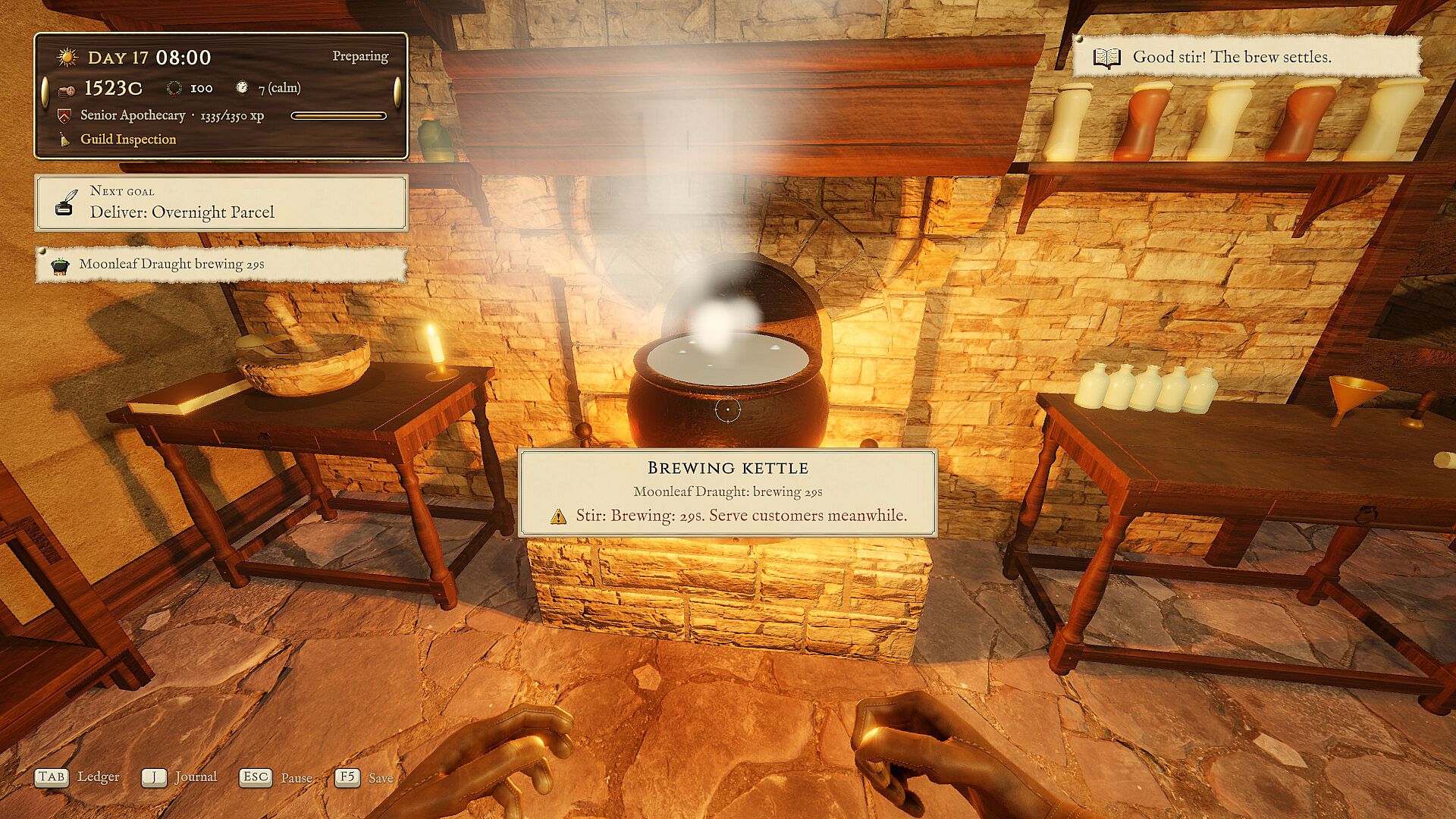
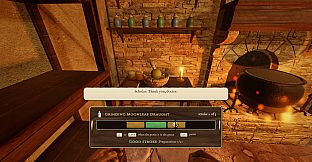
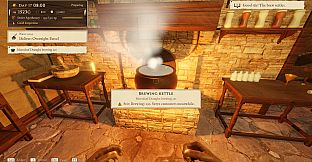
The core loop involves preparing remedies by hand in a first-person view. Herbs are ground in a mortar, mixtures are carried to a kettle for stirring at the right moments, and finished batches are bottled, corked, and sealed. Timing and equipment cleanliness affect the final quality, with successful batches reaching Fine or Masterwork standards. Twenty-four recipes are available, starting with items such as Moonleaf Draught and Ashwax Salve and expanding through trade licenses.
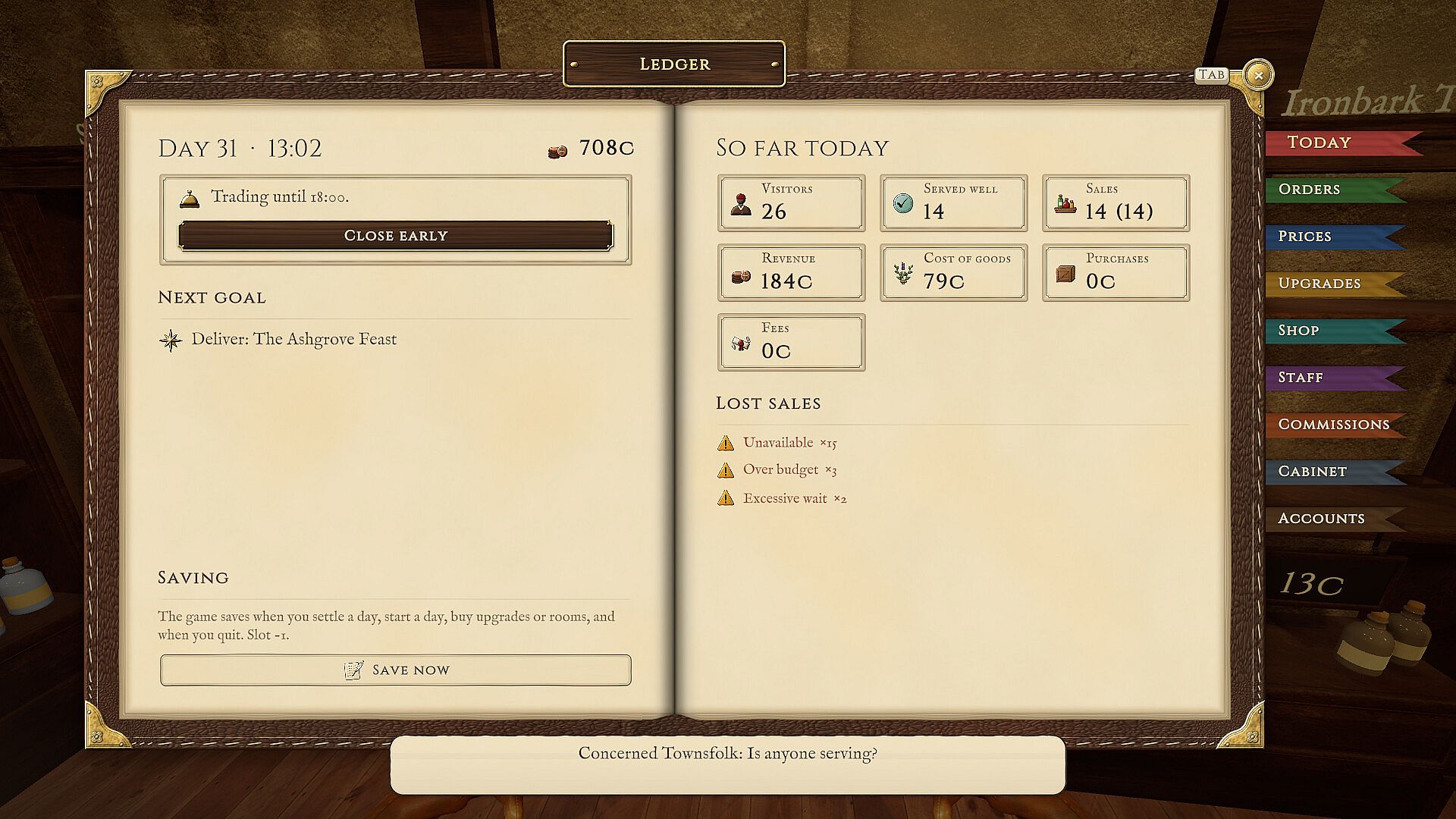
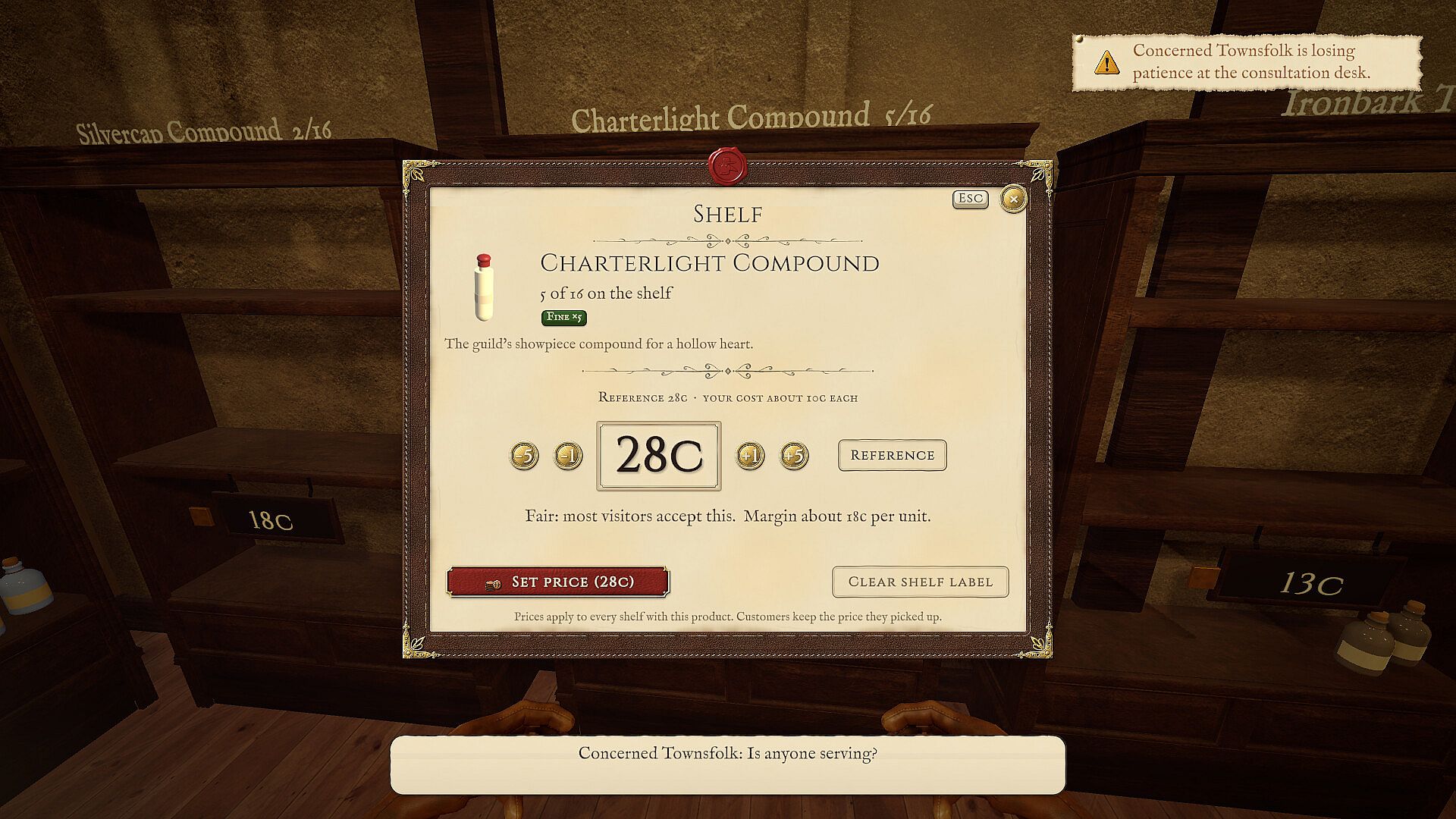
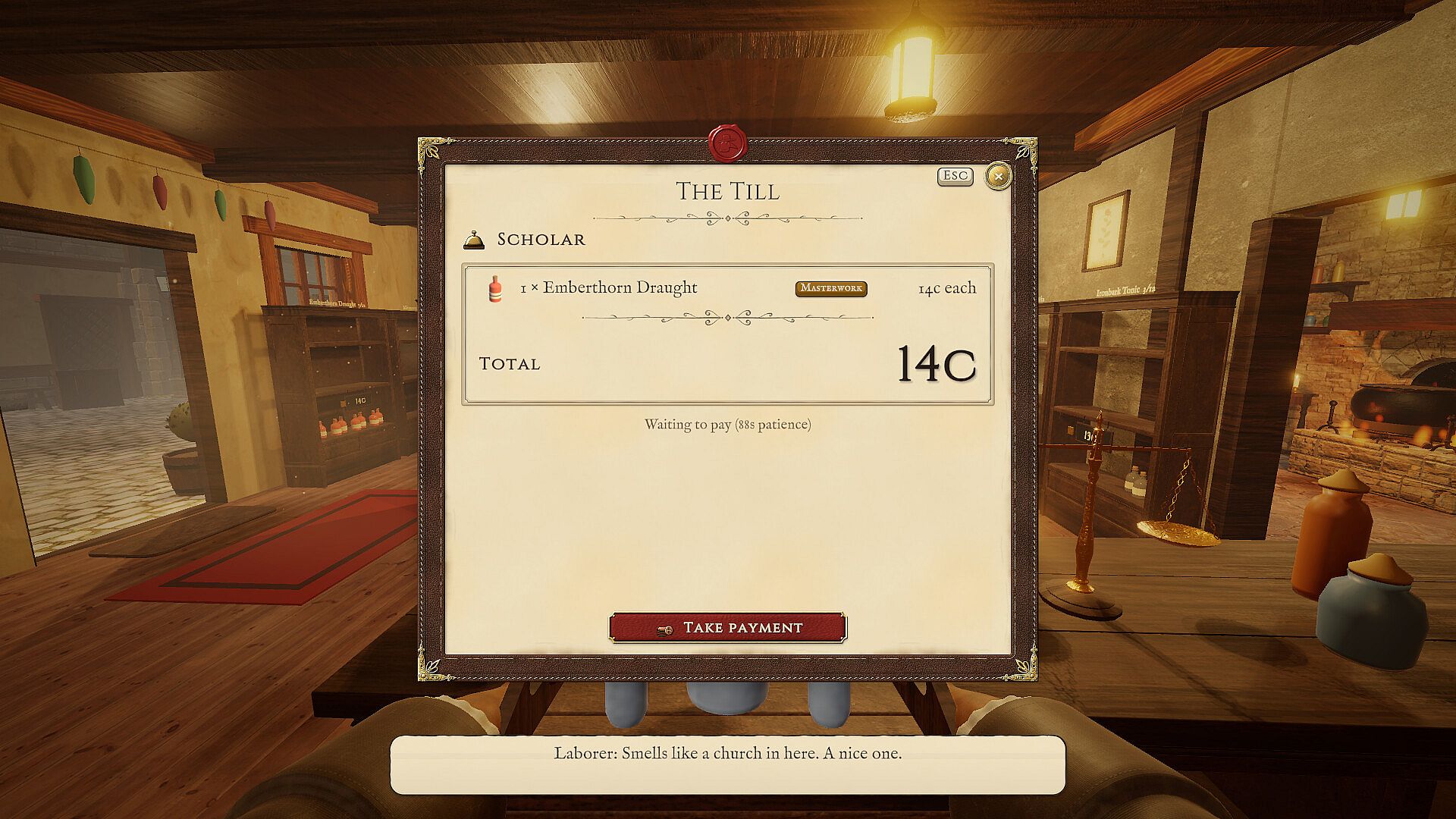
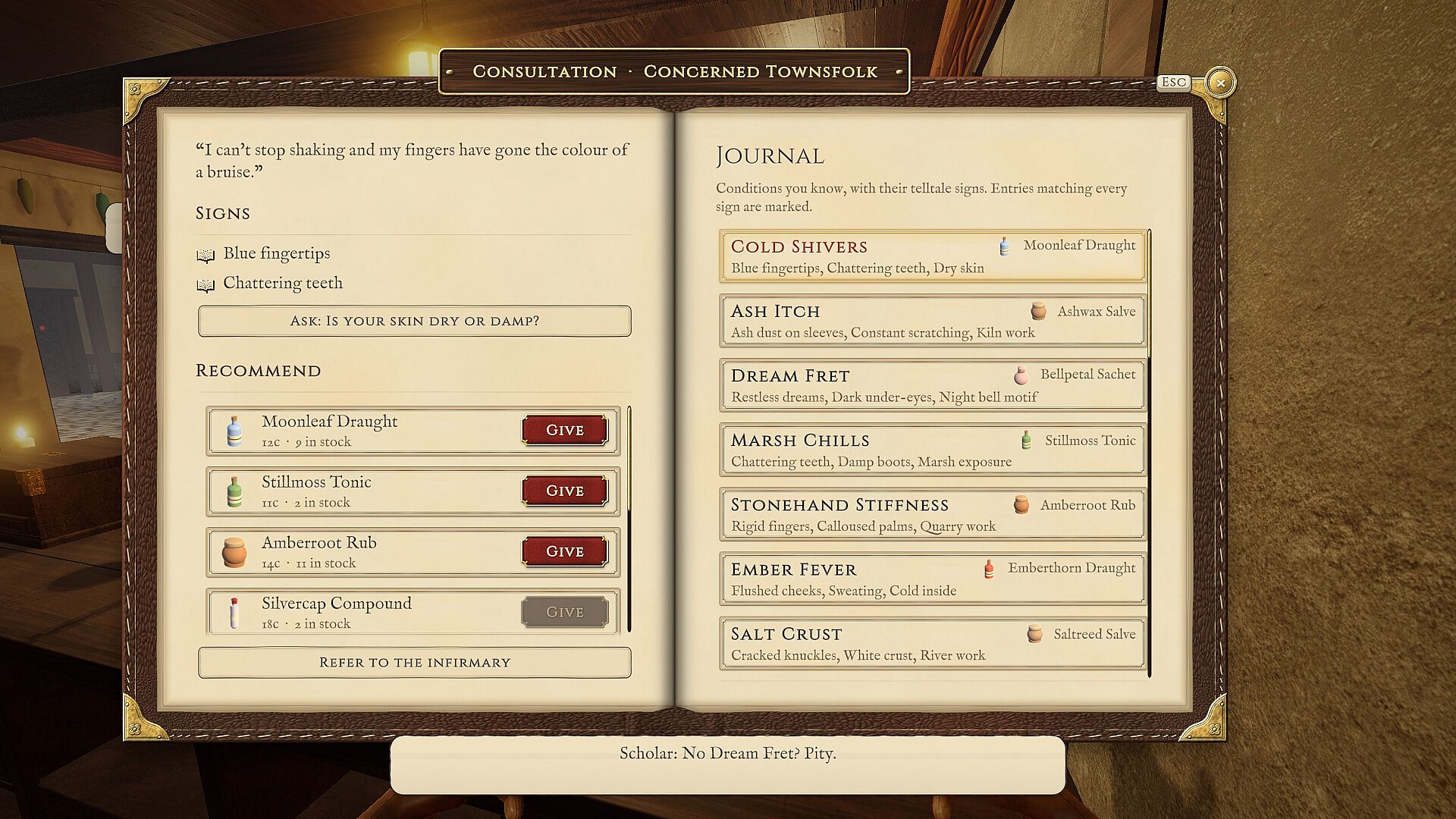
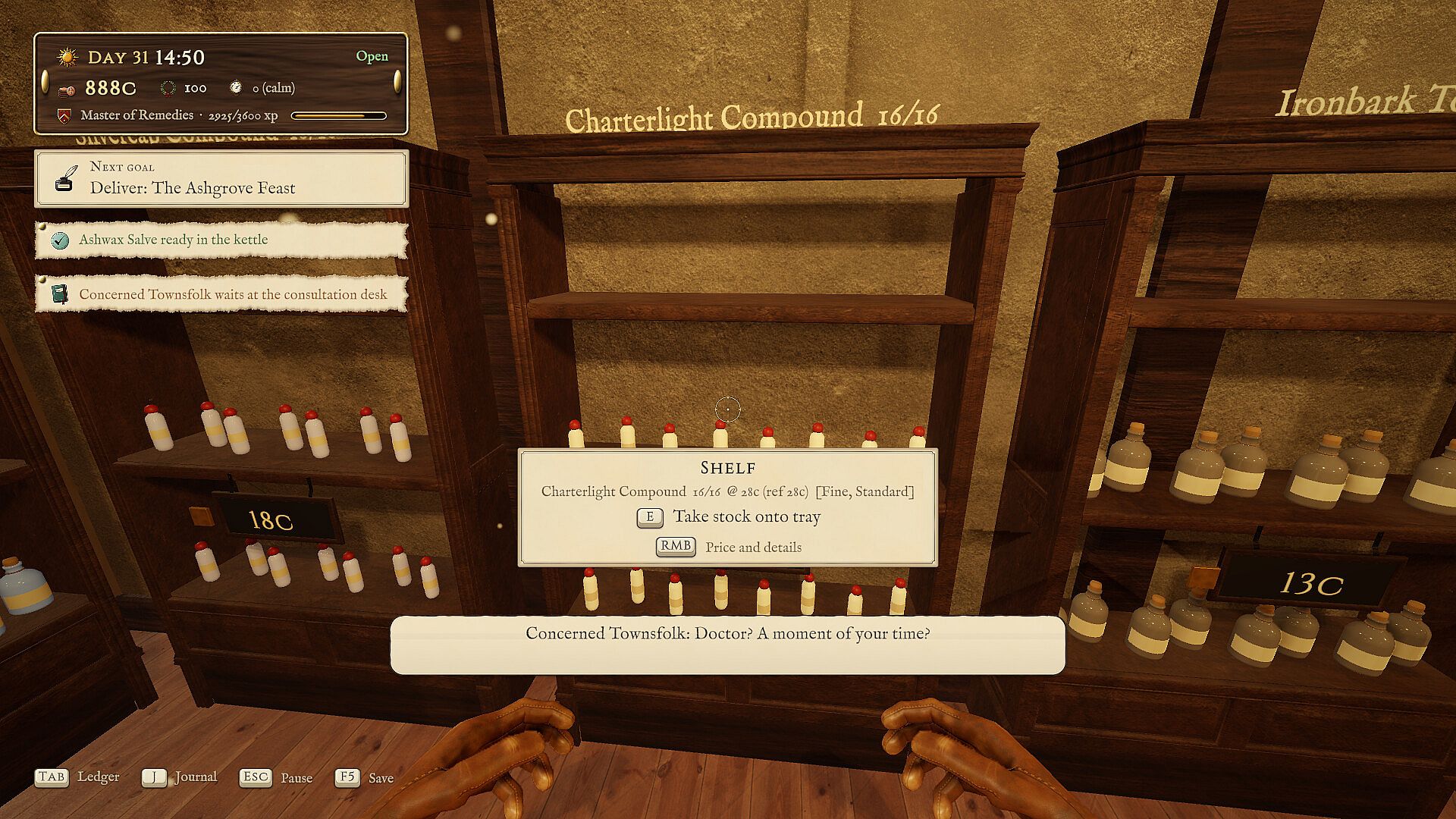
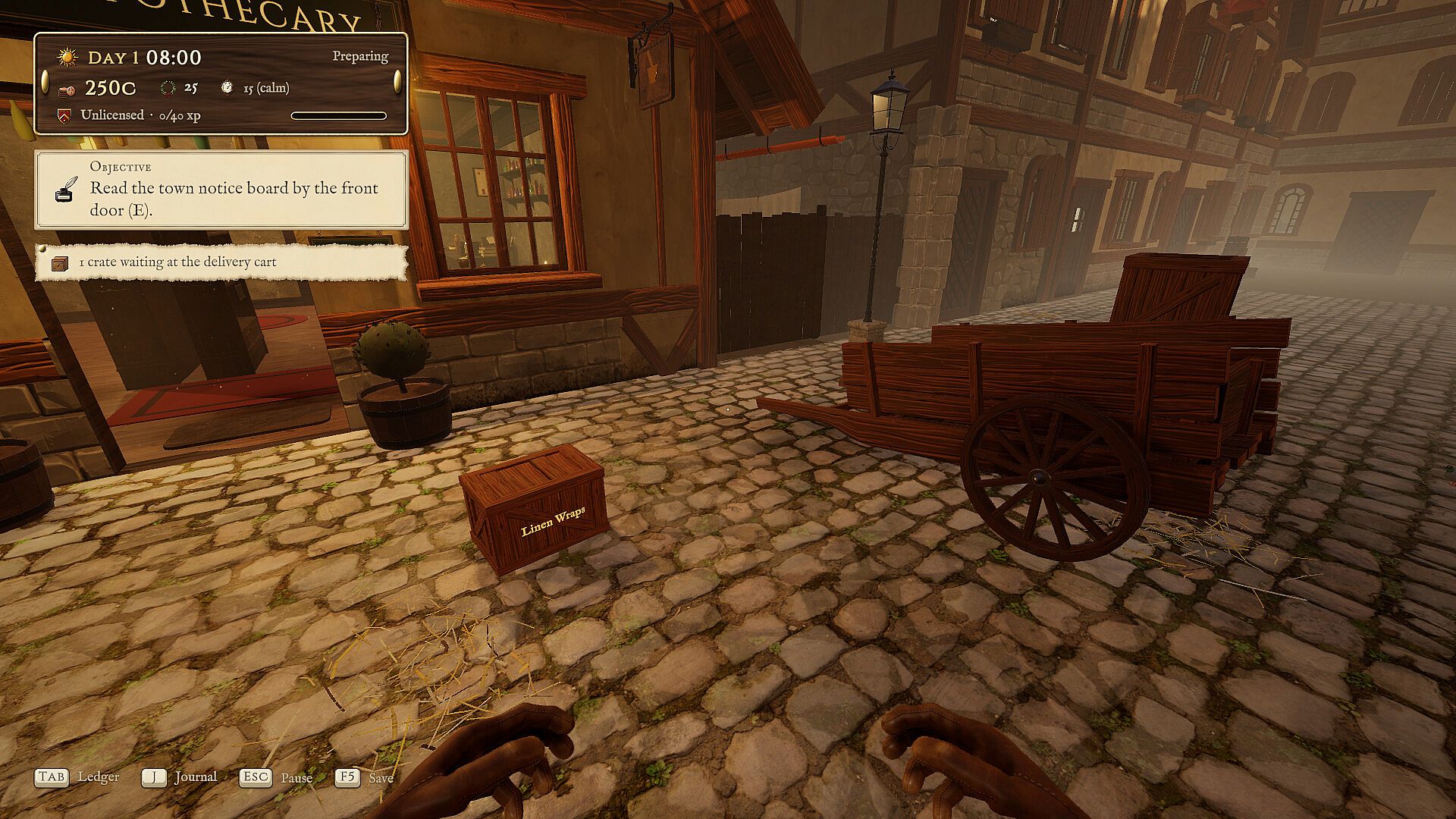
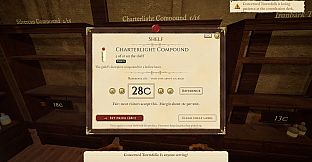
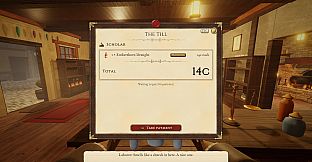
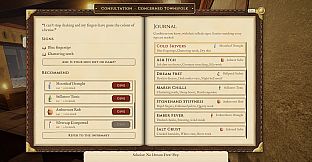
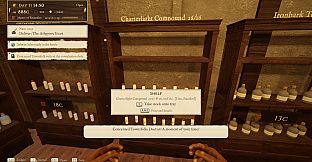
Shop operations require unpacking deliveries, arranging stock on shelves, setting prices, and handling transactions at the counter. Change can be counted manually or switched to automatic mode. Daily costs for supplies, wages, and upkeep are tracked, with the ledger settled each evening to allocate earnings. Consultations involve listening to regulars, noting clues in a journal, and selecting appropriate remedies from inventory. Follow-up letters and time-sensitive commissions add further layers to customer interactions.
Between trading days, the shop can be customized with new shelves, tables, and decorations. Tools and carrying capacity are upgraded, and additional rooms such as a storeroom, laboratory, and garden courtyard become available. Staff can be hired for specific tasks, including a porter for restocking, a clerk for checkout, and a brewer for repeating mastered recipes. Herbs grown in the courtyard support self-sufficiency. A curiosity cabinet displays unusual specimens collected from deliveries and traders, which can be researched or sold.
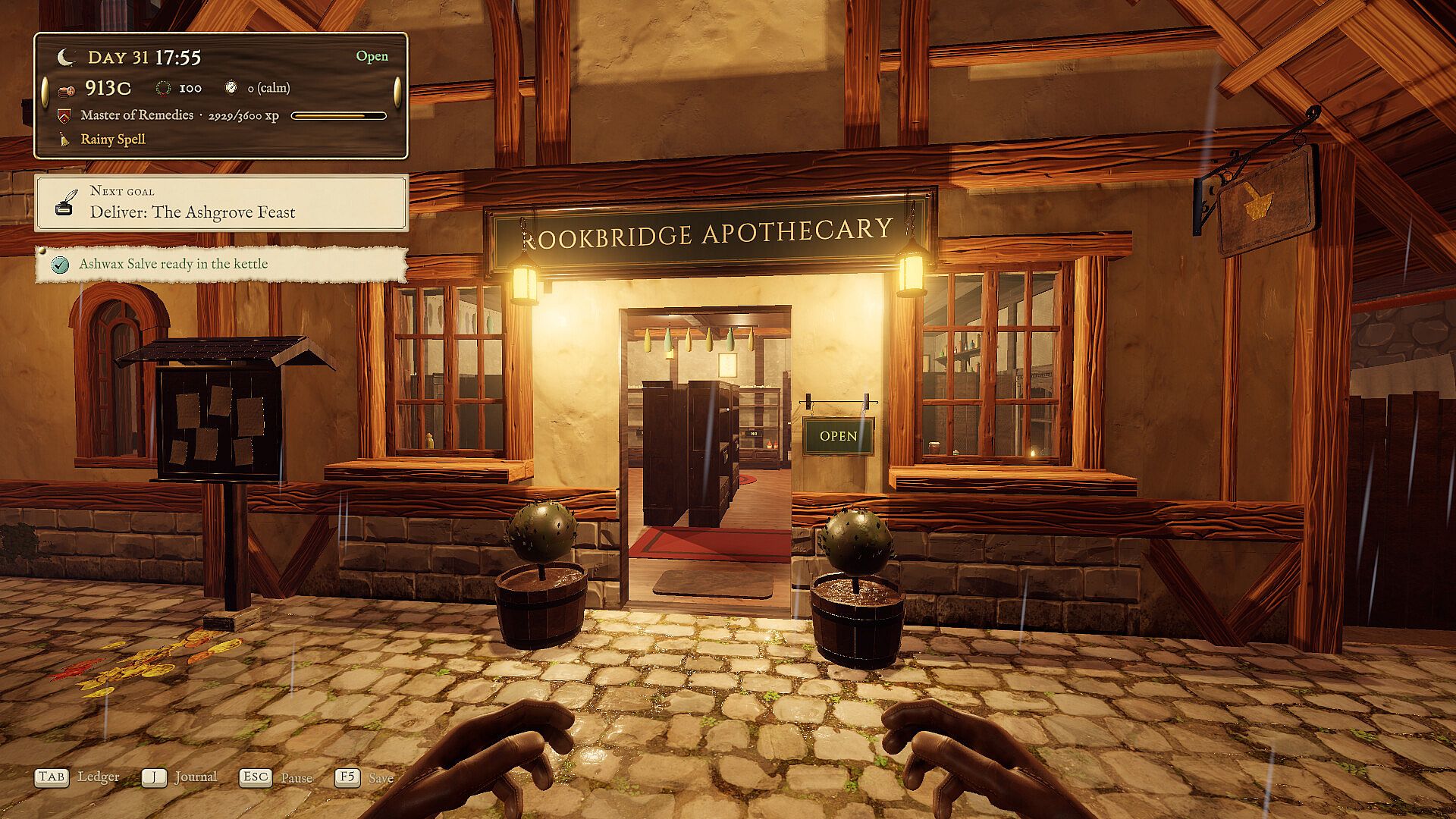
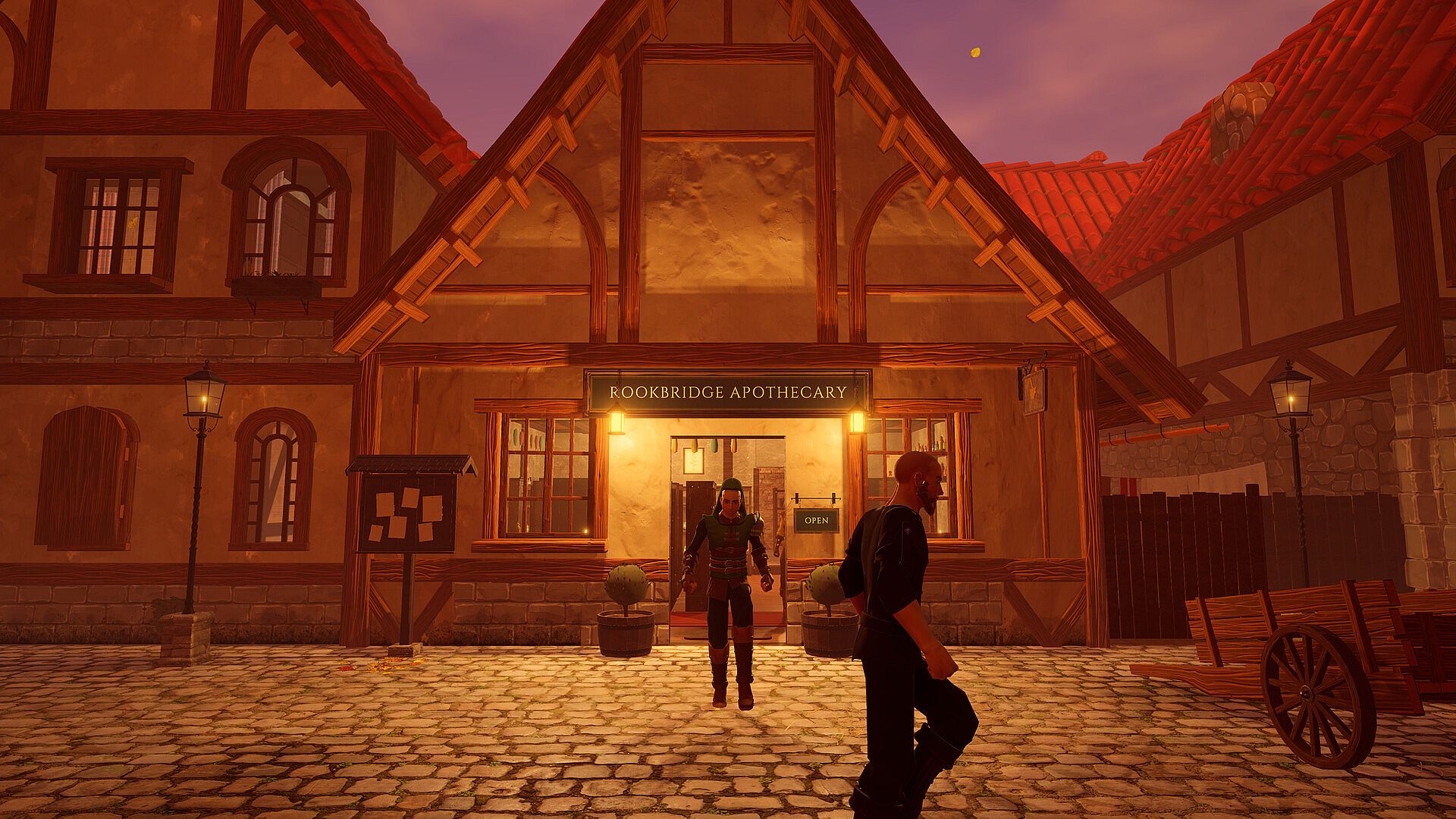
Environmental factors influence daily trade, including market fairs, inspections, delayed carts, and shifting weather. The view outside the windows changes from morning light through dusk to lantern-lit evenings, reinforcing the passage of time in Rookbridge.
Game Modes
Two rule sets are offered. Standard mode presents the full challenge of manual tasks and resource balancing. Relaxed mode includes accessibility options such as assisted grinding, automatic change counting, larger text, reduced camera motion, and captions for sound cues. These choices allow players to adjust the experience to match their preferred pace and focus.
Shop Building and Progression
Progression comes through reputation gains, skill improvements, and facility upgrades that unlock the Town Apothecary Charter. Expanding the laboratory and courtyard supports more efficient production and ingredient growth. Commissions with quality and deadline requirements provide larger goals alongside regular customer service. The journal tracks knowledge gained from interactions and research, guiding better recommendations over time.
Is It Worth Playing?
This title suits players who enjoy methodical single-player simulation games focused on crafting, inventory, and customer service. The detailed preparation steps and consultation mechanics reward careful attention, while staff hiring and shop customization provide steady advancement. With a planned release in December 2026 and no reviews available yet, those interested in hands-on apothecary management will find the core systems align closely with the described features. Accessibility toggles make it approachable for a range of play styles without altering the central shop-keeping loop.











