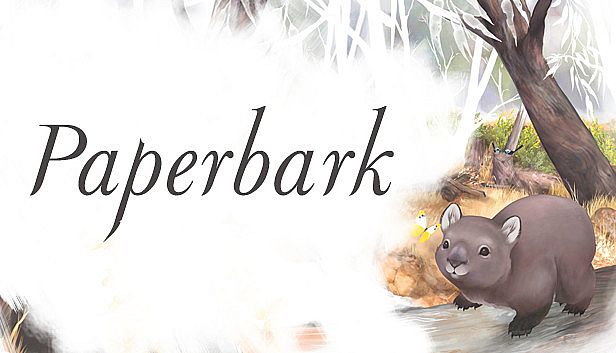











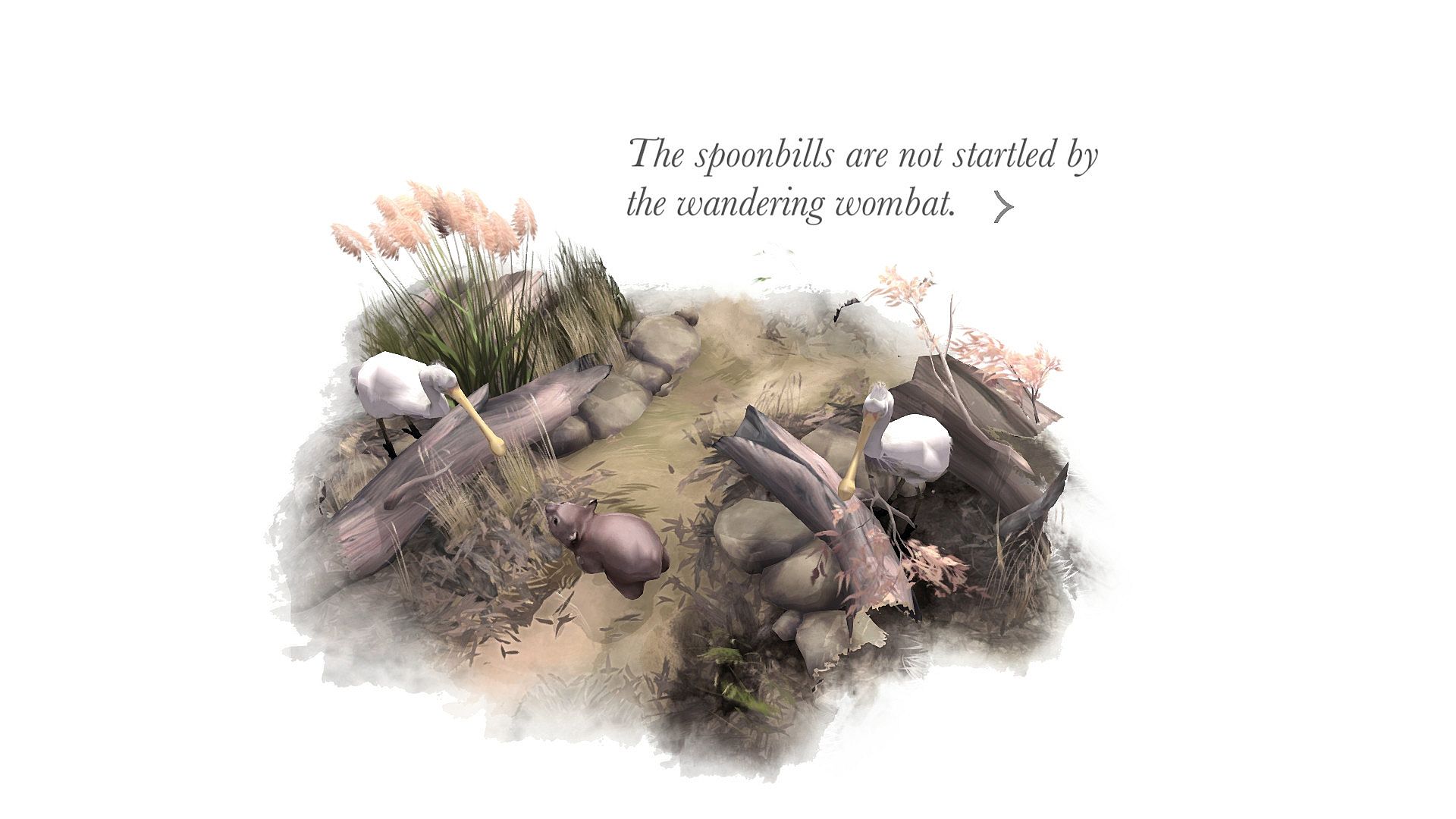
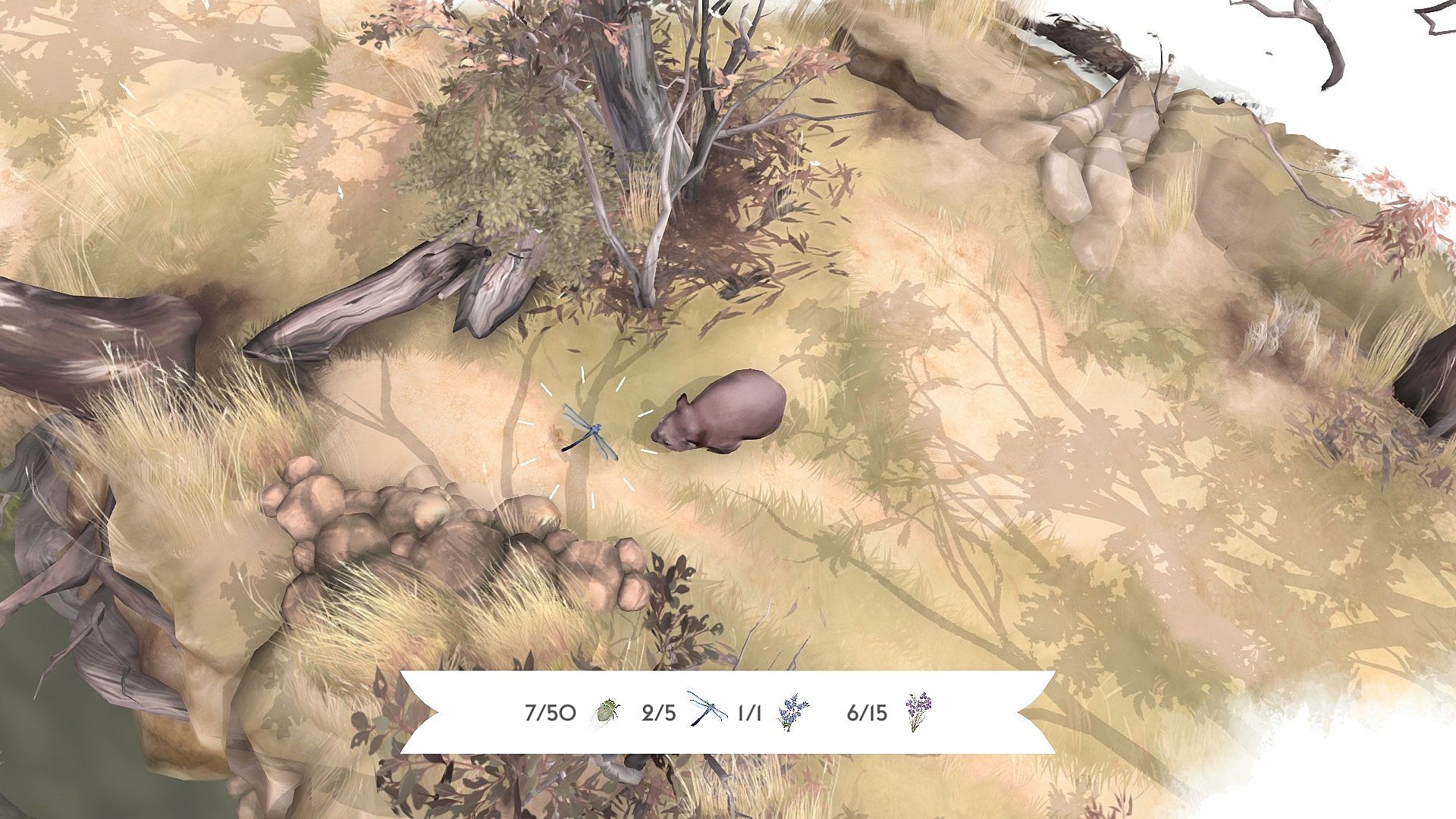
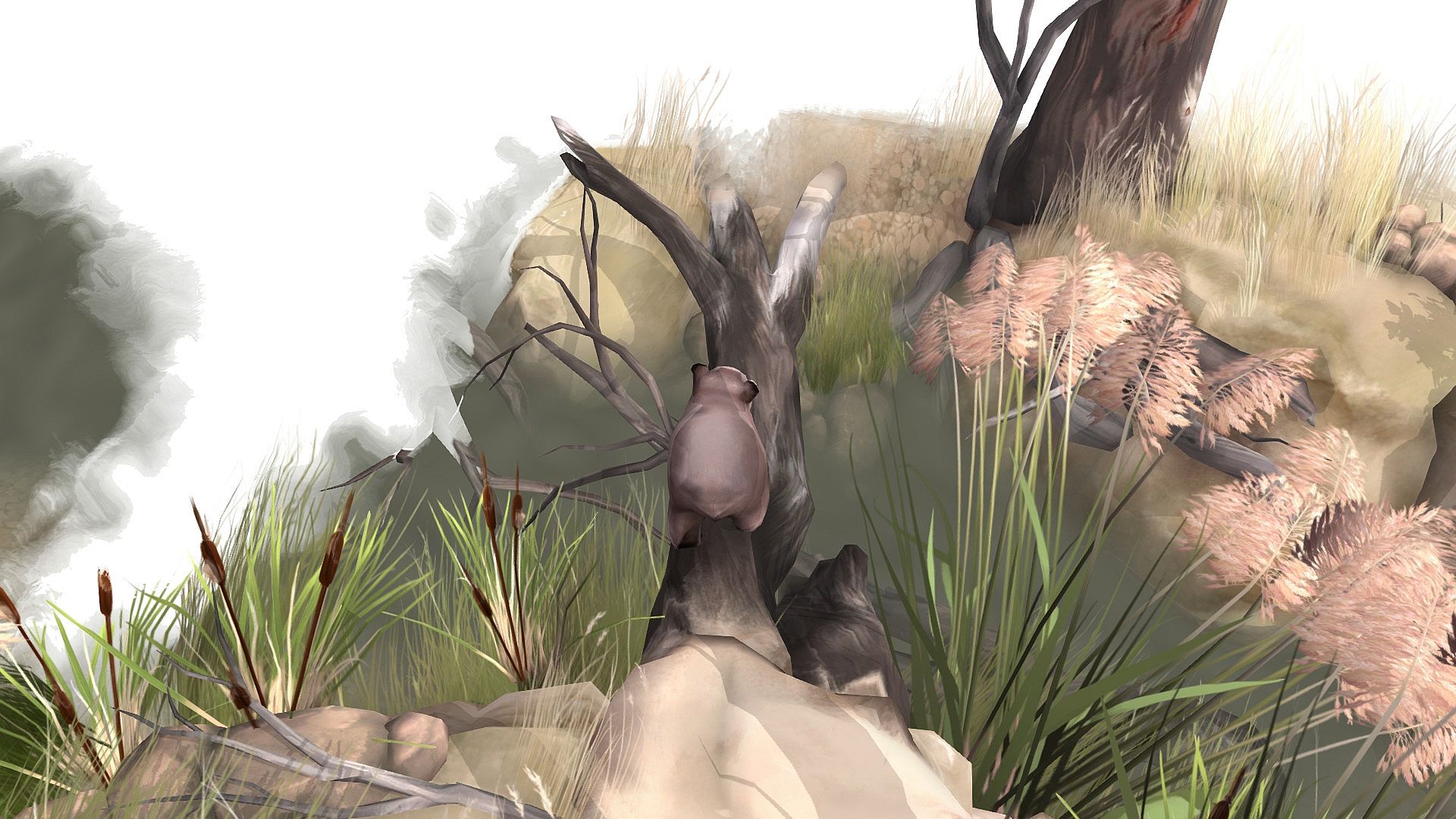
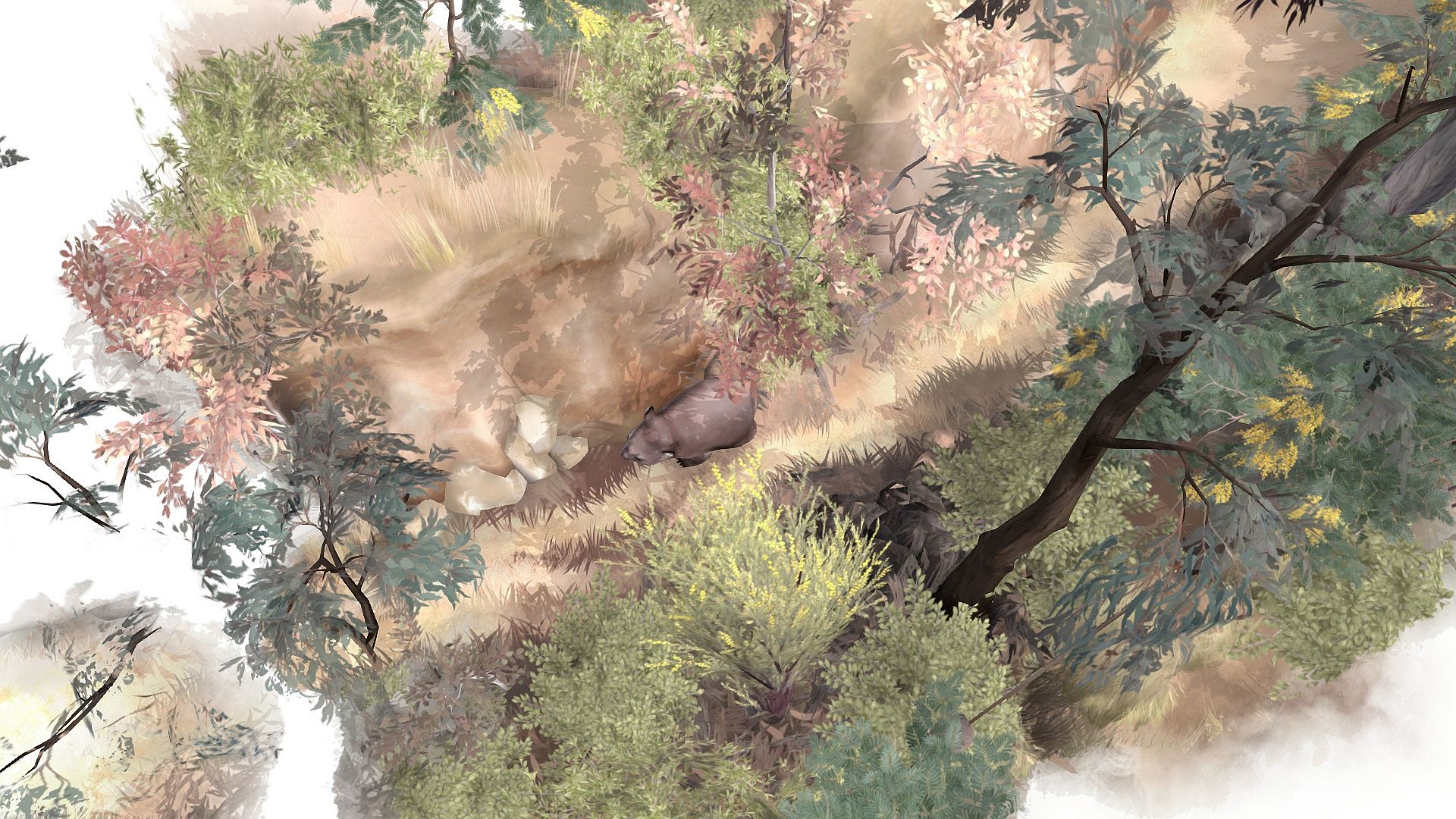
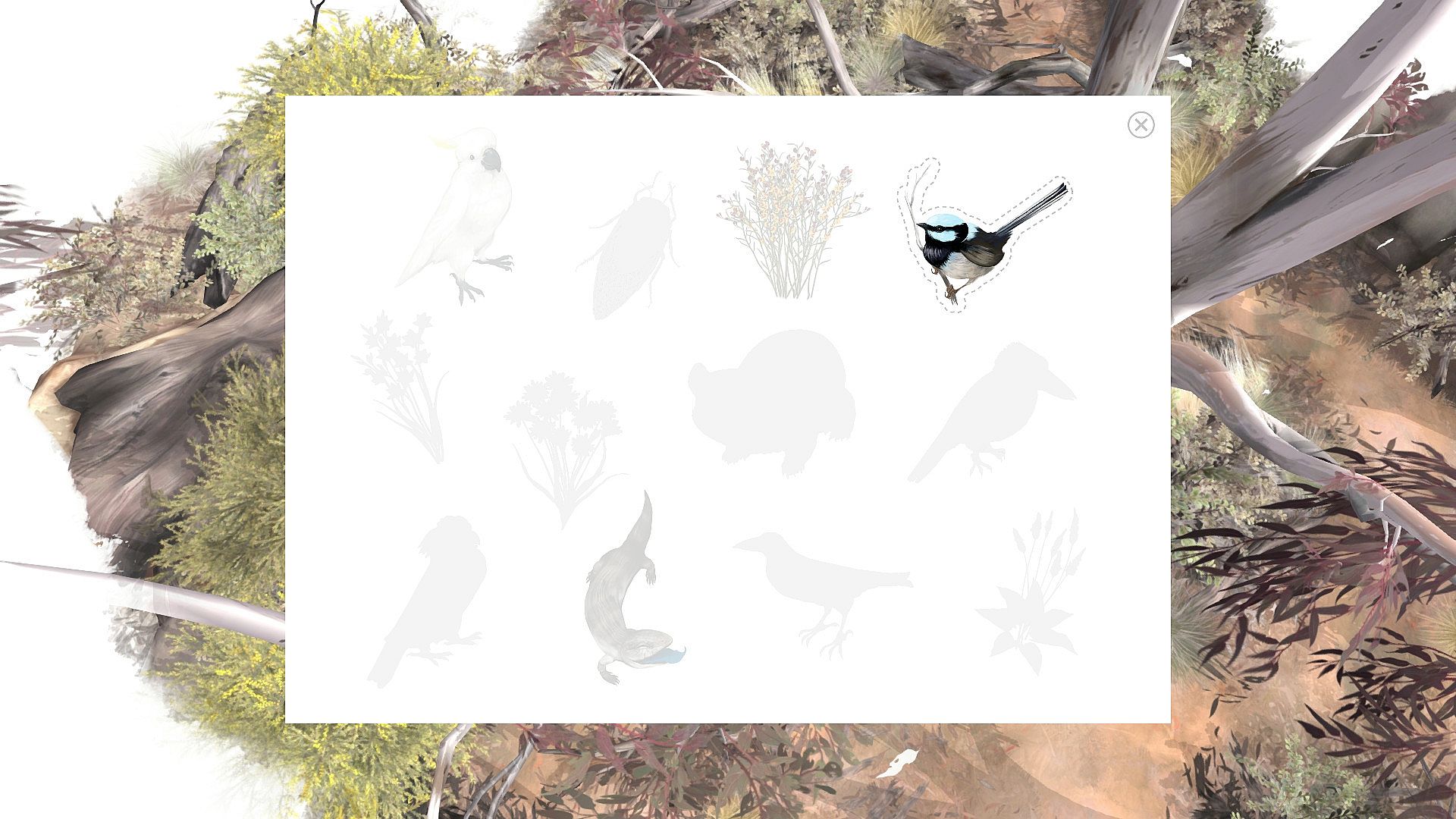
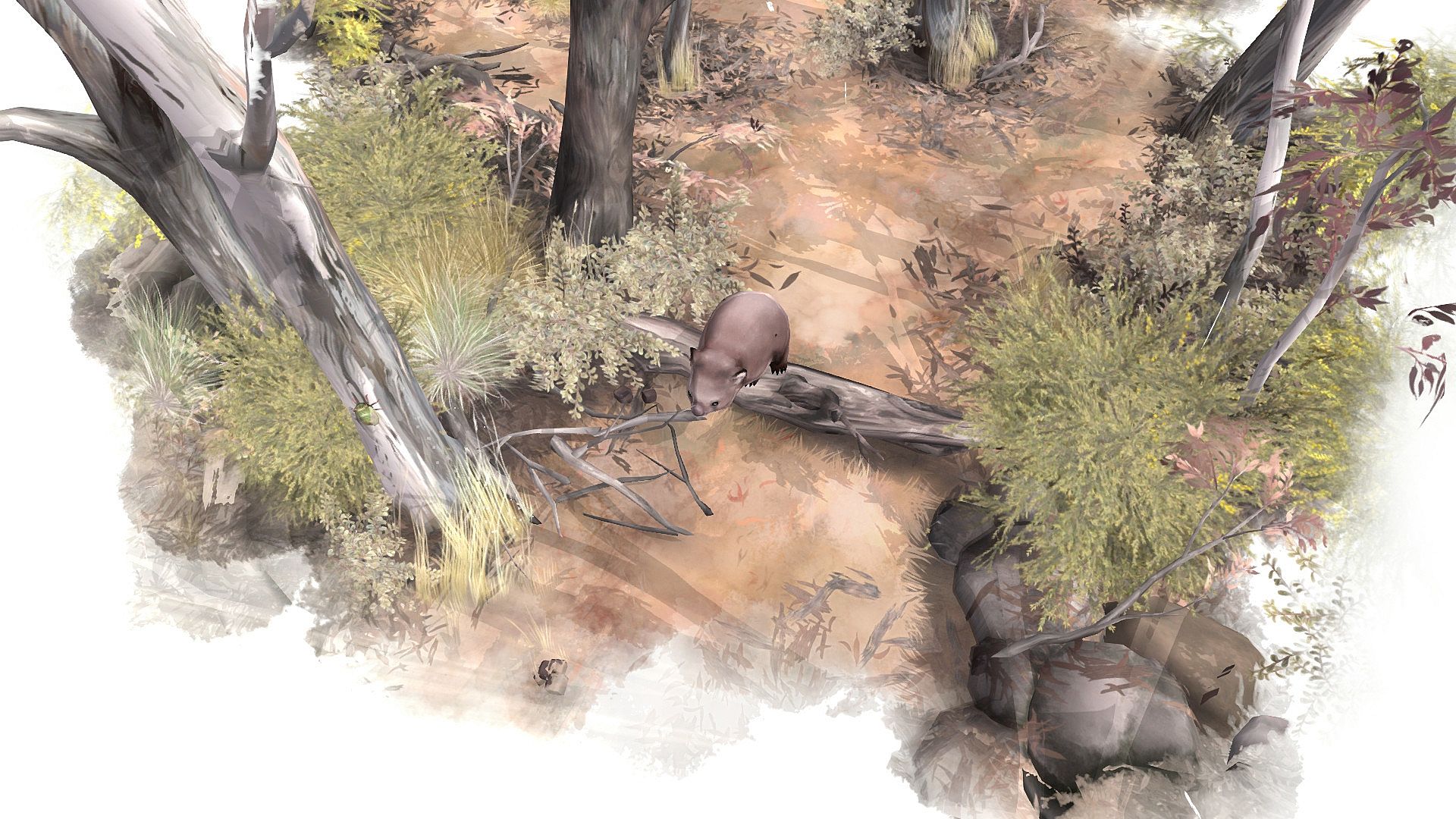
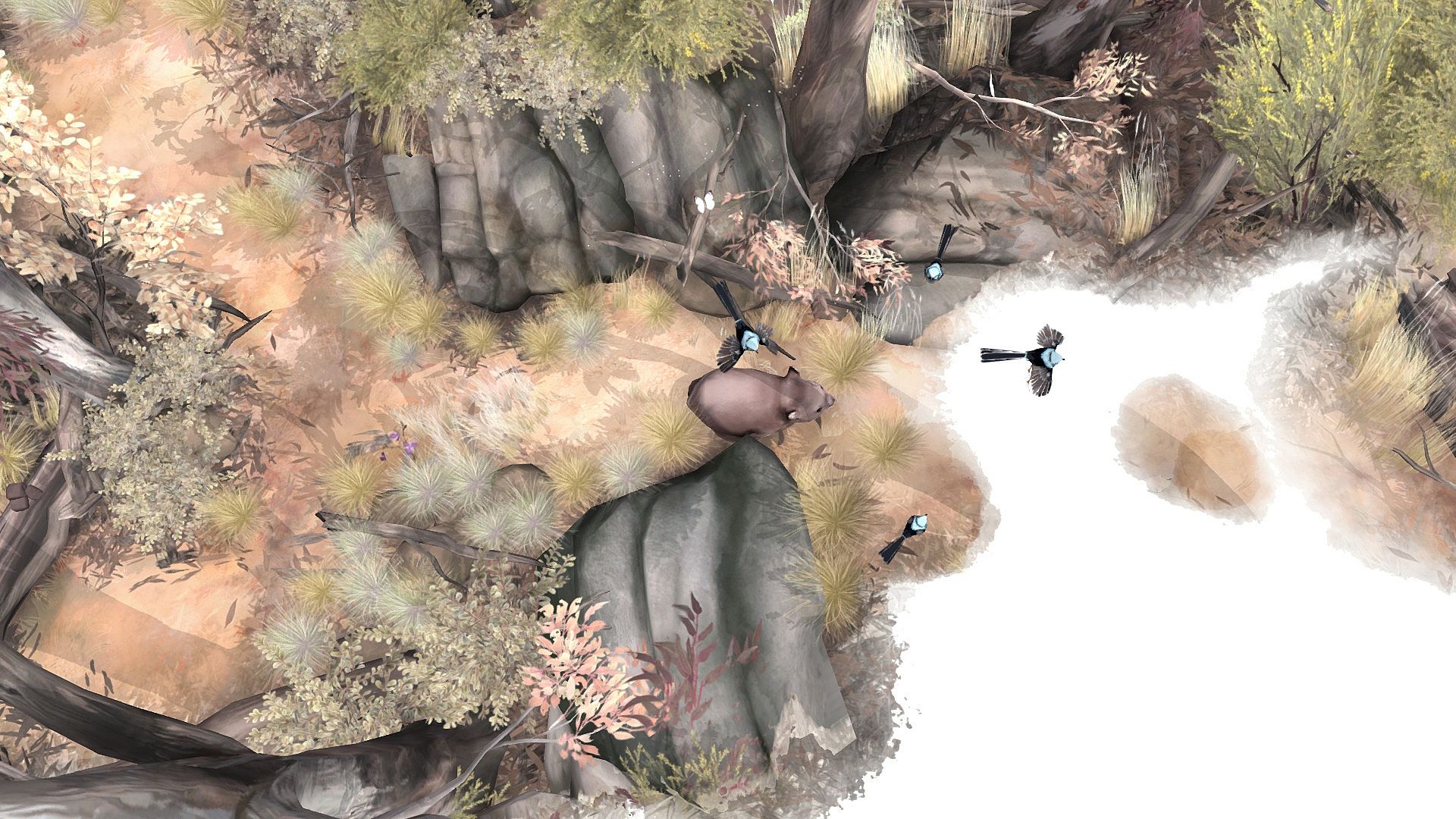
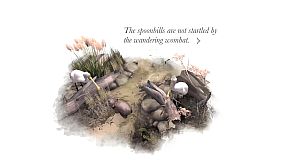
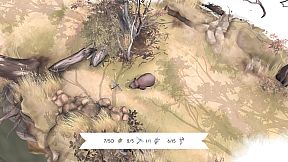
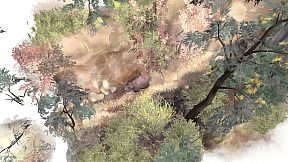
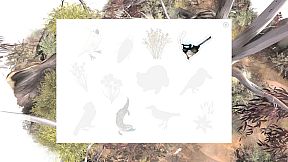
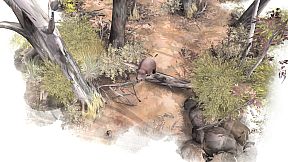
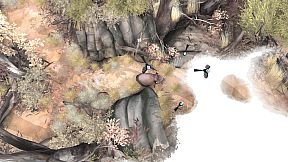
Paperbark stands as a distinctive indie casual adventure title centered on exploration and narrative in a stylized Australian setting. Players take on the role of a wombat navigating the bush following a bushfire, with the environment revealing itself gradually through watercolor illustrations that fill in during movement. The experience emphasizes a gentle pace suited to short sessions, incorporating elements like insect collection and an interactive sticker library alongside a fully narrated tale.
Gameplay
Core movement involves simple directional controls that allow the wombat to wander across illustrated landscapes. As the character progresses, white space gives way to vibrant colors and details, creating a sense of the bush coming alive with each step. Collection of insects serves as a light optional activity that encourages thorough exploration without pressure or complex mechanics. The soundtrack features original string compositions that complement the tranquil atmosphere, while animated storybook sequences punctuate key moments in the journey.
Controls remain straightforward and accessible, designed to minimize frustration during the brief play sessions. Interaction with the environment focuses on observation and gentle progression rather than puzzles or challenges. Voice narration by Georgia Maq delivers the story in a clear, engaging manner that ties the visual and audio elements together seamlessly.
Game Modes
The title operates exclusively as a single-player experience with no additional modes or variations available. Progression follows a linear path through the bush, where the emphasis rests on uncovering the narrative and completing the illustrated scenes at a relaxed tempo. Achievements on the platform track basic milestones such as insect collections and story completion, providing light incentives for players who revisit sections.
Absence of competitive or cooperative elements keeps the focus squarely on the personal journey of the wombat seeking a new home. The structure supports one continuous playthrough, with the option to revisit areas for missed collectibles or to appreciate the artwork again.
Story and Presentation
The narrative draws from Australian storybook traditions and landscape art influences, following the wombat's search amid the transformed bush during a hot summer. Story beats unfold through narrated segments and illustrated cut-scenes that highlight the resilience of the environment and the character's quiet determination. Visuals employ a distinctive watercolor approach that evolves dynamically, supported by sound design that captures ambient bush elements alongside the original music score by Biddy Conner.
Story credit goes to Renee Treml, whose work shapes the emotive core of this compact tale. The overall presentation prioritizes charm and atmosphere over extended length, resulting in a complete experience that fits comfortably within an hour or two of playtime.
Is It Worth Playing?
Paperbark suits players seeking a short, relaxing single-player adventure with strong emphasis on visual storytelling and gentle exploration. Its appeal lies in the unique art style and soothing presentation rather than depth of mechanics or replayability systems. Those who enjoy narrative-driven casual titles or brief escapes into illustrated worlds will find value in the wombat's journey through the recovering bush.
Reception highlights the game's heart and artistic qualities, with many appreciating its role as a pleasant interlude between longer experiences. The lack of ongoing updates or seasonal content reflects its status as a self-contained project, making it a one-time purchase for fans of indie adventures focused on atmosphere and simplicity. If the combination of voice narration, collectible elements, and evolving watercolor landscapes aligns with personal preferences, the game delivers a memorable, low-pressure experience without unnecessary complexity.