





























Moviehouse The Film Studio Tycoon is a strategy and simulation game that puts players in charge of building and managing a Hollywood film studio. Starting in the 1980s with a small crew and short films, the experience centers on business decisions that drive movie production, talent management, and studio growth over decades.
Gameplay
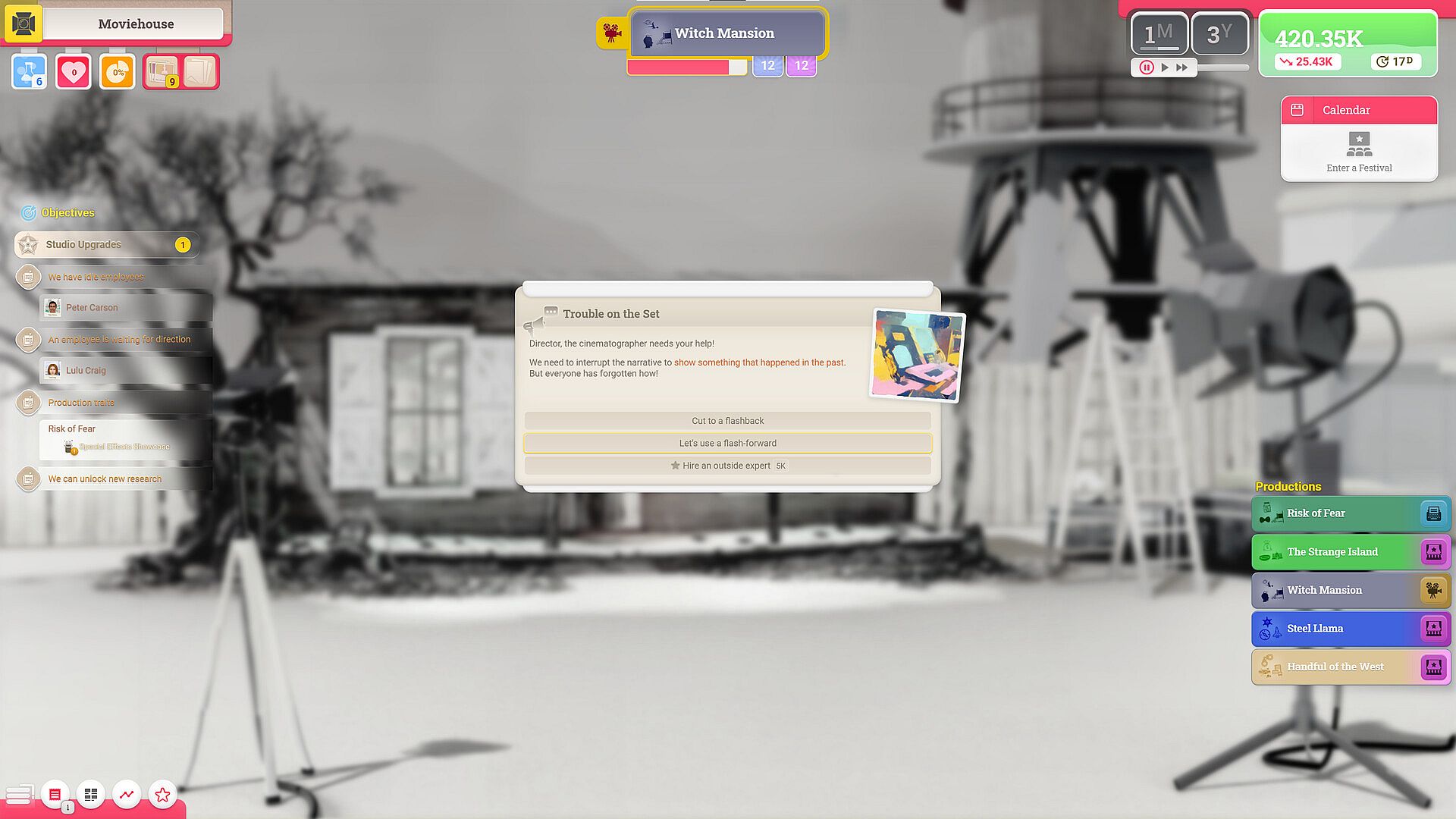
The core loop revolves around producing films through distinct stages. In pre-production, players hire writers and assign genres along with specific script elements such as setting, protagonist, and antagonist. These choices influence how well a project aligns with audience trends and box office potential. Directors and other crew members join the team next, with their skills affecting overall output quality and creative results.
Production follows as a timed process where the studio handles filming and post work. Once complete, distribution decisions determine release strategies and revenue. Success brings profits that fund studio upgrades, larger facilities, and the ability to hire more staff. Competition comes from rival studios, which players can outmaneuver by identifying emerging hit genres and securing event prizes that boost visibility and earnings.
Talent development adds depth. Unknown actors can rise to stardom through strong roles, while underperformers may be sidelined. The game spans multiple eras, allowing the studio to evolve from modest beginnings into a major operation capable of bigger budgets and wider releases. Mechanics emphasize resource allocation, intuition for market trends, and steady expansion rather than direct creative control over scenes or editing.
Game Modes
Moviehouse operates as a single player management simulation with no separate multiplayer or competitive modes. The entire experience unfolds in one continuous campaign that tracks studio progress across decades. Players advance by completing film projects, managing daily operations, and responding to market shifts without branching paths or alternate scenarios.
Progression remains linear in structure yet open in execution. Choices in genre selection, crew assignments, and expansion priorities shape the studio's direction and financial outcomes. Events provide occasional opportunities for bonuses, but the focus stays on the ongoing cycle of script development, production, and distribution within the single persistent world.
Studio Expansion and Competition
Growth requires balancing creative output with smart investments. Early short films generate initial revenue that supports hiring more writers and directors. As the studio scales, players gain access to higher profile projects and larger crews while needing to maintain profitability against rivals.
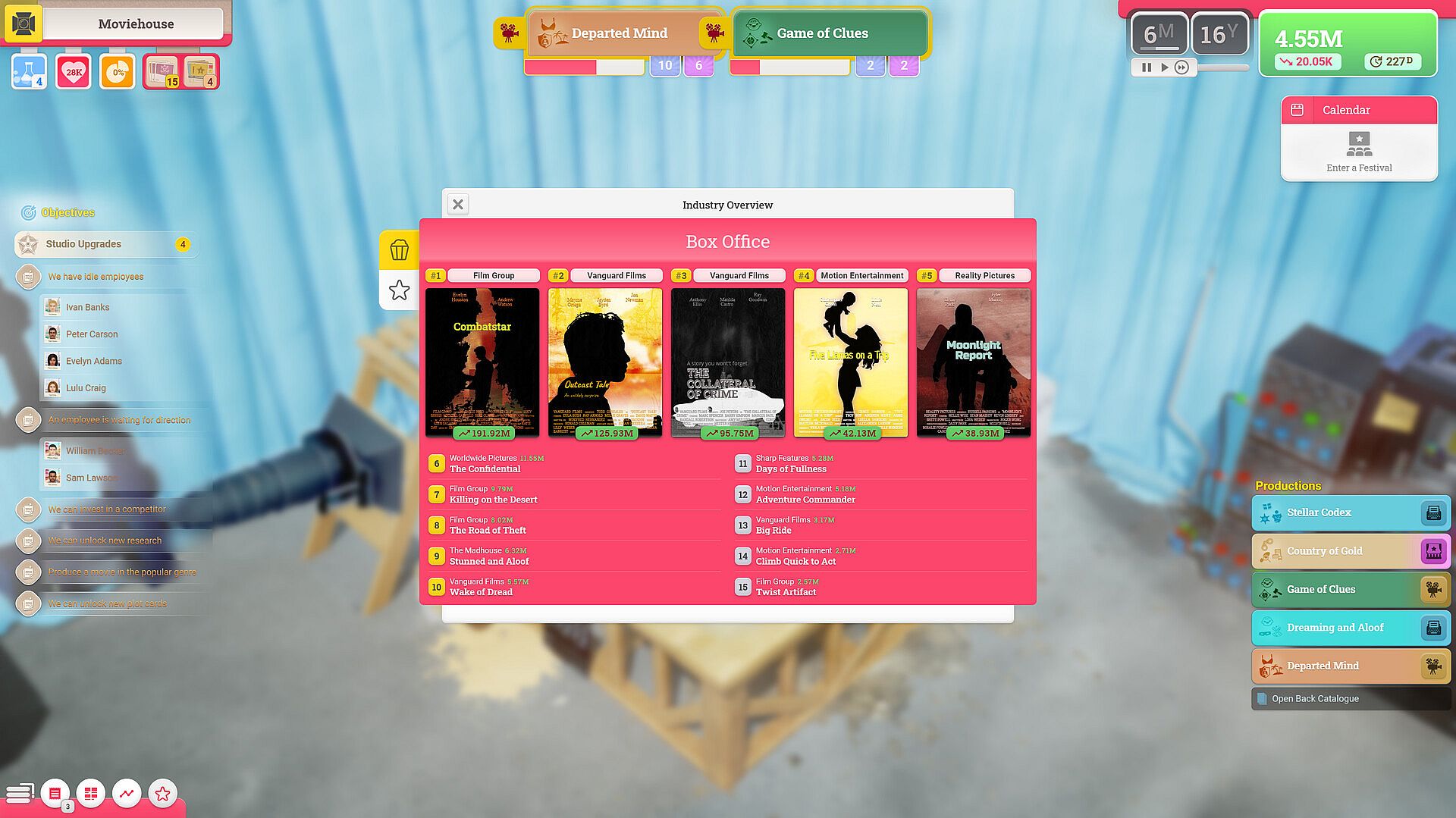
Outsmarting the competition involves tracking box office trends and capitalizing on successful genres. Buying out other studios becomes a late game option that accelerates dominance. The system rewards consistent production and timely decisions over flashy individual achievements.
Is It Worth Playing?
Player feedback highlights a solid premise for those interested in film industry management, yet notes the loop can feel repetitive after initial projects due to limited interactivity during production phases. The game suits fans of casual strategy and simulation titles who enjoy long term progression and resource management without needing constant input.
Reception on Steam stands at mostly negative based on hundreds of reviews, with praise for the thematic appeal and criticism for simplistic mechanics and extended wait times between releases. It delivers a focused tycoon experience for players willing to engage with menus and spreadsheets rather than visual filmmaking sequences. Those drawn to the genre may find value in the steady climb from small scale operations to industry leadership, while others seeking deeper creative tools or variety might look elsewhere. Availability remains on PC with no additional modes or ongoing seasonal content confirmed.














