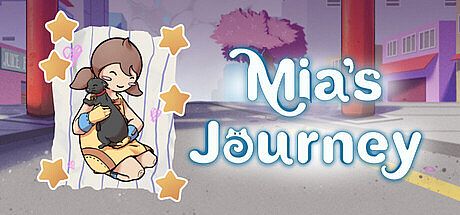


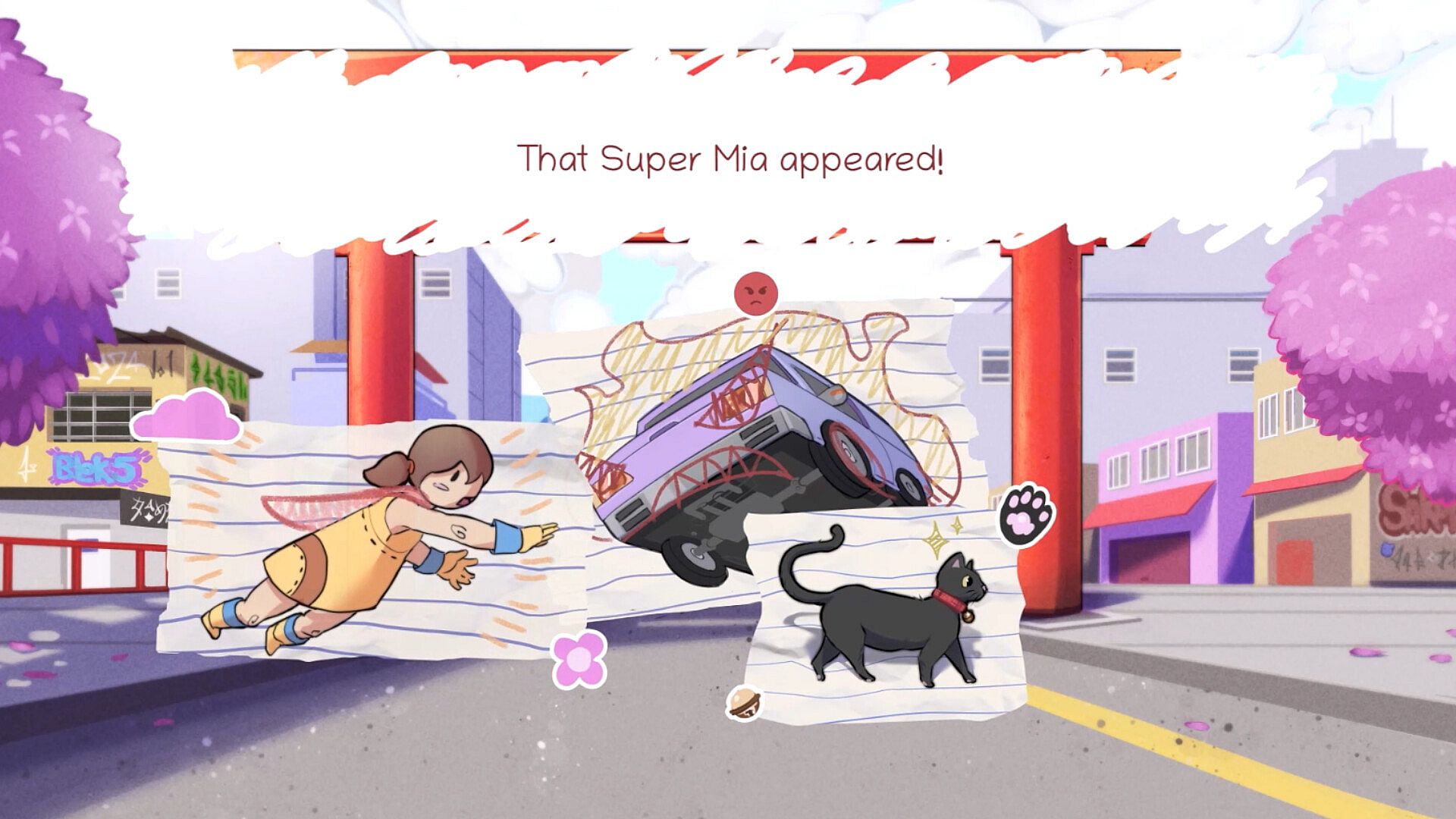
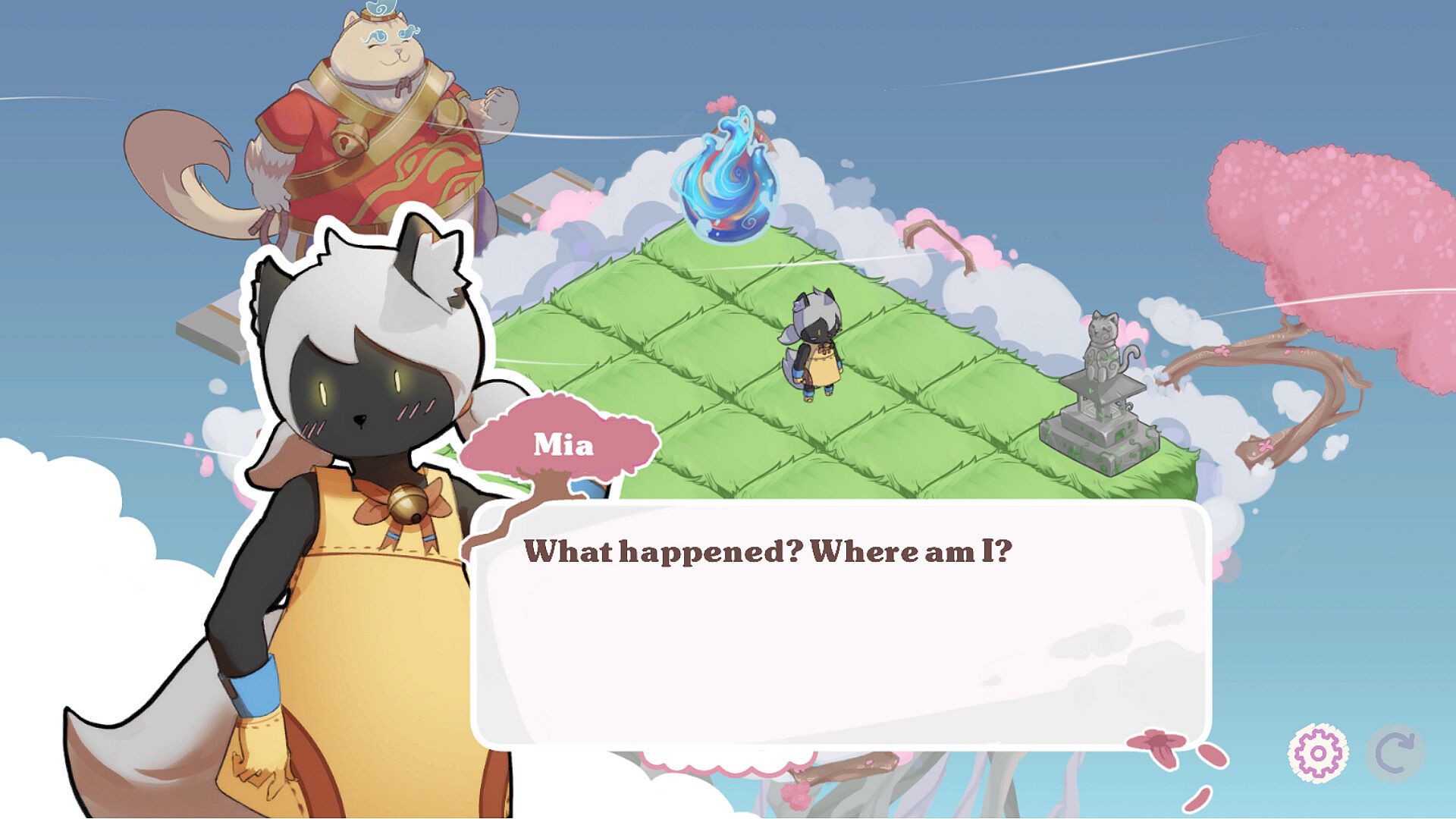
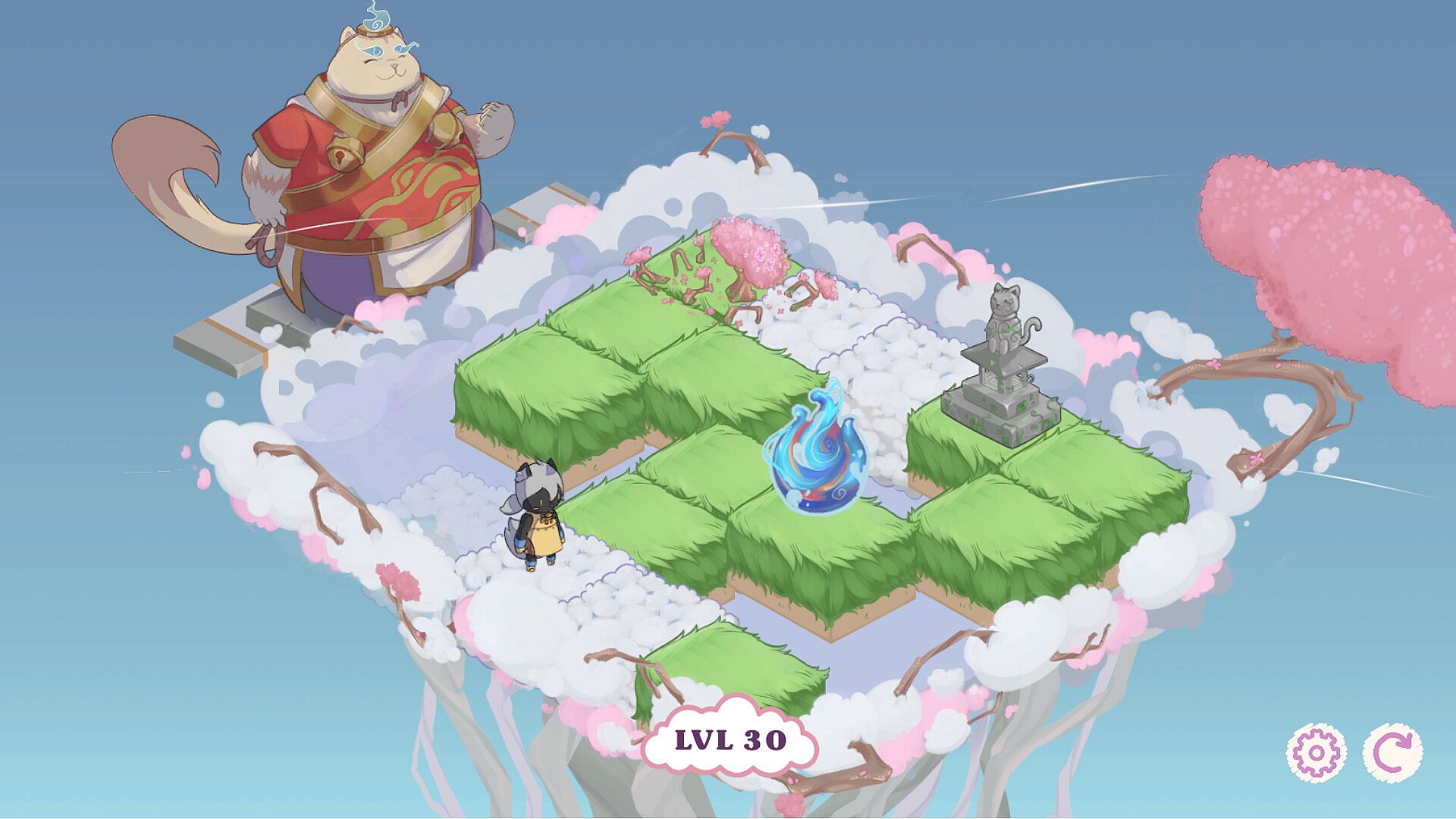
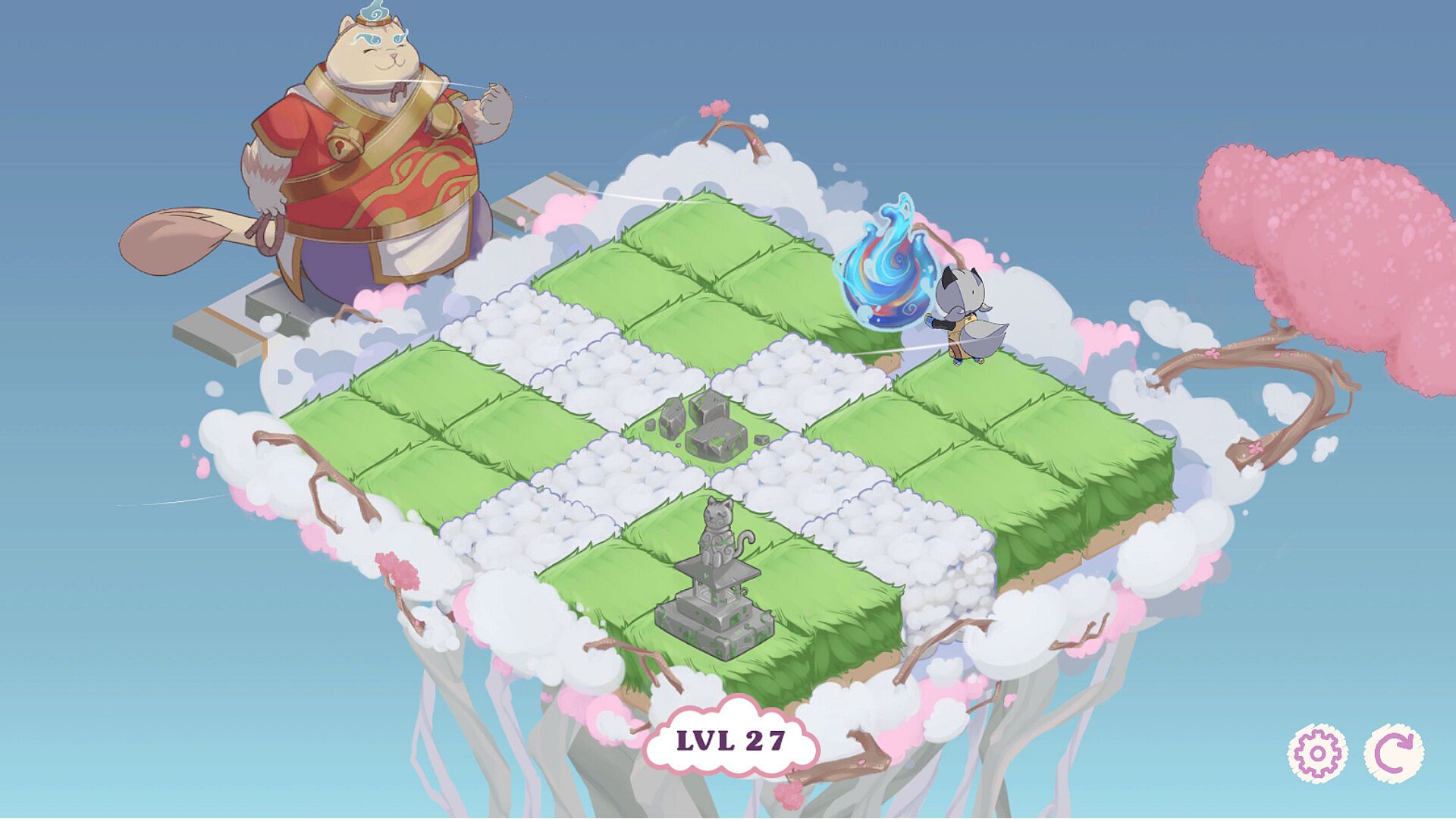
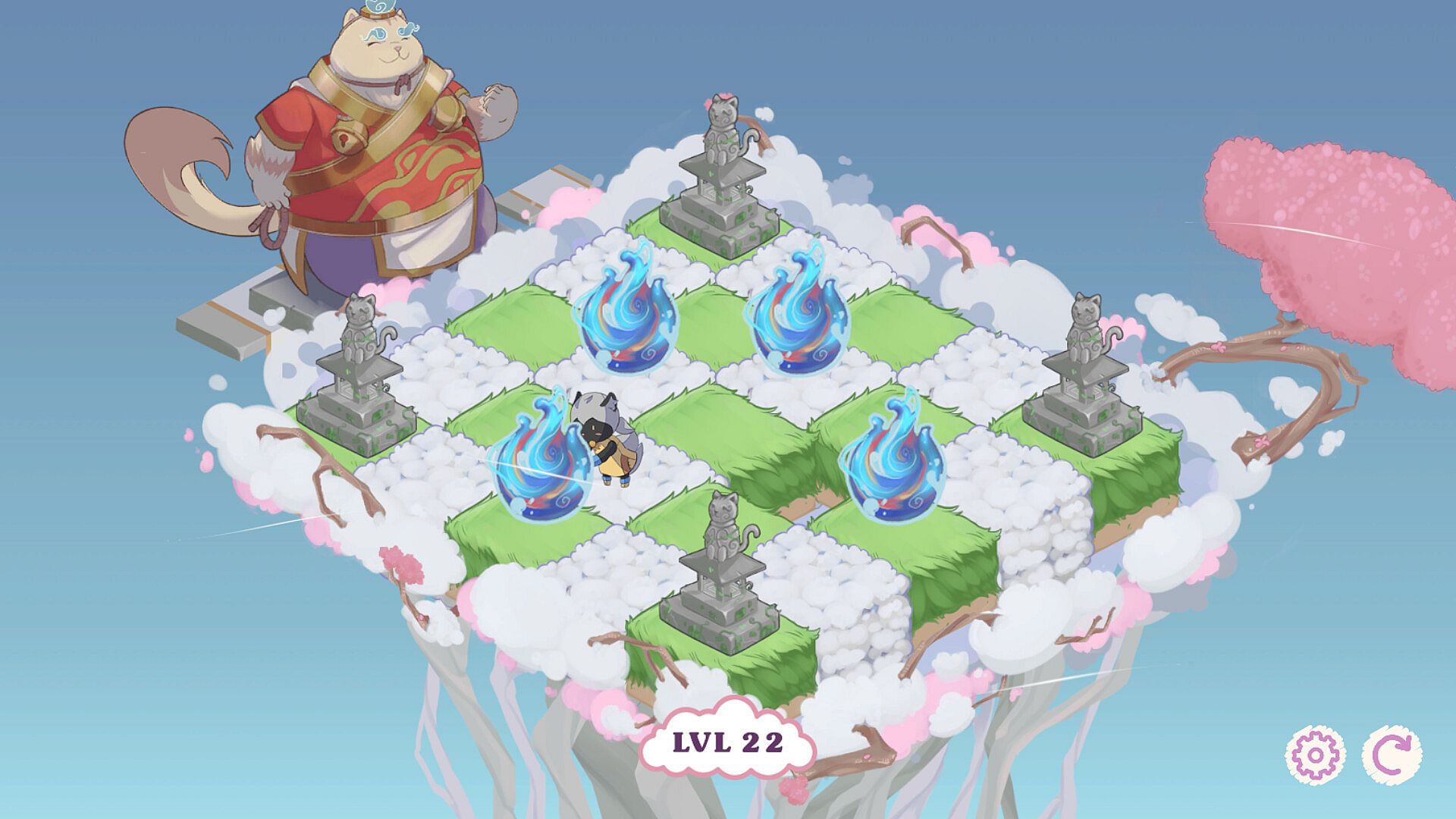
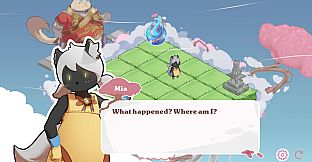
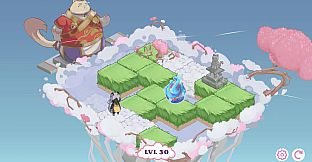
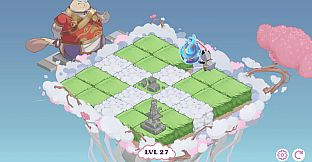
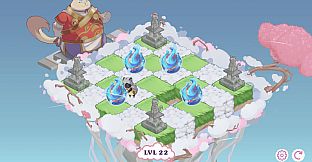
Mia's Journey stands out as a strategy indie casual puzzle game built around thoughtful level design and a gentle narrative thread. Players guide the protagonist Mia, transformed into a cat by a mysterious curse, through a series of interconnected challenges on PC. The experience blends precise spatial reasoning with light storytelling delivered in short visual novel segments that reveal her bond with the Cat God and her efforts to lift the curse.
Gameplay
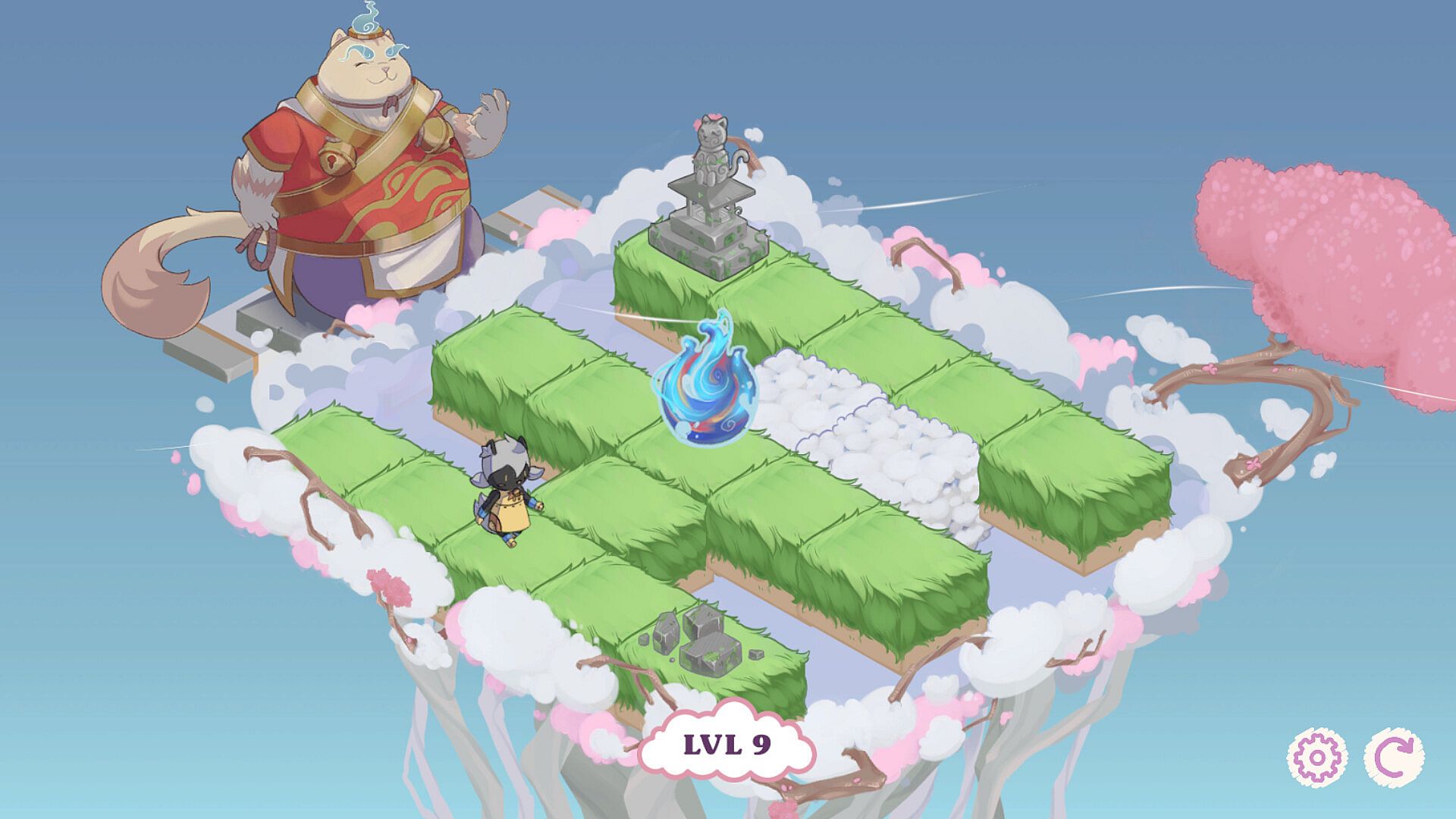
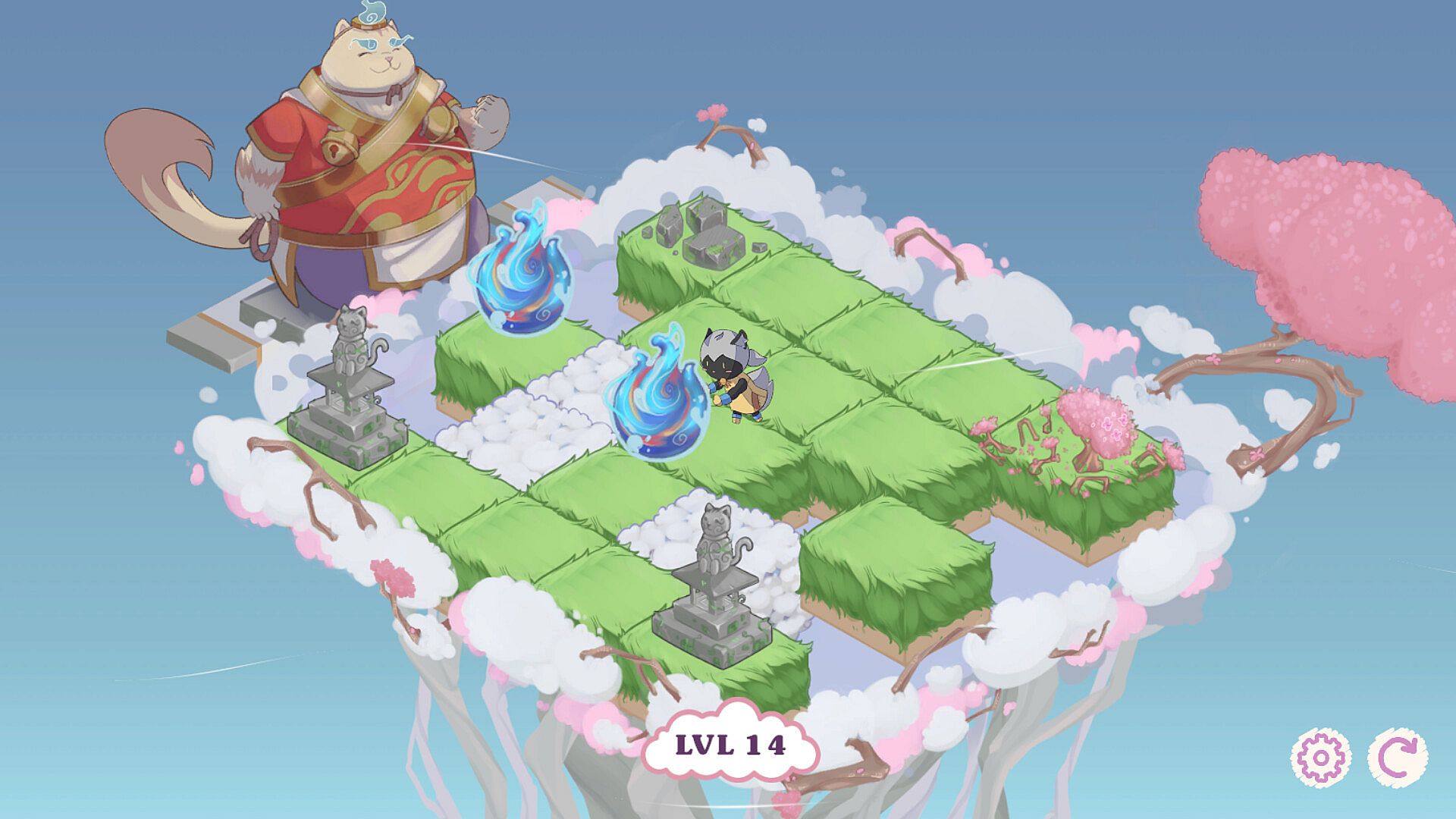
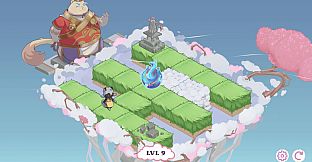
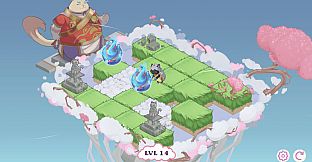
The core loop centers on moving and positioning magical orbs, described as souls, across each stage until every one rests on designated altars or statues. Levels reward careful observation because a single misplaced orb can block paths or trap others, forcing players to restart and try alternate sequences. Some puzzles explicitly support multiple valid solutions, encouraging experimentation rather than a single rigid path. The mechanics stay simple to grasp yet grow more intricate as stages progress, demanding planning and logical deduction without timers or external pressure.
Visual presentation reinforces the cozy tone through charming pixel art that depicts serene environments and expressive characters. Between puzzle sections, brief cutscenes advance the story and introduce personality to Mia and her feline guide. These narrative beats provide context and motivation while keeping the focus on the spatial challenges ahead. The overall pace suits relaxed sessions where players can pause, think, and return without losing progress.
Game Modes
Mia's Journey operates as a single-player experience with no separate competitive or cooperative options. Progression follows a linear sequence of thirty-two hand-crafted levels that steadily introduce new environmental elements and spatial constraints. Each stage builds directly on the previous ones, expanding the range of interactions players must manage while maintaining the same fundamental push-and-place objective.
Within this structure, the emphasis remains on individual problem solving. There are no branching campaigns, endless modes, or randomized challenges; instead, the game offers a contained set of puzzles designed for repeated attempts and incremental mastery. Players advance by completing stages in order, with the visual novel interludes serving as natural breaks that maintain narrative continuity across the full run.
Story and Presentation
The narrative unfolds primarily through the relationship between Mia and the Cat God. Cutscenes placed between puzzle sections reveal incremental details about the curse and Mia's determination to regain her human form. This approach keeps the story light and integrated rather than dominant, allowing the puzzles to carry most of the playtime while the characters provide emotional grounding.
Art direction prioritizes warmth and clarity. Pixel sprites and backgrounds create inviting scenes that contrast with the mental demands of the puzzles. Sound design supports the relaxed atmosphere without overwhelming the focus on spatial reasoning. The combination results in an experience that feels approachable for casual players yet offers enough depth to satisfy those who enjoy methodical puzzle solving.
Is It Worth Playing?
Mia's Journey targets players who enjoy deliberate, logic-based puzzles paired with a modest story framework. Its thirty-two levels provide a self-contained campaign that rewards patience and creative thinking, particularly for those comfortable with spatial manipulation mechanics. The cozy pixel art and narrative touches add personality without complicating the core challenge.
Because the game emphasizes single-player progression and multiple solution paths in several stages, it appeals to anyone seeking a focused puzzle title rather than high-intensity action or multiplayer competition. Availability on PC aligns with the strategy and indie tags, making it a straightforward choice for fans of similar casual puzzle experiences. The absence of additional modes or ongoing seasonal content keeps the package compact and complete upon release.