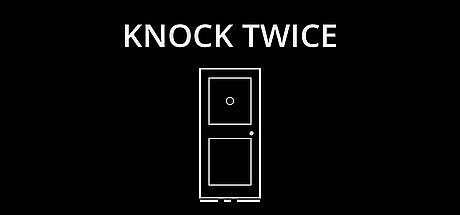


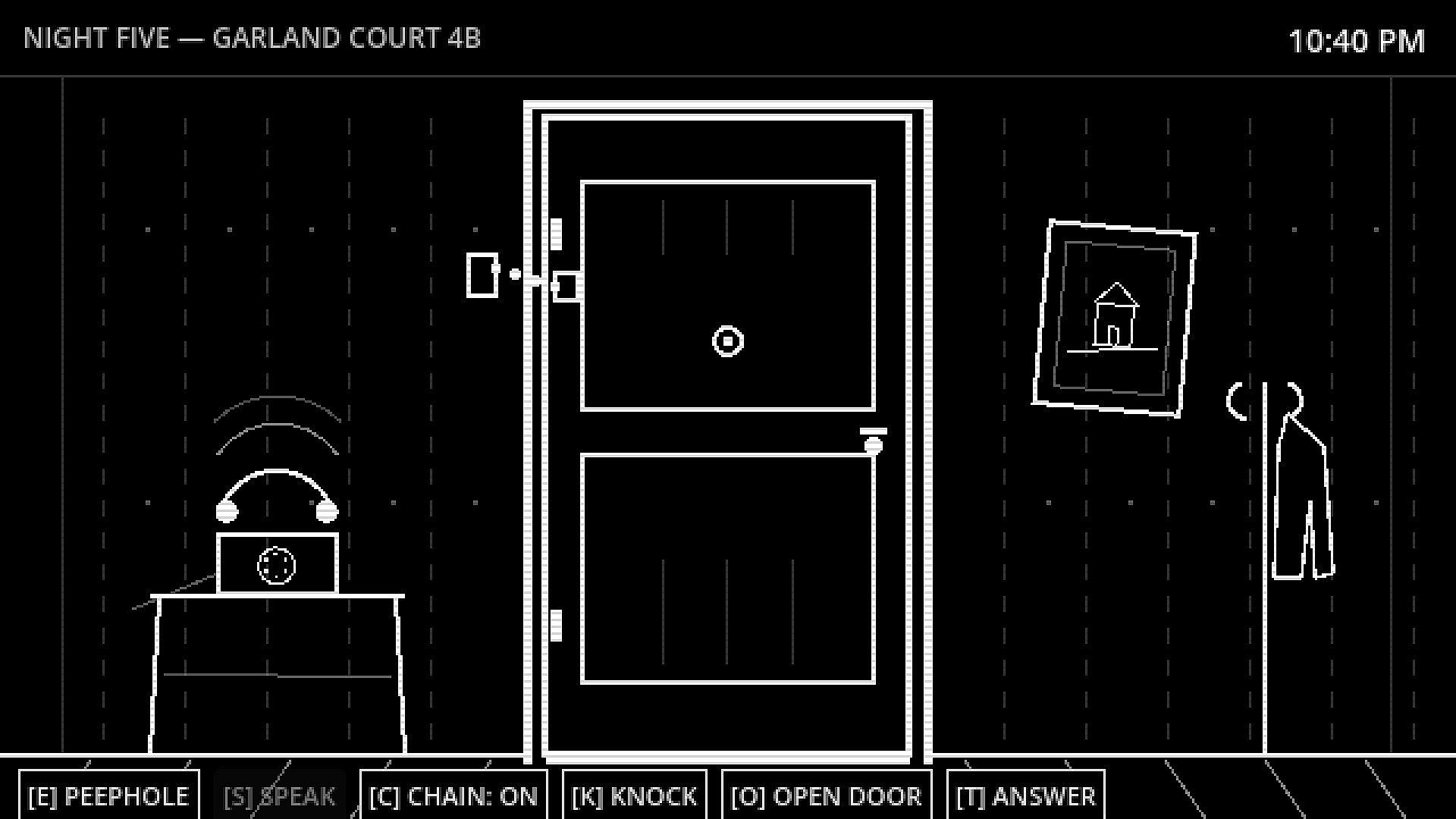
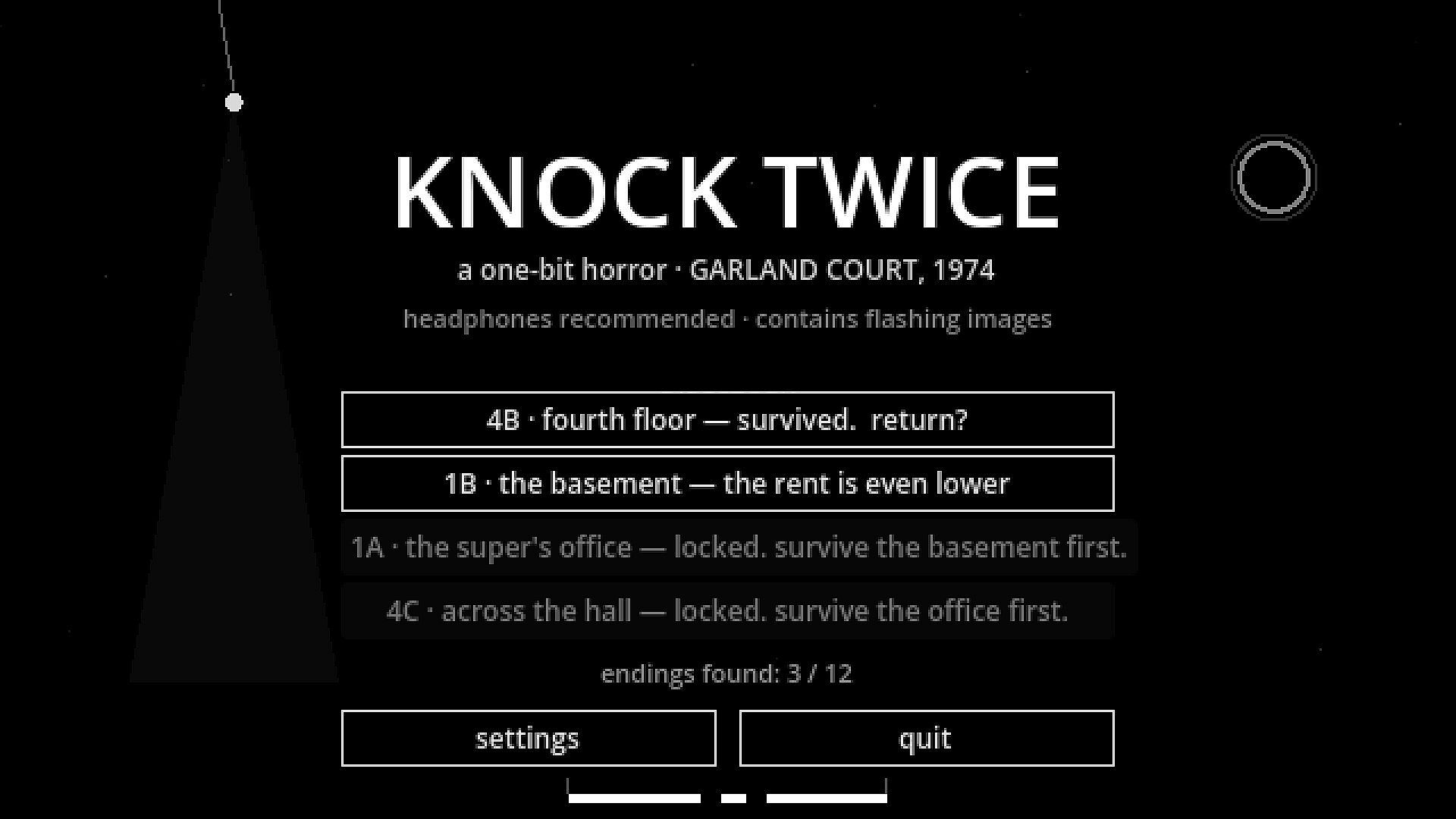
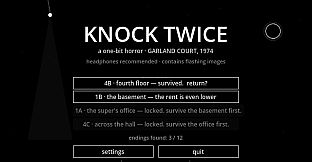
Knock Twice is a single player indie horror game on PC that centers on tension built through sound, observation, and strict rules about doors and knocks. Players take on the role of a new tenant in Garland Court during 1974, where the rent is suspiciously low and the building holds its own set of dangers tied to simple patterns of sound. The experience unfolds across four apartments, each presenting its own set of constraints and threats that force careful attention to detail rather than direct confrontation.
Gameplay
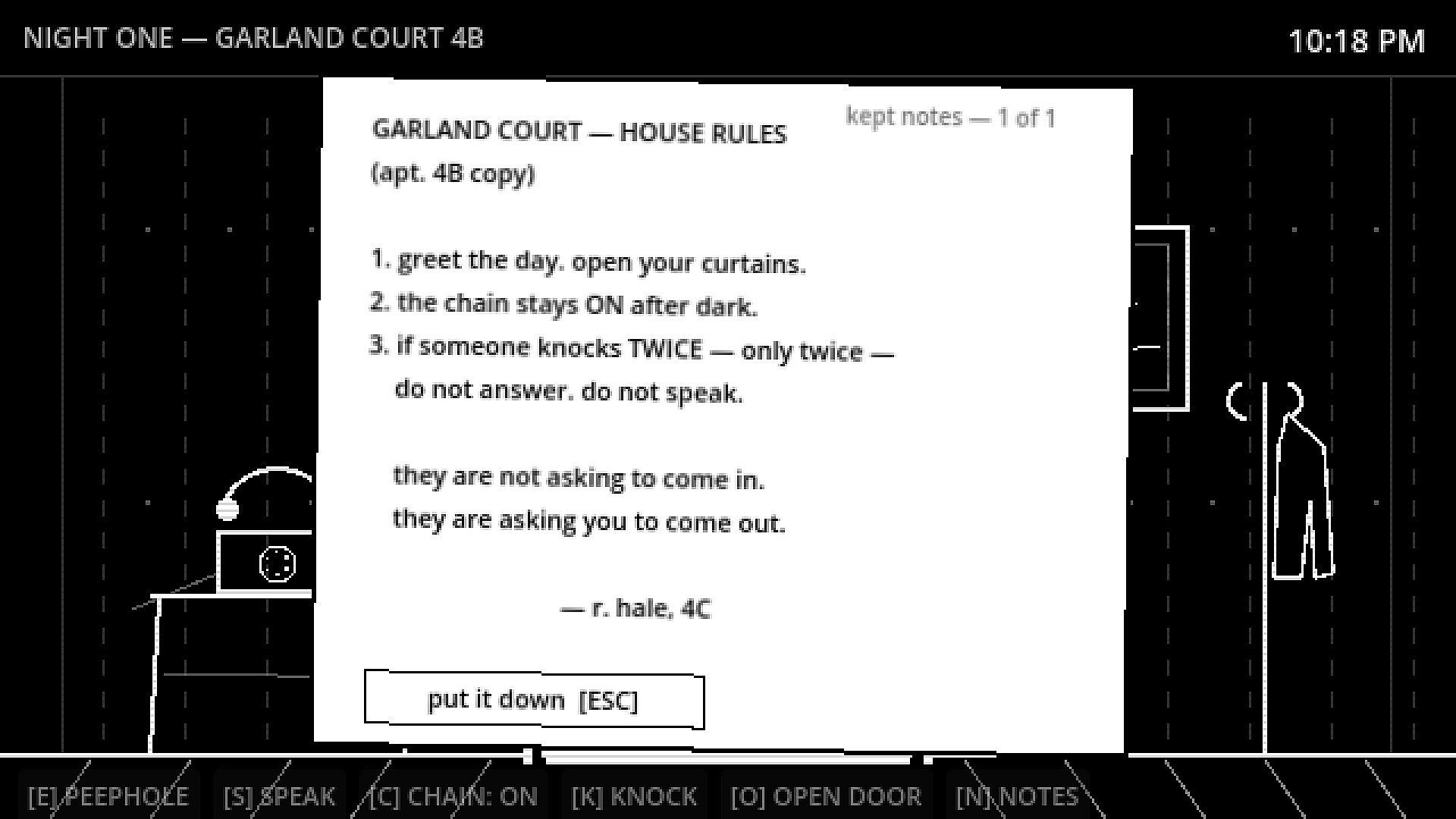
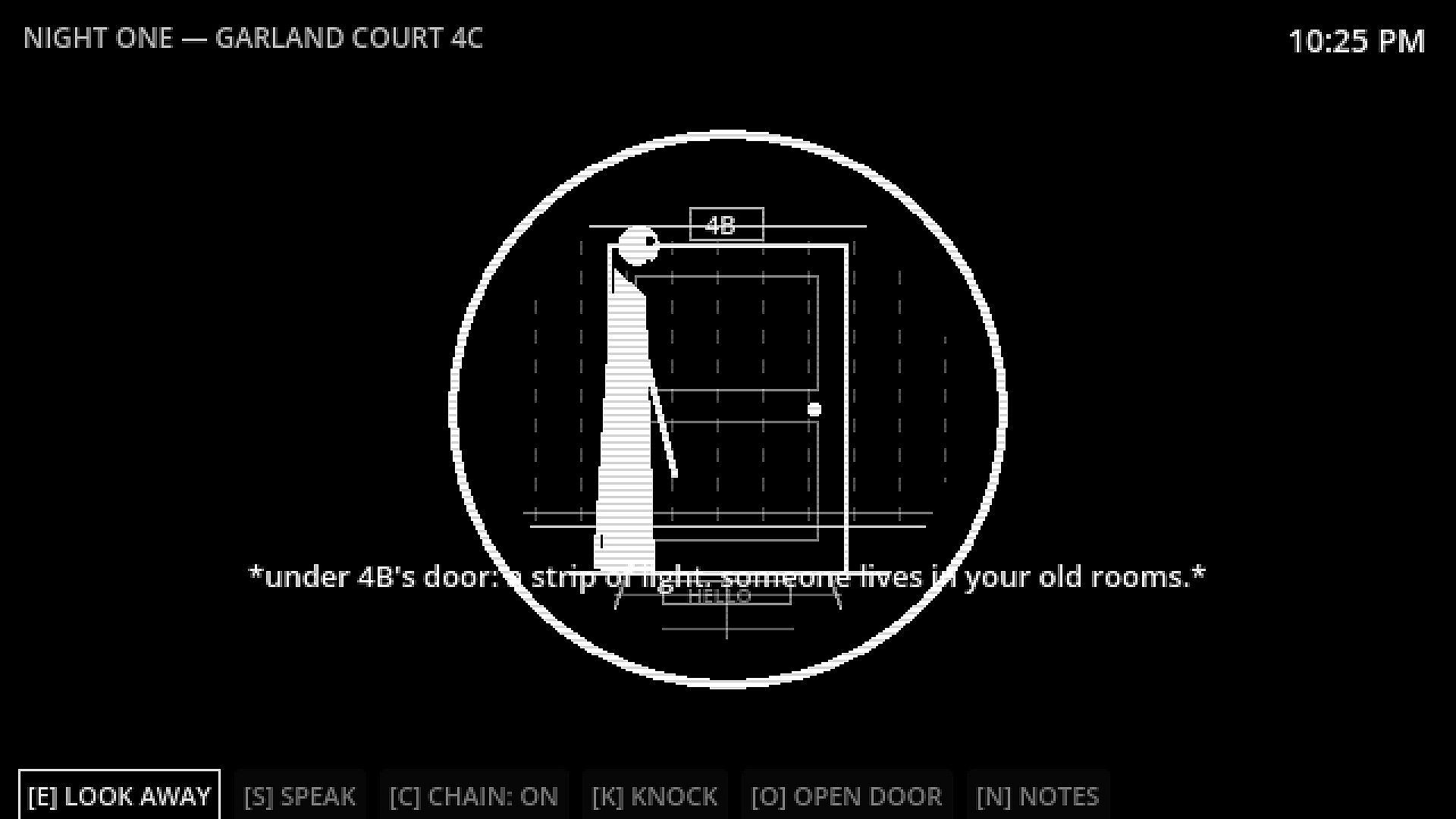
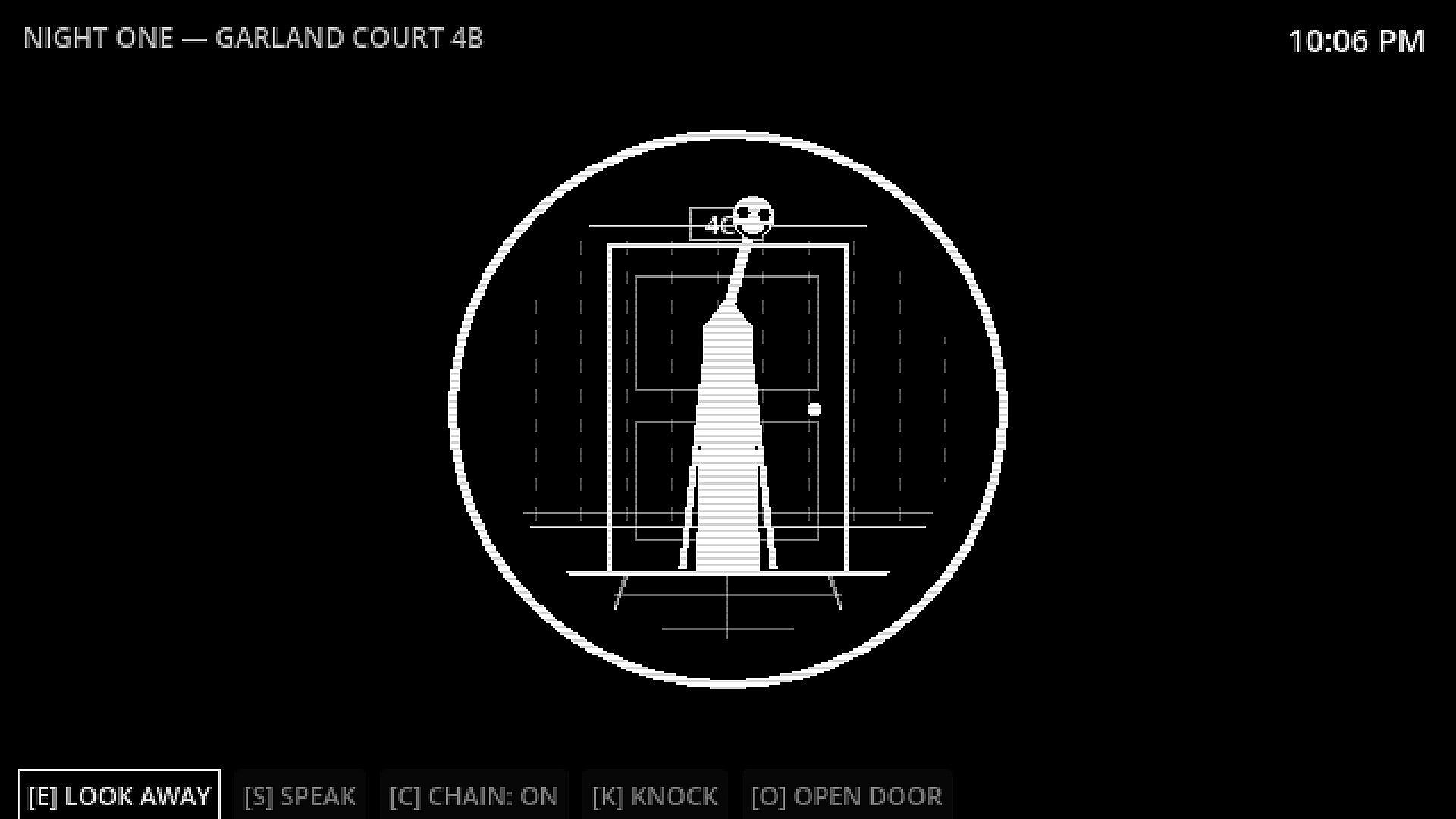
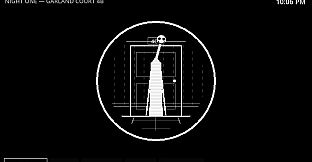
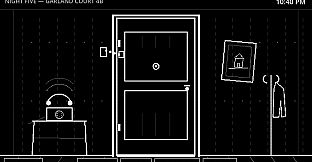
The core loop revolves around interpreting knocks at the door while managing limited tools like peepholes, chains, telephones, and intercoms. In the main apartment on the fourth floor, players learn a knock language over successive nights as power and other systems fail. The visual style uses only two colors in a strict 1-bit format, which means every shape seen through a peephole remains ambiguous and open to misinterpretation. Audio plays a central role because every sound is generated procedurally during play with no pre recorded files, creating unique rhythms for each visitor that must be memorized like enemy patterns in other titles. Headphones are recommended to catch the brief silences that precede every double knock.
Death resets only the current night, allowing players to retain all previously learned information across attempts. Notes and rules can be reviewed at any time, and the difficulty comes from the gradual corruption of safe patterns rather than increasing enemy health or speed. Controls support full mouse and keyboard input with options to adjust text speed, scanlines, and volume levels. The entire run lasts roughly an hour for a first completion, though repeated deaths extend that time as players refine their understanding of each apartment's mechanics.
Game Modes
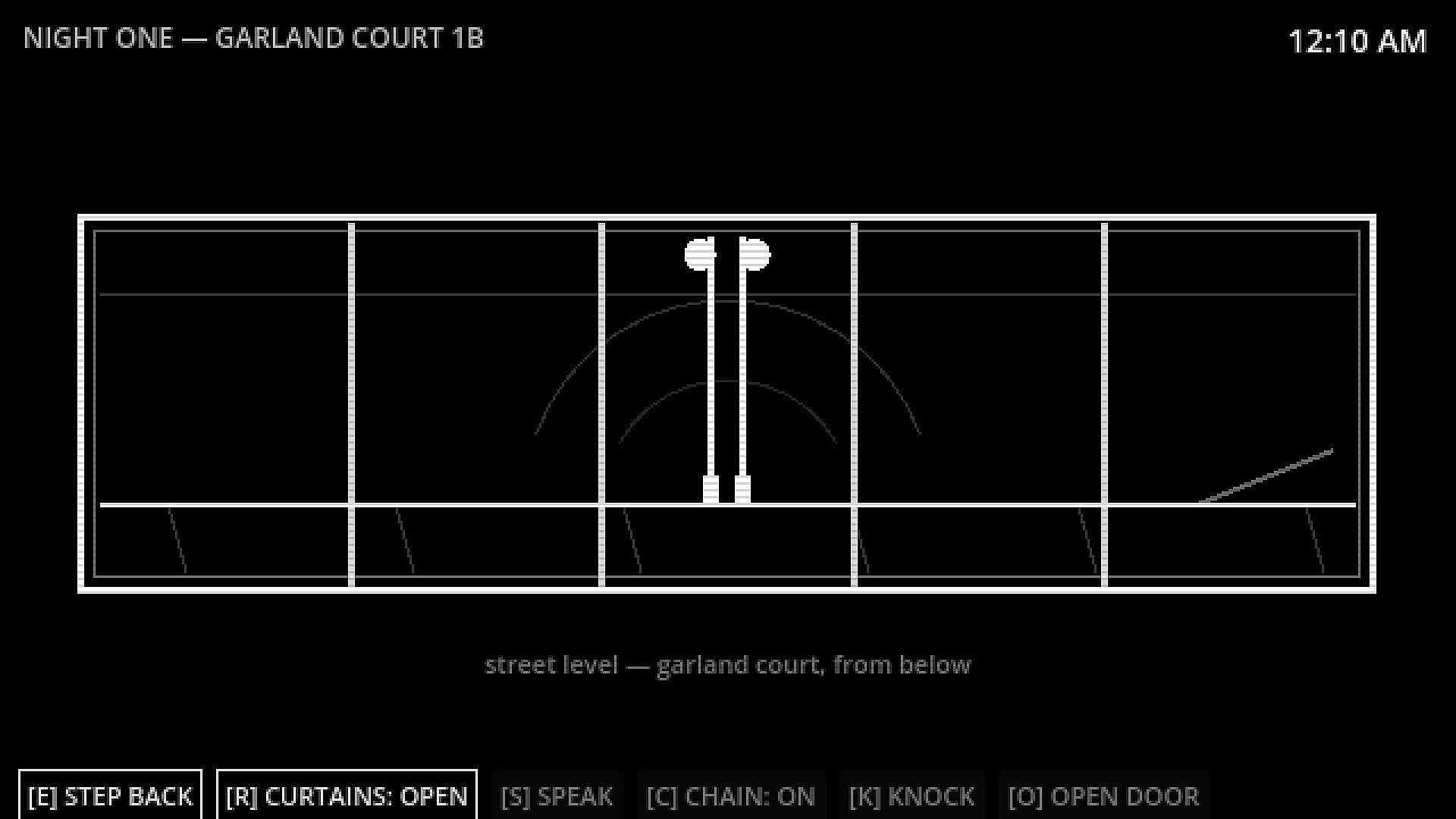
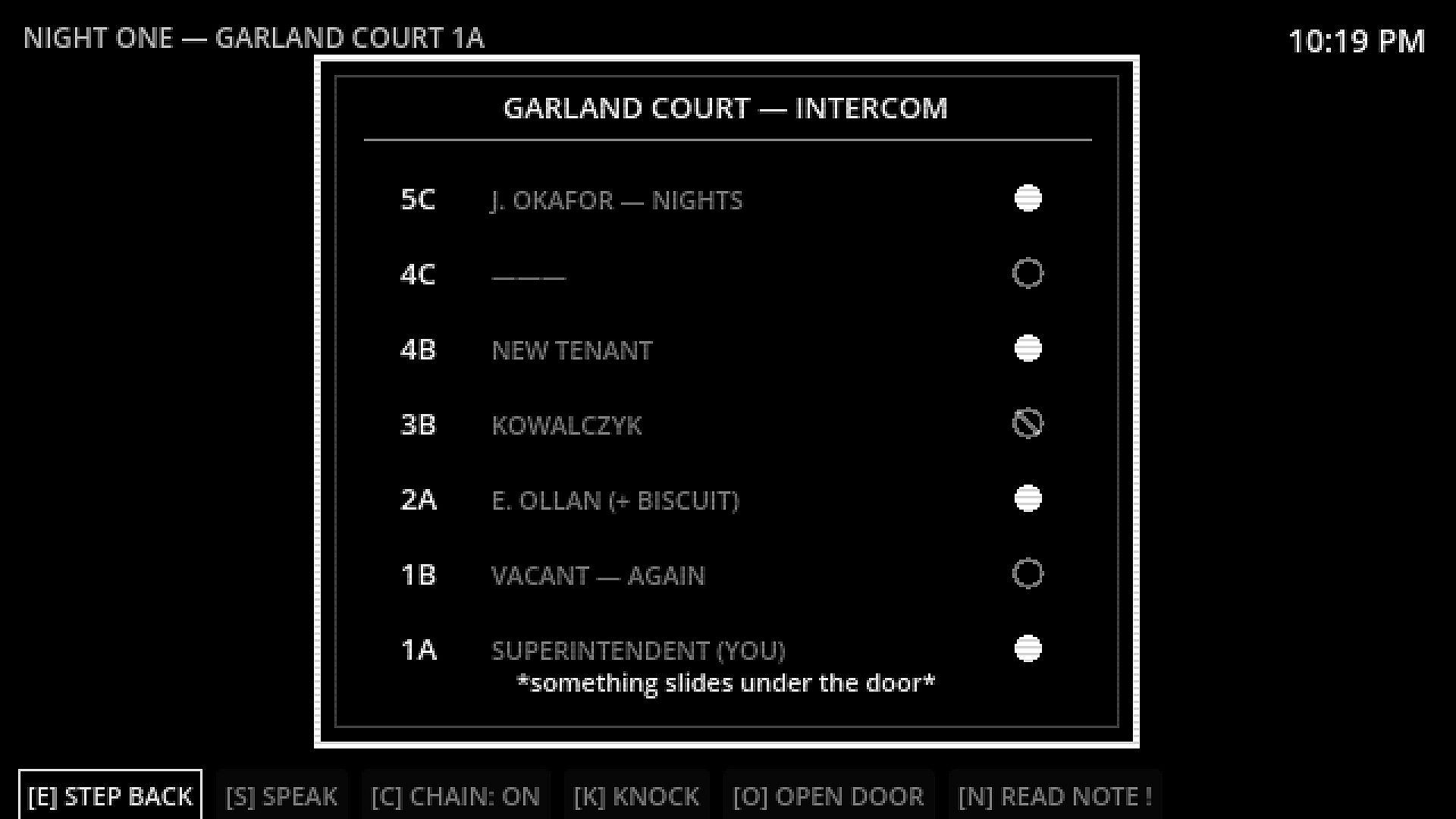
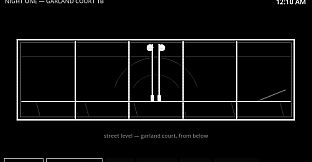
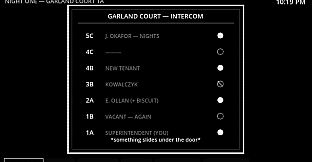
There are no separate multiplayer or competitive modes. Instead the game structures its content around four distinct apartments that unlock progressively and each function as a self contained scenario with its own rules and perspective. The basement apartment removes the peephole entirely and relies on a street level window that shows only approaching shoes, forcing players to judge threats by movement and timing alone. The superintendent's office places the player in control of an intercom board where deciding who to buzz in affects lights and names upstairs. The apartment across the hall reverses the viewpoint so players knock from the outside while observing someone else repeat familiar mistakes. These scenarios build on one another without traditional branching paths beyond the overall narrative choices that lead to different conclusions.
The Apartments and Their Mechanics
Each of the four units emphasizes a different instrument of dread while stripping away previous safety nets. The fourth floor unit introduces the telephone and power failures that escalate over nights. The basement focuses on visual cues from footwear and closed curtains after midnight. The office requires weighing the consequences of granting entry to unknown visitors. The final unit places the player on the opposite side of the door, limited to knocking as the only form of communication. Across all of them the 1-bit aesthetic and runtime generated audio ensure that certainty remains elusive, turning simple observation into the primary challenge. Fourteen nights in total span the unlockable apartments, and twelve endings exist, one of which loops back to the initial house rules provided at the start.
Is It Worth Playing?
Knock Twice suits players who enjoy short, focused single player horror experiences built around deduction and pattern recognition rather than combat or exploration. Its procedural audio system and strict visual limitations create a consistent sense of uncertainty that rewards careful listening and note taking. The game includes flashing images and sudden loud sounds, so those sensitive to such effects should consider that before starting. With no ongoing updates or seasonal content confirmed, the title stands as a complete package of four interconnected scenarios that can be revisited for alternate endings. Those drawn to psychological tension through sound design and rule based systems will find the mechanics engaging, while players seeking action or longer campaigns may prefer other options in the indie horror space.