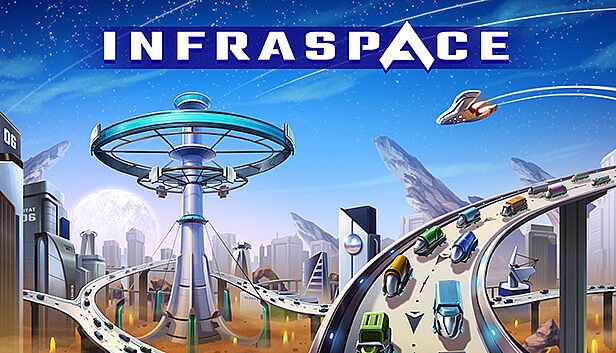















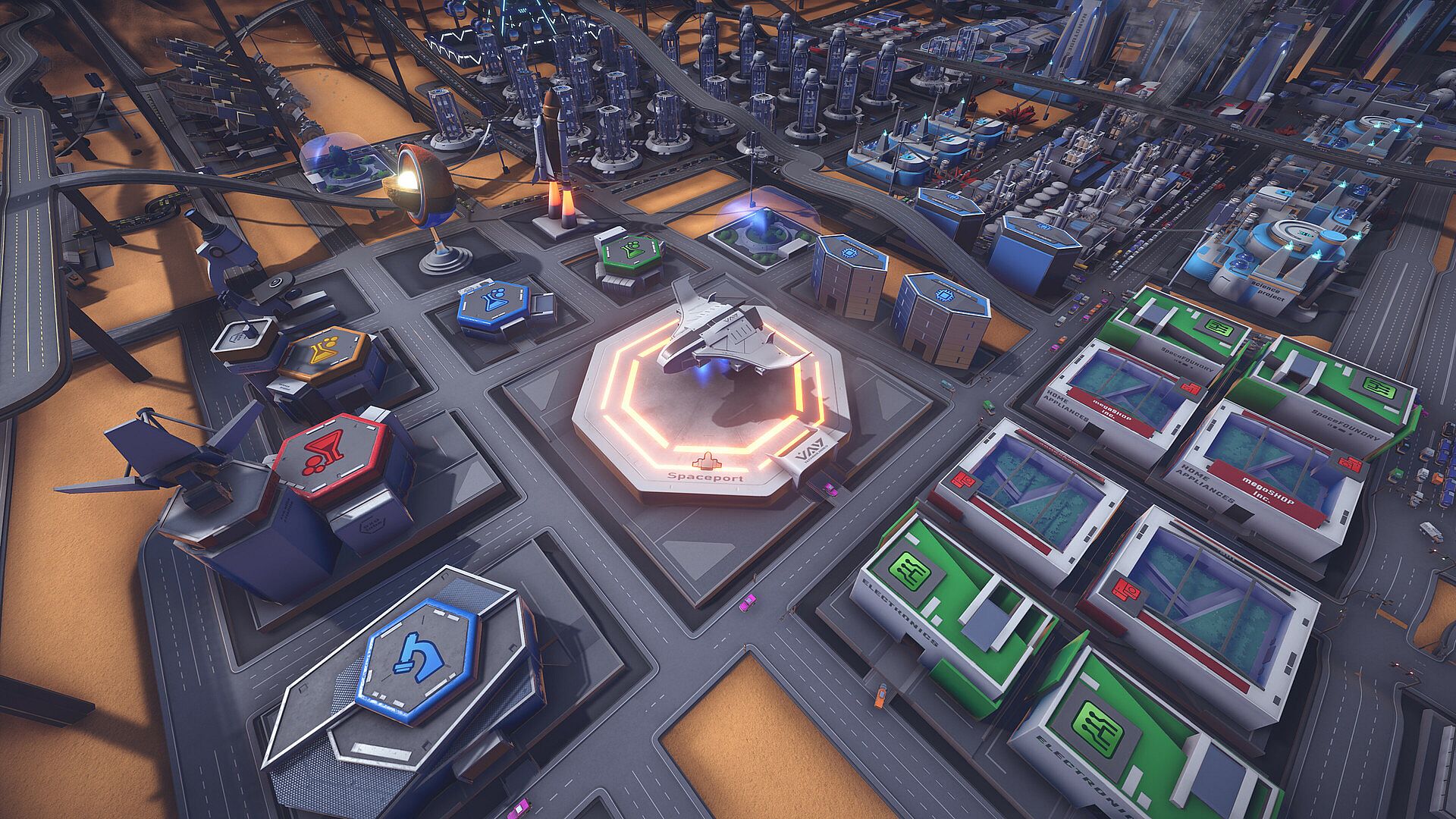
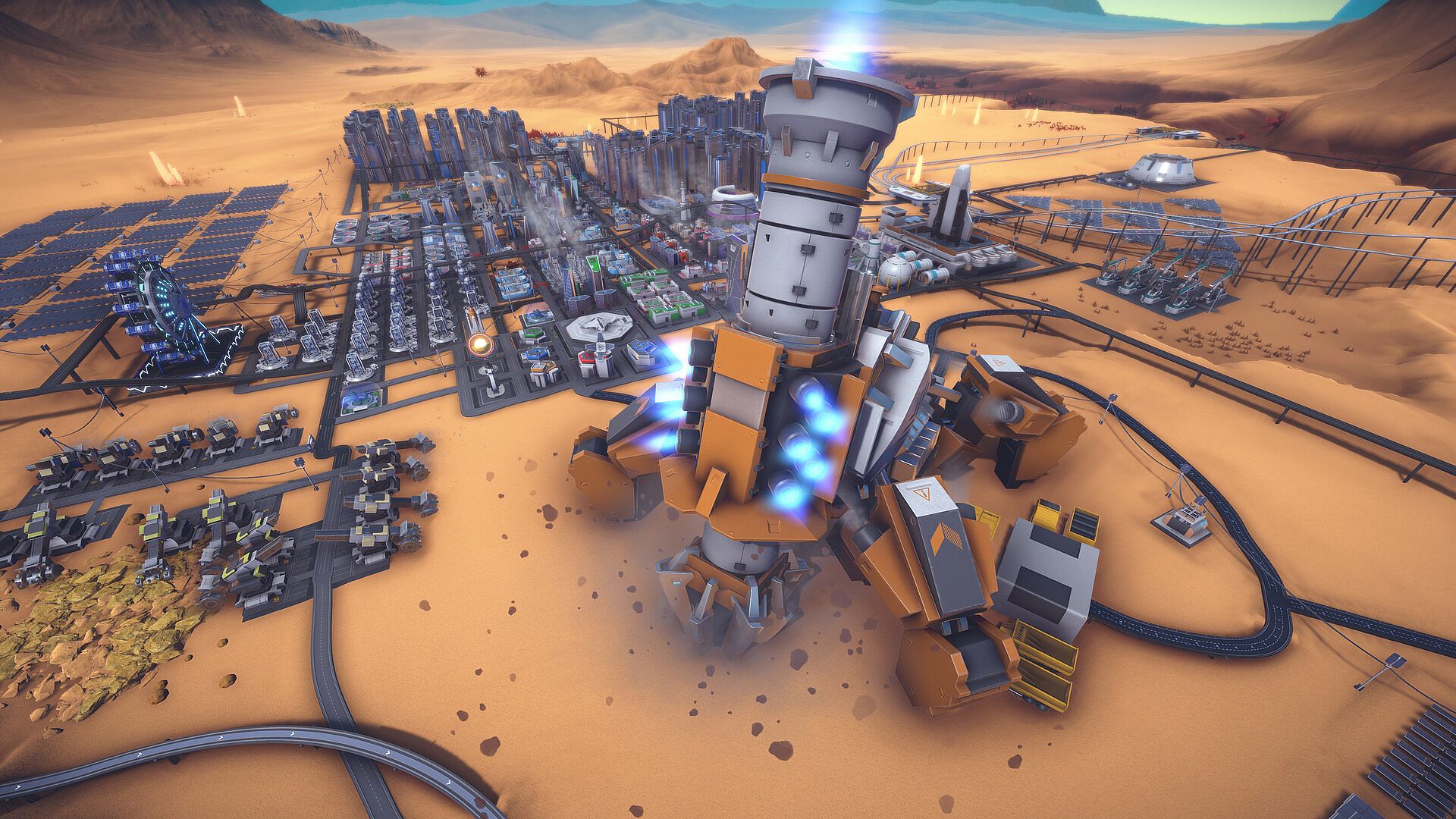
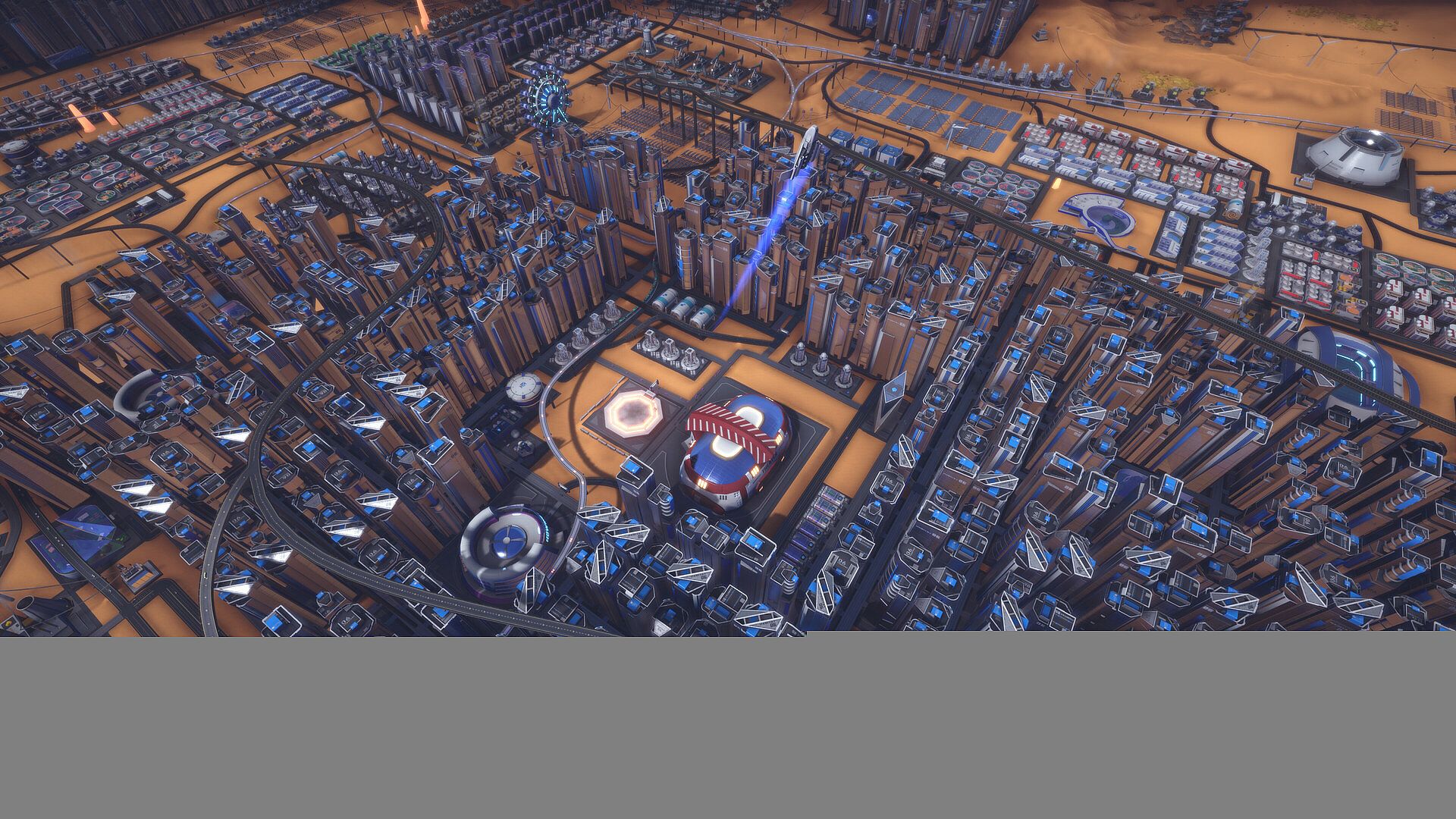
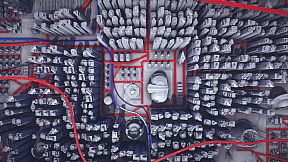
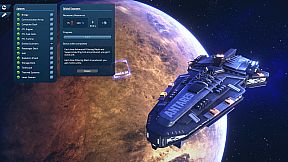
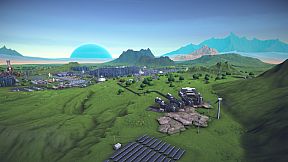
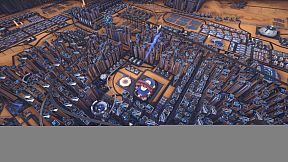
InfraSpace is a strategy and simulation game that puts players in charge of building and managing a colony on an alien planet. As a sci-fi city builder focused on production chains and logistics, it emphasizes careful planning of resource extraction, processing, and delivery across expanding settlements. The core experience revolves around establishing sustainable infrastructure without relying on abstract currencies, forcing direct engagement with mining, manufacturing, and transport systems from the outset.
Gameplay
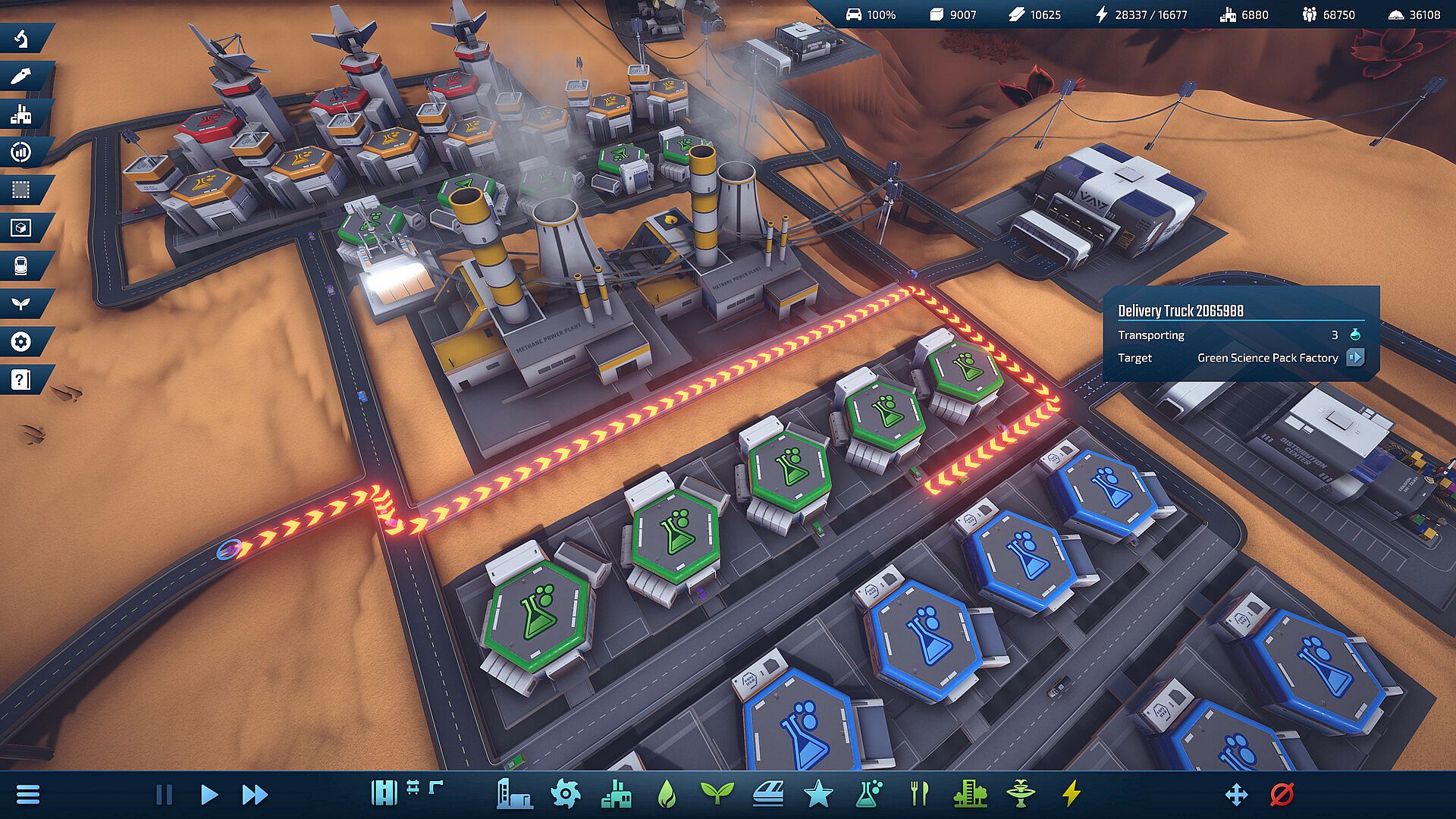
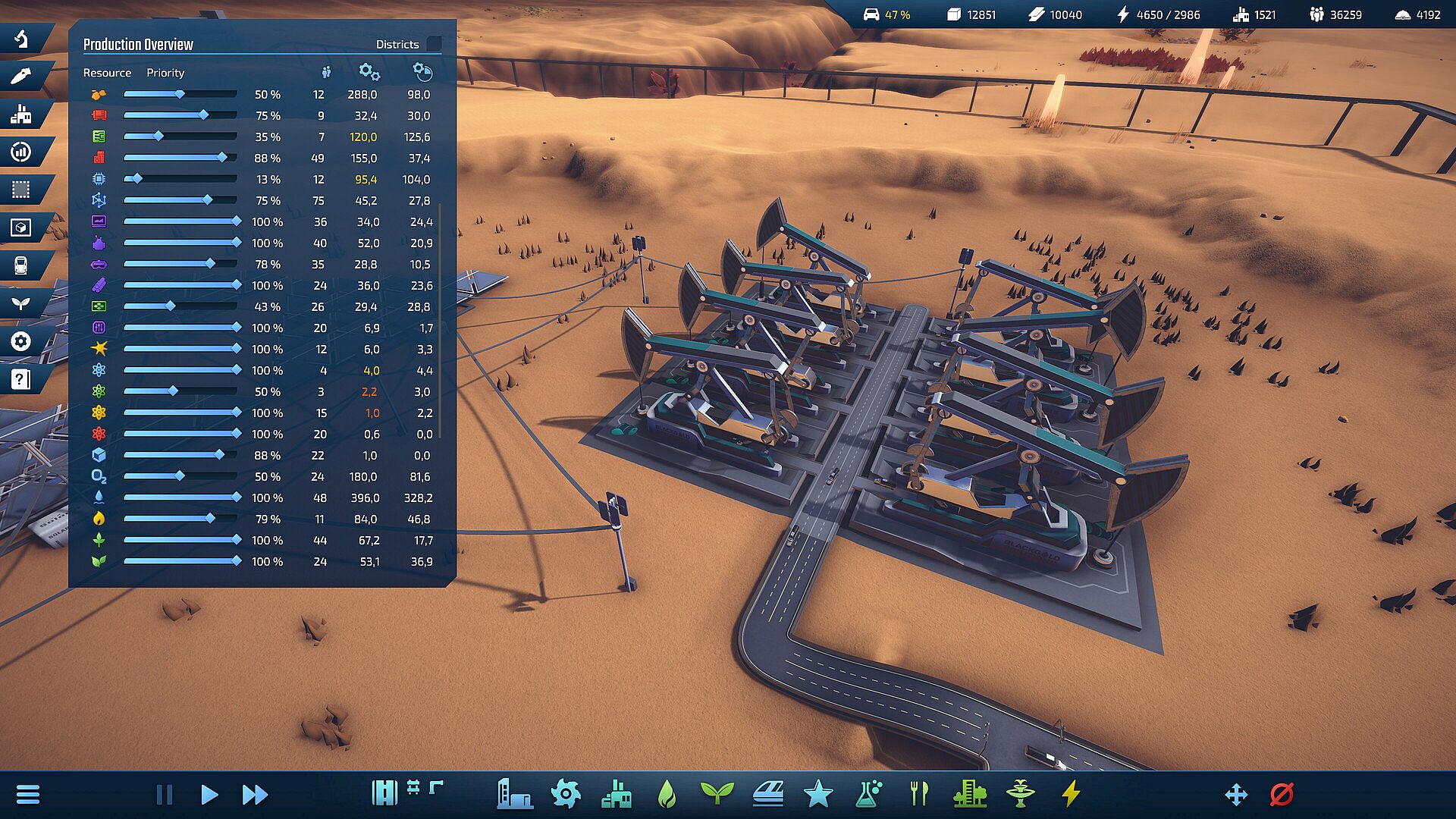
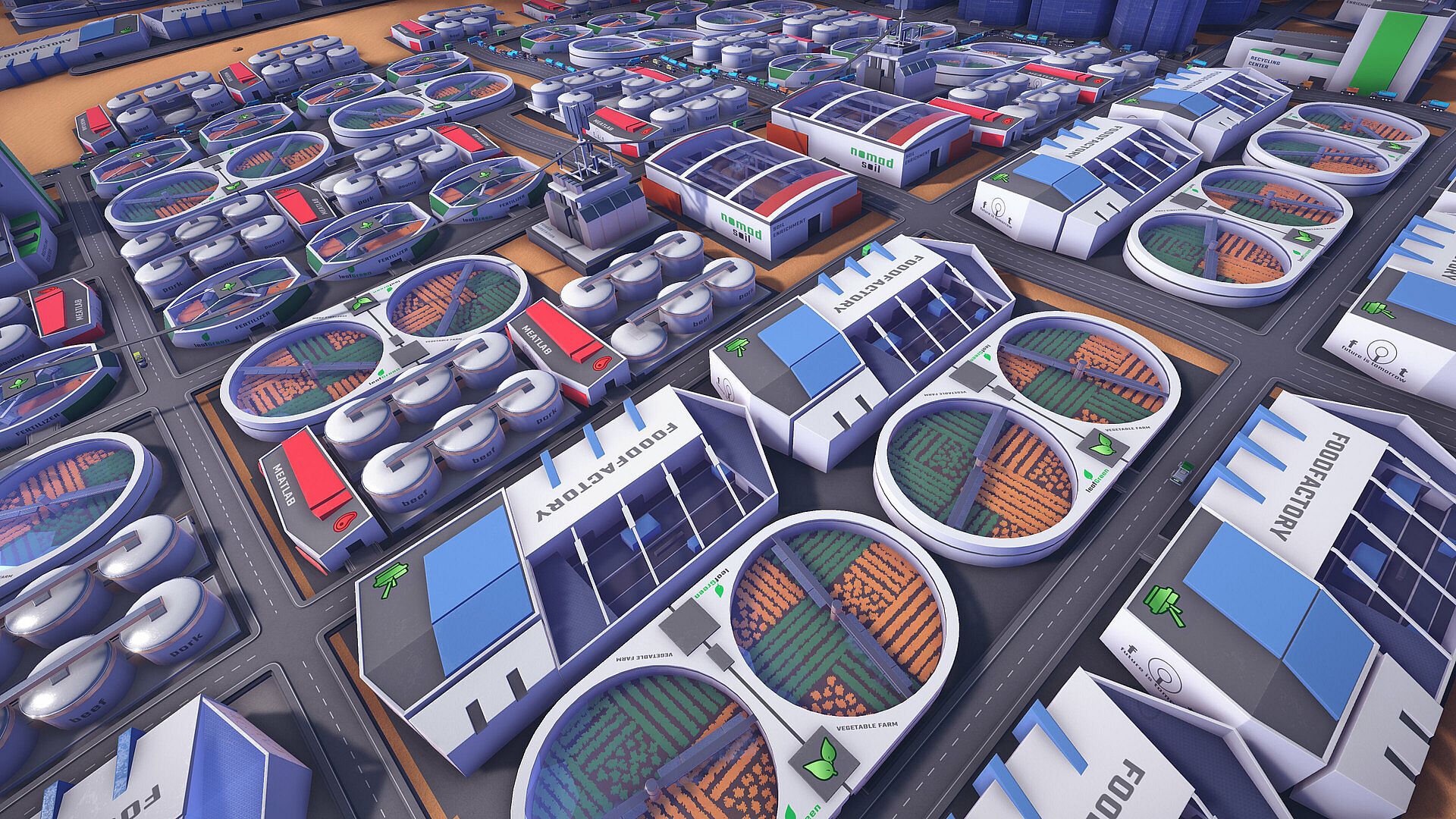
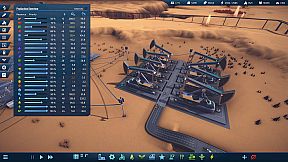
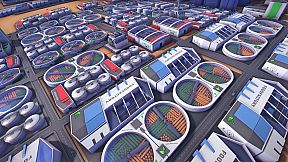
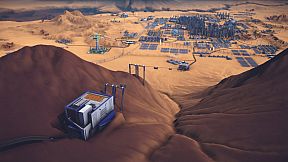
The gameplay centers on creating interconnected production lines that turn raw materials into usable goods. Players begin by directing initial colonists to extract iron, carbon, sand, and sulfur, then construct facilities like steel mills and concrete factories to build basic infrastructure. Food and oxygen production follow similar chains, requiring ongoing oversight to prevent breakdowns in supply.
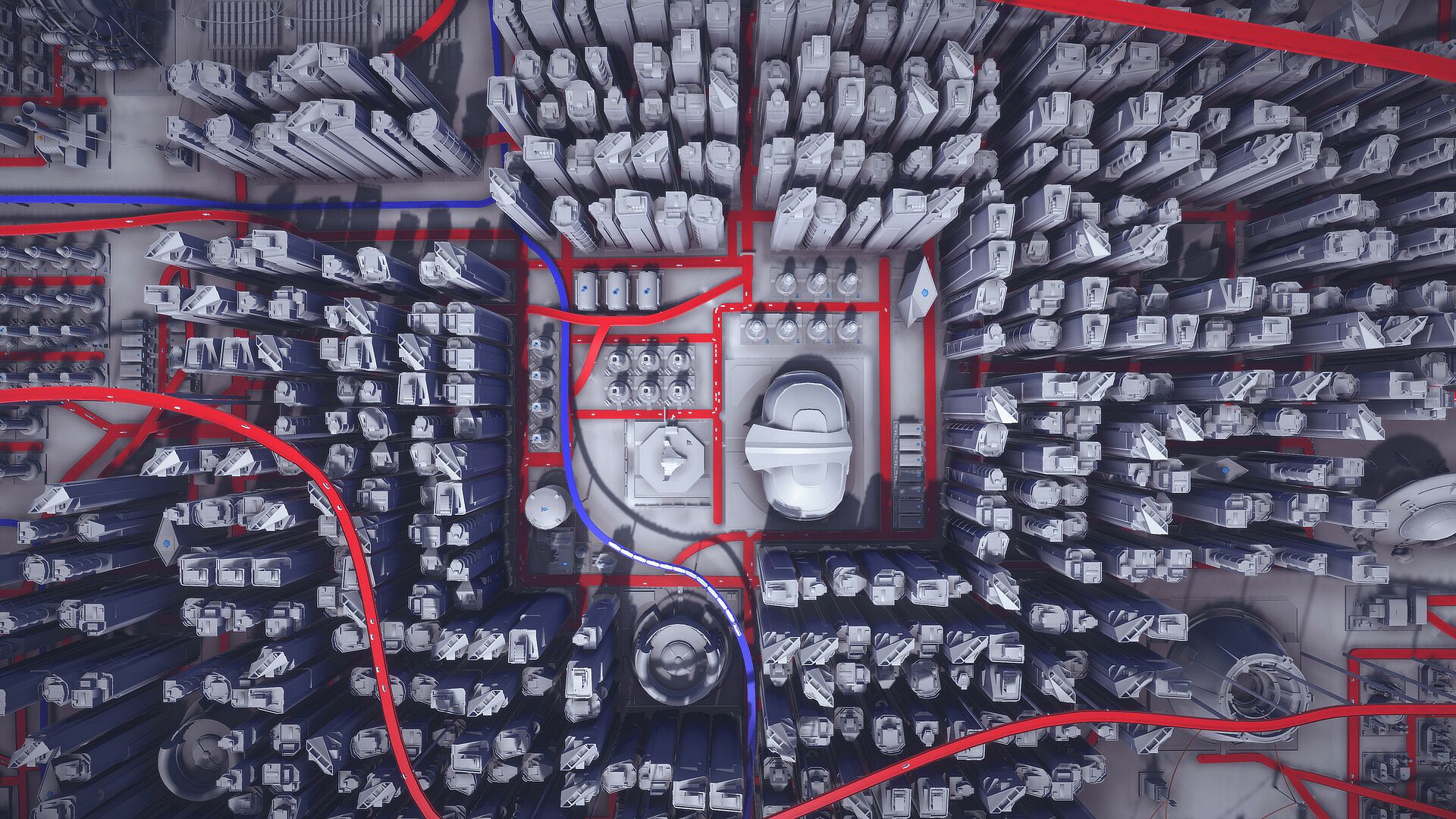
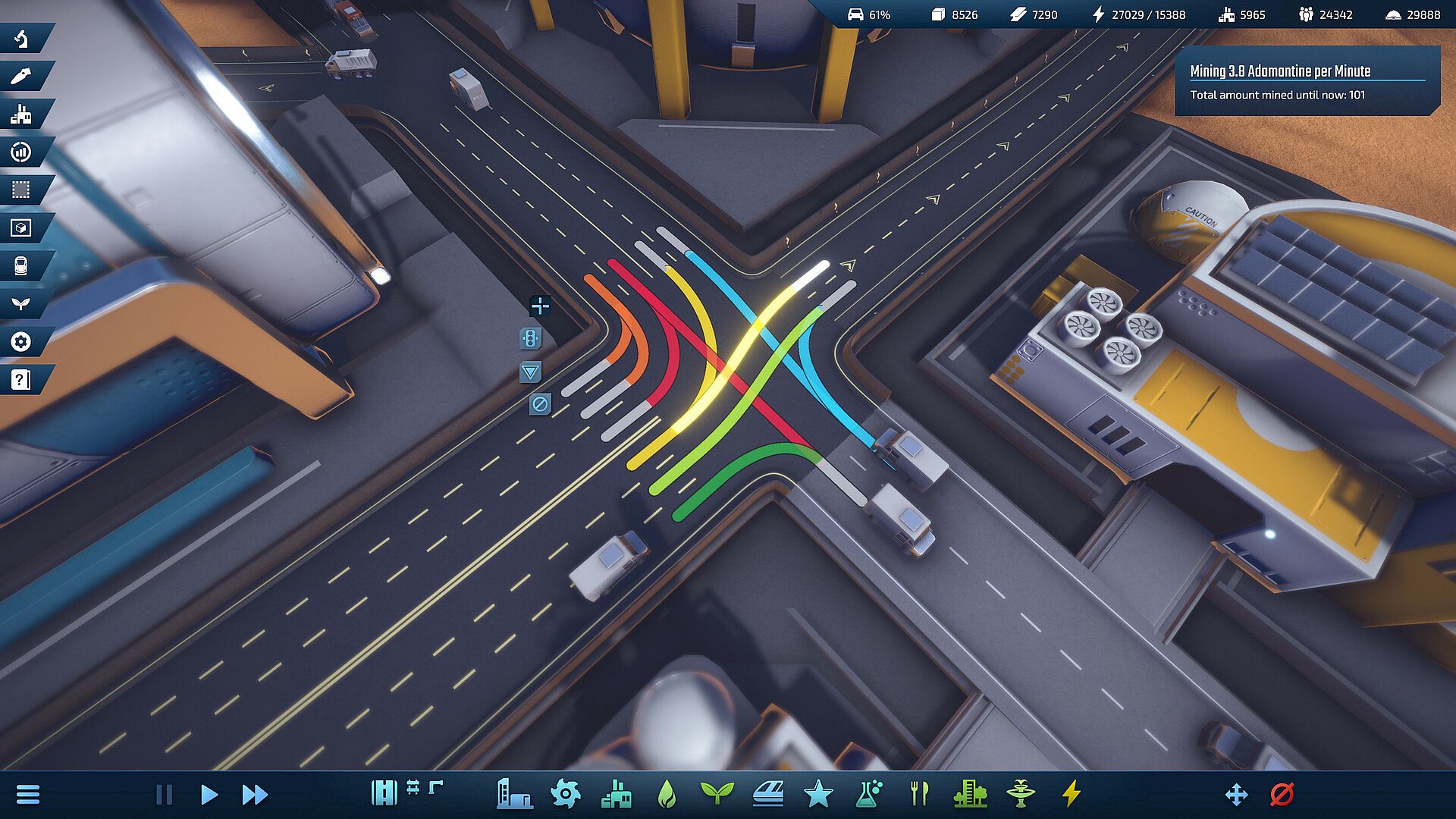
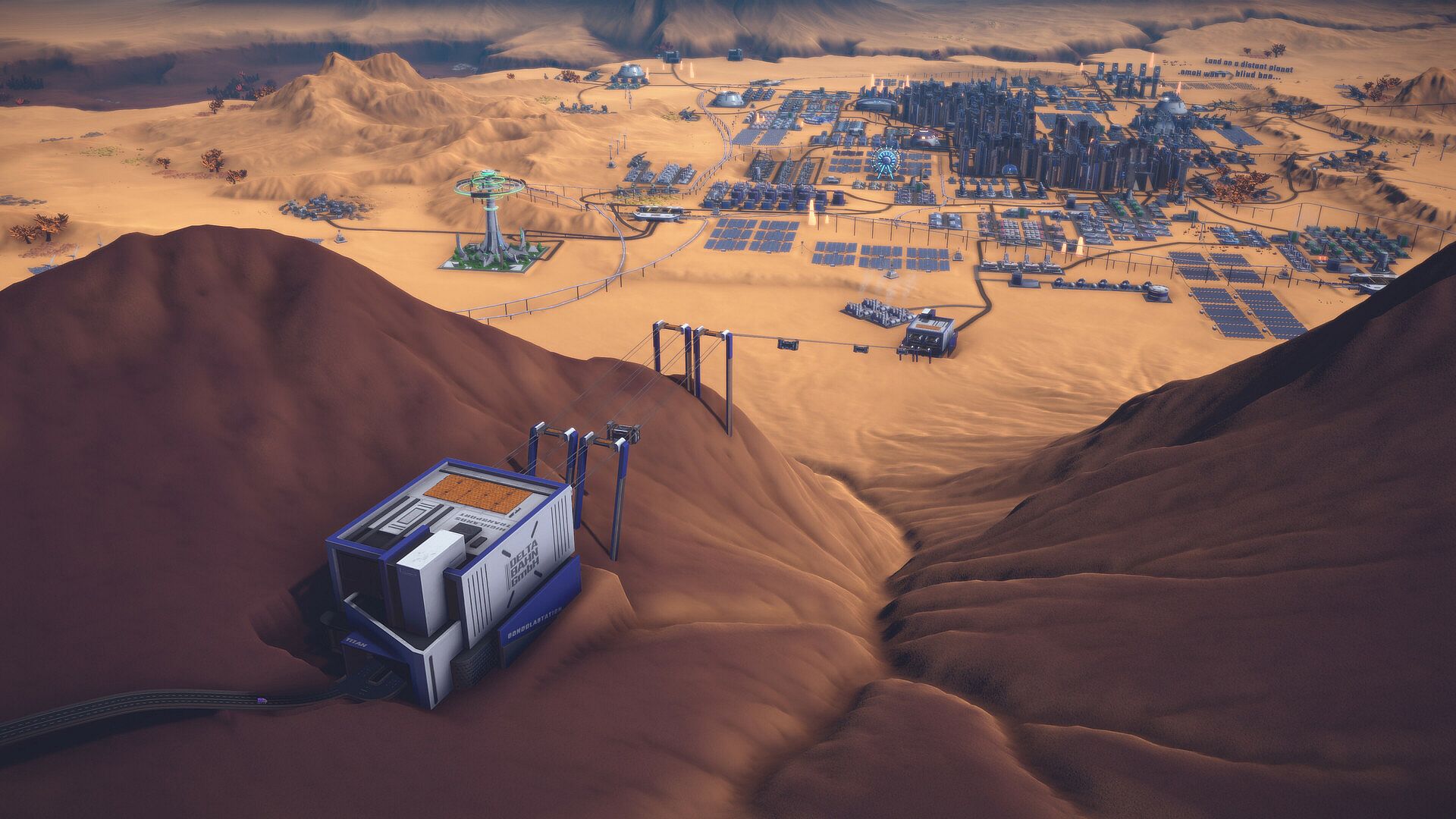
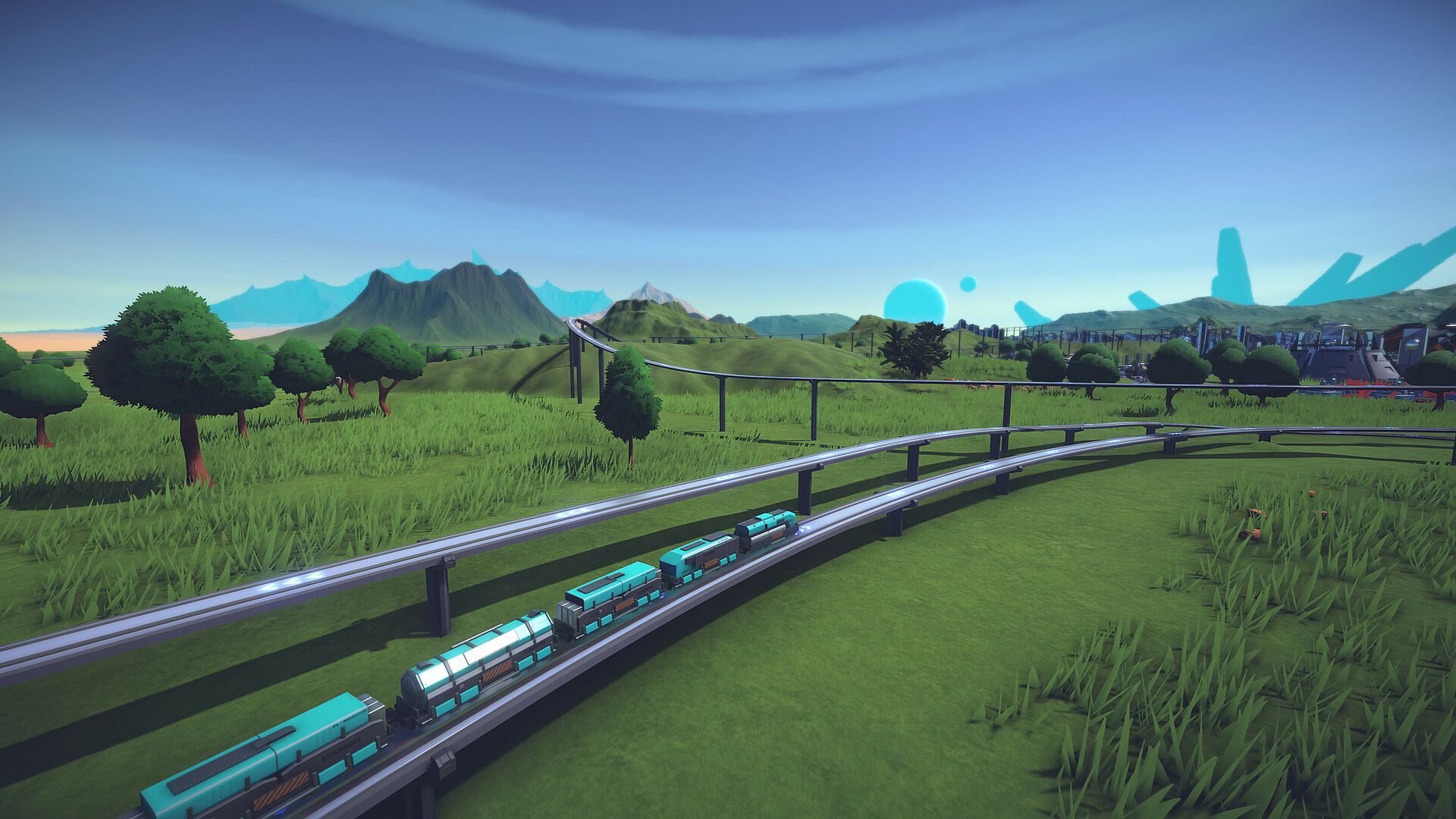
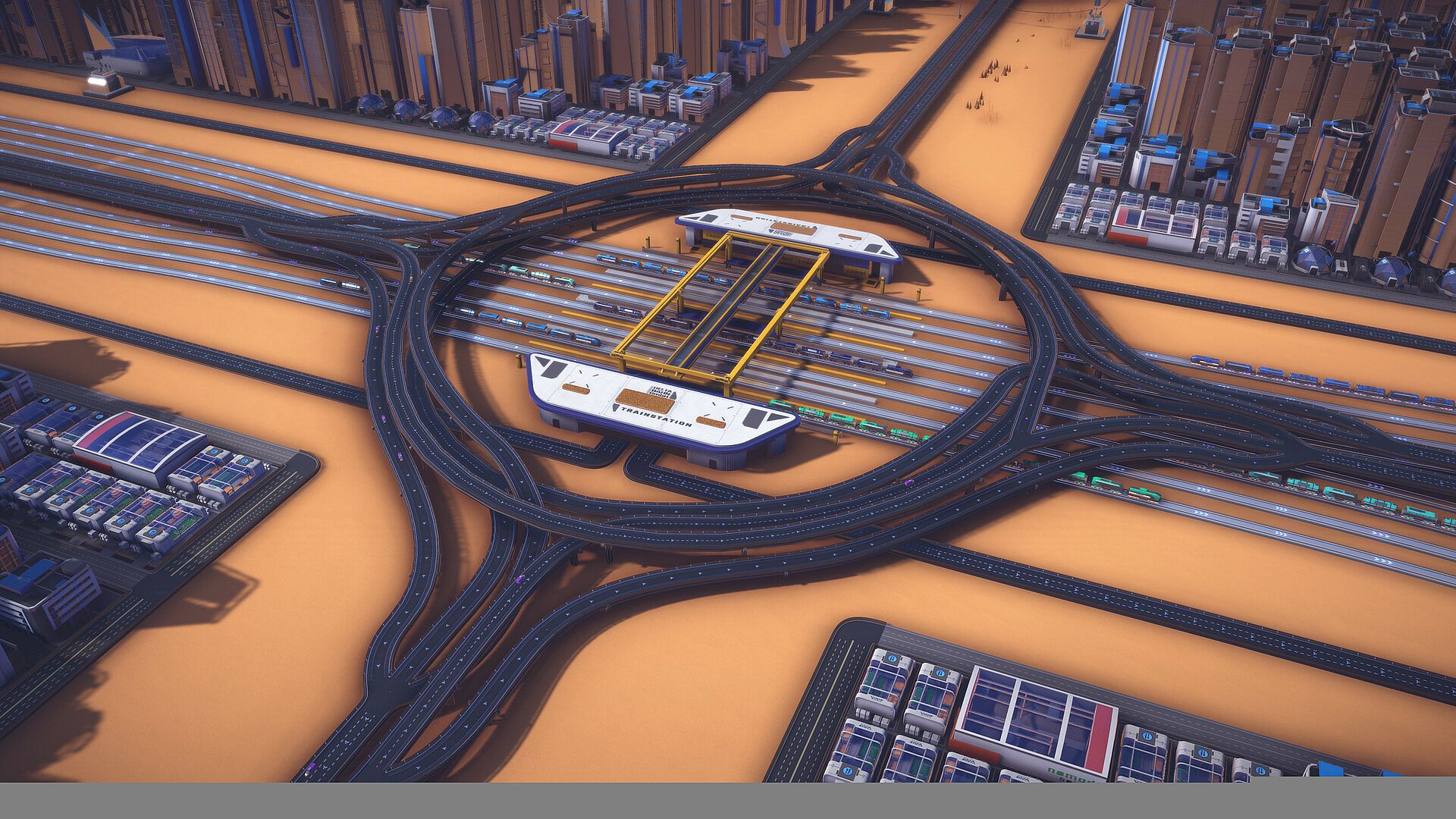
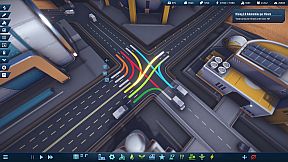
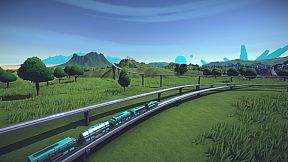
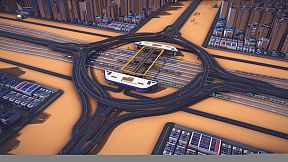
Transportation forms the backbone of every operation. Roads carry individual vehicles for each resource shipment, and unchecked growth leads to congestion that halts progress. Effective layouts incorporate highways, roundabouts, and multi-lane designs to maintain flow. Alternative systems expand options: rail networks handle bulk cargo between stations, underground pipes move liquids and gases efficiently, and cargo lifts connect isolated or elevated areas that roads cannot reach.
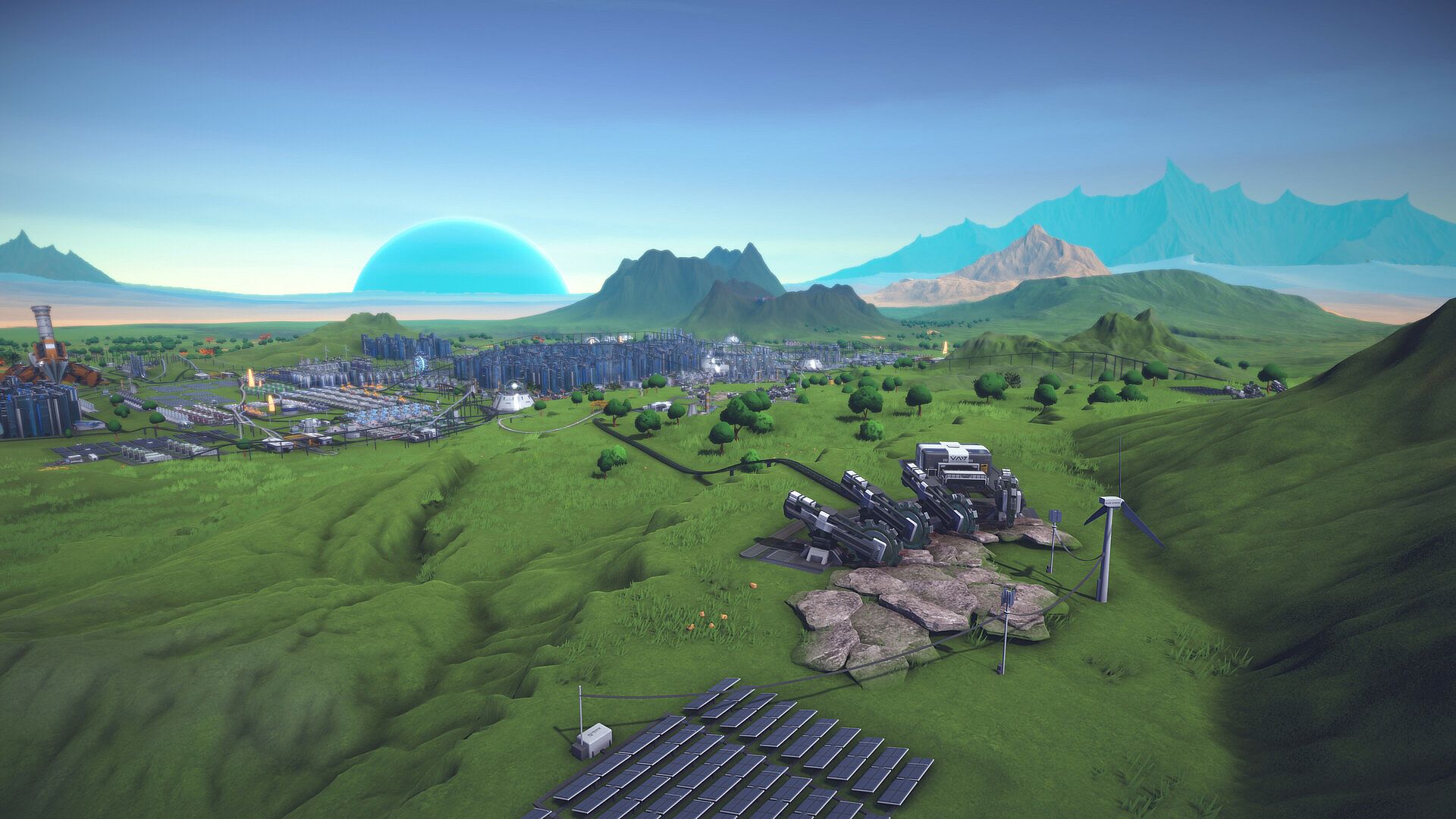
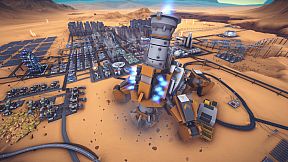
Population management evolves alongside infrastructure. Early astronauts handle basic tasks with minimal needs, while larger settlements require scientists and engineers who demand additional amenities. Families appear later, necessitating schools and advanced goods such as VR-edutainment products. Terraforming serves as a long-term objective, involving massive resource investments to transform the desert environment into a greener, breathable world once sufficient technology and capacity exist.
Adjustable difficulty settings for traffic and survival elements allow customization of challenge levels, supporting both relaxed building sessions and more demanding management scenarios.
Game Modes
InfraSpace operates primarily as a singleplayer experience with flexible difficulty options that alter the intensity of logistics and resource demands. Easy settings reduce pressure on transport networks and survival requirements, while harder configurations demand precise planning to avoid bottlenecks. A creative mode removes many constraints, enabling unrestricted construction and experimentation without the need to balance production or population needs.
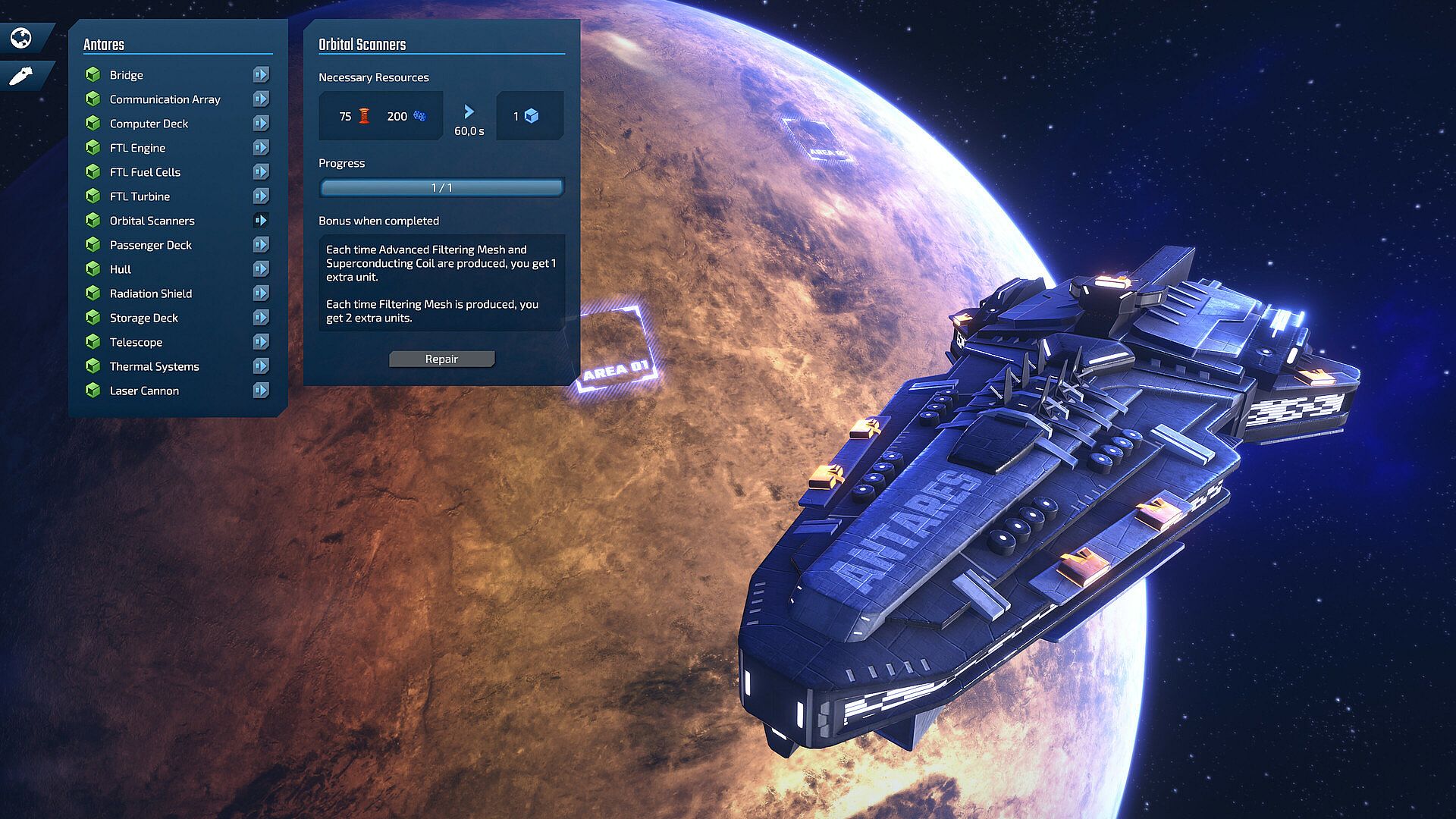
Progression follows a continuous colony-building loop rather than discrete scenarios, with research guiding the introduction of new buildings and technologies. Players scale from small outposts to full cities, incorporating all transport methods as the settlement expands across varied terrain.
Key Mechanics and Systems
Every resource and product moves physically through the world, making the road, rail, pipe, and lift networks critical to success. Factories process inputs on-site, and habitats consume outputs directly, creating a closed-loop economy that rewards efficient routing. Population tiers introduce layered requirements, from basic shelter to educational and recreational facilities, which in turn support further growth and specialized labor.
The terraforming system integrates with late-stage infrastructure, converting accumulated resources into planetary changes that improve habitability. This process ties back to the core loop by demanding sustained high-volume production and transport capacity.
Is It Worth Playing?
InfraSpace appeals to players who enjoy detailed logistics and automation in a city-building context. Its emphasis on visible vehicle movement and chain management creates a tangible sense of progress as networks scale up. Those who prefer hands-on transport design over simplified resource abstraction will find the systems rewarding, particularly when experimenting with rail and pipe alternatives to roads.
The game supports varied playstyles through its difficulty and creative options, making it accessible for newcomers to the genre while offering depth for experienced builders. Endgame phases shift toward large-scale projects like terraforming, which test the robustness of established infrastructure. Community feedback highlights its relaxing yet thoughtful pace for fans of simulation titles centered on planning and optimization.
Overall, InfraSpace delivers a focused experience for anyone interested in sci-fi colony management with strong transportation mechanics, provided they appreciate methodical expansion over fast-paced action.