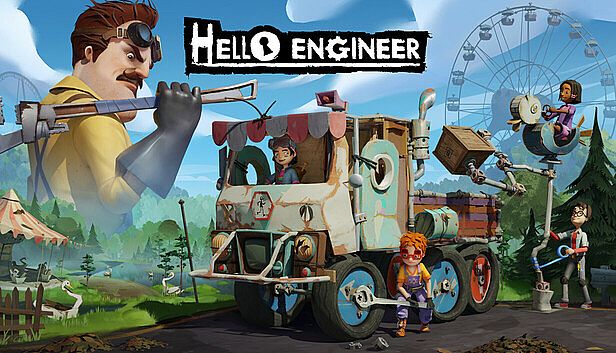
















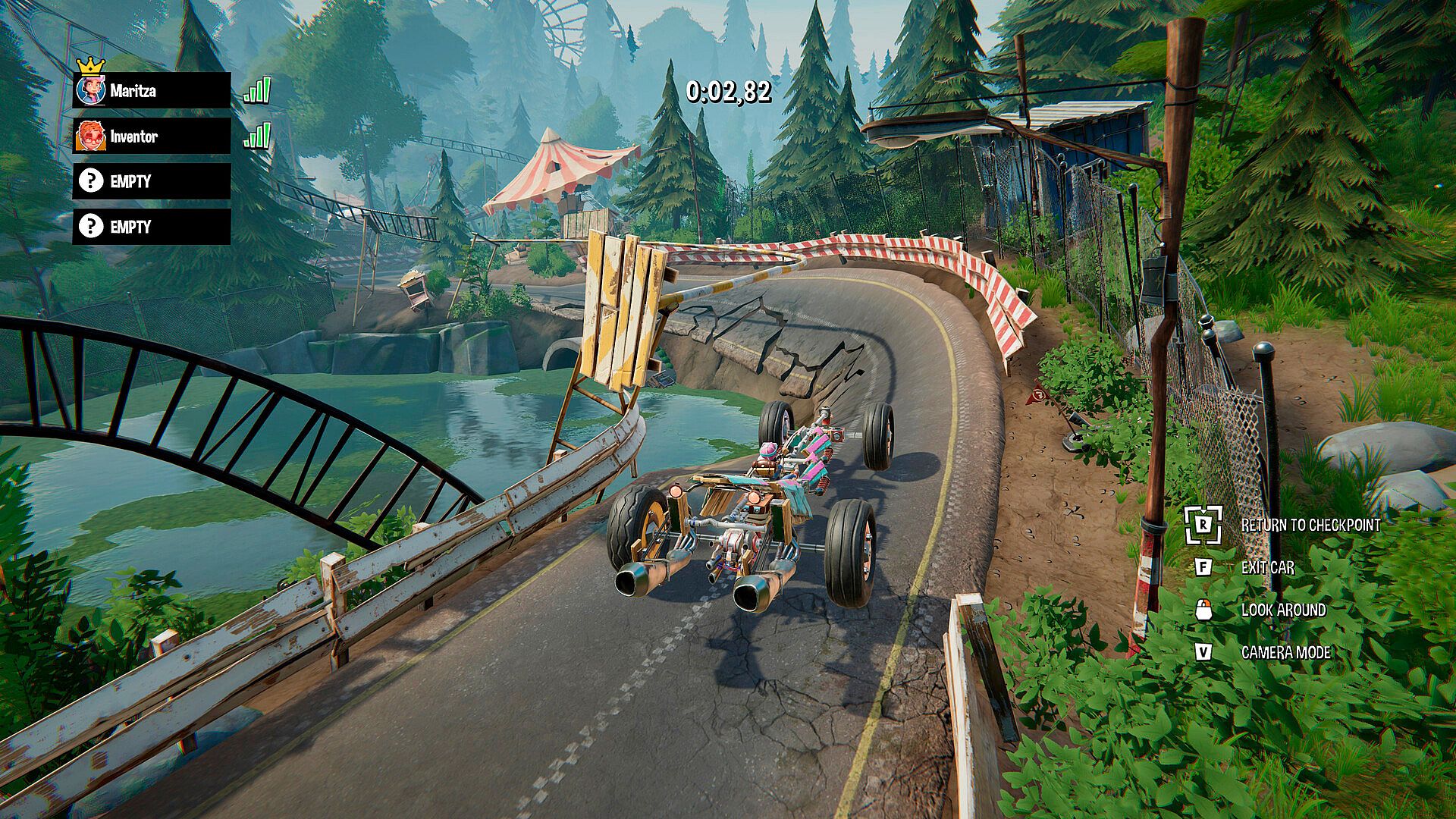
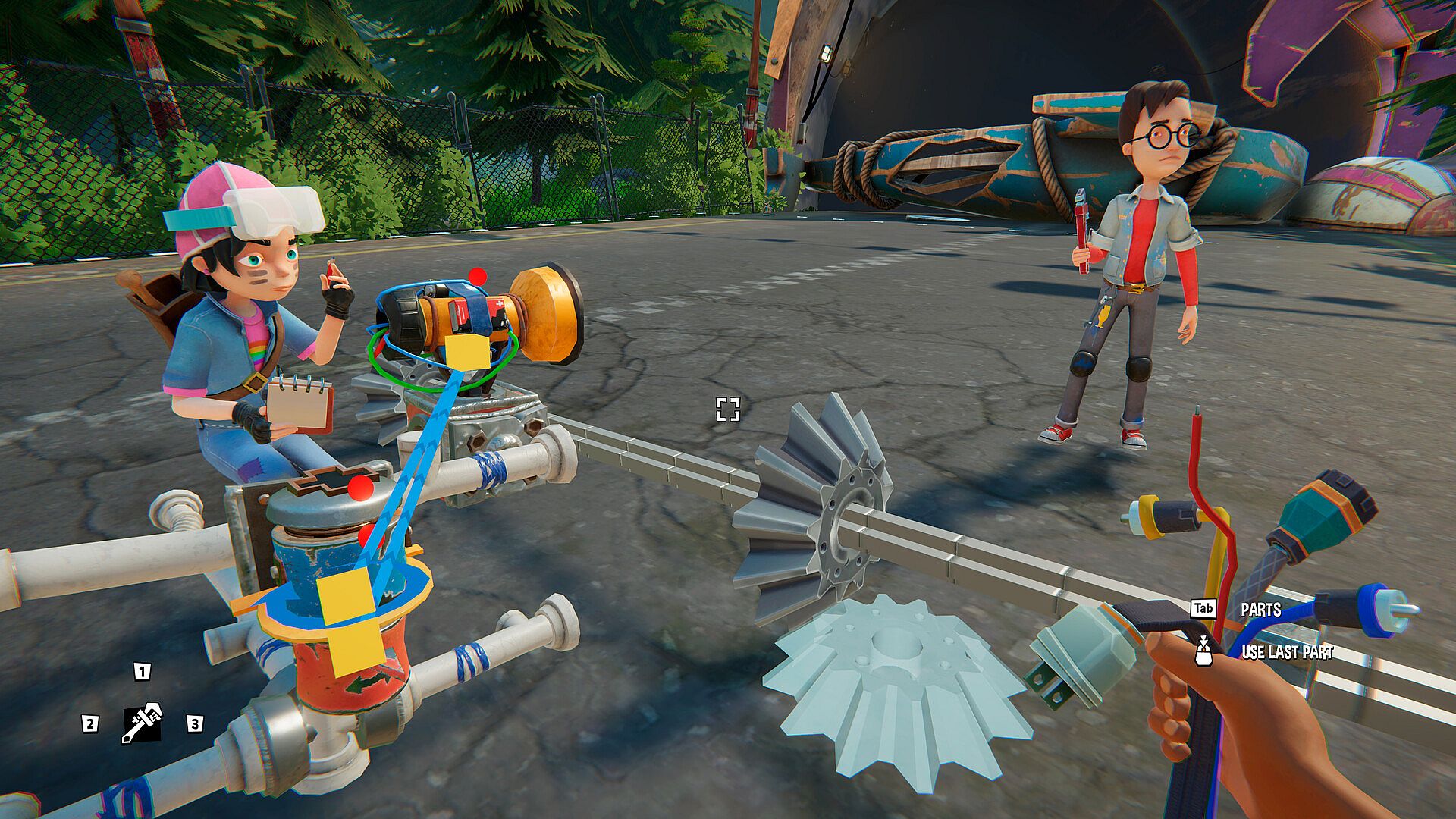
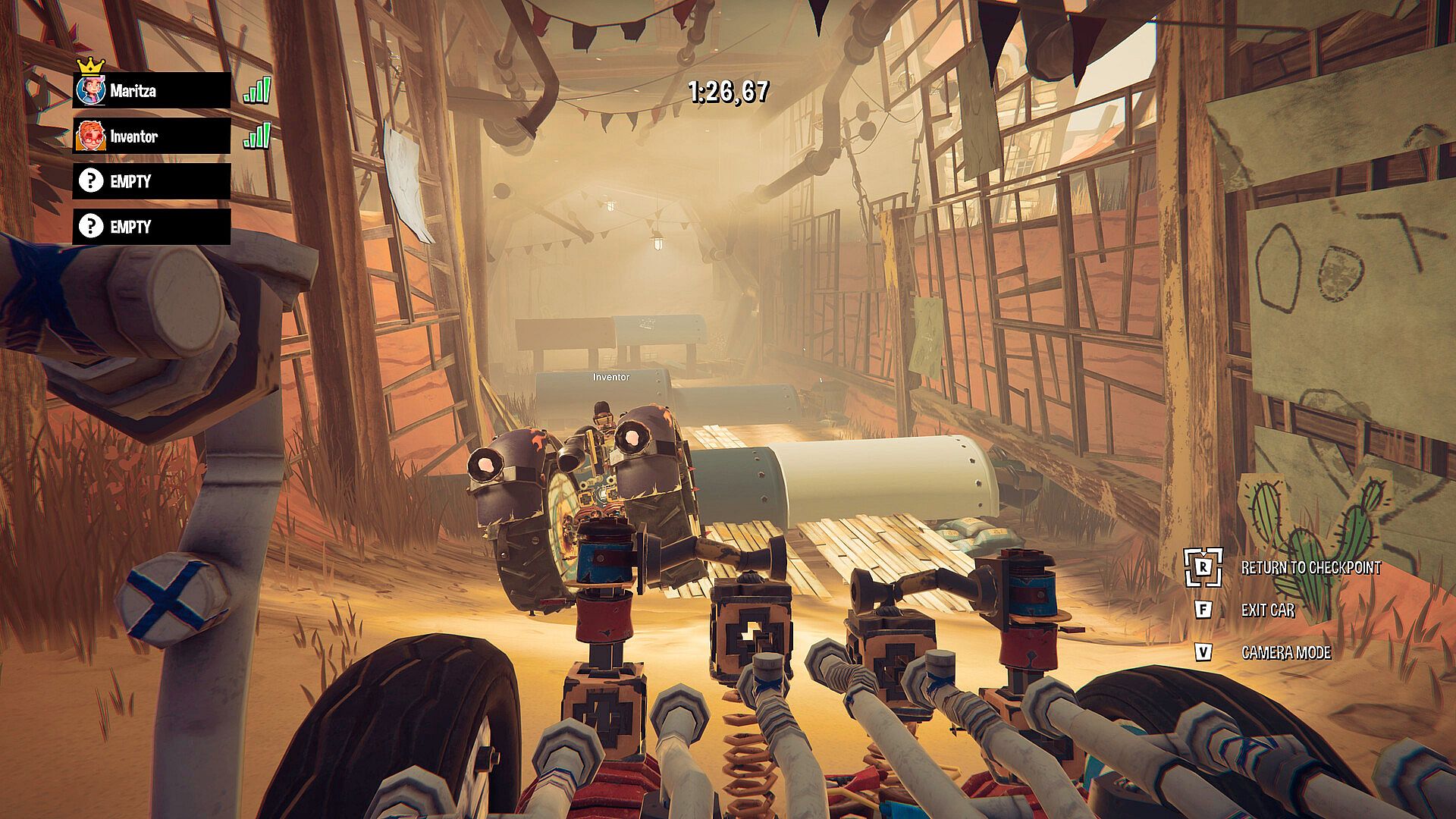
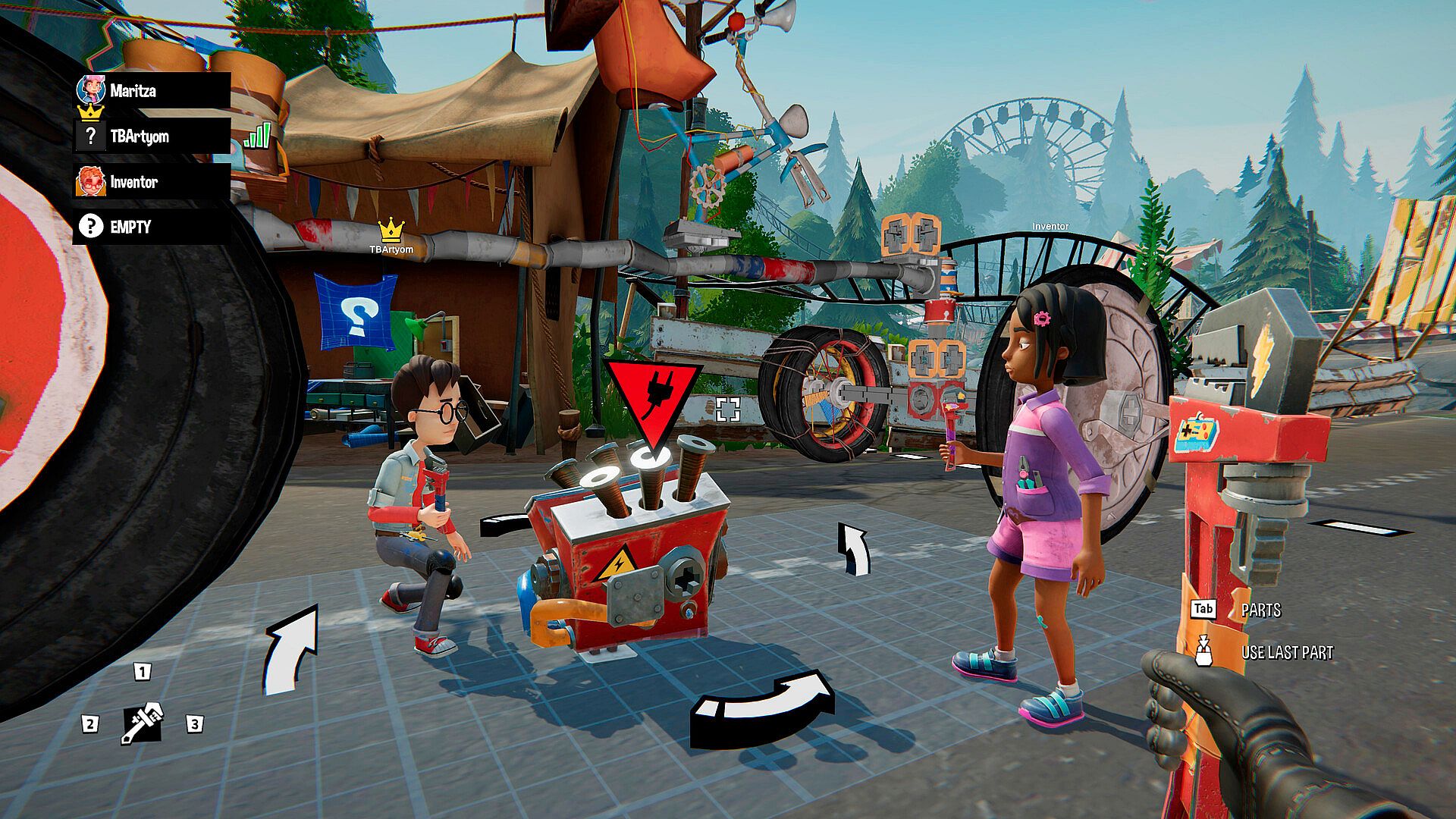
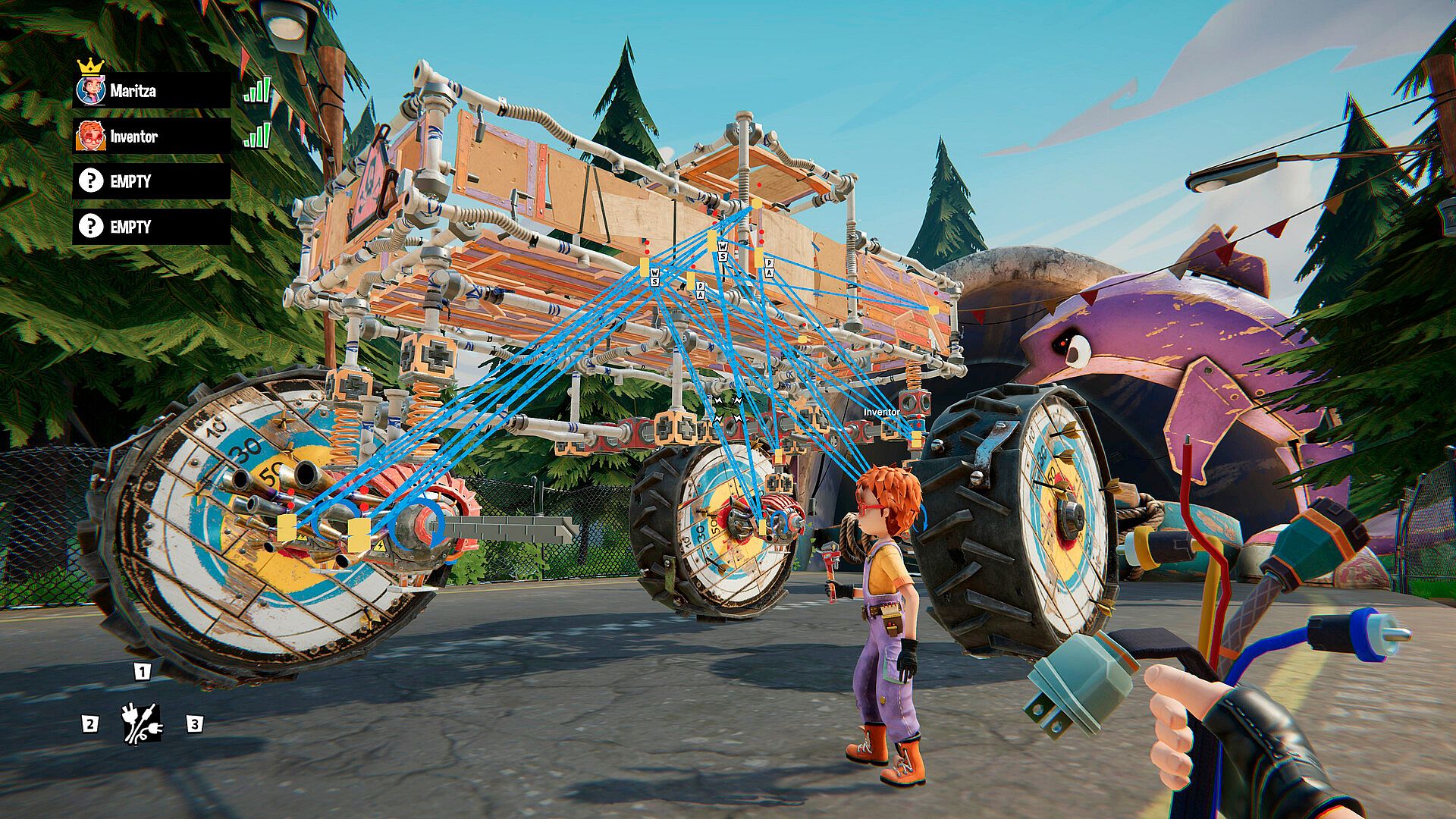
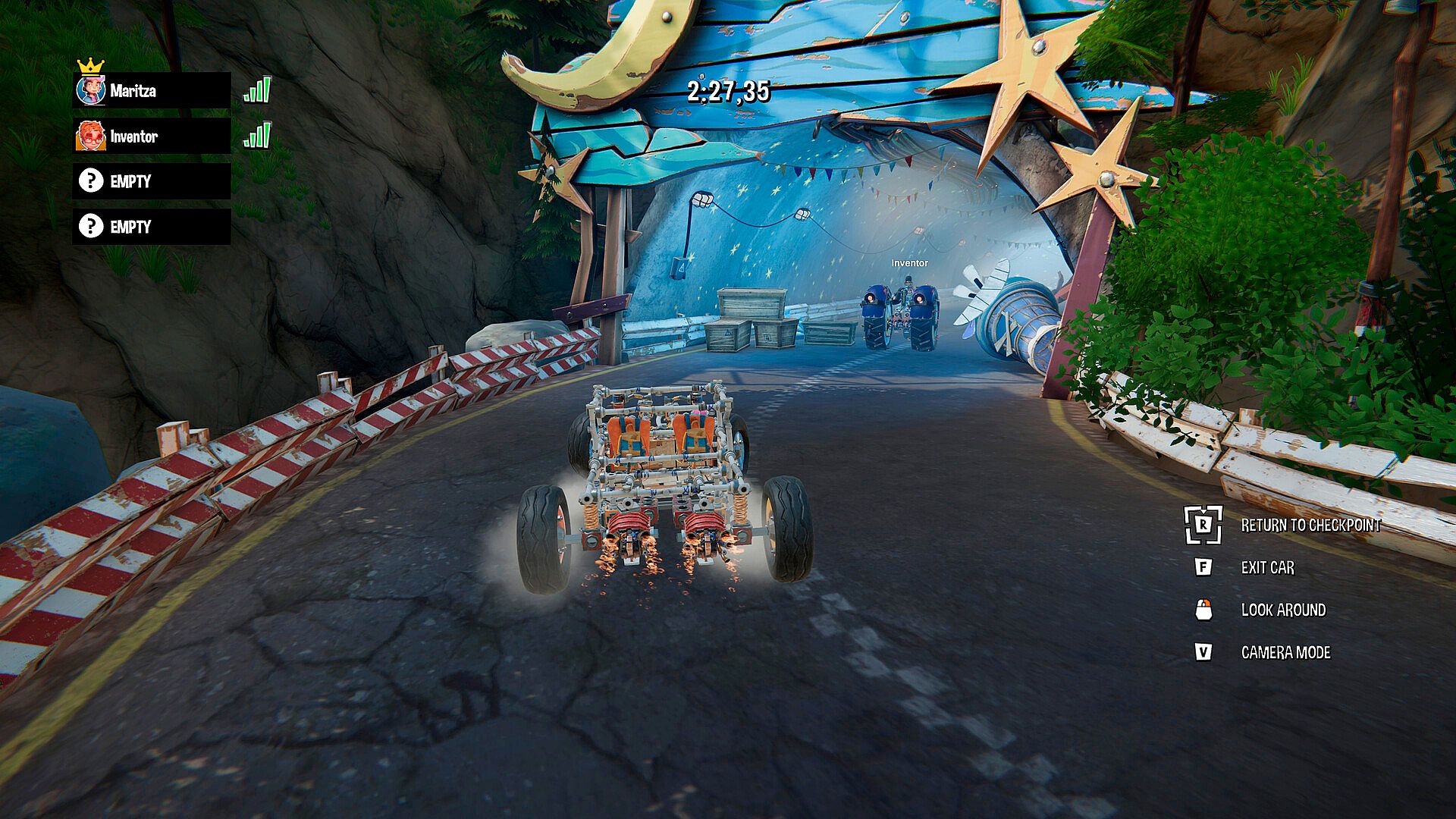
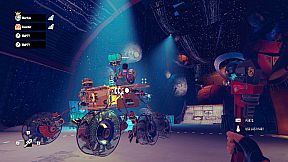
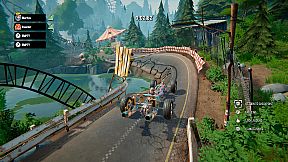
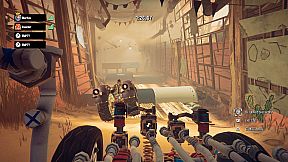
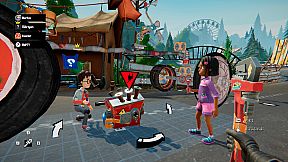
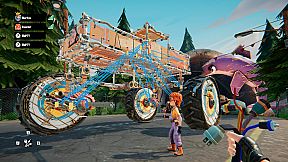
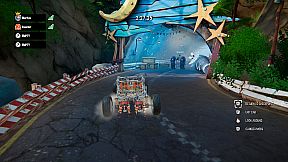
Hello Engineer: Scrap Machines Constructor is a machinery construction simulation game that blends elements of action, adventure, racing, and sandbox building. Set in the Hello Neighbor universe, it places players in an abandoned amusement park filled with scrap materials where they scavenge parts to assemble custom vehicles. The core loop revolves around gathering resources, experimenting with combinations of frames, gears, engines, wheels, weapons, and jet engines, then testing those machines against environmental challenges and robotic opponents.
Gameplay
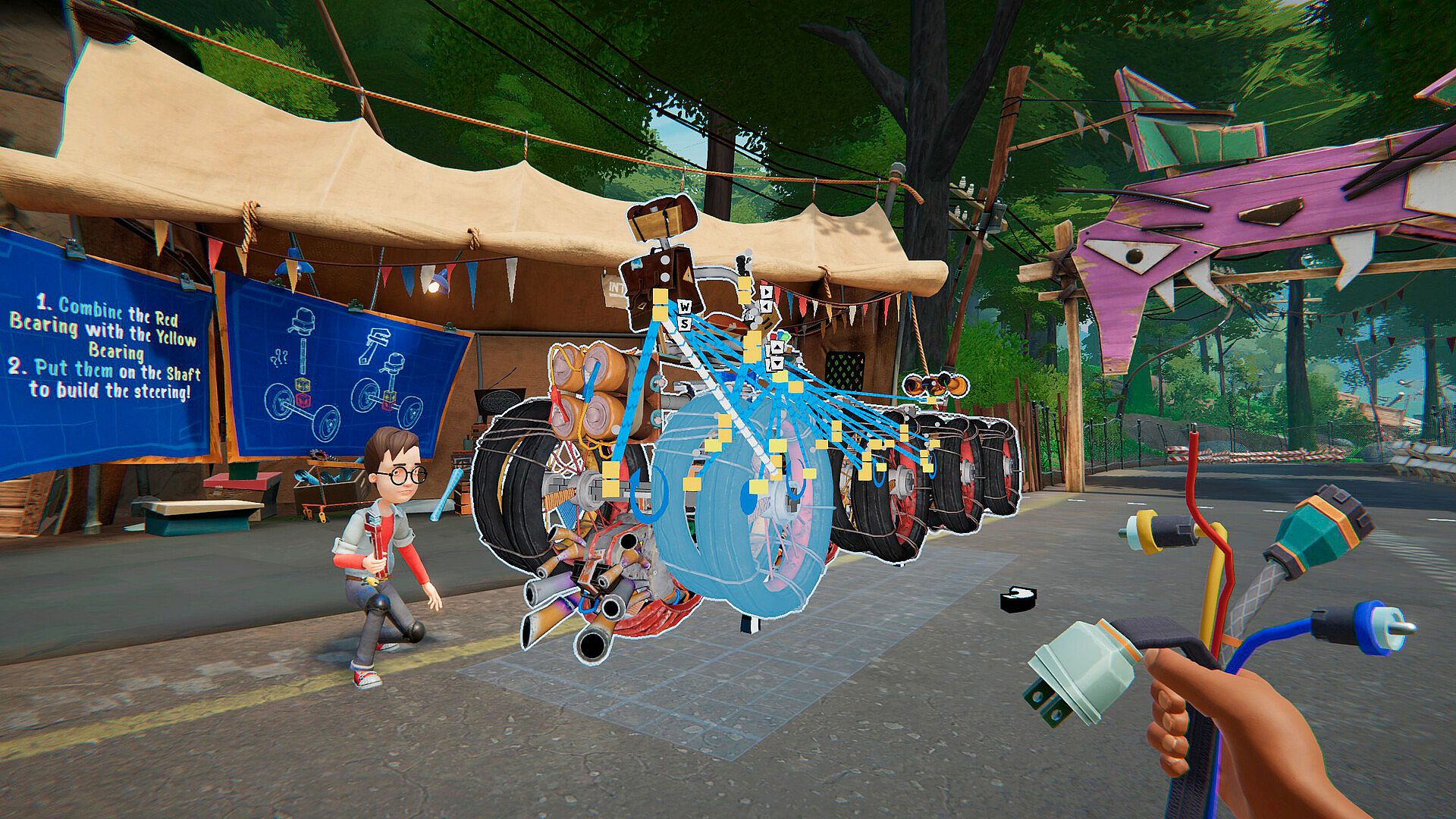
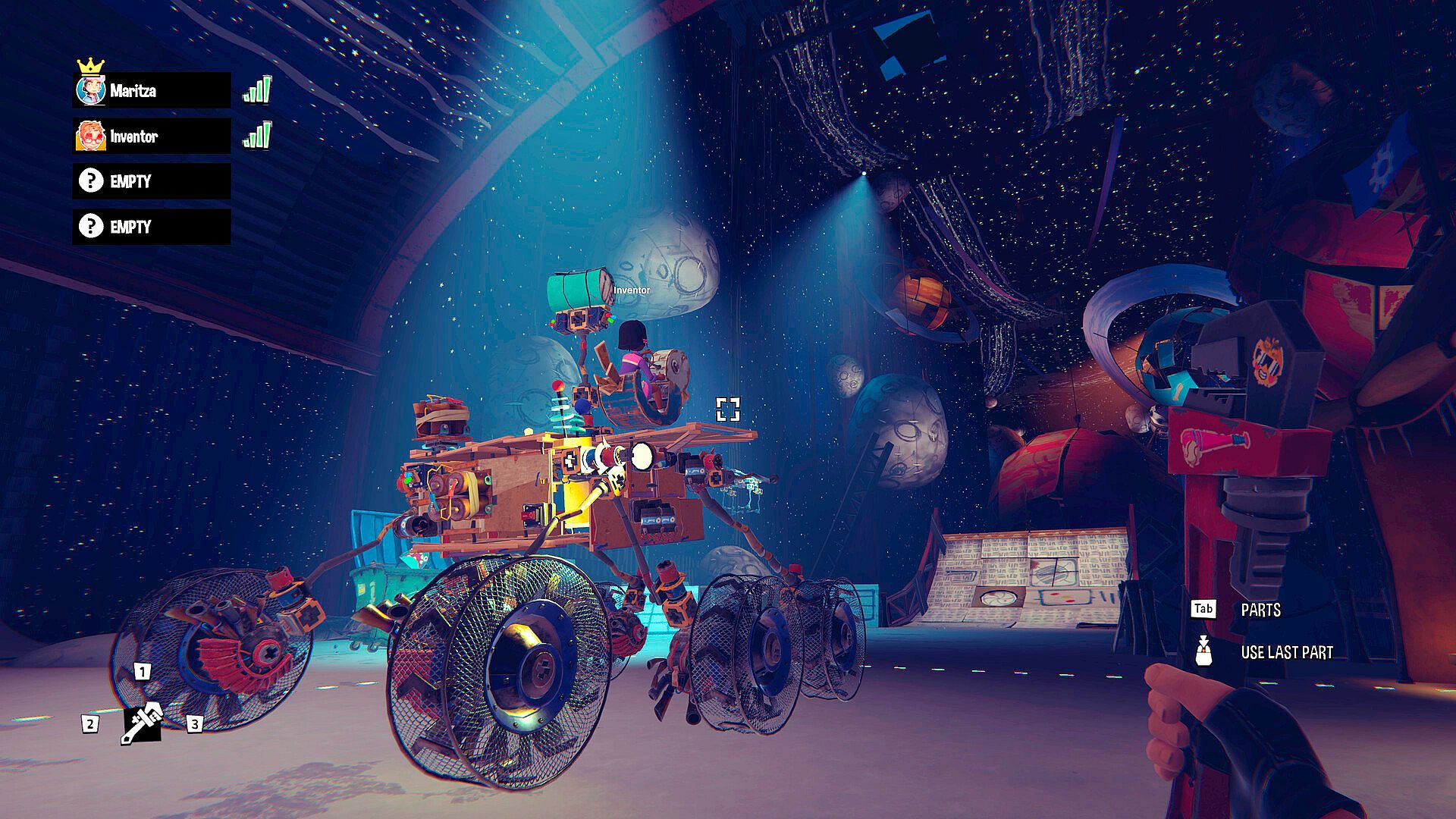
Players explore the park to collect scrap components and then use them to construct vehicles that can roll, fly, or bounce across varied terrain. Basic builds rely on straightforward mechanical connections, while more advanced designs incorporate electrical circuits and smart modules to create self-operating machines or even mechanical creatures. There are no fixed blueprints for success. Any functional design that completes an objective counts as valid, which encourages trial and error with different propulsion systems or weapon attachments.
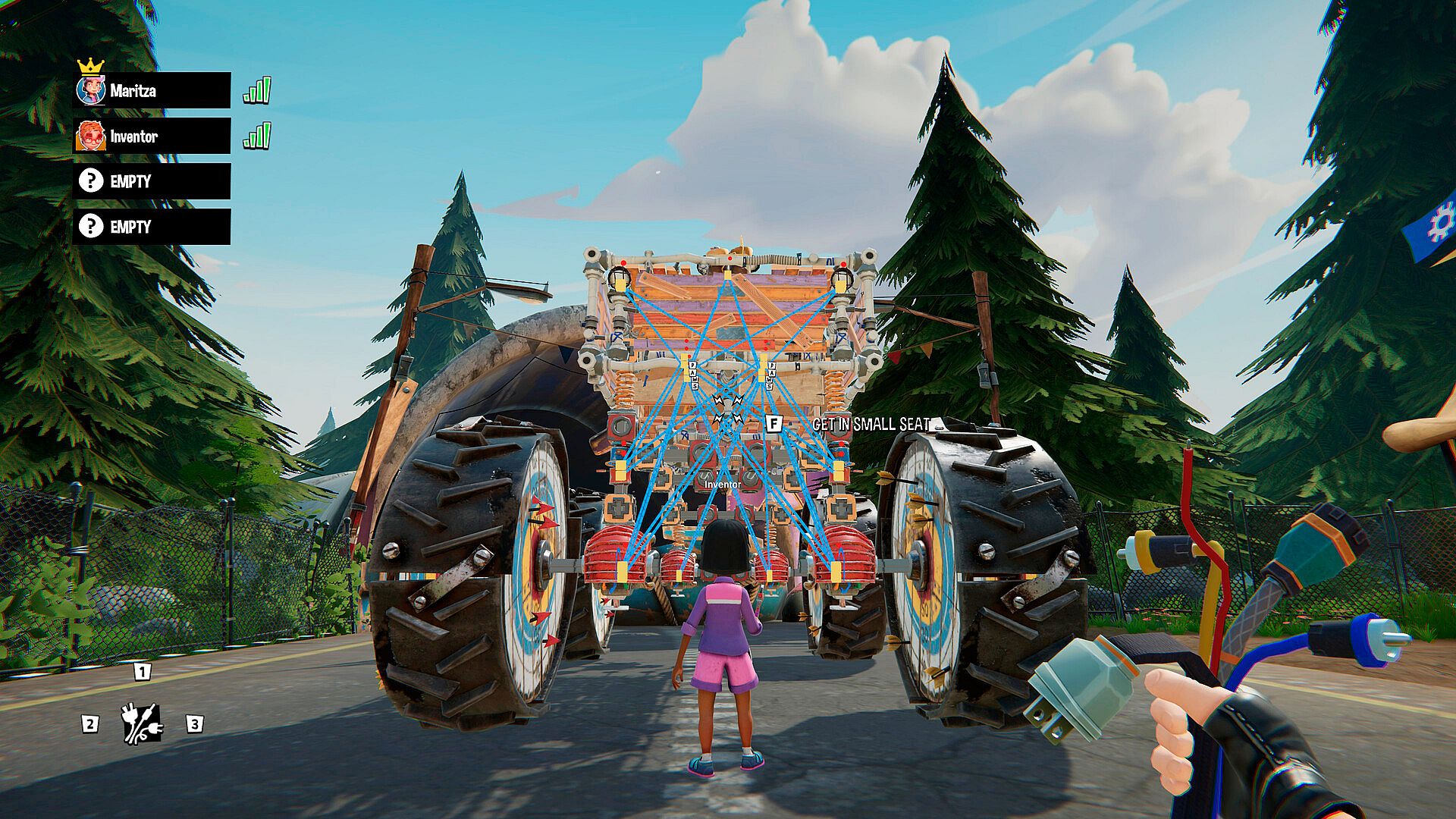
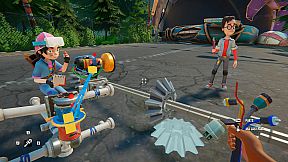
Control complexity increases with larger creations, so builders can add extra panels to allow multiple players to operate the same machine simultaneously. Blueprints can be shared between sessions or with others, letting designs evolve through repeated refinements. Recent quality of life changes introduced aerodynamic properties that affect how vehicles handle speed and stability during flight or high-speed runs.
Game Modes
Story Mode requires players to progress through a series of challenges and puzzles by building machines tailored to each situation. These sequences culminate in confrontations with boss-level threats that demand reinforced or specialized vehicles. The mode supports solo play or cooperative sessions with up to three additional participants.
Sandbox Mode removes all resource limits and objectives, allowing unrestricted construction of any vehicle concept. Builders can experiment freely with every available part type, including ambitious projects such as rockets or multi-part contraptions. This mode also serves as a testing ground for ideas that might later transfer into story progression.
Building Systems and Multiplayer
Construction draws from a pool of amusement park debris that includes propulsion options, structural frames, and offensive tools. Skilled users layer circuits to automate movement or add responsive behaviors. The system rewards iterative testing because machines must navigate uneven park grounds, avoid hazards, and sometimes engage enemy bots directly.
Multiplayer extends to four participants who can divide tasks during building or operate separate control stations on one vehicle. Cooperative efforts make complex mechanisms manageable, and blueprint sharing supports ongoing collaboration across play sessions. The amusement park setting provides both open areas for testing speed and enclosed zones that favor compact or agile designs.
Is It Worth Playing?
The game holds mixed reception on its primary platform, with roughly 62 percent positive reviews from a modest number of players. It appeals most to those already familiar with vehicle construction sandboxes who enjoy open-ended problem solving over linear narratives. Low current player counts limit spontaneous matchmaking, yet the solo and small-group focus keeps the experience viable without large communities.
Updates have added aerodynamic handling and expanded sandbox freedom, indicating ongoing support for core building features. Players who value creative freedom in assembling scrap machines and testing them against park obstacles will find consistent engagement. Those seeking polished storytelling or high population multiplayer may find the scope narrower than expected.