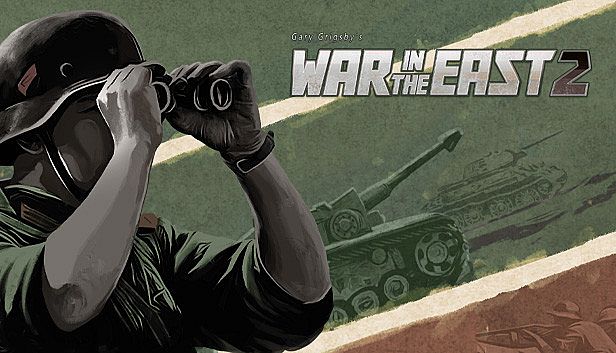













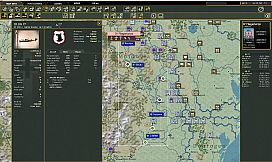
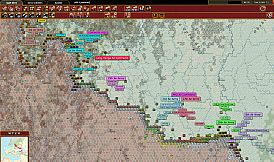
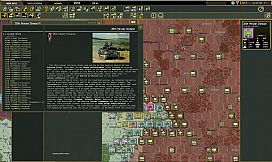
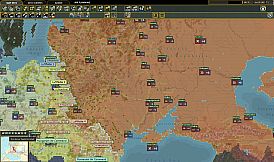
Gary Grigsby's War in the East 2 is a strategy simulation game that recreates the Eastern Front of World War II as a turn-based conflict between the Axis forces and the Soviet Union. Players manage large-scale operations across a detailed hex map that spans from the initial German invasion in 1941 through the final Soviet advances into Berlin in 1945. The title emphasizes historical accuracy in logistics, movement, combat resolution, and command structures while offering flexible control over air operations and theater-wide decisions.
Gameplay
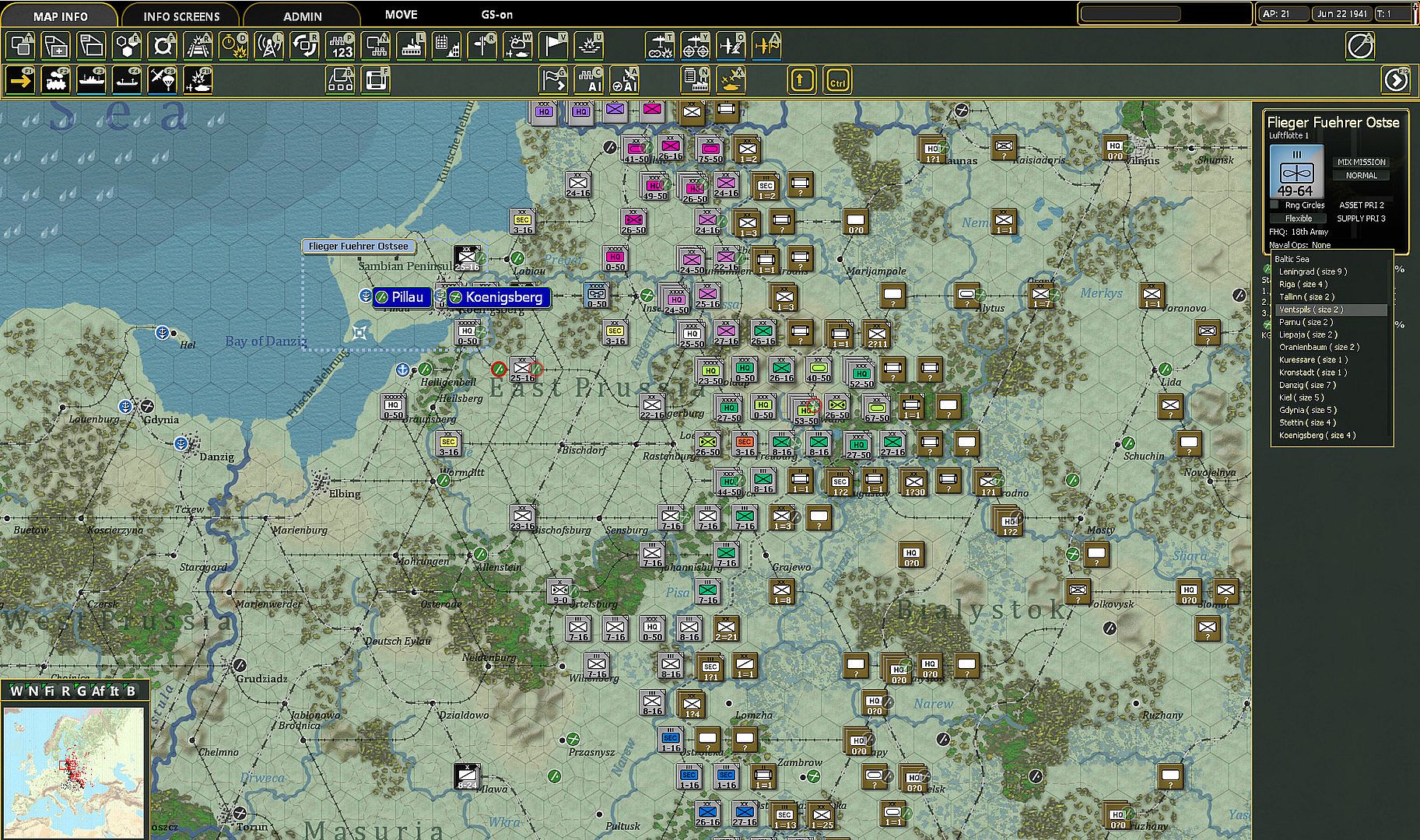
The core loop revolves around planning movements, allocating supplies, and executing attacks within strict movement point limits that reflect terrain, road quality, and weather conditions. Units advance along single and double rail lines or historical road networks, with administrative movement allowing faster repositioning in secure rear areas. Combat incorporates preparation points that reward rested formations and delay points that hinder units pushing through recently fought hexes. Multi-hex retreats and the ability to strip movement points from defenders add layers to each engagement.
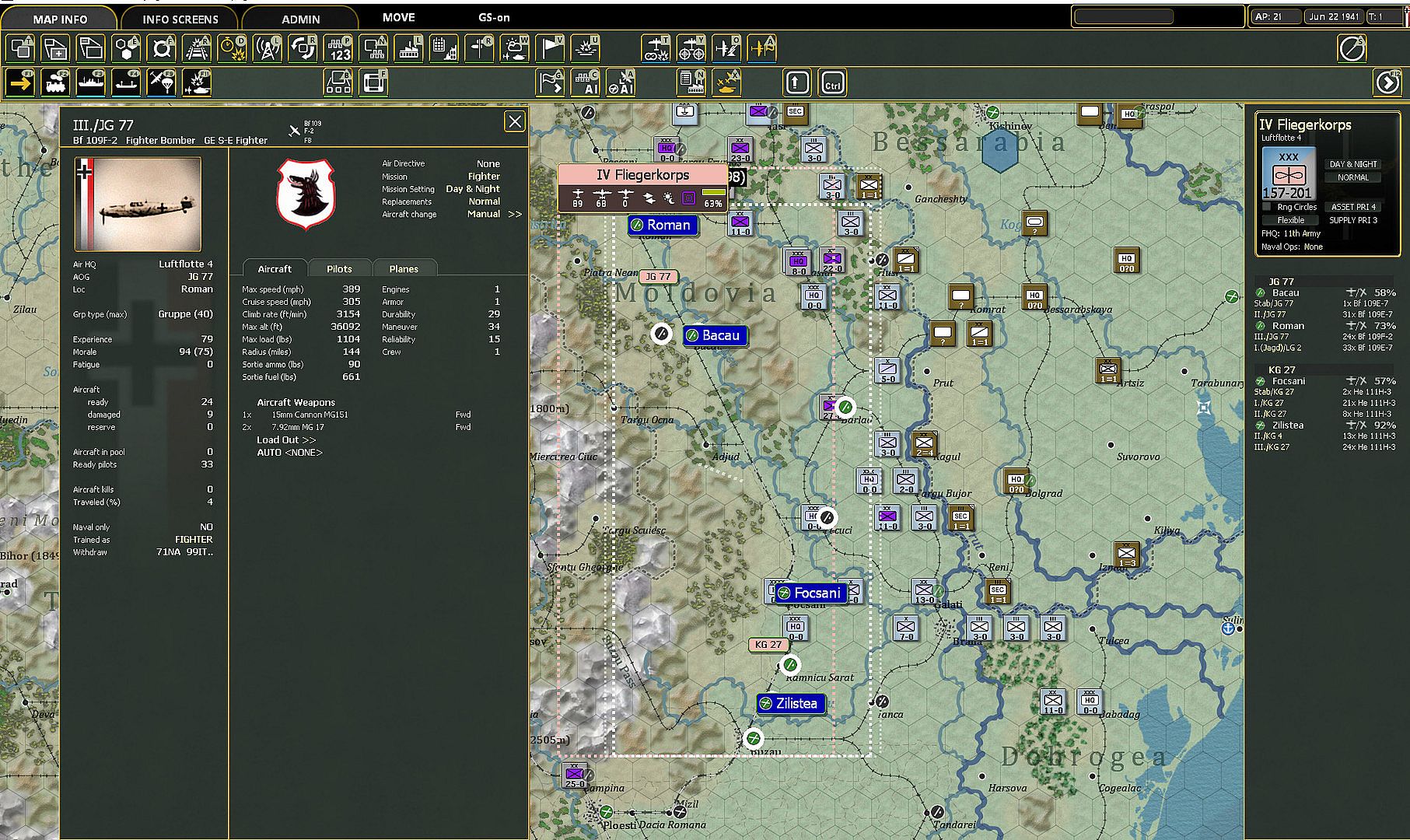
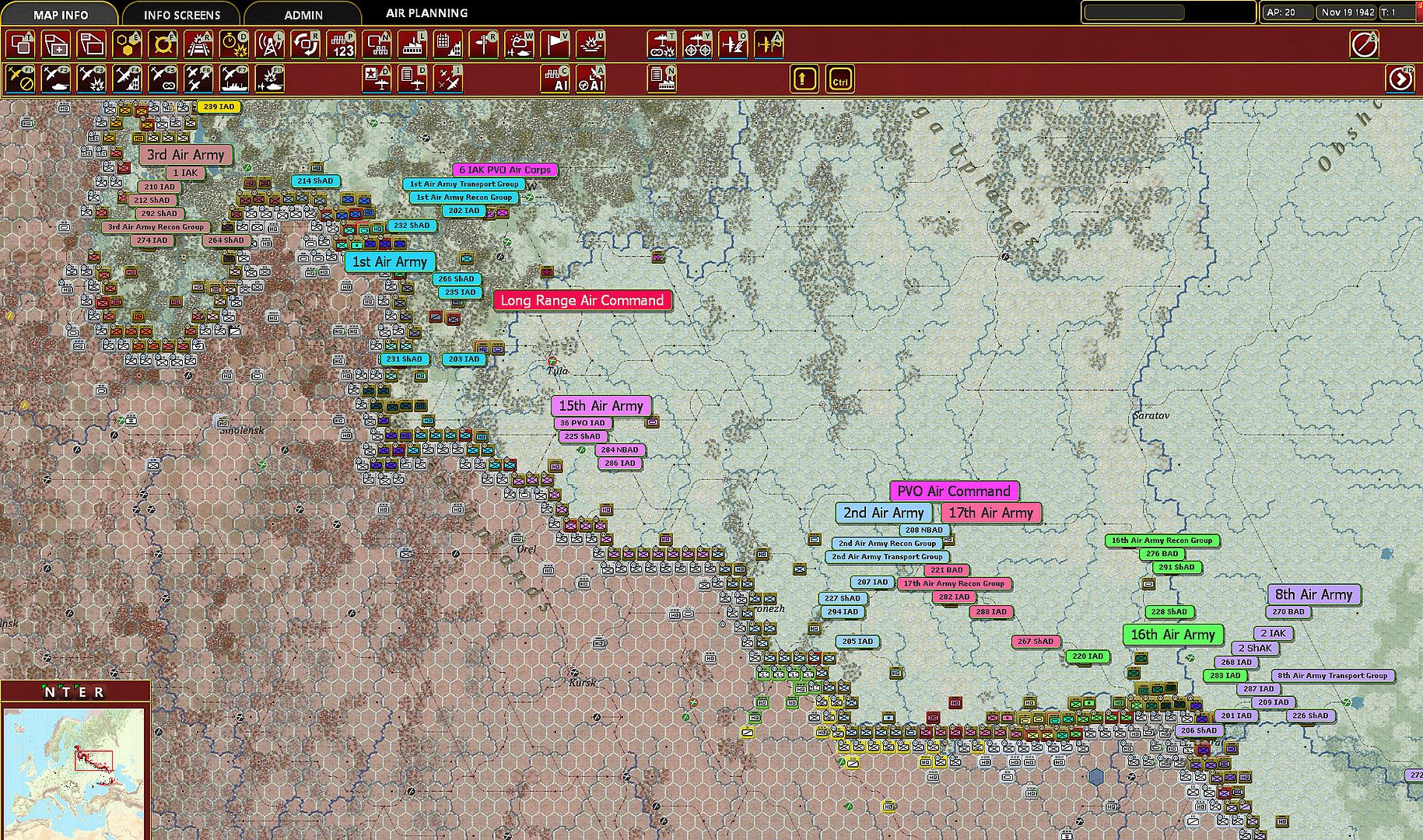
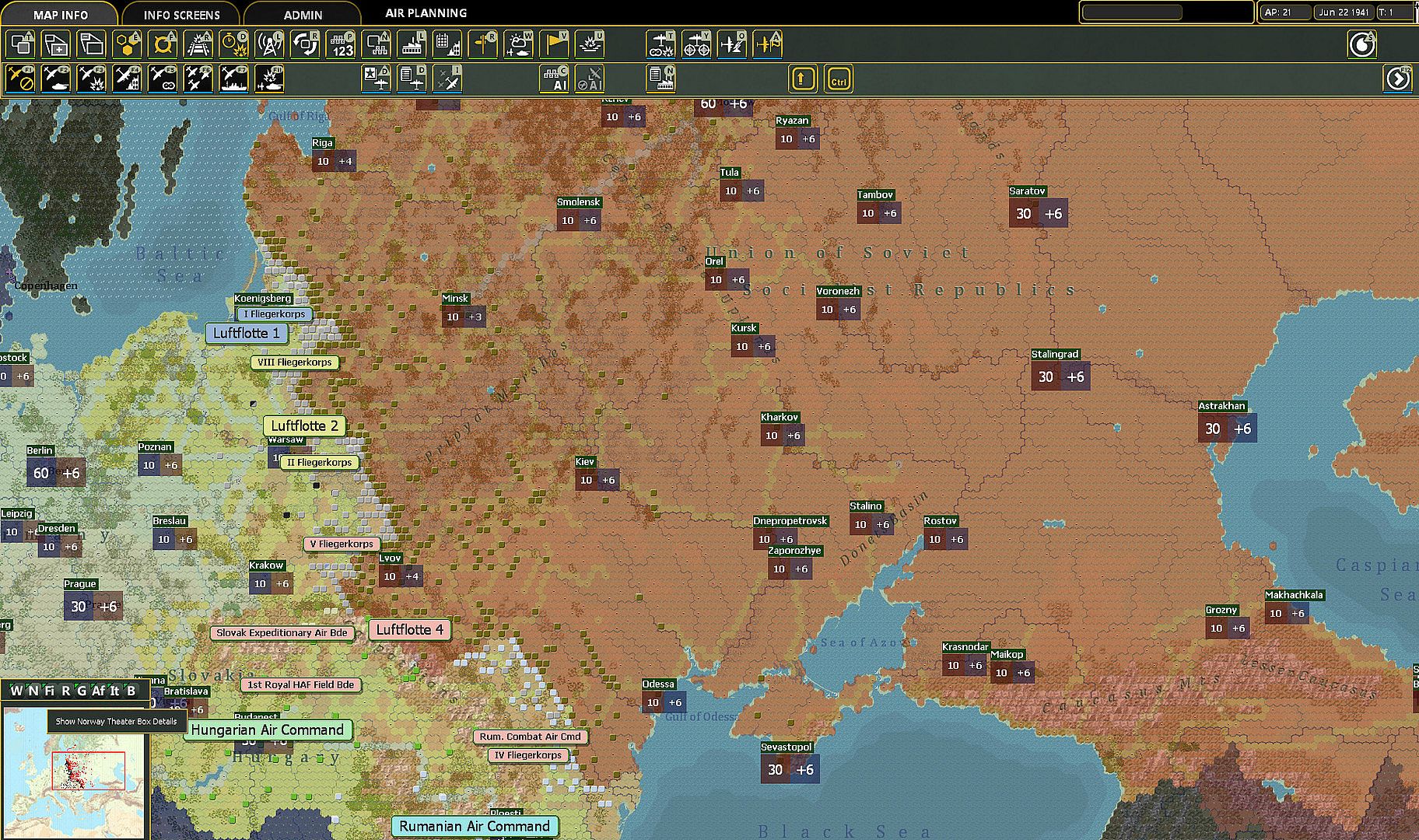
Logistics form a central pillar, with supplies flowing through depots and rail connections that players must protect and expand. Weather changes per hex affect ground movement, combat effectiveness, and air missions, creating cascading effects across the front. The air system supports two approaches: an advanced mode with full control over individual groups and bases, or a streamlined operational group mode where players issue broad directives and let the AI handle execution. Support units attach directly to divisions, and command restrictions limit mixing nationalities under one headquarters.
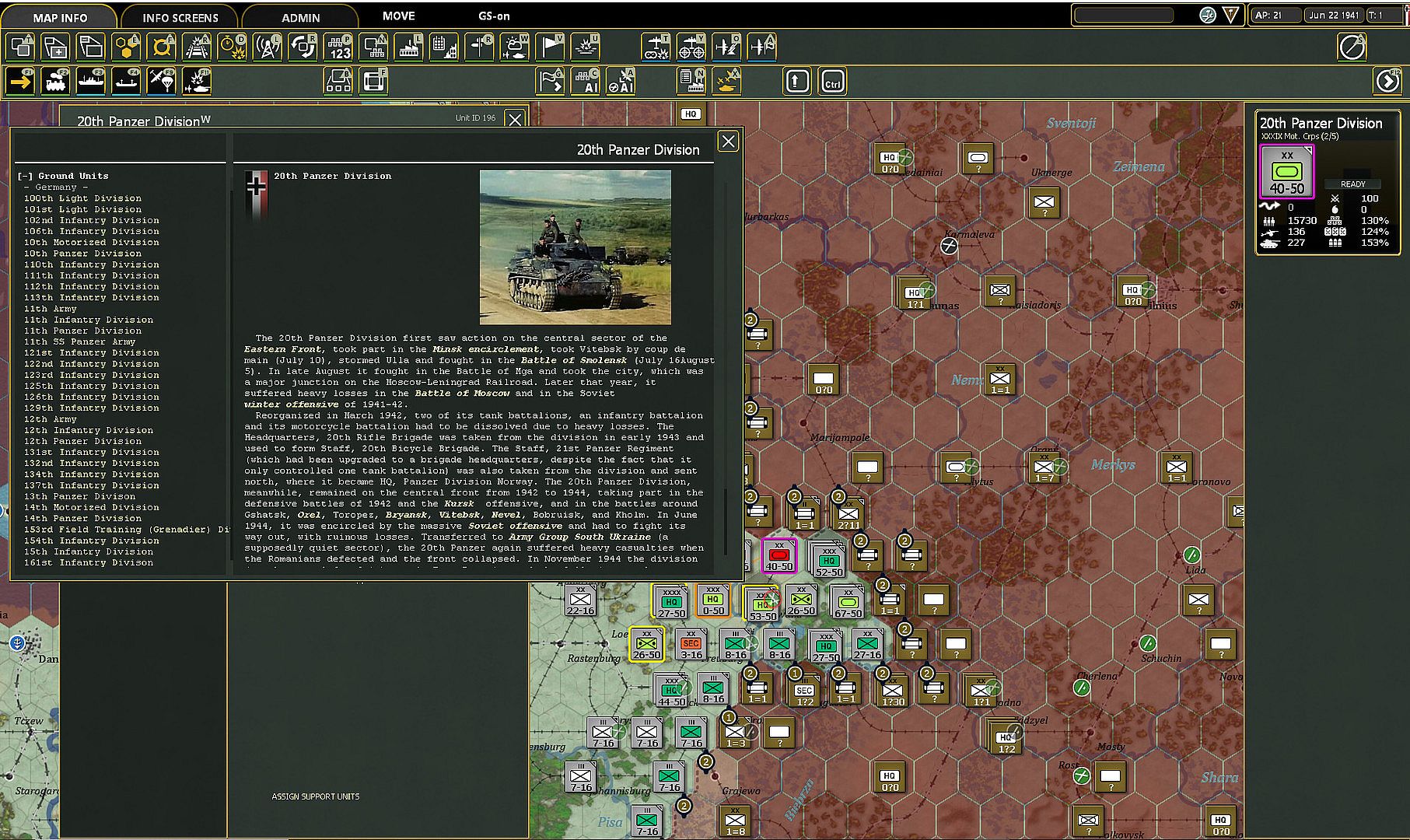
Interface improvements place key information on summary screens and reports that export to CSV for external analysis. A built-in encyclopedia details weapons and units, while special assault headquarters provide offensive bonuses at the expense of defensive strength. Theater boxes track off-map commitments such as garrisons in North Africa or Italy, with events that simulate partisan activity and reinforcement flows.
Game Modes
Three full-map campaigns cover the entire Eastern Front at different scales. The 1941-45 campaign runs from June 22, 1941, to August 1, 1945. Stalingrad to Berlin begins November 19, 1942, and ends July 4, 1945. Vistula to Berlin covers the final phase from January 13, 1945, to June 1, 1945. These campaigns use the complete map and victory conditions tied to historical objectives.
Seven operational scenarios focus on specific periods and fronts. Velikie Luki runs from November 17, 1942, to January 25, 1943. Road to Minsk covers June 22 to July 2, 1941. Road to Leningrad spans June 22 to October 8, 1941. The Destruction of Southwest Front lasts from June 22 to October 15, 1941. Operation Typhoon runs from September 30, 1941, to January 5, 1942. Red Army Resurgent covers November 19, 1942, to March 17, 1943. Red God of War extends from November 24, 1942, to February 8, 1943. Each scenario includes tailored orders of battle and shorter time frames for focused play.
AI and Historical Detail
The redesigned AI opponent manages both defensive stands and offensive pushes with improved coordination across multiple fronts. Historical order of battle data includes accurate unit placements, headquarters assignments, and transfers between theaters. Factory evacuation mechanics simulate Soviet industrial relocation, while partisan interdiction events disrupt rail lines on the map. Players can adjust theater box controls to balance garrison requirements against operational flexibility.
Is It Worth Playing?
This title suits players who enjoy deep, systems-driven strategy simulations with long play sessions and a steep learning curve. The combination of logistics, air management, and large-scale ground operations rewards careful planning and repeated playthroughs of the same scenarios. Reviews describe the experience as rewarding once the interconnected mechanics become familiar, though the comprehensive manual and interface density present a barrier for newcomers. The game remains available as a complete package with no ongoing seasonal content, making it a one-time purchase for those seeking an extensive single-player wargame focused on the Eastern Front. Those who appreciate detailed order of battle tracking and variable complexity in command options will find substantial depth here.