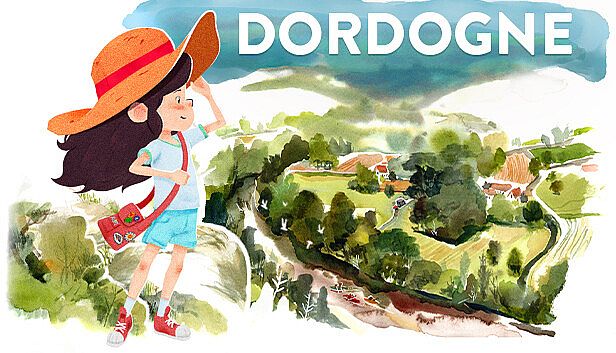
















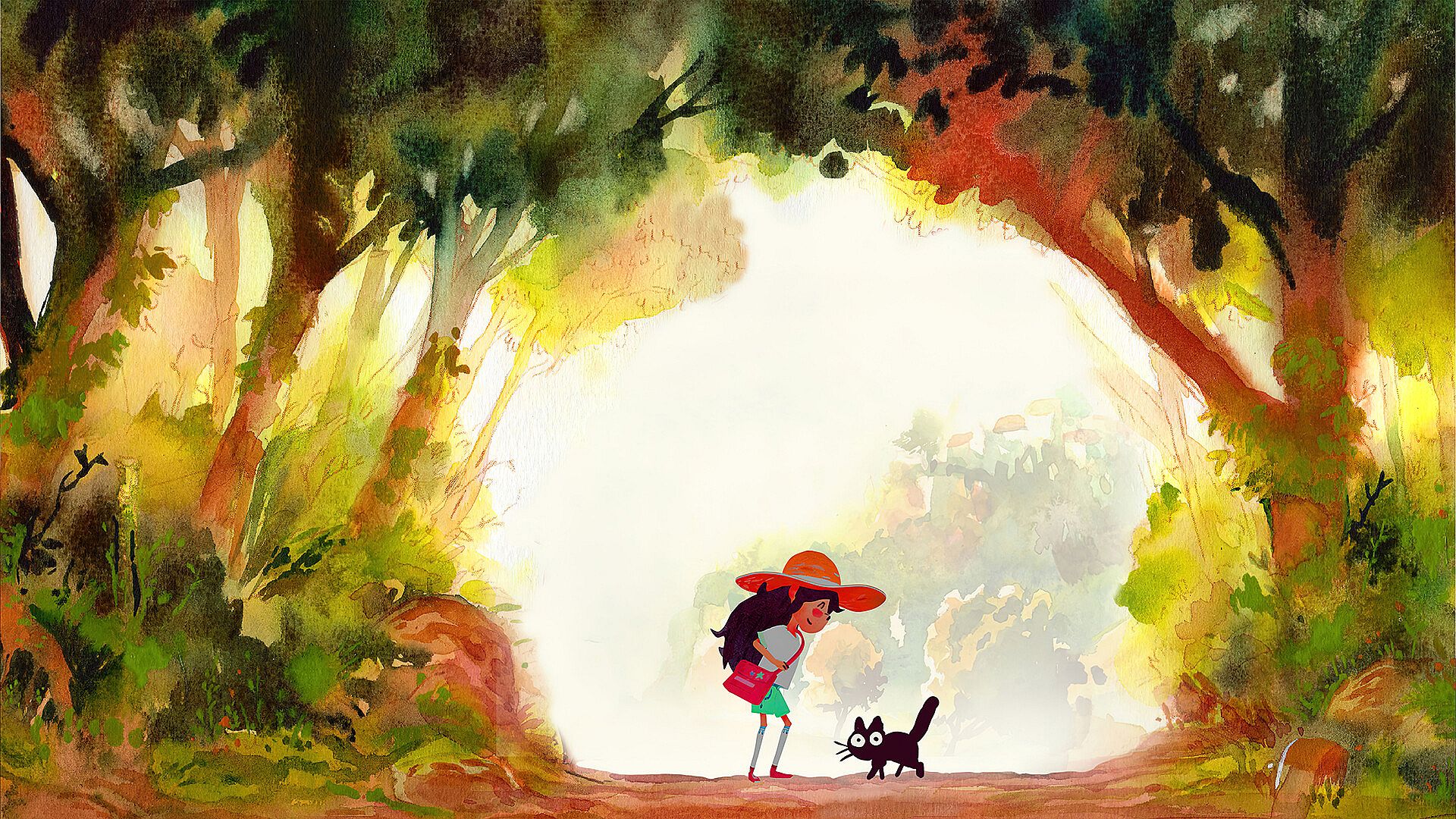
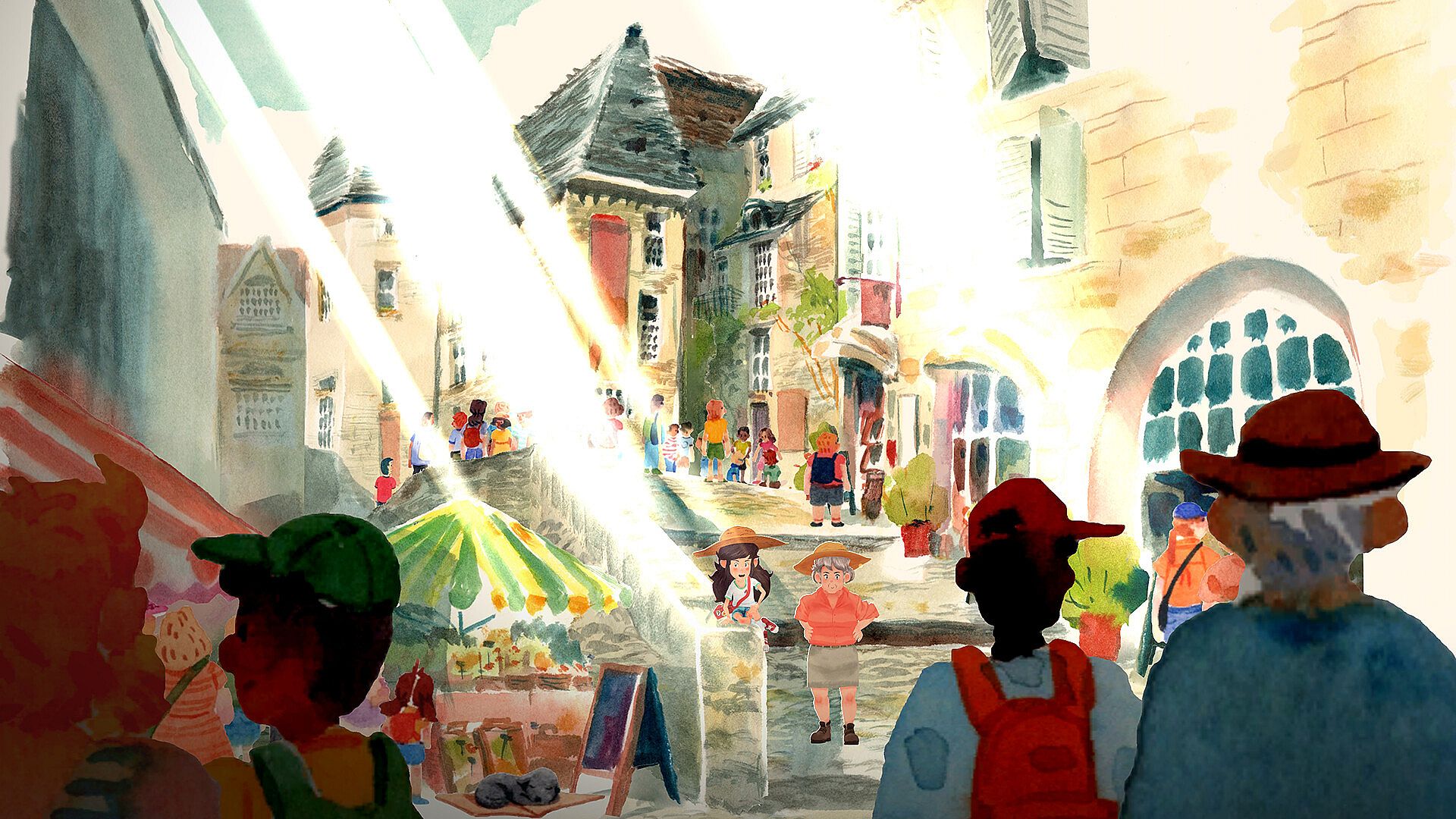
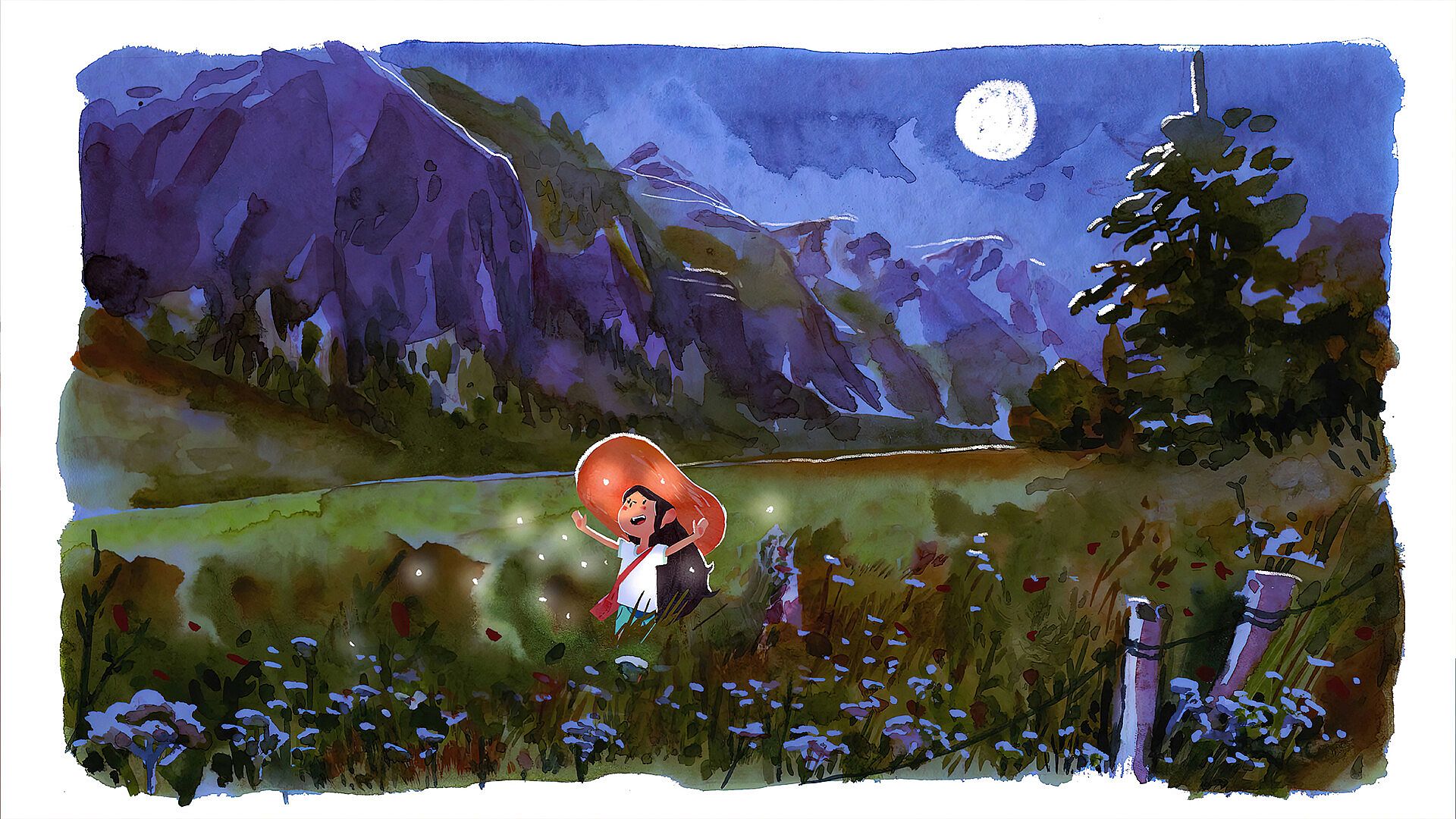
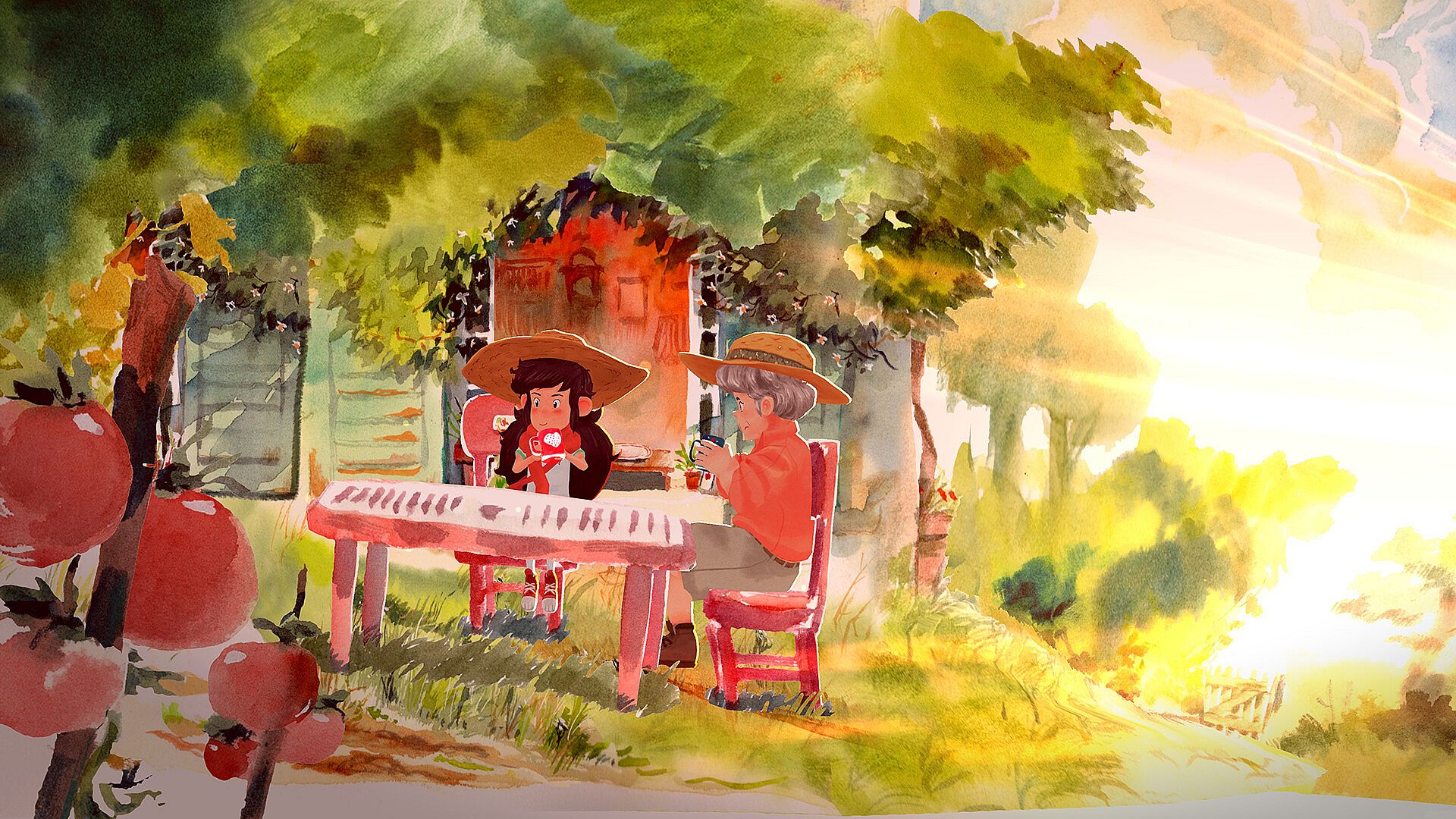
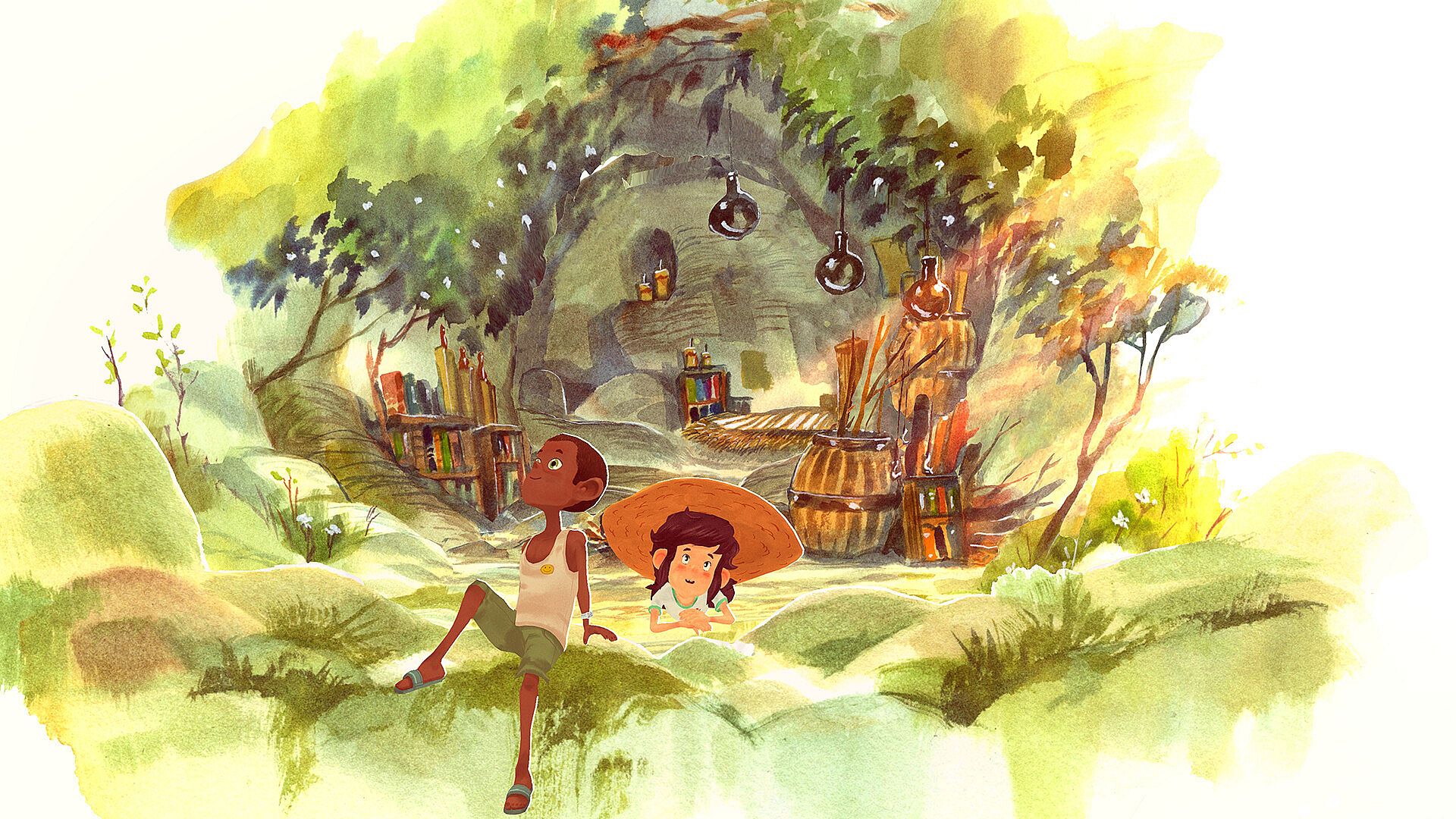




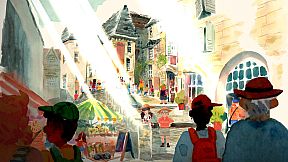
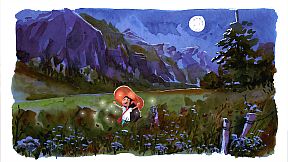
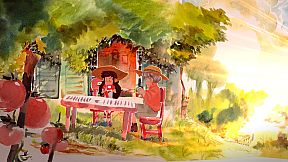

Dordogne is an indie adventure game that delivers a focused single-player narrative centered on personal memories and family connections. Players step into the role of Mimi, who returns to the French countryside following her grandmother's passing and works to piece together fragments of her own childhood summers spent there decades earlier. The experience unfolds through exploration of rural landscapes rendered in hand-painted watercolor visuals, combined with light puzzle-solving and collection mechanics that emphasize sensory details from the past.
Gameplay
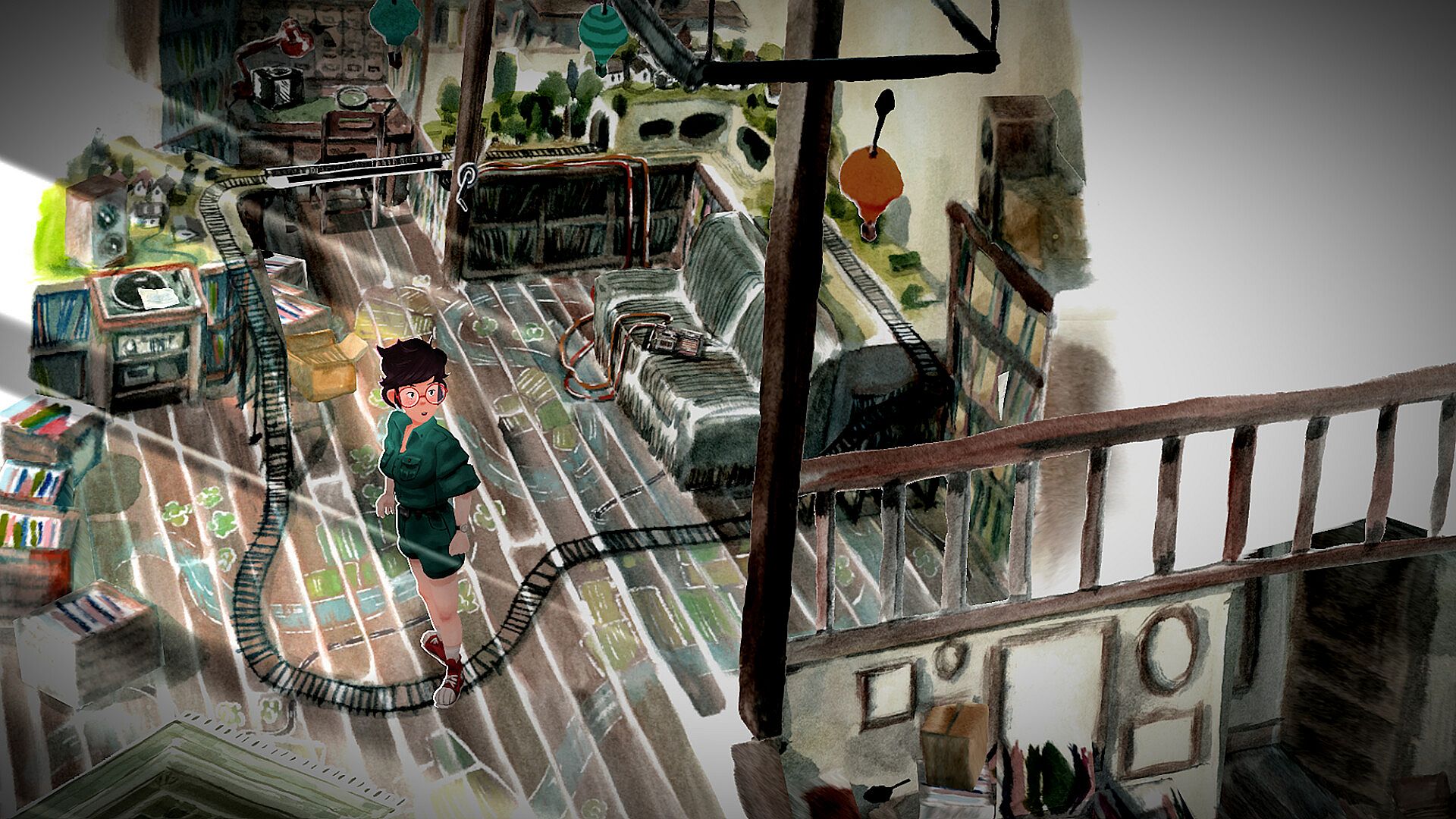
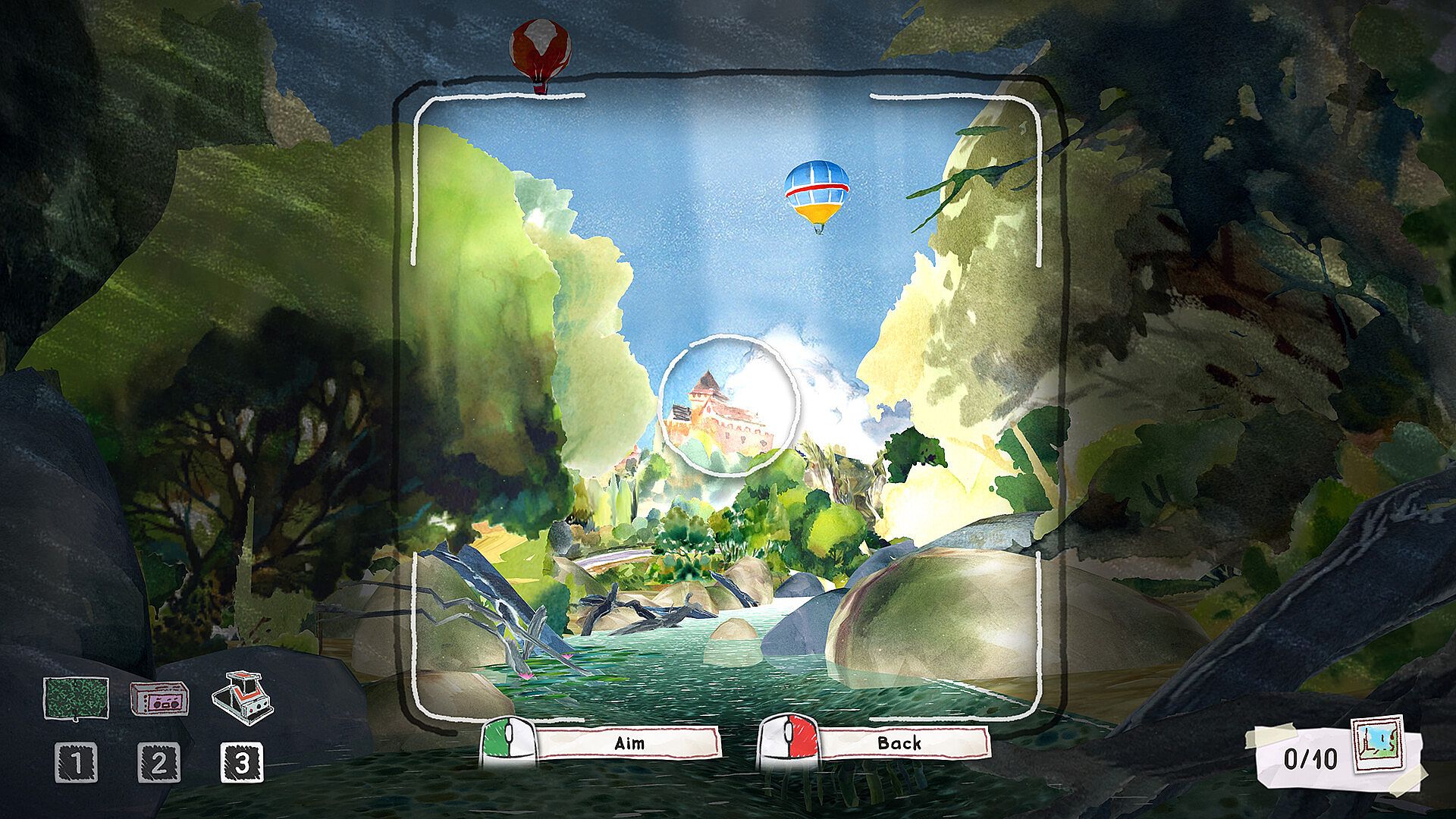
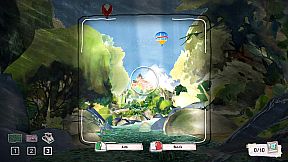
The core loop involves navigating detailed environments in both the present day and recalled childhood scenes. Mimi interacts with objects and locations to trigger recollections, solving simple puzzles and participating in short minigames that represent everyday activities from the 1980s. These activities help bridge the gap between adult perspective and earlier experiences, gradually revealing family history and personal reflections. A key system lets players gather mementos such as photographs, recorded sounds, and scent descriptions to fill a personal journal or scrapbook. Each addition contributes to a record of the journey that feels tailored to the choices made during play. The pace remains deliberate, encouraging careful observation of the surroundings rather than fast action or complex combat.
Game Modes
Dordogne operates exclusively as a single-player experience with no multiplayer options or alternate modes. The entire story progresses linearly through the narrative chapters, allowing players to focus entirely on Mimi's story without interruptions from competitive or cooperative elements. This structure suits the game's emphasis on quiet reflection and personal discovery, with progress tied directly to completing the memory-related tasks and journal entries.
Narrative and Themes
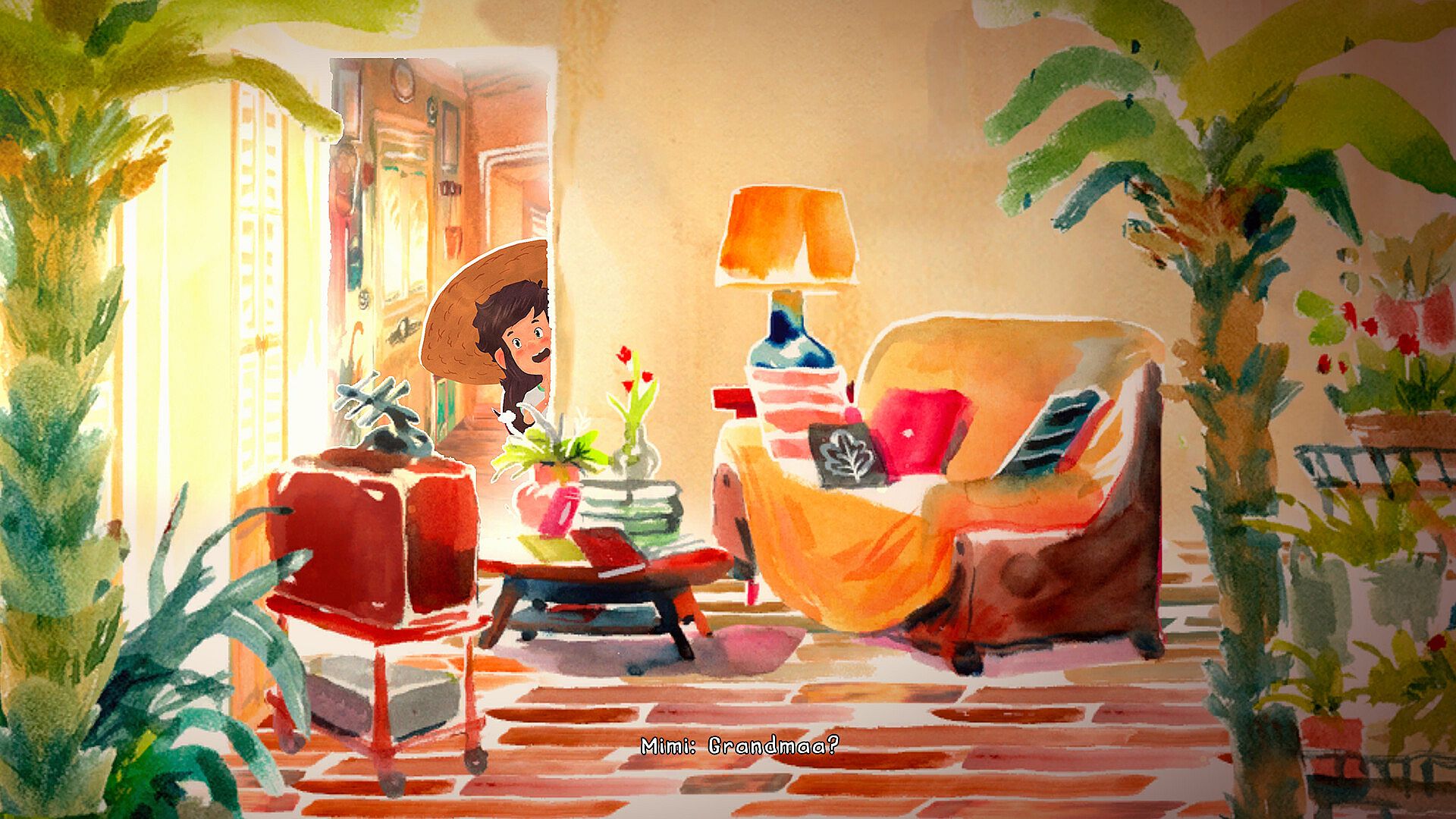
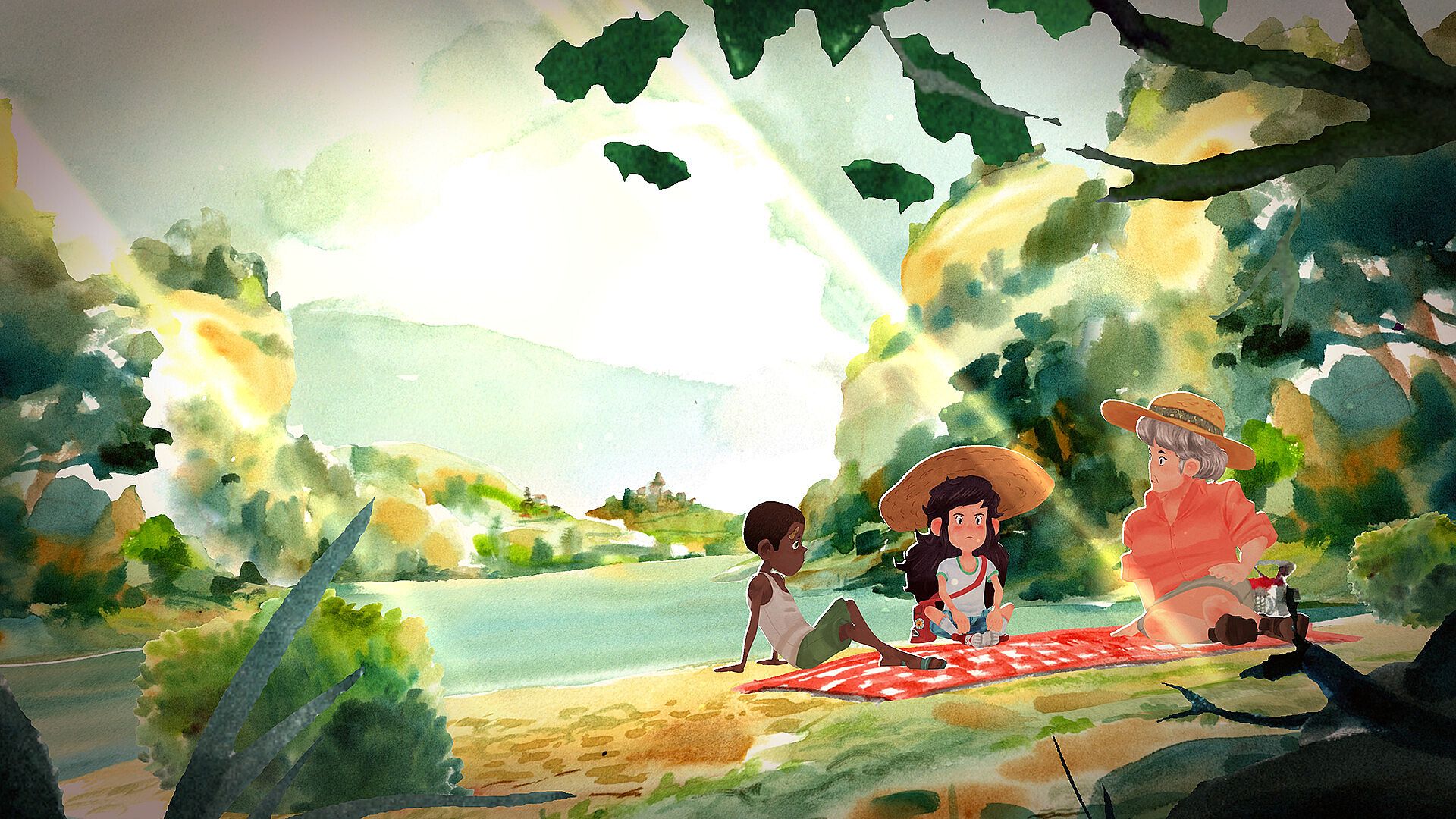
The story explores the contrast between childhood innocence and adult responsibilities through Mimi's interactions with her late grandmother Nora. As past and present overlap, players uncover details about family relationships and long-buried secrets. The writing highlights everyday moments, sensory memories, and the process of reconciling earlier life choices with current circumstances. Dialogue and environmental storytelling drive the emotional core, supported by the collection of personal artifacts that add layers to the family history being reconstructed.
Visuals and Atmosphere
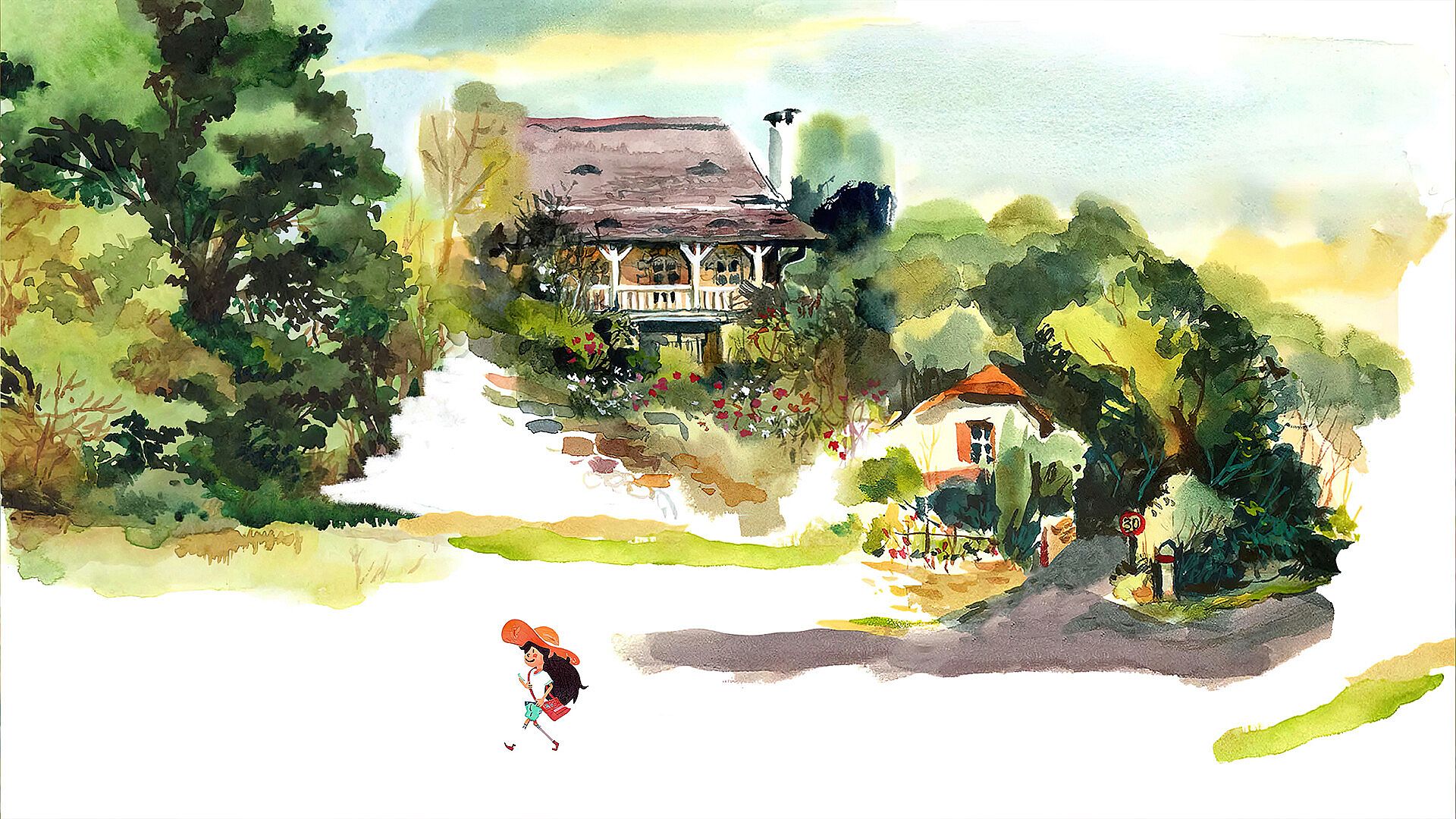
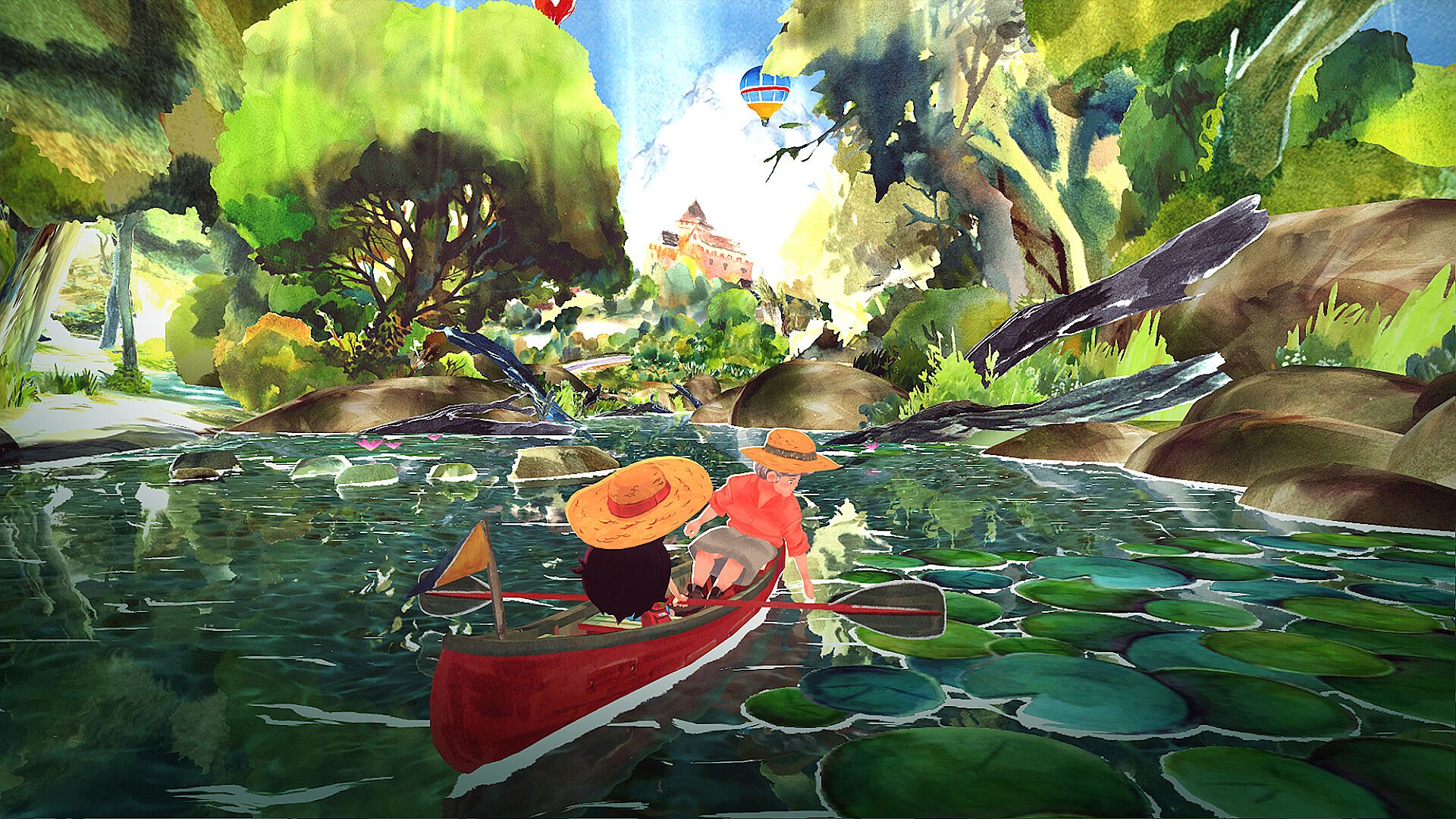
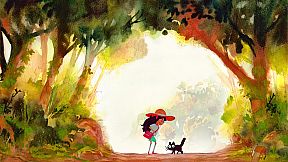
Hand-painted watercolor artwork defines the presentation, creating lush depictions of the Dordogne region across changing seasons and times of day. The style shifts subtly between vibrant summer hues in memory sequences and more muted tones in the present. Sound design reinforces the sensory focus by incorporating ambient noises and effects that players can capture as part of the journal system. This combination produces a consistent, atmospheric setting that supports the introspective tone without relying on flashy animations or complex particle effects.
Is It Worth Playing?
Players who appreciate narrative-driven adventure games with an emphasis on exploration and emotional storytelling will find Dordogne a strong match. The mechanics stay accessible while still providing meaningful interaction through the puzzle and collection systems. Reception highlights the game's ability to evoke genuine nostalgia and warmth through its art and themes, making it particularly appealing for those seeking a shorter, reflective experience rather than lengthy campaigns or high-stakes challenges. As a complete single-player title released in 2023, it offers a self-contained journey without ongoing seasonal content or required updates. Those drawn to cozy, memory-focused adventures on PC will likely value the distinctive watercolor presentation and the personal journal feature that ties the gameplay directly to the story's themes of family and remembrance.