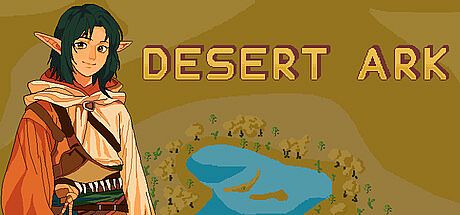


Desert Ark is a single-player strategy survival game that combines card-based mechanics with oasis construction in a desert setting. Players manage resources and plant growth to expand habitable zones while preparing for recurring environmental threats on PC.
Gameplay
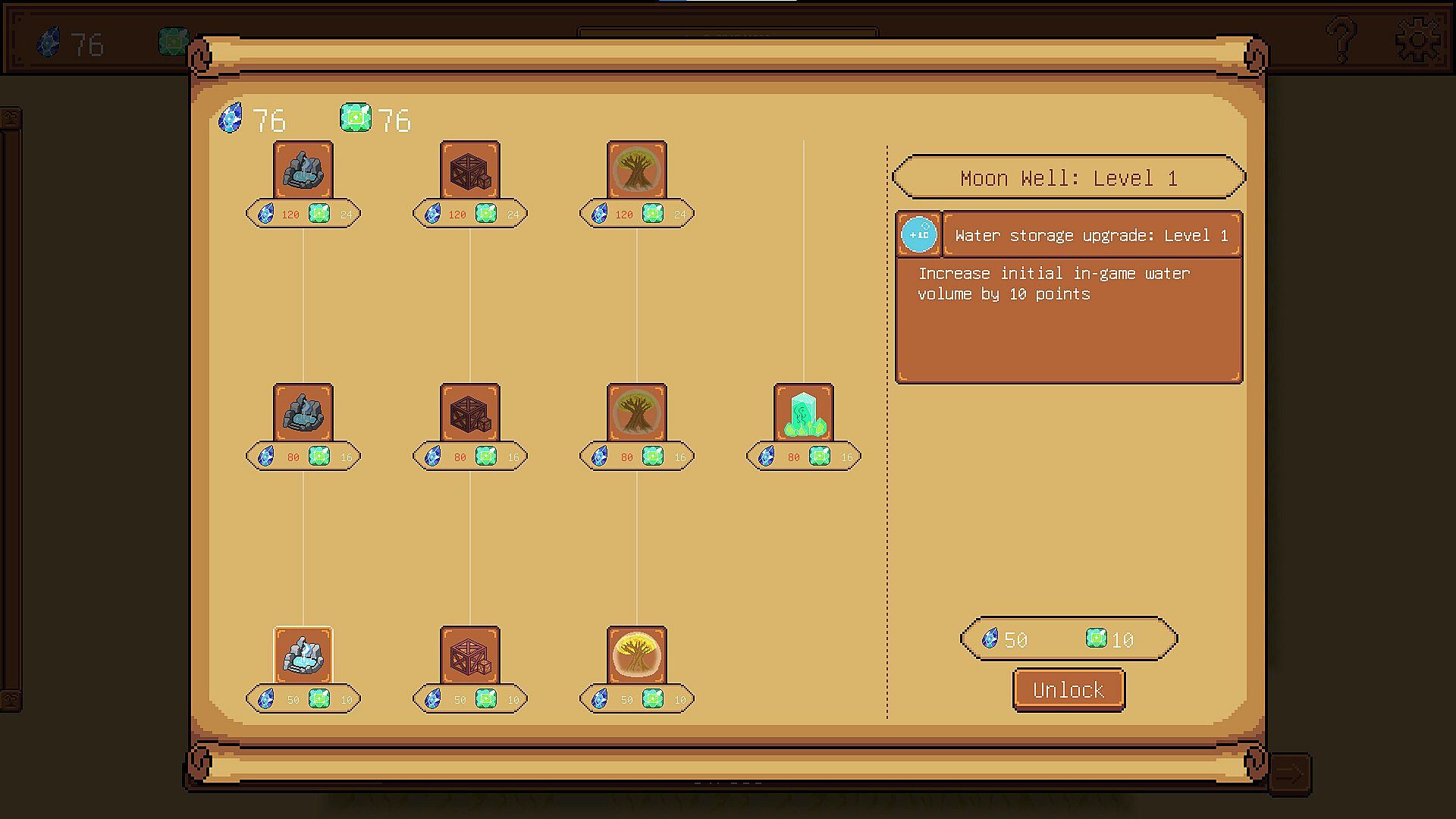
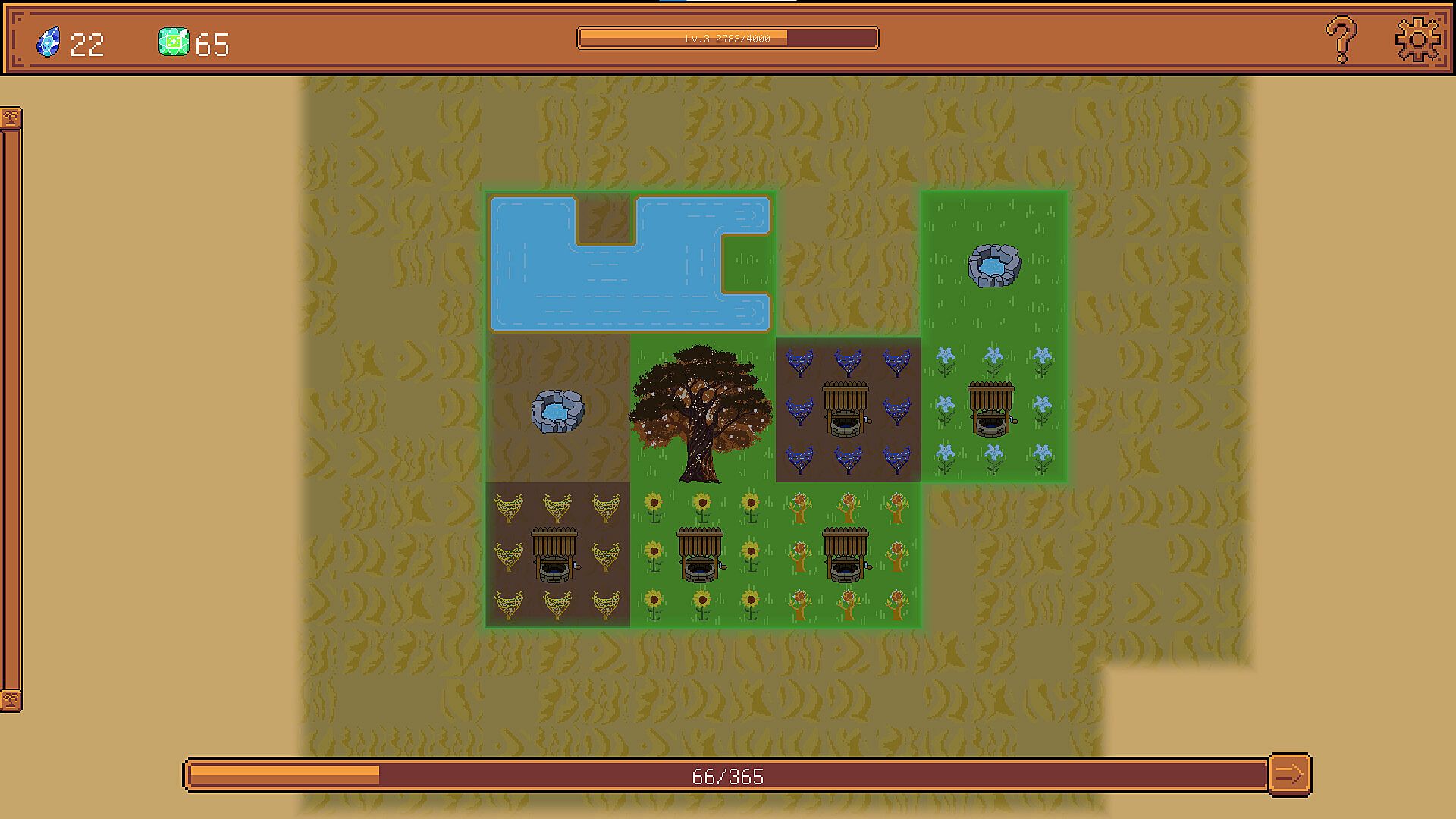
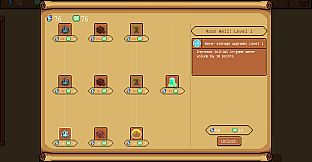
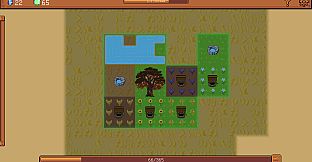
The core experience revolves around a dual-loop system that alternates between large-scale expansion and focused building sessions. On the world map, activity begins at a central Spirit Tree whose influence zone expands as players construct new oases on adjacent plots. Each construction advances an in-game day counter toward a 365-day sandstorm cycle that resets unprotected areas outside the tree's range. Resources gathered from successful oases support structures like Botanical Gardens and Wells, along with tech tree upgrades that carry over between attempts through Spirit Tree leveling.
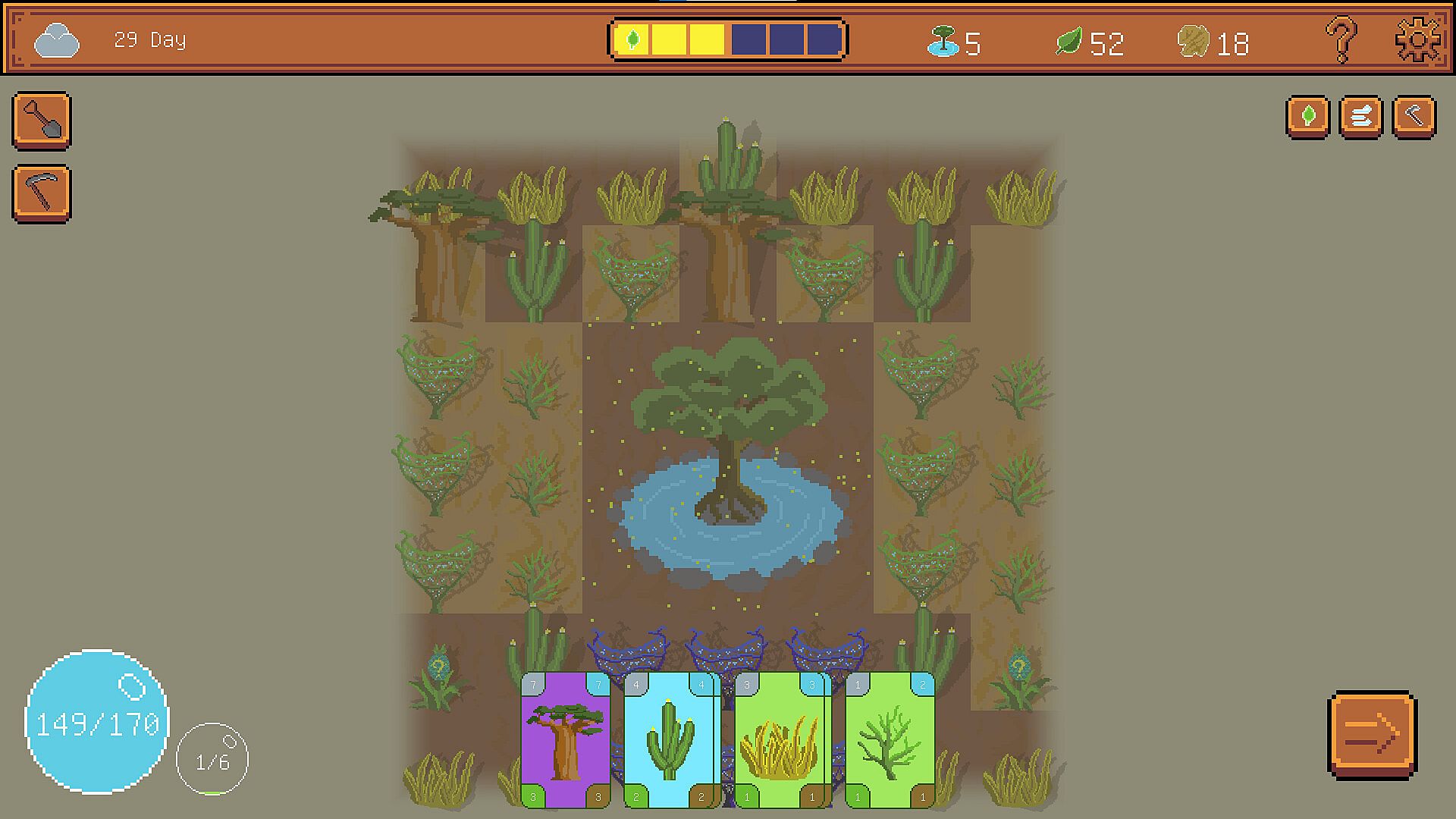
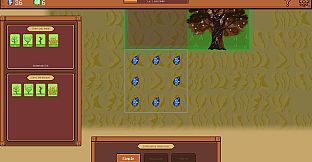
Individual oasis sessions operate on a turn-based schedule of six turns per day, split evenly between day and night phases with corresponding visual changes. Players draw from a hand of plant cards and place them on a grid, spending water and action points with each action. Plant statistics track growth, greening contribution, wind resistance, and harvest potential. Barrenness increases with distance from the central spring and inflicts damage at the end of each day unless countered by mature plants' greening values. Periodic sandstorms test windbreak defenses, with breakthroughs causing direct spring damage. Sessions begin with a choice among three cards, and daily weather events add variability to conditions.
Nineteen plants fall into six categories: Shrubs, Vines, Cacti, Trees, Flowers, and Fruits. Each offers distinct effects including water capture, sand stabilization, wind protection, and adjustments to day or night length. Batch placement speeds up large-scale planting, while harvesting mature specimens returns additional cards. The Chaos Fruit specifically grants a bonus selection upon collection. A codex tracks all discovered plants and their attributes for reference across playthroughs.
Game Modes
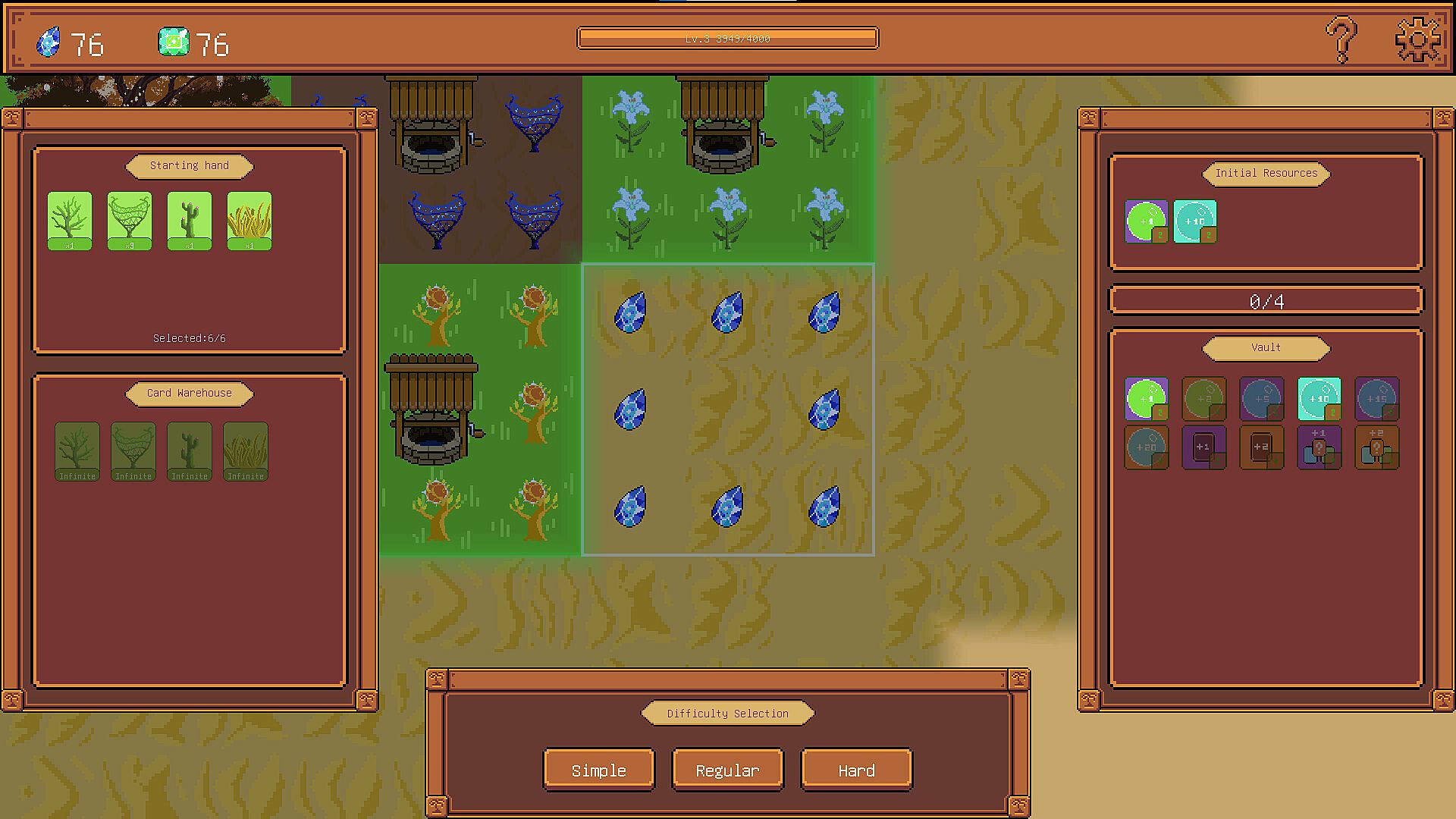
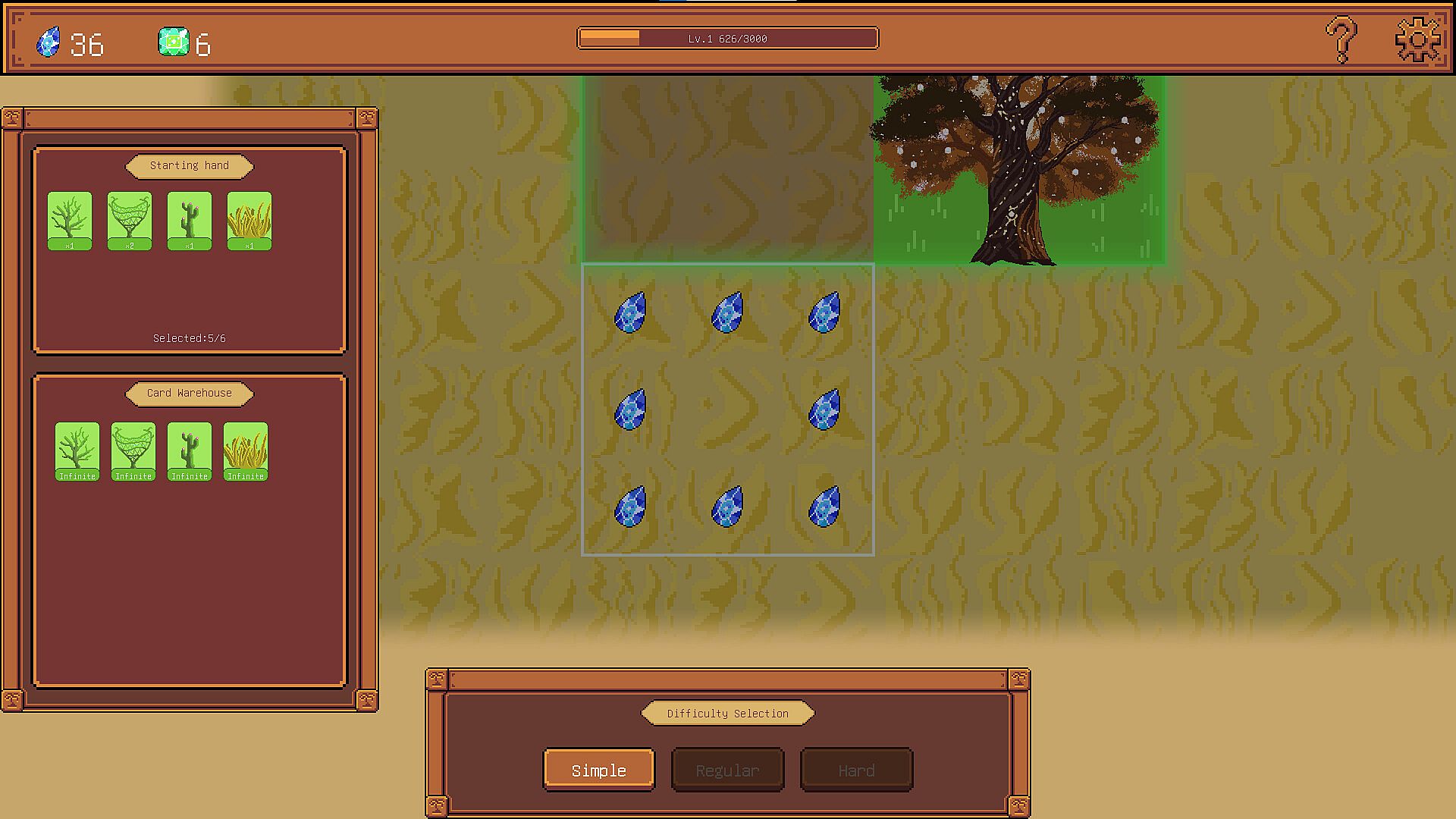
Desert Ark operates entirely in single-player format with no multiplayer components. Progression centers on repeated oasis construction runs that feed into broader world map advancement. Three difficulty settings adjust key parameters: Easy reduces map scale and sandstorm strength while lowering score multipliers, Normal provides a balanced challenge, and Hard increases map size along with storm intensity for higher rewards. These options alter the strategic demands without introducing separate named modes.
The macro cycle on the world map emphasizes long-term planning and resource allocation across multiple sessions, while each micro cycle demands precise card management and defensive positioning within a single oasis. Tech tree unlocks tied to Spirit Tree progress create meta-layer decisions that influence future runs regardless of difficulty choice.
Core Mechanics and Systems
Plant placement requires careful consideration of grid position relative to the spring and upcoming sandstorm paths. Growth values determine how quickly a plant matures to contribute greening or harvest benefits. Windbreak values directly mitigate storm damage, creating defensive layers that protect the spring. Random events each day can alter water availability, growth rates, or storm frequency, forcing adaptive responses mid-session.
Meta-progression rewards consistent performance by strengthening the central Spirit Tree, which in turn expands safe building zones on the world map. Structures built with oasis resources provide ongoing bonuses that support further expansion. The system encourages experimentation with different plant combinations to optimize greening efficiency and storm resistance under varying conditions.
Is It Worth Playing?
Desert Ark suits players who enjoy methodical strategy games focused on resource management, card drafting, and incremental base expansion in a survival context. The dual-loop structure offers clear short-term goals within oasis sessions alongside longer-term map progression that rewards repeated play. Difficulty scaling allows newcomers to learn core systems before tackling higher challenges that emphasize optimization and defense layering.
With a planned release in Q4 2026 and currently no user reviews available, the game remains in a pre-launch state. Those interested in indie strategy titles that blend card mechanics with environmental management will find the described systems align closely with that preference. The single-player focus keeps attention on personal decision-making and run-to-run improvement through the tech tree.