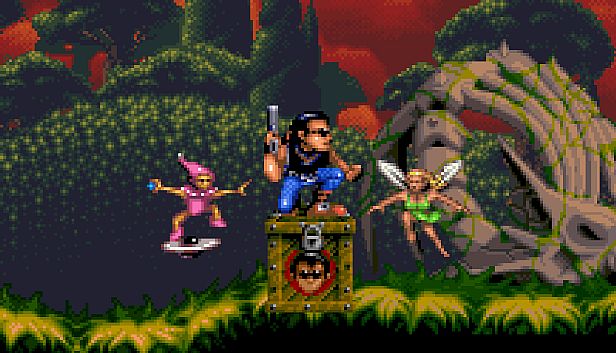


Biomechanical Toy (QUByte Classics) is a 2D run-and-gun action adventure game originally released in arcades in 1995 and now available on Xbox and PC. Players control the hero Inguz in a mission to recover the stolen Magic Pendulum from the villain Scrubby, who has animated an army of hostile biomechanical toys across a kingdom.
Gameplay
The core loop centers on side-scrolling stages filled with enemies, hazards, and collectibles. Inguz moves through detailed pixel-art environments, jumping over obstacles while firing a pistol that starts with infinite basic ammo. Power-ups expand the arsenal to include automatic fire, explosive projectiles, and special bombs for clearing groups of foes. Players can also jump on certain enemies to reach higher areas or items, and they interact with the surroundings by destroying chests for rewards and using elements like mushrooms for boosted jumps.
Levels demand quick reflexes as waves of toys attack from multiple angles, with patterns that reward precise movement and timing. Giant bosses appear at the end of stages, requiring players to learn attack sequences while managing limited resources. The re-release adds rewind and quick-save options that allow experimentation without heavy punishment, preserving the original's challenging arcade feel while improving accessibility for modern players.
Game Modes
The game operates entirely in a single-player format. There are no separate multiplayer options or additional modes beyond the main campaign of sequential stages. Players progress through the story-driven levels in order, facing escalating difficulty as they advance toward the final confrontation with Scrubby and his generals. Difficulty and life count settings appear as basic options before starting, letting users adjust the challenge level to suit their preference.
Visuals and Presentation
The game features vibrant pixel art that captures a surreal toy kingdom with biomechanical twists. Stages include varied themes such as a Wild West setting, chess-themed areas, train sequences, clockwork forests, and prehistoric zones. Sprites stand out with bold colors and exaggerated designs that emphasize the eccentric humor of living toys turned hostile. Sound design supports the fast pace with punchy weapon effects and energetic music that fits the arcade roots.
Is It Worth Playing?
This title suits fans of classic run-and-gun games who enjoy precise platforming mixed with constant shooting. Its short length suits quick sessions, though the intensity and boss fights provide replay value through the added rewind feature. Reviews highlight responsive controls, satisfying weapon upgrades, and the unique toy-themed world as strengths, while noting the original arcade toughness remains intact even with quality-of-life improvements. The re-release on Xbox and PC makes it easy to experience this 1995 title without needing original hardware, delivering a focused action adventure that stands on its own merits for players seeking straightforward, high-energy gameplay.