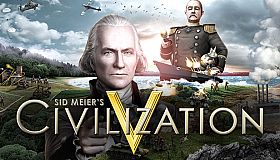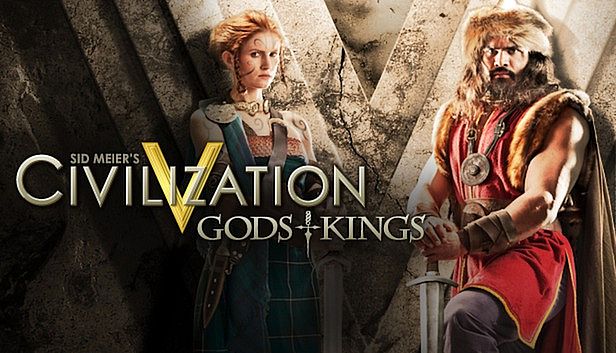















Sid Meier's Civilization V: Gods and Kings is a strategy expansion that builds directly on the turn-based empire-building foundation of the 2010 base game. Players lead one of several civilizations through history, managing cities, research, diplomacy, and military forces on a hexagonal map while pursuing victory through domination, science, culture, or diplomacy.
Gameplay
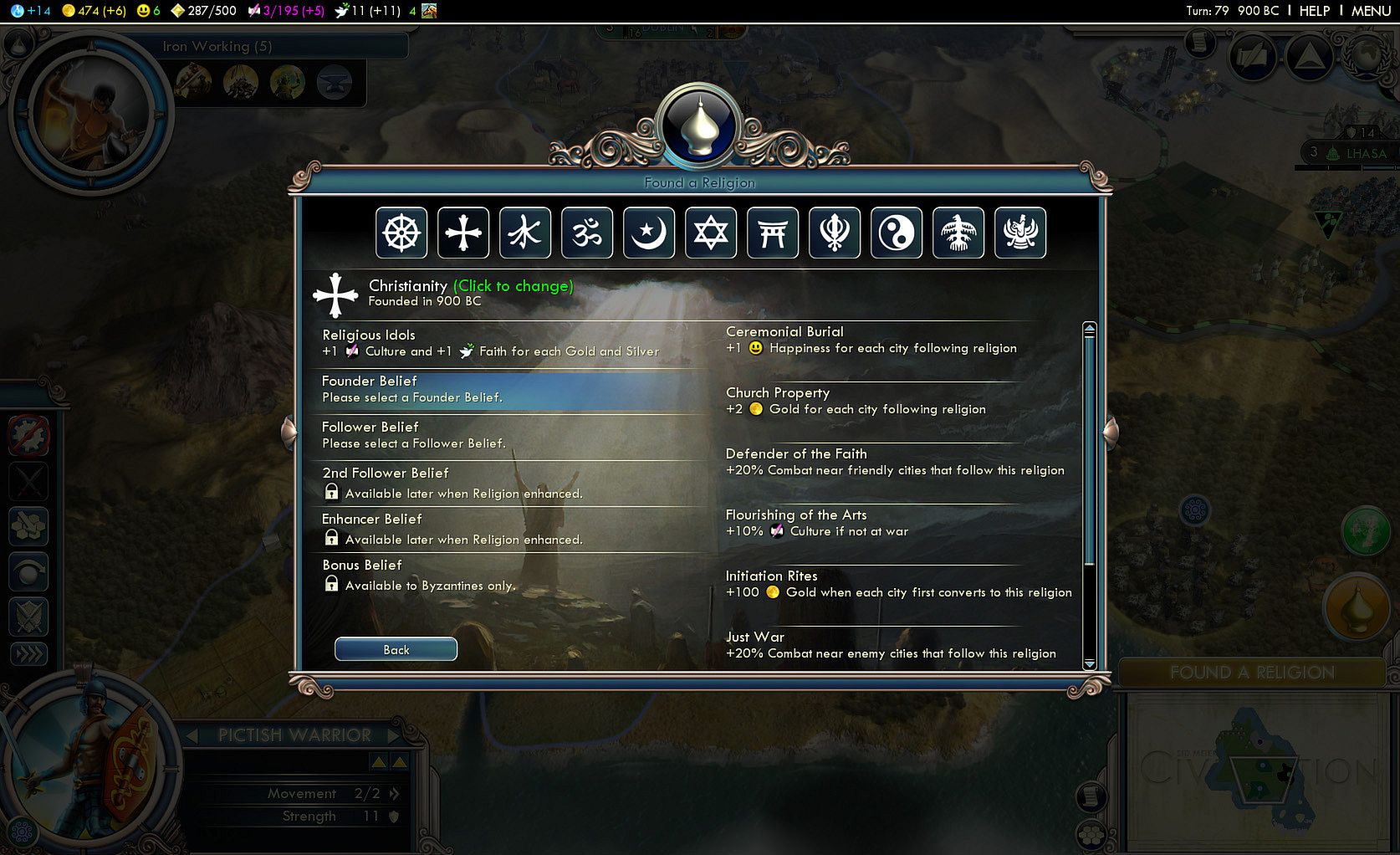
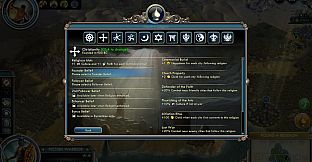
The expansion introduces religion as a core system. Players generate Faith to found a pantheon and later a full religion through Great Prophets. Beliefs can be selected to emphasize gold, culture, military strength, or other focuses, and they unlock unique buildings available only to followers of that faith. Missionaries and inquisitors spread or defend the religion, influencing city-state alliances and rival civilizations.
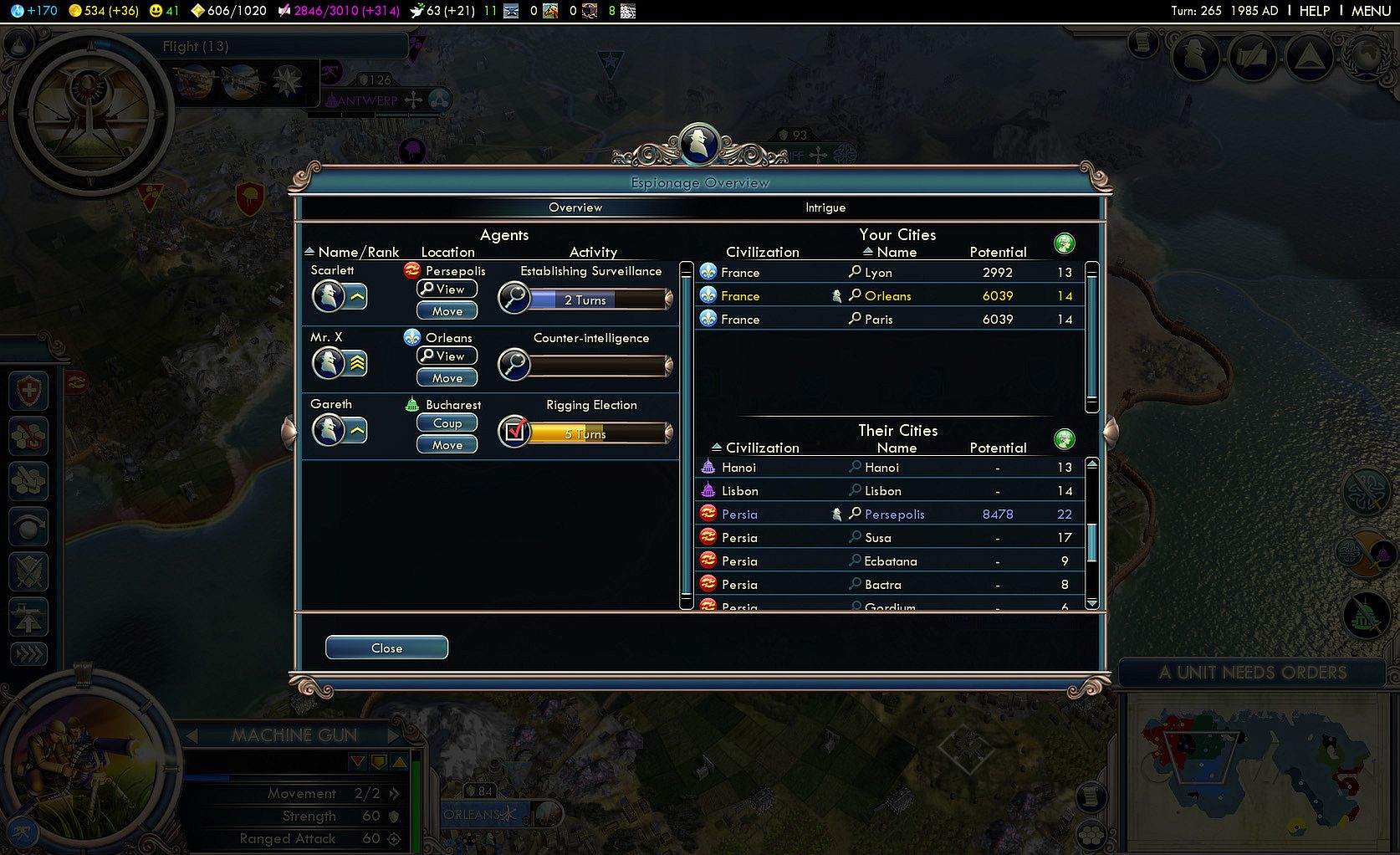
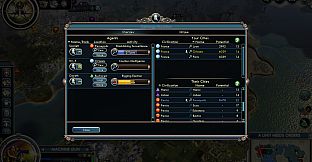
Espionage adds a layer of covert operations once the Renaissance era begins. Spies can be stationed in foreign cities to gather intelligence, steal technologies, or disrupt city-state relationships. Establishing embassies supports open diplomacy while spies enable hidden actions that risk diplomatic penalties if discovered.
City-state interactions expand with two new types: mercantile and religious. These provide fresh benefits such as unique luxury resources or faith bonuses. The quest system receives an overhaul, shifting emphasis away from gold payments toward narrative-driven tasks that support diplomatic victories.
Combat receives refinements for both land and naval forces. Armies benefit from improved AI and mechanics that reward balanced compositions over single decisive rolls. Naval units split into melee and ranged classes, allowing ranged ships to threaten coastal cities directly. Embarked land units gain defensive options when stacked with naval escorts, and a new Great Admiral unit supports fleet operations.
Game Modes
The base experience remains a single-player campaign of empire expansion across eras, with options for multiplayer matches. Three dedicated scenarios provide focused alternatives. The Medieval scenario tasks players with building a kingdom amid Mongol and Ottoman invasions while navigating the Crusades and Reformation. Fall of Rome lets participants control either the Eastern or Western Roman Empire against barbarian threats or play as the barbarians themselves. Empires of the Smoky Skies presents a Victorian science-fiction setting where players construct airships and massive land vehicles from a custom tech tree to conquer a pre-industrial world.
New Civilizations and Wonders
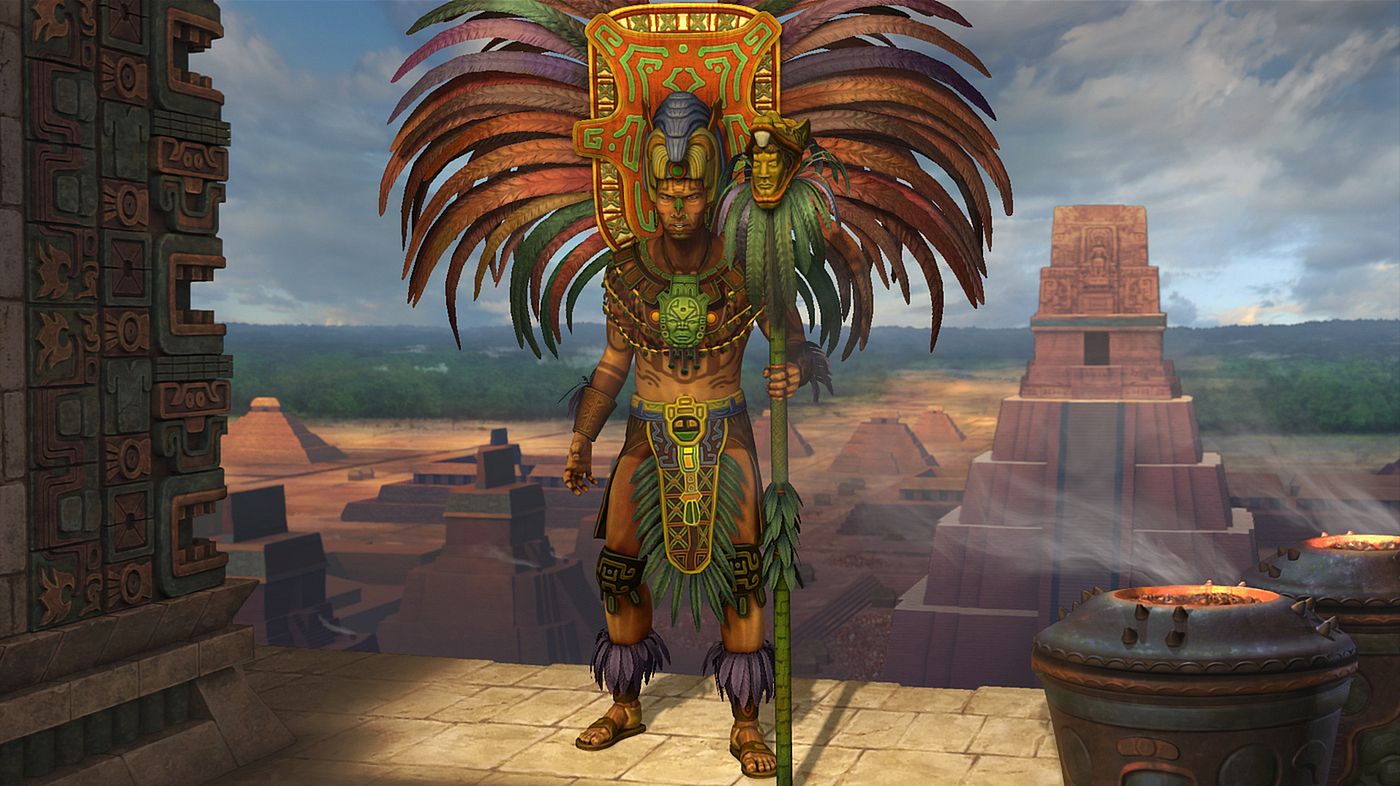
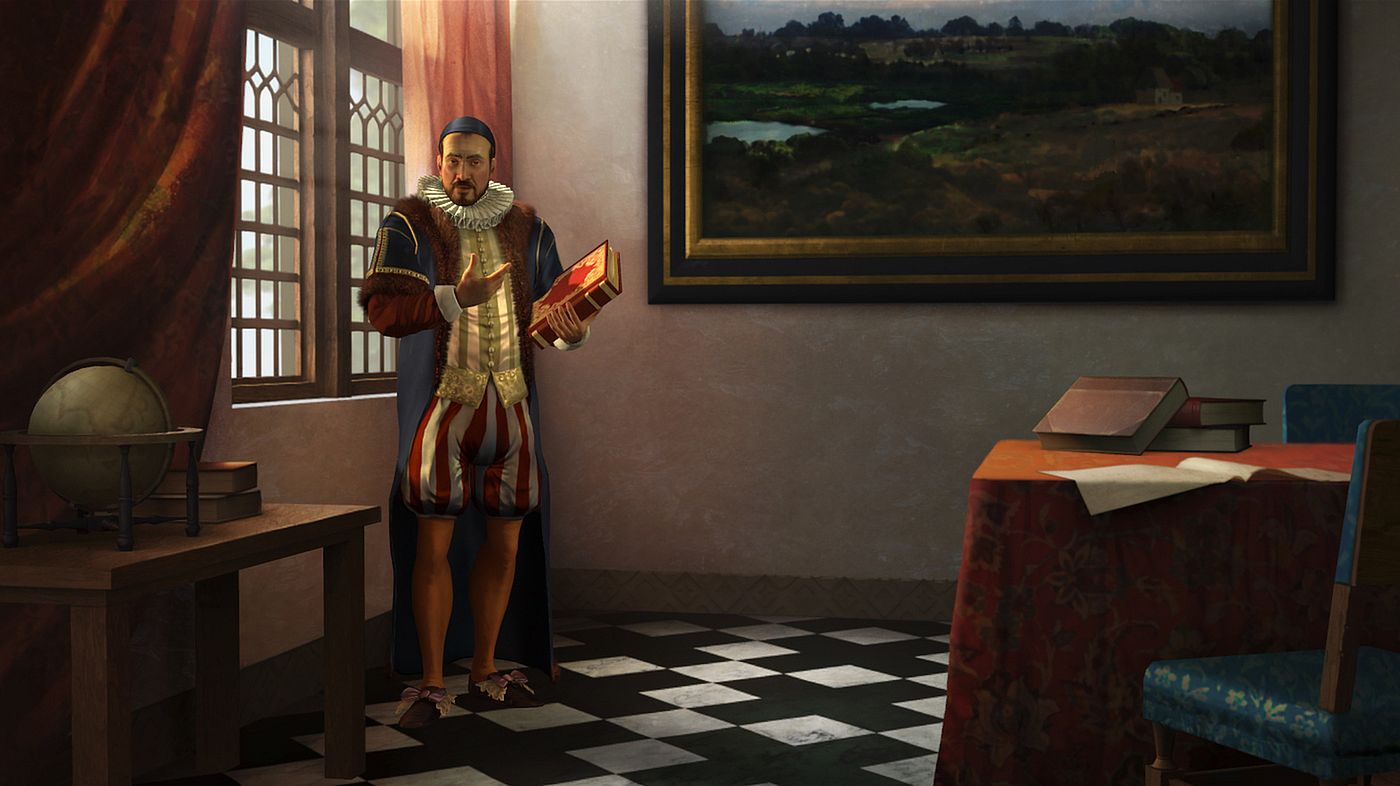
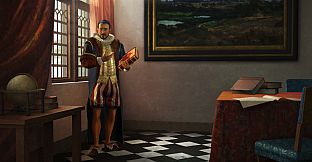
Nine additional civilizations join the roster, each with distinct traits, units, and buildings. Examples include Carthage, the Netherlands, the Celts, and the Maya, led by figures such as William I, Boudicca, and Pacal the Great. Nine new wonders appear, among them Neuschwanstein, the Great Mosque of Djenne, the Terracotta Army, the Great Firewall, and the Hubble Space Telescope. These structures deliver specialized bonuses that integrate with the expanded religion and espionage systems.
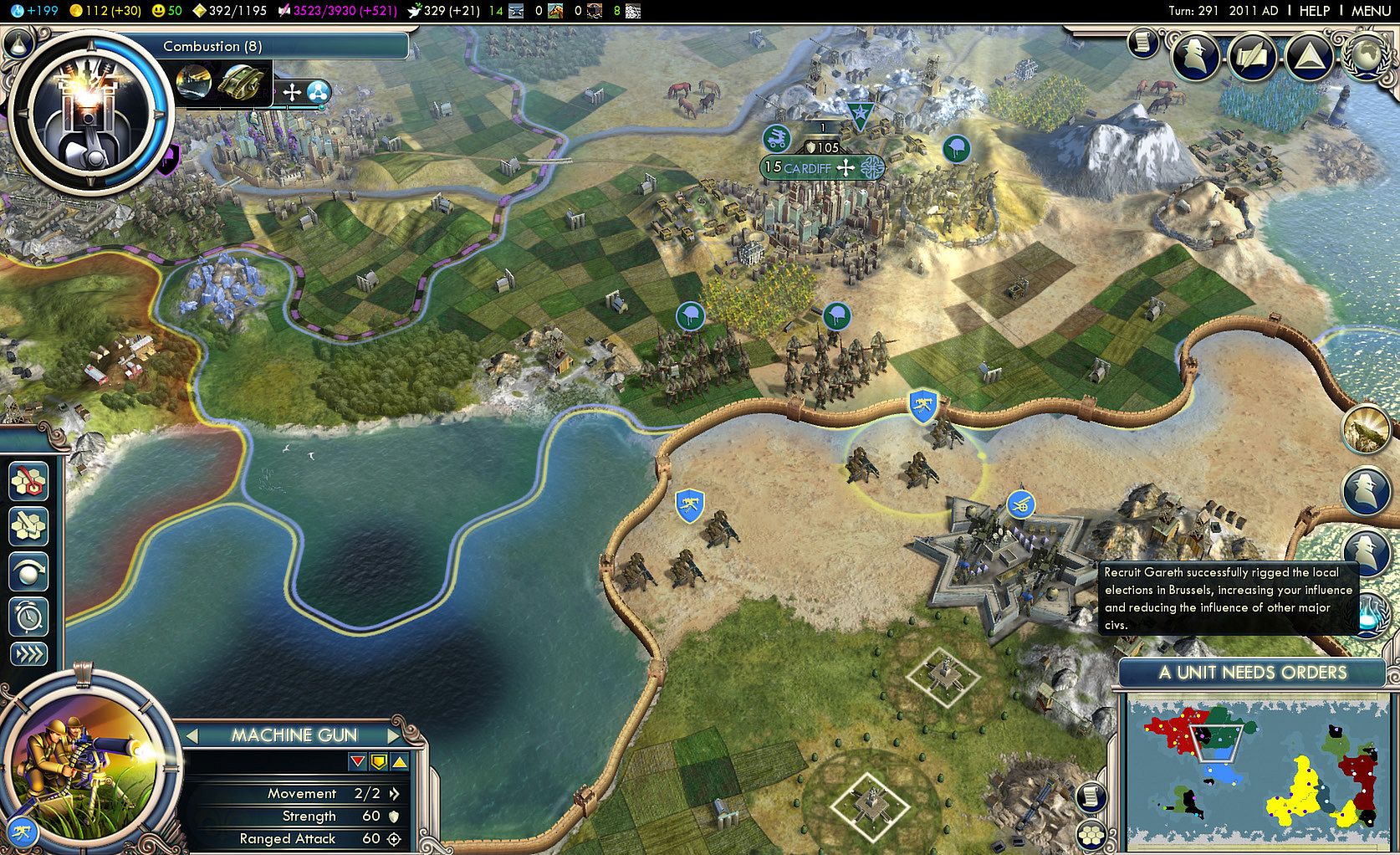
Dozens of new units, buildings, and technologies further diversify options. Examples range from the Machine Gunner as a one-hex ranged unit to the Bomb Shelter for late-game protection. The tech tree incorporates entries such as Combined Arms, while social policies and resources receive supporting adjustments.
Is It Worth Playing?
Gods and Kings deepens the strategic layers of Civilization V through religion, espionage, and combat refinements that reward long-term planning and tactical decisions. The added civilizations, wonders, and scenarios extend replay value for players who enjoy managing faith networks, conducting spy operations, or experimenting with naval superiority. Those seeking a complete historical strategy experience with enhanced diplomacy and city-state mechanics will find the expansion integrates seamlessly into the core loop. Availability on PC platforms supports continued play without ongoing seasonal content. The expansion suits fans of deliberate, multi-hour sessions focused on empire management rather than fast-paced action.