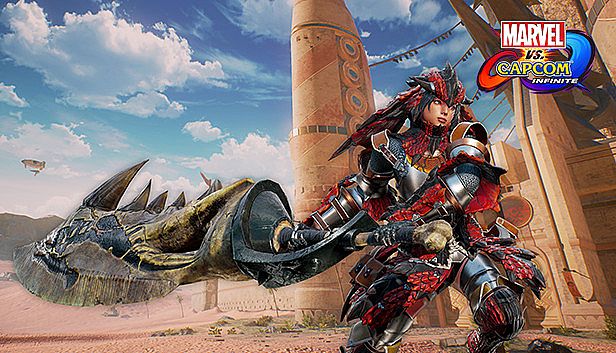



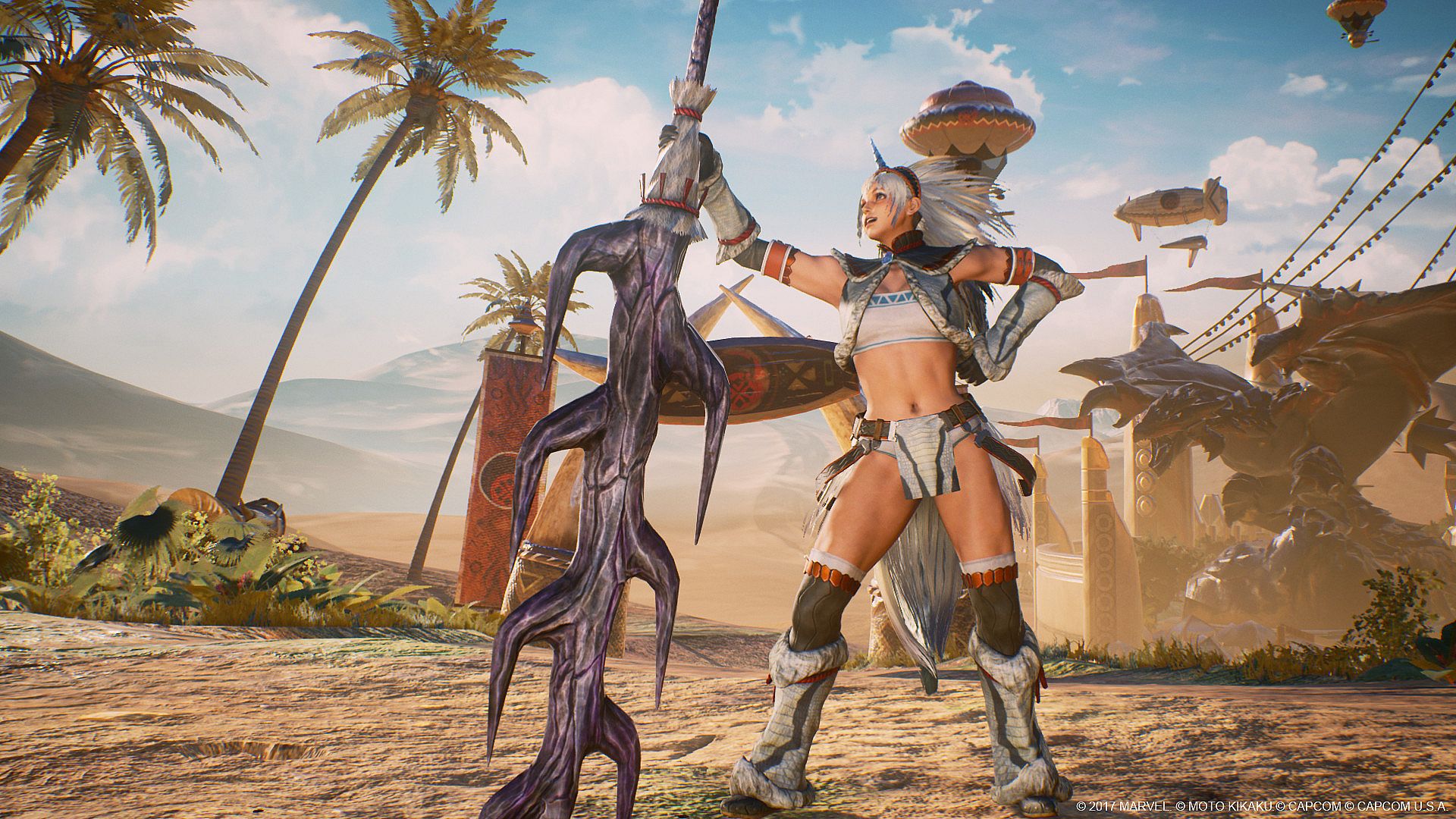
Marvel vs. Capcom: Infinite is a 2v2 fighting game that pits characters from Marvel comics against fighters from Capcom franchises. The Monster Hunter DLC adds a female hunter from the Monster Hunter series as a playable character, complete with an alternate premium costume. She enters battles equipped with weapons such as the Great Sword, Dual Blades, and Bow, drawing directly from her home series for move animations and style.
Gameplay
Matches take place in a two-on-two format where each player controls a pair of characters. The Active Switch system lets fighters tag in their partner at any moment, even during combos on the ground or in the air. This replaces older assist mechanics and supports continuous pressure and creative sequences. A Counter Switch option allows a tagged partner to interrupt an incoming attack by spending meter, turning defense into an opening for retaliation.
Before each match, players select one of six Infinity Stones. These grant access to an Infinity Surge ability once the dedicated gauge fills. The stones provide distinct effects: Power increases damage and combo potential, Time aids recovery and chaining, Space restricts opponent movement, Reality adds elemental properties to attacks, Mind refills the Hyper Combo meter, and Soul revives a fallen ally. Activating an Infinity Storm applies the stone's passive benefits for a limited time while altering the soundtrack.
Monster Hunter fits this system with her multi-weapon toolkit. Her Great Sword delivers heavy strikes with super armor on certain moves, Dual Blades enable rapid status-inflicting combos such as Demon Dance, and the Bow supports ranged options. Her animations reference Monster Hunter gameplay, including armor sets like Rathalos that influence her appearance and alternate colors.
Game Modes
Offline options include a cinematic Story mode that runs roughly two hours and follows heroes uniting against Ultron Sigma. Arcade mode recreates a classic ladder climb ending in a boss encounter. Mission mode delivers tutorials alongside character-specific challenges. Training mode offers adjustable parameters for practicing combos and stone usage. Local Versus supports player-versus-player or player-versus-CPU matches, while Collection unlocks extras such as artwork, audio, and story scenes through play.
Online features center on Ranked Match for competitive progression and Casual Match for relaxed sessions. Beginners League restricts participation to players below a set rank threshold. Lobbies allow up to eight participants to organize simultaneous matches with spectating. Global rankings and replay viewing round out the online suite.
Character and Roster Integration
The base roster mixes Marvel heroes and villains with Capcom icons. Monster Hunter joins as downloadable content and appears in the story as a loyal figure aligned with Black Panther in the merged setting of Valkanda. Her inclusion expands team-building choices for players seeking a versatile close-to-mid range fighter with strong defensive tools and elemental damage potential through her weapons.
Team composition matters because stones and switches reward experimentation. A player might pair Monster Hunter with a fast Marvel character to cover her slower heavy attacks or use her reach to control space while the partner applies pressure.
Is It Worth Playing?
Core combat receives consistent praise for its accessible tag system and Infinity Stone customization, which add strategic layers without overwhelming new players. The game launched in 2017 and maintains a mixed overall reception on Steam, with many noting enjoyable matches once the mechanics click. Online activity has declined over time, leaving fewer opponents in ranked queues during off-peak hours.
Players who enjoy tag-team fighting games and appreciate cross-franchise matchups will find the most value here. Those seeking high player counts or frequent updates may encounter limitations. The Monster Hunter DLC specifically appeals to fans of the Monster Hunter series who want to bring her weapon variety into versus battles. Local play and training tools remain solid entry points regardless of online population.