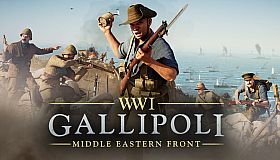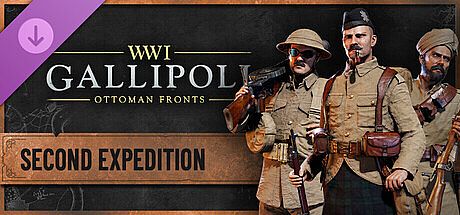



Gallipoli is a first-person shooter that places players in the role of soldiers fighting across the Ottoman Fronts during World War I. Developed as the latest entry in a series focused on realistic World War I combat, the game emphasizes tactical squad play in large-scale multiplayer battles between the British Empire and the Ottoman Empire. It features authentic weaponry, detailed environments drawn from historical campaigns, and a core loop built around objective control and resource management in expeditionary warfare.
Gameplay
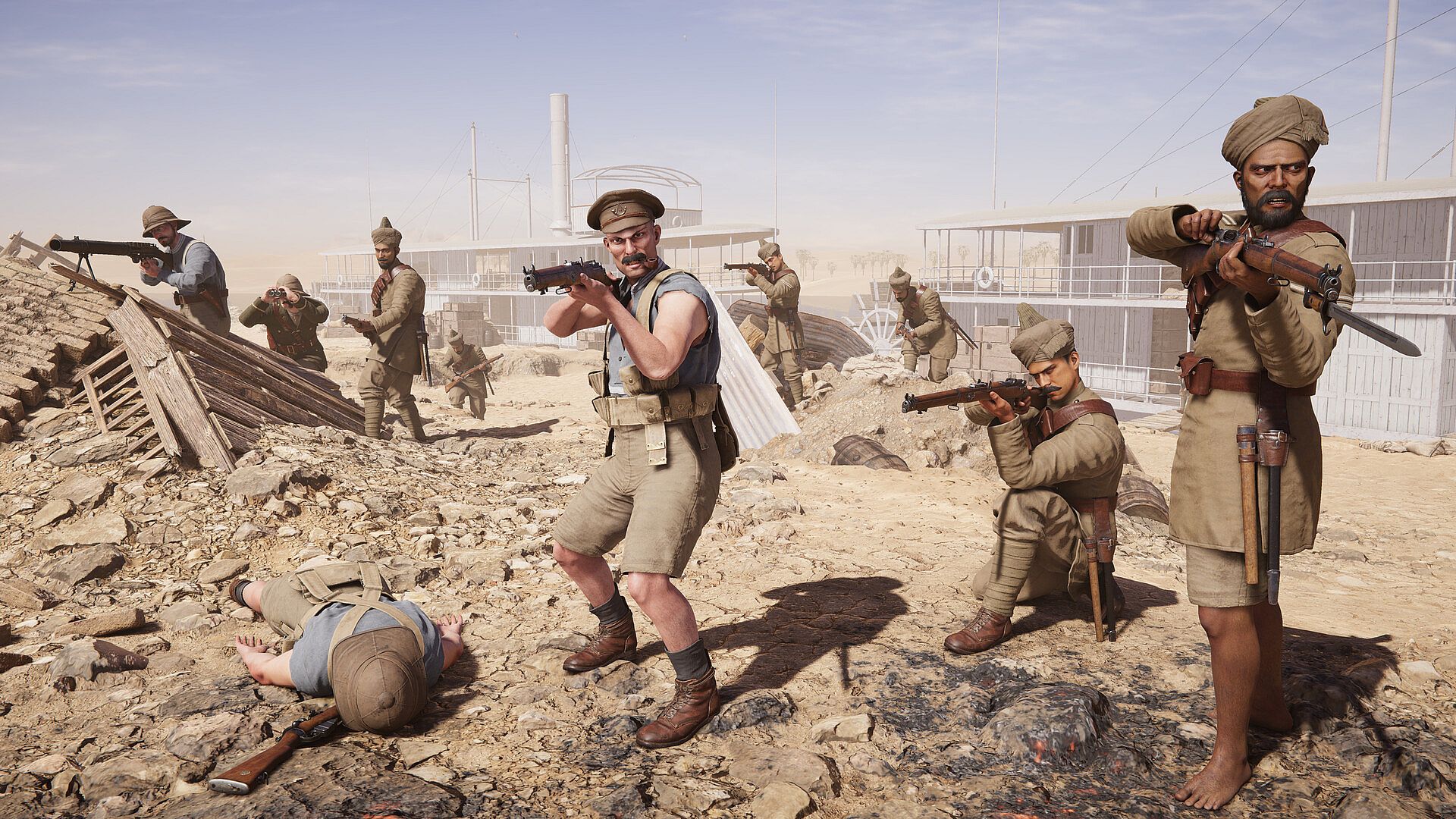
The experience centers on squad-based combat where players select from ten historic classes, each with specialized roles such as leading teams, providing suppressive fire, or supporting wounded allies. Weapon handling includes realistic ballistics, suppression effects, and body-specific damage, requiring careful aim and positioning. Matches unfold in one-shot-one-kill conditions that reward coordination over individual heroics, with exhaustion mechanics affecting aim stability under sustained pressure. British forces include subfactions representing different historical units, while Ottoman troops defend key positions across varied terrain including beaches, deserts, and urban areas.
Core mechanics highlight mobility and sustainability on extended fronts. Players must adapt to changing battlefield conditions, using cover effectively and coordinating advances or defenses. The simulation elements extend to equipment and environmental factors like dust and heat, which influence movement and visibility during engagements.
Game Modes
Expedition serves as the primary mode, structuring battles as 25-versus-25 contests across multiple sectors. Each sector contains a Headquarters objective and a Support Objective that must be captured in sequence to push toward the enemy spawn. Attackers begin with a set amount of Momentum that decreases with each death, creating pressure to maintain offensive tempo. Defenders focus on delaying progress to deplete this resource, while both sides can contest and recapture points once taken.
Objectives incorporate randomization per sector, forcing teams to adjust strategies mid-battle. Captured positions gain static weapons for defense, and support points provide additional resources or spawn advantages. A final Foothold phase activates when attackers exhaust their Momentum, offering a last opportunity to secure victory. This system captures the fluid nature of expeditionary operations on the historical fronts.
Historical Context and Maps
Battles draw from campaigns spanning the Gallipoli Peninsula, Mesopotamia, and Sinai and Palestine regions. Maps recreate specific locations such as Anzac Cove landings and street fighting in towns like Kut Al Amara. Environments range from coastal dunes to arid expanses, influencing tactics through open sightlines and limited cover. Faction availability aligns with historical presence on each battlefield, adding authenticity to unit selections and loadouts.
The game supports cross-platform play, allowing consistent matchmaking across available systems. Public matches incorporate AI bots to fill teams, maintaining flow even with variable player numbers.
Is It Worth Playing?
Player reception stands at mostly positive based on nearly one thousand reviews shortly after the August 2026 release. The title appeals to those seeking grounded World War I multiplayer action with emphasis on teamwork and historical detail rather than arcade-style pacing. Its indie development roots deliver focused mechanics without unnecessary complexity, suiting players who enjoy simulation aspects alongside competitive strategy.
Those drawn to objective-driven fights and class specialization will find repeated value in adapting to randomized sectors and momentum shifts. The game remains accessible for newcomers to the series while offering depth for veterans of similar tactical shooters. Current support includes ongoing map and feature updates typical of the developer's approach to the series.