

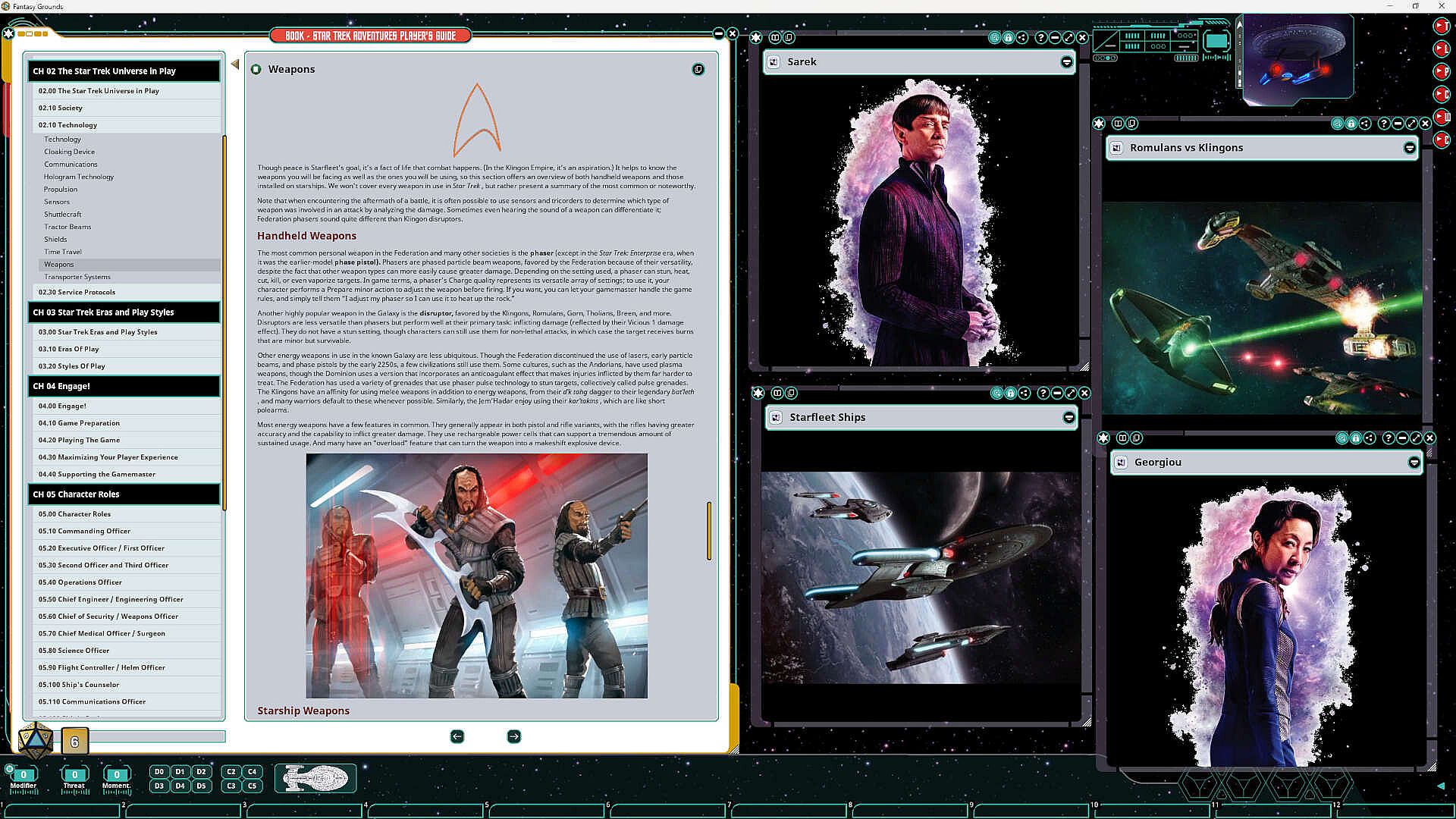
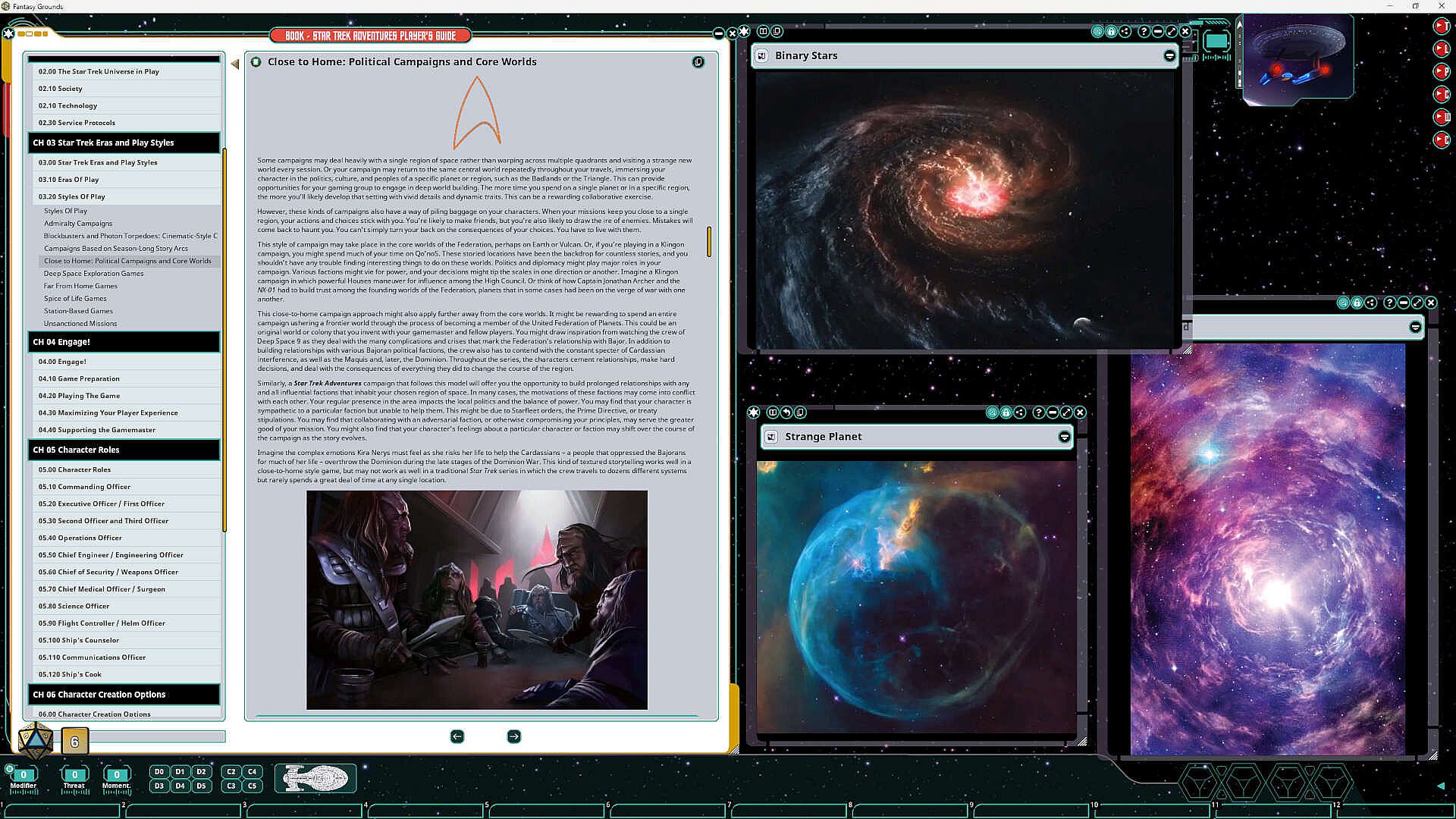
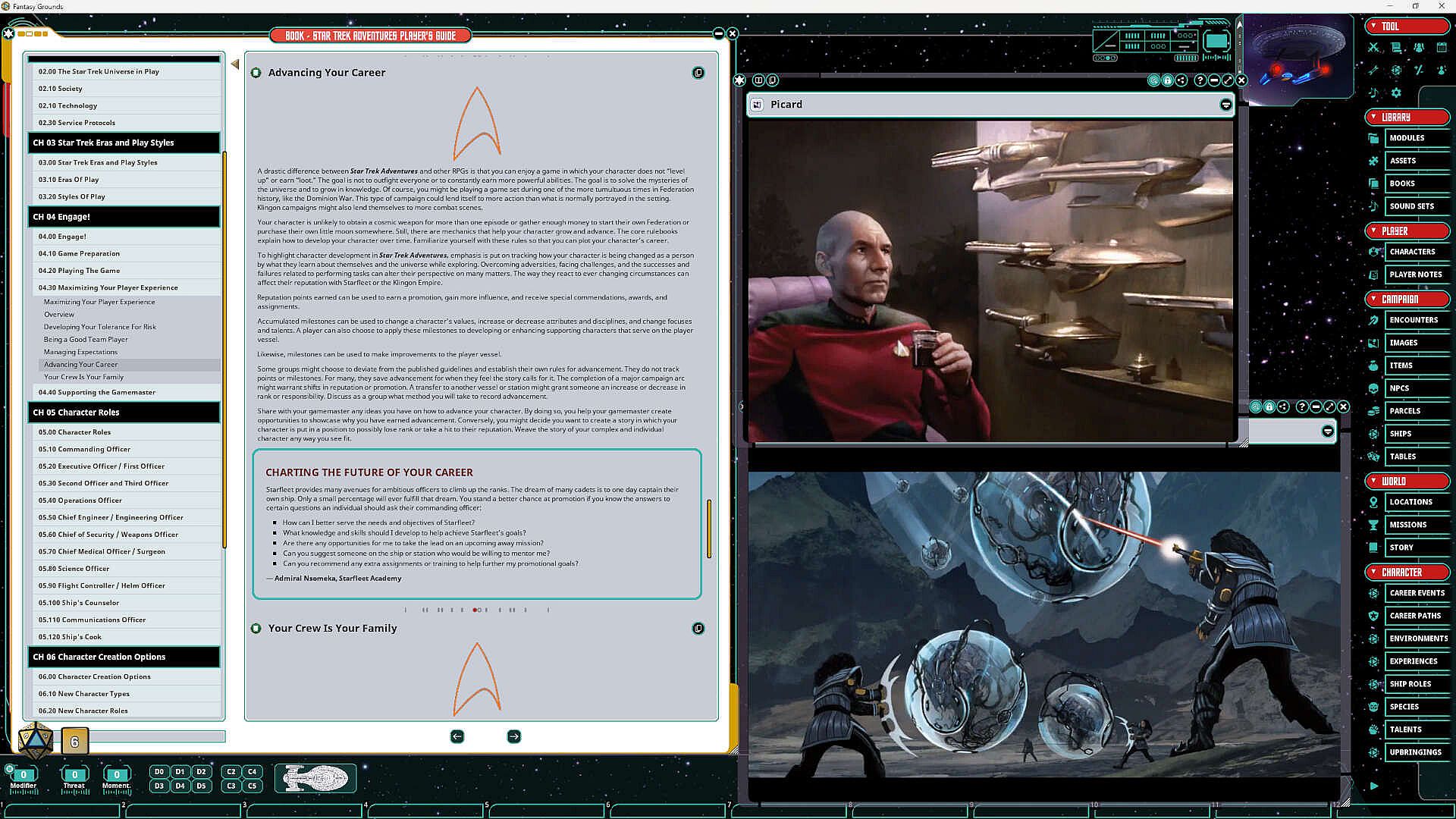
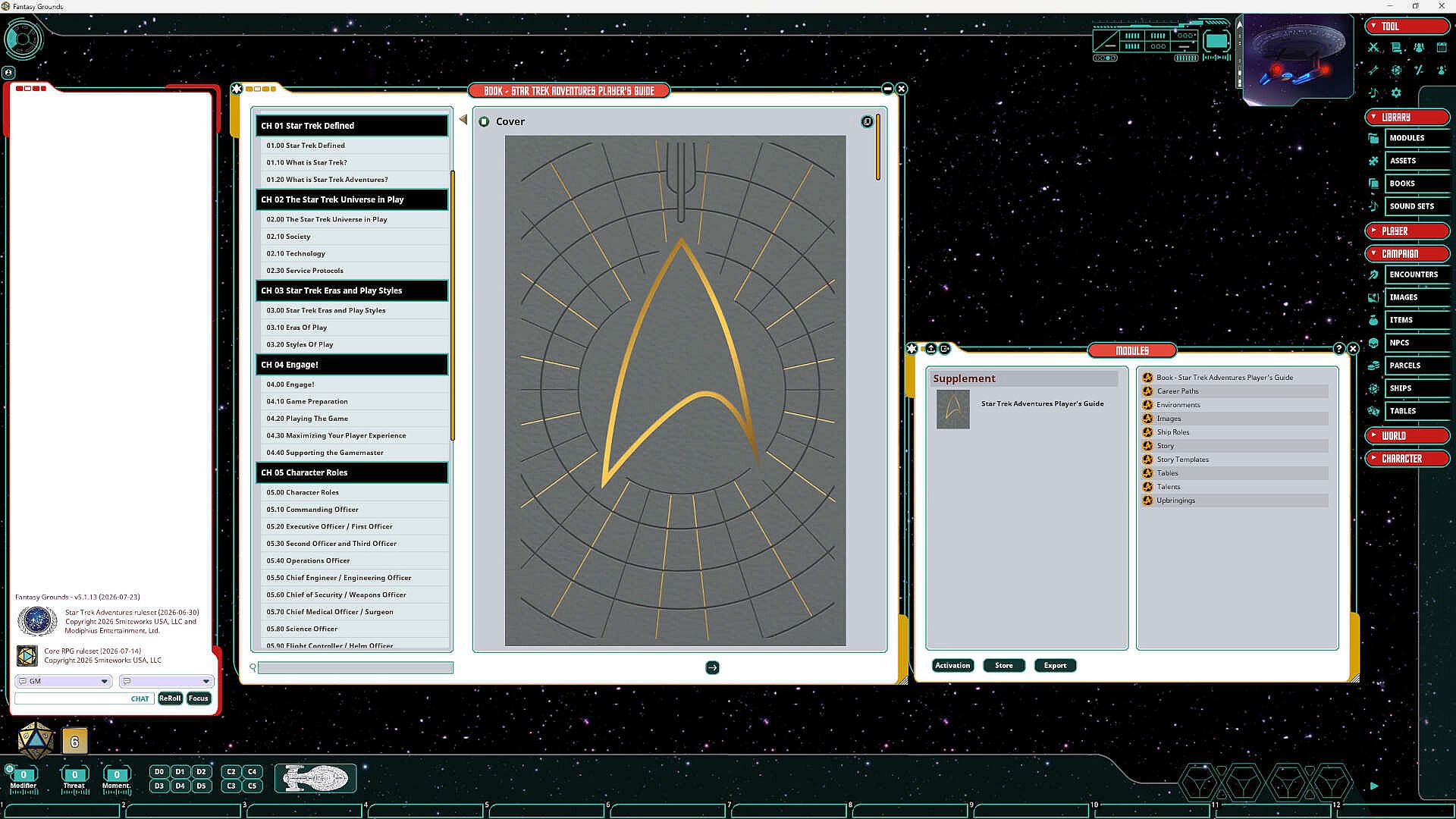
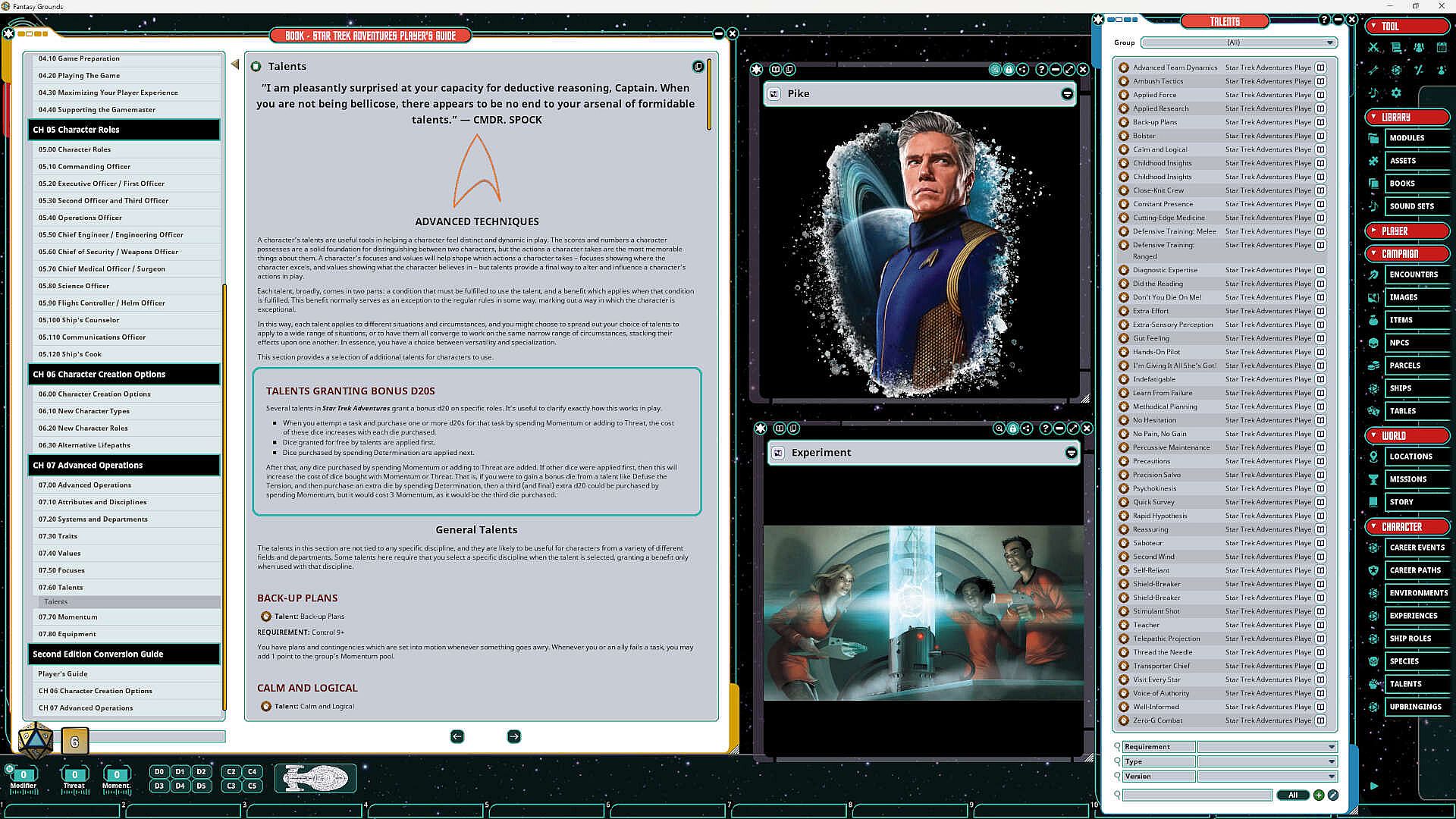
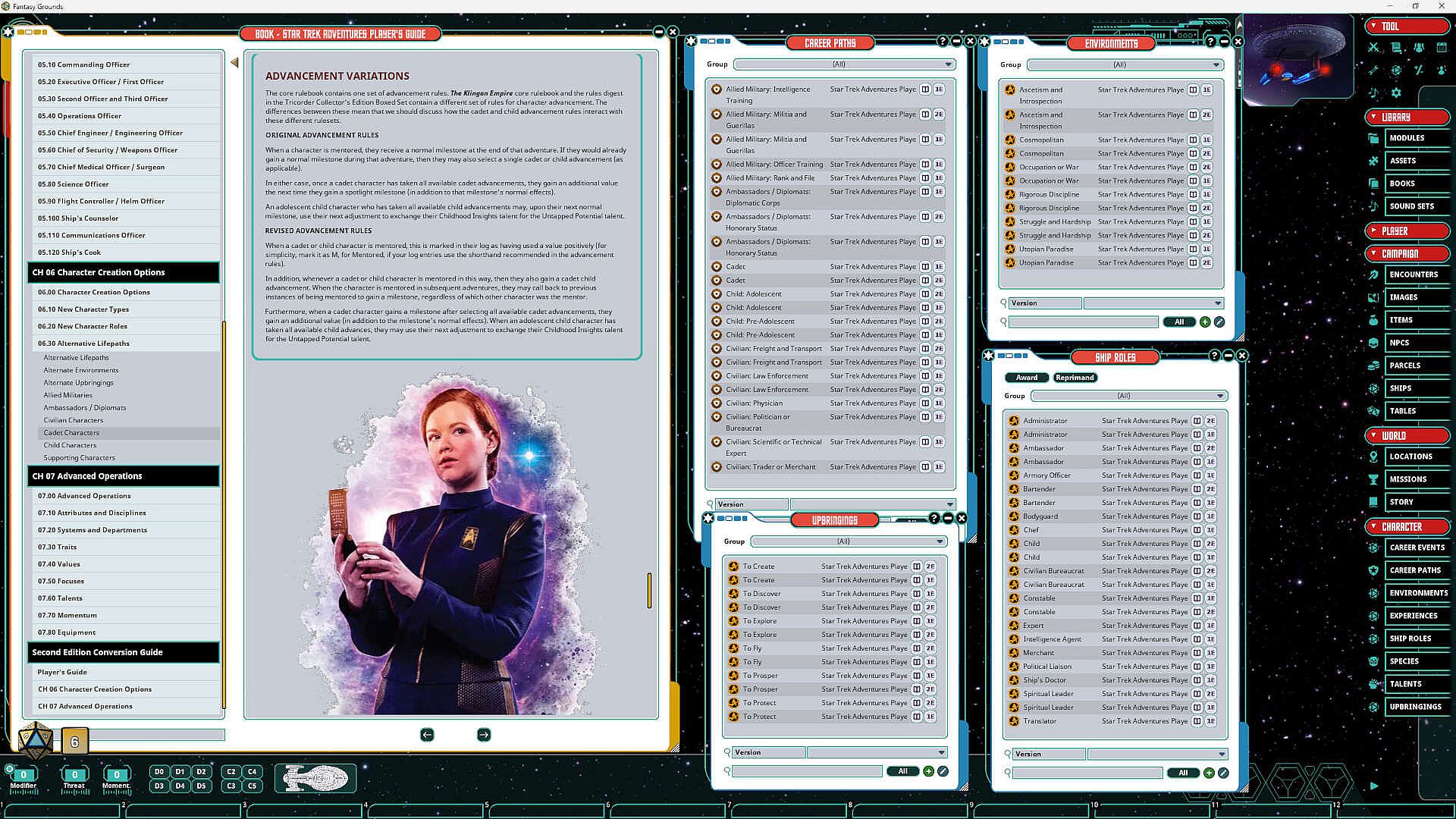
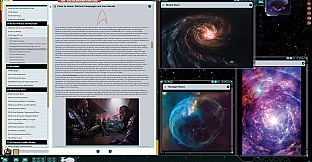
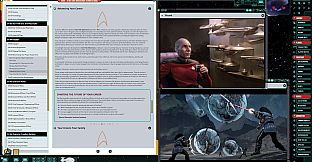
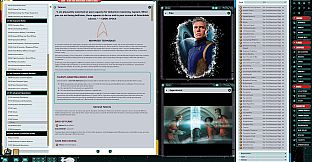
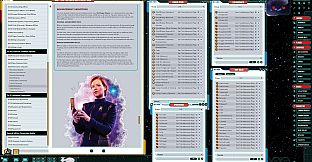
Fantasy Grounds Star Trek Adventures Player's Guide is a digital adaptation of the tabletop roleplaying game supplement designed for the Fantasy Grounds virtual tabletop on PC. It expands the core Star Trek Adventures experience with new player options and guidance for campaigns set in the Star Trek universe.
Gameplay
The core resolution system relies on the 2d20 mechanic. Players roll two twenty-sided dice against a target number formed by combining an attribute and a discipline. Each die that meets or beats the target counts as a success, with additional dice available through Momentum spends. The system tracks resources such as Momentum for player advantages, Threat for complications managed by the gamemaster, and Determination for rerolls or guaranteed successes.
Character sheets in Fantasy Grounds connect attributes, disciplines, and focuses directly to automated task rolls. The ruleset handles stress, injuries, resistance, and talents while supporting both first and second edition workflows. Starship records include systems, departments, weapons, and crew quality, allowing station actions and assists during combat. The combat tracker manages power allocation, breaches, and initiative, with zones replacing precise distance measurements for movement and positioning.
Personal and starship combat follow structured rounds and turns. Characters perform one major task per turn along with minor actions that may cost Momentum. Extended tasks cover longer efforts such as repairs or negotiations. The automation reduces bookkeeping so groups can focus on narrative decisions and collaborative storytelling.
Game Modes
The Player's Guide defines six key Star Trek eras that allow campaigns to take place anywhere from the 21st century through the 32nd. These eras provide distinct technological levels, political situations, and available species or factions for character creation.
Nine distinct play styles cover a range from deep space exploration and first contact missions to stories centered closer to home or involving internal Federation politics. Groups can adapt these styles for Starfleet crews, Klingon warriors, or crews from other polities. The guide supplies advice on matching play style to group preferences and on building characters collaboratively during session zero.
Additional player-focused content includes new non-Starfleet roles, more than forty new talents, and expanded details on existing roles. An overview of setting technology and key locations helps ground characters in the universe. A supplemental chapter provides conversion guidance for second edition records and updated Fantasy Grounds entries.
Character Creation and Options
Players generate characters through lifepath steps that incorporate species, upbringing, career events, and roles. The guide adds new options for non-Starfleet backgrounds and alternative paths that expand choices beyond standard Starfleet officers. Talents provide mechanical customization for abilities such as specialized expertise or unique advantages in specific situations.
Existing roles receive additional insights drawn from years of play feedback, including guidance on when one role might suit a player's preferred style over another. All content supports groups that mix species and affiliations, allowing diverse crews to operate together under shared mechanics.
Is It Worth Playing?
This module suits players already invested in Star Trek Adventures who want expanded character options and structured advice on running or participating in campaigns. It requires the core rulebook and works within the Fantasy Grounds environment that automates the 2d20 system for online or in-person groups. The content emphasizes collaborative play and setting immersion through eras and play styles rather than competitive elements.
Groups that enjoy narrative-driven roleplaying with resource management and tactical combat elements will find the additions useful for long-term campaigns. The second edition conversion support keeps the material current with ongoing ruleset updates available in Fantasy Grounds. New players benefit from the guidance on engagement and character building, while experienced groups gain mechanical variety through the new talents and roles.