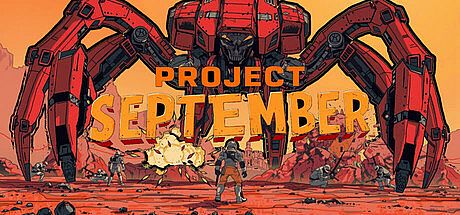


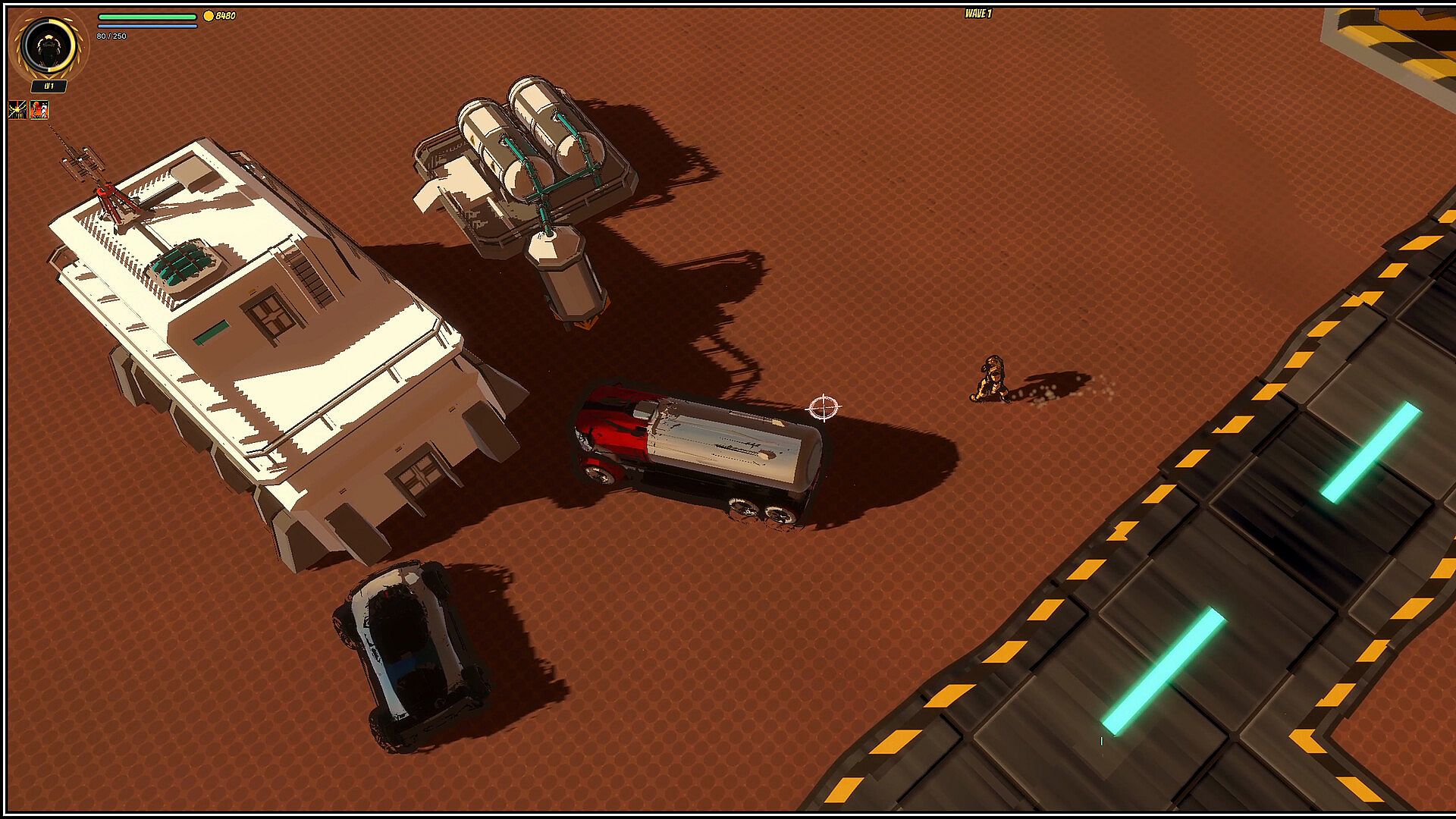
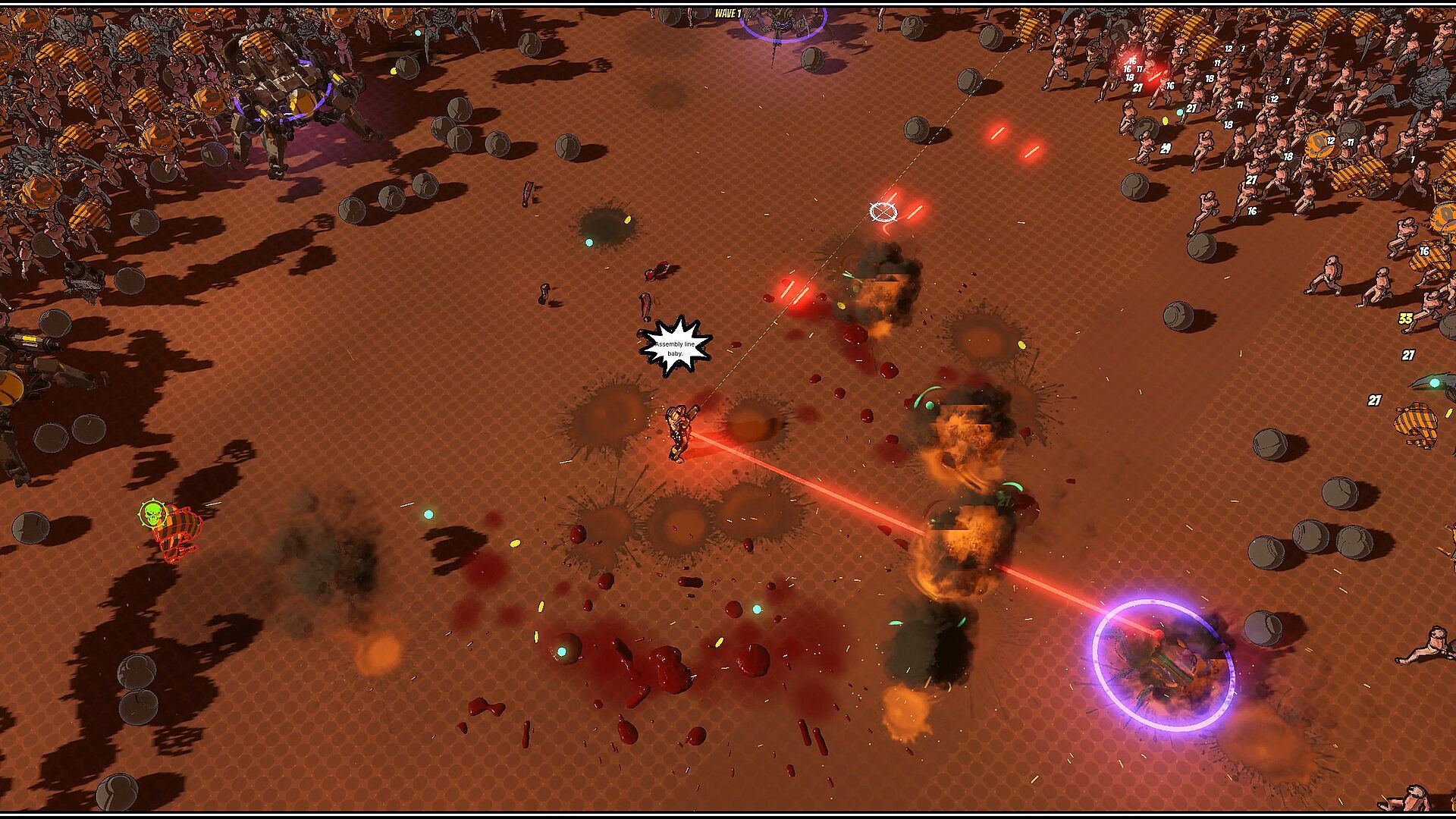
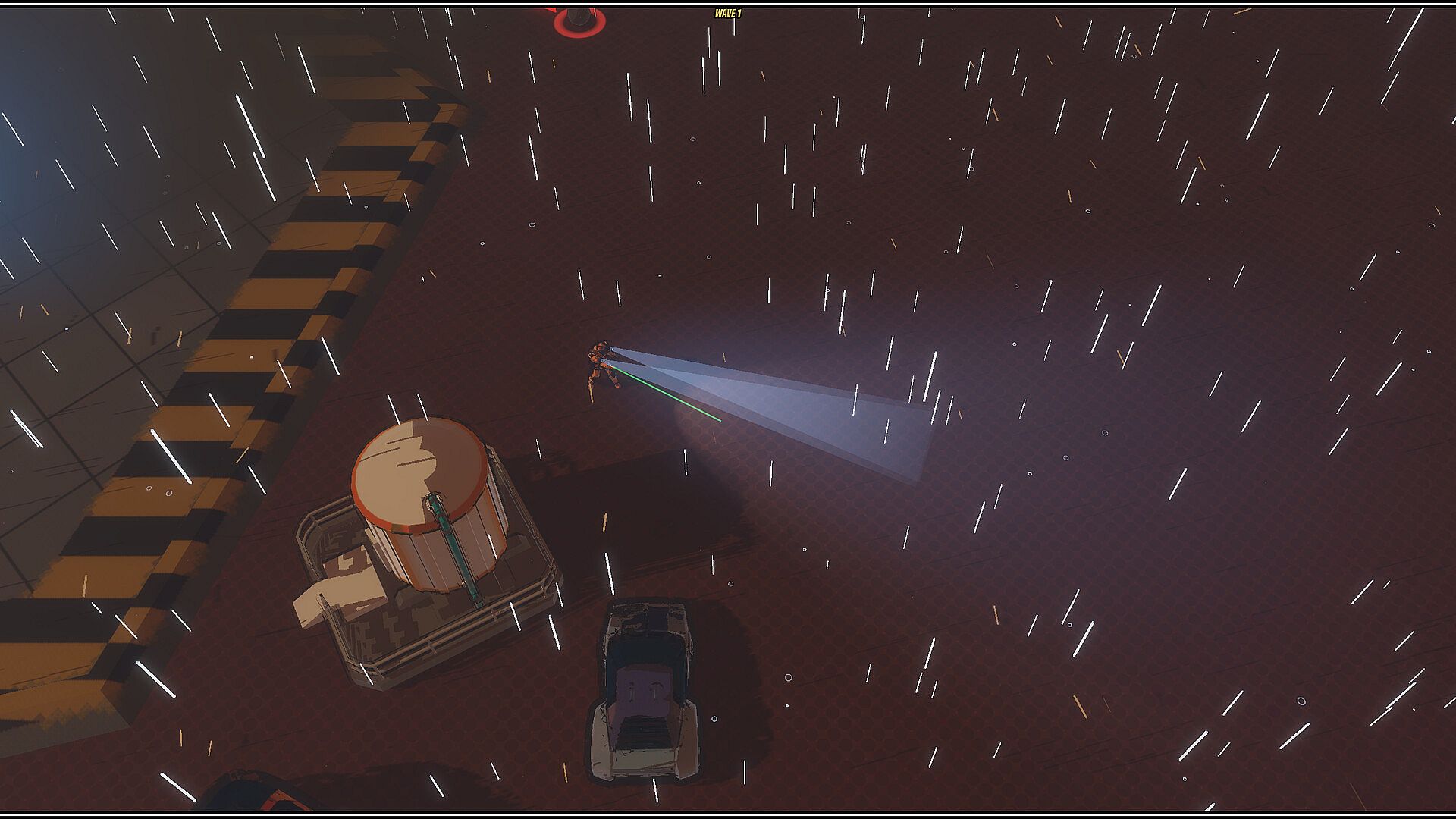
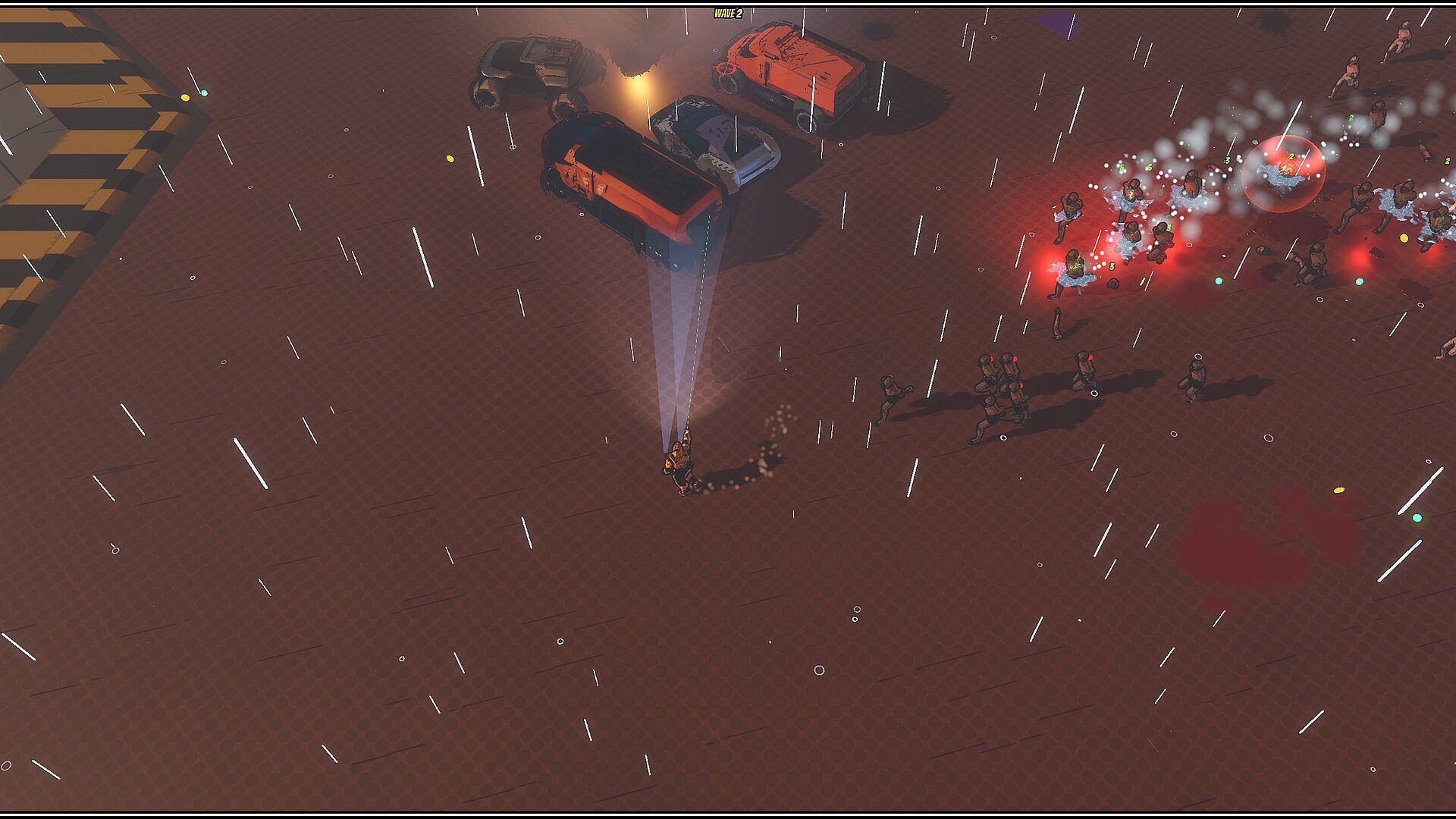
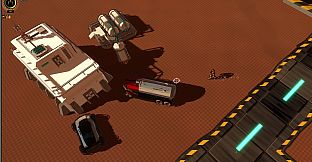
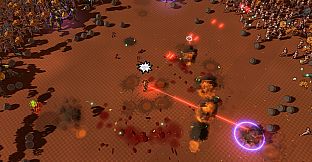

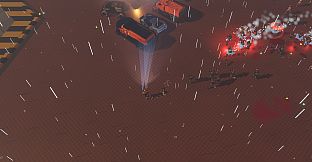
Project September is an isometric twin stick action roguelite set on a Mars colony that has fallen to a relentless enemy horde. Players take on the role of the last remaining customer support operative, battling through endless waves of foes in a style that mimics 2000s comic books with bold ink outlines and flat colors. The game emphasizes constant combat, environmental destruction, and meta progression that carries over between runs.
Gameplay
The core loop revolves around surviving escalating waves of enemies while managing resources and building powerful combinations. Combat takes place from an isometric perspective with twin stick controls for movement and aiming. Players face more than a dozen distinct enemy types, including walkers, flyers, striders, siege mechs, and multi-legged creatures, each presenting unique threats that require different approaches.
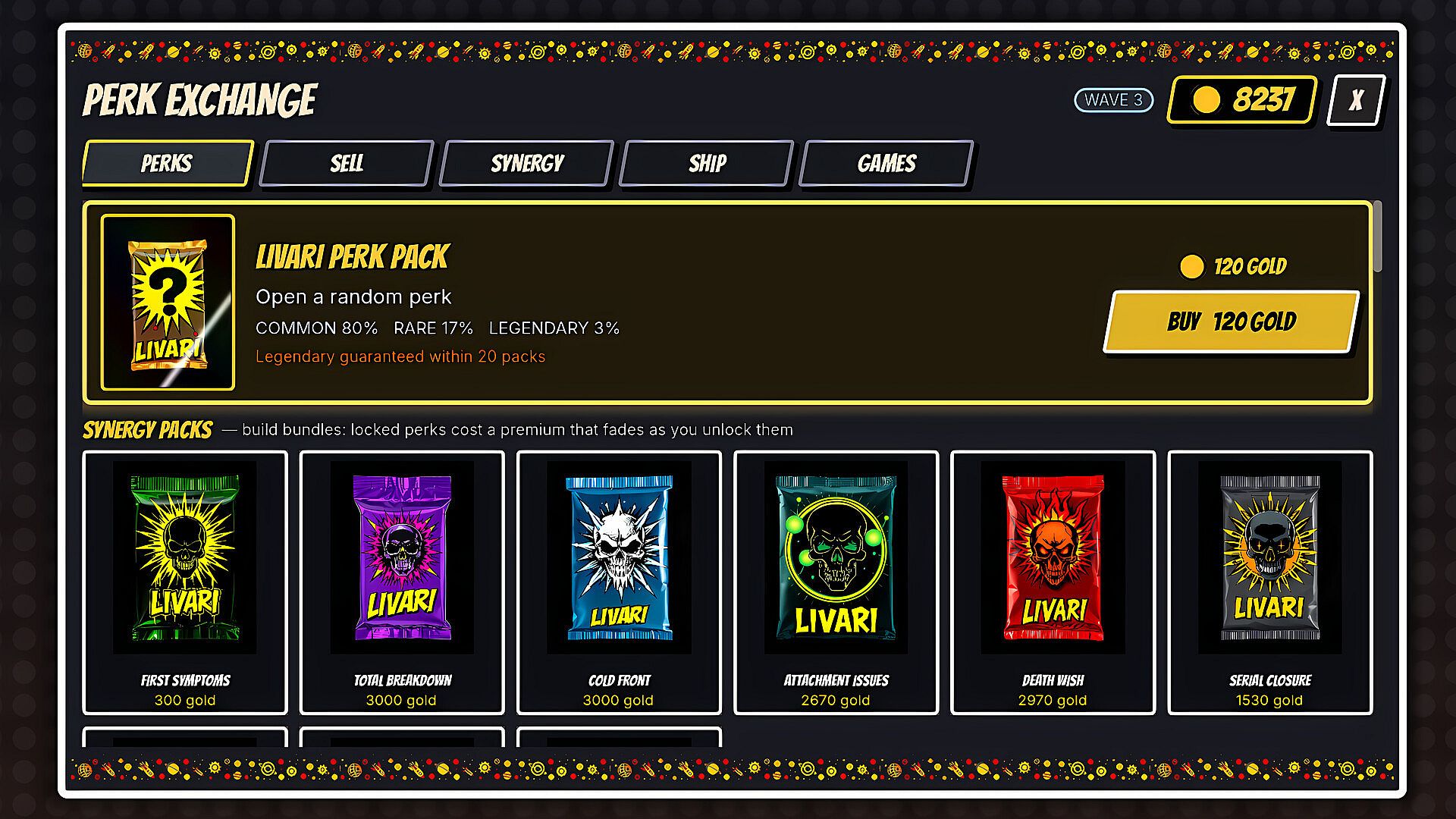
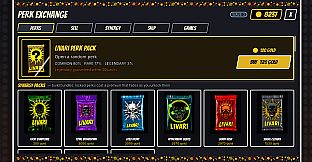
Before each wave begins, an enemy card deck determines the upcoming threats, and players roll up to thirteen dice to influence what arrives. This system encourages reading the situation and preparing accordingly. Perks form the heart of customization, with over eighty options that alter playstyles through effects like grenades, cryo warheads, jetpack dashes, chain lightning, additional weapons, and summoned allies. These perks feature rarity tiers and strong synergies, allowing extensive stacking for increasingly chaotic and effective builds.
Destruction plays a central role, as fuel tanks, buildings, and vehicles can chain reactions into the horde, turning the environment into an active weapon. Gold collected during runs persists after death, enabling spending in the Perk Exchange, gambling on card packs, or constructing custom decks in the Synergy Tab. A blackjack table offers another way to risk or gain resources. Full controller support includes focus-driven menus, rumble feedback on explosions, and an aim beam for precision.
Game Modes
Project September centers on a single wave-based survival experience that forms the foundation of its roguelite structure. Runs consist of successive waves that increase in intensity, with a boss encounter appearing every tenth wave to provide a major challenge. The format supports repeated attempts, with each run feeding into persistent progression systems that carry forward gold and unlock options for future attempts.
No separate named modes exist beyond this core loop, though the dice and card mechanics introduce variability within each session. The design focuses on one cohesive experience that rewards experimentation with perk combinations and threat management across multiple runs.
Progression and Systems
Meta progression emphasizes long-term growth outside individual runs. Gold serves as the primary currency that survives death, allowing investment in new perks, deck customization, and risk-reward elements like the blackjack table. The Perk Exchange and Synergy Tab provide dedicated spaces for refining loadouts based on what has been unlocked or earned.
Enemy variety and the card-dice system add layers of adaptation, while environmental chain reactions reward positioning and awareness. These elements combine to create runs that feel distinct even after multiple attempts, as players refine strategies around synergies and threat prediction.
Is It Worth Playing?
Project September targets players who enjoy roguelites built around horde survival, build crafting, and persistent progression. The wave structure, perk synergies, and environmental destruction create a focused loop that emphasizes one more attempt through escalating challenges and meaningful choices in the meta layer.
As an Early Access title from Livari Studio, the game includes a complete run loop with the described systems already functional. It suits those comfortable with iterative development and who value controller-friendly twin-stick action in a comic-inspired presentation. The absence of user reviews at this stage means expectations should align with the current feature set rather than polished final content.