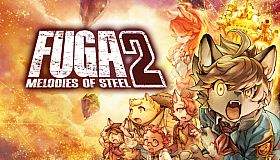
Fuga: Melodies of Steel 2 is a tactical RPG available on Xbox and PC that places players in command of a crew of children piloting the massive tank Tarascus. The story follows events one year after the first game, where the children are called to investigate the recovered Taranis only for it to activate and carry off several of their group. The survivors board their former enemy vehicle to pursue it and recover their friends, navigating a world rebuilt with airship technology across fragmented floating islands.
Gameplay
Combat unfolds in turn-based battles aboard the tank, where up to six children occupy three turrets. Each child specializes in one of three weapon types: machine guns for precise strikes, grenade launchers for balanced area effects, or cannons for high damage at lower accuracy. Players position crew members to exploit enemy weaknesses, which appear as color-coded indicators. Matching the correct weapon type delays an enemy's turn on the shared timeline, preventing attacks and creating openings for follow-up strikes.
Placement and formation matter heavily because paired children build affinity over time. Higher affinity unlocks link attacks that deliver powerful combined damage. Between battles, intermission phases let players spend limited action points on conversations to raise affinity further, triggering personal events and support bonuses. Facilities include a workshop for upgrading tank weapons, armor, health, and special points using materials gathered through scrap fishing.
The Judgment system tracks choices made during the journey, raising gauges for empathy or resolution. These values influence which leader skills Malt can activate randomly in combat for buffs and recoveries. A notebook tracks each child's wishes; fulfilling them raises mood and can trigger hero mode, granting five turns of unique character-specific advantages such as armor removal or enhanced healing.
New mechanics include the reworked Soul Cannon, which now carries greater risk as the tank's AI may activate it automatically during crises, and the Managarm, an alternative heavy weapon that incapacitates a child without permanent loss but forgoes experience from the fight. Branching battlefield routes and an airship support system add flexibility, offering supply drops, enemy bombardments, or transport between paths for extra rewards or safer progress.
Game Modes
The core experience centers on a single-player campaign structured around sequential chapters. Each chapter advances the pursuit of the Taranis through node-based routes filled with battles, resource nodes, and story events. Players manage the crew and tank across intermission phases before committing to combat encounters that test positioning, timing, and resource use.
Progression emphasizes decision-making that shapes both immediate battle outcomes and longer-term story branches. Affinity building, mood management, and Judgment choices create replay value by altering available skills, events, and potential endings without requiring separate modes. The game supports adjustable speed options and accessibility features such as auto-battle variants to suit different play styles during repeated encounters.
Story and Choices
Decisions throughout the campaign carry weight beyond combat. Malt's actions influence the Judgment gauges, which in turn affect leader skill availability and how certain events resolve. The narrative explores themes of leadership under pressure, loss, and the cost of survival as the children confront both external threats and internal strains aboard the Tarascus.
Character interactions during intermissions deepen relationships and reveal personal backstories. These moments tie directly into battle performance through affinity bonuses and link attacks, making crew management a central part of the experience rather than a side activity.
Is It Worth Playing?
Fuga: Melodies of Steel 2 delivers a focused tactical RPG experience built around high-stakes decisions and precise combat timing. Players who enjoy managing limited resources, positioning units for maximum effect, and navigating story consequences will find the systems rewarding. The game improves on several mechanics from its predecessor while maintaining a consistent loop of exploration, management, and battle.
Reception has been strong, with players highlighting the tactical depth, character development, and emotional impact of the choices. It stands as a complete single-player title without ongoing seasonal content, making it suitable for those seeking a self-contained story with meaningful replay through different decision paths. Those drawn to turn-based strategy with crew management and moral weight will likely appreciate the full campaign, while the option to start fresh without prior knowledge keeps the entry accessible.