




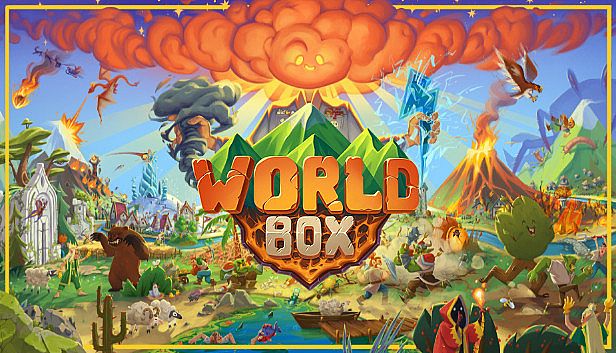










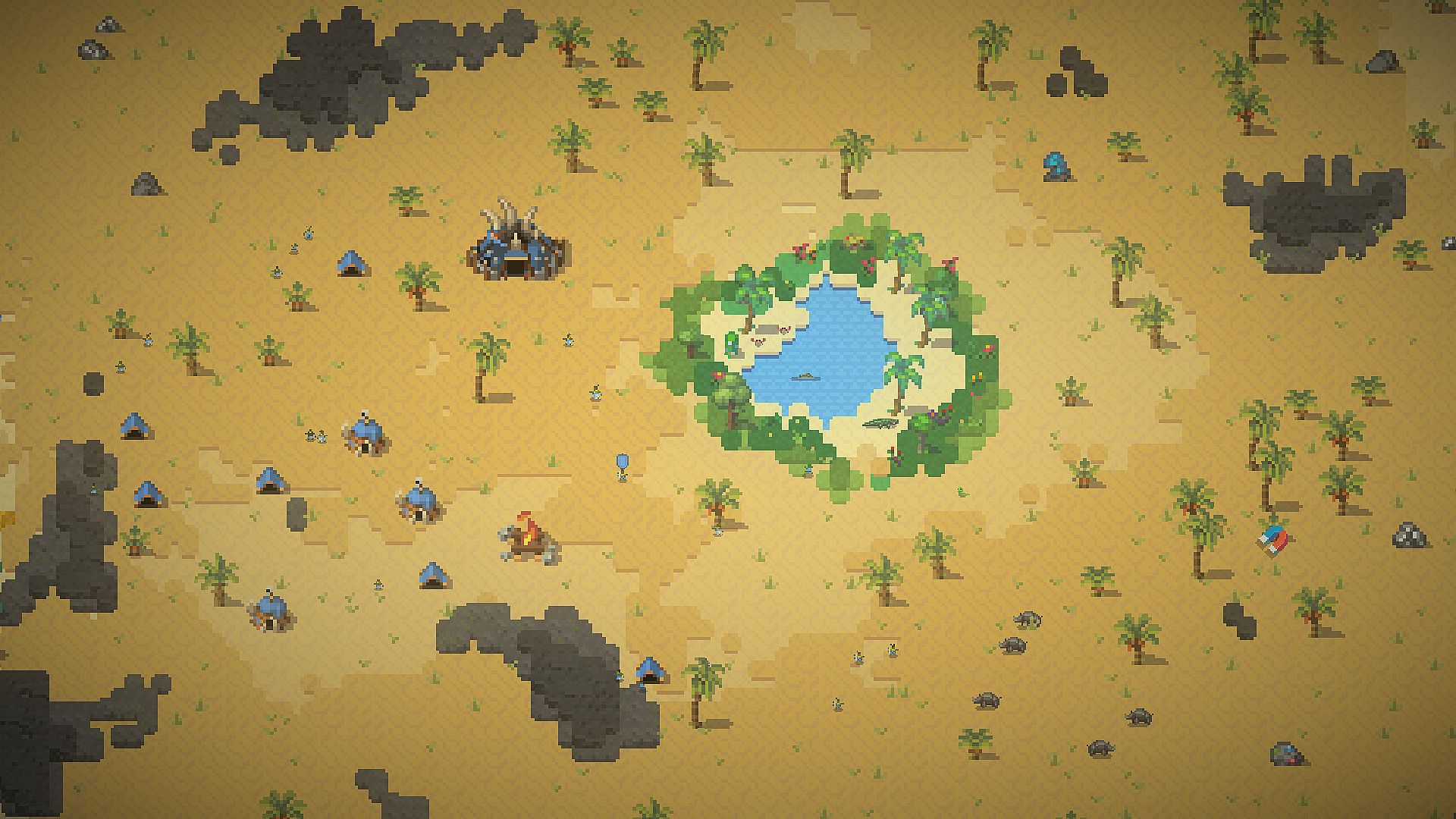
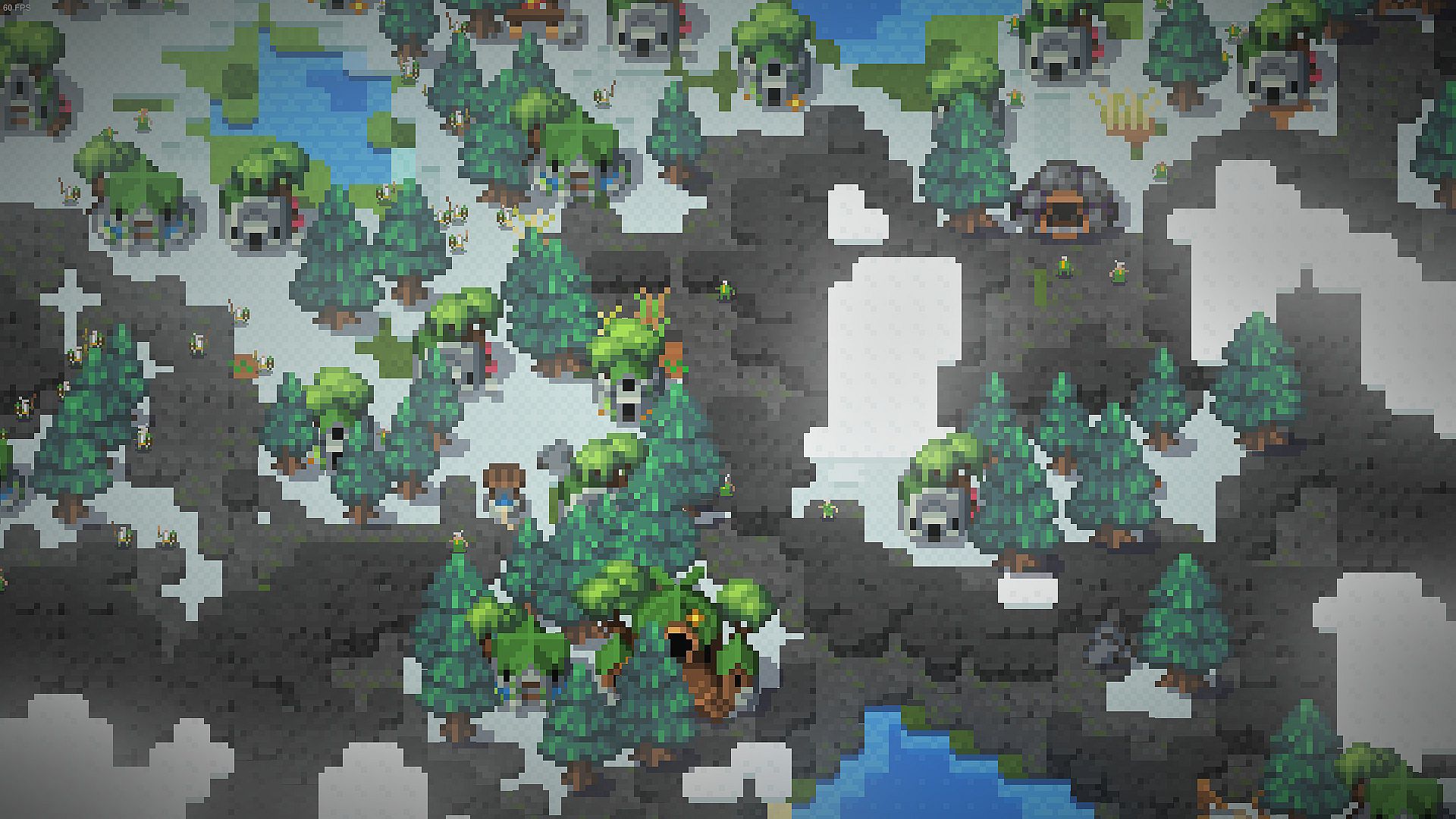
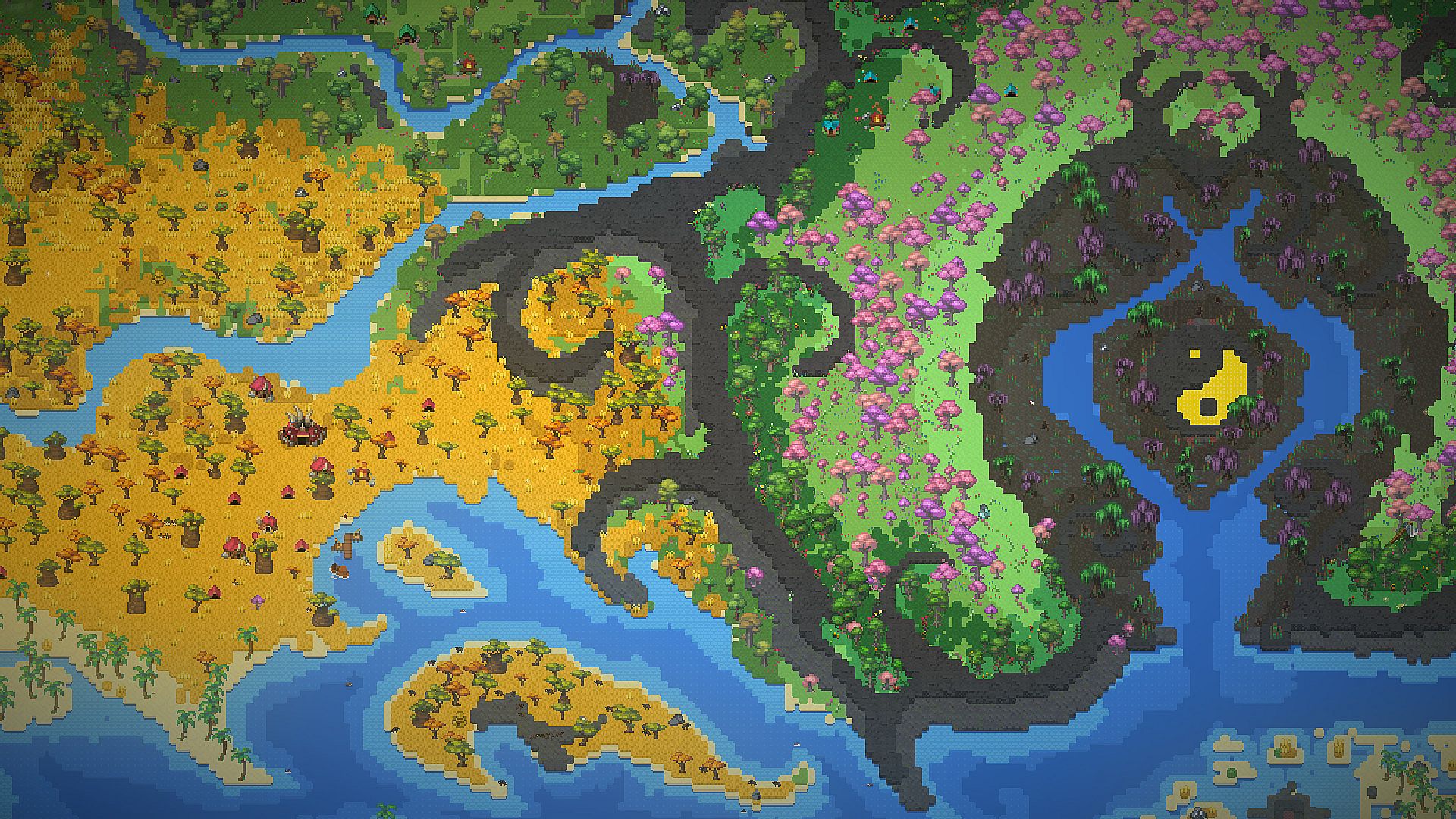
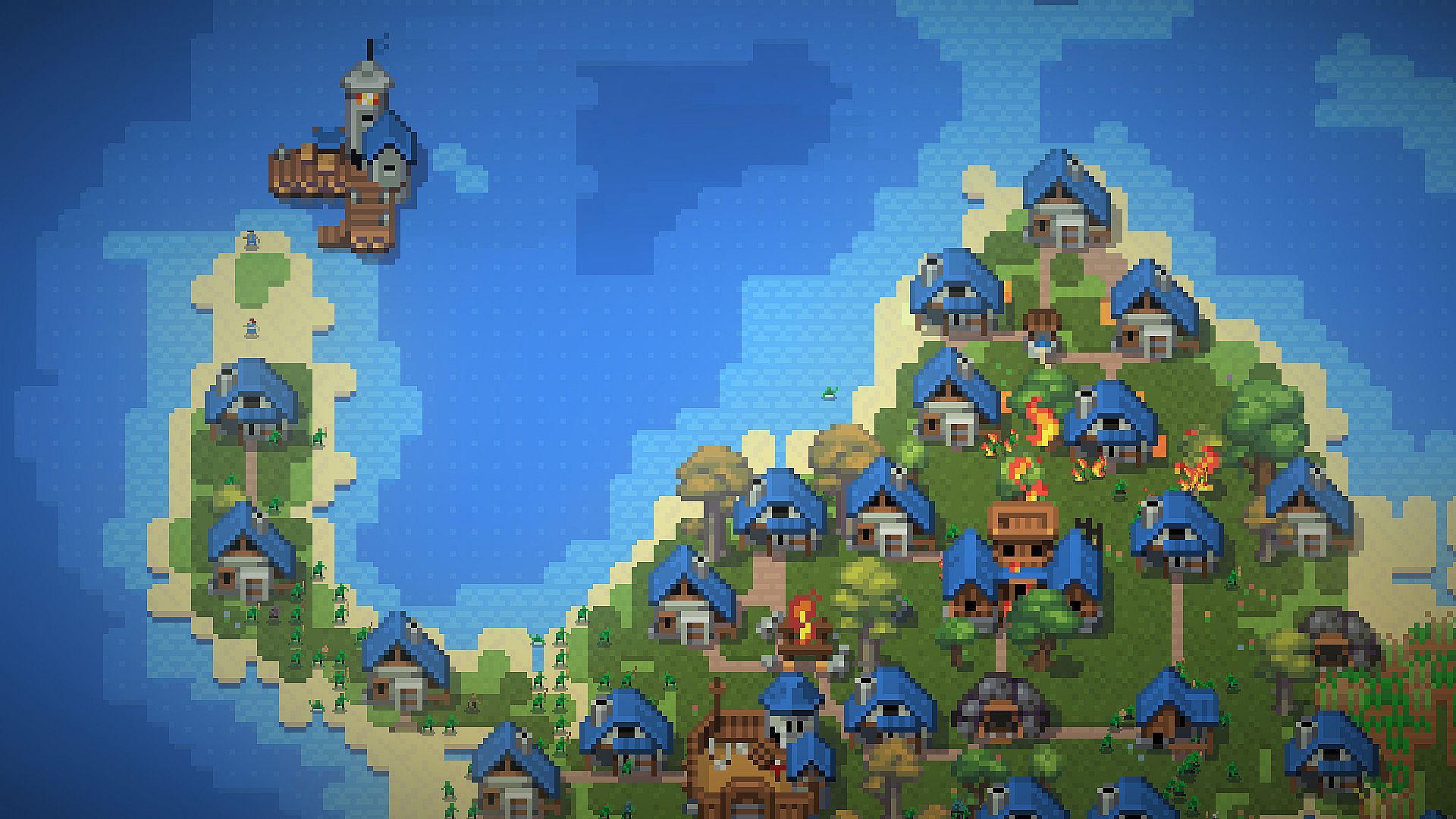
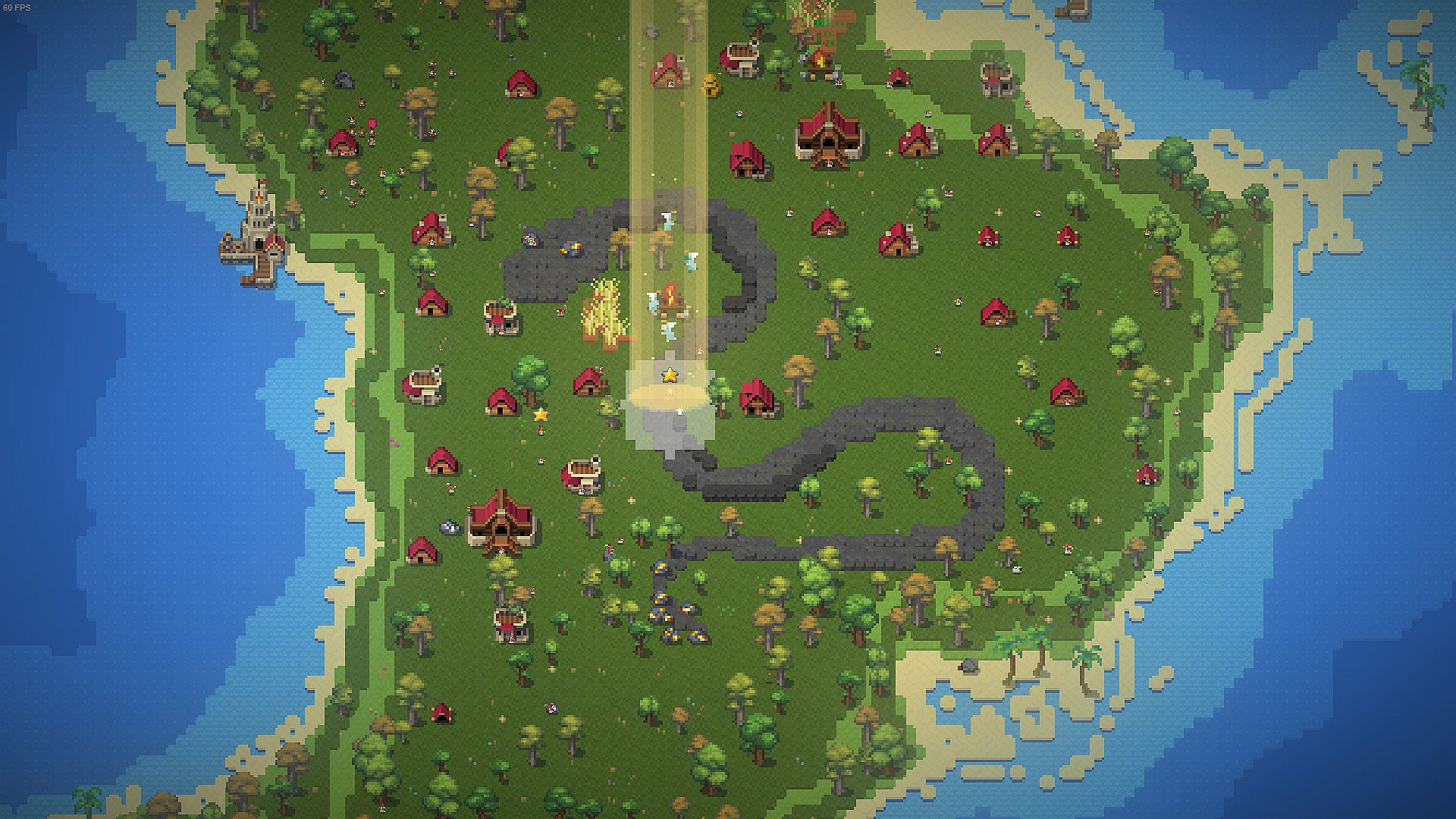
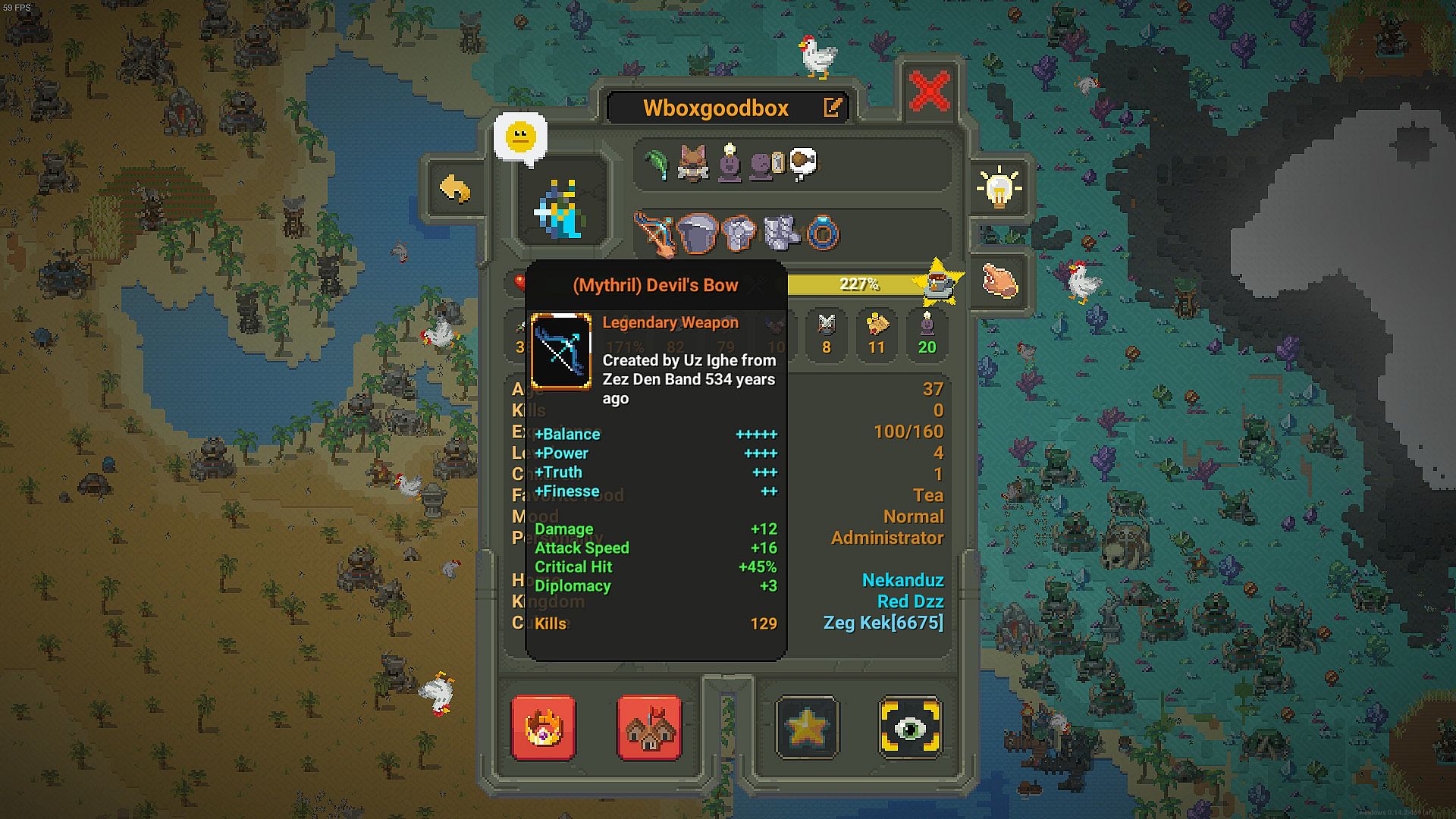
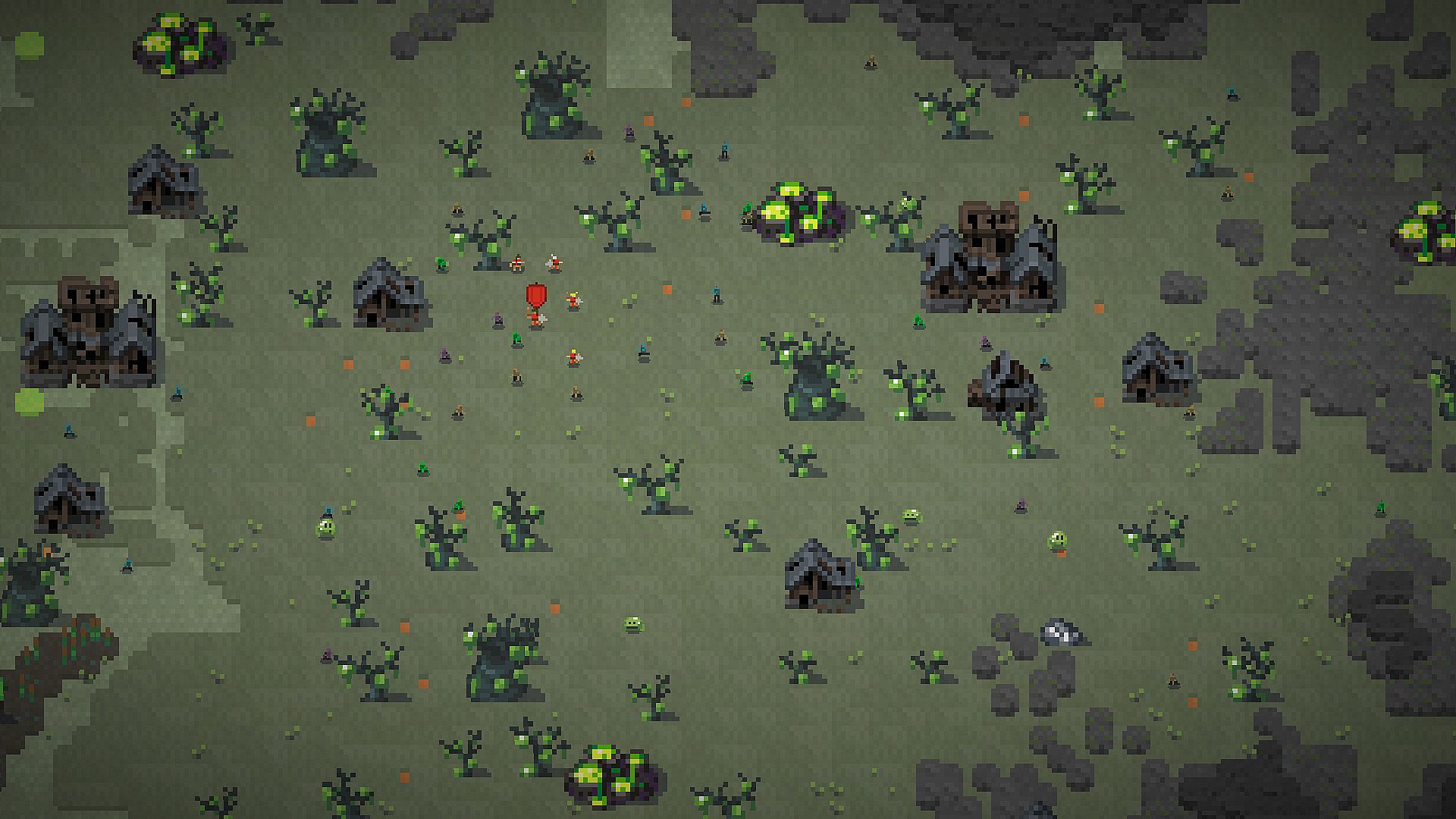
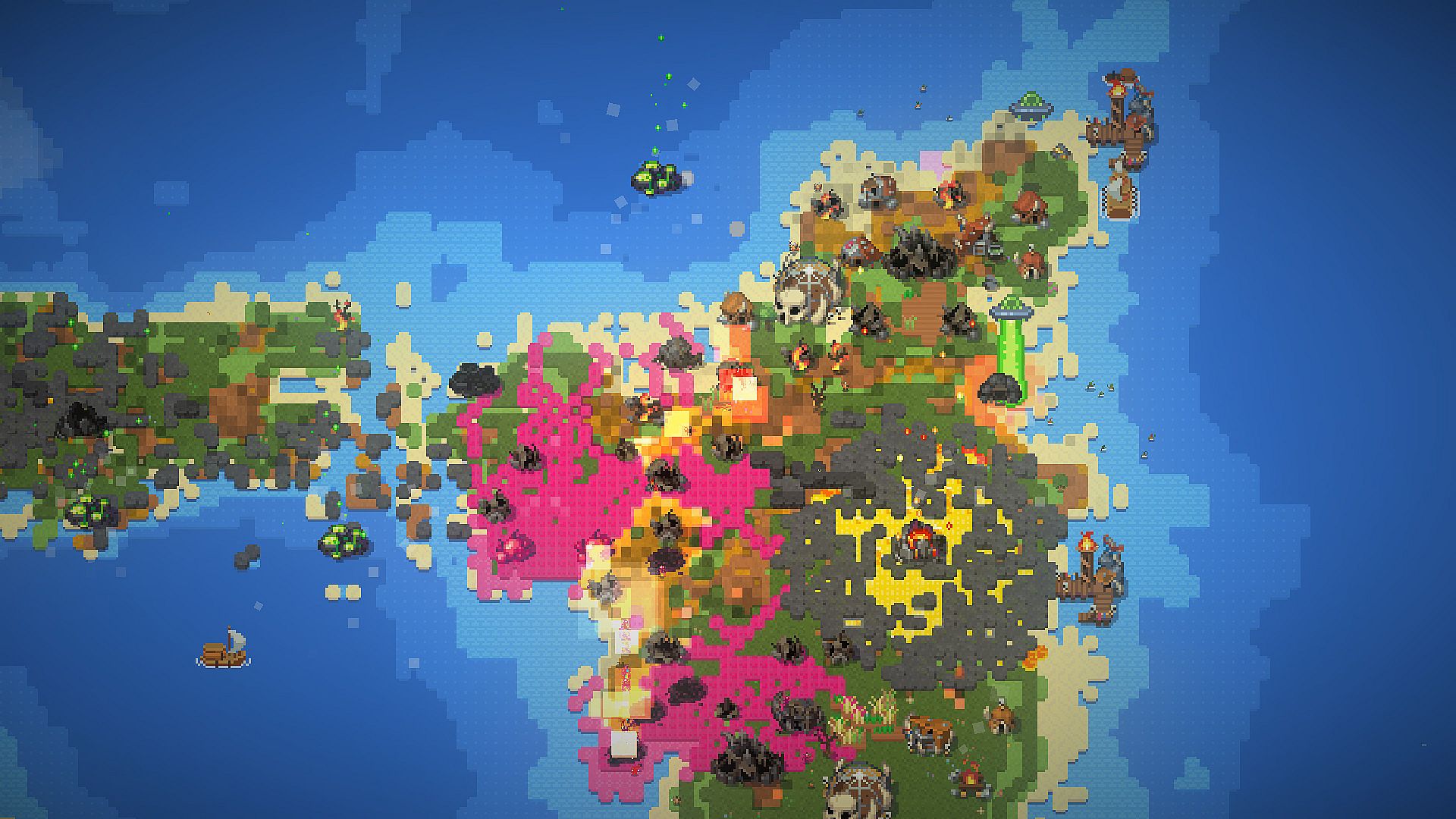
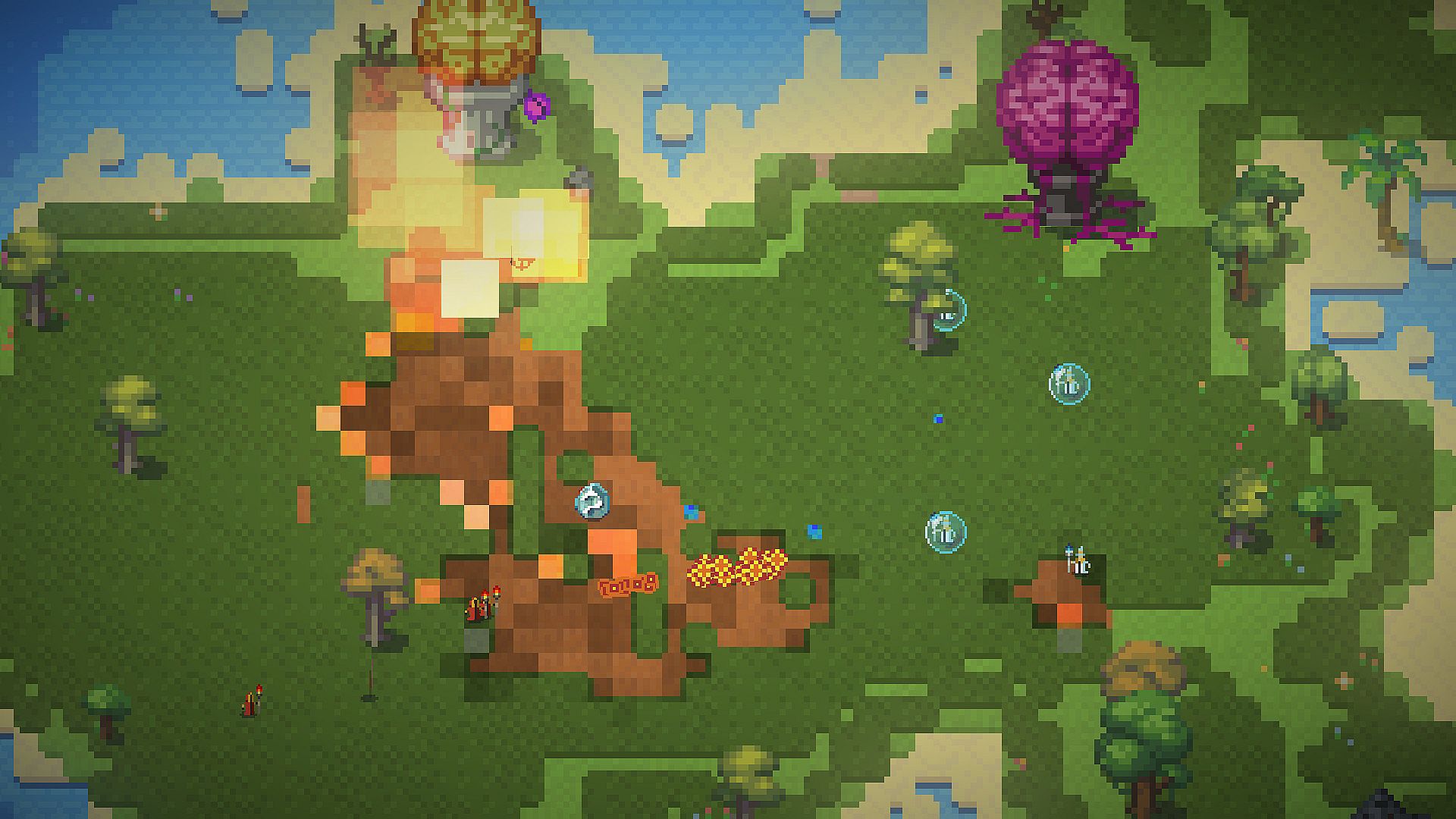
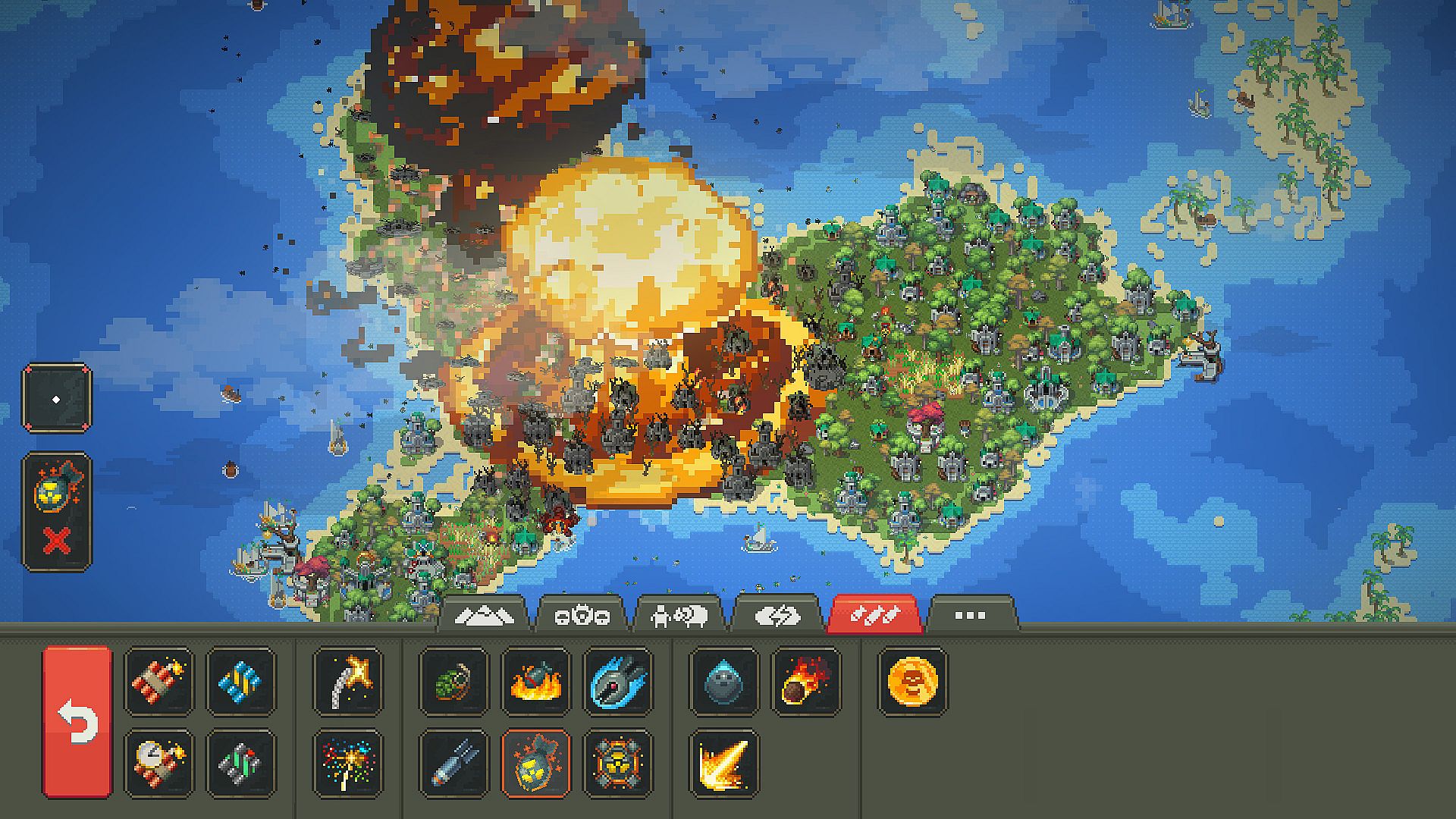
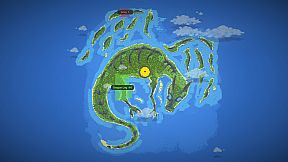
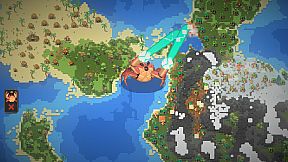
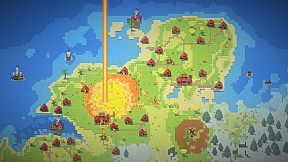
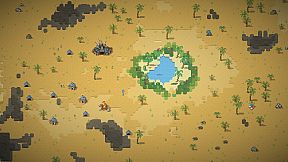
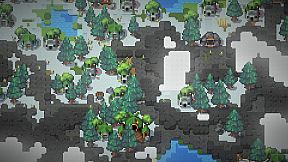
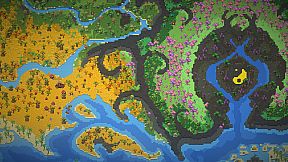
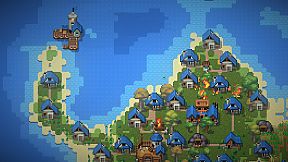
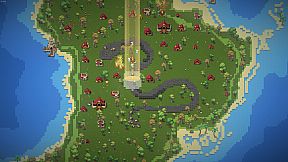
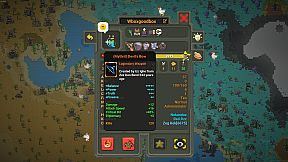
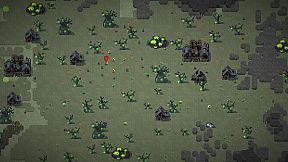
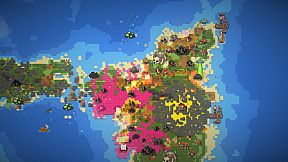
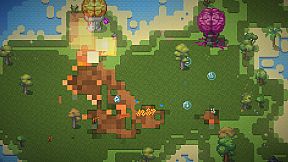
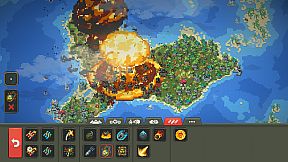
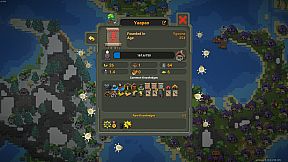
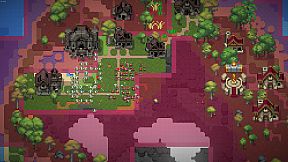
WorldBox - God Simulator stands out as an indie simulation game where you take on the role of a deity in a sandbox environment, building and manipulating entire worlds at your whim.
Gameplay
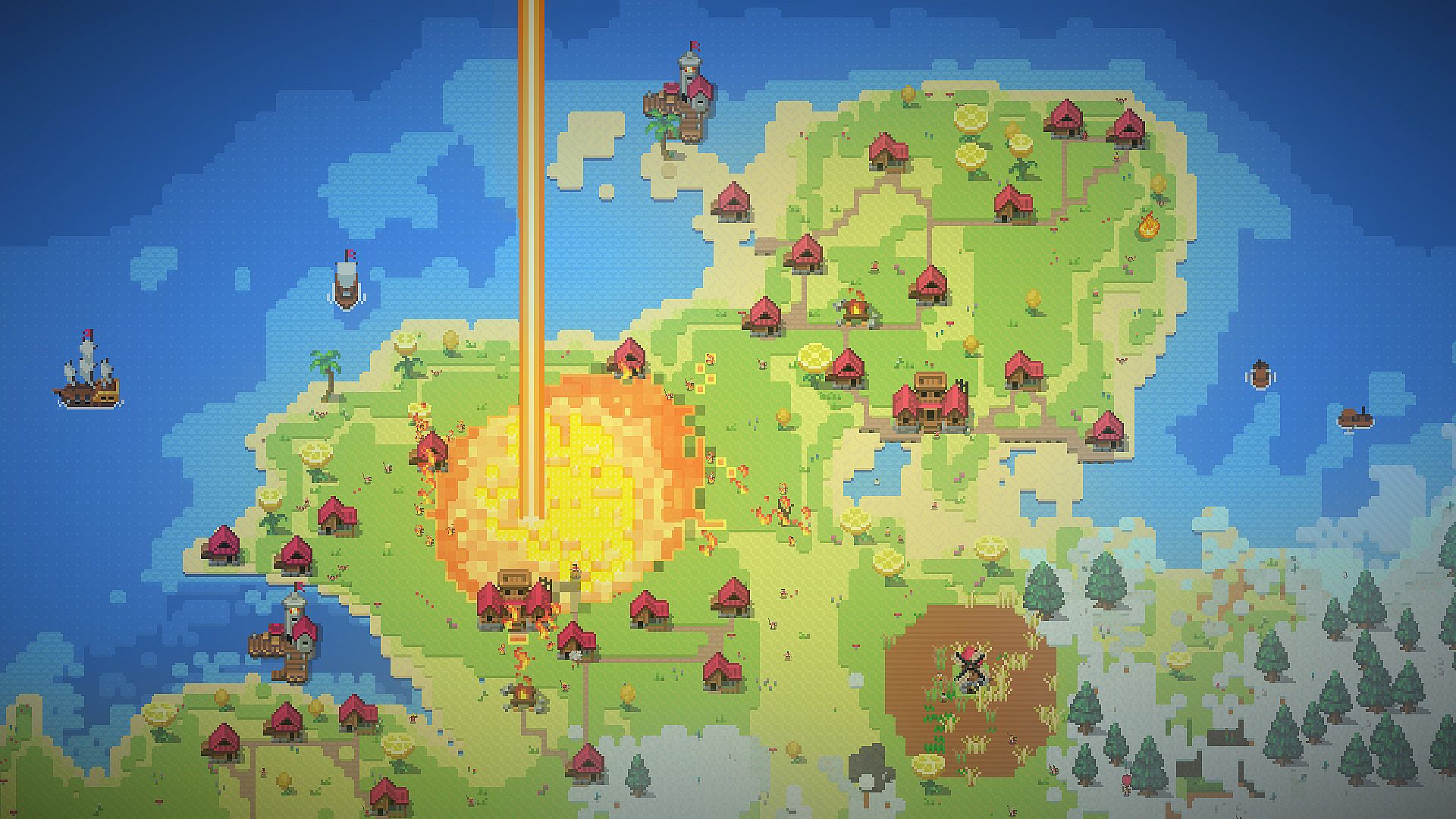
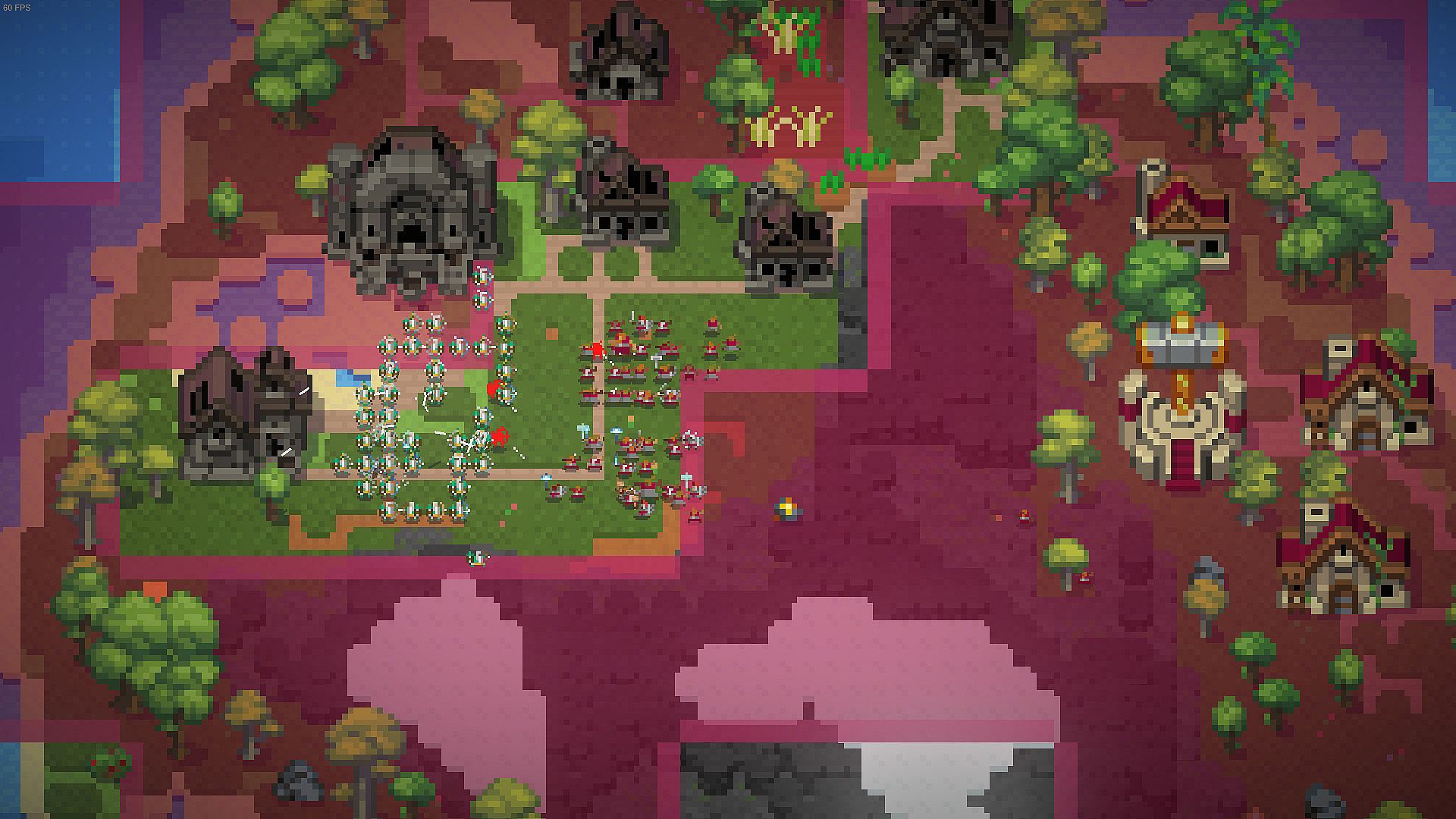
In WorldBox, the core loop revolves around generating procedural worlds and populating them with various races and creatures. You start by crafting landscapes using tools and brushes, then spawn life forms like humans, orcs, elves, and dwarves, each with unique traits that influence their behavior. These races form kingdoms, engage in diplomacy, colonize new areas, and wage wars, creating dynamic civilizations that evolve over time.
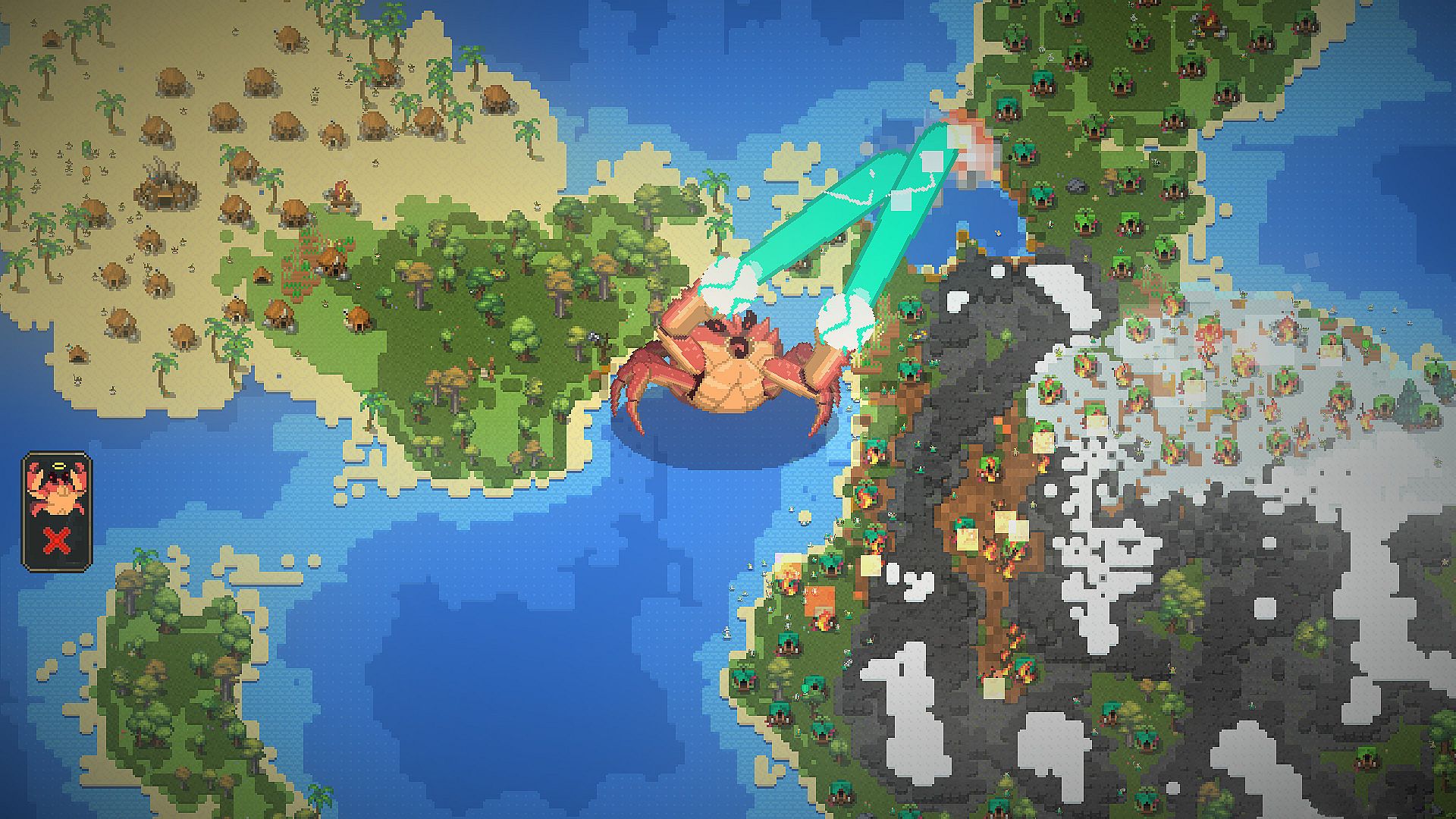
Mechanics include a wide array of powers for creation and destruction, such as summoning lightning, tornadoes, acid rain, meteorites, plagues, dragons, and even UFOs, all usable without resource limits. Creatures have needs, like animals hunting for food, while kings expand territories greedily. Recent additions from updates introduce genes, religions, clans, languages, and families, allowing deeper customization of societies. You can also directly control units, possess them, or use a divine magnet to interact with the world, sparking events like rebellions or natural disasters.
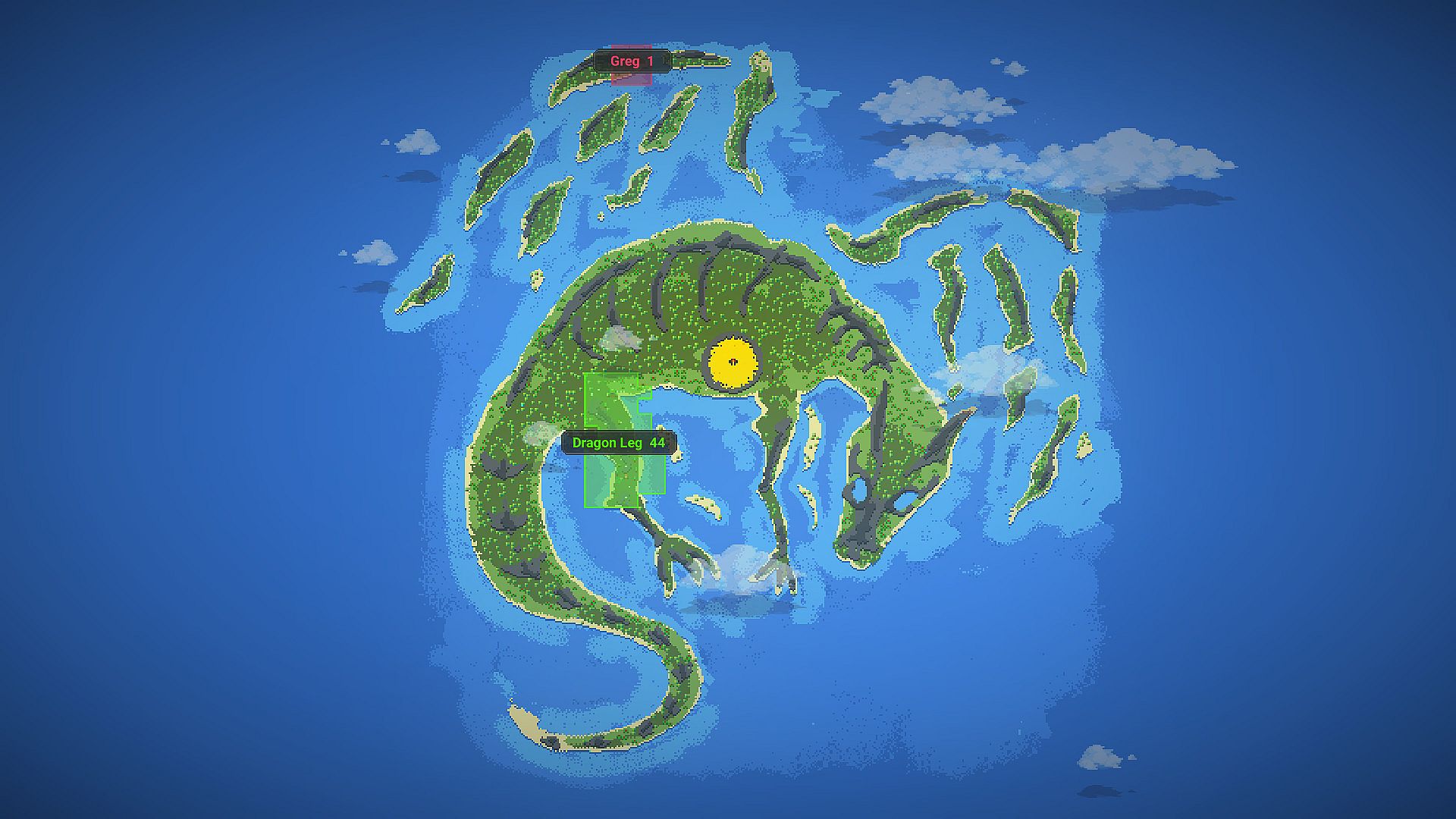
The game simulates living ecosystems where interactions lead to emergent scenarios, such as empires rising and falling based on your interventions or passive observation. Procedural generation ensures each world varies in size, with unique kingdom flags and names, enhancing replayability in this god simulator sandbox.
Game Modes
WorldBox operates primarily in a single-player sandbox mode, giving you full freedom to experiment without structured objectives or multiplayer elements. This setup supports offline play, letting you create scenarios like massive wars or peaceful expansions at your own pace.
While there are no distinct named game modes, the sandbox allows for varied playstyles, such as focusing on destruction with nukes and plagues or nurturing civilizations through careful interventions. Community-shared maps extend this by letting you load and modify others' creations, effectively creating custom scenarios. Updates have added features like zombie outbreaks or direct unit control, which players use to simulate specific themes, but the experience remains centered on open-ended god simulation.
Recent Updates and Features
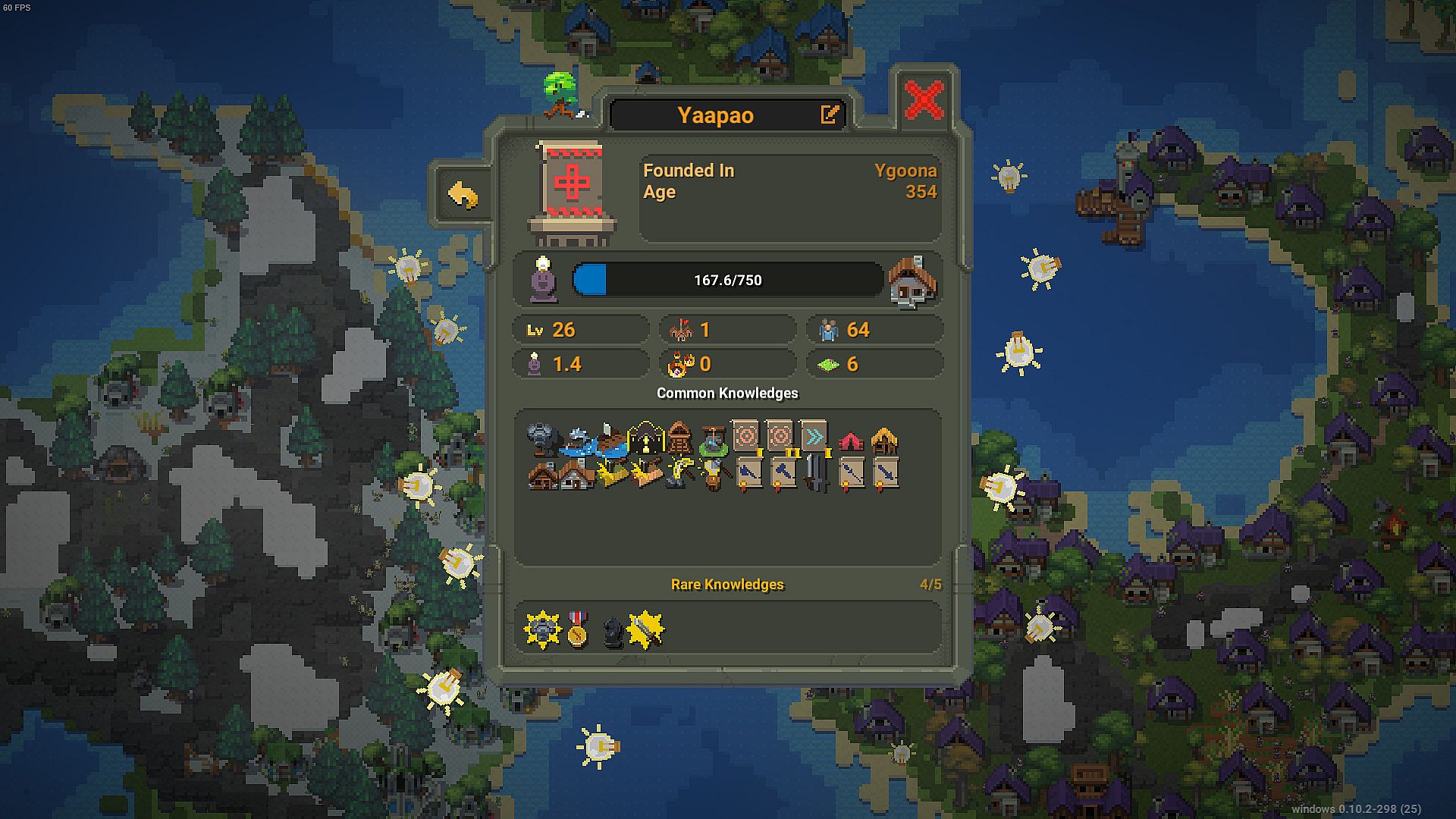
As of late 2025, WorldBox received significant updates that expanded its mechanics. The Monolith Update in June 2025 overhauled systems with subspecies, new genes, languages, religions, families, clans with traits and levels, additional biomes, walls, and UI graphs for tracking elements like population and wars.
The subsequent ArmyBox Update in September 2025 introduced species like navy seals, punkcorns, and ghosty ghosts, along with direct unit control, multi-toggle zones for kingdoms and cultures, and improved save features. These changes added depth to warfare and society management, including war logs, leader tracking, and biome adaptations that affect creature survival.
Key new mechanics include:
- Clan systems with bloodlines and bonuses
- Religion and language breakdowns in graphs
- Direct possession and control of units
- New biomes with specific traits, like desert immunity
- UI enhancements for better navigation and visualization
These updates keep the game evolving, with thousands of fixes and ongoing community input shaping future content.
Is It Worth Playing?
WorldBox appeals to those who enjoy creative freedom in simulation games, especially if you like overseeing complex systems without strict goals. Player reception is strong, with 96% positive reviews out of 47,196 on PC and a 4.7 out of 5 rating from 74,000 users on mobile, praising its depth and replayability.
The game continues to receive updates, like the 2025 Monolith and ArmyBox additions, indicating active development even in its Early Access state on PC. If you prefer hands-on god simulation with elements of strategy and chaos, it's a solid choice, though it might not suit players seeking guided narratives or competitive multiplayer. For indie simulation fans, the current features and community support make it worthwhile.














