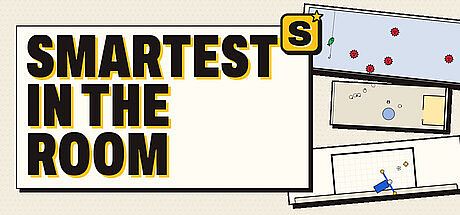


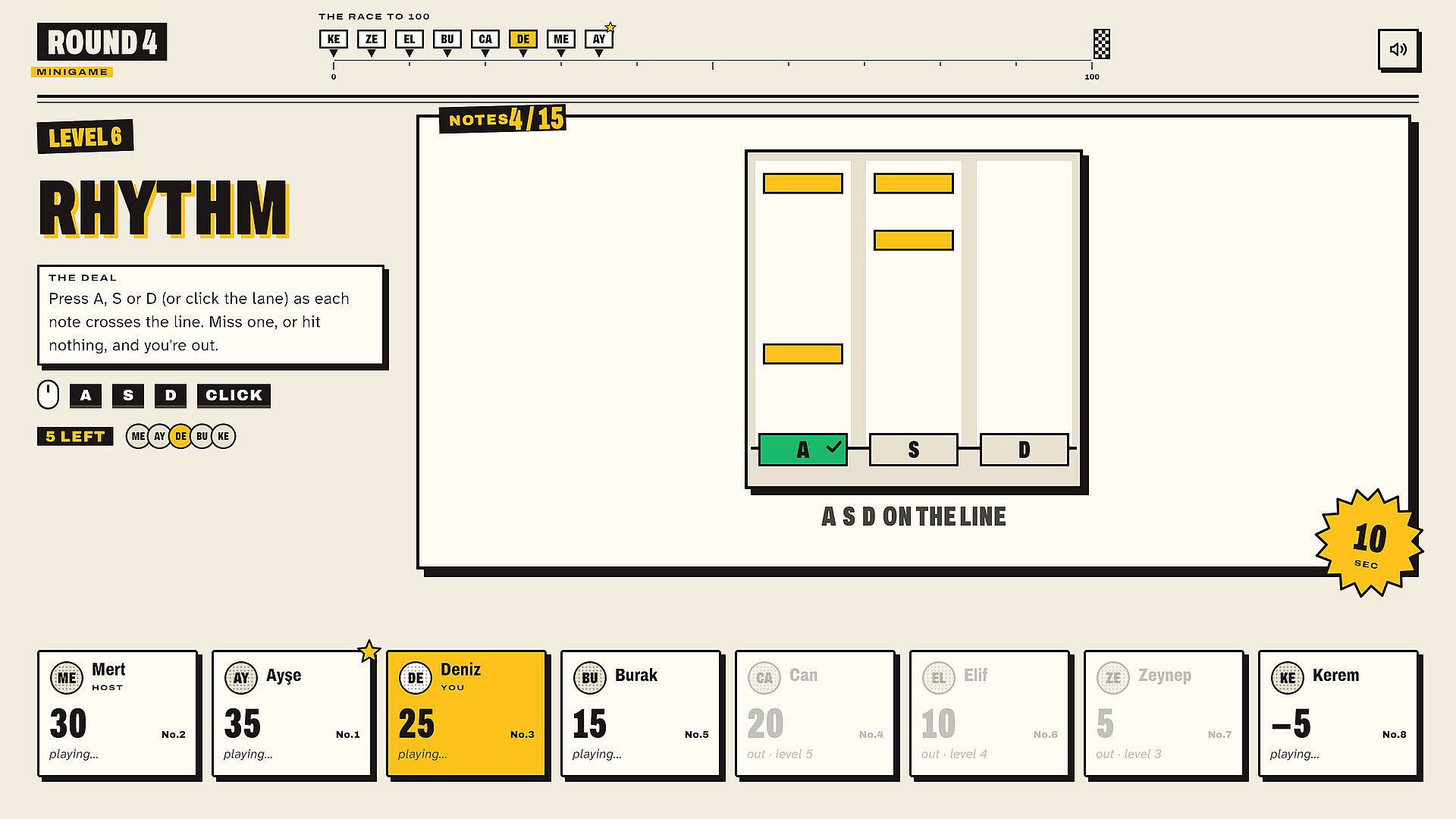
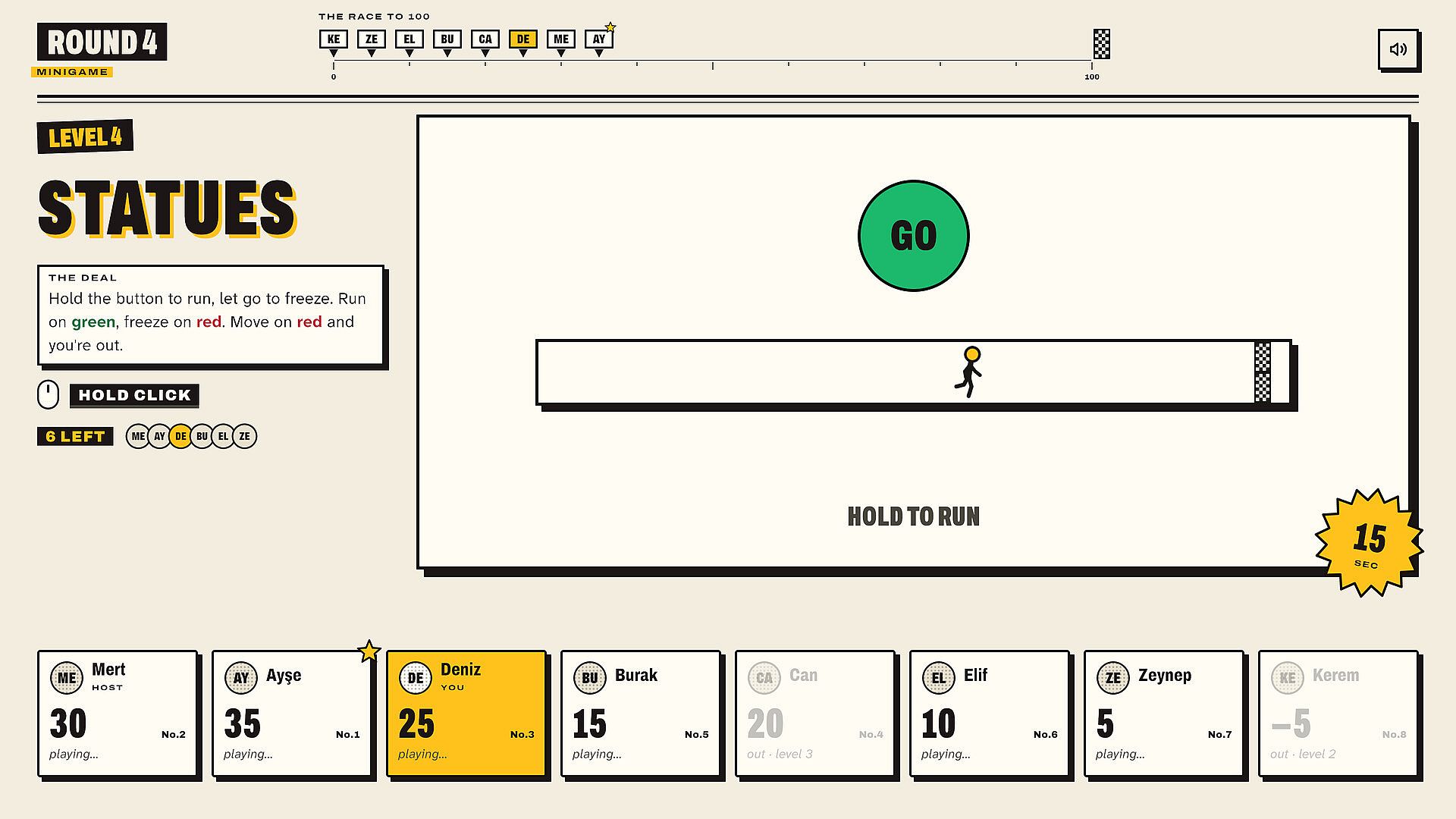
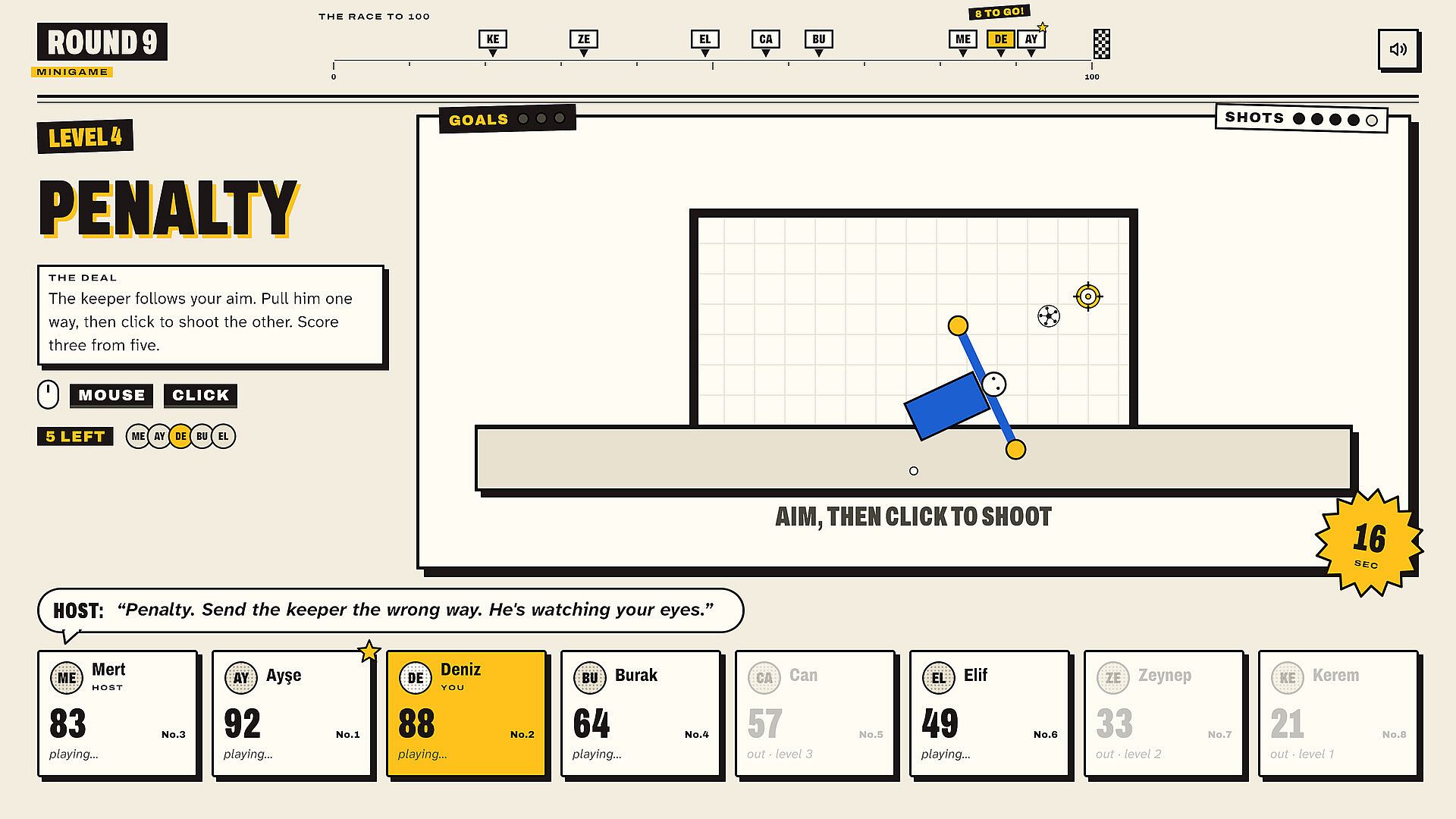
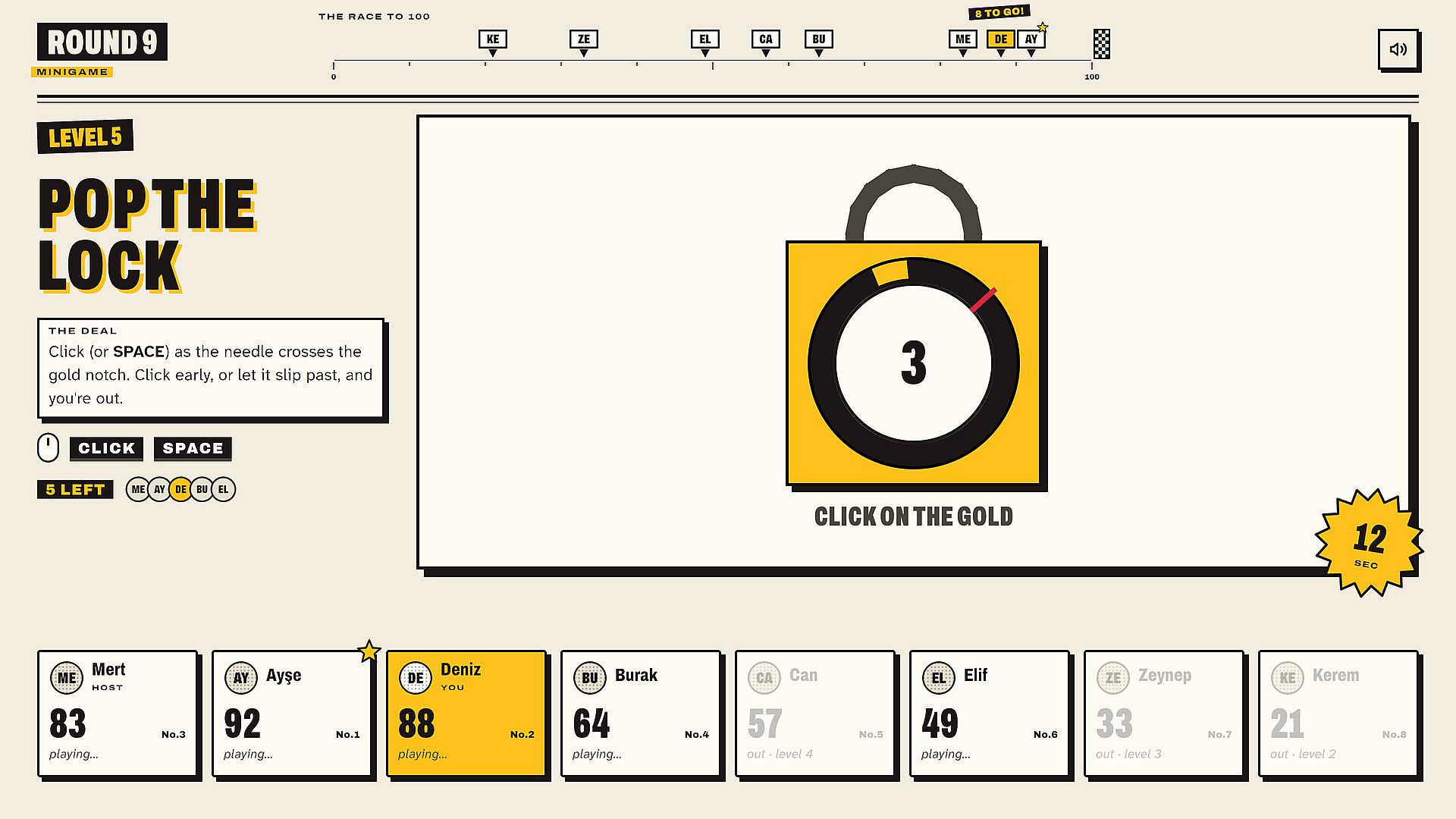
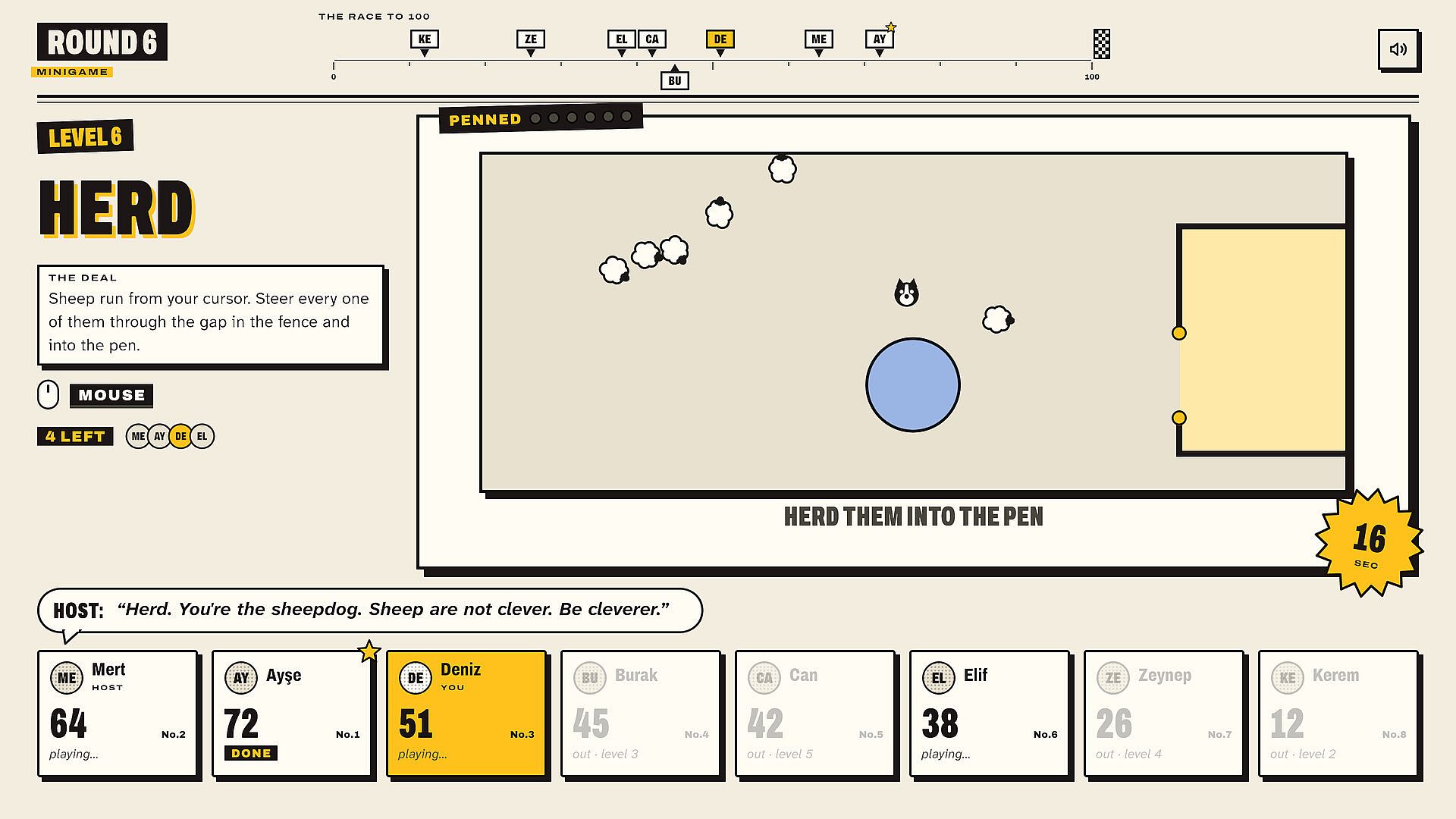
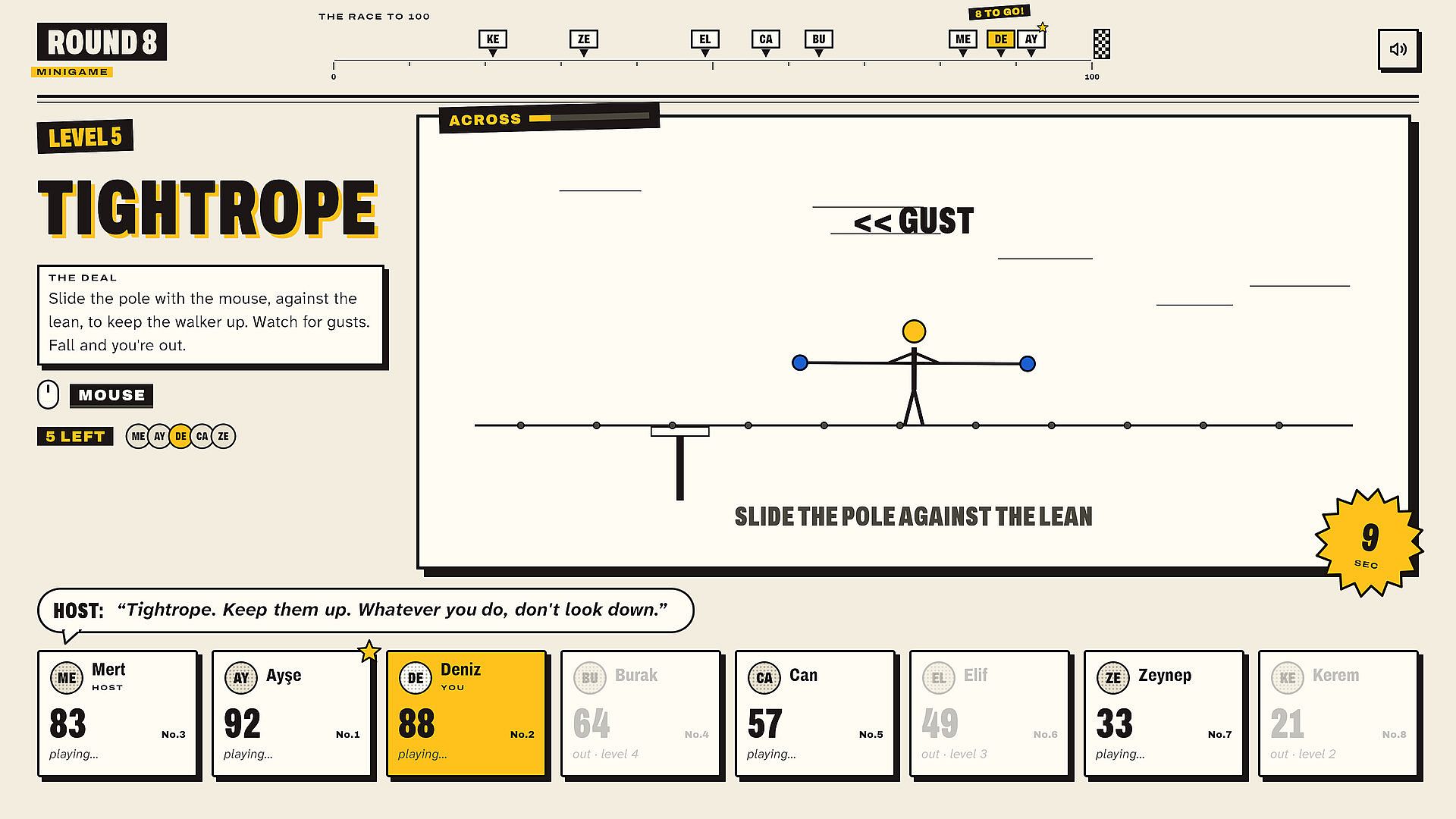
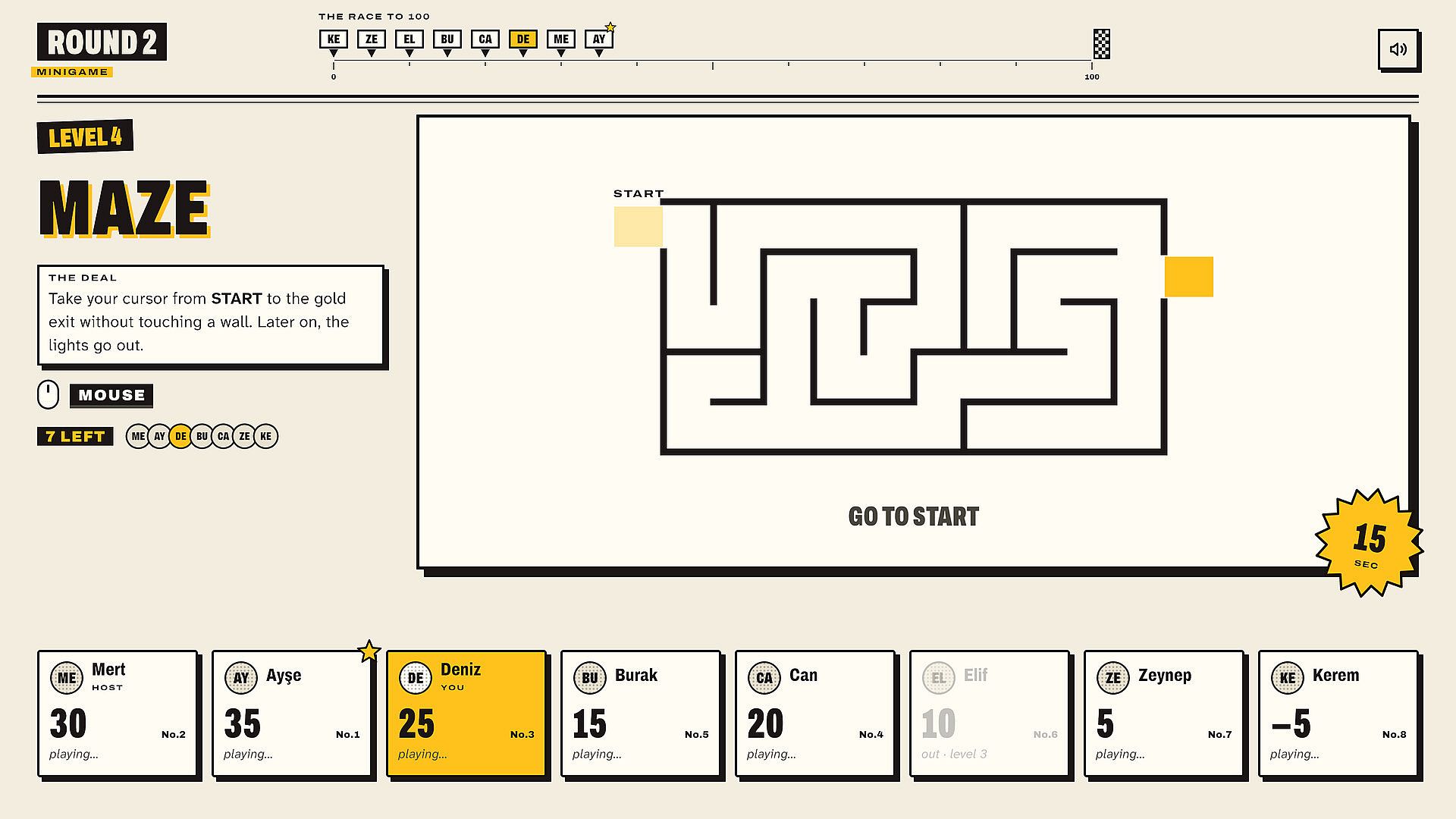
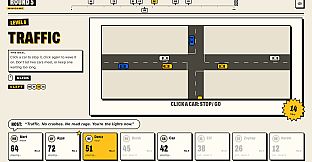
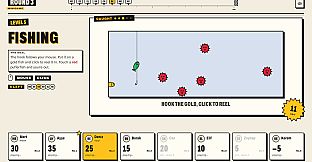
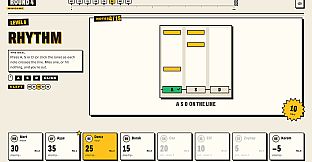
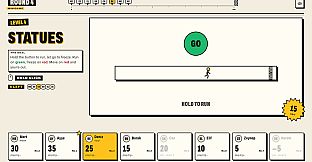
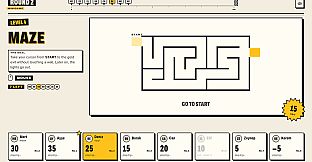
Smartest in the Room is a casual indie party game for PC that pits one to eight players against each other in quick rounds of elimination minigames. The core loop revolves around shared challenges where everyone starts on equal footing and the last player standing claims the round.
Gameplay
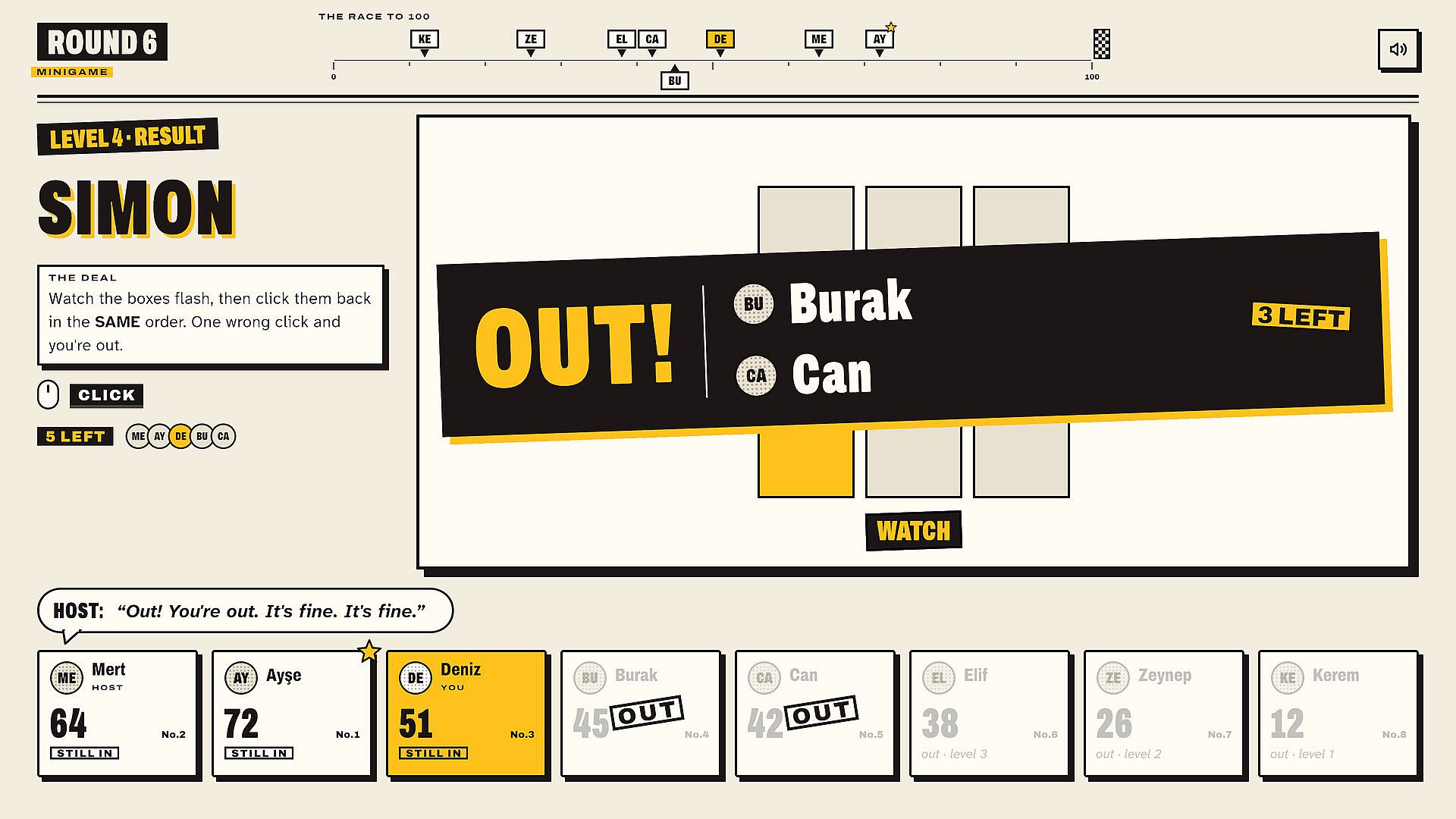
Each round begins with a fresh minigame introduced in a single sentence and demonstrated automatically before play starts. All participants receive the identical level simultaneously, removing any advantage from staggered starts. Failure eliminates a player immediately, while success advances everyone to a tougher version of the challenge. Beginning at level three, even a full clear by the group results in the slowest performer being removed to keep the pressure high. The process repeats until only one remains and secures the round victory.
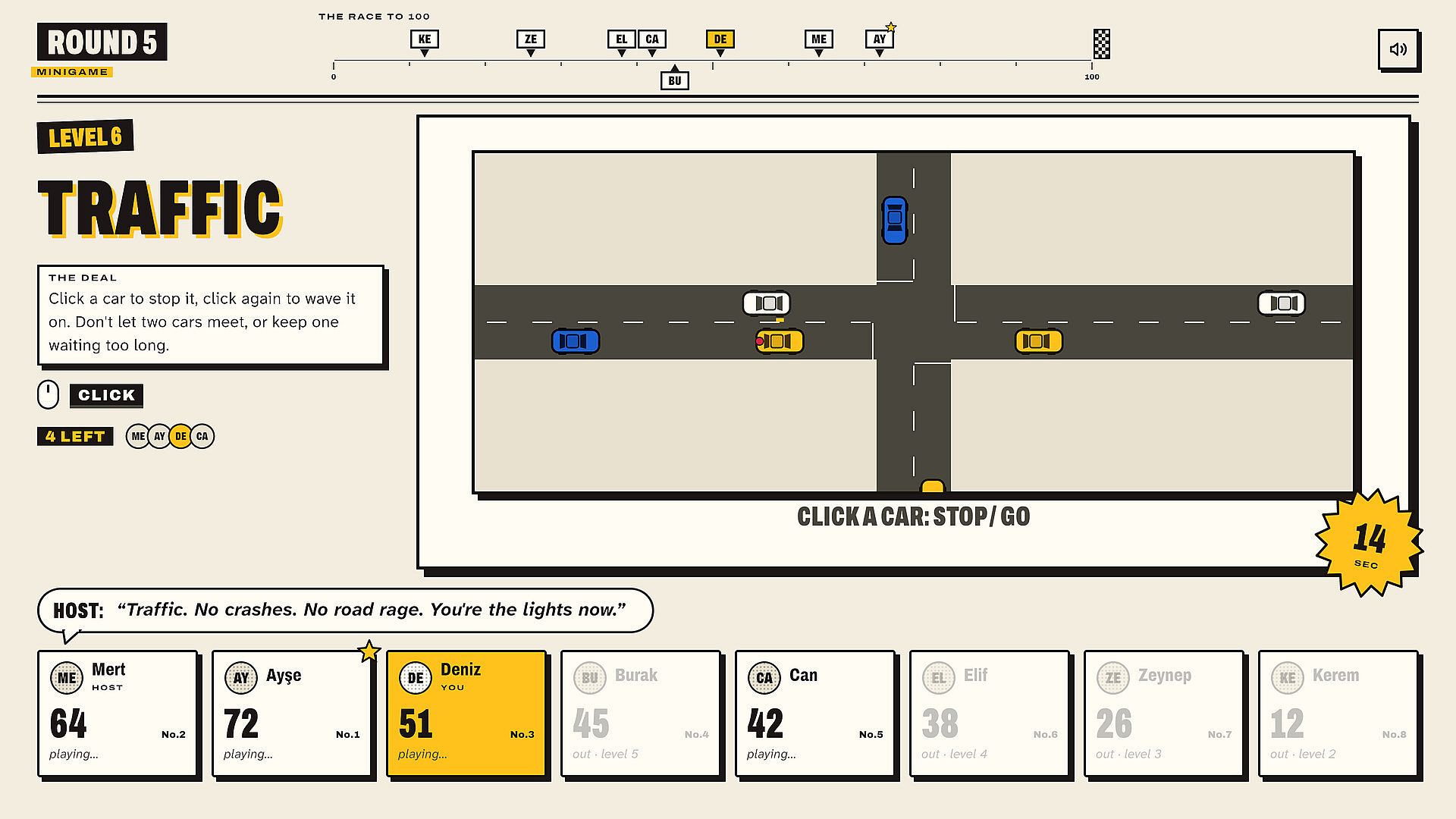
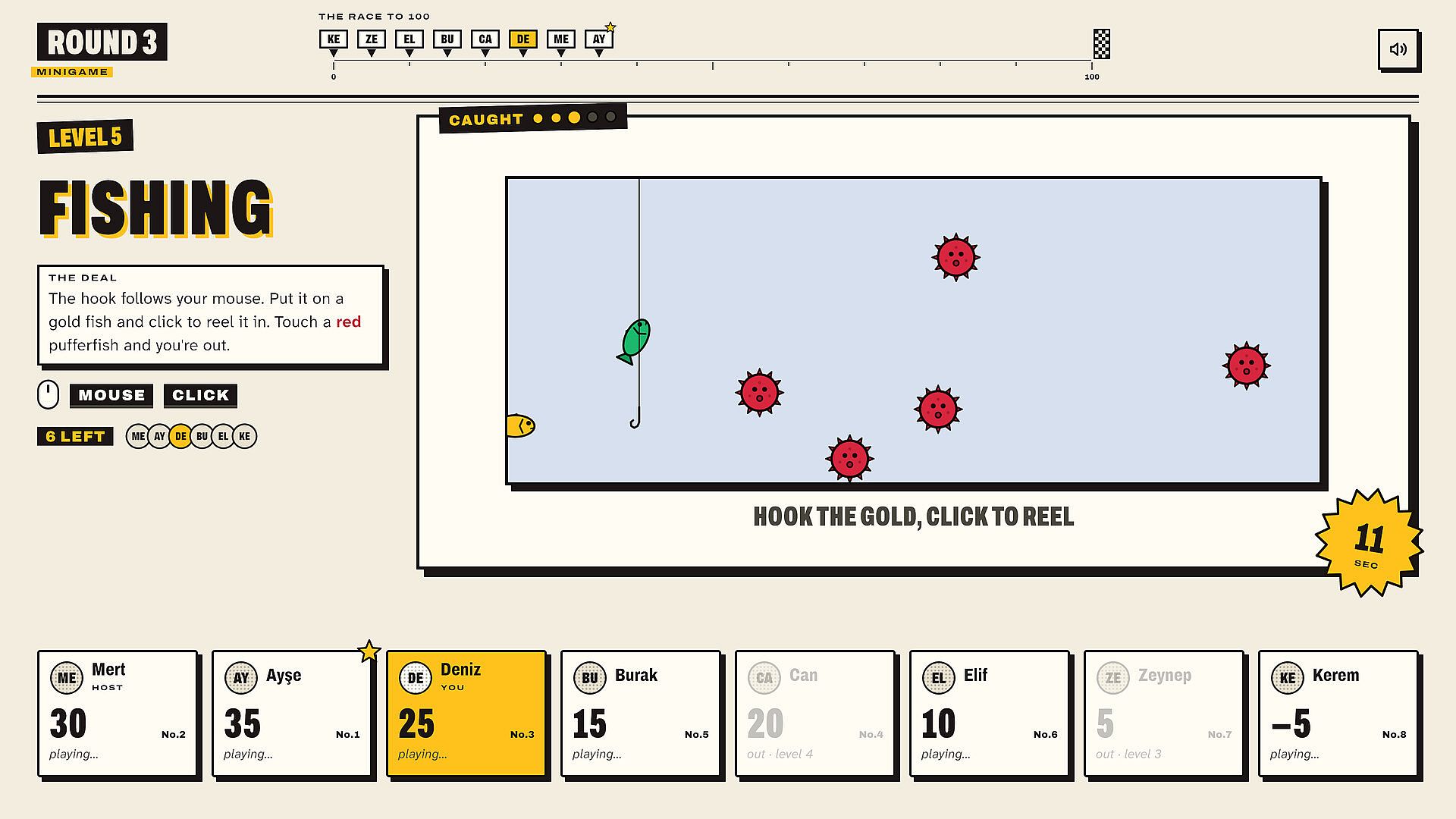
Scoring tracks progress toward a shared goal of one hundred points displayed prominently at the top of the screen. First place in a minigame awards twenty points, second place ten, third place five, and last place subtracts five. A full match strings together successive minigames drawn from a pool of sixty nine distinct challenges until one player hits the target total. Eliminated participants continue watching the ongoing level in real time alongside active players.
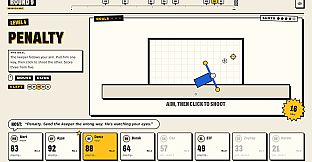
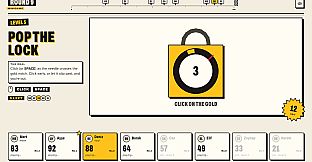
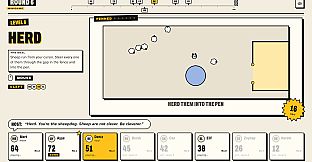
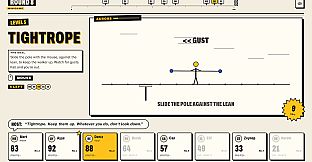
Minigames fall into four broad categories that test different skills. Reflexes cover timing and quick reactions through examples such as Green Light, Statues, Whack, and Pop the Lock. Memory challenges include Simon, Memory Boxes, Spot the Change, and What's Missing. Aim and steering tasks feature Penalty, Traffic, Herd, Fishing, Tightrope, Maze, and Dodge. Timing and nerve entries range from Press Your Luck and Stop the Clock to Keep the Beat and Rhythm. Every minigame requires only seconds to understand yet rewards repeated practice for consistent performance.
Game Modes
The primary experience supports one to eight players in online sessions hosted through a simple lobby system. The host generates a join code that others enter directly, bypassing accounts or friend lists entirely. Matches run over the internet or local network connections, with reaction timings measured locally on each machine to ensure fairness regardless of latency. A fully voiced host provides ongoing commentary, noting eliminations, point leads, and memorable moments throughout the session.
Single player mode allows solo practice by clearing successive levels to build scores and familiarity with the minigame pool. No in game chat exists, keeping the focus on external communication through voice tools or in person gatherings. The structure suits short bursts or extended sessions where groups cycle through the randomized sequence of challenges.
Accessibility and Setup
Entry requires no prior accounts or complex setup. Players join by code or local discovery, making it straightforward for groups already connected elsewhere. The local measurement of timings prevents connection quality from deciding outcomes in reaction based minigames. This design keeps emphasis on individual skill and quick adaptation rather than technical factors.
Is It Worth Playing?
Smartest in the Room suits players seeking a lightweight party experience built around short, repeatable minigames and direct elimination. The format rewards reflexes, memory, and steady nerves across varied challenges while the race to one hundred points maintains clear competition. Groups that enjoy voice chat or shared physical spaces will find the lack of built in messaging a natural fit. Solo players can use the practice mode to improve before joining others. The game remains available on PC with the described systems intact, offering consistent access to its core loop of quick rounds and progressive difficulty.