








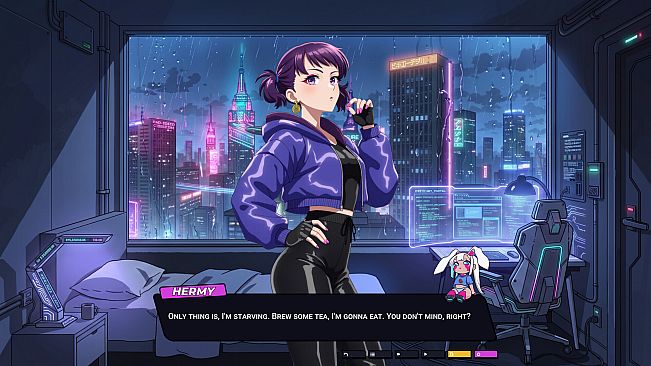

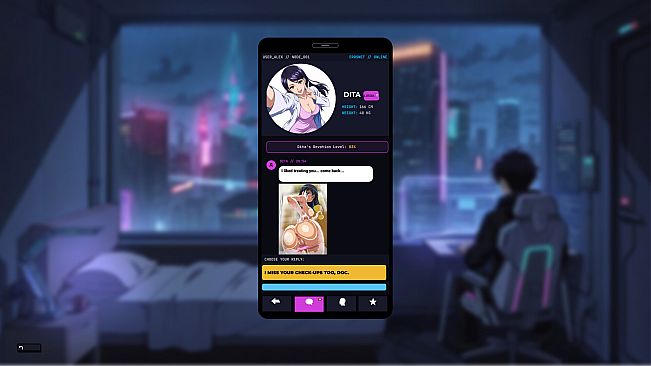











ErosNet: Glitch in Love is an indie casual game for PC in which players take on the role of a broke IT specialist who accepts a side job as a QA tester for the unstable dating app ErosNet. The experience centers on navigating buggy virtual environments while managing limited resources and uncovering hidden details about the app's avatars.
Gameplay
The core loop involves testing the app's VR biomes that begin in monochrome pixel art due to hardware limitations. Players upgrade their rig over time to access more detailed 2D graphics and animations. Each biome contains avatars with concealed personal traits that players investigate by earning payment from testing sessions. Hacking encrypted log files occurs through integrated mini-games, while collecting data fragments from character dossiers reveals underlying motives and patterns. Avatars embody distinct tropes and psychological profiles that influence interactions and discoveries. Mental energy serves as a key resource that depletes during extended sessions, requiring careful pacing to avoid burnout before reaching key revelations.
Game Modes
Exploration takes players through varied scenarios tied to the app's biomes. These include narrative sequences focused on investigative elements, survival challenges amid turbulent conditions, and high-energy segments resembling live broadcasts. Progression across these areas builds through hardware improvements and data collection, with each environment presenting unique obstacles and opportunities for uncovering avatar secrets. The structure emphasizes single-player progression without multiplayer components.
Progression and Mechanics
Hardware upgrades form a central system that directly affects visual fidelity and access to deeper content. Mini-games for hacking provide the primary interactive challenge alongside dossier management. Players balance income from QA work against the costs of upgrades and the toll on mental energy. Avatars' hidden elements drive the investigative aspect, encouraging repeated engagement with dossiers to piece together motives. The overall design blends casual pacing with targeted puzzle-like activities in a contained digital setting.
Target Audience and Style
This title suits players interested in indie experiences that combine light simulation, narrative discovery, and simple progression systems. The casual genre classification aligns with accessible mechanics that do not require intense reflexes or complex strategy. Themes draw from everyday tech troubleshooting mixed with character-driven intrigue, appealing to those who enjoy piecing together stories through collected fragments rather than action-heavy sequences.
Is It Worth Playing?
The game delivers a focused single-player experience built around hardware progression, mini-game hacking, and avatar investigation. Its indie casual approach makes it suitable for shorter play sessions where players manage resources and explore digital environments at their own pace. Those drawn to narrative uncovering through dossiers and trope-based characters will find consistent mechanics that support repeated runs to reveal additional details. The absence of confirmed large-scale updates or community metrics means expectations should center on the core loop described in available materials rather than ongoing seasonal content. Players seeking a straightforward PC title with visual upgrades and investigative elements may find value in its contained structure and thematic consistency.