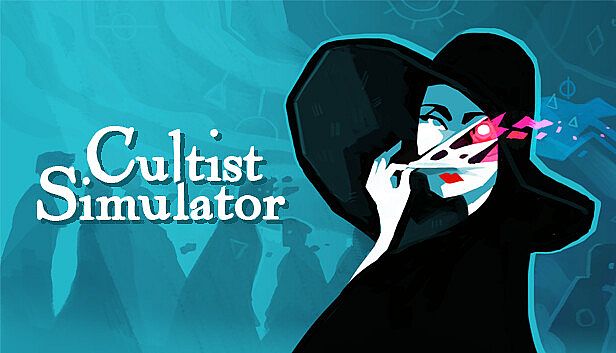


















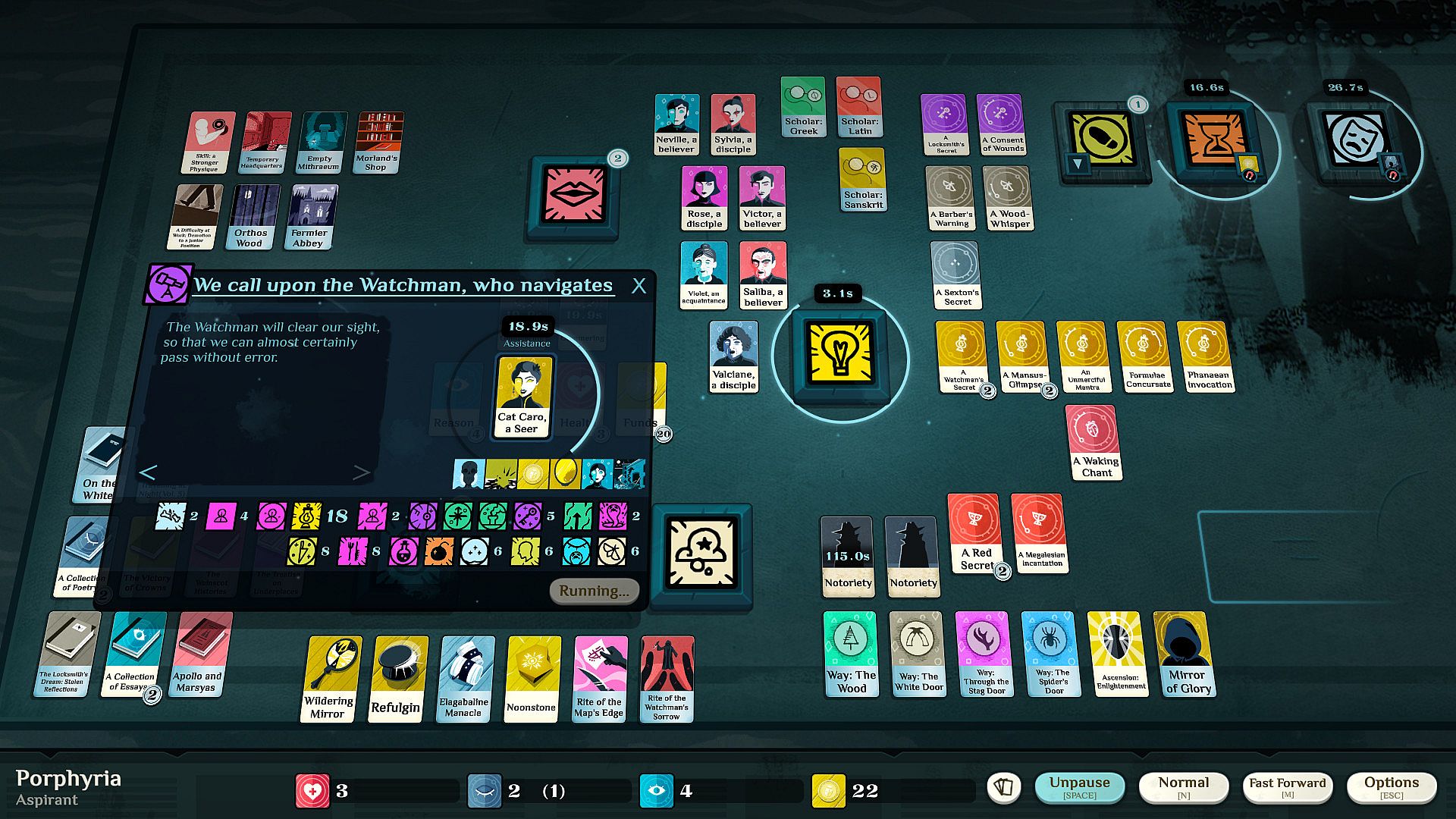
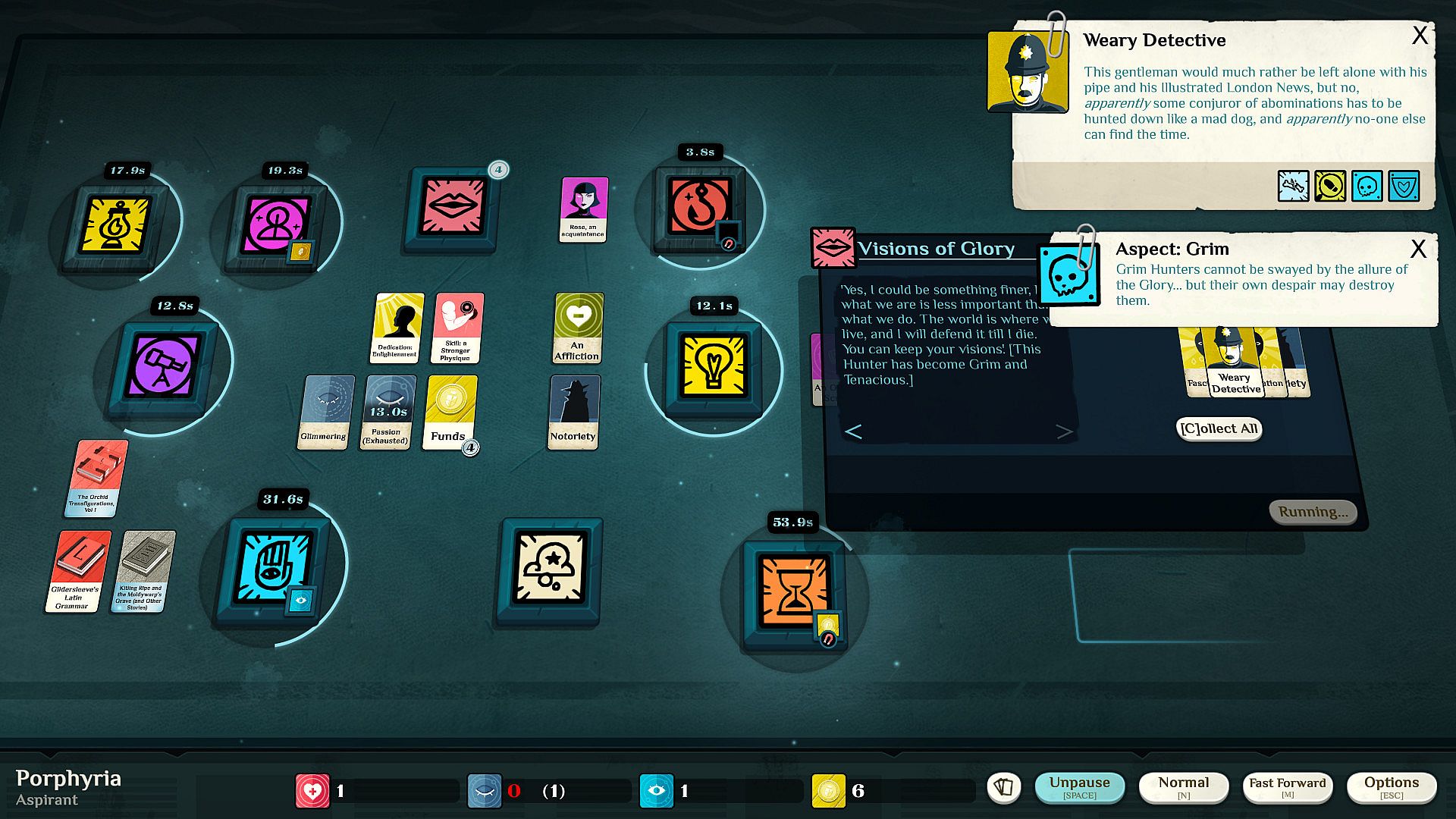
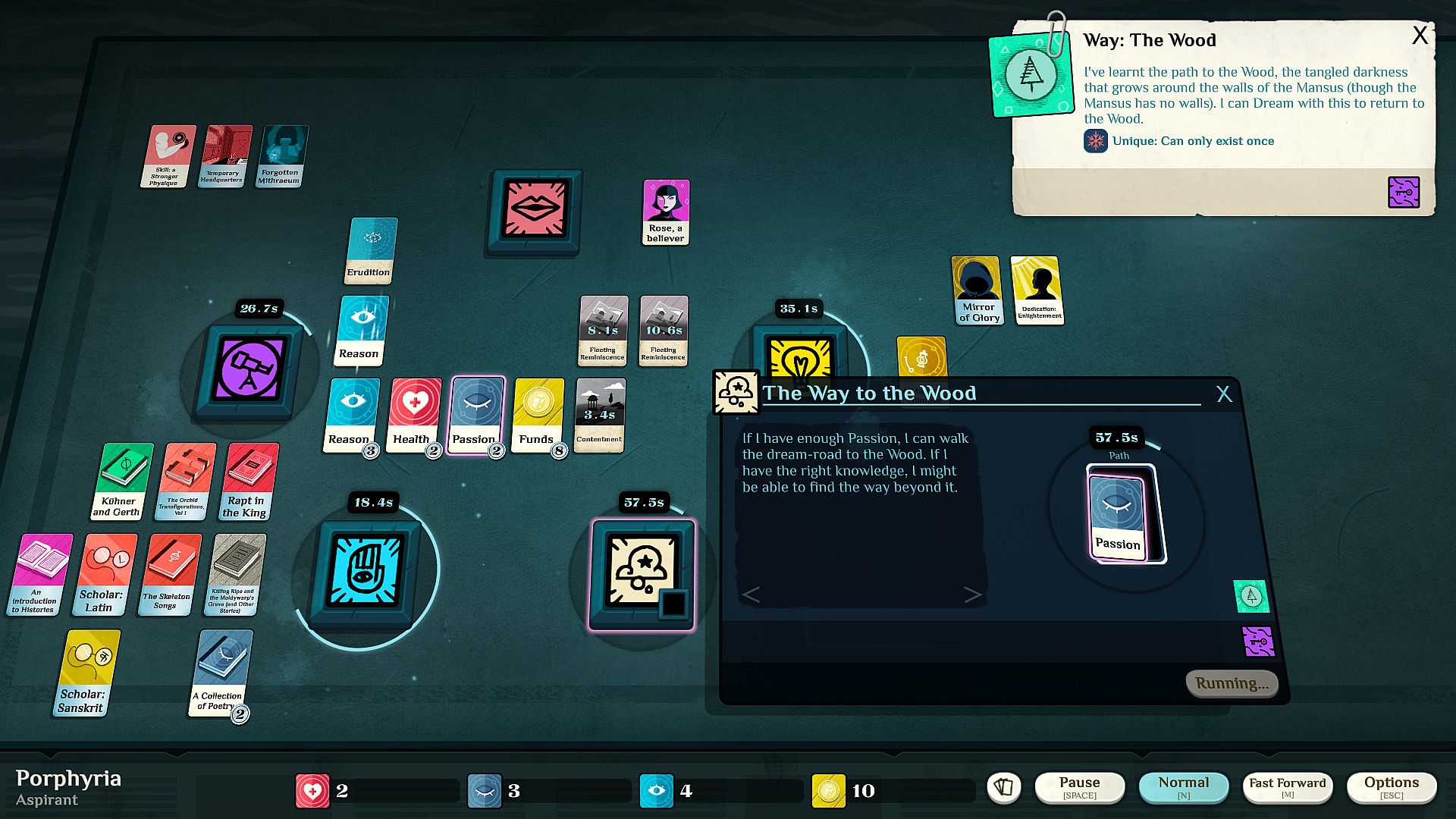
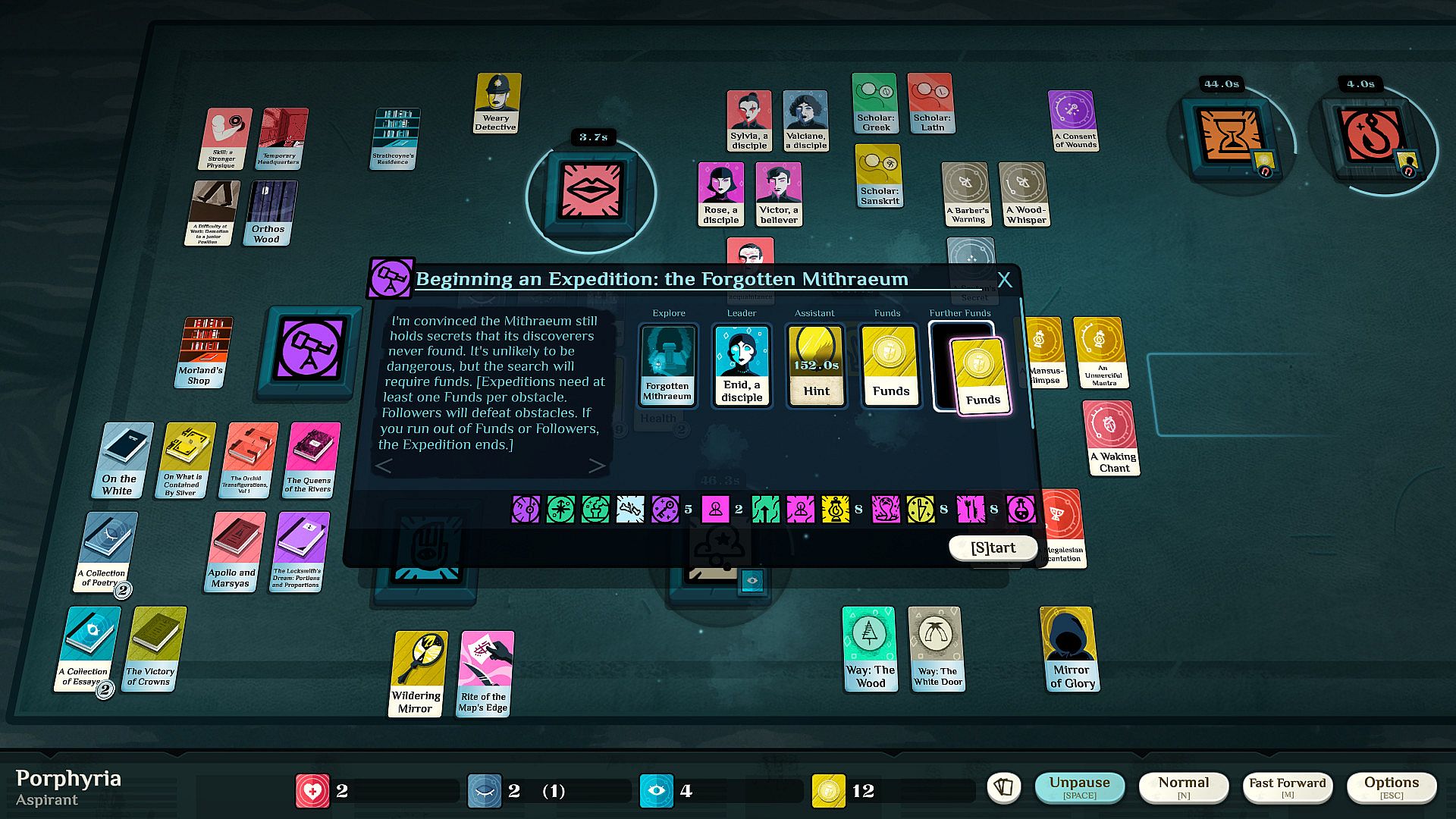
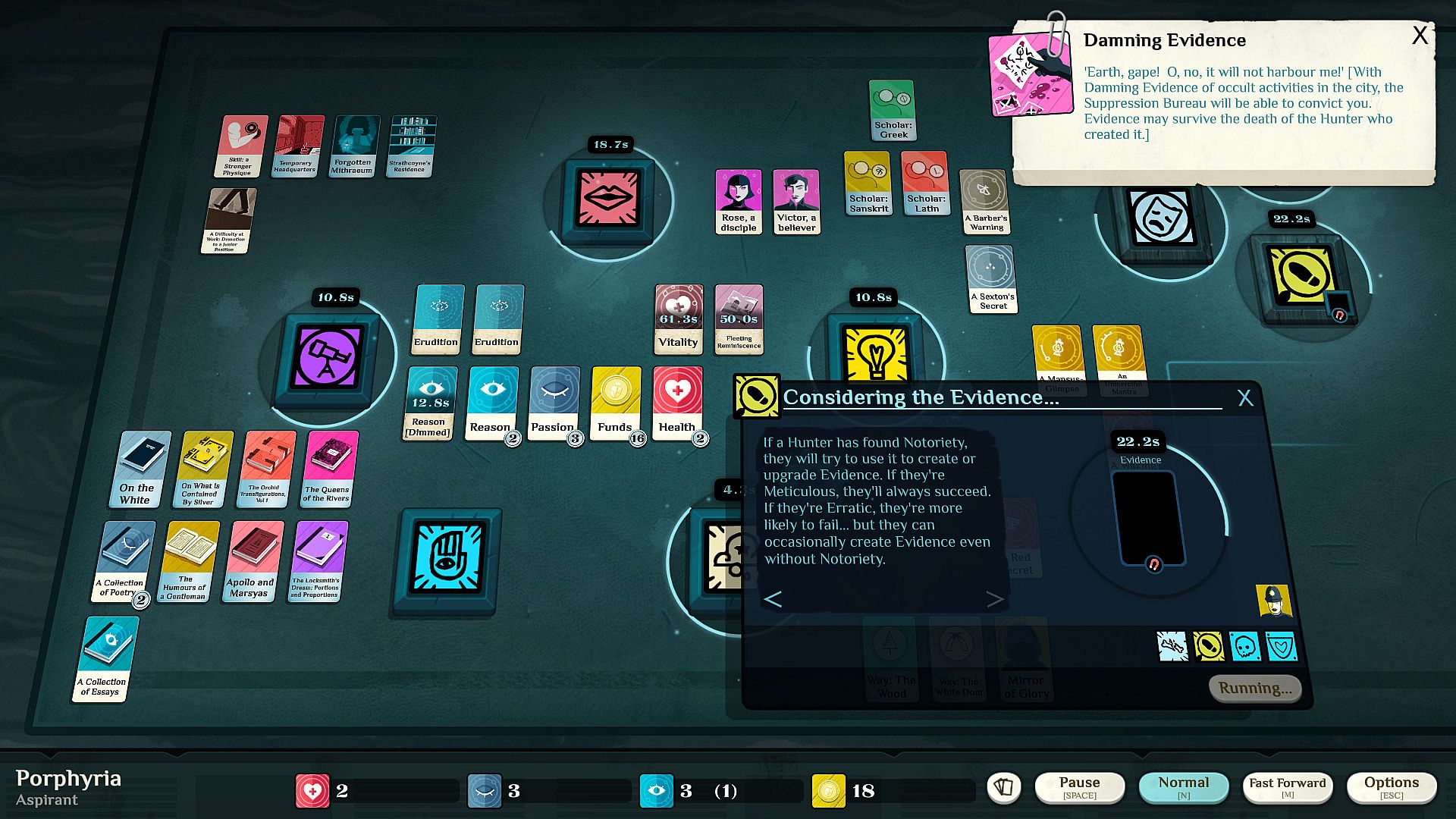
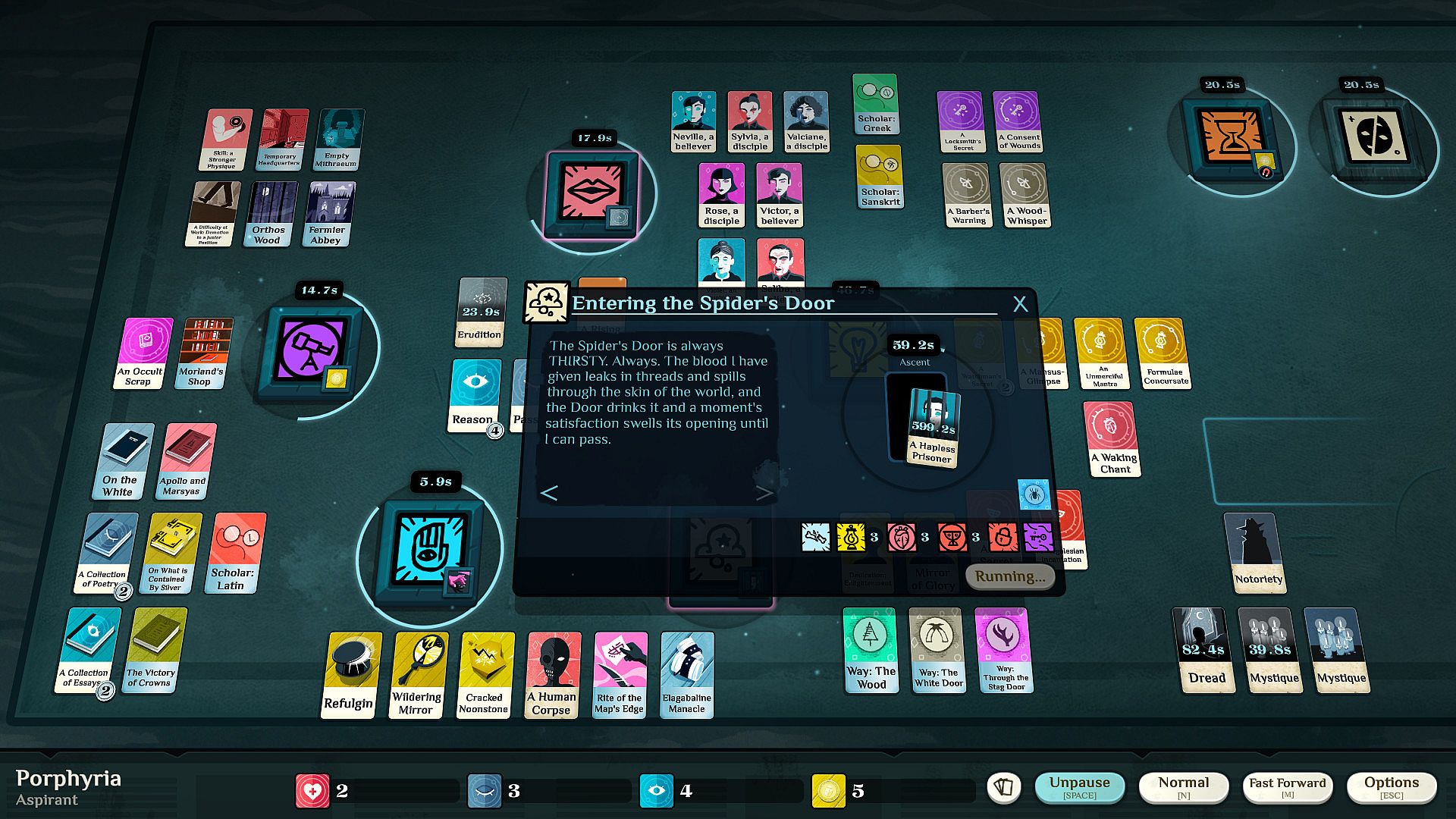
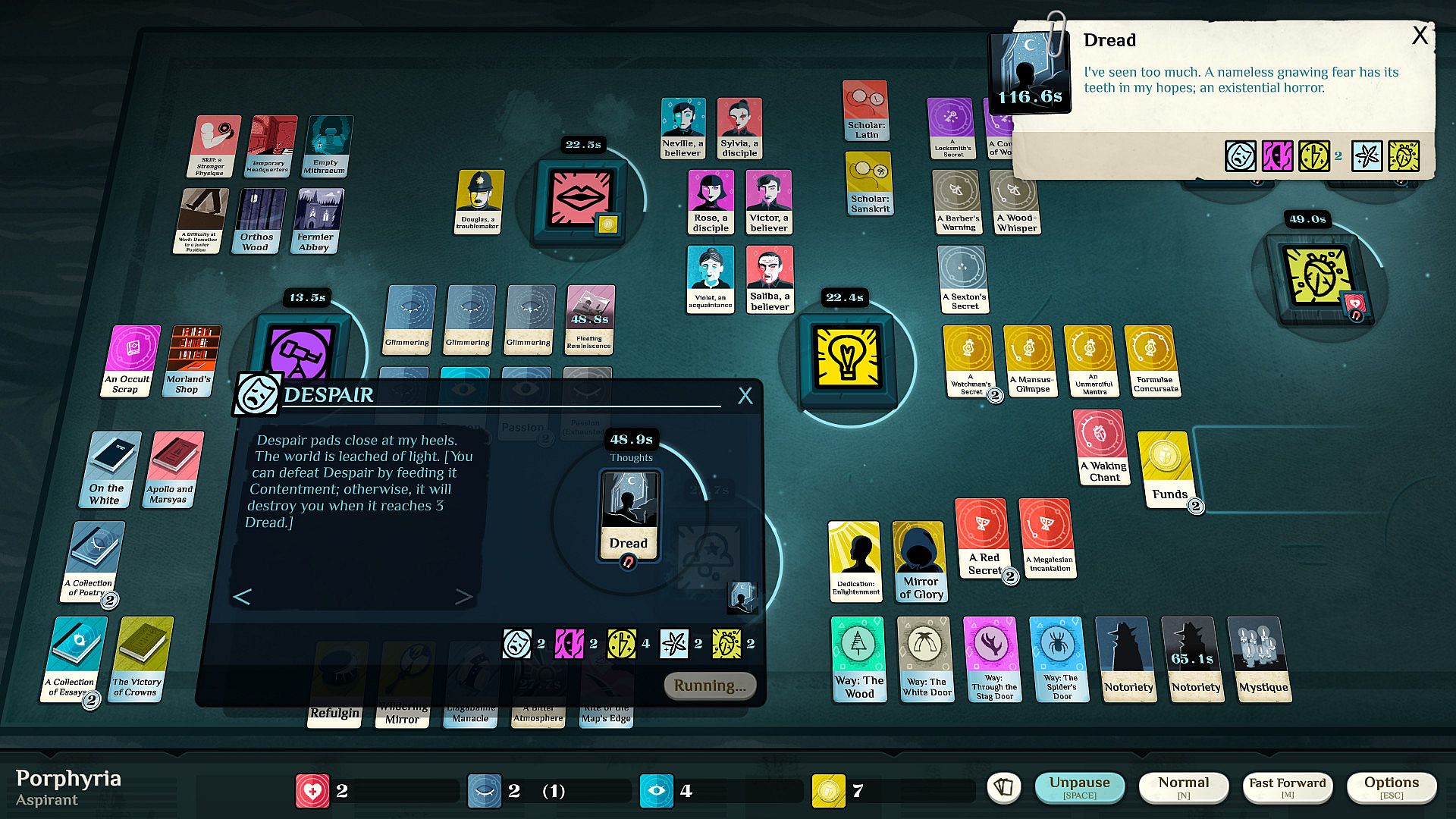
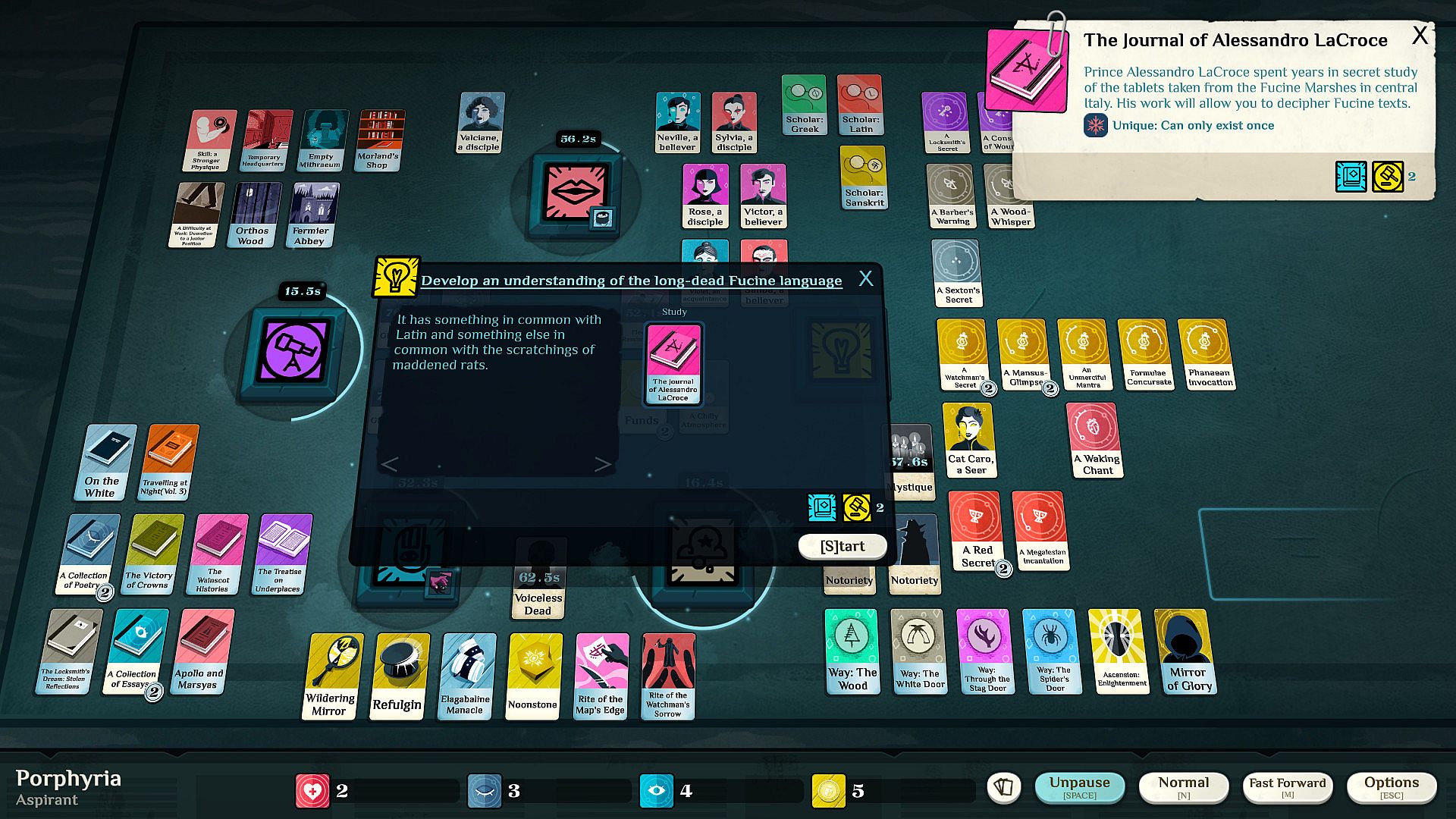
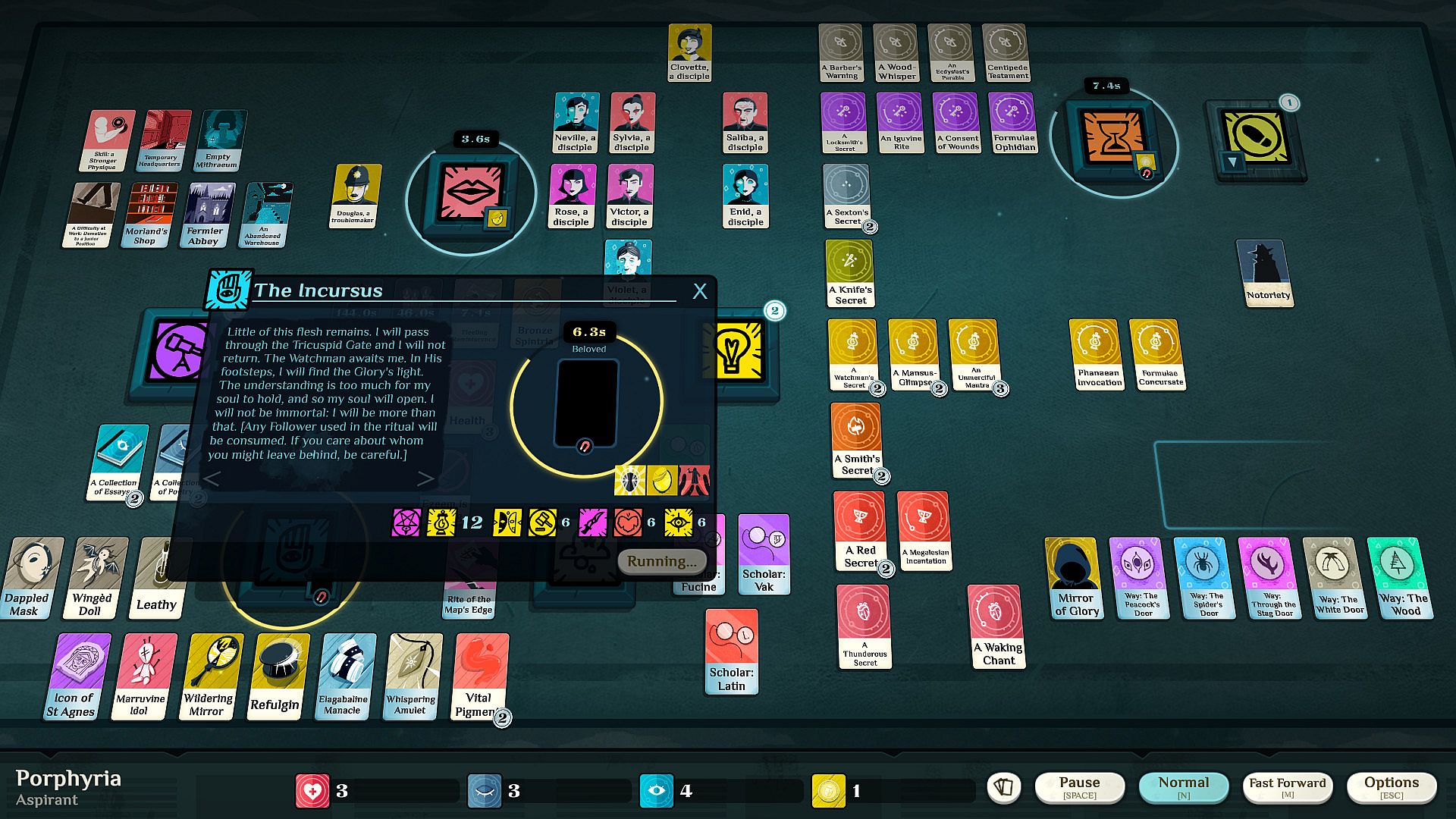
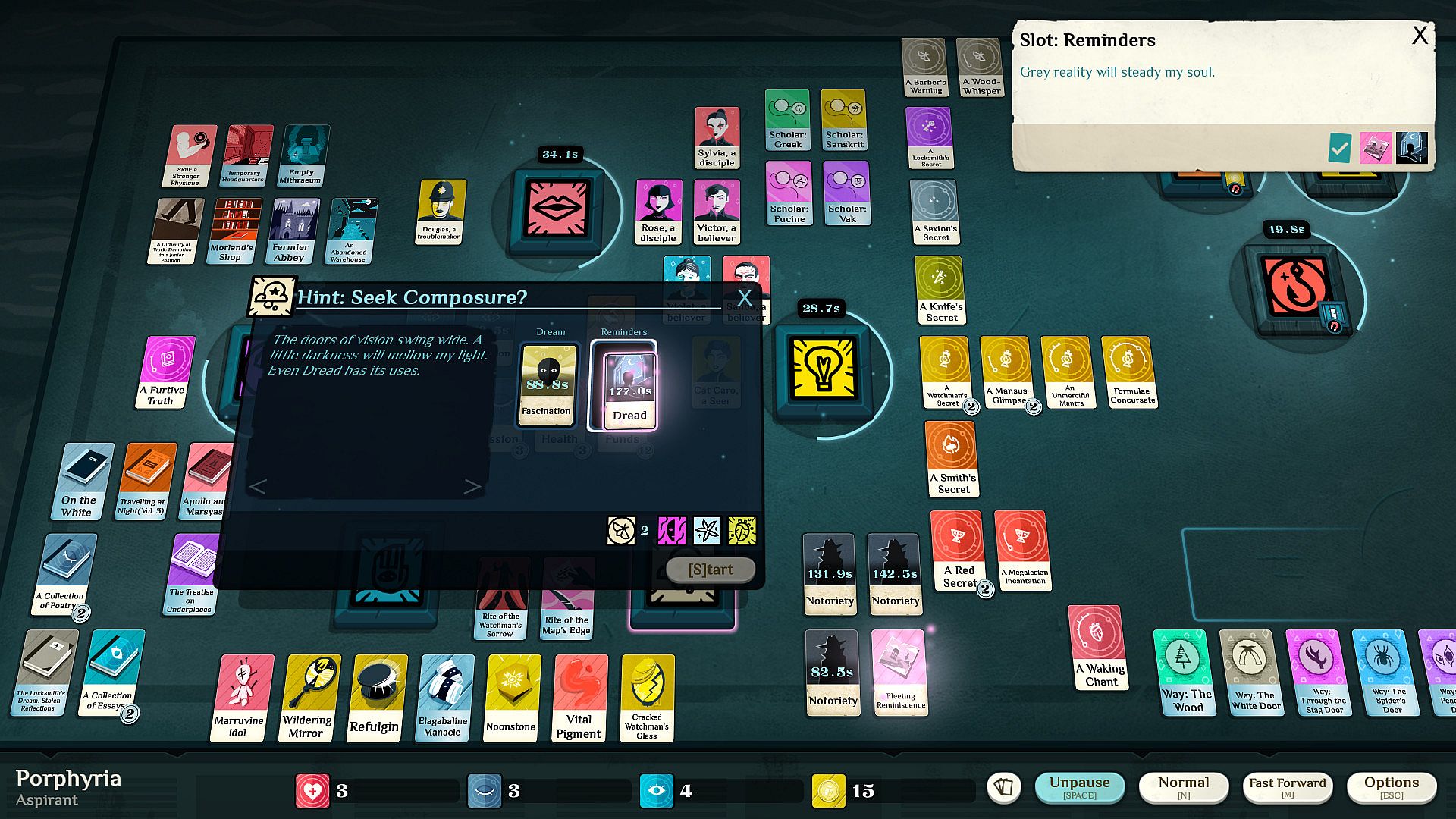

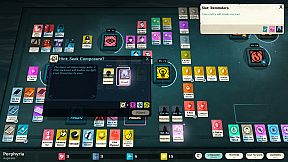
Cultist Simulator is an indie RPG simulation title that places players in the role of an aspirant pursuing forbidden knowledge in a 1920s setting filled with hidden gods and secret histories. The experience unfolds through a roguelike narrative card system where every decision shapes both immediate outcomes and longer-term consequences. Players manage resources, perform rituals, and navigate risks that can transform their character permanently.
Gameplay
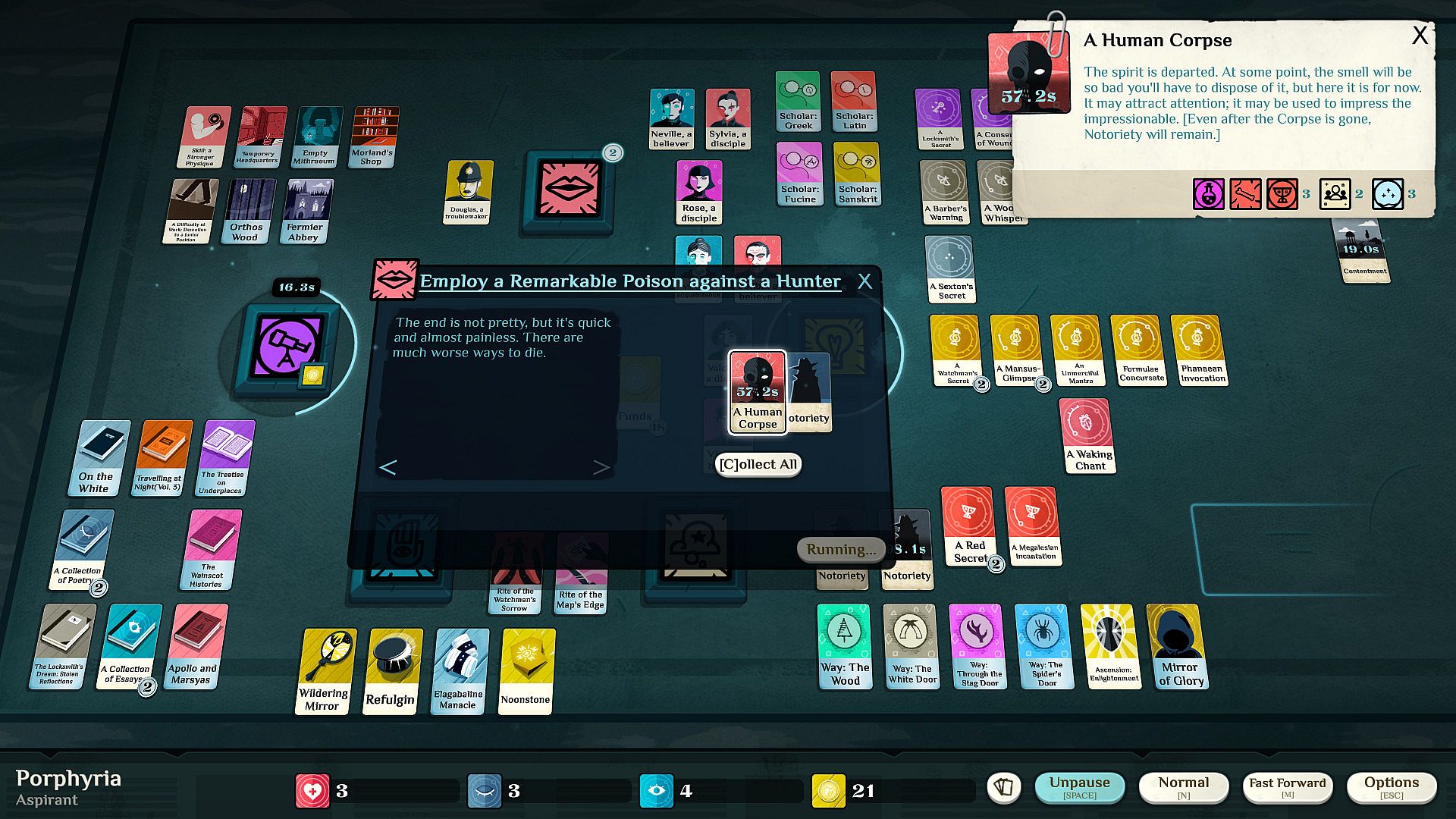
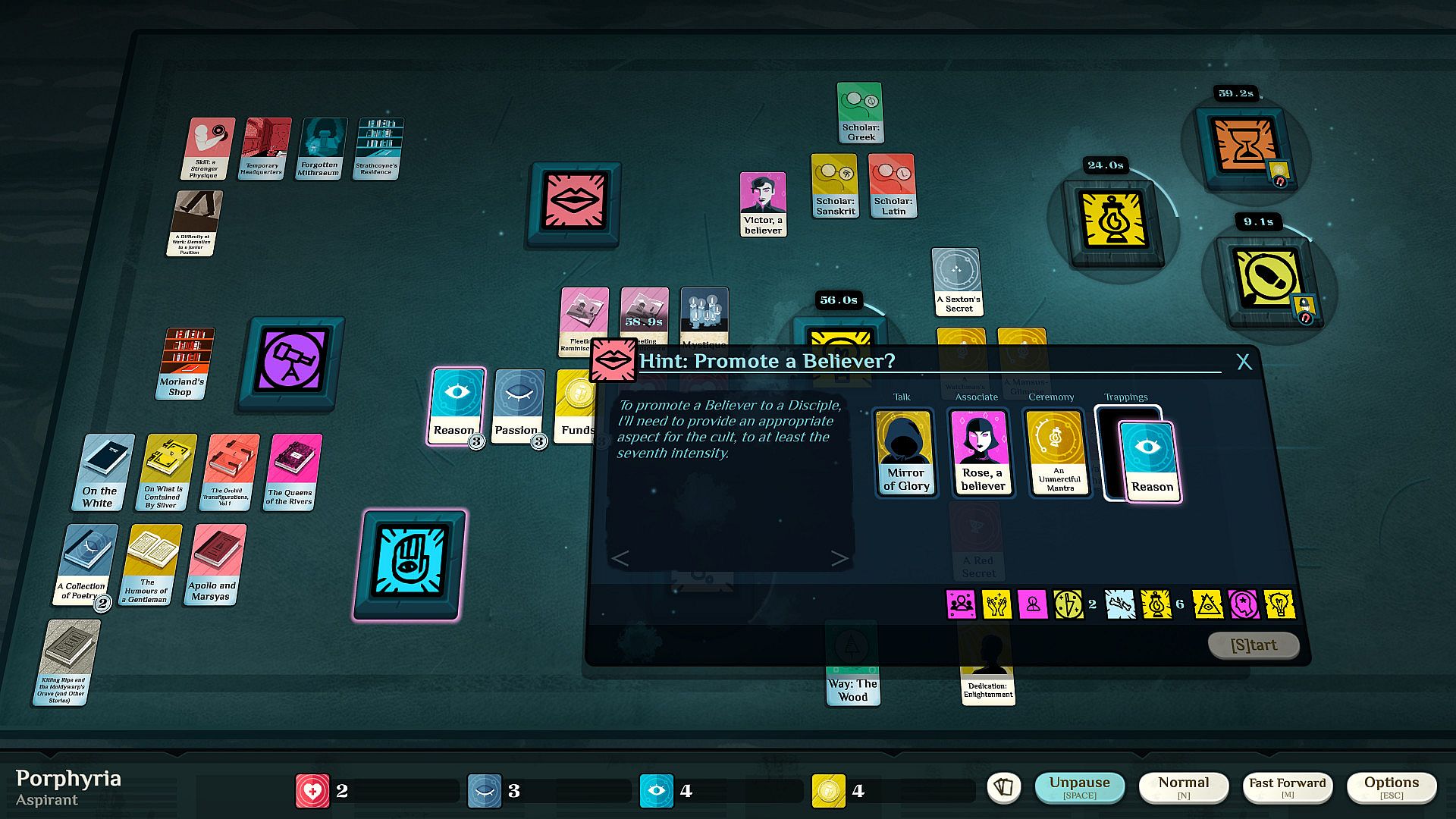
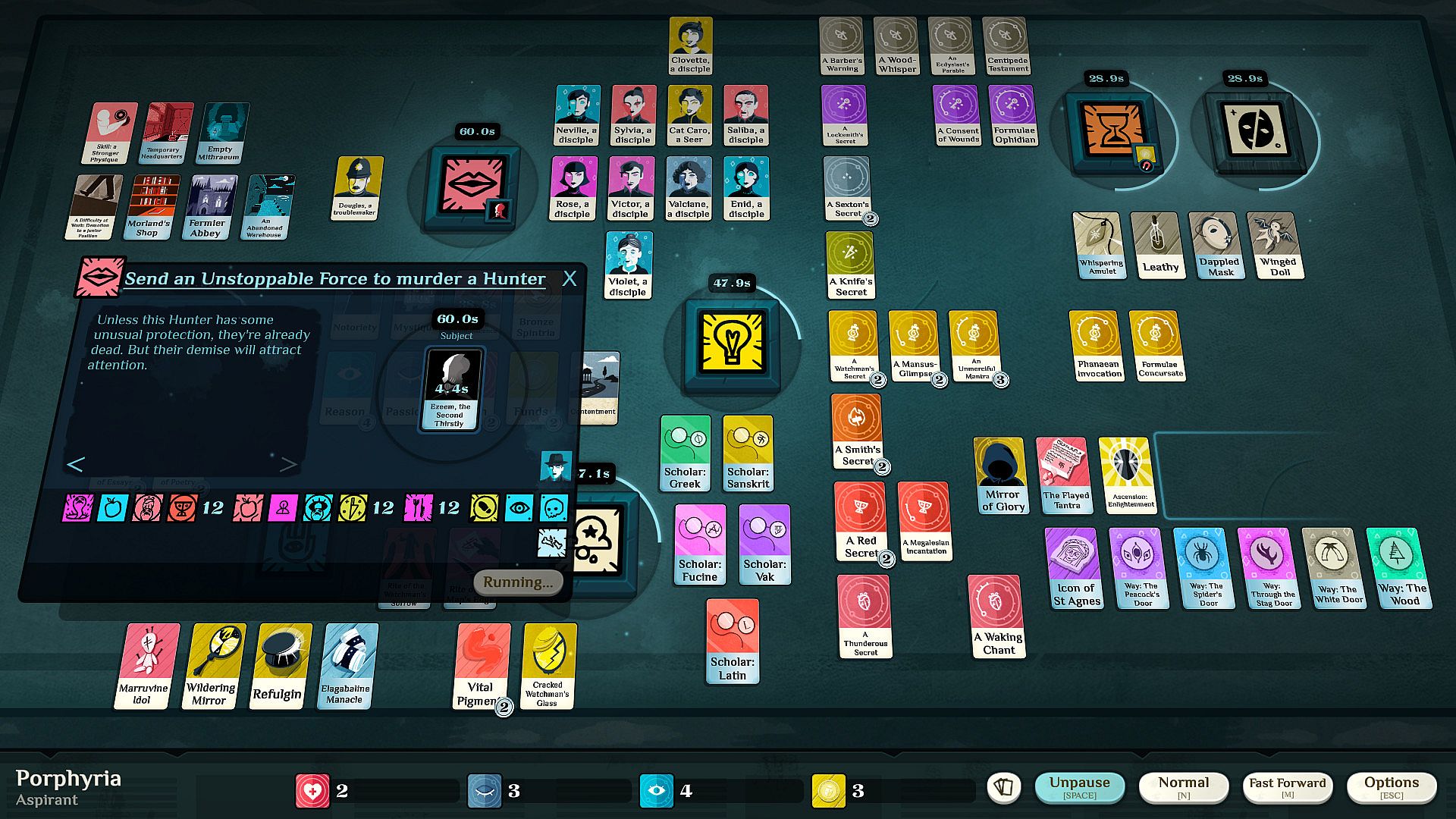
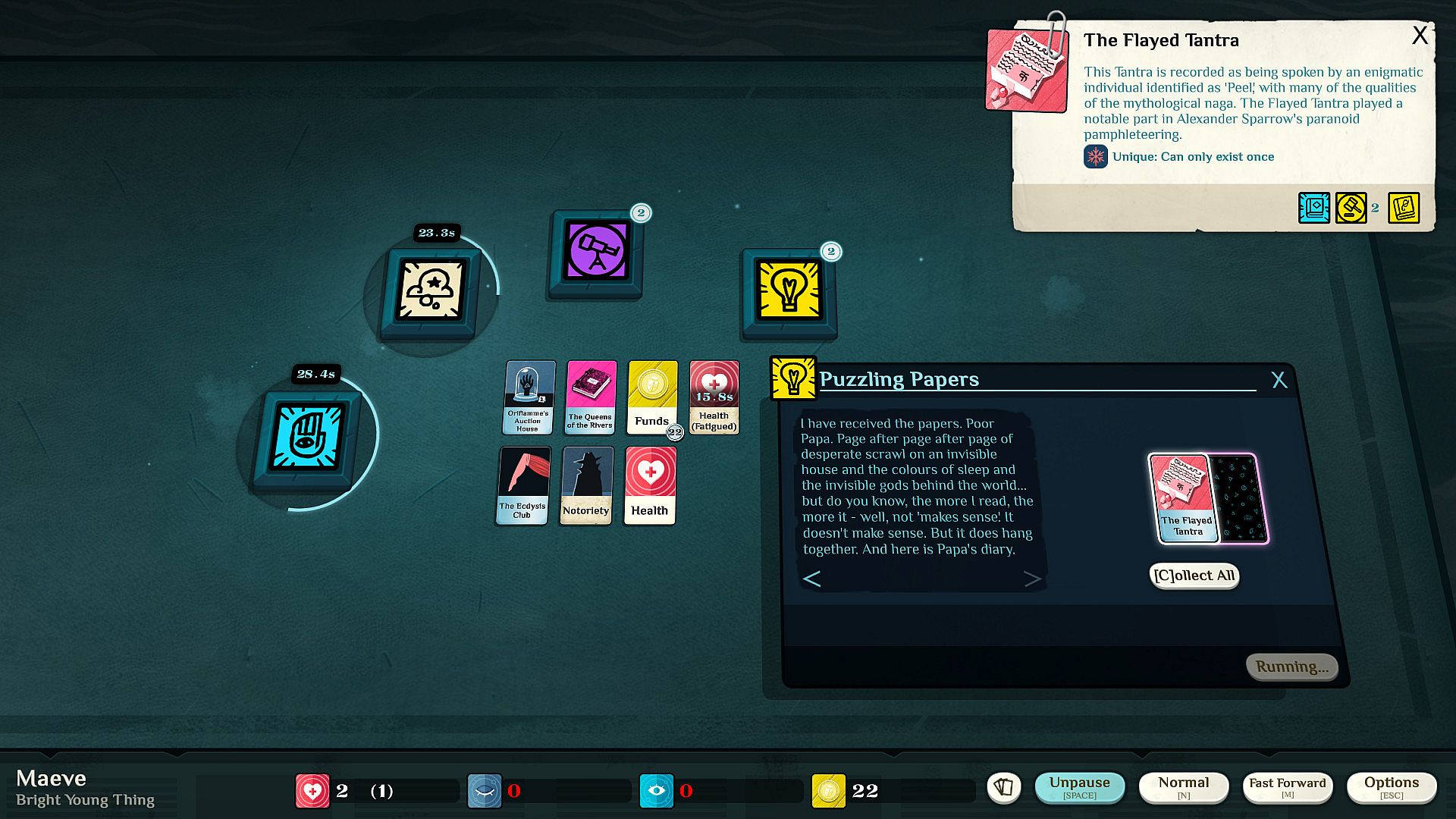
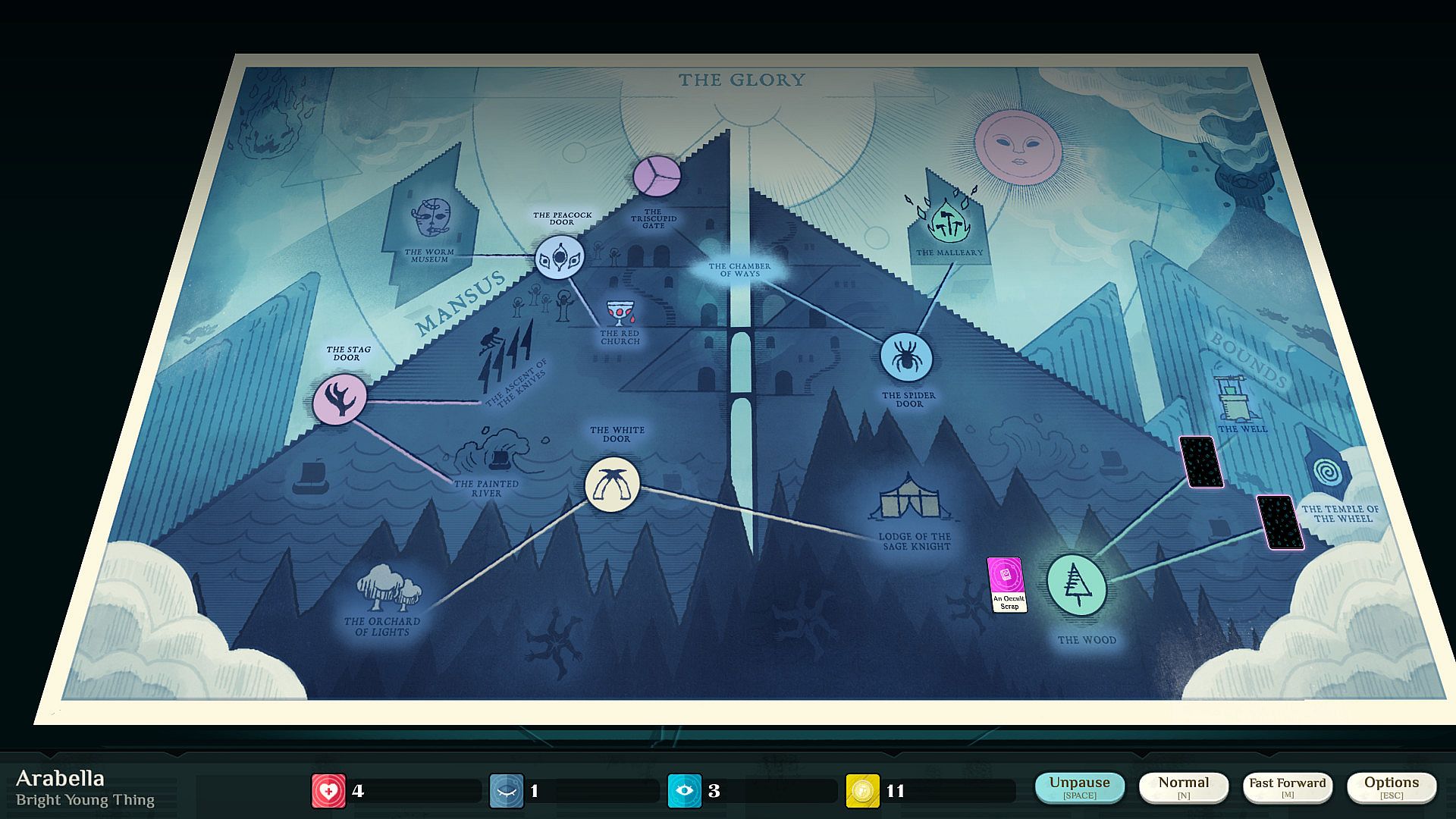
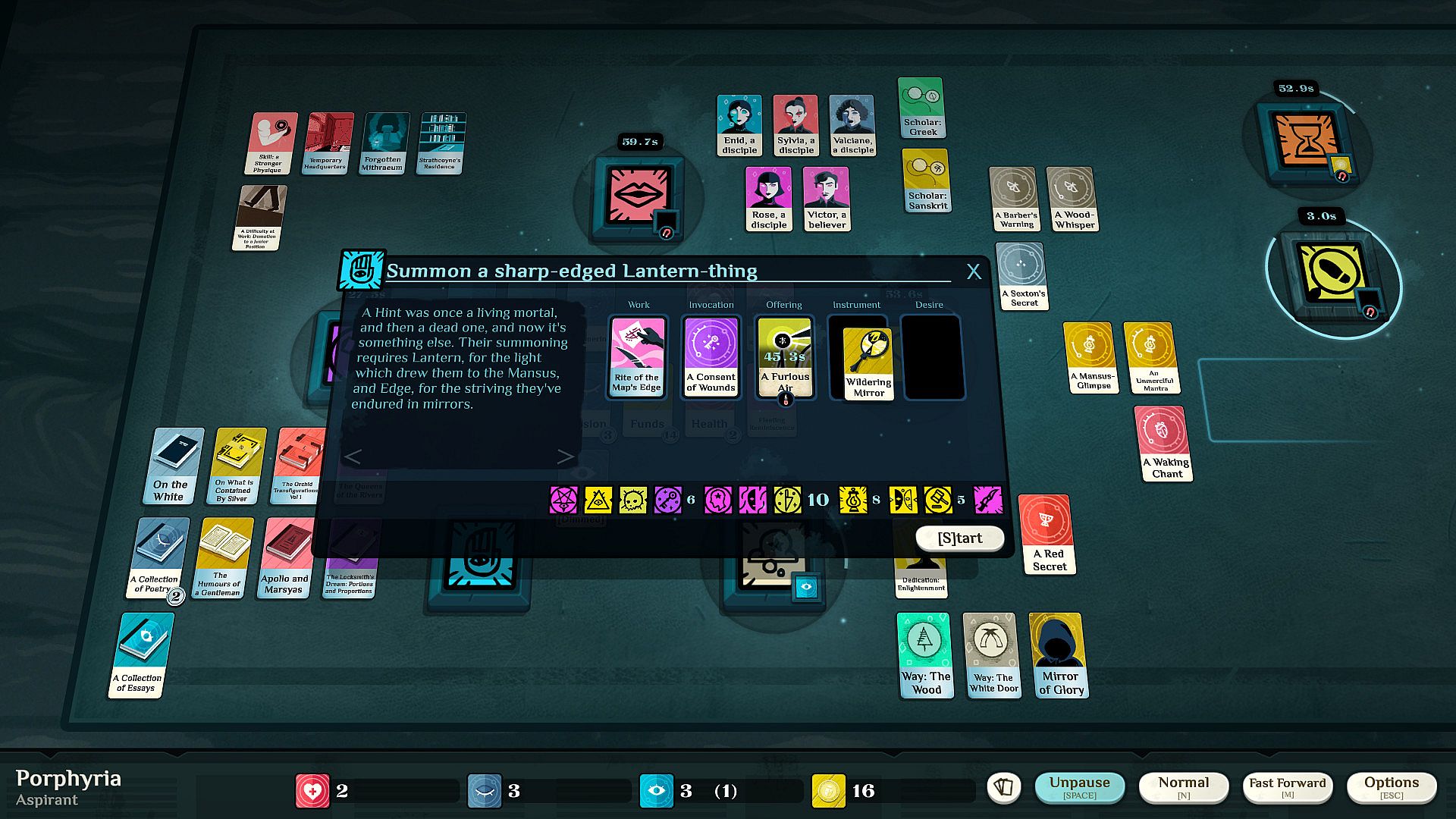
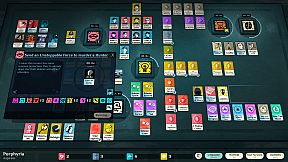
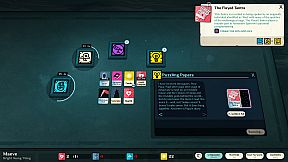
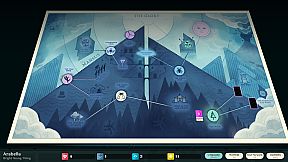
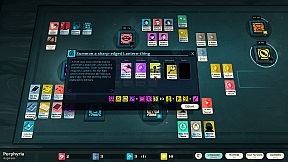
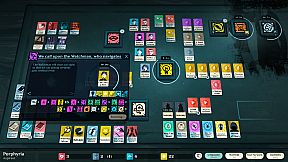
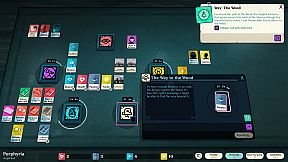
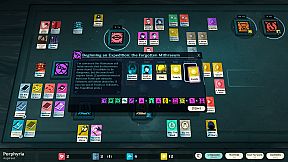
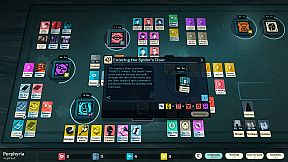
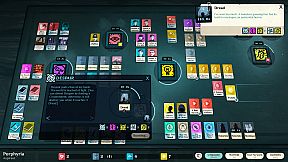
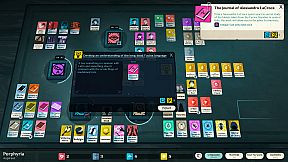
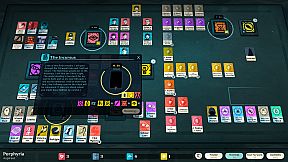
The core loop revolves around placing cards into timed verb slots that represent actions such as Work, Study, Dream, Explore, Talk, and Time. Cards represent attributes like health, passion, and reason, along with items, followers, lore fragments, and influences. Combining these elements produces new cards that advance personal goals or trigger events. The system demands careful management of exhaustion and hunger while pursuing occult objectives. Players can recruit believers, promote them to disciples, and direct them toward tasks like research or theft. Different cults offer distinct paths, including devotion to the Red Grail, the Witch-and-Sister, or the Forge of Days. Expeditions to locations such as the Star Shattered Fane allow collection of rare materials and insights. The legacy system carries elements forward after a run ends, enabling new starting conditions for subsequent attempts.
Game Modes
Cultist Simulator operates as a single-player experience without separate multiplayer or competitive modes. All progression occurs within one continuous narrative framework that branches through player choices and legacy outcomes. The structure encourages repeated playthroughs to explore alternate histories and victory conditions, some of which involve sanity loss or physical transformation.
Key Mechanics and Systems
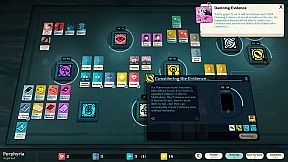
Translation of grimoires yields lore that unlocks new rituals and influences. Summoning spirits and crafting tools require precise card combinations and timing. Rivals and authorities introduce pressure through suspicion and investigation mechanics. Appetites can force difficult decisions that risk the cult's stability. The game emphasizes experimentation, where failure often reveals new information for future runs. A typical playthrough spans 20 to 40 hours depending on exploration depth and legacy pursuit.
Is It Worth Playing?
This title suits players who enjoy complex, experimental card systems and narrative-driven progression in a single-player format. Its focus on personal ambition, occult themes, and branching legacies provides depth for those willing to learn the verb-based interface. The game reached completion with its initial release and subsequent ports, maintaining a consistent experience without ongoing seasonal content. Reception highlights its distinctive approach to storytelling and mechanics, though the learning curve can feel steep at first. Those interested in Lovecraftian atmosphere combined with simulation elements will find repeated value in uncovering different paths and endings.