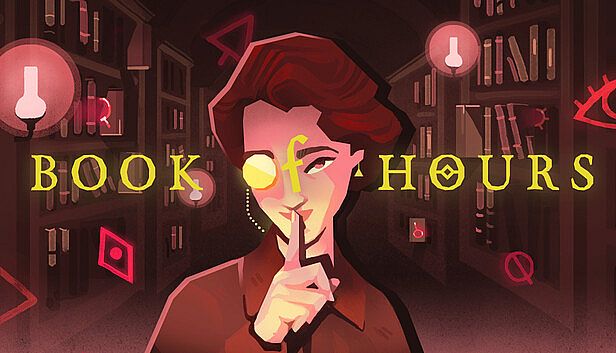














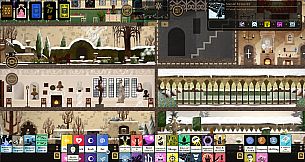
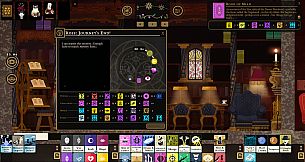
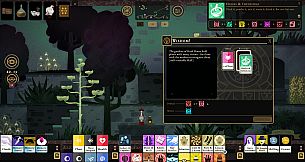
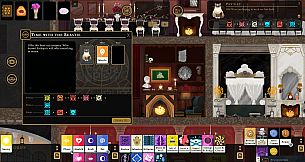
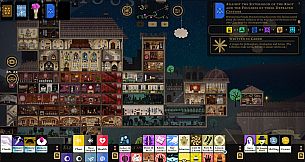
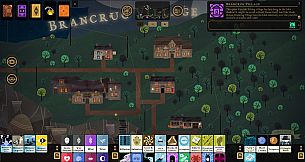
Book of Hours is an indie RPG simulation title that places players in the role of a librarian tasked with restoring a ruined occult library known as Hush House. Set against a backdrop of hidden histories and esoteric knowledge in a 1930s-inspired world, the game emphasizes solitary reflection and careful management over action or conflict. Players rebuild the collection of books and artifacts while piecing together the past of the site and shaping their own narrative through deliberate choices.
Gameplay
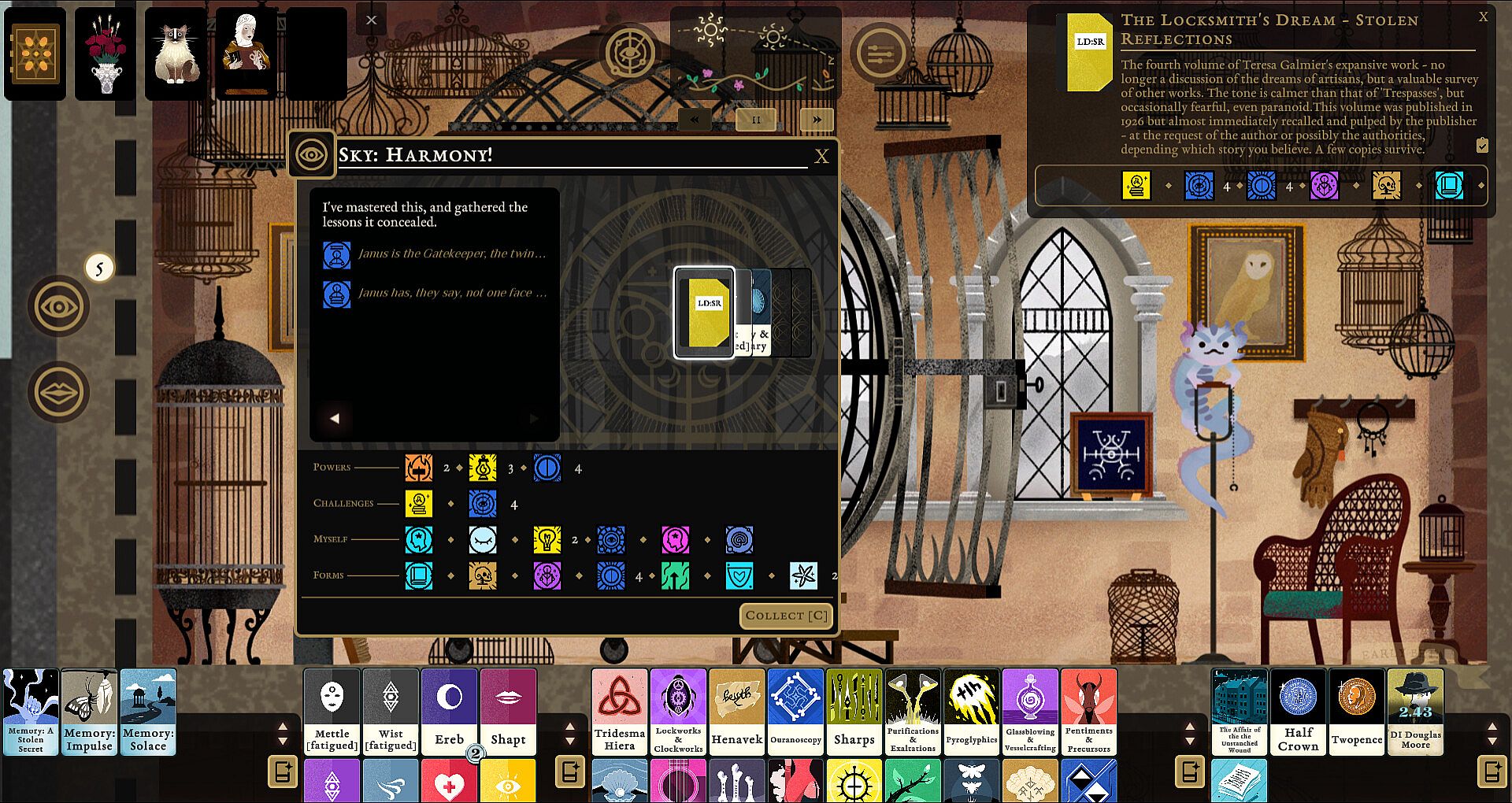
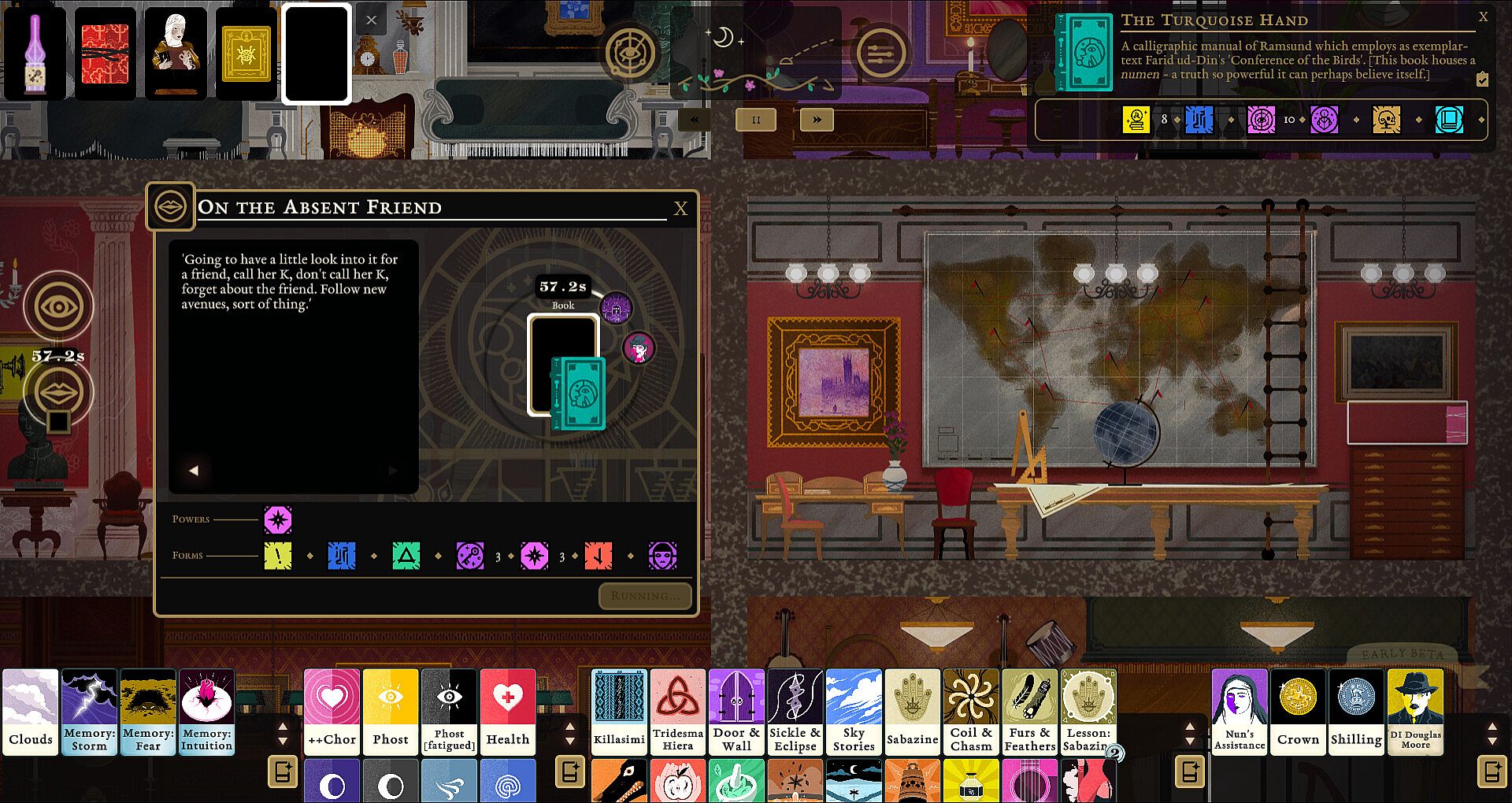
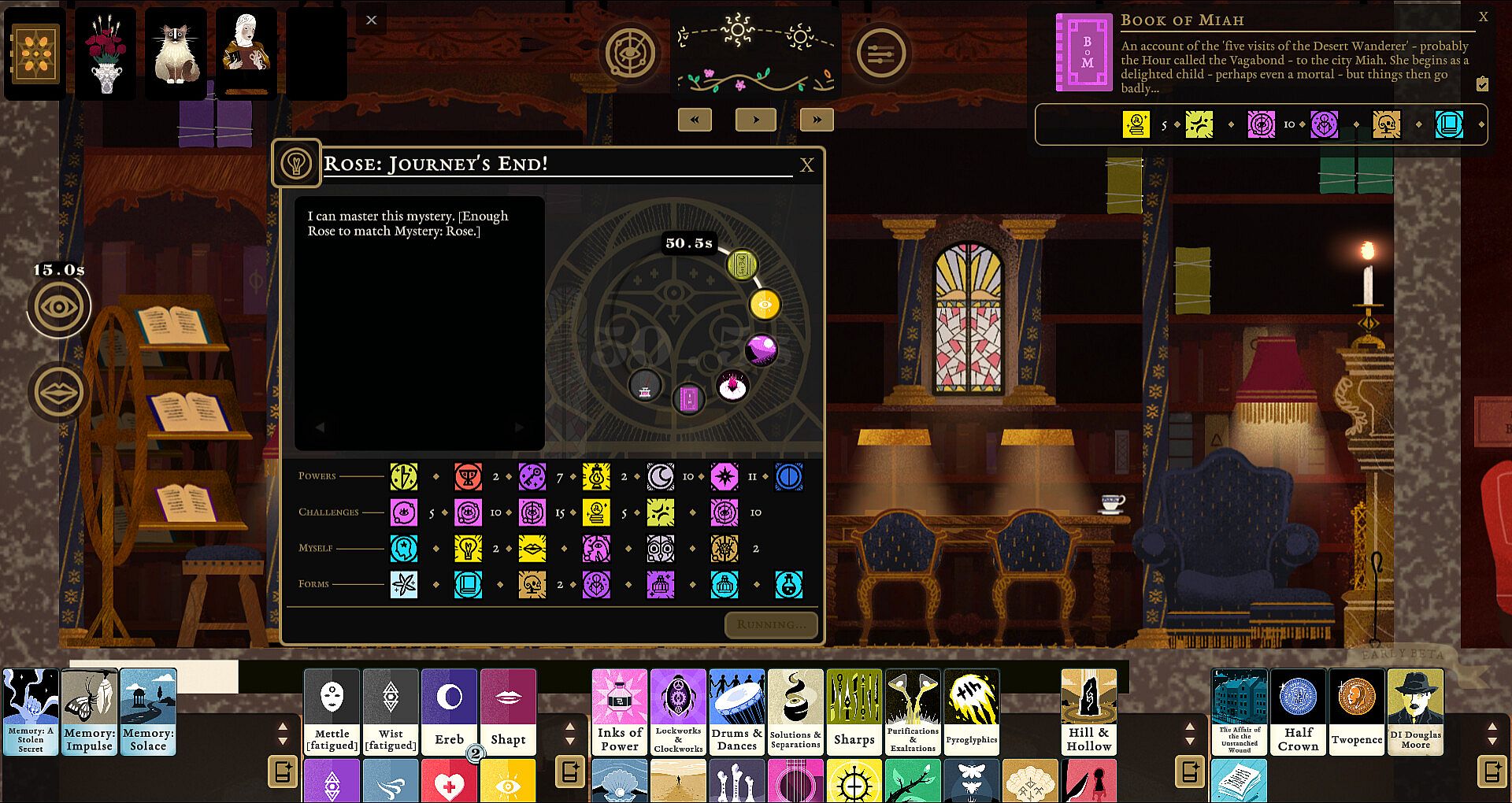
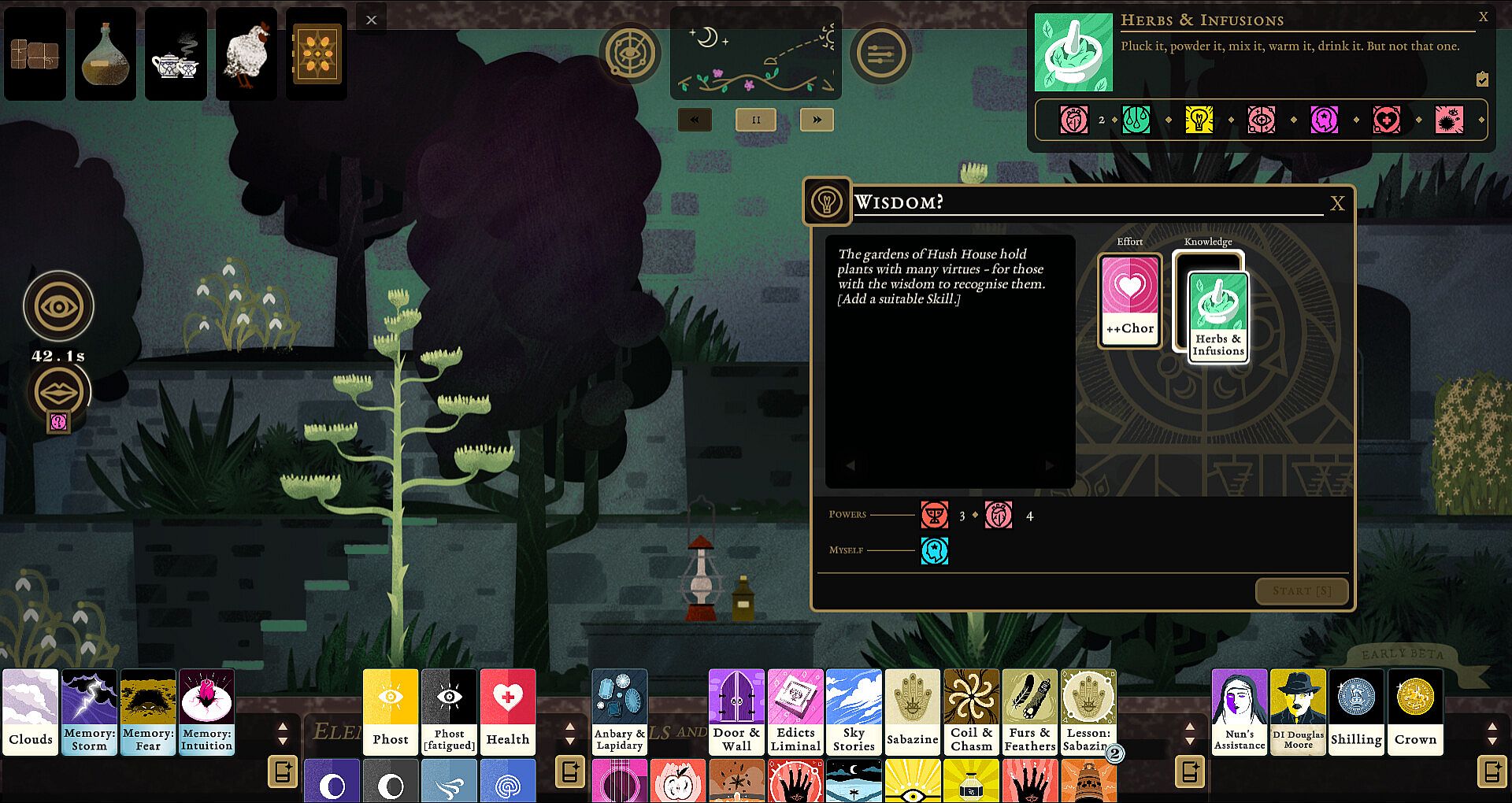
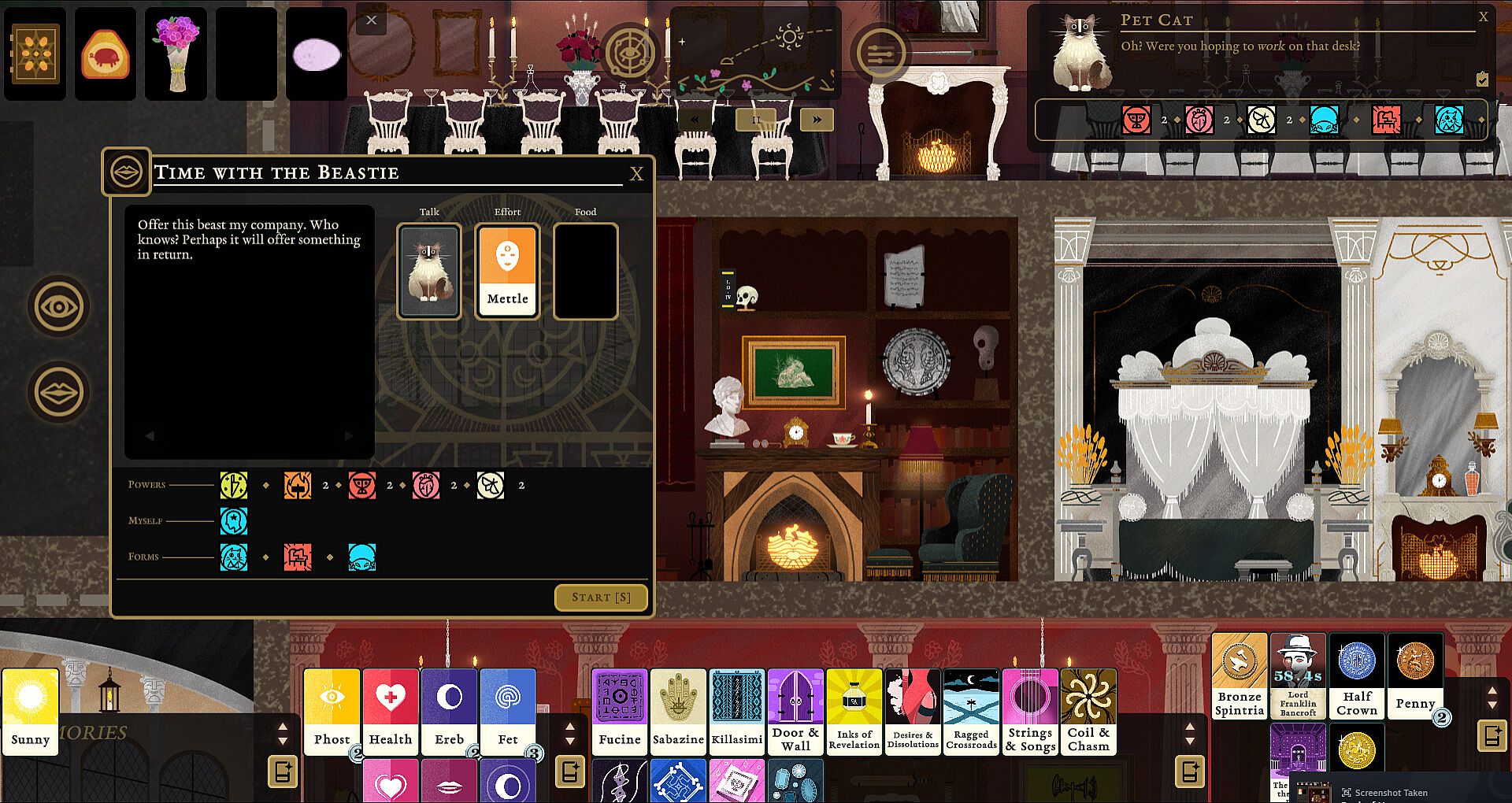
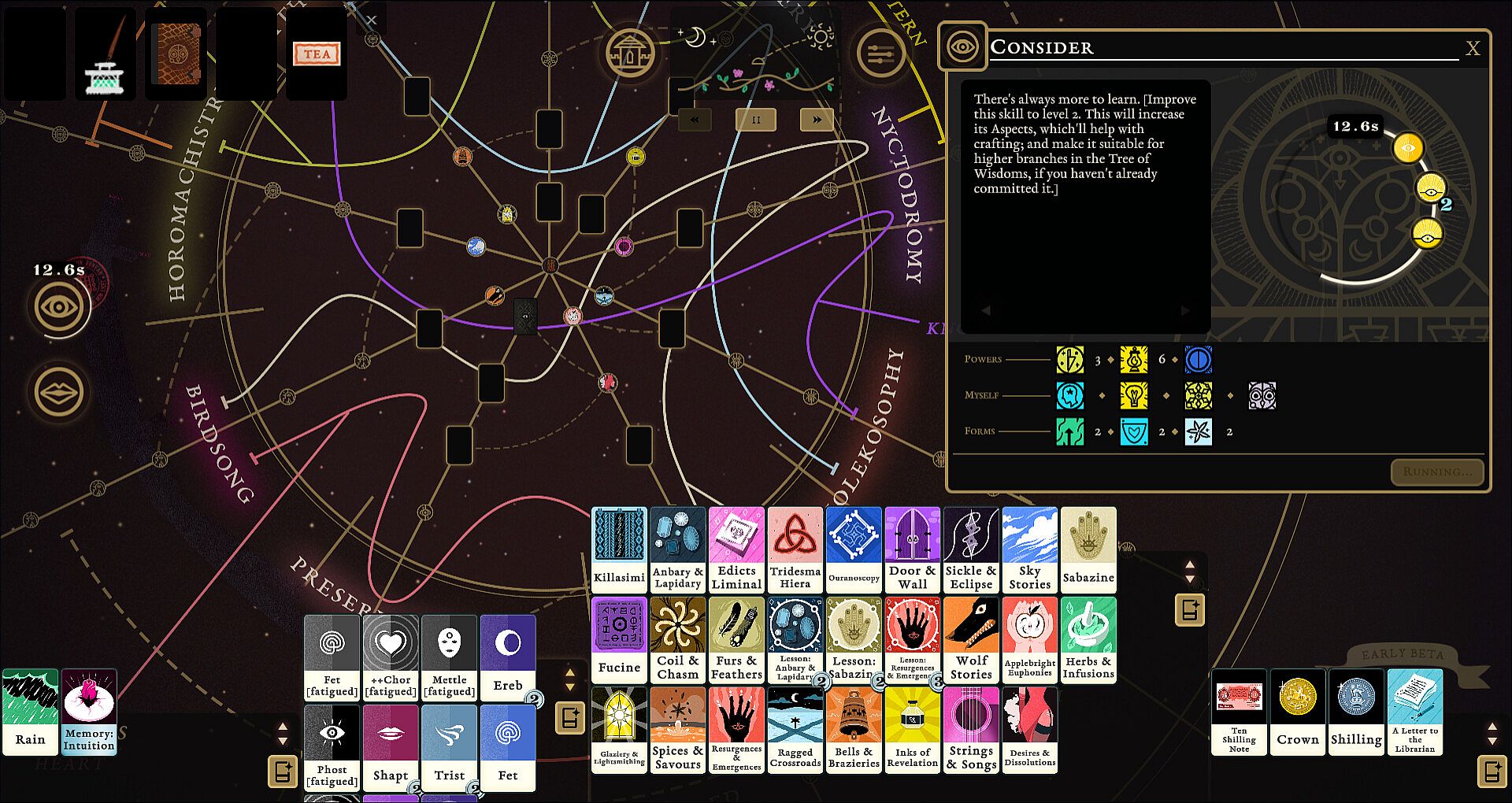
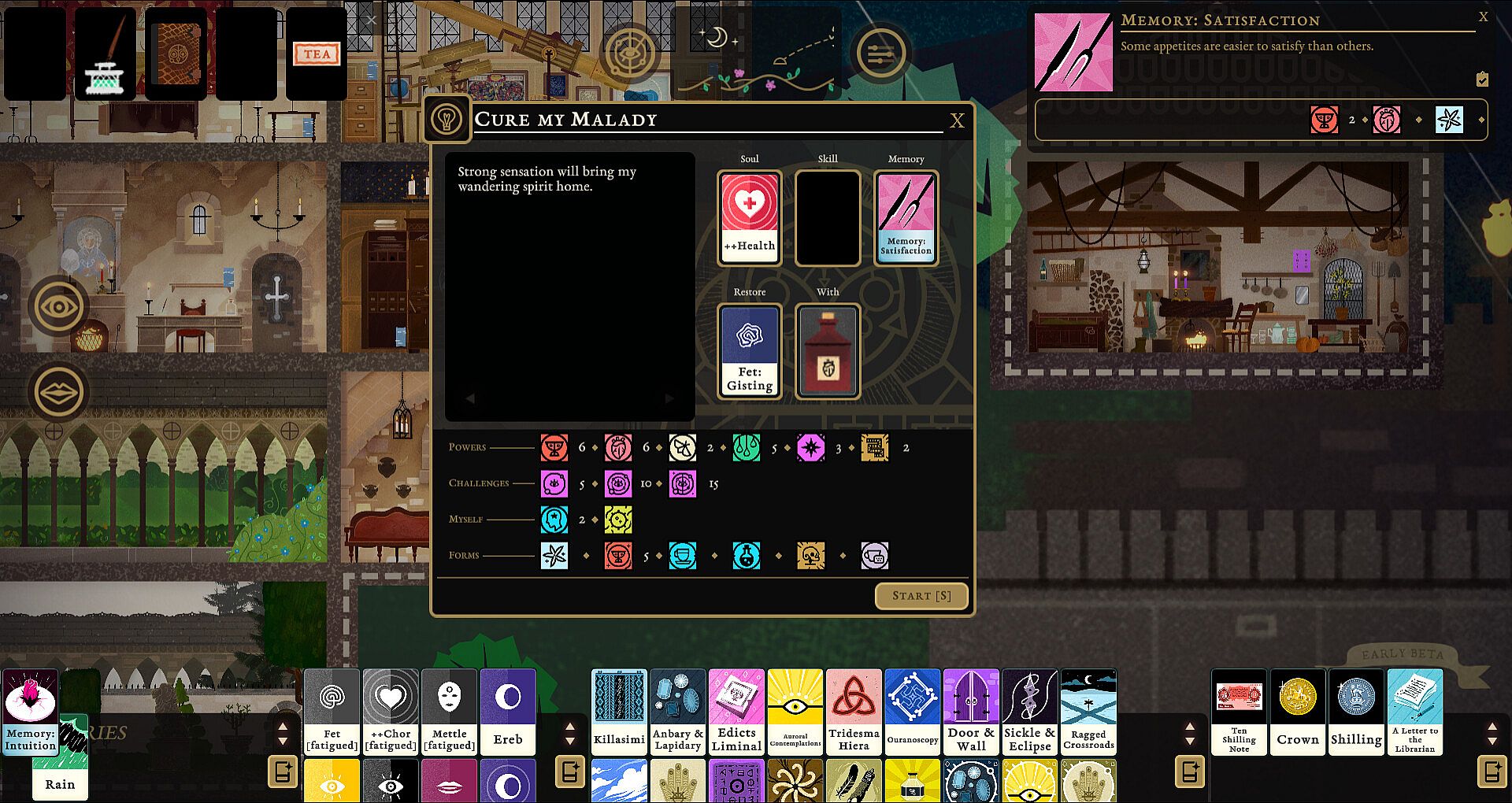
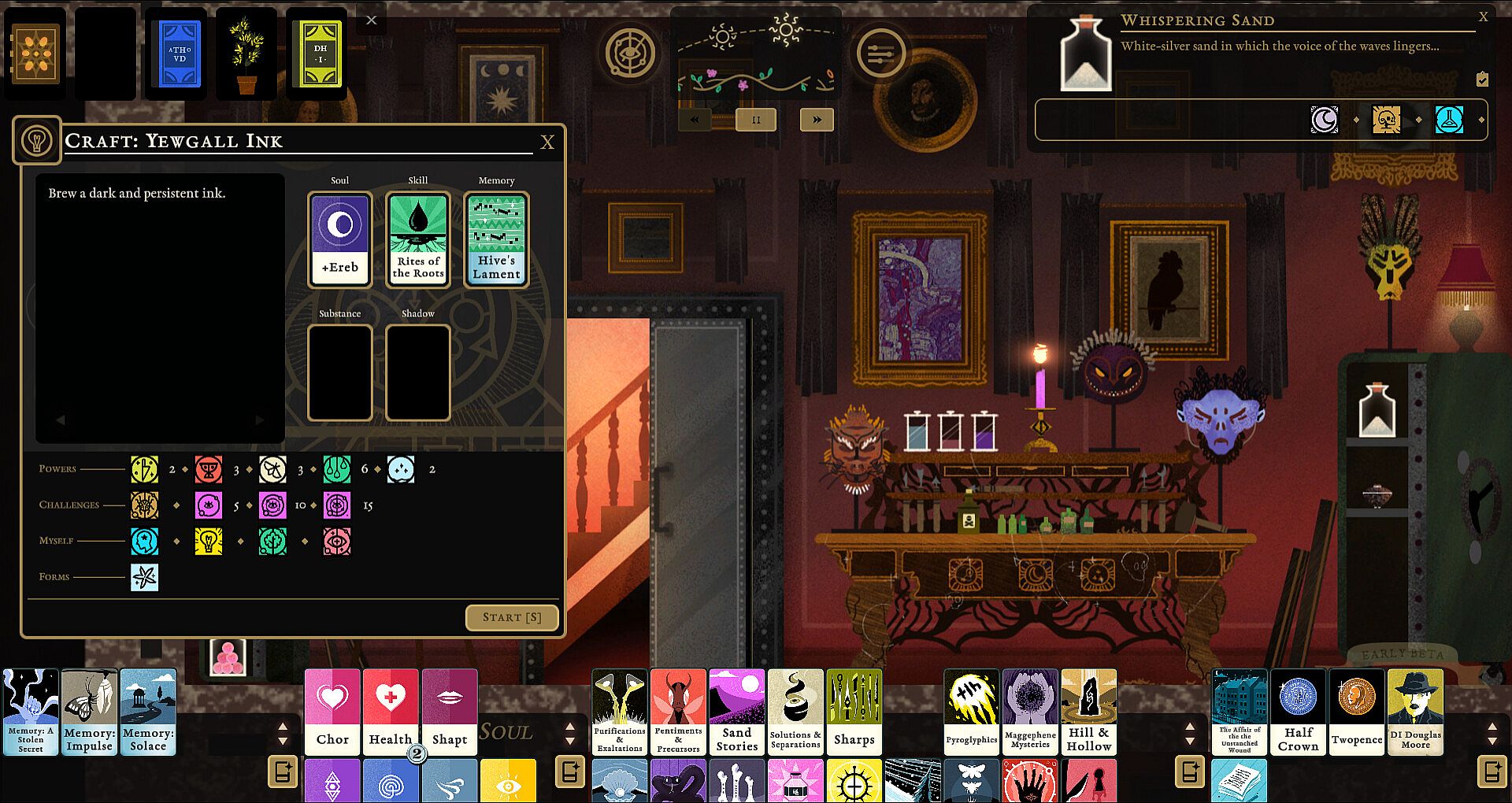
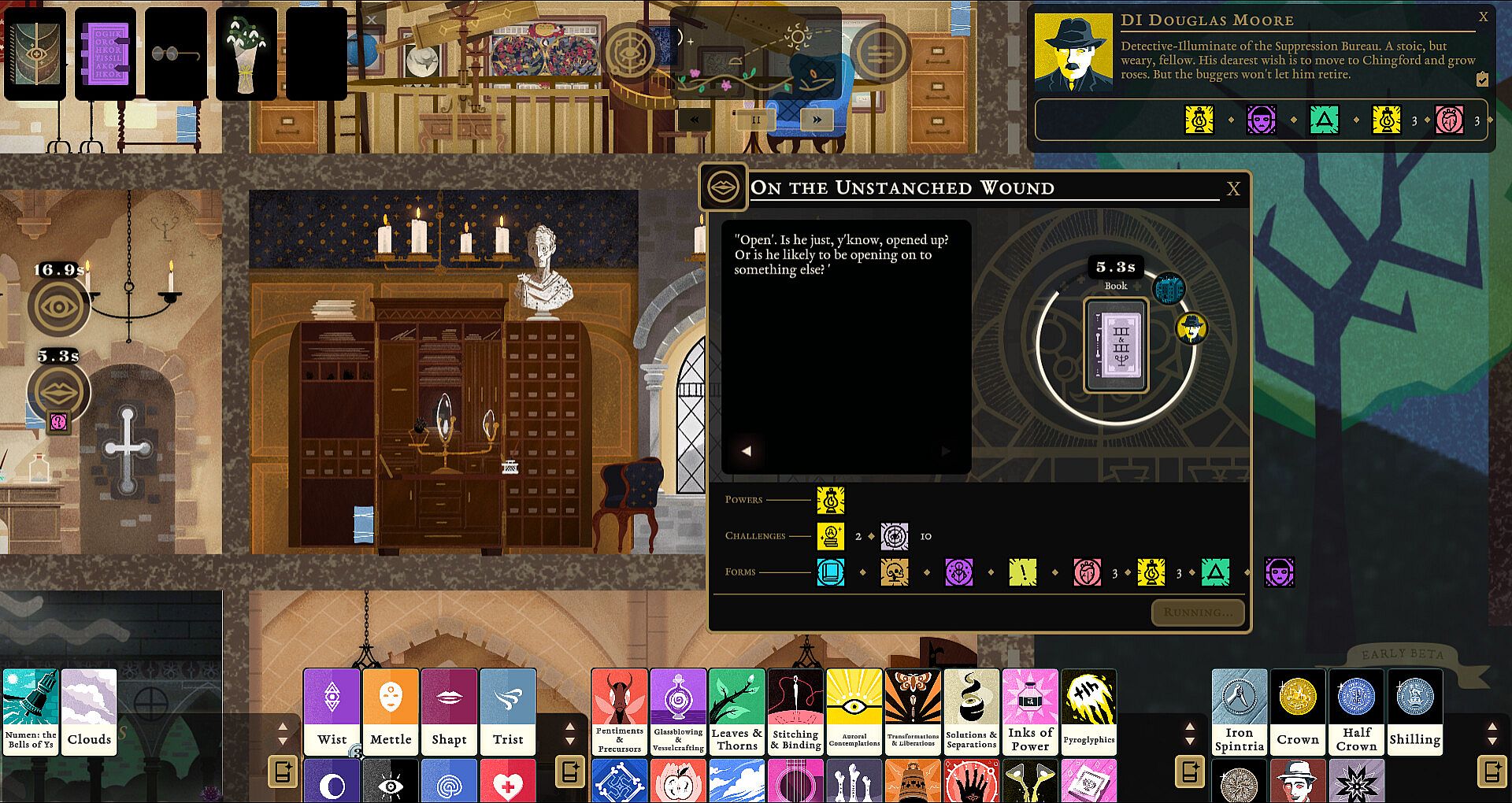
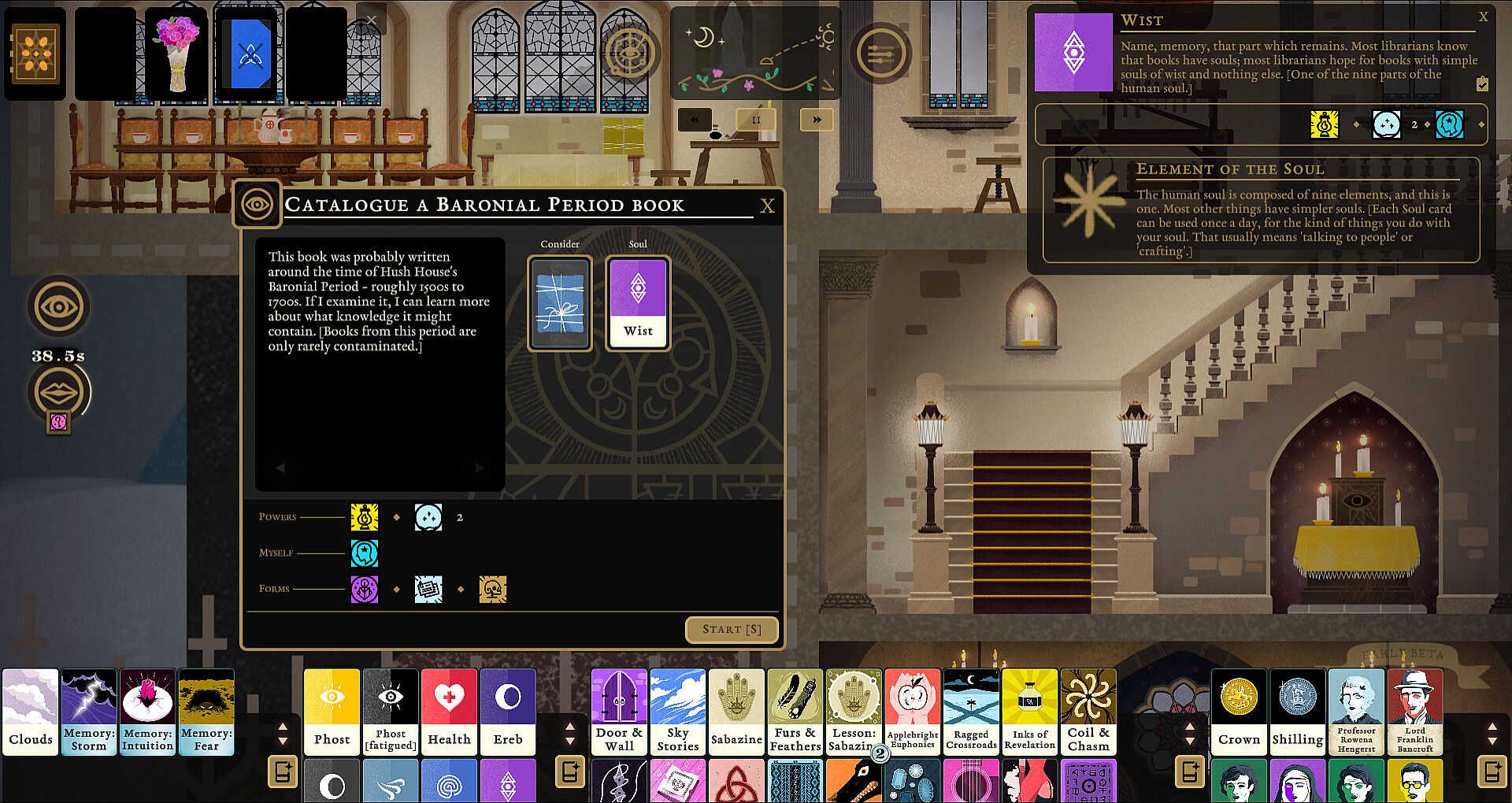
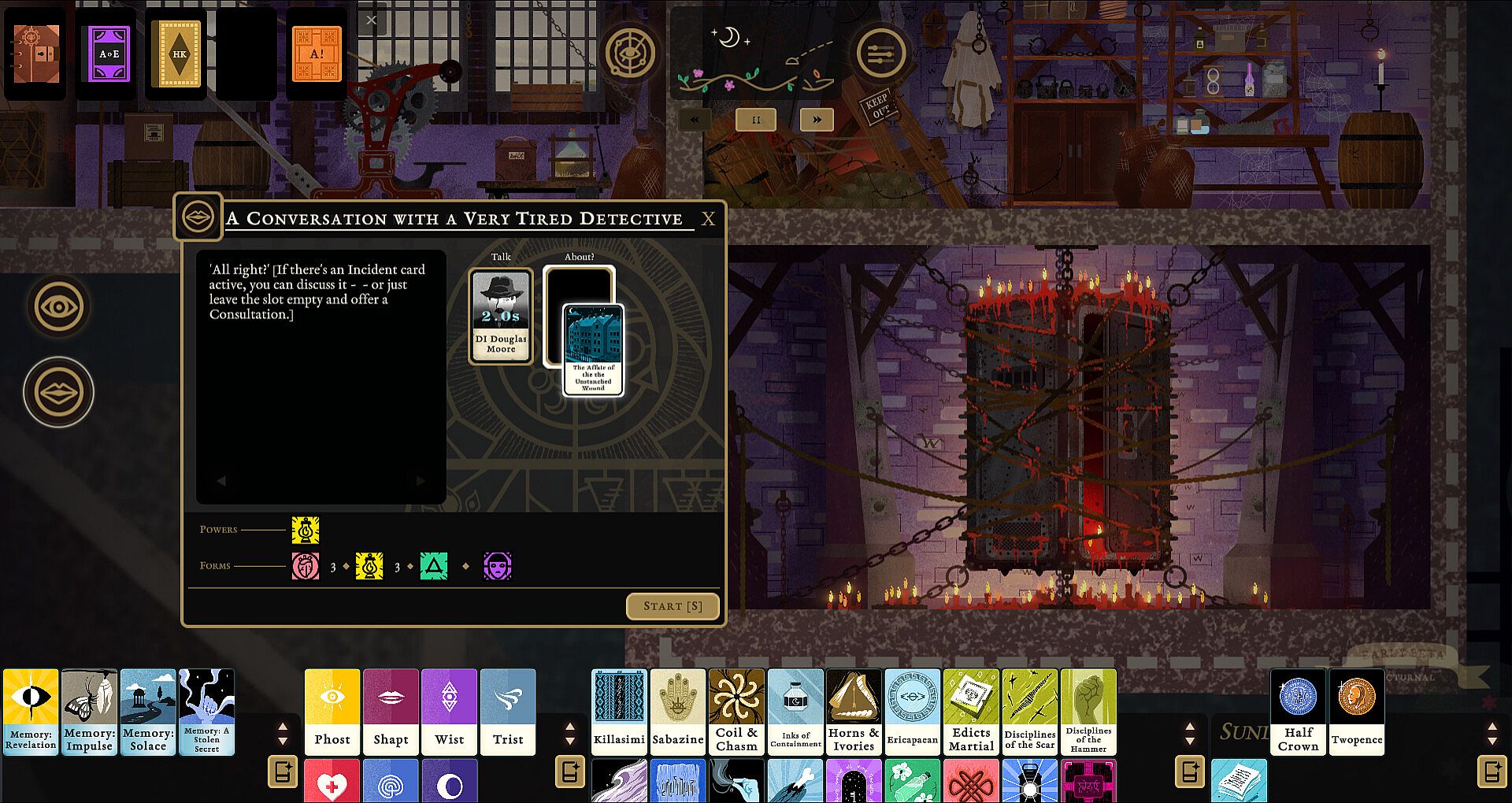
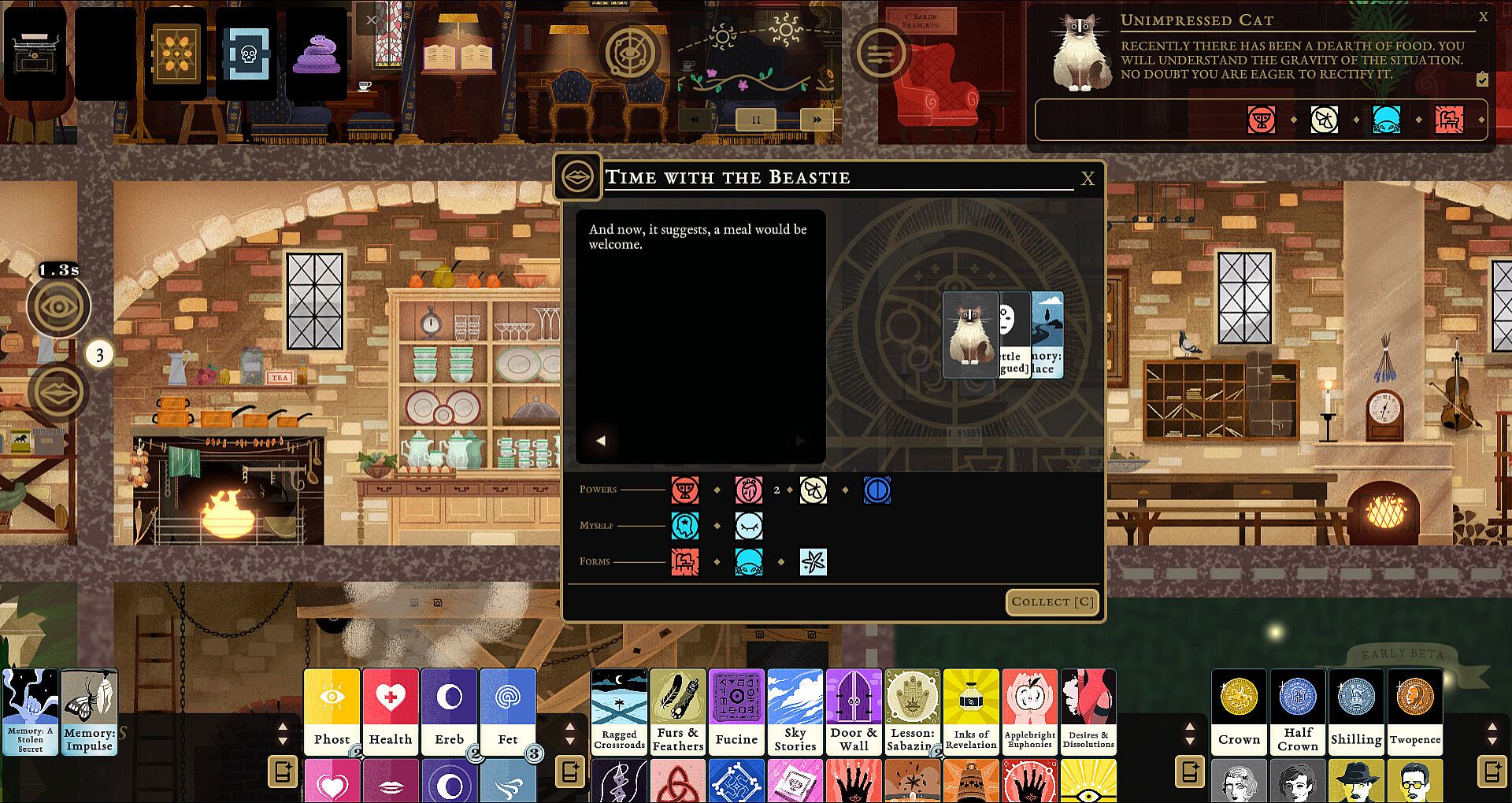
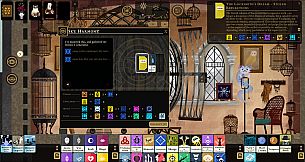
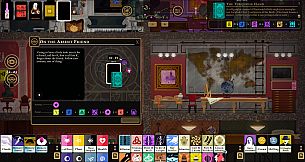
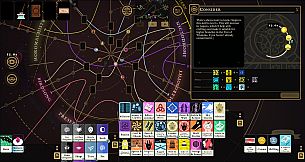
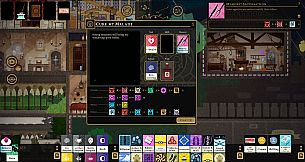
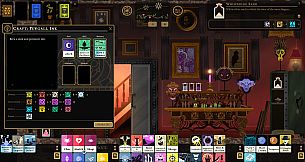
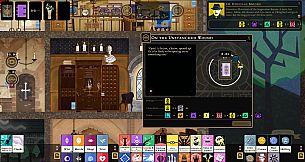
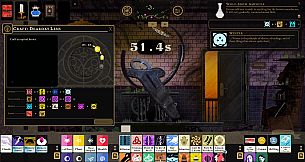
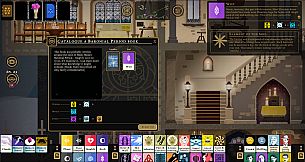
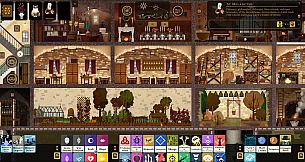
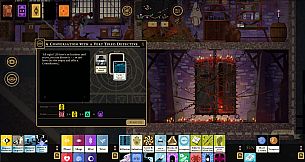
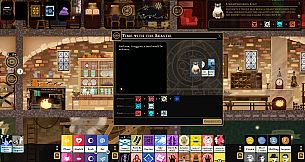
The core loop revolves around exploring the sprawling, crumbling structure of Hush House and its surrounding grounds. Players acquire occult books and curiosities through various means, then investigate their contents using a card-based system. Cards represent elements such as skills, memories, tools, and soul aspects that players place into verb slots to perform actions like considering objects or conversing with others.
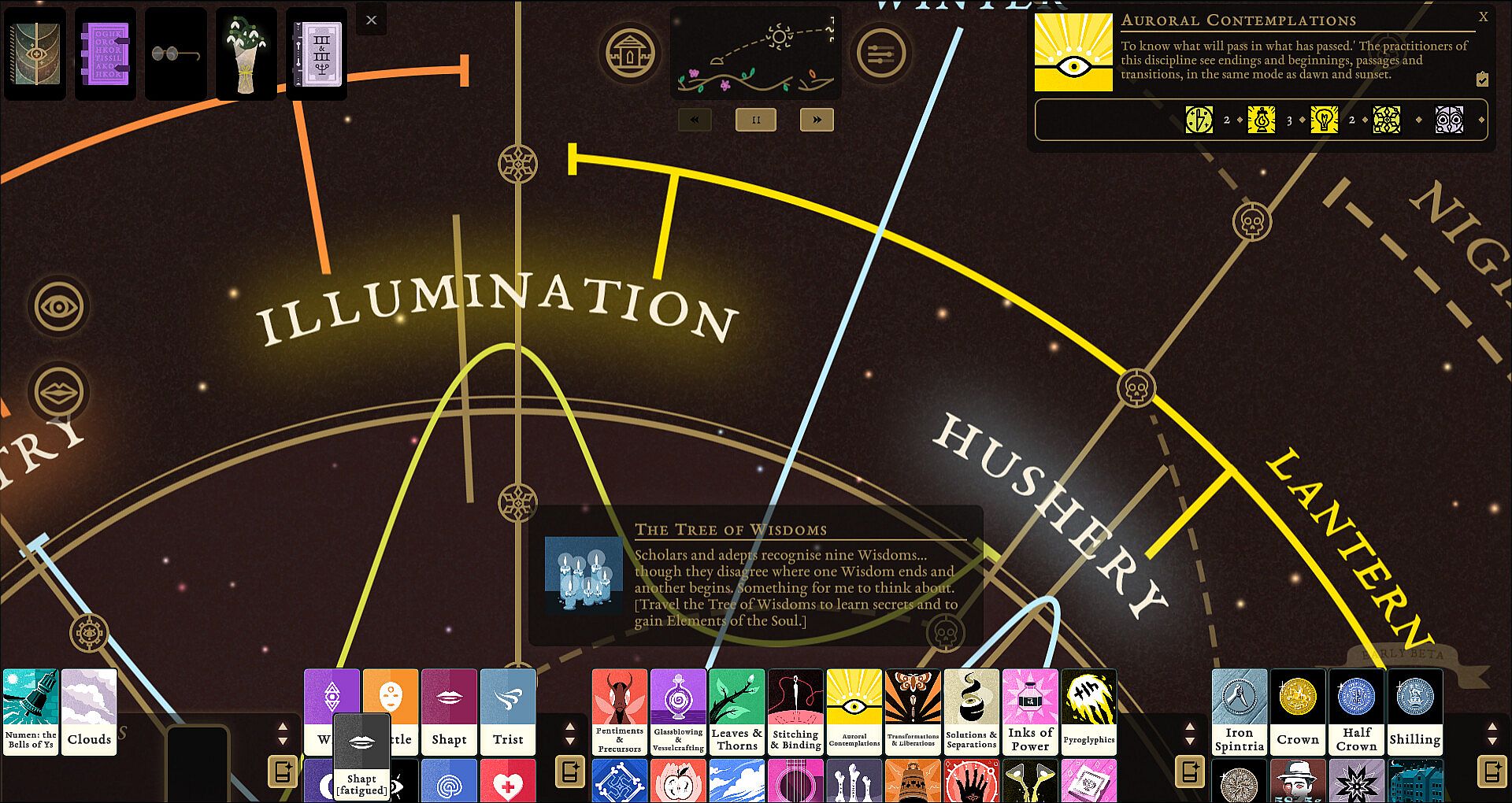
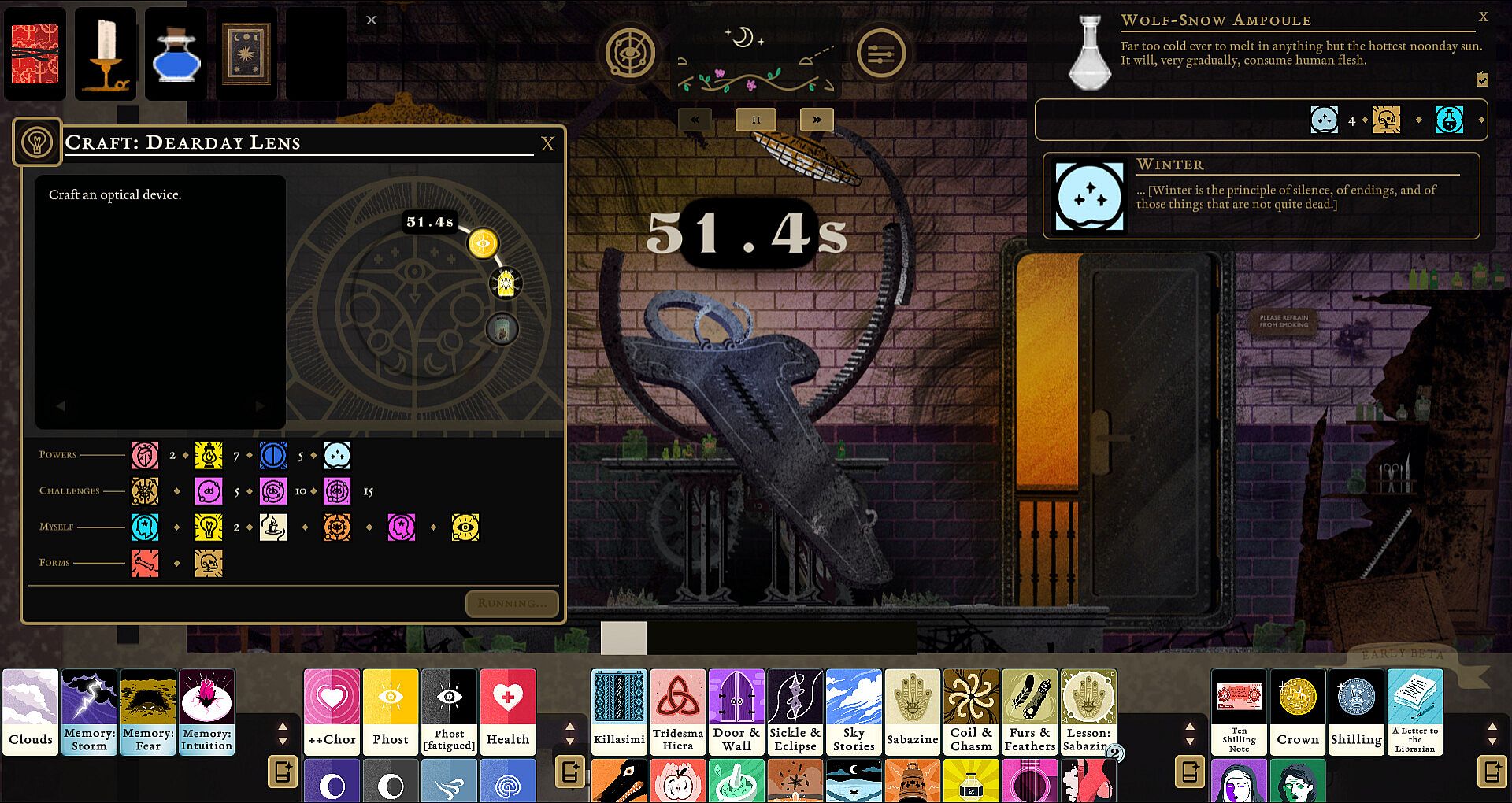
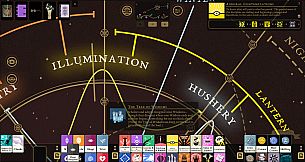
Crafting plays a central role as players combine materials to create inks, memories, and other esoteric items needed for deeper study. Nine Wisdoms form a progression tree that players advance by studying books and unlocking connections, while nine Elements of the Soul must be developed and balanced to access new capabilities. Visitors arrive seeking assistance with their own inquiries, and helping them yields rewards that further the library's growth.
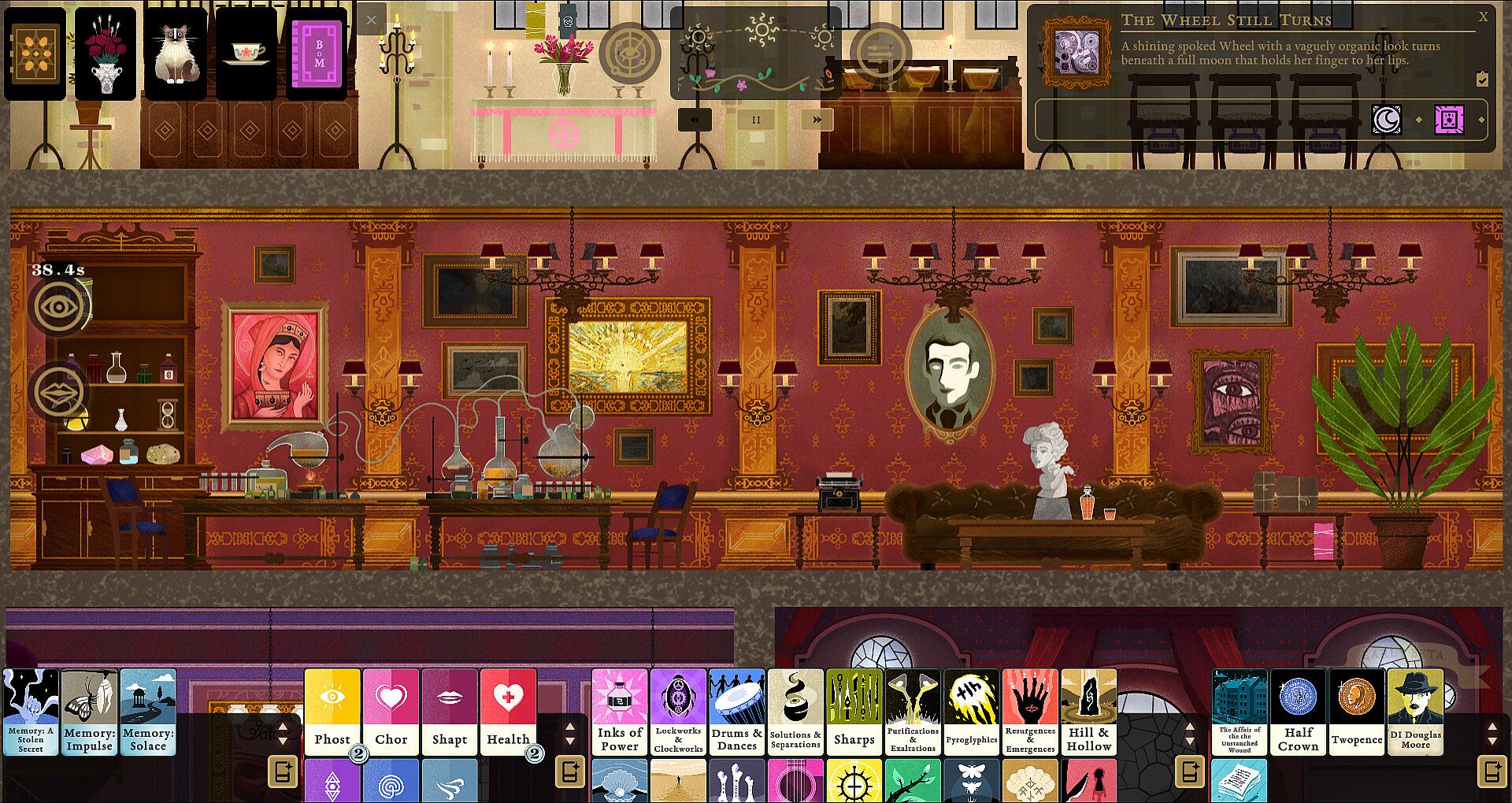
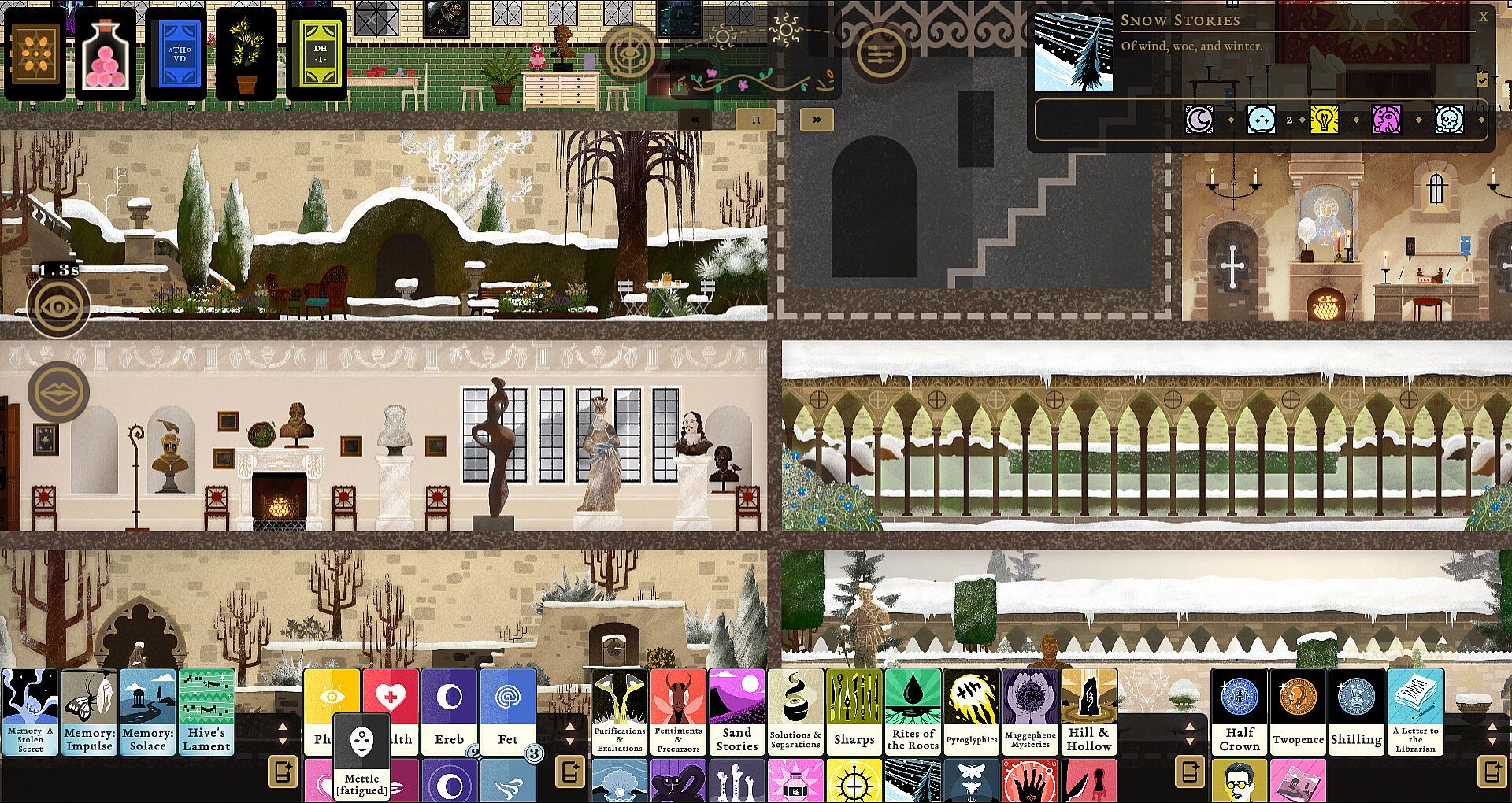
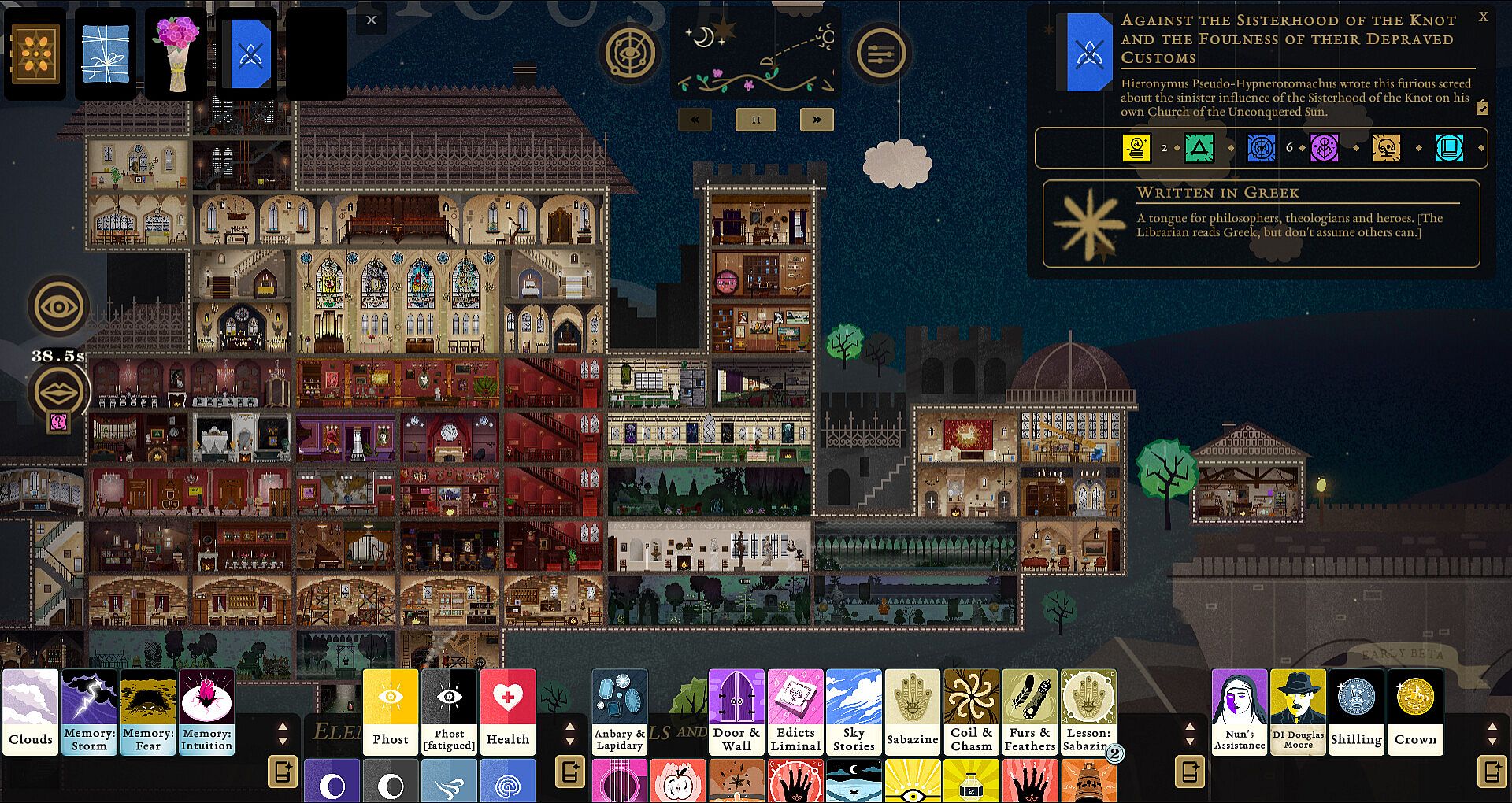
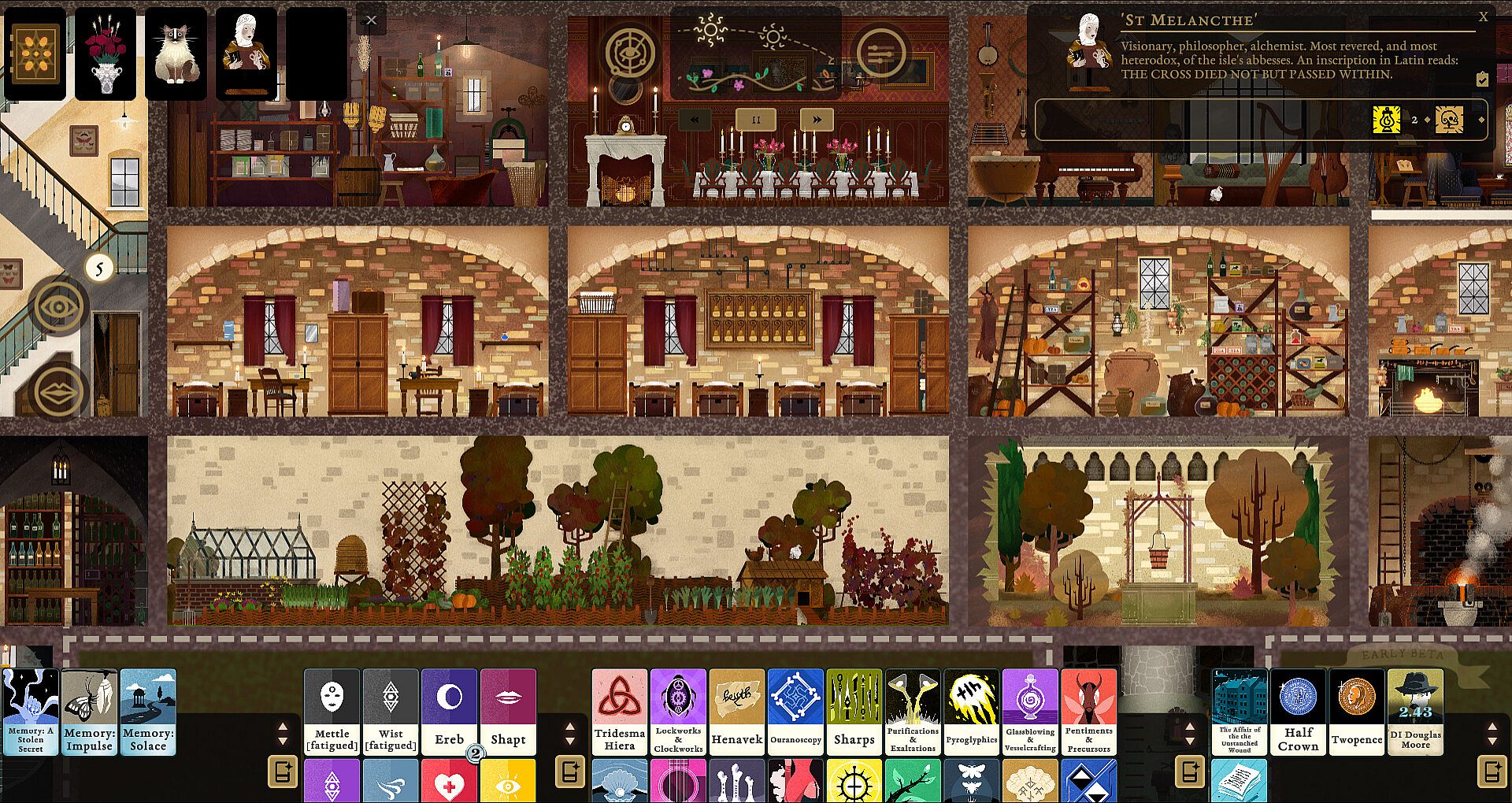
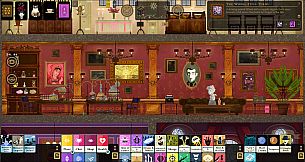
Restoration involves opening new rooms, furnishing spaces, and gradually repairing the vast edifice built on ancient abbey foundations. The process unfolds at a measured pace without time pressure or combat, allowing focus on cataloguing, experimentation, and uncovering layers of history embedded in the stones and texts.
Game Modes
Book of Hours operates as a single-player experience centered on one extended campaign that can span 20 to 40 hours or extend to 100 hours depending on exploration depth. Replayability stems from nine distinct legacies that define the player's background and starting conditions. Each legacy alters the initial circumstances and available opportunities, such as the Magnate who turns away from wealth in pursuit of quiet or the Archaeologist who flees a curse uncovered during digs. More esoteric options include the Symurgist and the Twiceborn, each opening different paths through the narrative and mechanics.
These starting choices influence how history unfolds within the library and beyond its walls, encouraging multiple playthroughs to experience varied stories and outcomes. The game contains no separate competitive or cooperative modes, keeping the emphasis on personal discovery and incremental progress through the occult systems.
The Setting and Narrative
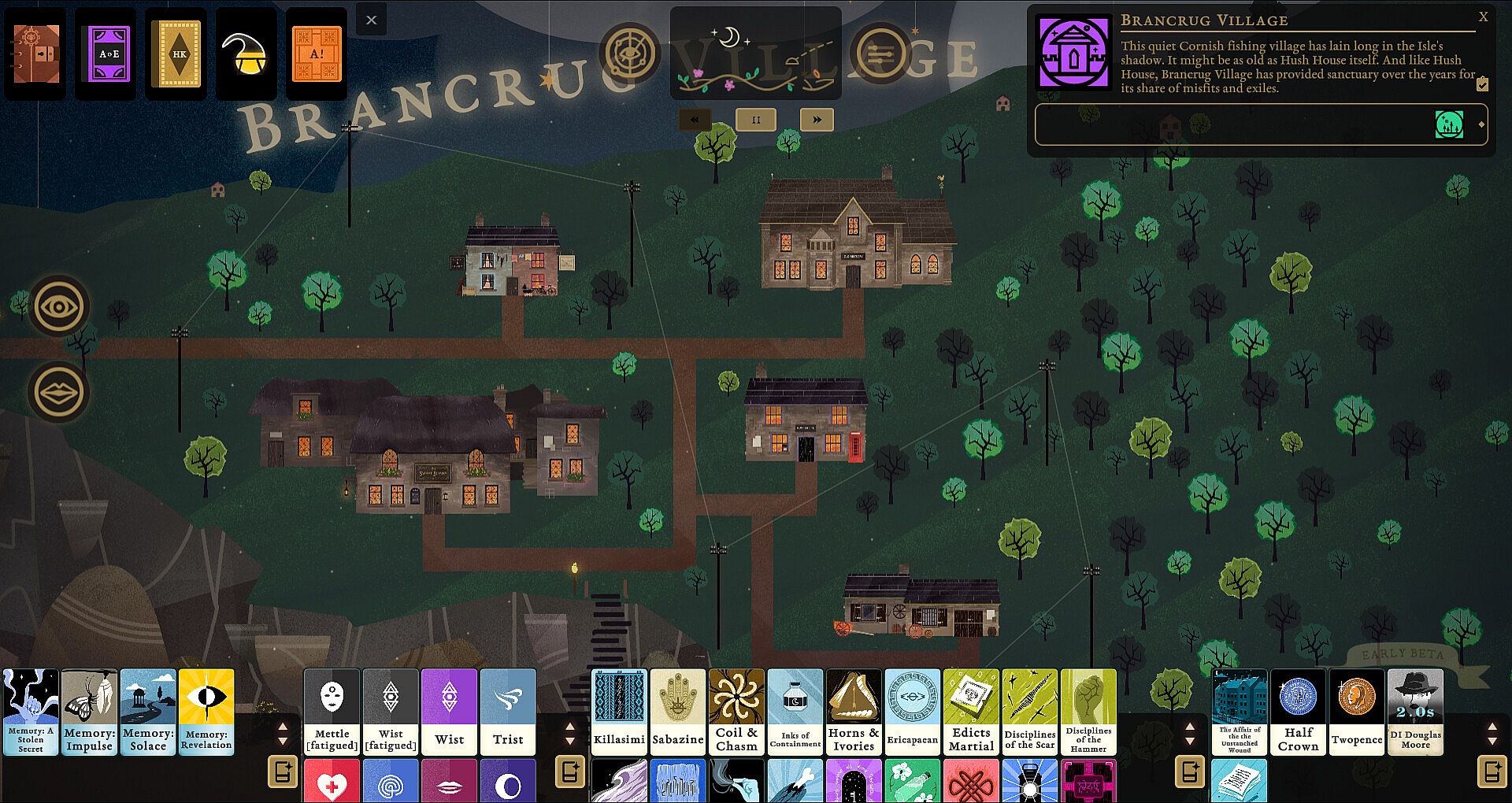
Hush House stands as a fortress of knowledge that endured for fifteen centuries until a devastating fire left its collection in ruins and its last librarian absent. Players step into this solitude as the newest librarian, using unique talents to reorganize books, customize living spaces, and peel back centuries of occult lore. Influence extends outward as decisions shape how events are recorded and how visitors pursue their goals.
The world draws from secret histories governed by a pantheon of Hours, revealed gradually through study and interaction. This framework supports a melancholy tone where quiet contemplation and careful curation drive the experience forward.
Is It Worth Playing?
Book of Hours suits players who appreciate dense, intricate single-player systems and the satisfaction of mastering opaque mechanics over time. Its combat-free design and focus on crafting, restoration, and narrative branching create a distinctive rhythm that rewards patience and note-taking. Reviews highlight the elegant integration of theme with gameplay, the depth of interlocking systems, and the high-quality artwork and prose that enhance the occult atmosphere.
Some players note the initial learning curve and the challenge of tracking numerous elements in larger sessions, yet the forgiving nature of decisions and the absence of permanent setbacks allow steady progress. The game remains actively supported with expansions that add further depth to visitor stories. Those drawn to thoughtful indie RPG simulations with strong emphasis on personal history and library management will find substantial value in its deliberate pace and replay potential through the legacy system.