

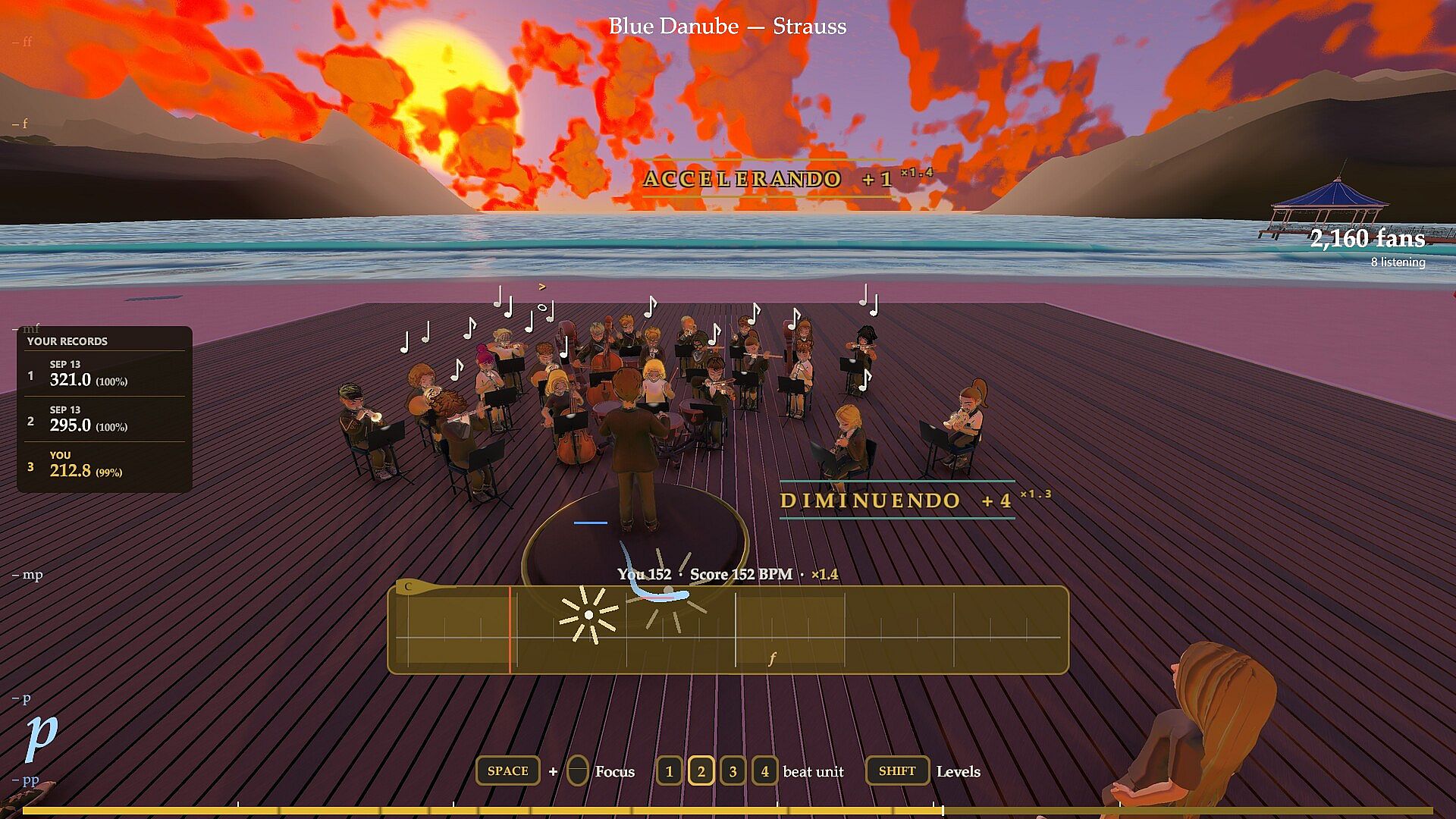
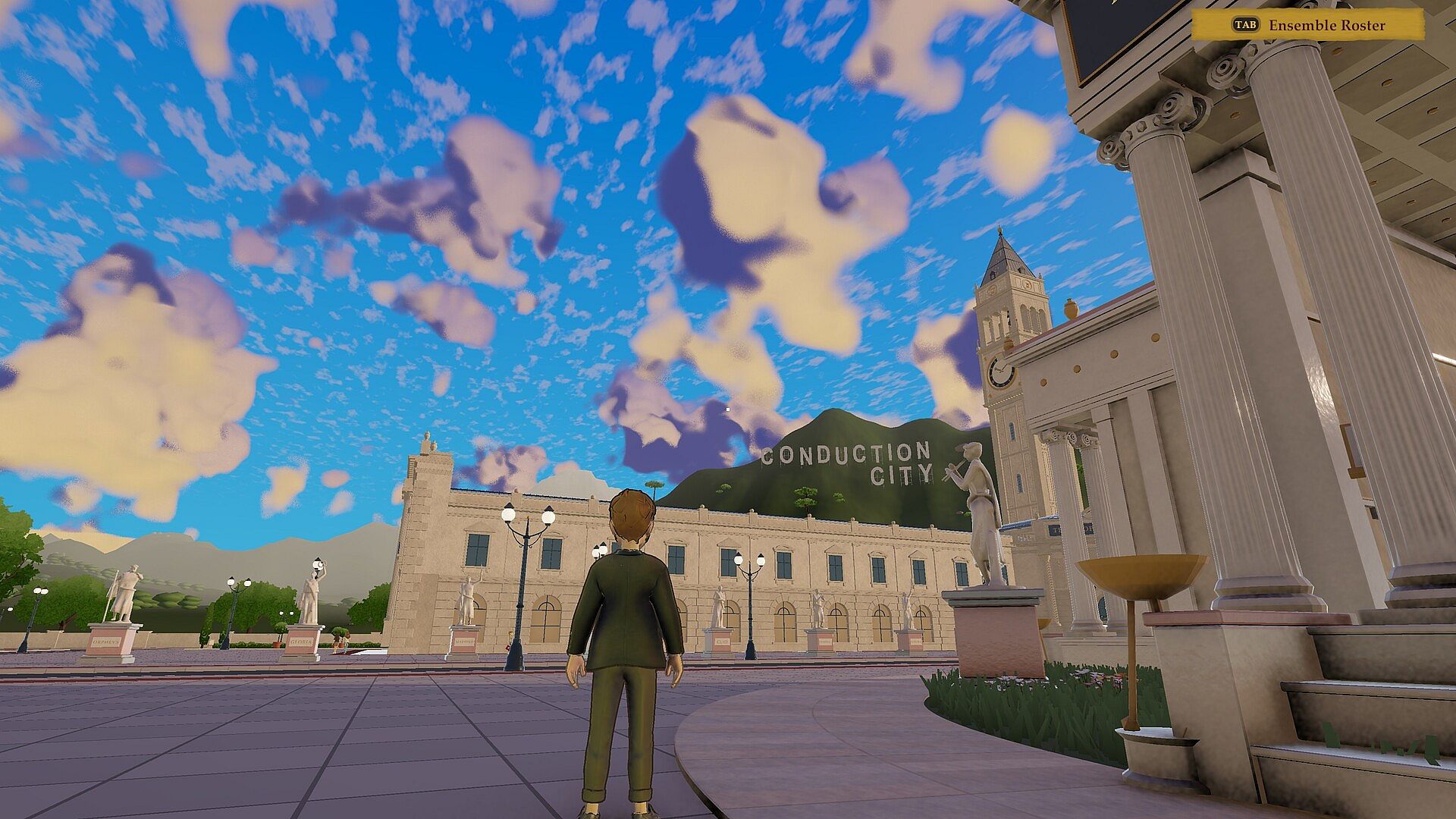
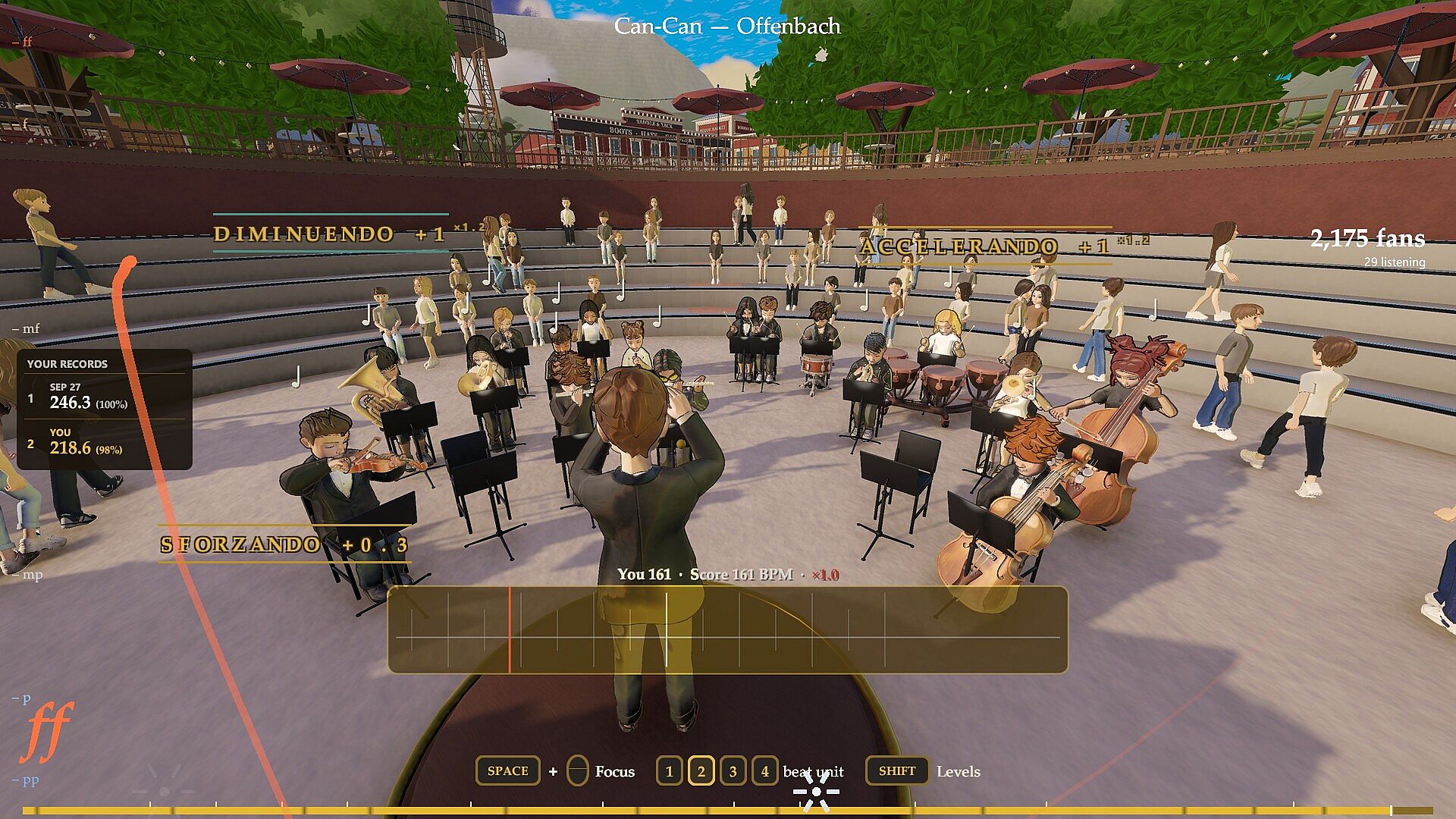
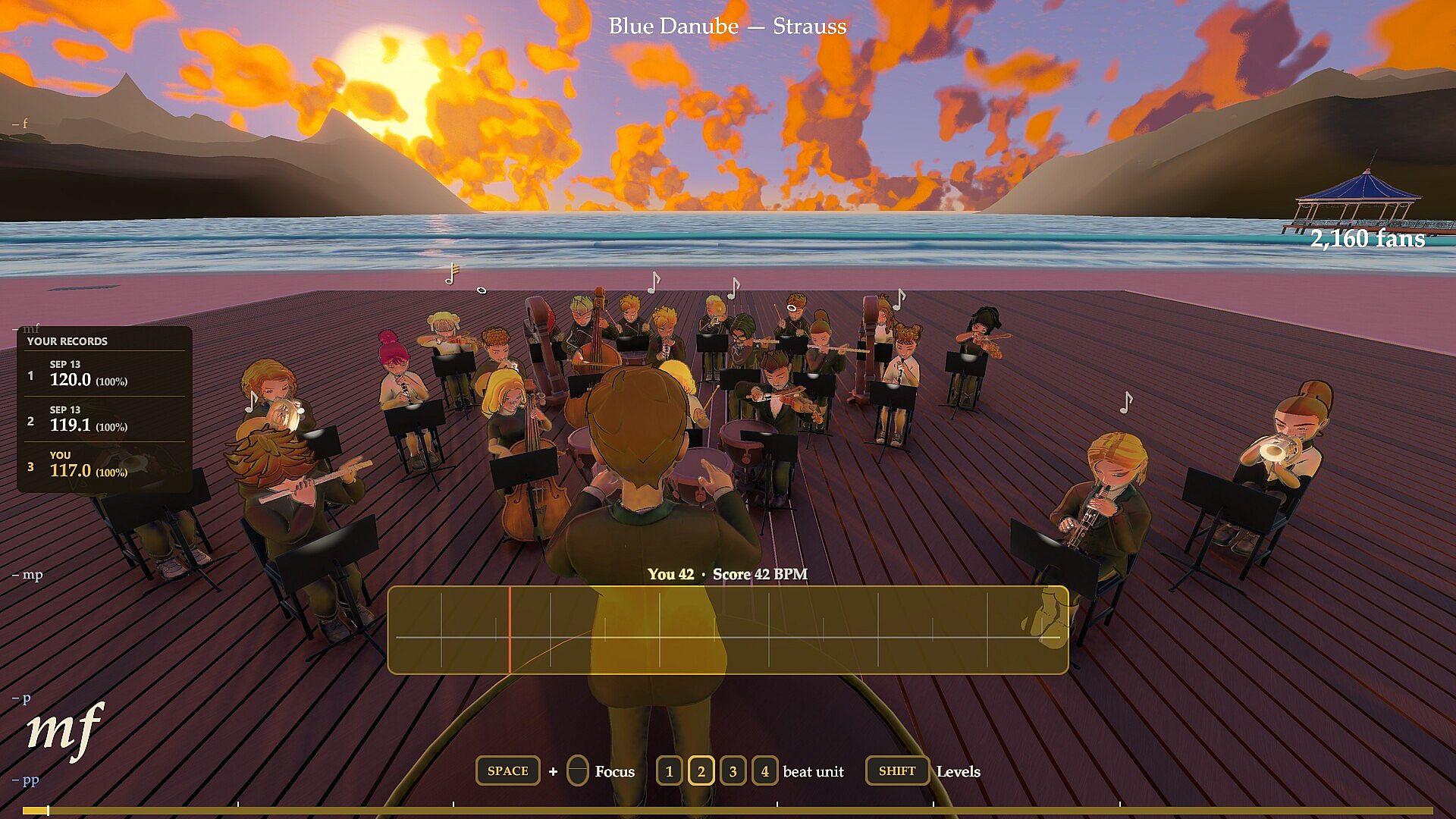
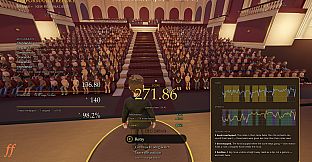
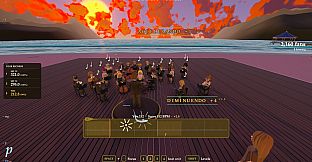
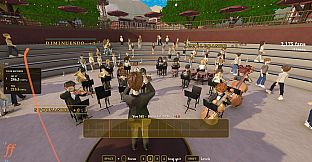
Conduction 2 is a casual simulation game on PC that places players at the podium of a living orchestra. Instead of following preset note tracks common in rhythm titles, the experience centers on interpreting classical pieces through mouse gestures that control tempo, volume, accents, and phrasing in real time. The game draws from a selection of well-known works by composers such as Mozart, Tchaikovsky, Strauss, and Elgar, allowing free-form direction without a single correct approach.
Gameplay
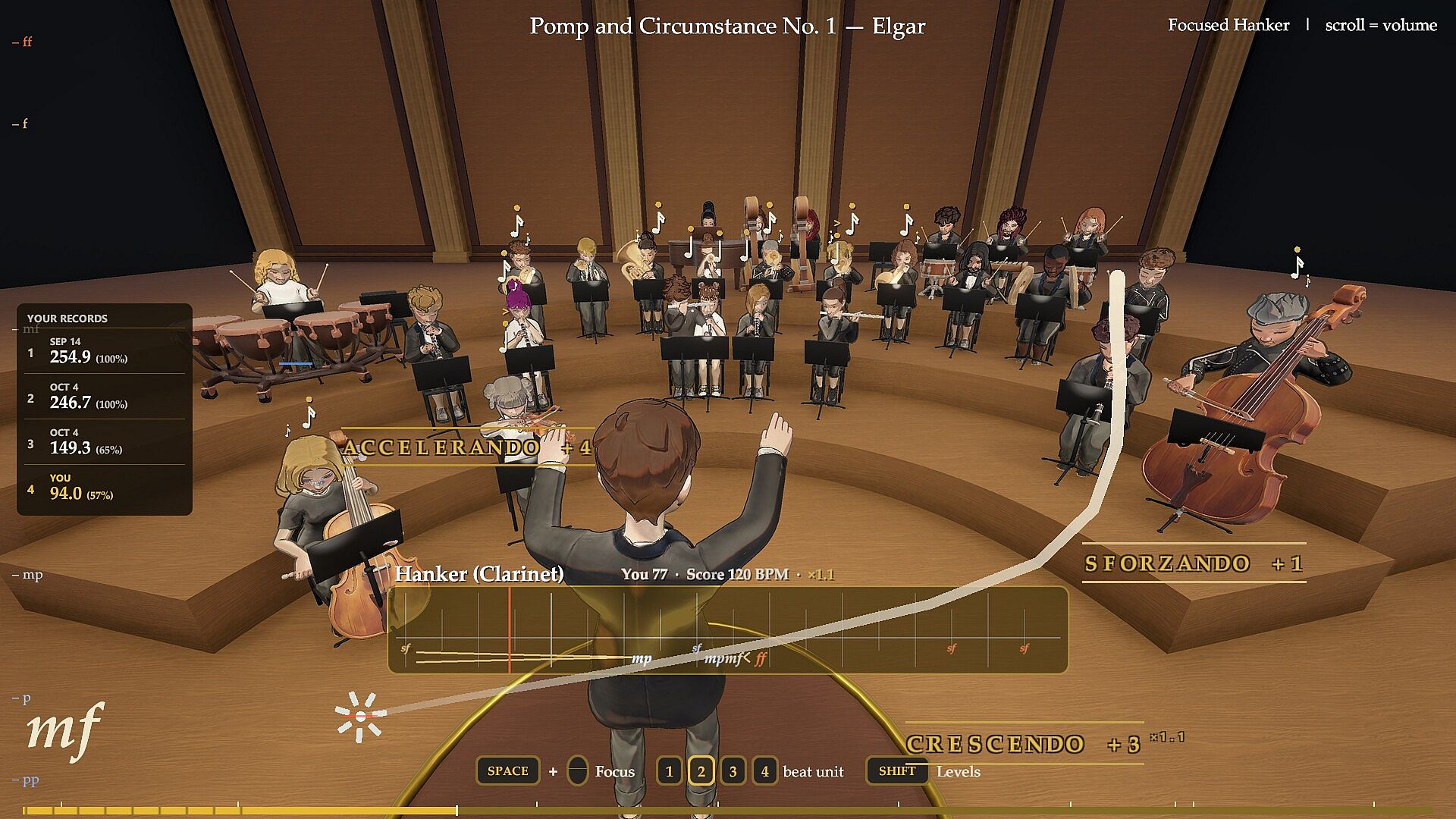
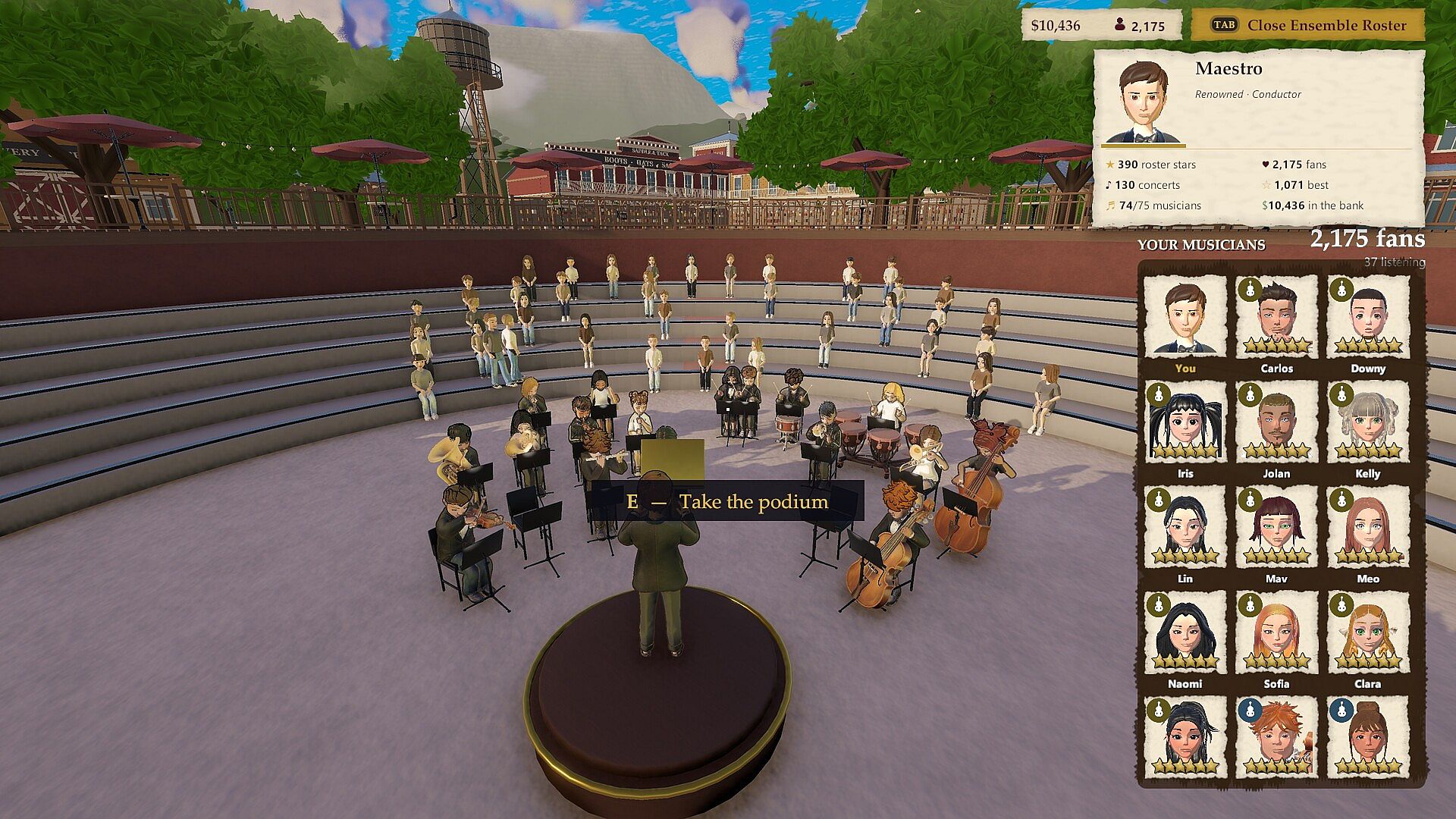
The core loop revolves around conducting sessions where mouse movements directly shape the performance. A downbeat initiates the music, while stroke speed sets the pace and gesture size adjusts dynamics from full volume to near silence. Sharp motions create accents, pauses trigger fermatas that hold notes until released, and flexible timing enables rubato effects that stretch phrases before returning to the pulse. Each musician in the ensemble has a distinct name, appearance, and skill level that improves with repeated performances.
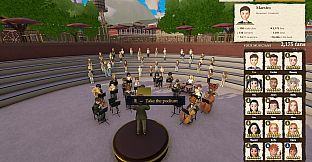
Players hire and position individual musicians to expand the group from small ensembles to a complete symphony orchestra. Larger lineups unlock access to more demanding repertoire. Progress comes through repeated practice that refines both player control and ensemble quality, with the mouse serving as the sole input for all expressive decisions.
Game Modes
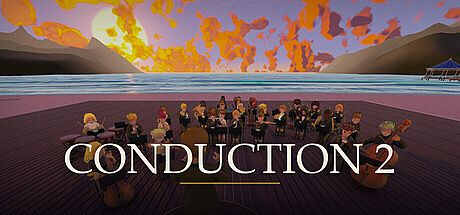
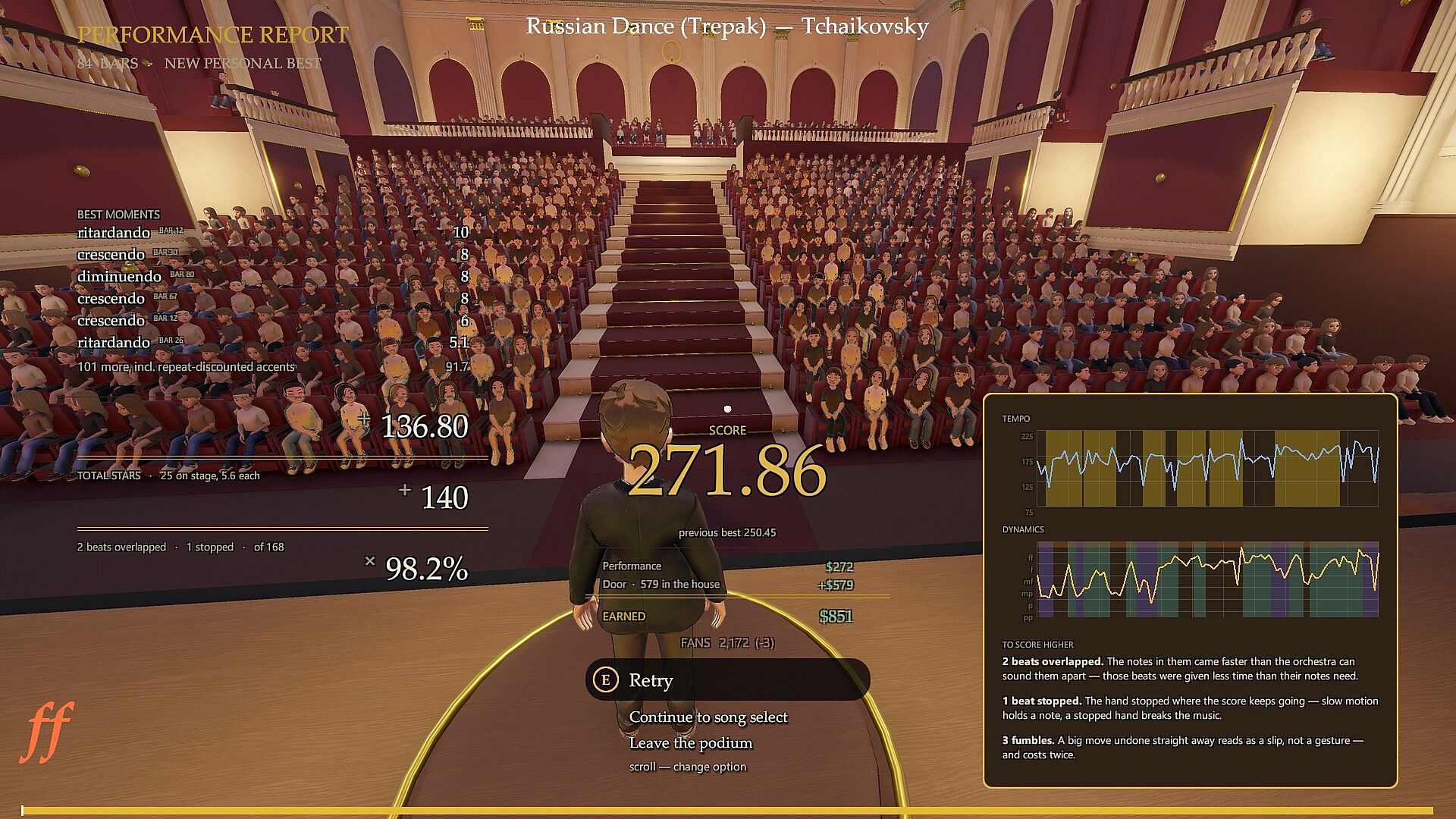
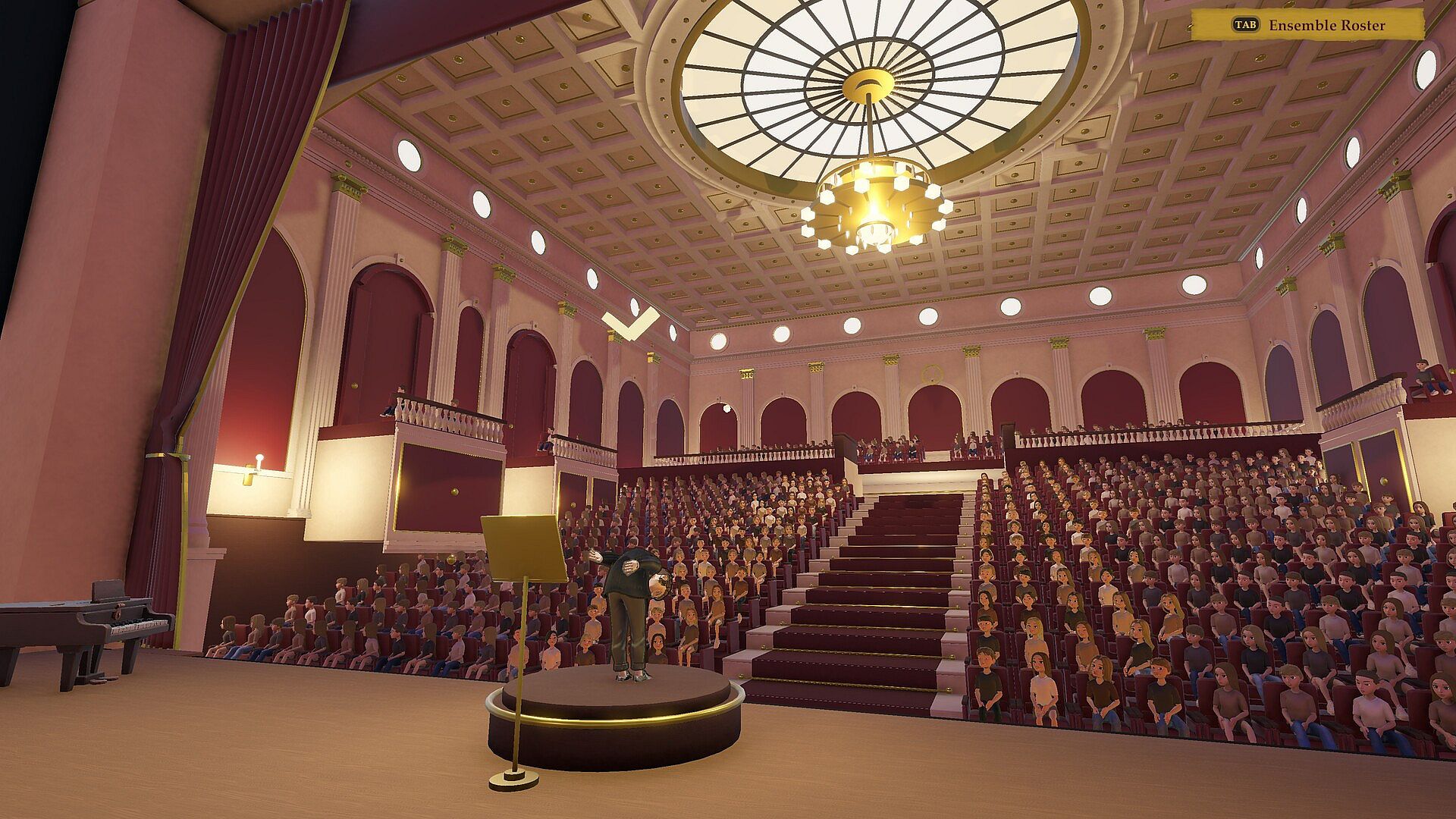
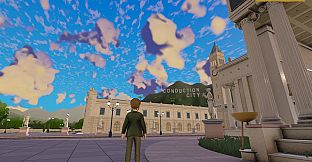
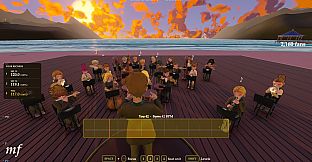
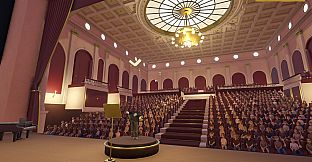
Performances take place across a progression of venues that reflect growing reputation. Early sessions occur at an open-air Bowl location to attract initial fans, followed by a seaside Palm Beach stage, and eventually the main concert hall. Each run receives evaluation based on expression and technical control, with top results saved for personal comparison and record attempts.
The experience culminates in a Graduation Day event featuring a full audience joining in a choral performance of Elgar's Pomp and Circumstance March No. 1. A separate import feature supports loading any MIDI or MusicXML file for custom conduction with the assembled orchestra, extending play beyond the included classical selections.
Orchestra Building and Progression
Ensemble management forms a key layer alongside conducting. Hiring decisions and seating arrangements influence available repertoire and overall sound quality. Musicians develop through live performances, creating a sense of investment as the group grows in size and capability. This system ties directly into venue advancement, where stronger ensembles support more ambitious pieces and larger audiences.
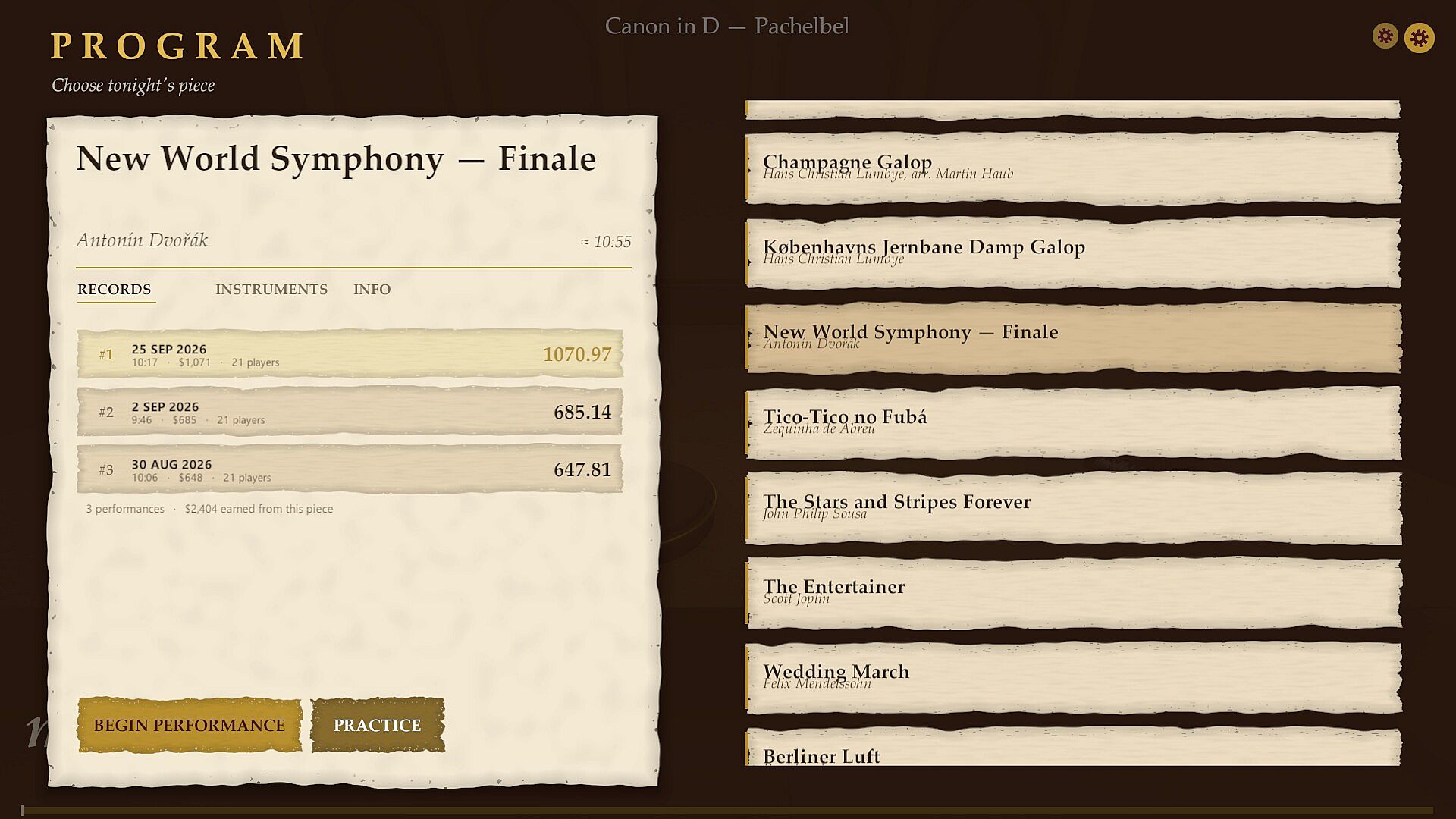
The included repertoire spans marches, waltzes, symphonic excerpts, and shorter works, providing variety in length and character. Pieces range from energetic dances like the Can-Can to lyrical selections such as The Blue Danube and more dramatic movements from the New World Symphony.
Is It Worth Playing?
Conduction 2 remains in development with a planned release date still to be announced. The single-player focus and emphasis on interpretive freedom suit players interested in music simulation without competitive pressure or timed note sequences. Those who enjoy building systems and refining personal technique may find the progression through venues and ensemble growth engaging once the title launches. The absence of multiplayer or additional confirmed features keeps the scope centered on solo conducting sessions and custom score support. Potential buyers should monitor official updates for the final release timing and any post-launch refinements.