

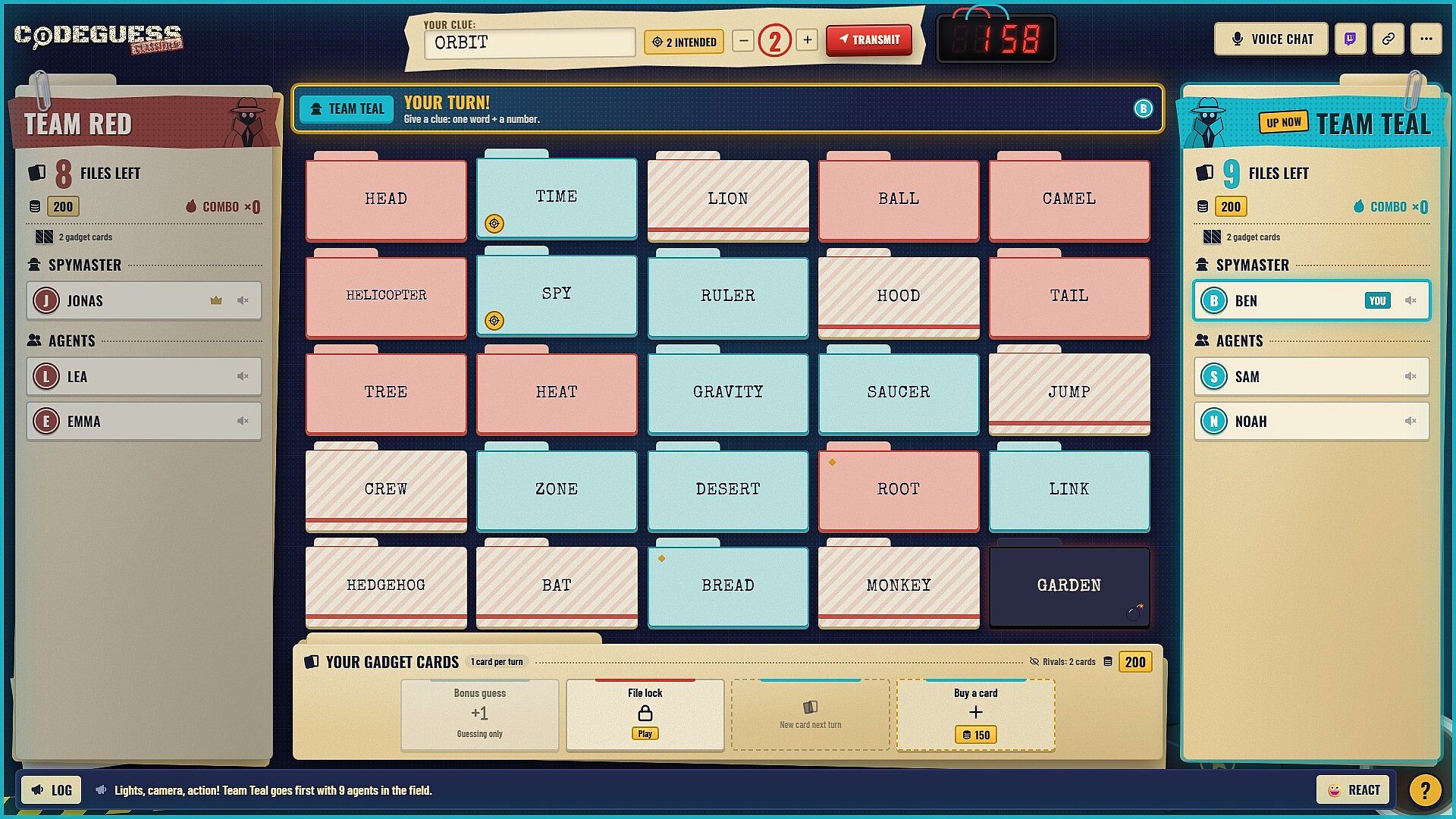
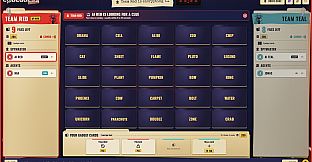
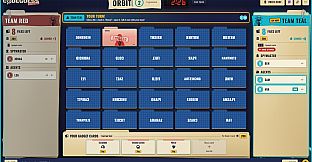
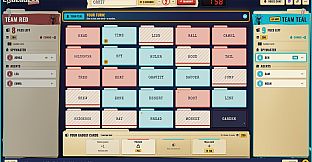
Codeguess is an indie casual word game for PC that blends deduction, teamwork, and light strategy in matches for two to twenty-four players. Two teams, Red and Teal, compete to claim files on a shared board while only the spymasters know the true ownership of each file. The core loop revolves around one-word clues paired with a number, such as Ocean 3, which signals that three files connect to the ocean theme. Agents discuss the clue, select files, and reveal them one by one. Correct team files allow continued guessing, a civilian file ends the turn, an opposing file awards progress to the rival side, and the bomb file ends the game immediately for the revealing team.
Gameplay
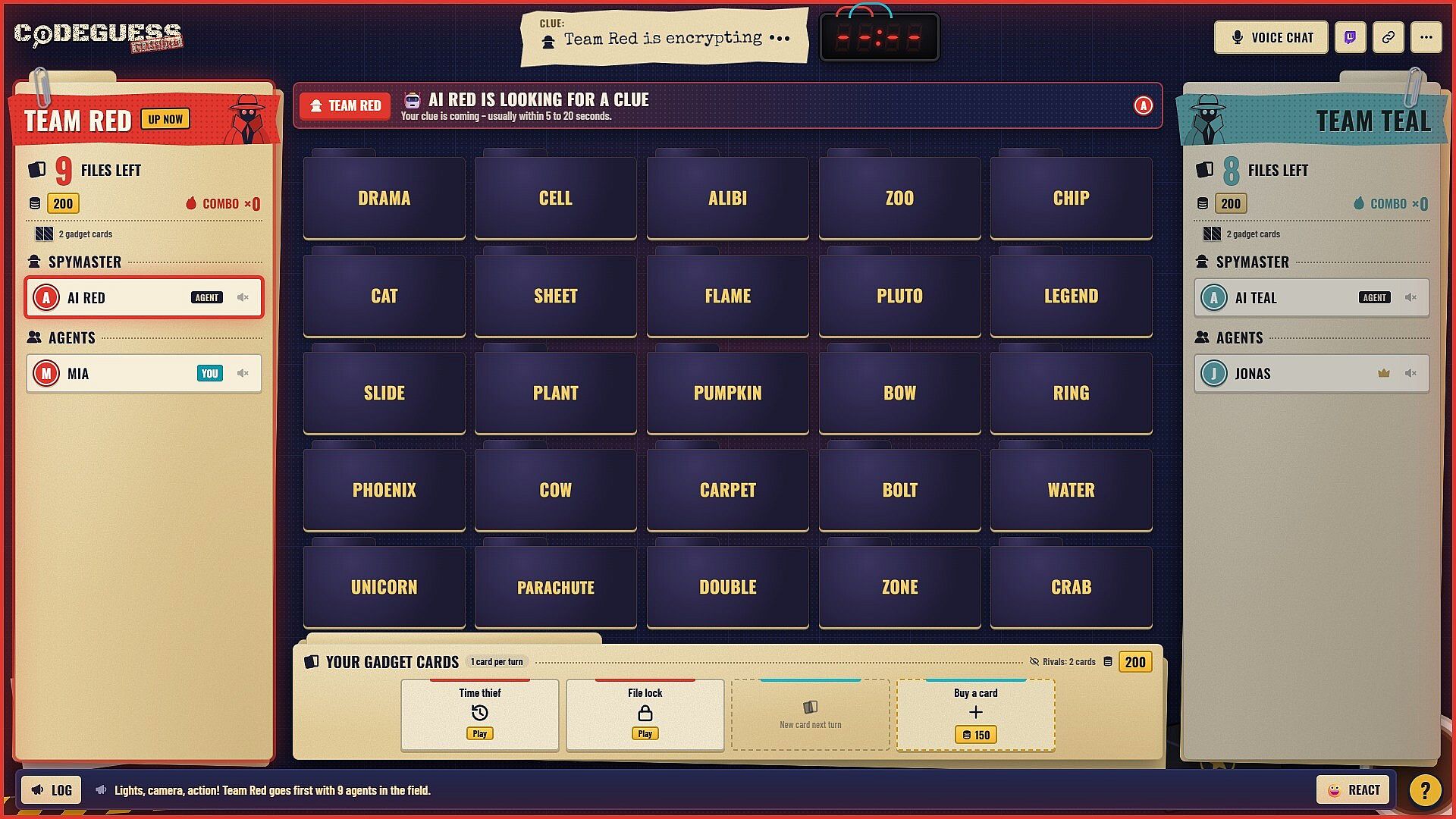
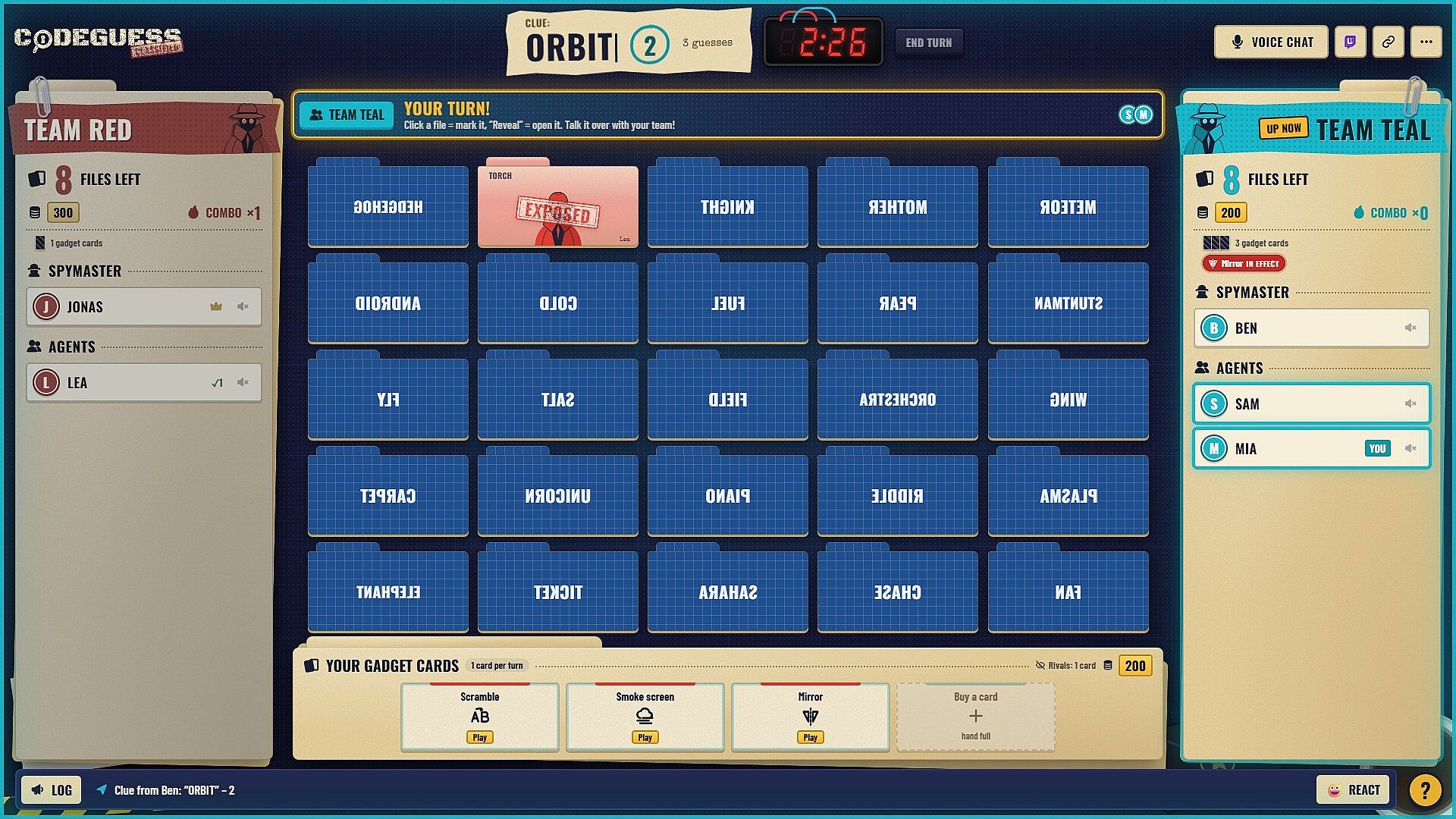
Each round begins with spymasters reviewing their hidden key card that assigns files to teams. They deliver a single clue consisting of one word and a number that indicates how many files match the association. Agents on both sides hear the clue and collaborate within their team to decide which files to mark. Revealing proceeds sequentially, and successful hits on friendly files keep the turn alive. Gadget cards add layers of interaction. Each team holds a hidden hand and draws one new card per turn from a pool of twenty-two cards across common, rare, and epic rarities. Cards provide utility such as highlighting rows with the most friendly files, exposing a civilian, or disrupting the opposing team through effects like smoke screens, mirror writing on files, or radio jamming that prevents agents from hearing the number portion of a clue. Sabotage effects remain hidden until triggered. Credits earned from hits and lost on misses fund additional card purchases, while the trailing team receives better draw odds for rare cards. Five file designs alter the visual presentation without changing mechanics.
Game Modes
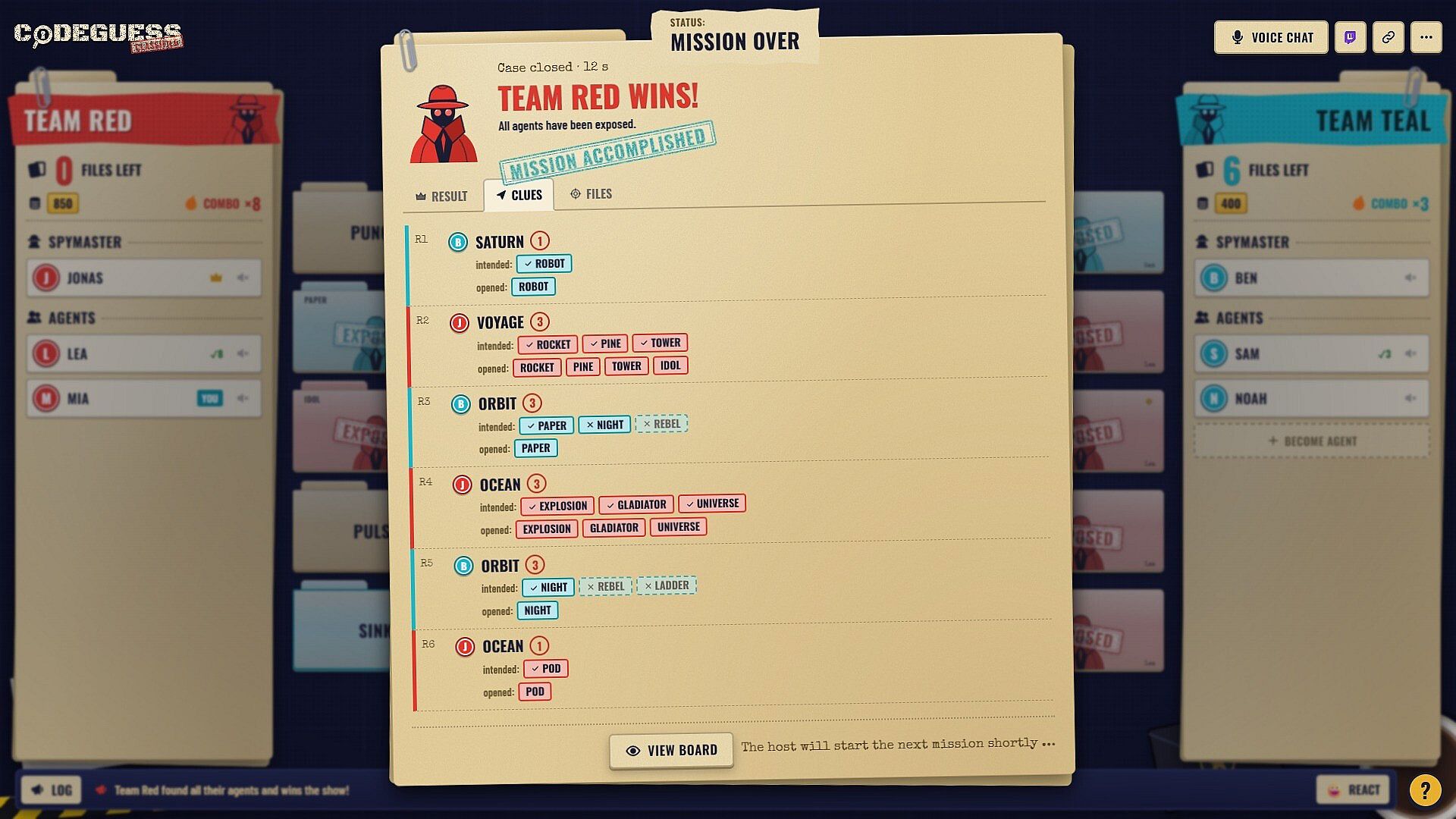
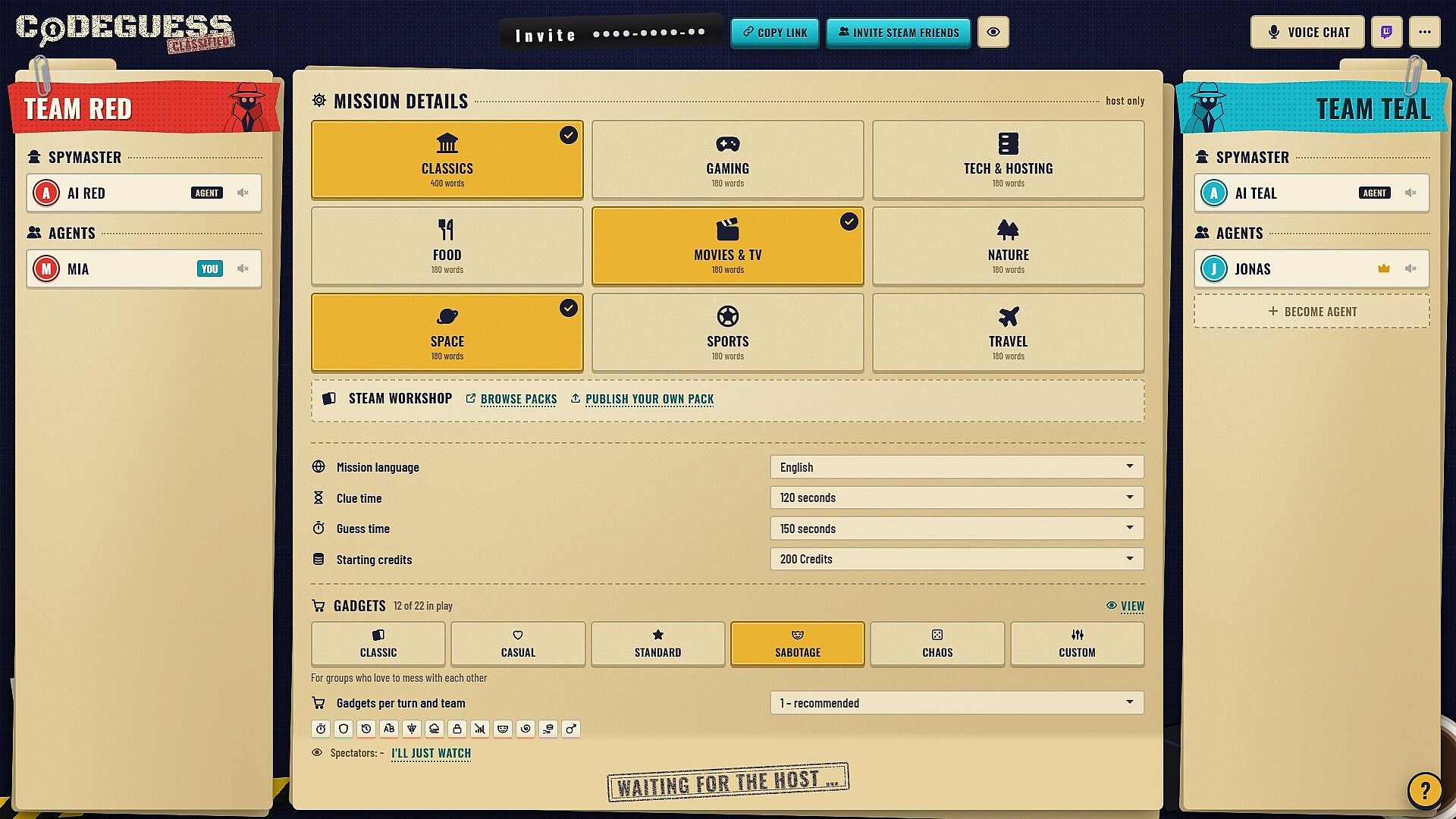
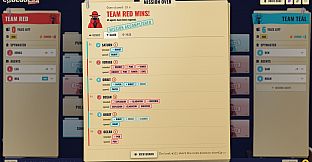
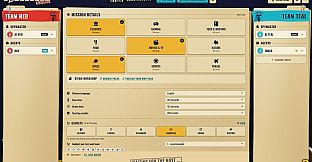
Five presets shape the gadget experience. Classic removes all cards for a pure clue-and-reveal session. Chaos activates the full card set for maximum disruption and opportunity. Custom presets let hosts select which cards appear and at what frequency. When player counts fall short of two spymasters, an AI spymaster fills the gap. Three difficulty levels govern AI behavior: Recruit issues straightforward clues, Agent coordinates reliably with teammates, and Master Spy connects up to four files while deploying its own gadget cards strategically. Built-in voice chat routes audio according to roles, with agents hearing one another across teams and spymasters communicating privately while monitoring all agents. A radio call feature lets a spymaster record a five-second spoken hint that plays back with audio distortion options such as robot, helium, or deep voice. Rule objections trigger a group vote, and every session concludes with a debrief screen listing all clues, intended file associations, and recorded radio calls for review.
Additional Features
Combo multipliers reach up to three times for consecutive hits, and certain jackpot files award bonus points. Streamer mode conceals the room invite code from viewers and activates a privacy overlay that displays only spymaster colors when a key is held. Twitch integration allows chat participants to suggest clues with commands like !tip word when acting as spymaster or mark files with !card followed by a number when serving as an agent. The browser version supports two word packs and four basic gadgets at no cost. The paid PC edition expands access to all nine word packs in English and German, totaling over 1,800 words per language, plus community packs created and shared through the Steam Workshop. All twenty-two gadget cards become available along with every preset and six file designs. Achievements track progress, and friends can join sessions via browser links without owning the paid version.
Is It Worth Playing?
Codeguess suits groups that enjoy cooperative deduction and light sabotage in a party setting. The mix of verbal clues, card-driven twists, and role-specific voice rules creates repeatable sessions that scale from small teams to larger lobbies. AI support lowers the barrier for fewer players, while custom presets and workshop content extend replay value for dedicated groups. The free browser tier provides a solid entry point to test the core loop before committing to the expanded content. Players seeking a fresh take on team word games with tactical interruptions will find consistent engagement across the verified mechanics and modes described.