




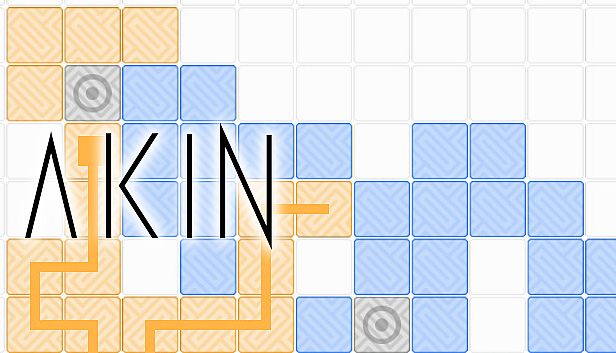












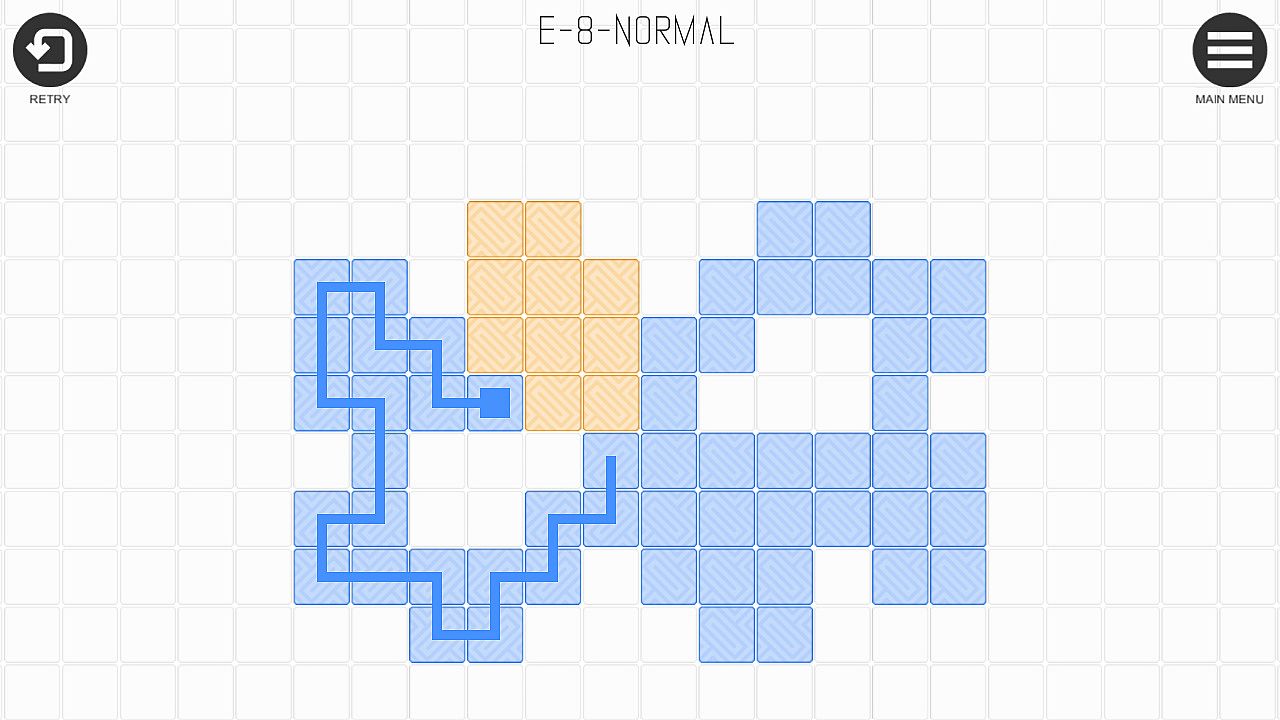
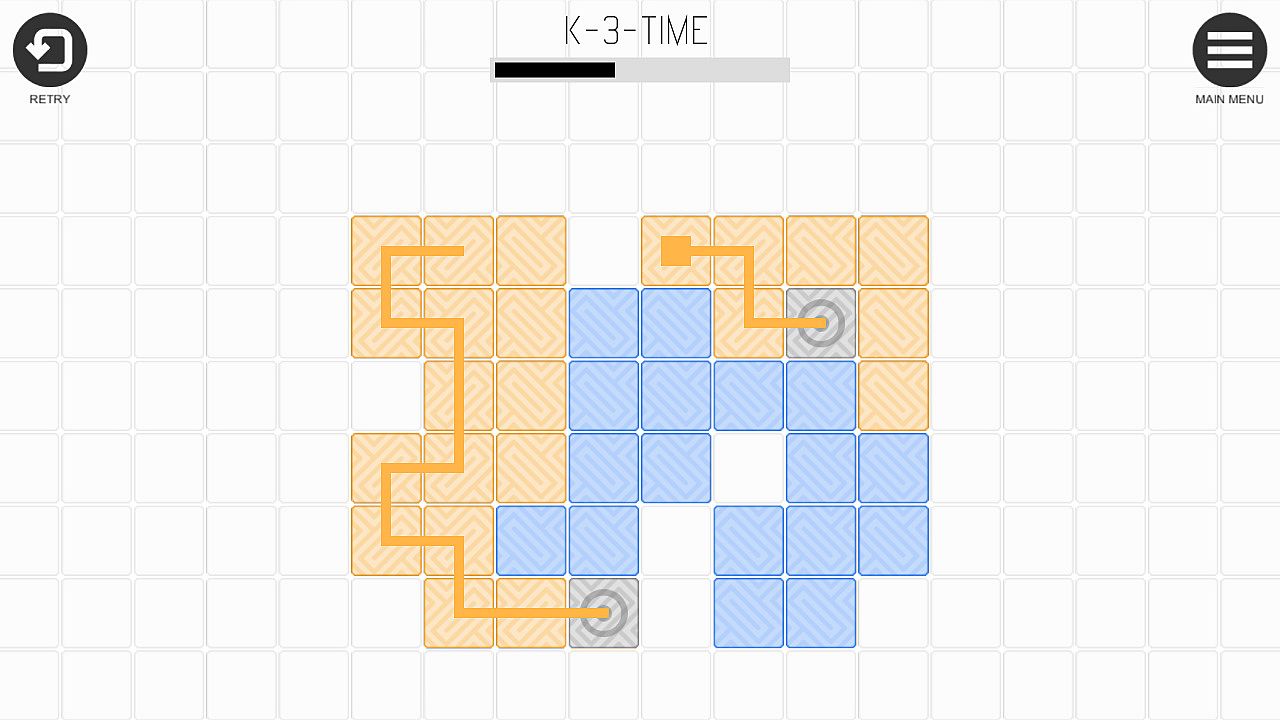
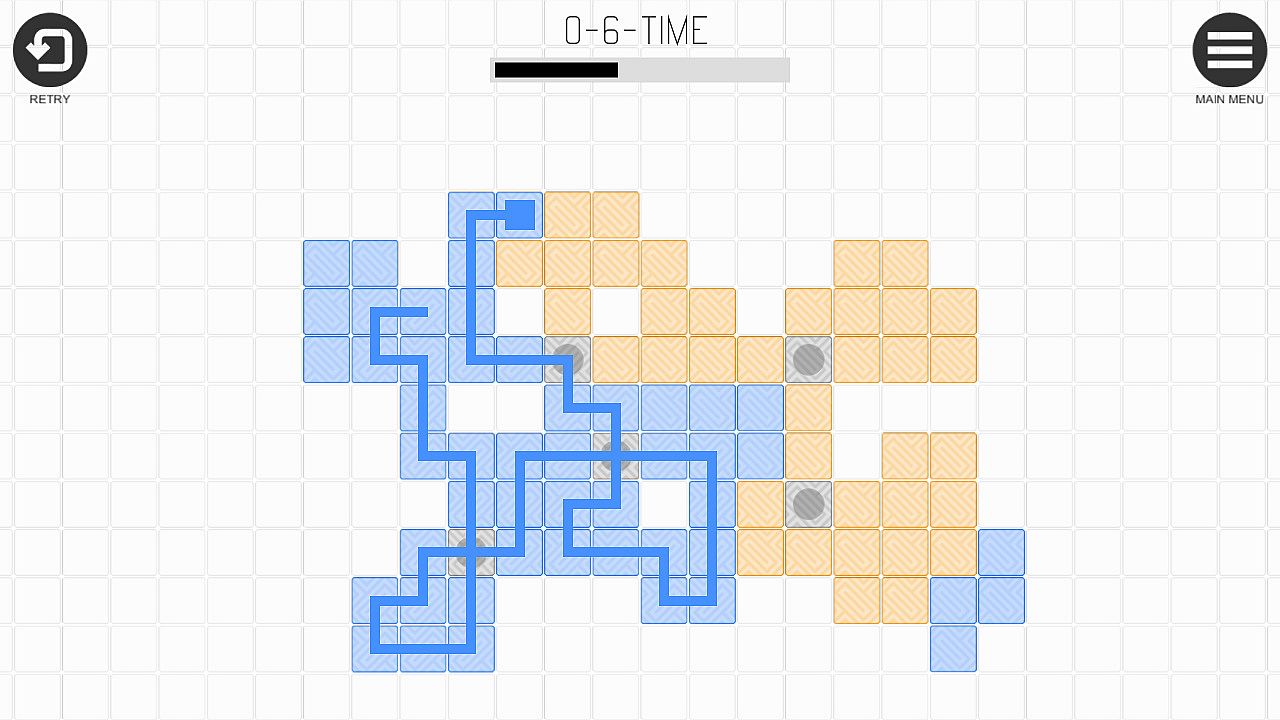
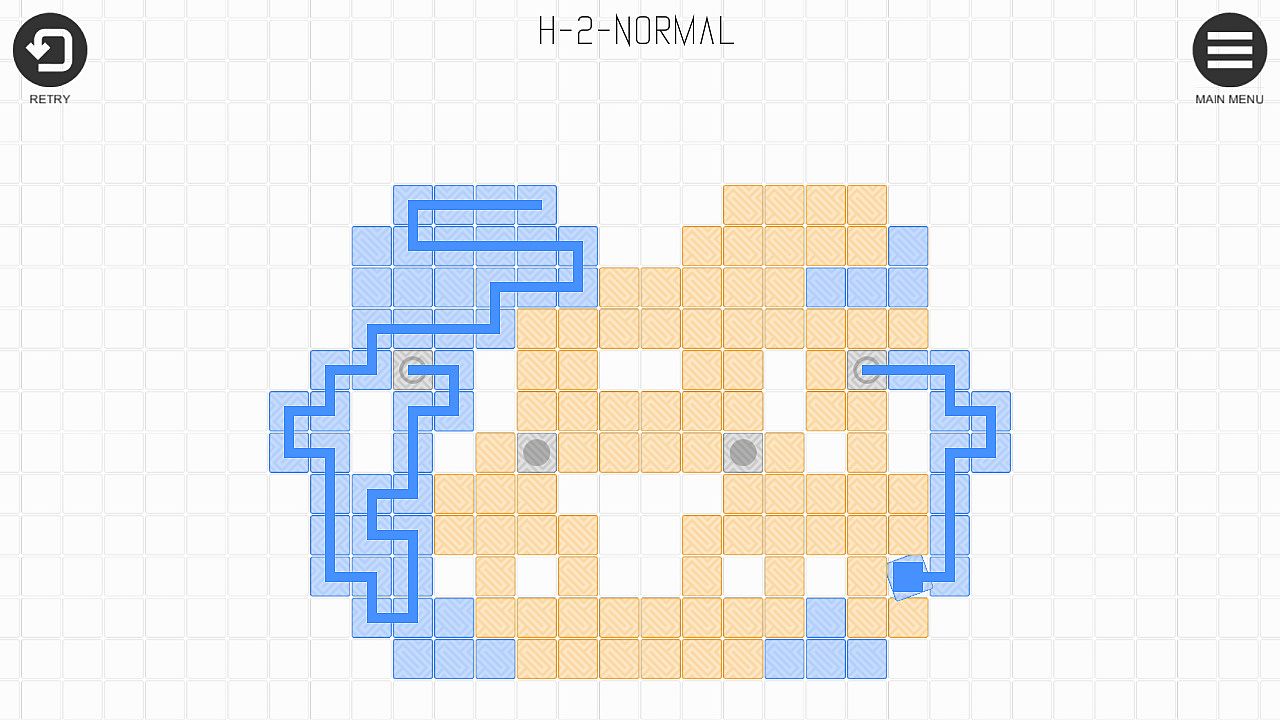
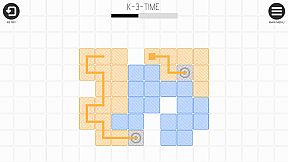
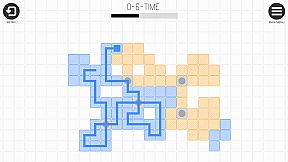
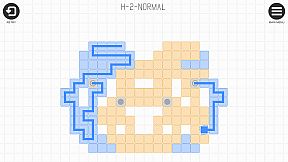
Akin is a casual indie puzzle game available on PC. Players solve levels by drawing a single continuous line across a grid of colored tiles. The core challenge involves changing every tile to the same color through strategic pathing.
Gameplay
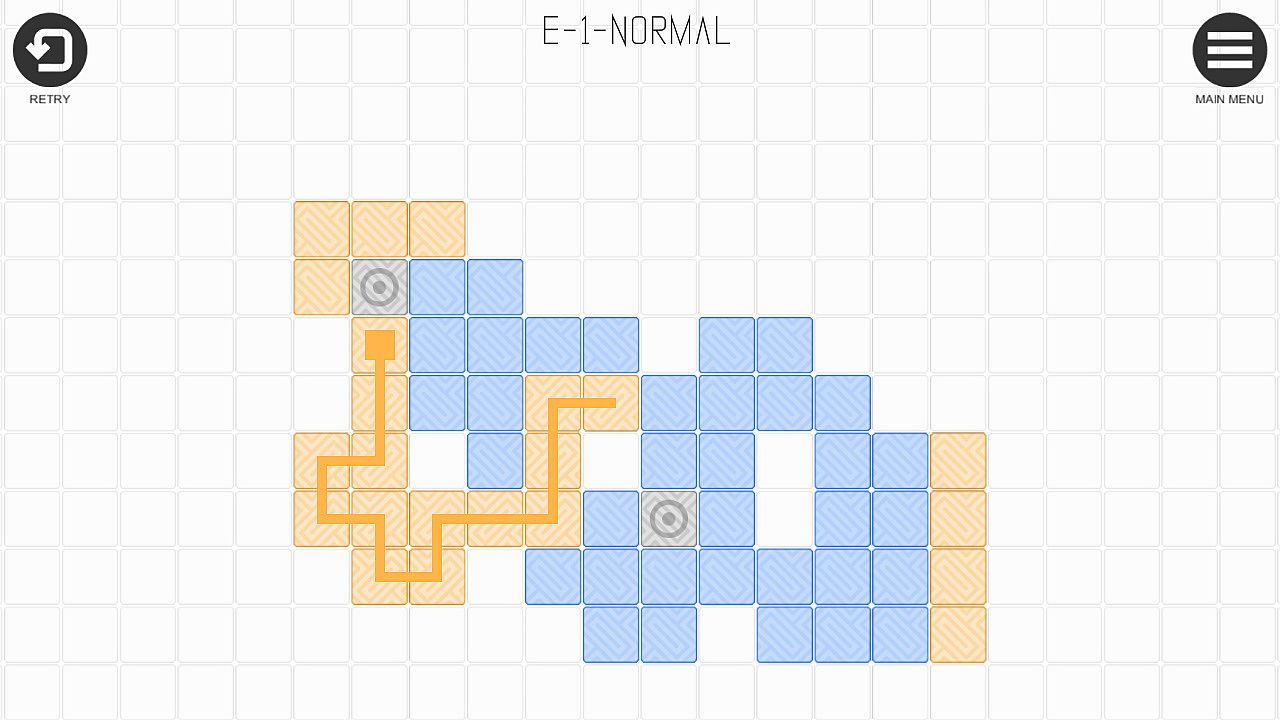
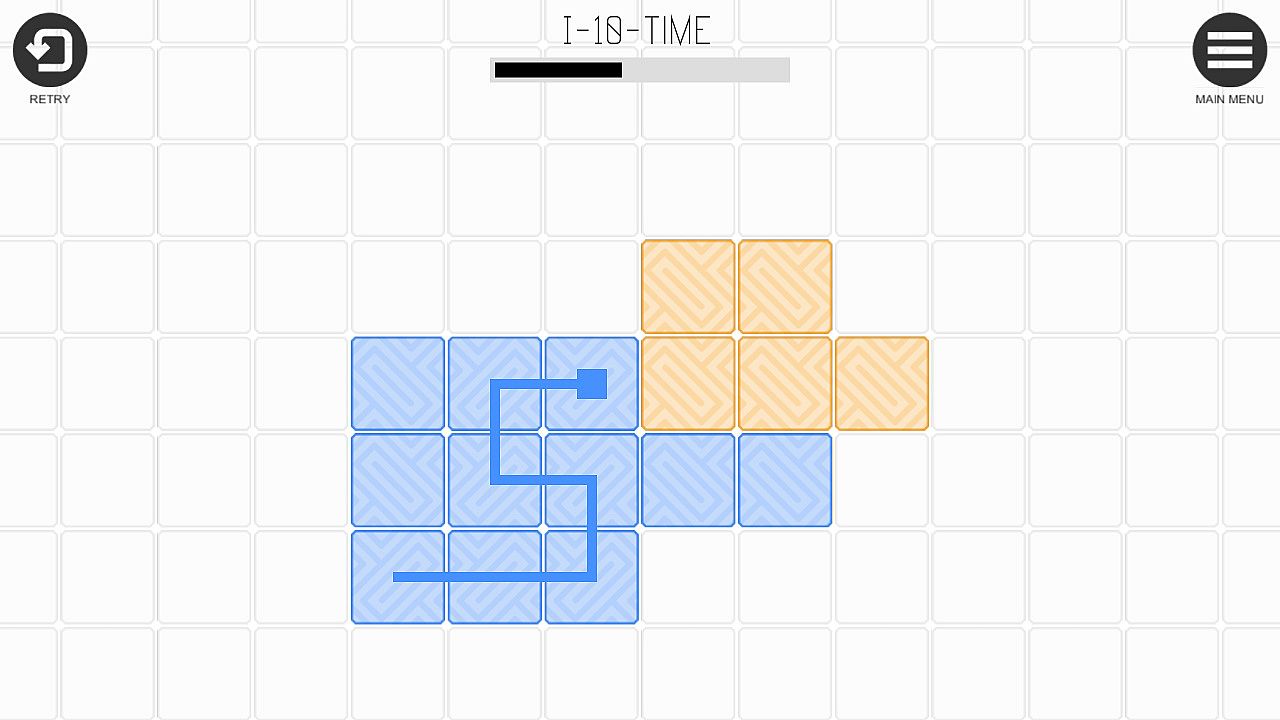
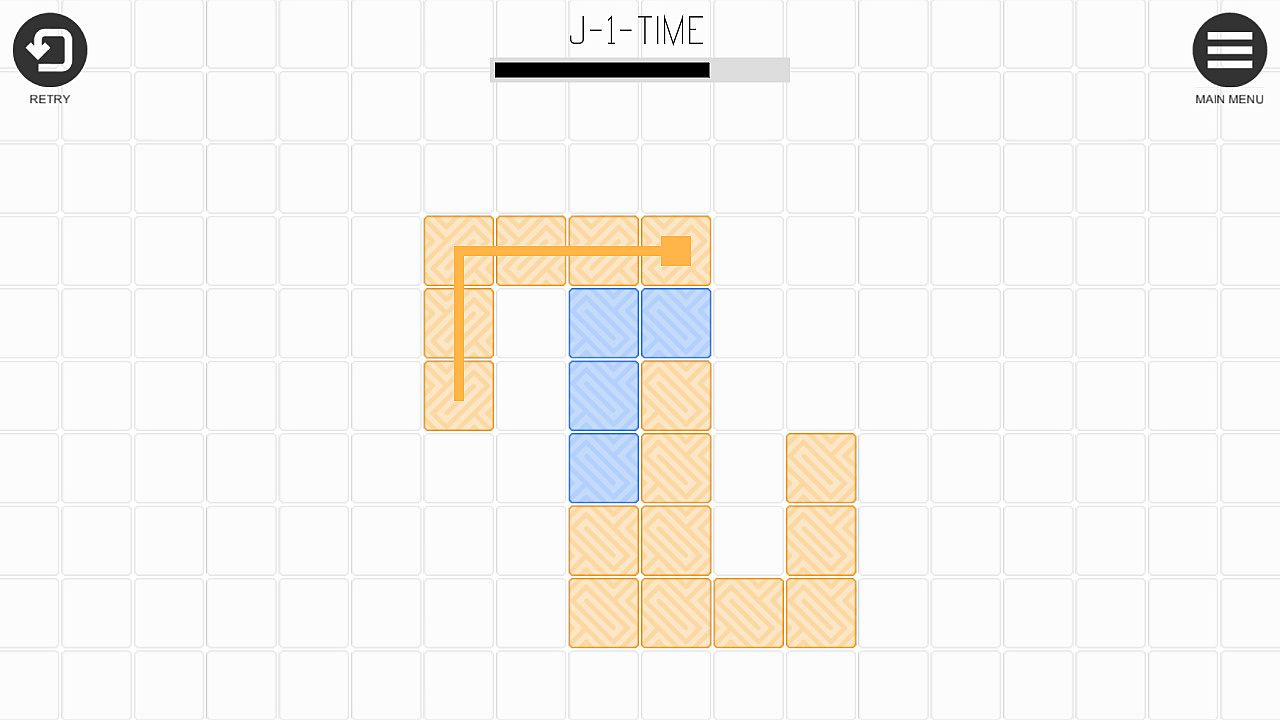
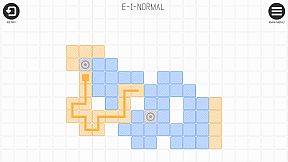
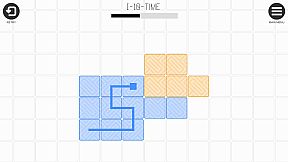
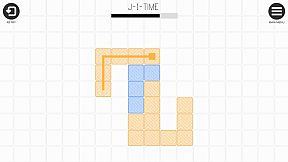
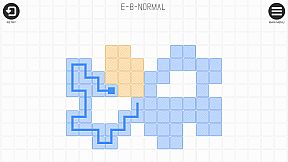
The central mechanic requires tracing one unbroken line over the grid. Each tile the line passes through flips its color between orange and blue. The objective is to reach a state where all tiles match in color. Puzzles begin with straightforward grids that introduce the basic flipping rules. As players advance, the layouts grow more intricate with added obstacles and constraints that demand careful planning of the line's route.
Multiple valid paths exist for most puzzles, allowing different approaches to the same solution. This flexibility encourages experimentation without penalty for initial attempts. The line must remain continuous from start to finish, and no retracing or lifting the path is permitted once drawing begins. Special tiles introduce variations that alter how the line behaves or how many times certain areas can be affected.
Two notable special tiles appear in later puzzles. The teleport tile instantly shifts the line's endpoint to a distant location on the grid, enabling connections that would otherwise be impossible. The double use tile permits the line to affect its space twice, which proves essential for completing certain complex arrangements where a single pass falls short.
Game Modes
Normal mode presents 96 puzzles focused on logical completion without time pressure. Players can take as long as needed to find a working path, making it ideal for methodical solvers who enjoy exploring options. Each puzzle unlocks progressively after the previous one is solved, creating a steady ramp in difficulty.
Time mode offers another set of 96 puzzles that add a clock element. Here the emphasis shifts toward efficient line drawing while still achieving the color-matching goal. The same core rules apply, yet the added urgency changes how players prioritize routes and handle special tiles. Both modes share the same pool of puzzle designs but differ in their pacing demands.
Puzzle Progression and Variety
Early levels teach the fundamentals of line drawing and color flipping with small grids. Later stages incorporate the special tiles more frequently and combine them in ways that require precise sequencing. The design ensures that solutions remain open-ended, so one puzzle can be cleared through several distinct line patterns.
Unlocking proceeds linearly, with each completed puzzle granting access to the next. This structure keeps the experience accessible while gradually introducing new challenges. The overall collection covers a wide range of grid sizes and configurations, providing sustained variety without repetition of identical setups.
Is It Worth Playing?
Reception for Akin has been positive among players who appreciate compact, focused puzzle experiences. With hundreds of user reviews reflecting an 86 percent approval rating, many highlight the satisfying progression and the freedom to discover multiple solutions per level. The two modes cater to different preferences, whether someone seeks relaxed solving or a timed test of efficiency.
The game suits those who enjoy line-based or pathfinding puzzles and want a straightforward single-player experience on PC. Its modest scope means sessions can be short yet rewarding, with clear goals and no extraneous systems to navigate. For anyone drawn to casual indie titles centered on clever mechanics rather than expansive narratives, the available puzzles deliver consistent engagement through their color-matching challenge and special tile interactions.




![Attempt[42]](https://img.xd.deals/capsules_thumbs/ca/fb/cafbfe9482989ceea4c2f6aaeb313adf97fccd7c_280x160.jpg)








