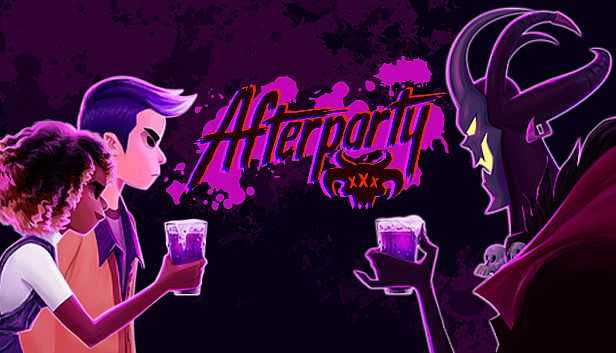














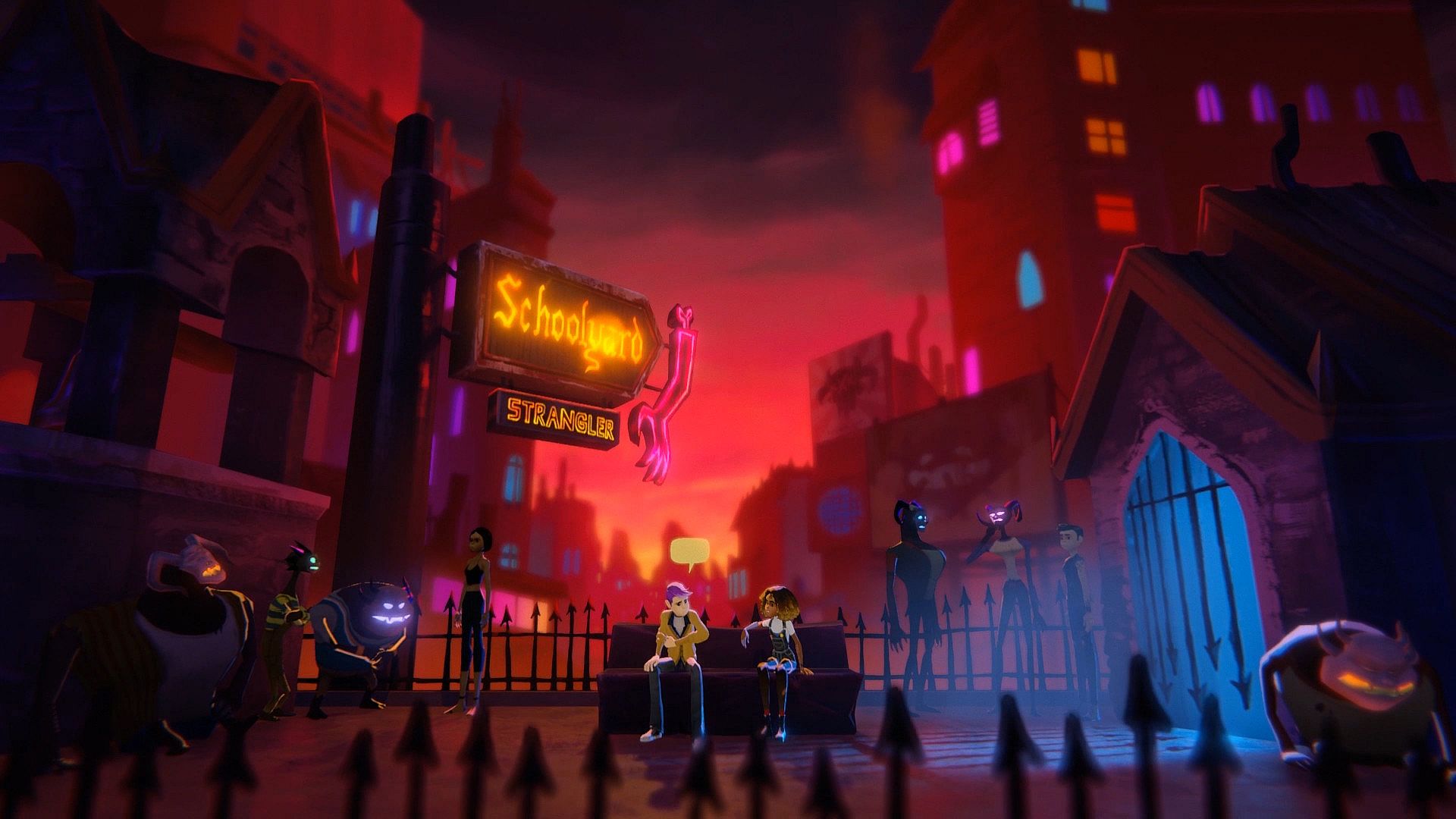
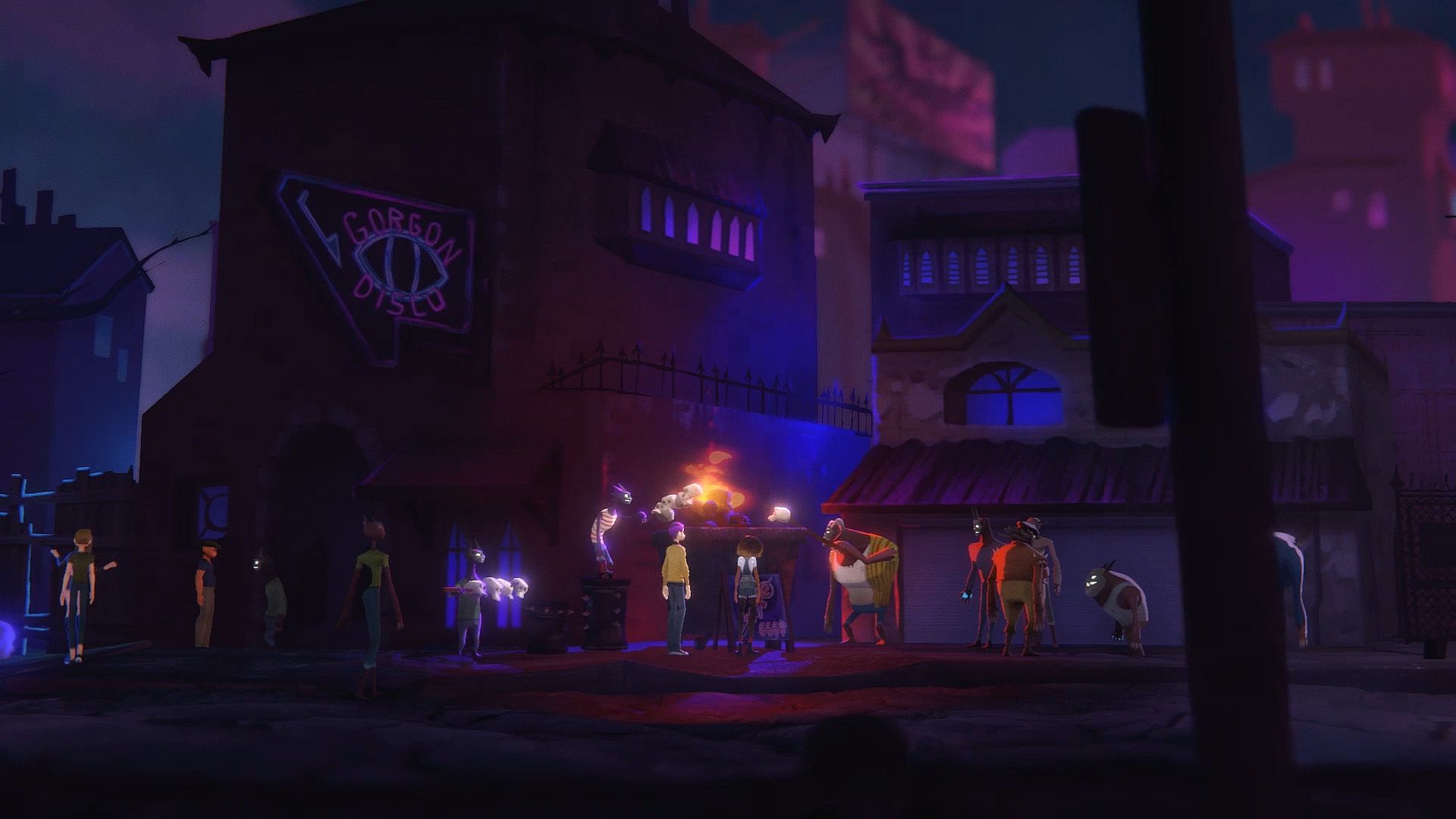
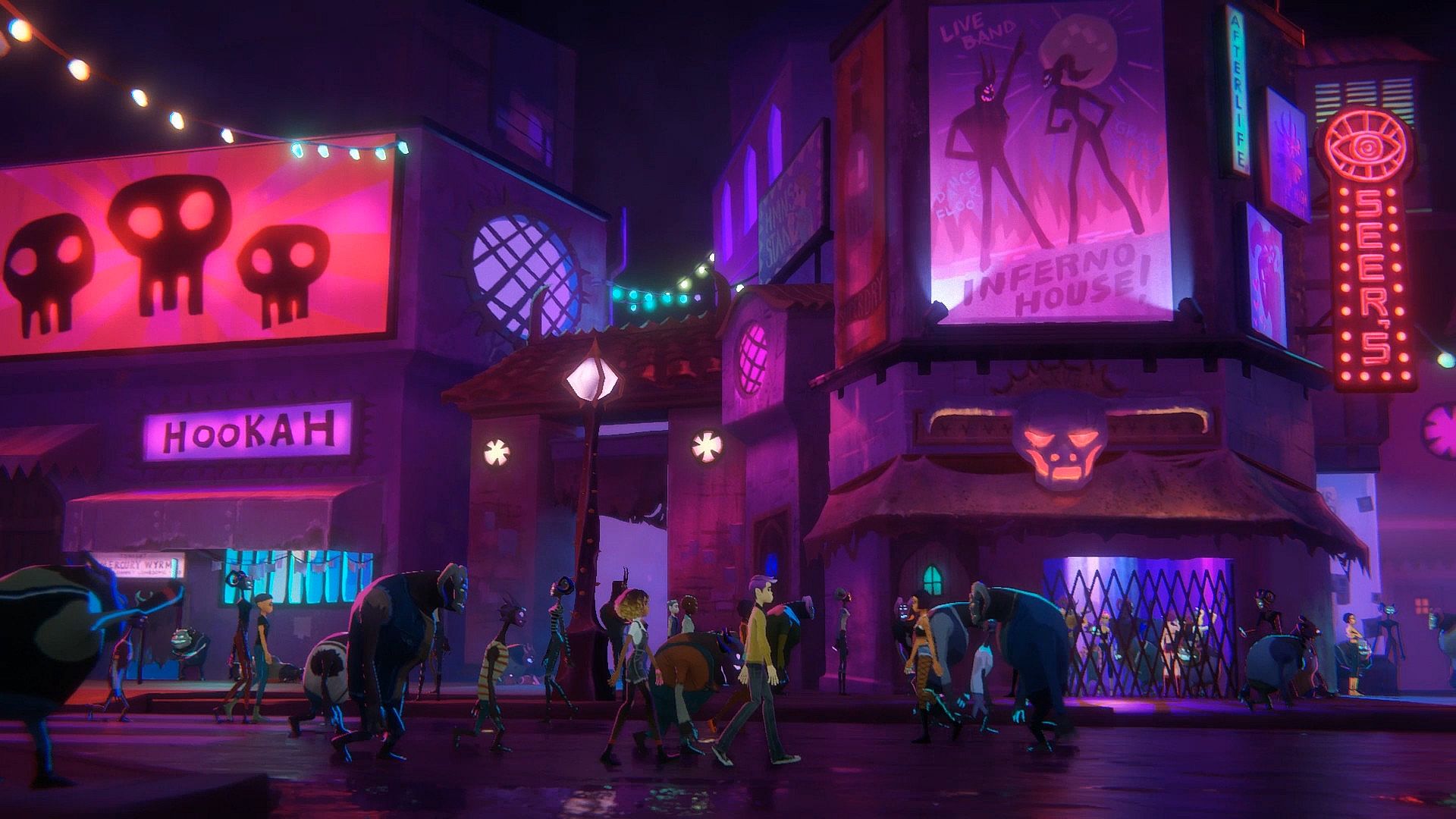

Afterparty is an indie adventure game developed by Night School Studio. Players take control of Milo and Lola, two recently deceased friends navigating the afterlife in a hell reimagined as a sprawling party scene. The core premise centers on a single-player narrative experience where the pair must outdrink Satan himself to earn a return to Earth. Built around dialogue choices and light environmental interactions, the game emphasizes character relationships and branching story outcomes over traditional action or puzzle elements.
Gameplay
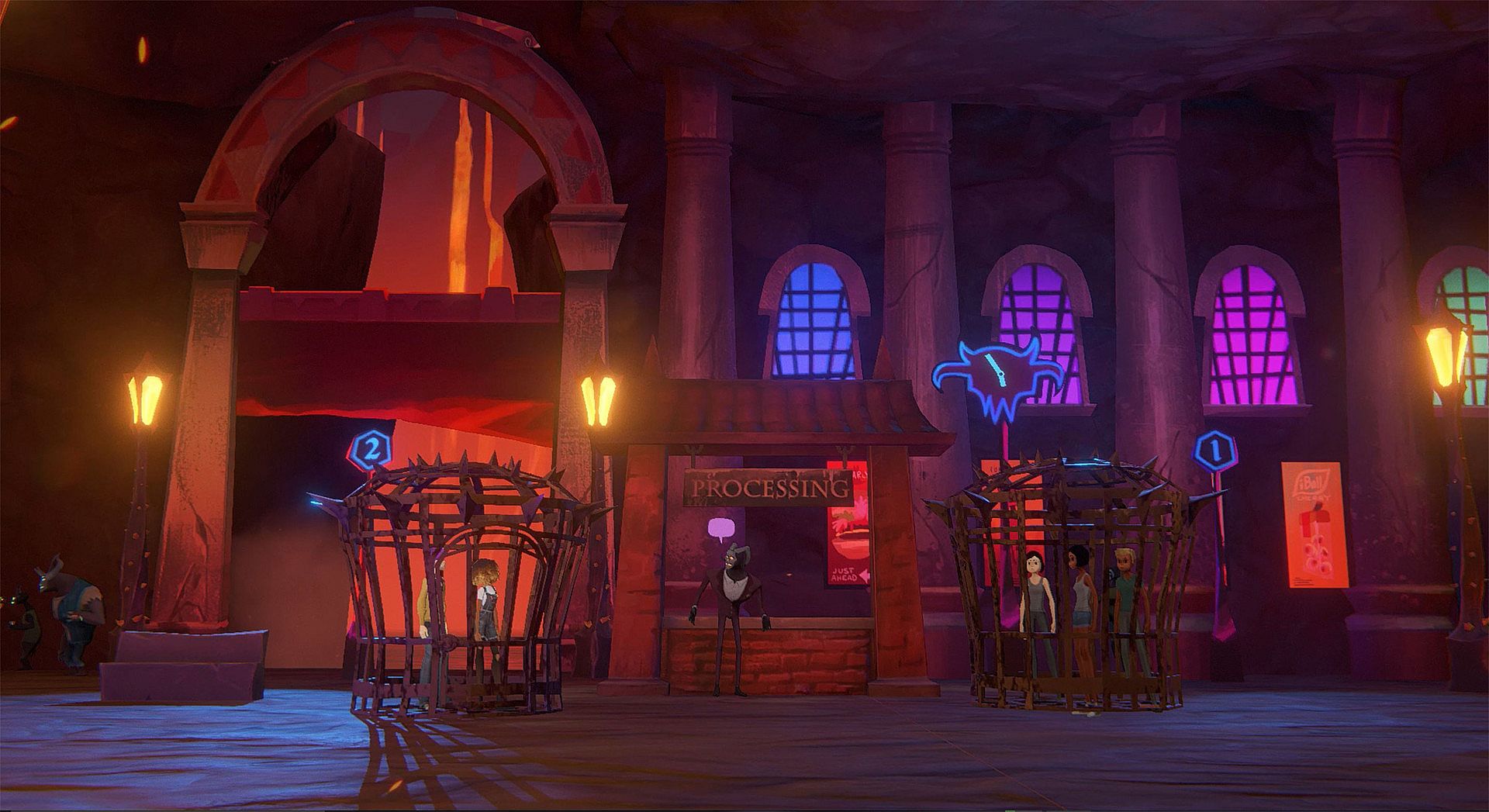
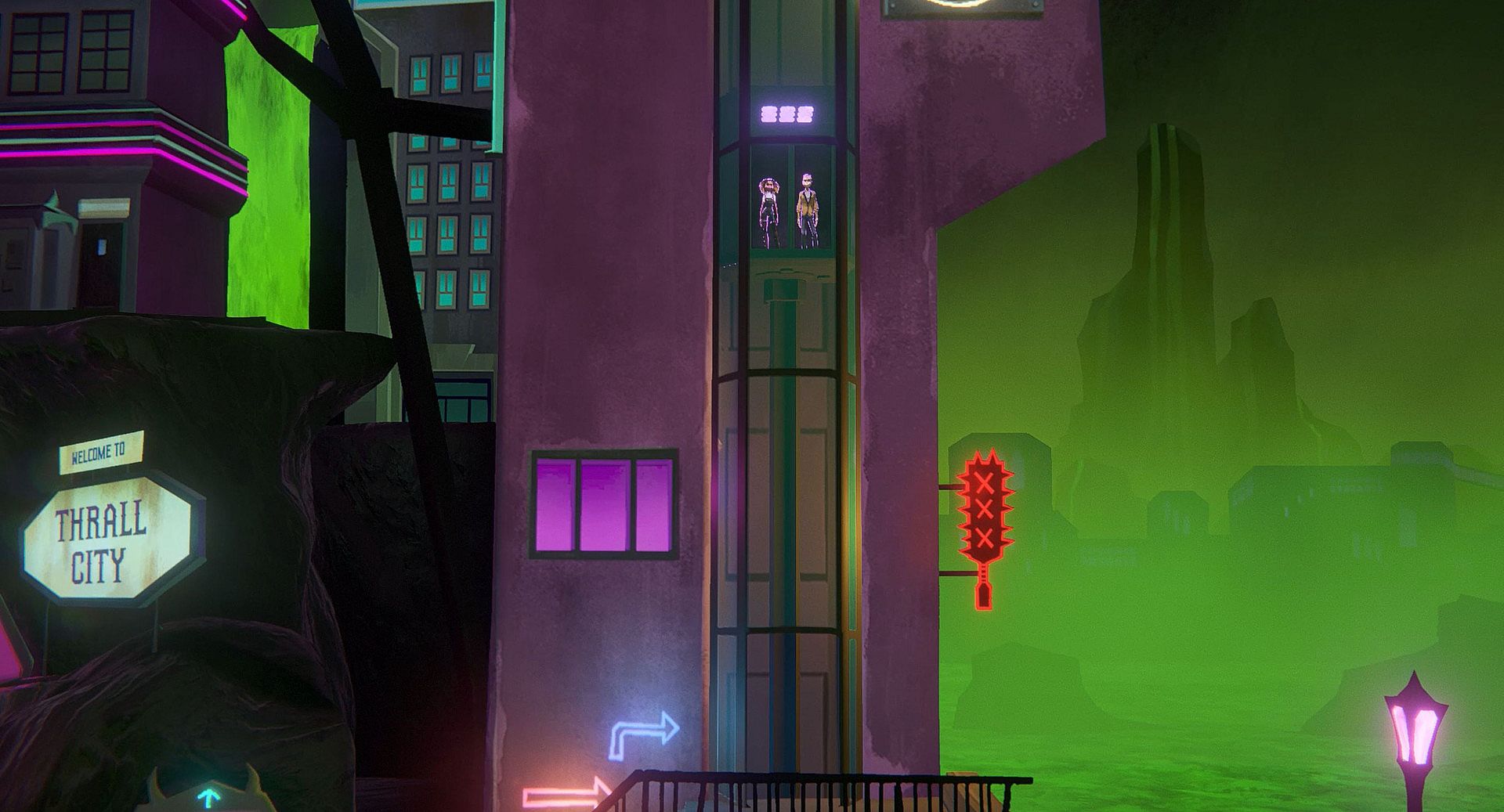
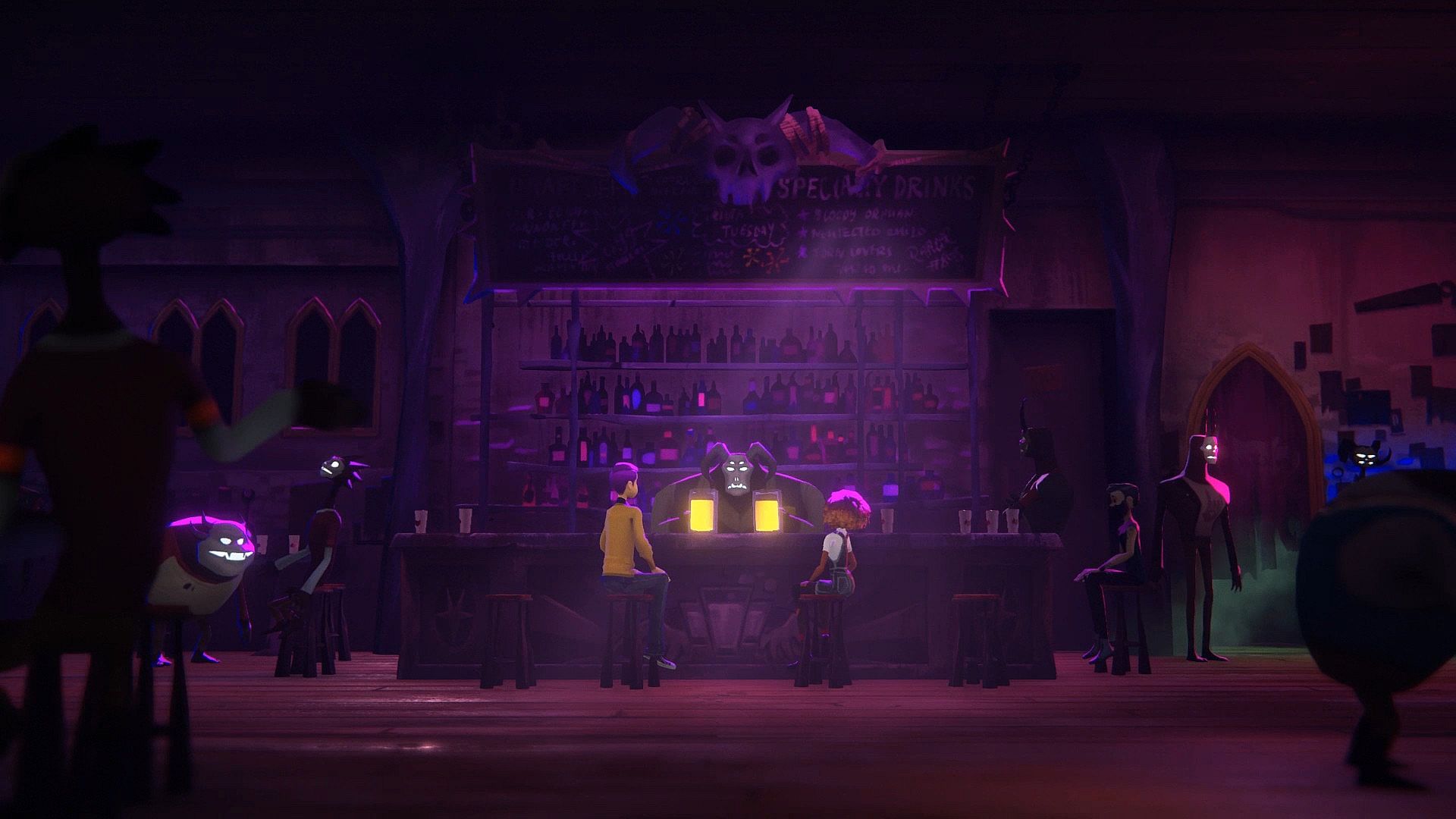
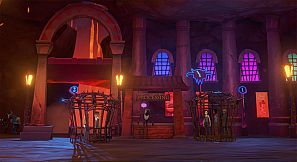
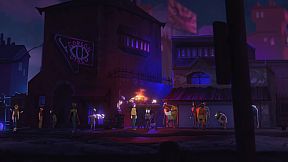
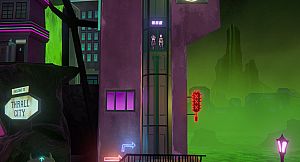
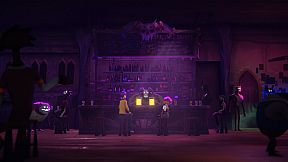
Afterparty unfolds in a 2.5D side-view environment where players guide Milo and Lola along connected islands linked by the River Styx. Movement is straightforward, limited to left and right navigation with interactions at key points such as bars, characters, and activity stations. The primary mechanic revolves around an intelligent conversation system that tracks prior decisions and alters available dialogue options, relationships, and story branches accordingly. Each character brings distinct personality traits that surface through these exchanges, revealing details about their shared history and individual quirks.
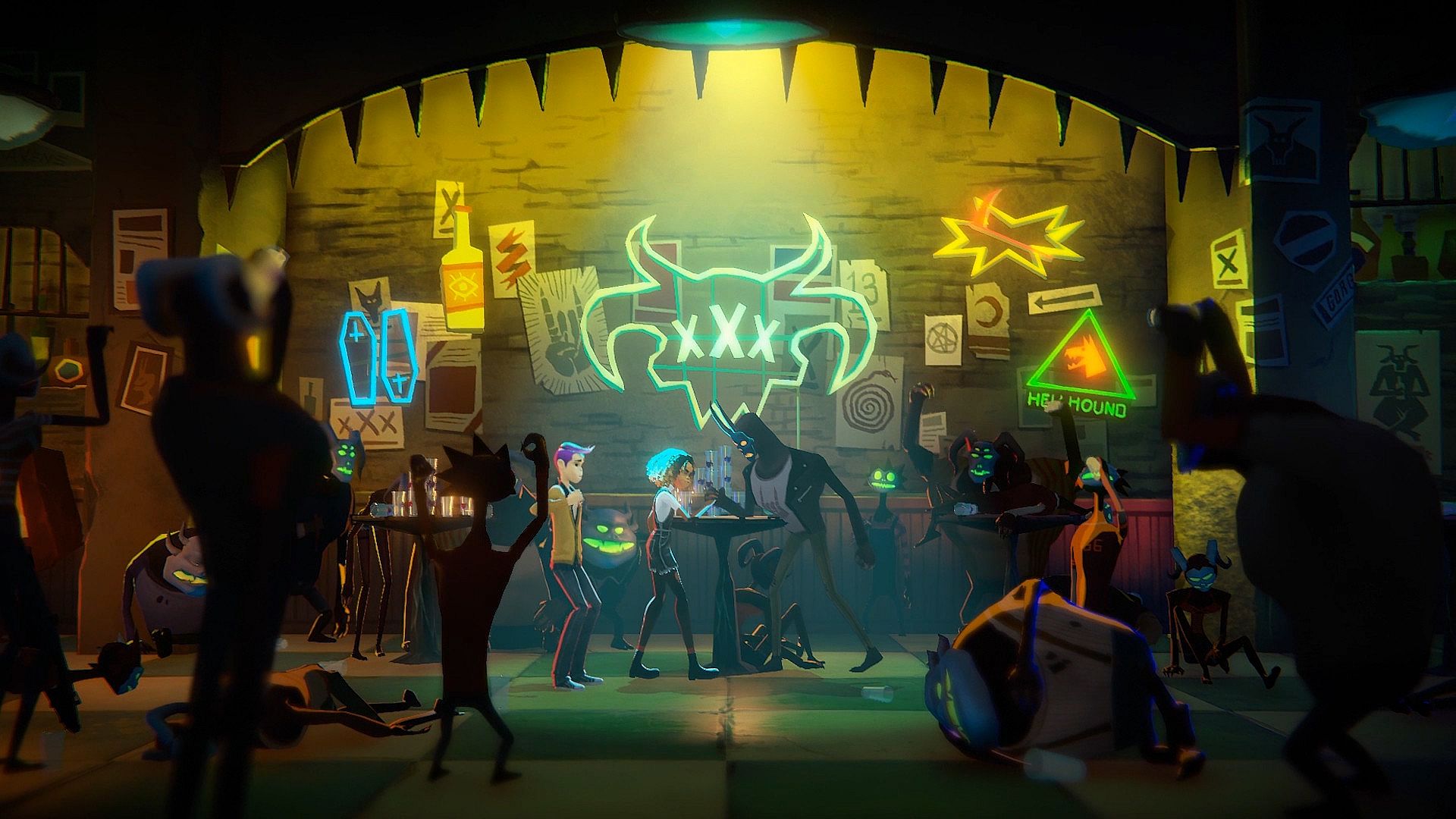
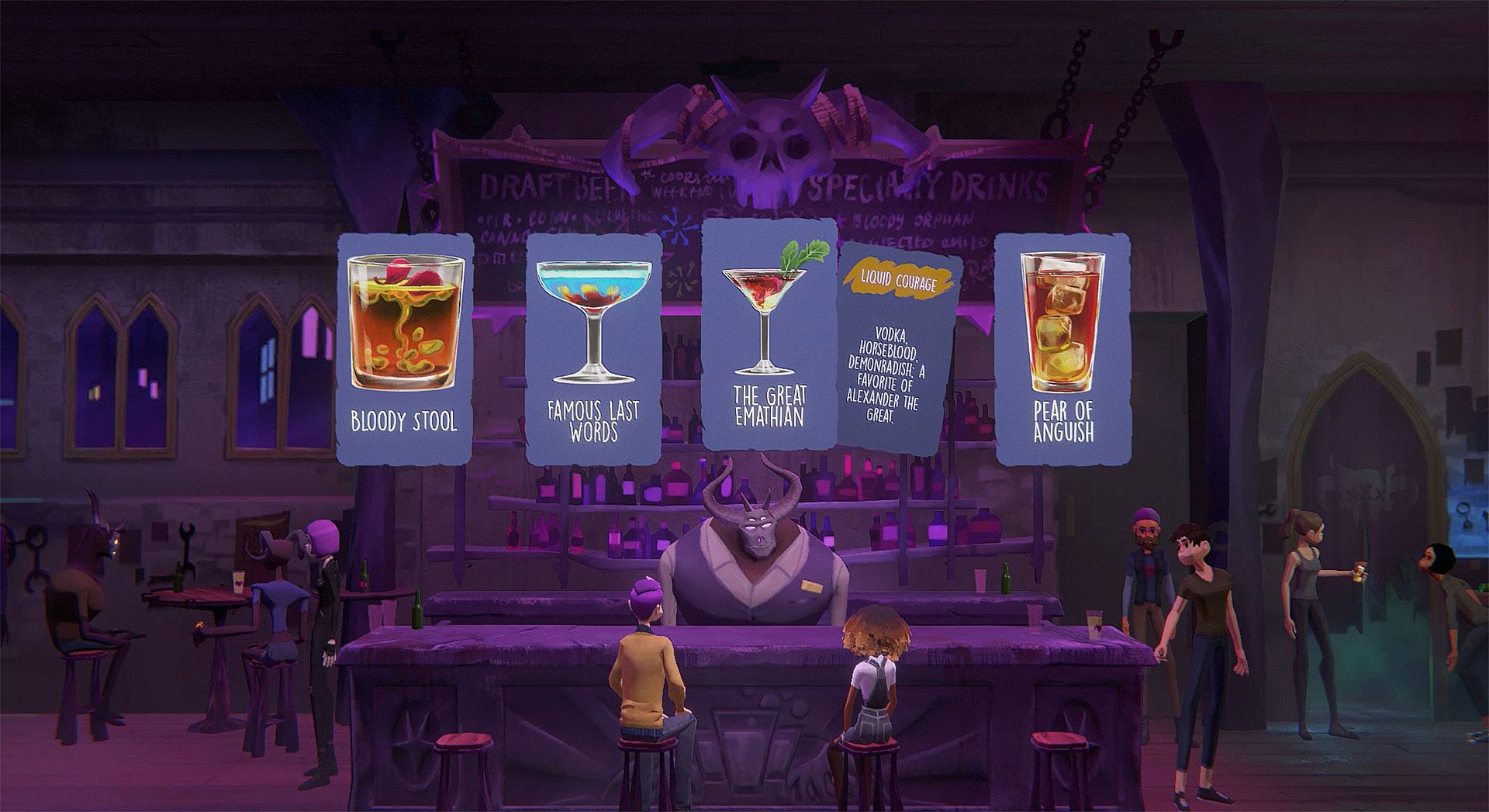
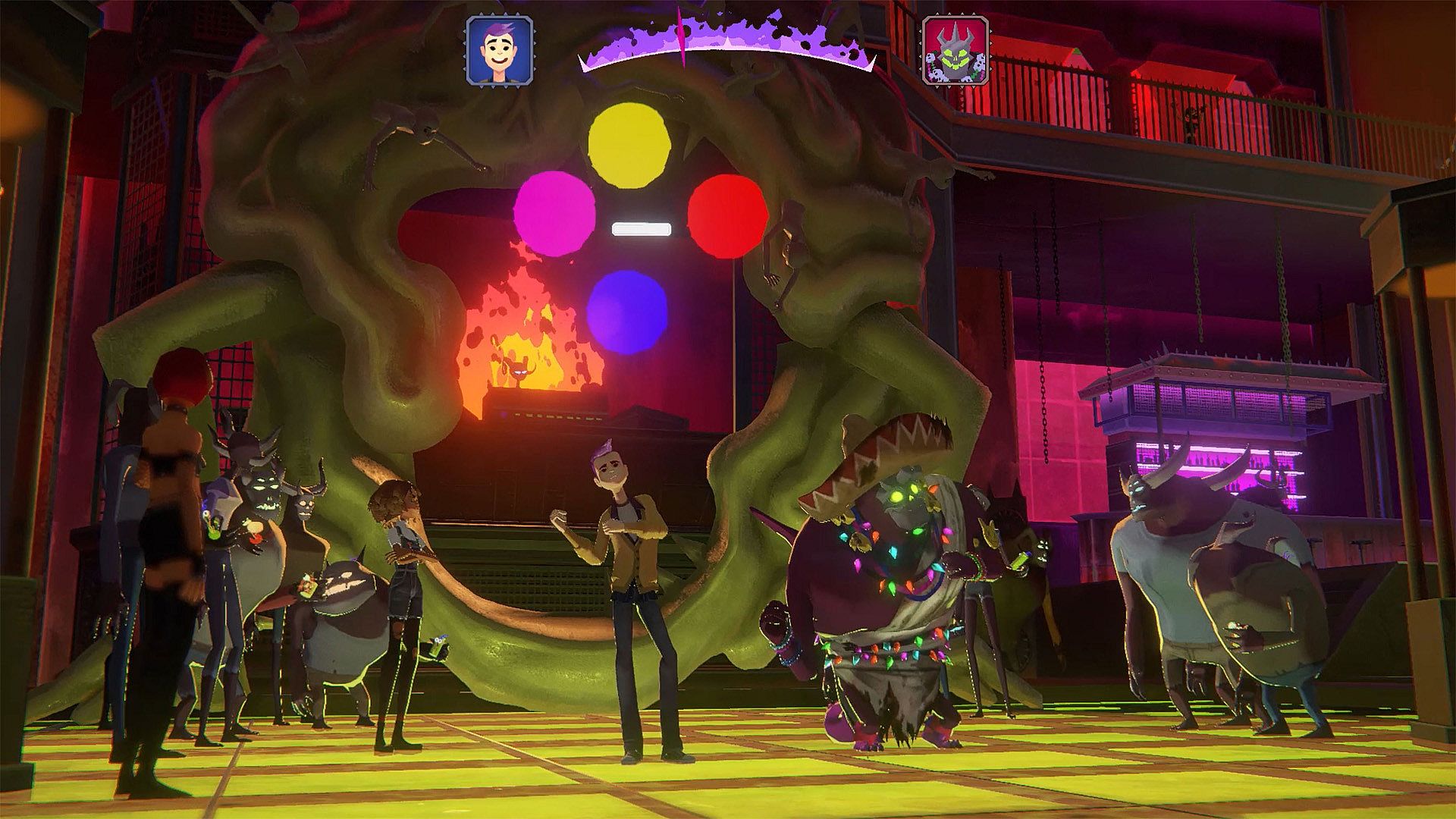
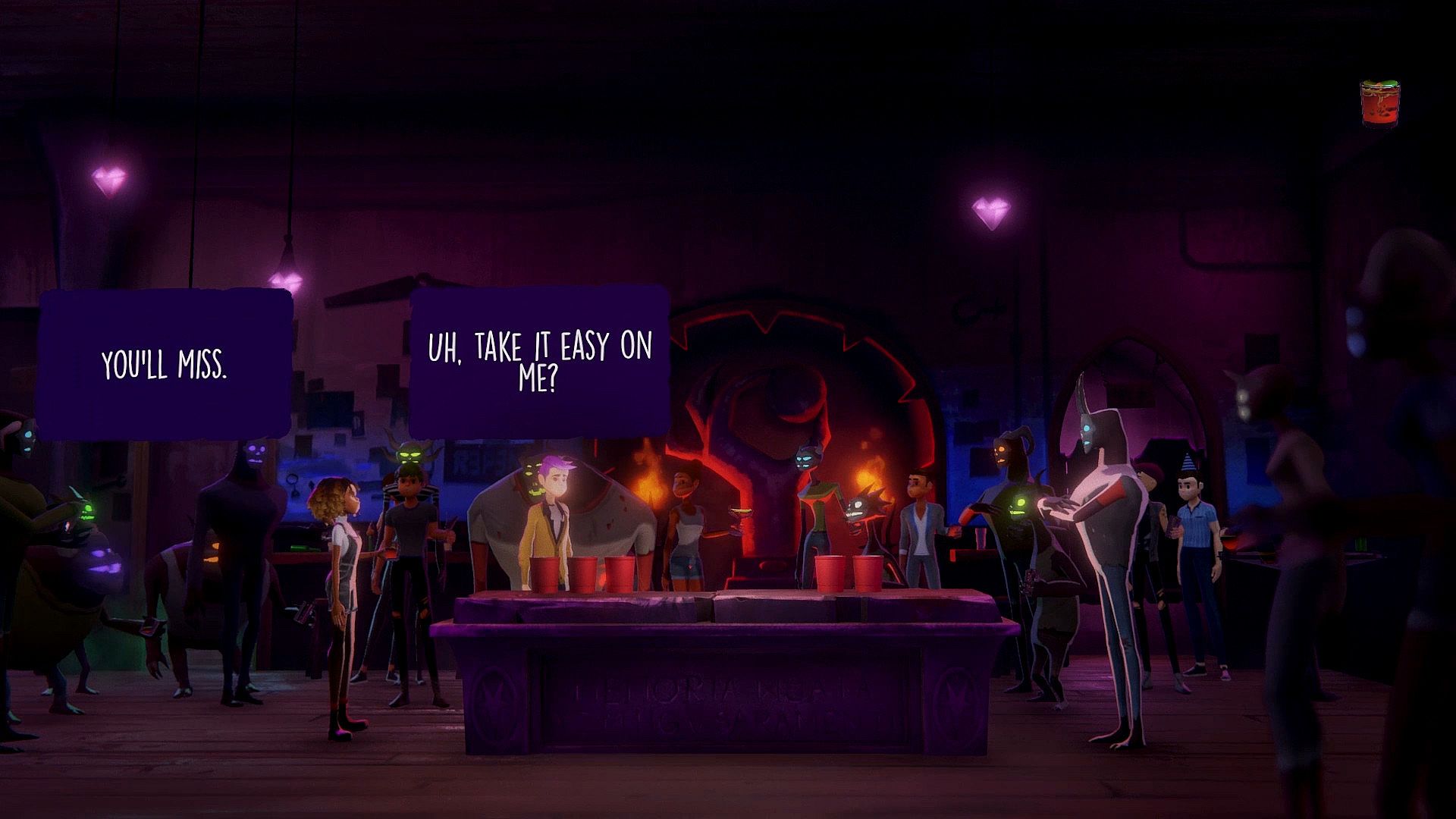
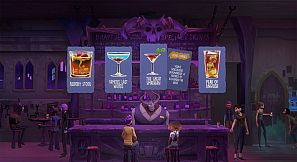
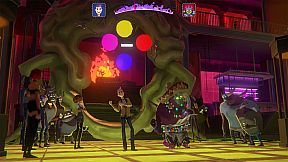
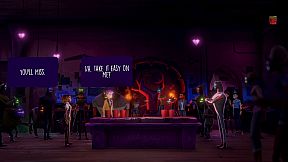
Over thirty different drinks appear throughout the night, each influencing the tone and content of subsequent dialogue lines while shifting how Milo or Lola express themselves in the moment. Players switch between controlling the two protagonists at various points, which directly impacts which paths open up later. Occasional demonic activities break up the conversation flow, including beer pong matches, dance-offs, and chugging competitions that test timing or selection skills in simple minigame formats. These elements integrate into the larger goal of collecting seals from hell's monarchs to secure an audience with Satan.
Game Modes
Afterparty operates exclusively as a single-player experience with no separate multiplayer or competitive modes. The entire game consists of one continuous narrative campaign that players complete in a linear sequence of locations and encounters. Branching occurs naturally through dialogue selections and drink choices, leading to different relationship dynamics and several distinct endings based on performance in the final drinking contest against Satan. Replay value stems from these variations, as selecting different protagonists for key decisions or experimenting with intoxication levels produces alternate routes and revelations about the cast of supporting demons and souls.
Progression remains consistent across playthroughs, with the same interconnected underworld layout and core objectives. There are no additional modes such as challenge runs, survival variants, or post-game content layers. The structure encourages at least one full replay to explore the alternate character-driven paths that the dual-protagonist system enables.
Narrative and Characters
The story follows Milo and Lola as they piece together their arrival in hell while interacting with a large ensemble of demons and damned souls, each carrying unique personal issues. A personal demon named Wormhorn serves as a constant companion, offering commentary and guidance. Supporting roles include the psychopomp cab driver Sam and Satan himself, portrayed with distinct voice performances that shape the tone of every exchange. Player decisions during trials, dance-offs, and social encounters determine alliances and outcomes, feeding back into the central drinking challenge. The narrative explores themes of friendship, regret, and adulthood through the lens of hell's perpetual party atmosphere.
Is It Worth Playing?
Afterparty delivers a focused single-player adventure suited to players who enjoy choice-driven stories and humorous dialogue systems. Its short length, typically four to six hours for a first playthrough, makes it accessible for those seeking a complete experience without long-term commitment. Reception highlights the witty writing and the way drink mechanics meaningfully alter conversations, though some note the limited scope of the movement and interaction systems. Multiple endings and the dual-character perspective provide incentive for a second run, particularly for fans of narrative adventures like the developer's prior title. The game remains available on PC with no ongoing updates or seasonal content, presenting a self-contained package best appreciated by those drawn to its premise of out-partying the devil through conversation and personality shifts rather than combat or complex mechanics.