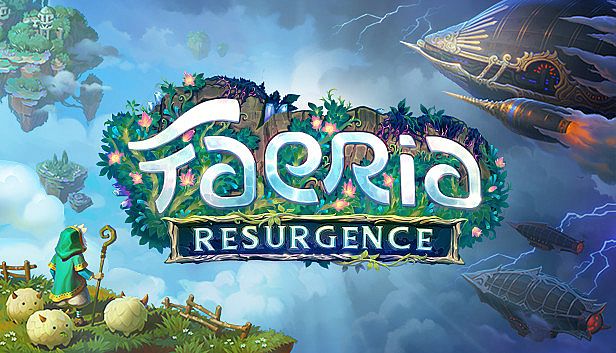
















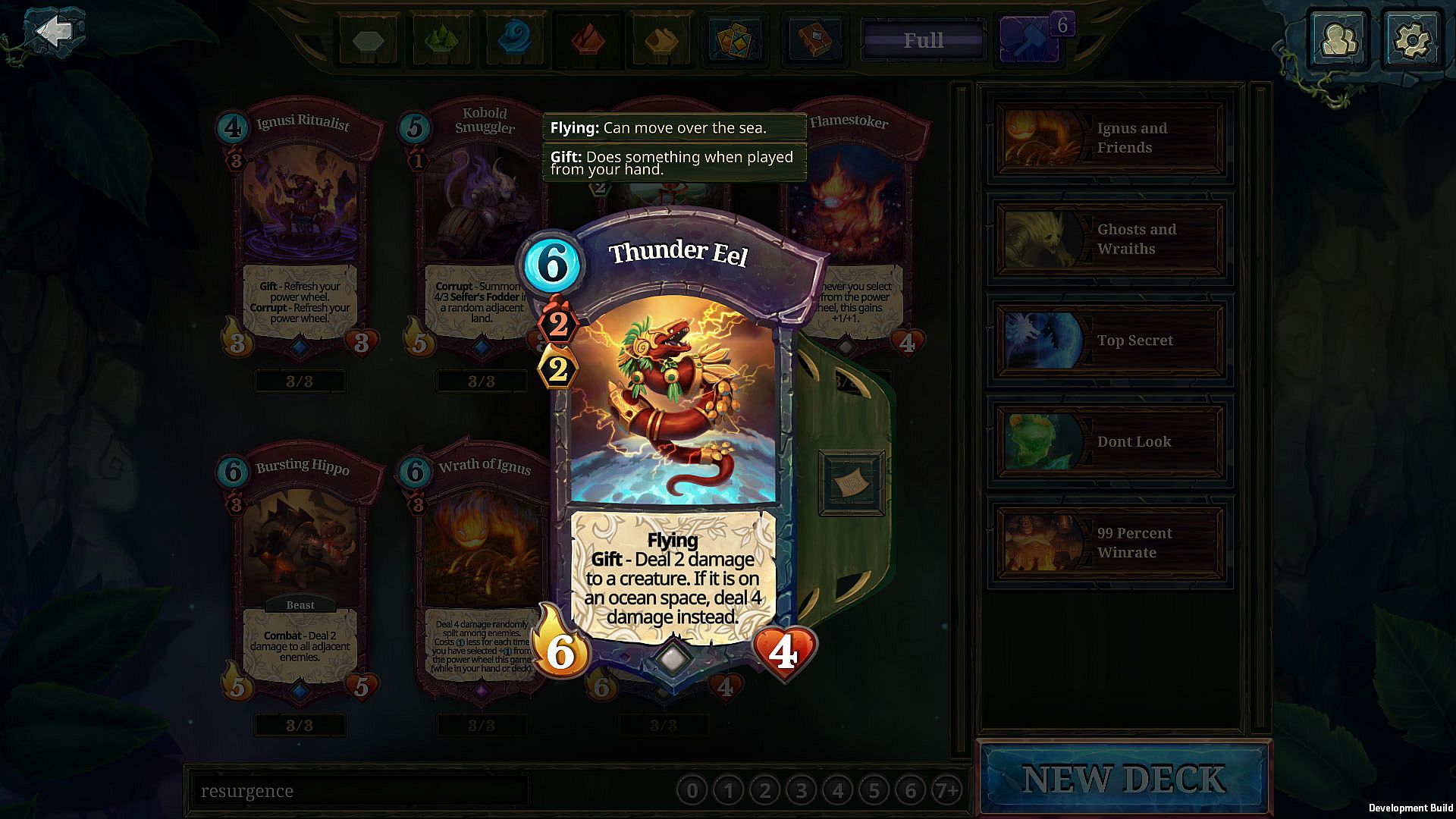
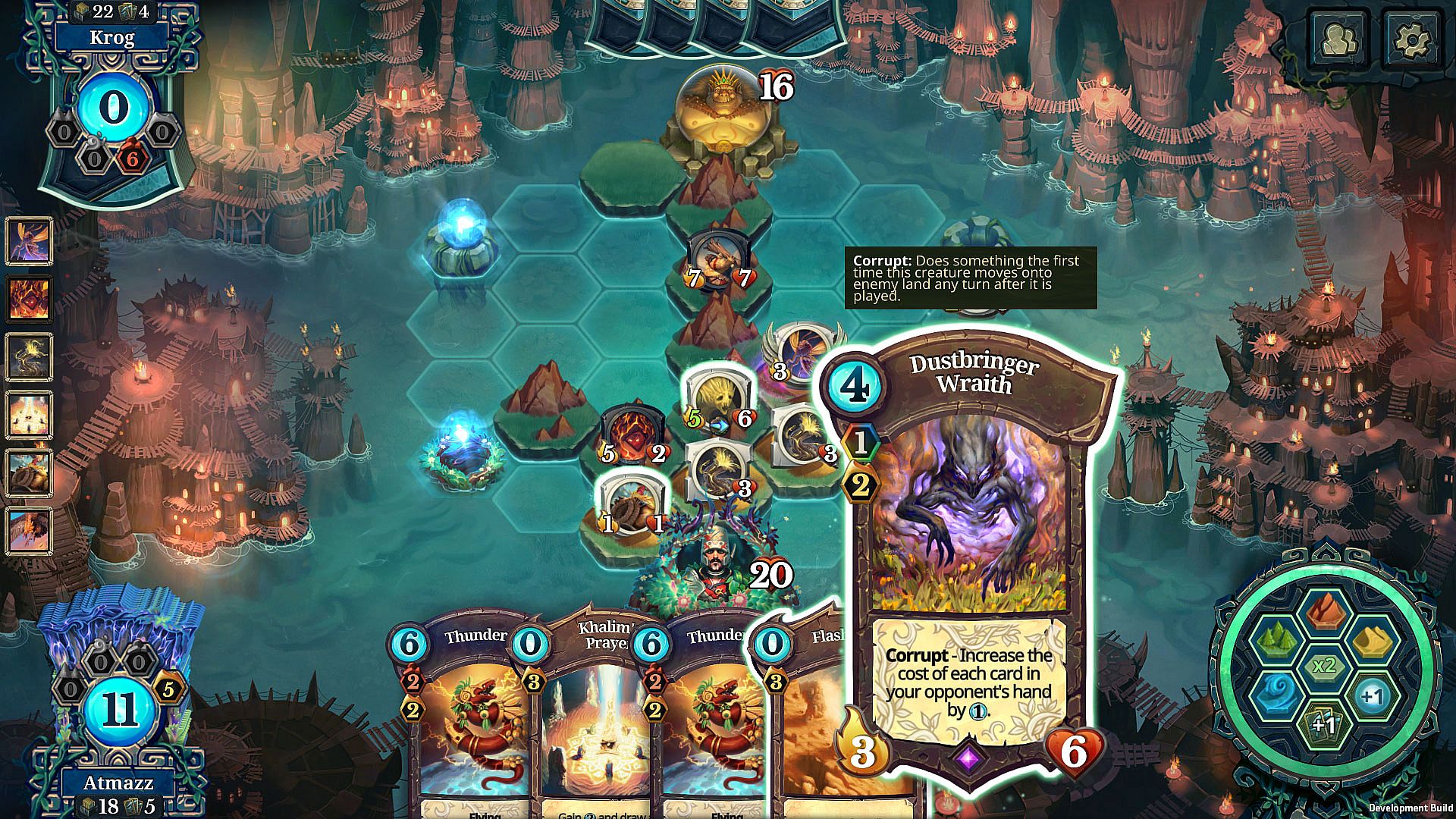
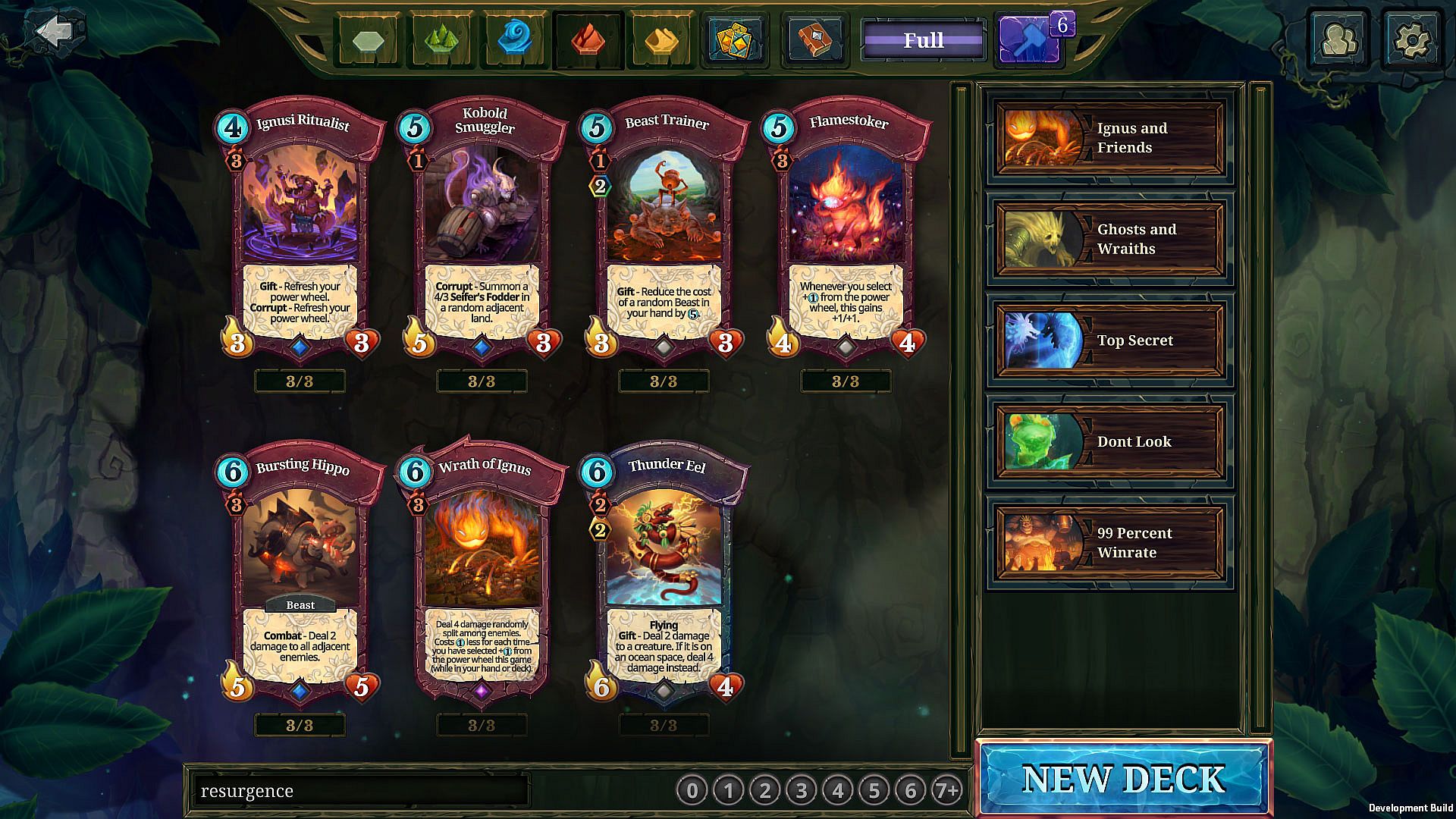
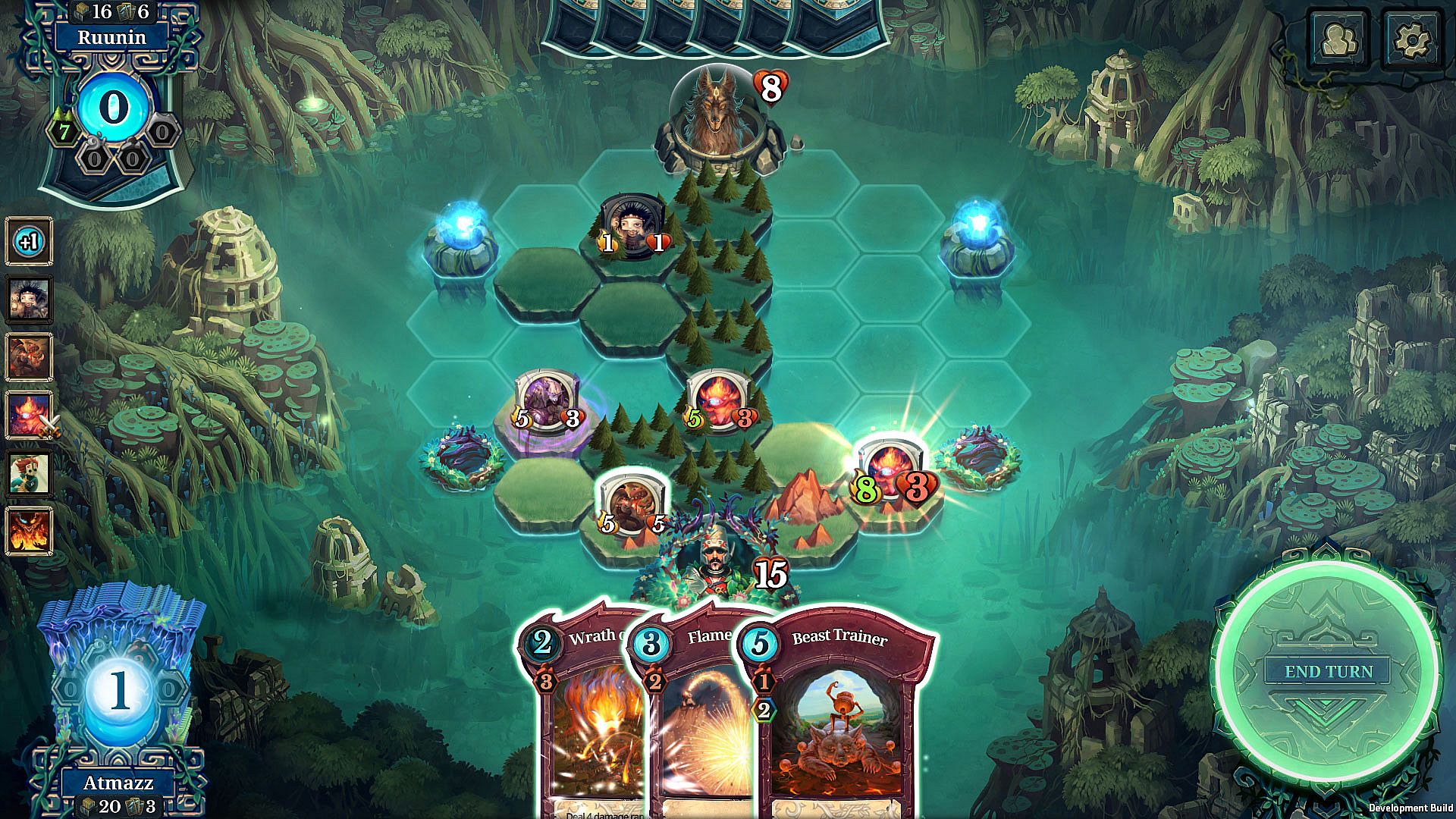
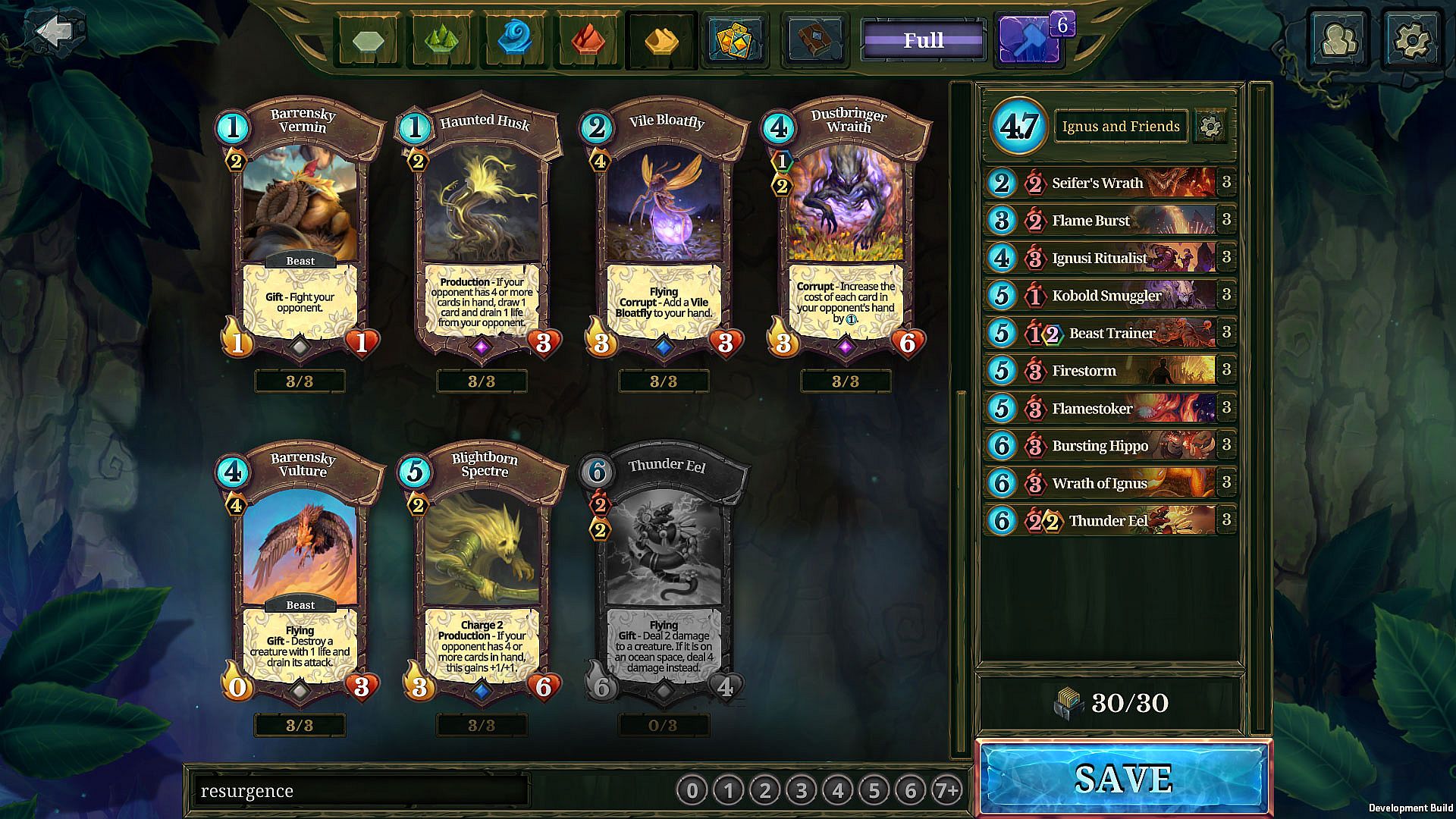
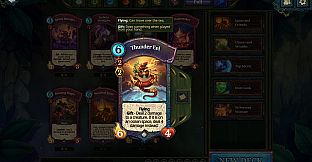
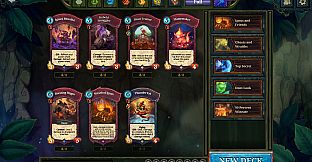
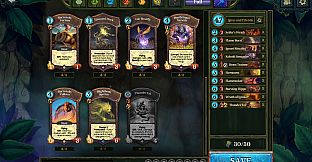
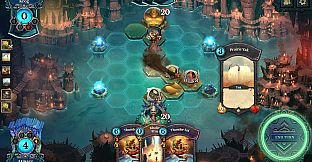
Faeria is a strategy card game that blends deck building with tactical board control on a living hex grid battlefield. Players collect cards, construct decks, and compete in matches where positioning and resource management determine the outcome. The Resurgence DLC expands the card pool with 40 new additions that introduce fresh mechanics such as the Power Wheel for dynamic choices, hand-size manipulation effects, and a new support subtype for creatures. These cards span red, yellow, green, blue, and neutral colors, released in two batches that unlock progressively after purchase.
Gameplay
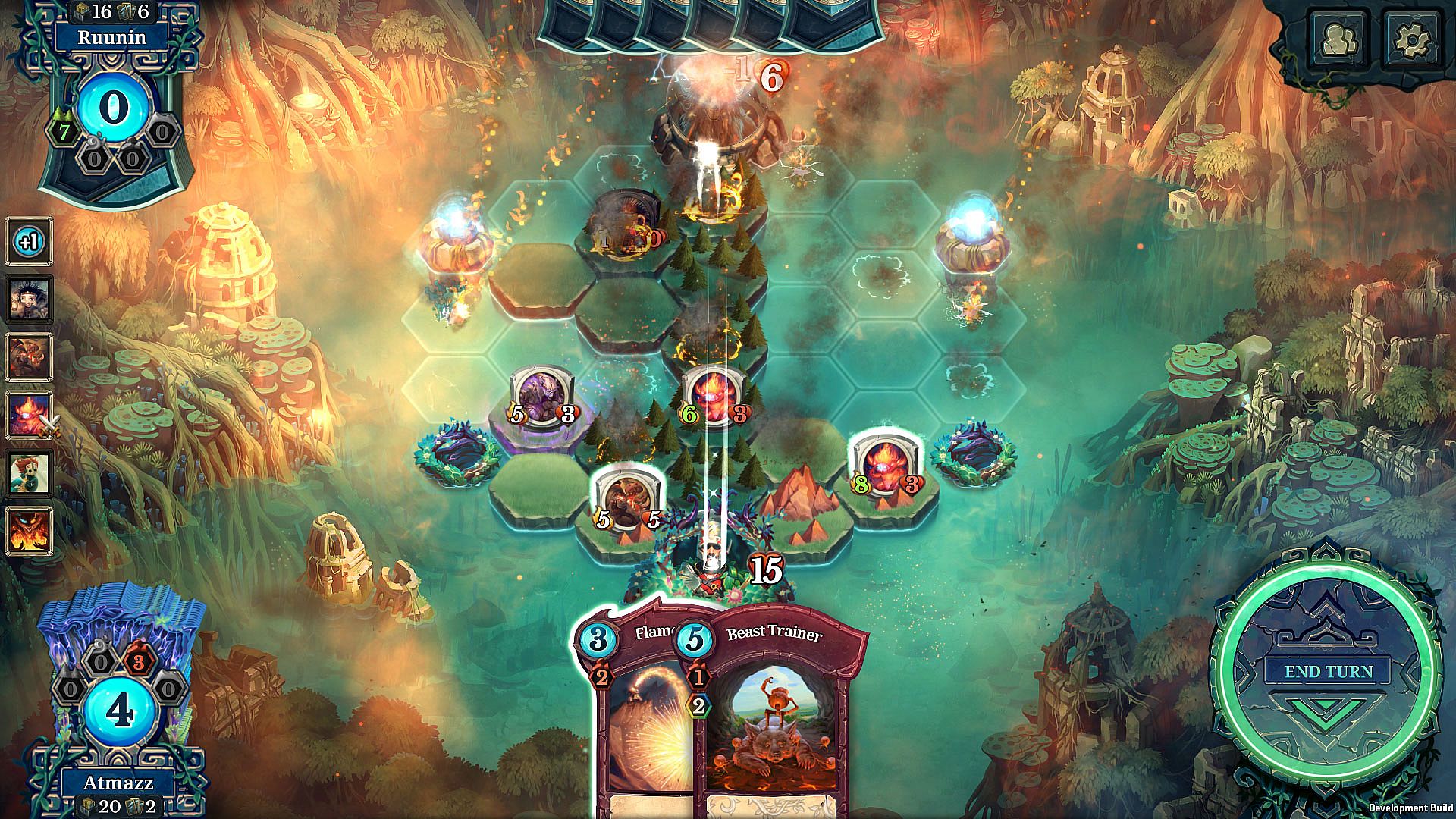
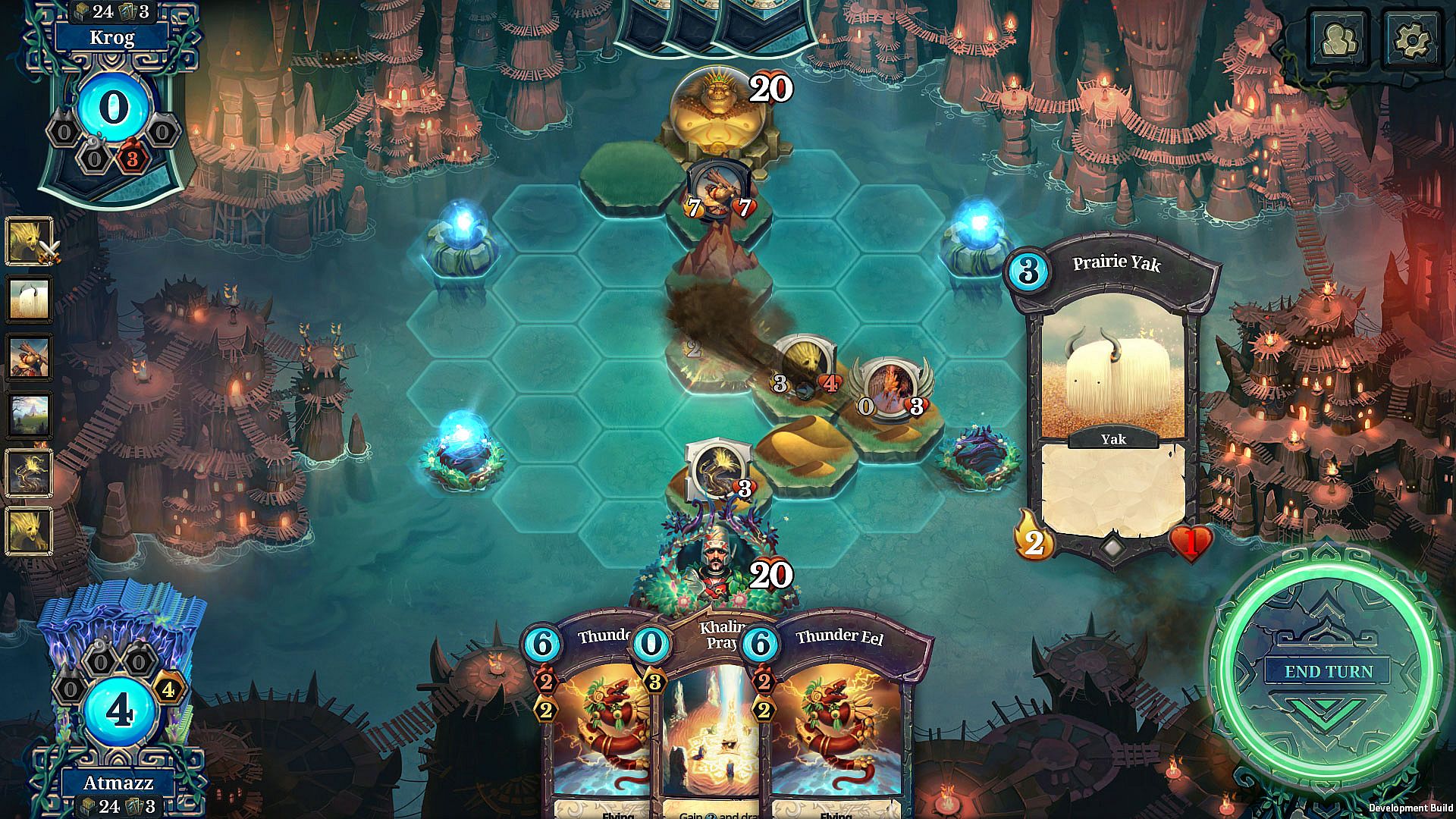
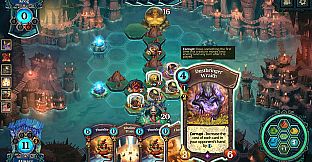
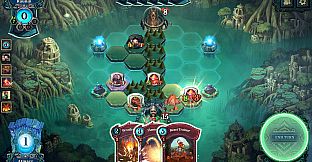
The core loop centers on building lands to generate Faeria, the game's primary resource, while summoning creatures and casting spells. The board consists of a central hex grid where players expand their territory from opposite sides toward shared mana springs at the vertices. Controlling these springs provides ongoing advantages, and creatures move across the board each turn to attack or block. Combat resolves when units engage in adjacent hexes, with life totals reduced through direct damage or creature strikes. Deck construction draws from a growing collection that includes base cards plus the Resurgence additions featuring elements like Ignus for aggressive red plays and Banon as an imperial captain leading support units.
Resource decisions matter at every step because lands must be placed deliberately to fuel plays without overextending. The Power Wheel mechanic from the expansion adds layers by letting players rotate or activate wheel segments for variable effects during turns. Hand-size disruption cards punish opponents who hold too many options, forcing careful management of draws and discards. Support subtype cards provide ongoing buffs or abilities that activate in specific board states, rewarding coordinated creature placement.
Game Modes
Faeria supports several distinct ways to play that emphasize different aspects of the card and board systems. Pandora serves as the primary draft experience where participants select cards in a rotating format to build temporary decks for matches. Adventure content guides new players through story-driven encounters against AI opponents using themed decks that teach core interactions. Puzzle challenges present isolated board states that require precise sequences of plays to solve within limited turns.
Multiplayer matches form the competitive backbone, allowing direct 1v1 confrontations with full collections. These can incorporate the full range of Resurgence cards once unlocked, enabling strategies built around the new support units and wheel interactions. Battle chests provide a steady stream of cards without duplicates, ensuring consistent collection growth over time.
Expansion Content and Mechanics
Resurgence splits its 40 cards into two themed releases. The first batch focuses on red, yellow, and neutral options centered around conflict and destruction, while the second emphasizes green, blue, and neutral cards tied to themes of resilience and recovery. New abilities never seen prior include direct manipulation of opponent hand sizes and the introduction of the support creature type that interacts with existing board elements in novel ways. Yaks appear among the additions as a recurring motif that ties into humorous or utility-focused designs.
Purchasing the content grants immediate access to exclusive cosmetic items including an avatar, orb, well, and card back. The cards integrate directly into ongoing collection systems, appearing in future battle chests for players who own the expansion.
Is It Worth Playing?
Faeria appeals most to players who enjoy deliberate, position-based strategy over pure luck or speed. Its hybrid card and board design rewards foresight in land placement and creature movement, creating matches that often hinge on small tactical edges rather than overwhelming power swings. The Resurgence cards add meaningful variety through the Power Wheel and support mechanics without requiring constant purchases beyond the initial expansion.
Current activity shows a stable, if modest, player base on PC with consistent concurrent users in the low dozens during peak hours. Matches remain accessible for both casual and dedicated participants thanks to the absence of duplicate cards in chests and the variety of modes that accommodate different time commitments. Those who value tactical depth in a collectible card format will find the combination of living board and expanding card pool engaging over repeated sessions.
The game runs well on standard PC hardware and supports both solo progression through adventures and direct competition. Its buy-to-play model with one-time DLC ownership removes ongoing monetization pressure, allowing focus on mastering the unique interactions introduced by Resurgence and the base systems alike.