




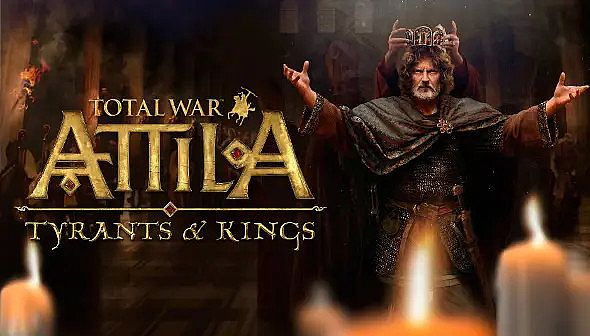












Total War: ATTILA is a strategy game for PC that blends turn-based campaign management with real-time tactical battles. Set in 395 AD during the collapse of the Western Roman Empire, it places players in a period marked by migration, conflict, and the rise of new powers from the eastern steppes. The Tyrants and Kings Edition delivers this core experience on a single platform, focusing on survival and conquest amid widespread instability.
Gameplay
The campaign unfolds on a detailed map of Europe and surrounding regions where players manage settlements, armies, and internal affairs through turn-based decisions. Core systems include politics that influence alliances and internal stability, a family tree that tracks succession and character development, and civic management that shapes building priorities and resource allocation. Technological progression allows advancement in military and societal areas tailored to the historical era.
Real-time battles emphasize unit positioning, terrain use, and morale factors, with added mechanics for destruction. Armies can set structures ablaze during combat, and the raze option lets players eliminate settlements entirely from the campaign map. Faction types differ notably: nomadic groups operate as mobile hordes that combine military and settlement functions without fixed territory, while settled factions like the Roman empires maintain cities and infrastructure. This distinction affects expansion strategies and defensive planning across multiple playable groups such as the Huns, Western Roman Empire, Eastern Roman Empire, Franks, Vandals, Visigoths, and Sassanid Empire.
Game Modes
The primary single-player experience centers on the Grand Campaign, where one faction pursues long-term objectives against AI opponents in a persistent world state. Multiplayer options expand this through co-operative campaigns that require allied factions to coordinate military efforts without the ability to declare war on each other. Head-to-head multiplayer allows direct competition between players starting from standard diplomatic relations, supporting both online and LAN connections. These modes maintain the same underlying campaign and battle systems while altering interaction rules between participants.
Factions and Historical Context
Each faction brings distinct starting positions and unit rosters shaped by its cultural background. Nomadic hordes prioritize mobility and rapid strikes, whereas Roman factions contend with internal divisions and external threats while defending established borders. The setting incorporates period-specific elements like religion, social changes, and military equipment that influence available options during play. Players navigate these differences to either expand aggressively or stabilize threatened territories.
Is It Worth Playing?
Player reception remains positive, with overall reviews at 80 percent positive from more than 13,000 submissions and recent feedback also rated Very Positive. The game suits those interested in historical strategy that combines large-scale map control with detailed battlefield decisions. Its mechanics for horde movement and settlement destruction provide focused challenges around survival and adaptation in a turbulent era. Availability on PC with single-player and multiplayer support makes it accessible for both solo campaigns and group sessions, though expectations should align with its 2015 release date and emphasis on deliberate pacing over frequent content additions.


