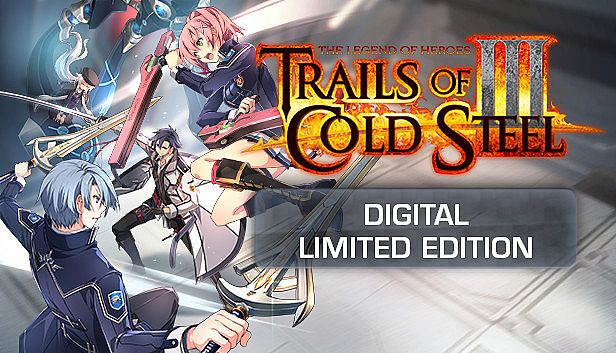































The Legend of Heroes: Trails of Cold Steel III is a single-player role-playing game centered on turn-based combat and narrative progression through a structured campaign. Players control a party that explores field maps, engages visible enemies, and advances through story chapters while managing resources and relationships.
Gameplay
Combat follows an Action Time system where turns appear on an AT bar ordered by speed. Commands map directly to controller buttons for faster input, replacing earlier menu navigation. Characters accumulate Craft Points through attacks to unleash unique skills, while Energy Points power elemental Arts that carry casting delays. A Break Gauge on enemies depletes through targeted damage, leading to a stunned state that raises incoming damage and forces item drops.
Combat Links pair two party members for cooperative follow-ups such as Pursuit attacks or stronger Rush and Burst options once Brave Points accumulate. Brave Orders let any character spend those points on party-wide effects without ending their turn. Field encounters allow pre-battle positioning for advantages, including Double or Triple Advantage states that grant earlier turns or extra Break damage. One character switches between close-range Striker mode and multi-target Gunner mode on her turns. Occasional battles shift to mech piloting with targeted strikes on enemy components.
Outside combat, players sprint across maps, switch controlled characters for different field attack ranges, and destroy objects to build Assault Points for guaranteed advantages. Side activities include fishing, cooking recipes, card battles, and reading. Bonding events strengthen ties with companions and unlock additional scenes or abilities. Quartz equipping customizes Arts access, while difficulty options range from Very Easy to Nightmare with corresponding enemy stat adjustments.
Game Modes
The core experience consists of a linear story campaign divided into chapters that alternate between academy life, field missions, and larger conflicts. Side quests appear alongside main objectives and contribute to academic standing or character development. New Game+ carries over progress for subsequent playthroughs with adjusted challenges.
Difficulty selection occurs at the start and remains adjustable mid-game. No separate multiplayer or competitive modes exist. Exploration emphasizes real-time field movement with visible foes rather than random encounters, and battles resolve on the same map layout without separate arenas in most cases.
Exploration and Progression
Field navigation rewards patience with enemy positioning for optimal encounter types. Turbo mode accelerates movement and combat pacing. Party management involves swapping members during fights and equipping gear that influences both combat and field performance. Progression ties into completing missions, raising bonds, and collecting items or recipes that support long-term survival across extended play sessions.
Is It Worth Playing?
Player reception remains strongly positive years after release, with Steam reviews rated Very Positive across thousands of entries. Critics highlight the depth of the combat systems, character interactions, and consistent pacing improvements over prior entries in the series. The game suits those who enjoy methodical turn-based JRPGs that reward planning around turn order, resource management, and positioning.
Its single-player focus and complete campaign make it a self-contained experience for newcomers to the style, though familiarity with earlier story threads enhances context. Current player counts show ongoing engagement on PC, with no live-service elements or required updates beyond the base release. Those seeking strategic battles paired with extensive side content will find substantial value here.