




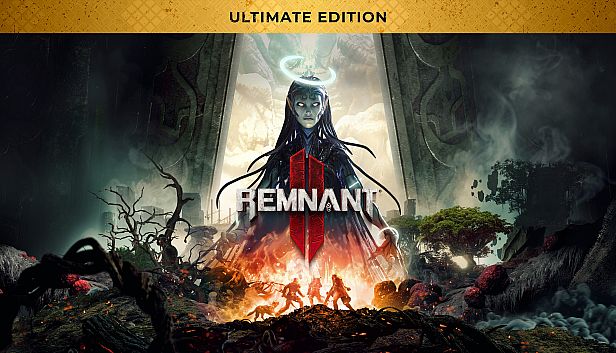




Remnant II is a third-person action RPG shooter that blends precise gunplay, melee combat, and deep character customization across procedurally generated worlds. Players take on the role of a Traveler fighting the spread of the Root, a destructive force threatening multiple realities. The game supports solo play or cooperative sessions with up to three participants, emphasizing build experimentation and repeated runs through varied environments on PS5.
Gameplay
Combat revolves around a mix of ranged firearms and close-quarters melee weapons, supported by dodge rolls and resource management that reward careful positioning. Players equip two primary archetypes at once, selecting from options such as the tanky Challenger, the ranged-focused Hunter, the support-oriented Medic, or the Handler with its canine companion. These choices influence skills, stats, and playstyle while allowing further layering through traits, rings, relics, and weapon mods.
Worlds like Yaesha, Losomn, and N'Erud feature randomized layouts, enemy placements, dungeons, events, and even storyline branches. Each playthrough can present different bosses, NPCs, and loot opportunities, encouraging multiple campaigns to uncover everything. Procedural elements extend to enemy types and quest variations, creating fresh encounters without altering the core loop of exploration, combat, and progression.
Buildcrafting forms a central pillar, with weapons gaining mutators and mods that alter functionality, alongside systems for upgrading gear and managing relic charges. The experience draws from souls-like design in its checkpoint-based enemy respawns and emphasis on learning attack patterns during demanding boss fights.
Game Modes
Campaign Mode delivers the primary narrative experience, guiding players through a sequence of worlds in random order while following an overarching story thread. Adventure Mode lets players select a specific world to generate a standalone storyline, focusing on targeted exploration and loot collection without committing to the full campaign structure.
Boss Rush serves as a dedicated challenge mode where participants face sequences of bosses interspersed with enemy hordes. It offers three difficulty tiers: Triple Threat for shorter three-boss runs, Trial by Fire for seven encounters, and The Gauntlet for nineteen. The mode supports solo or multiplayer play and provides temporary buffs to aid survival.
Additional options include Hardcore Mode, which imposes permanent death and restricts grouping to other Hardcore players only. These modes accommodate different preferences for story progression, targeted farming, or pure combat testing.
Worlds and Progression
Five main realms define the setting, each with distinct aesthetics, enemy factions, and environmental hazards. The Labyrinth acts as a hub-like connector, while Root Earth represents a late-game area tied to the central conflict. Random generation ensures that side dungeons, injectables, and boss variants differ across sessions, expanding replay value through discovery rather than linear repetition.
Archetype progression and trait allocation allow gradual power growth, complemented by item acquisition from defeated foes and hidden chests. Players manage inventory carefully, balancing offensive capabilities with defensive tools and utility options during extended expeditions.
Is It Worth Playing?
Remnant II maintains strong player interest years after launch through consistent updates, including a free Boss Rush mode and quality-of-life additions like the Prism system for endgame enhancement. Reception remains positive overall, with critics highlighting satisfying combat and build depth while Steam reviews sit in the Very Positive range based on tens of thousands of submissions.
The game suits players who enjoy challenging co-op shooters that reward experimentation and persistence. Those seeking varied procedural content and meaningful character advancement will find repeated value in its systems. Availability on PS5 ensures accessible performance for console users interested in the genre mix of action RPG elements and third-person shooting.
Core strengths lie in the seamless integration of solo and group play, where archetypes complement one another effectively during tougher encounters. Ongoing support keeps the experience fresh without requiring additional purchases for basic modes and updates.
