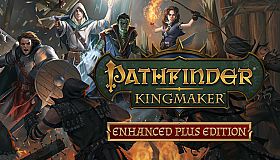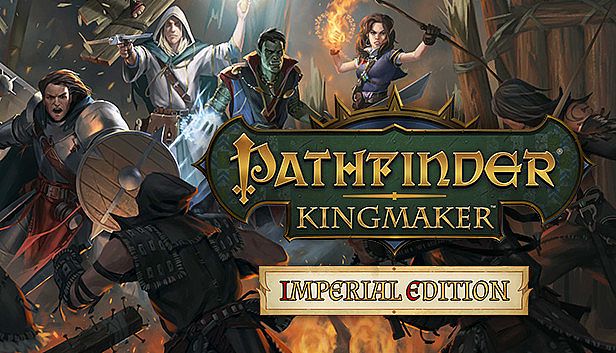








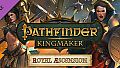
Pathfinder: Kingmaker is an isometric CRPG that places players in the role of a custom hero tasked with taming the untamed Stolen Lands and establishing a kingdom. Developed for PC, the game draws directly from the Pathfinder tabletop ruleset to deliver a single-player experience centered on exploration, tactical combat, companion management, and realm-building decisions that shape both the narrative and the physical growth of settlements.
Gameplay
Core systems revolve around deep character creation using ability scores, skills, feats, and multiclassing options across multiple races and classes. Alignment choices influence dialogue outcomes and companion relationships, shifting gradually based on actions taken throughout the campaign. Combat operates in real-time with pause by default, allowing players to issue commands to a party of up to six characters while enemies act autonomously, with an optional turn-based mode available for more deliberate encounters. Exploration covers wilderness areas, dungeons, and settlements on an overland map, where random encounters and scripted events add variety to travel. Kingdom management integrates as a parallel layer once the player claims territory, requiring the assignment of advisors to handle projects, resolve crises, and improve statistics that affect resource production, security, and public opinion. Decisions in both adventuring and governance carry long-term consequences for available quests and kingdom stability.
Game Modes
The primary experience consists of a single-player campaign that combines main story progression with extensive side content and companion quests. Difficulty options range from story-focused settings that simplify combat mechanics to higher challenges that increase enemy stats and enforce stricter adherence to rules. No cooperative or competitive modes exist, keeping the focus entirely on individual decision-making across the full campaign length. Kingdom events and advisor assignments function as integrated systems rather than separate modes, influencing the pace of the main adventure without requiring dedicated sessions.
Character Progression and Companions
Progression emphasizes specialization through hundreds of feats, spell selections, and archetype choices that allow varied builds for each party member. Companions join at different points and bring unique backstories, skill sets, and potential conflicts tied to the player's alignment and kingdom policies. Respec options and quality-of-life improvements in later patches support experimentation without restarting the campaign. The isometric perspective and party-based structure encourage careful positioning and ability synergy during fights, while skill checks during exploration and dialogue provide non-combat paths to resolution.
Is It Worth Playing?
Player reception has remained mostly positive years after release, with sustained interest driven by the depth of the rules adaptation and the kingdom-building layer that sets it apart from standard party-based RPGs. The experience suits those who appreciate complex character systems, meaningful choices with visible impacts on the world, and a mix of adventuring and management. It may feel demanding for players seeking lighter pacing or forgiving mechanics due to its faithful implementation of tabletop elements and the need to balance exploration with realm upkeep. Availability on PC continues with an active modding scene that extends replayability for dedicated fans. Those drawn to isometric CRPGs with strong narrative branches and strategic layers will find substantial content to engage with over multiple playthroughs.