







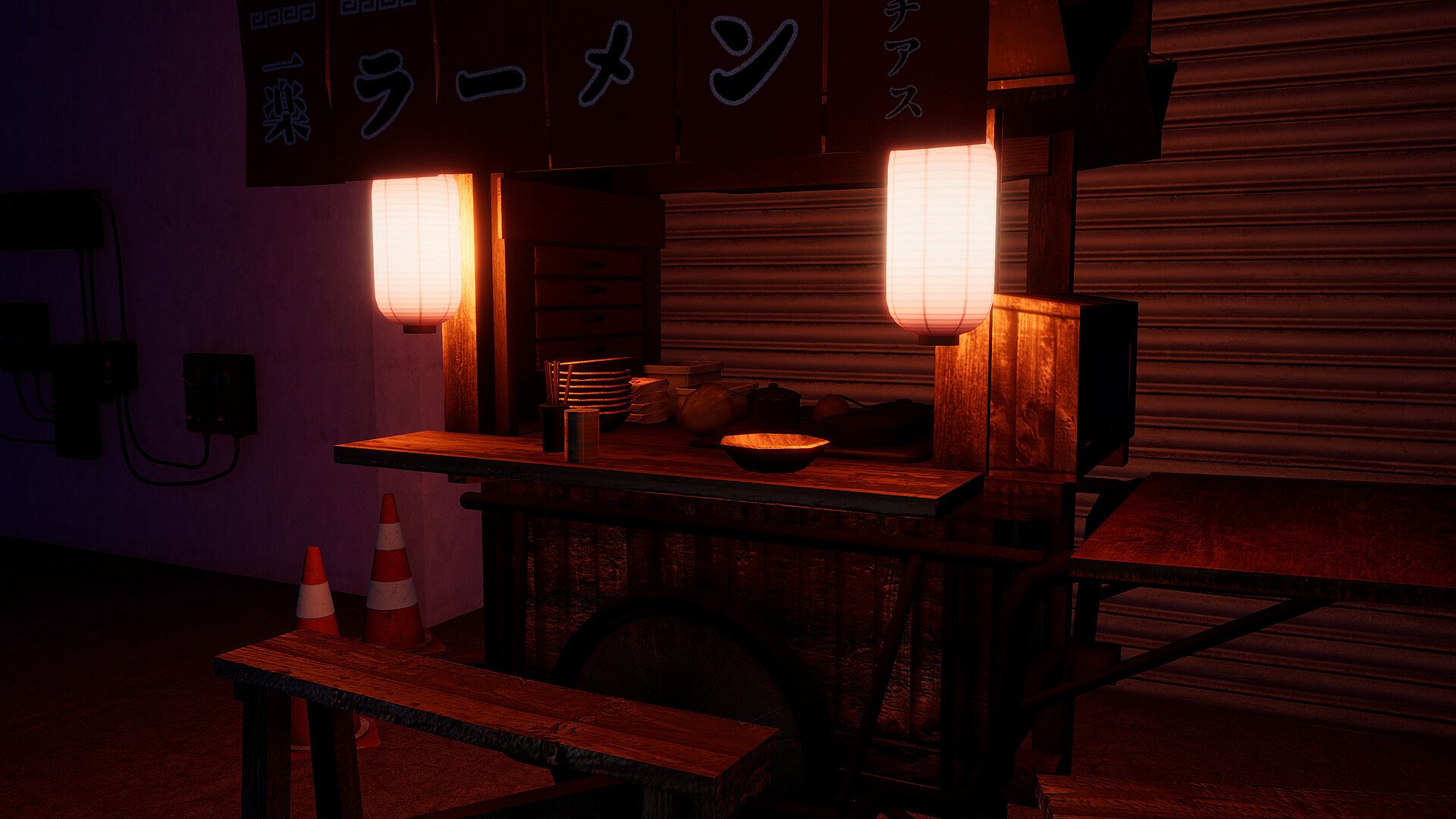
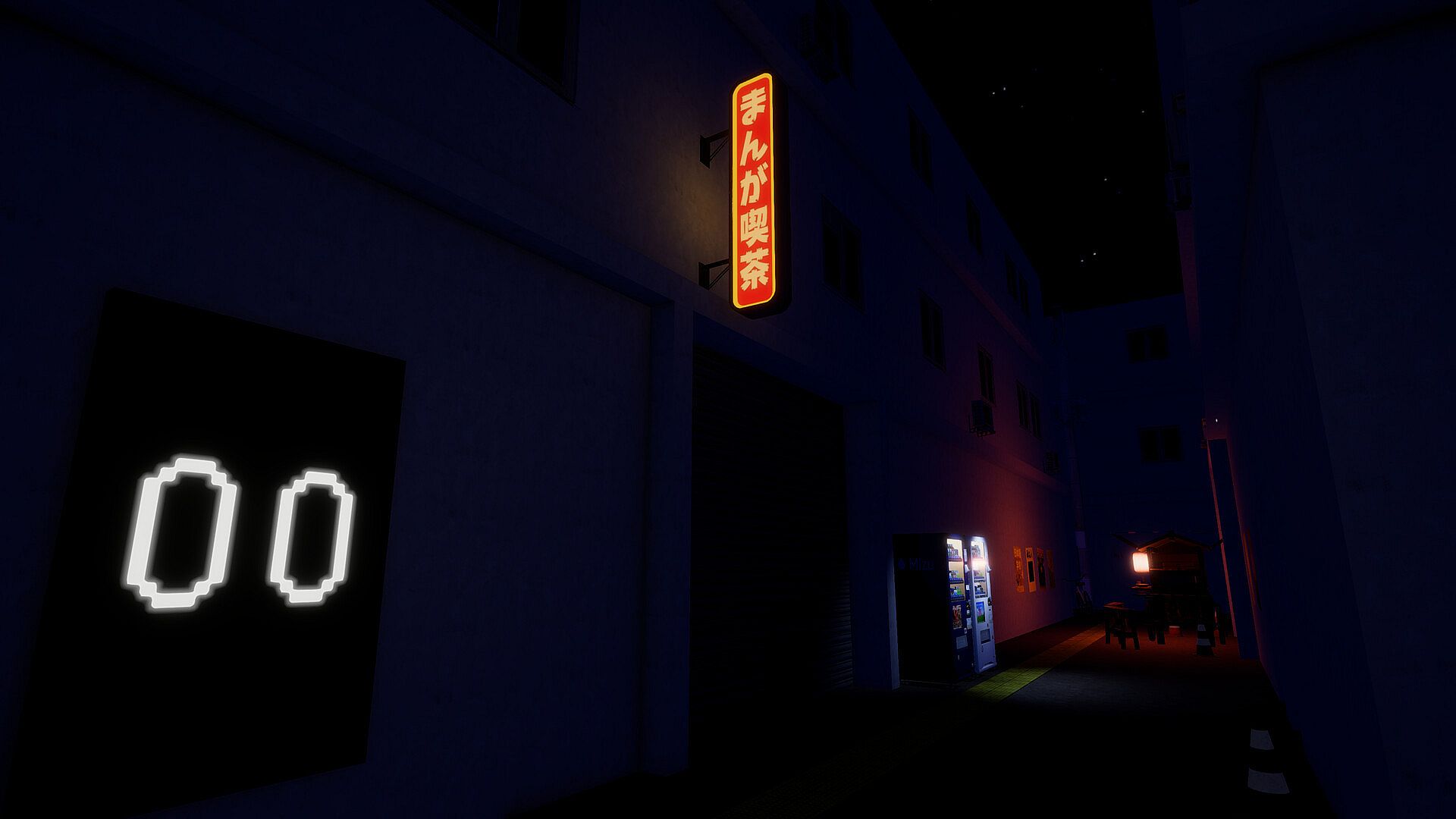
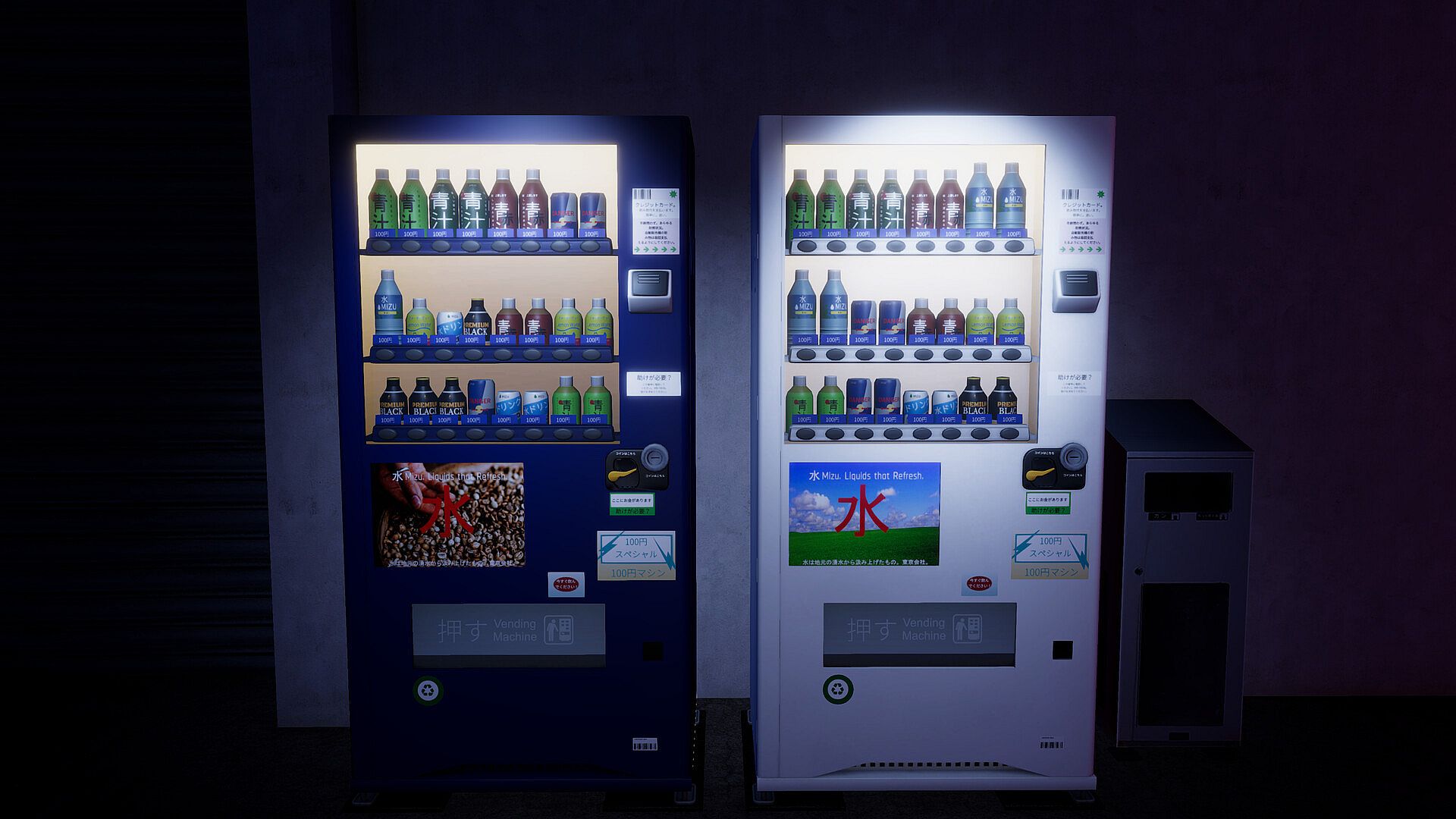






Yatai 8 is an indie simulation game set on PC that places players in a looping Japanese-style corridor where careful observation determines survival and progress. The core premise revolves around escaping an endless hallway by identifying subtle changes in the environment on each pass. Success depends on spotting anomalies and reacting correctly without hesitation, creating a tense loop of analysis and decision-making that resets entirely on any error.
Gameplay
The gameplay centers on repeated traversals of the same corridor segment. Players must examine every detail during each loop, from visual elements like altered signage or objects to audio cues such as unexpected sounds or distortions. If the corridor appears unchanged, the correct action is to continue forward. Spotting any anomaly requires an immediate turn back to advance the exit counter. This system builds tension through repetition, as the environment remains mostly consistent until a change appears. Quick reactions matter because hesitation or an incorrect choice sends progress back to the start. The simulation emphasizes patience and attention to detail over speed or combat, with heavy reliance on sound design and lighting to highlight subtle shifts that signal danger or normalcy.
Progression unfolds through consecutive correct choices that gradually increase the exit number. Each successful loop without mistakes brings the player closer to the final exit. The design rewards thorough scanning on every attempt, encouraging players to notice minor differences in lighting, textures, or ambient noise that might otherwise go overlooked. Mistakes punish by resetting the counter, which reinforces the need for consistent focus across multiple runs. This creates a tight feedback loop where observation skills improve with practice, turning each attempt into a test of memory and perception.
Game Modes
Yatai 8 operates as a single continuous experience without separate named modes or variations. The primary loop involves repeated corridor walks where players apply the same observation rules on every attempt. Random anomaly placement ensures that no two runs follow identical patterns, which adds natural variety to the core progression system. Players advance by maintaining a streak of accurate decisions until reaching the exit threshold. There are no branching paths, competitive elements, or alternative rulesets, keeping the focus squarely on the observation mechanic and the pressure of potential resets. This streamlined structure suits focused sessions where the goal remains consistent: identify changes accurately and react without error.
Key Features
The game delivers an immersive atmosphere through detailed sound design and lighting that makes every faint noise or shadow shift potentially significant. Dozens of unique anomalies appear across attempts, ranging from small visual alterations to more pronounced audio disturbances and unsettling events. These elements appear randomly, which supports high replayability as players encounter different combinations on successive tries. Full text localization covers six languages, including English, French, Spanish, German, Japanese, and Simplified Chinese, allowing broader accessibility without altering the core mechanics. The simulation avoids complex controls, relying instead on simple forward movement and turning decisions that keep attention on environmental analysis rather than interface management.
Is It Worth Playing?
Yatai 8 appeals to players who enjoy deliberate, observation-driven experiences in a contained setting. The emphasis on spotting anomalies and managing resets creates a satisfying sense of mastery once patterns become familiar, though the random nature of changes keeps each session fresh. Those drawn to simulation titles that reward patience and attention to subtle details will find the loop engaging, especially during short play sessions where the goal is to extend a successful streak. The absence of additional systems or modes means the value lies entirely in refining observation skills within the corridor environment. Players seeking straightforward, focused gameplay without extraneous features may appreciate the direct approach, while those preferring varied mechanics or longer campaigns might look elsewhere. Availability on PC makes it accessible for anyone interested in this style of indie simulation.











