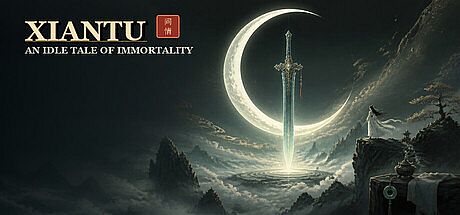


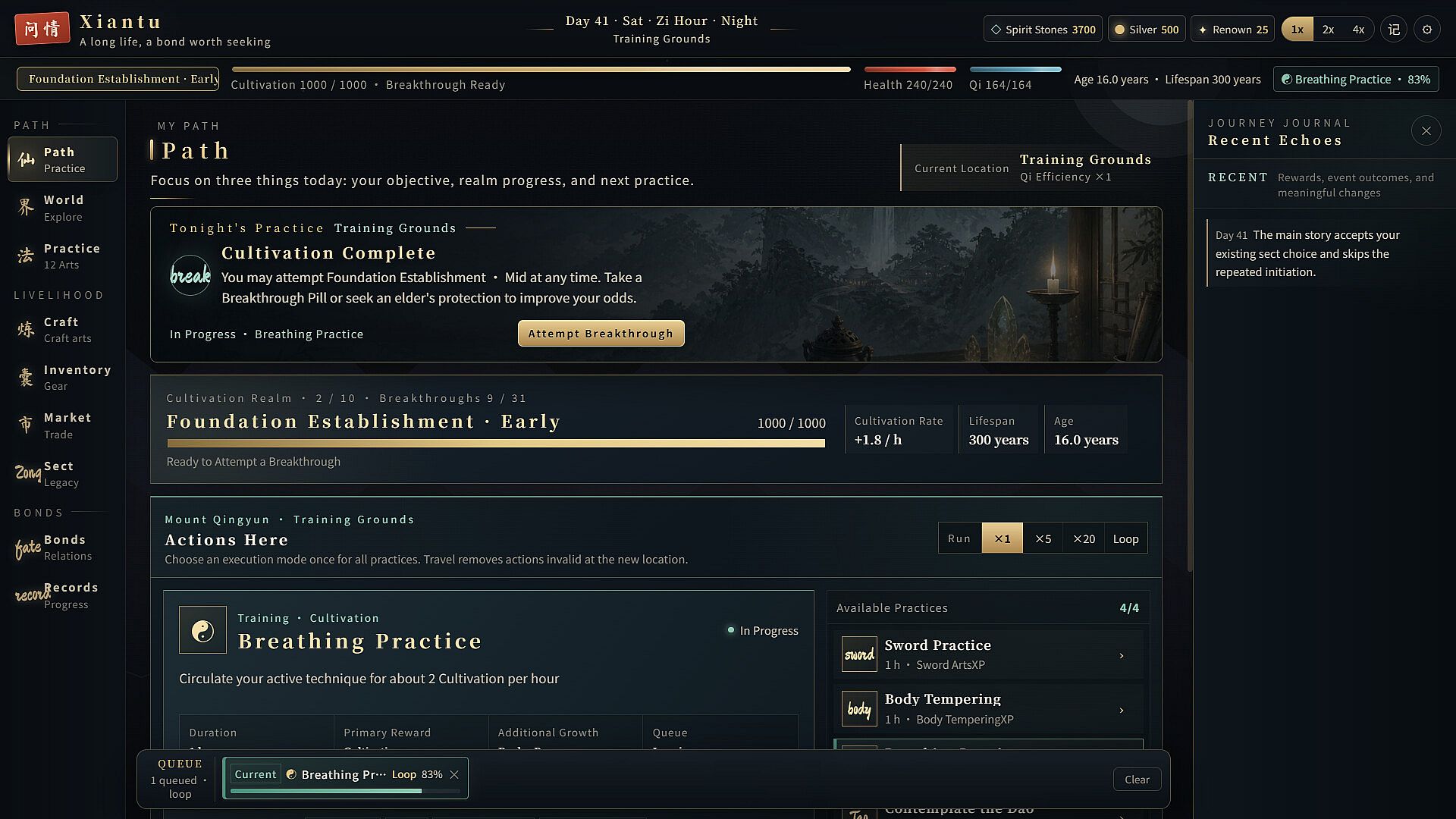







Xiantu: An Idle Tale of Immortality is a single-player idle RPG built for extended desktop sessions on PC. Players begin as an unknown wanderer and shape a cultivation journey that spans centuries through deliberate choices in training, travel, crafting, combat, and duty. The game emphasizes readable progress at a glance, with an always-visible journey journal that tracks pursuits, resources, and events while time advances in the background.
Gameplay
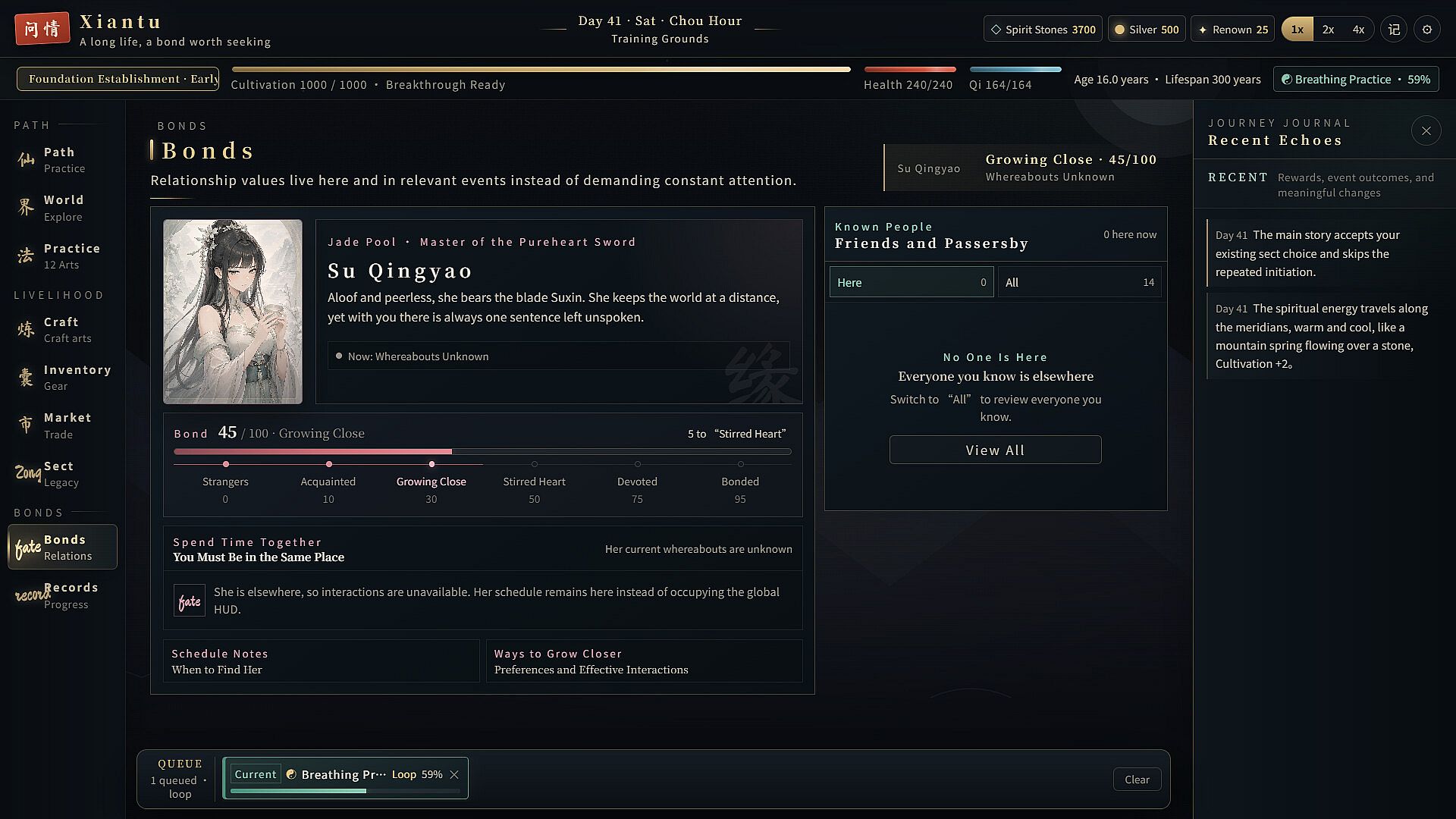
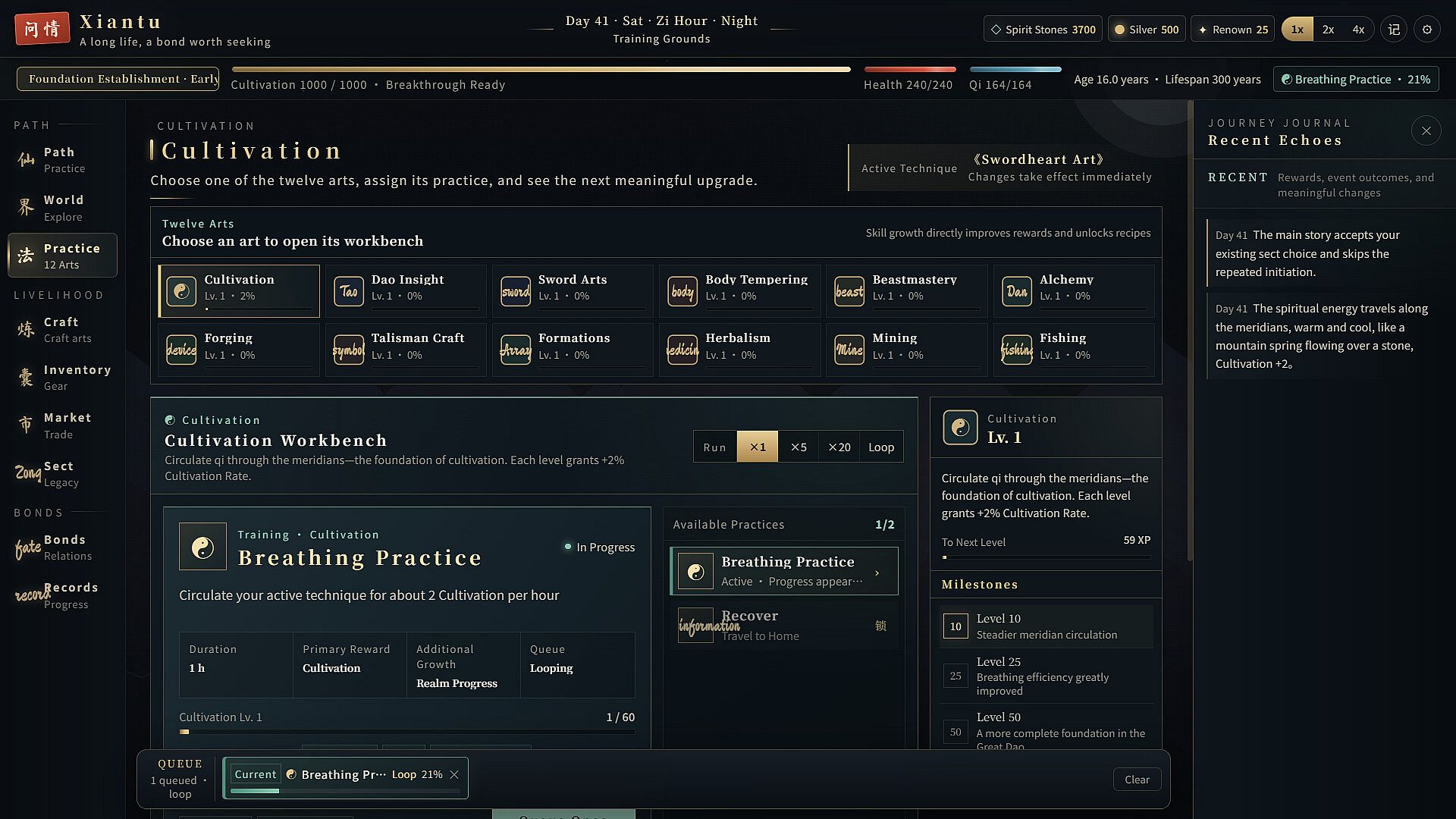
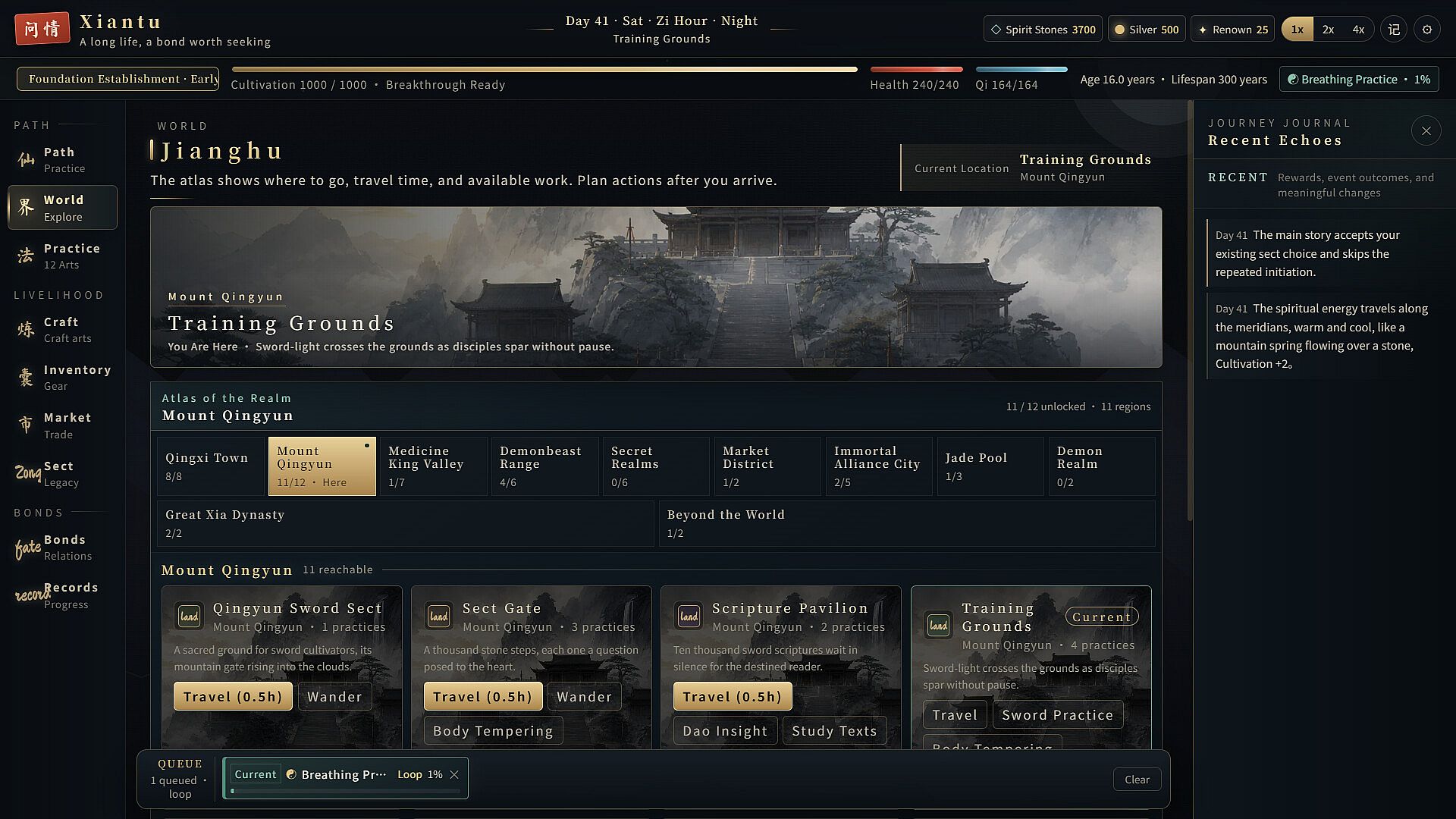
The core loop centers on queuing activities and returning later to review outcomes. Twelve arts form the foundation of progression, paired with breakthroughs across ten major realms. Players refine pills, forge equipment, inscribe talismans, and raise spirit beasts to support their path. Exploration covers 55 illustrated locations filled with 461 encounters that respond to prior decisions. A ten-chapter main story unfolds alongside these events, where allegiances shift, techniques unlock, and consequences ripple forward. Affinity with the reserved sword cultivator Su Qingyao develops through meetings, gifts, remembered choices, and shared trials rather than constant meter management.
Offline progress keeps the world moving when the game is closed. Adjustable time speed, activity queues, and batch actions support long-form play without constant input. Eighty-three crafting recipes integrate with spirit beasts, sect duties, court ranks, a trial tower, and secret realms. The interface maintains a clear hierarchy suited to desktop viewing, and the full story and menus appear in both Simplified Chinese and English.
Game Modes
Progression branches through distinct systems rather than separate competitive modes. Cultivation focuses on the twelve arts and realm breakthroughs. Crafting covers pill refinement, equipment forging, and talisman inscription. Exploration sends the wanderer through illustrated locations and encounter chains. Duty options include serving a sect or advancing through imperial court ranks. Combat and beast raising add layers to these pursuits, while the trial tower and secret realms provide structured challenges. Decisions across these systems influence later events and contribute to one of nine principal endings or 54 lighter odd endings.
Time management ties the systems together. Players queue one or more activities, advance time, and return to new opportunities or consequences. This structure suits players who prefer setting a direction and checking results periodically over moment-to-moment control.
Story and World
The narrative unfolds through encounters and a ten-chapter main story rather than dense cutscenes. Travel between 55 locations triggers 461 distinct events shaped by earlier choices. Allegiances can form or break, techniques become available or lost, and the path narrows or widens accordingly. Nine principal endings reflect major decision branches, while 54 odd endings capture lighter or unexpected outcomes. The journey journal records these developments for easy reference during idle stretches.
Atmosphere comes from 21 original music tracks composed for specific regions, battles, romance moments, and endings. The text-rich presentation keeps key information visible without requiring constant menu navigation.
Technical Features and Support
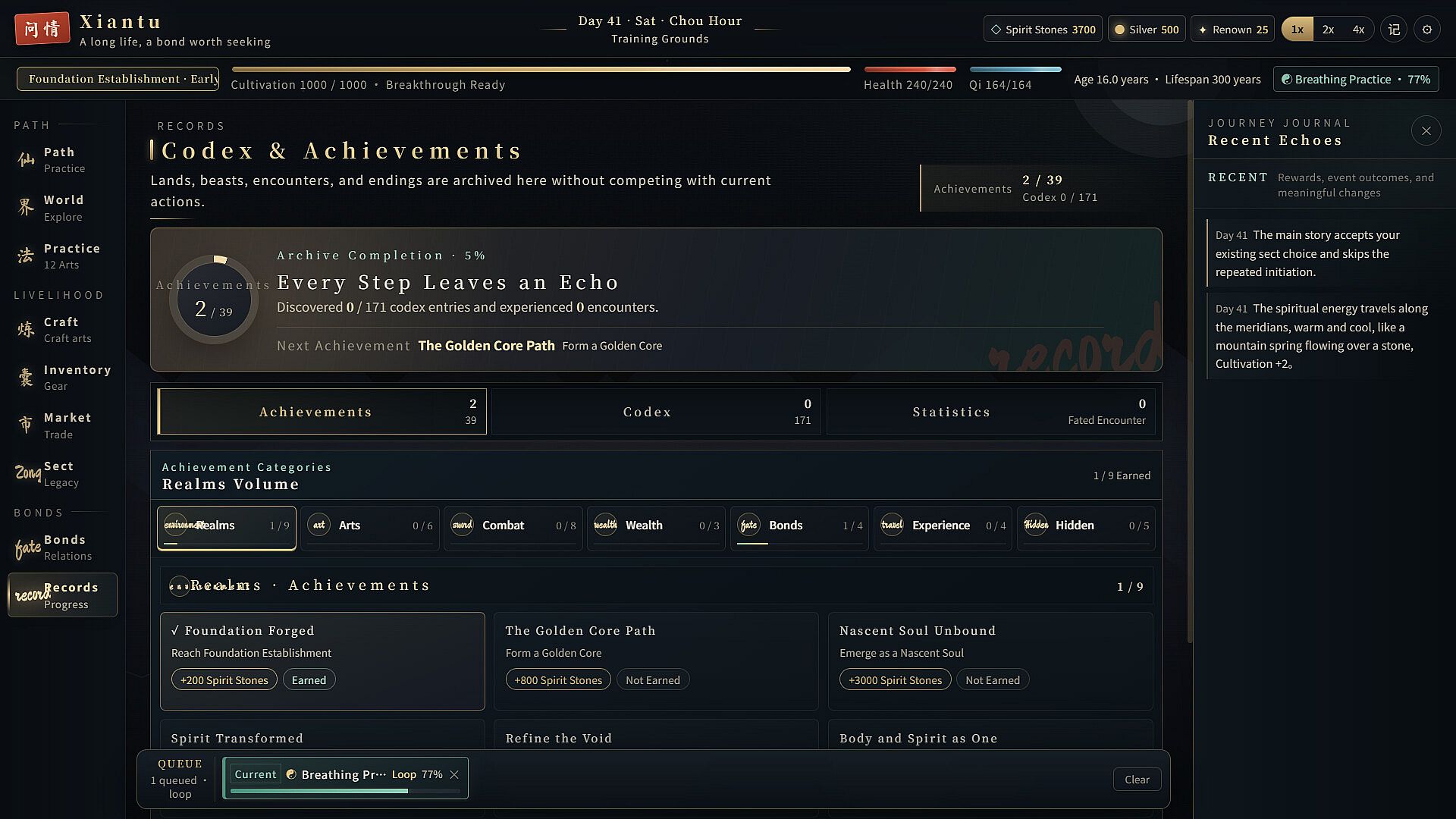
Designed as an experimental independent title, the game prioritizes calm management of centuries-long timelines. Desktop-first layout keeps the current pursuit, progress bars, resources, and journal readable at a glance. Steam Cloud support preserves progress, and 39 achievements track milestones across the systems. Full bilingual interfaces cover all story content.
Offline advancement, speed controls, and batch actions reduce the need for active monitoring. These elements align with players who enjoy incremental growth and periodic returns to meaningful updates.
Is It Worth Playing?
Xiantu suits players who enjoy idle progression layered with meaningful choices in a cultivation setting. The combination of queued activities, branching encounters, and multiple endings rewards thoughtful planning over rapid clicking. Features such as offline progress, adjustable pacing, and a persistent journal support extended play sessions without demanding constant attention. Those drawn to text-heavy single-player experiences with crafting, exploration, sect involvement, and quiet relationship development will find the systems align closely with the described promise of calm, readable centuries. The independent scope keeps the focus narrow and consistent rather than expansive.