


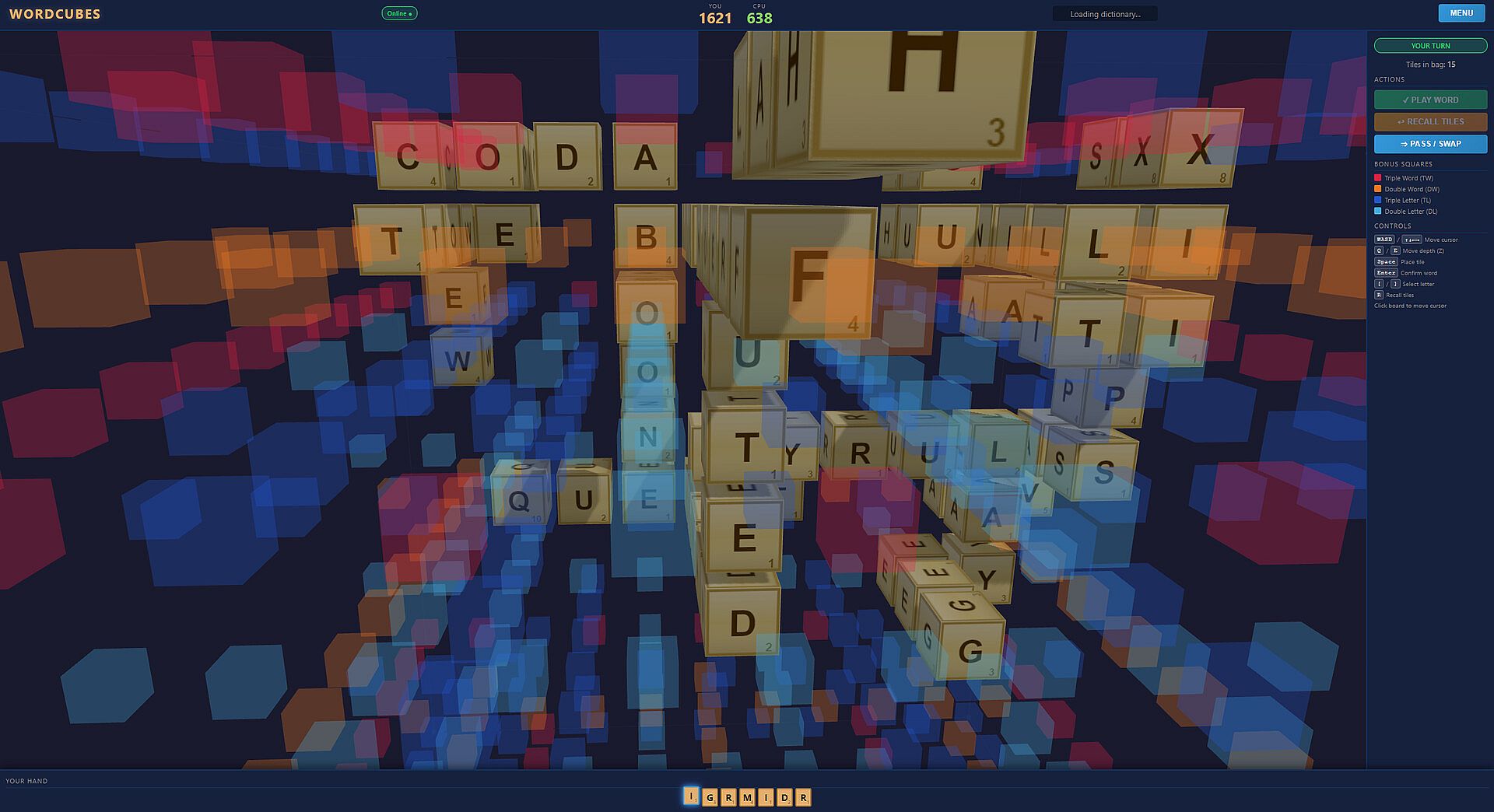
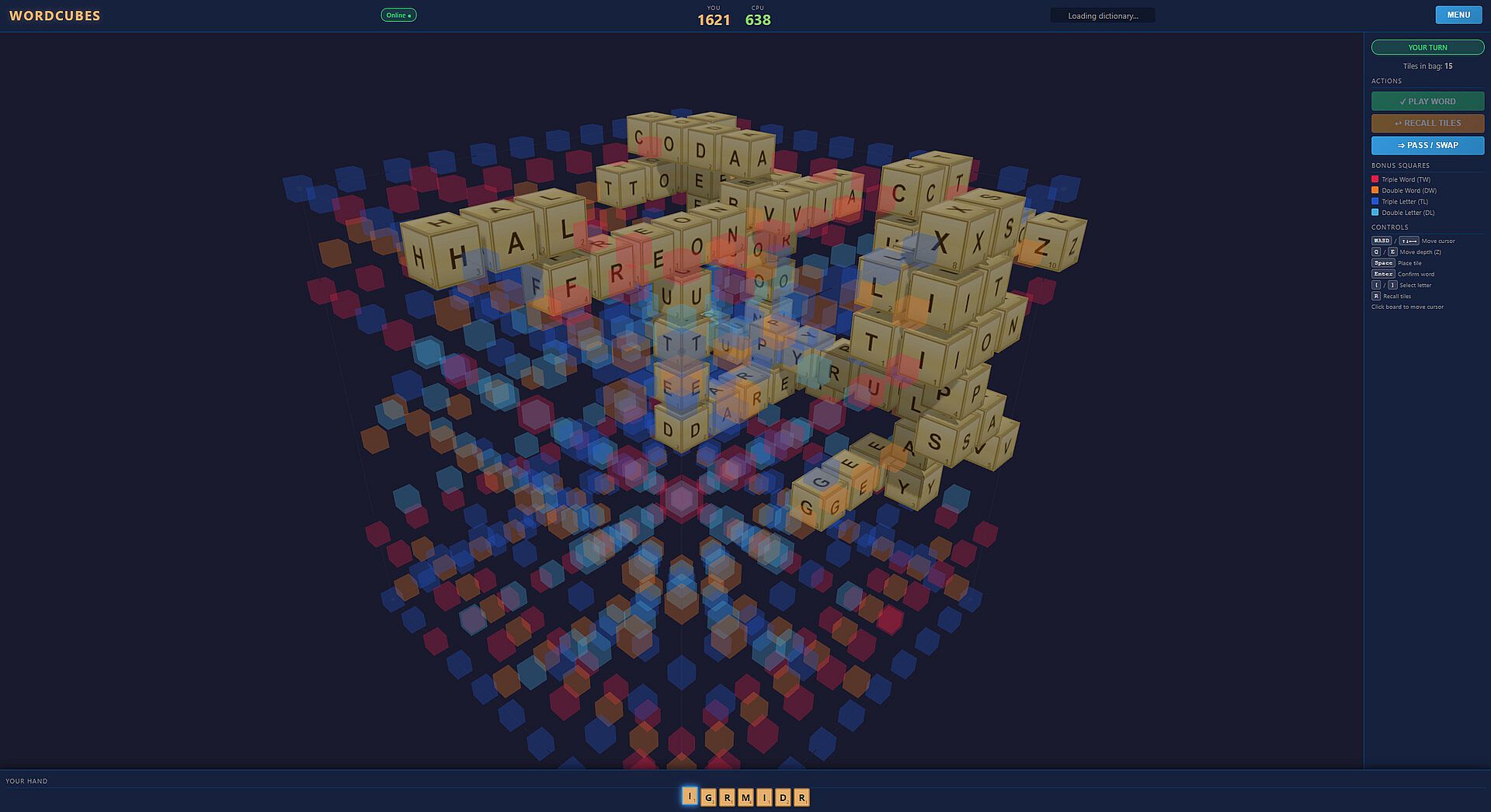
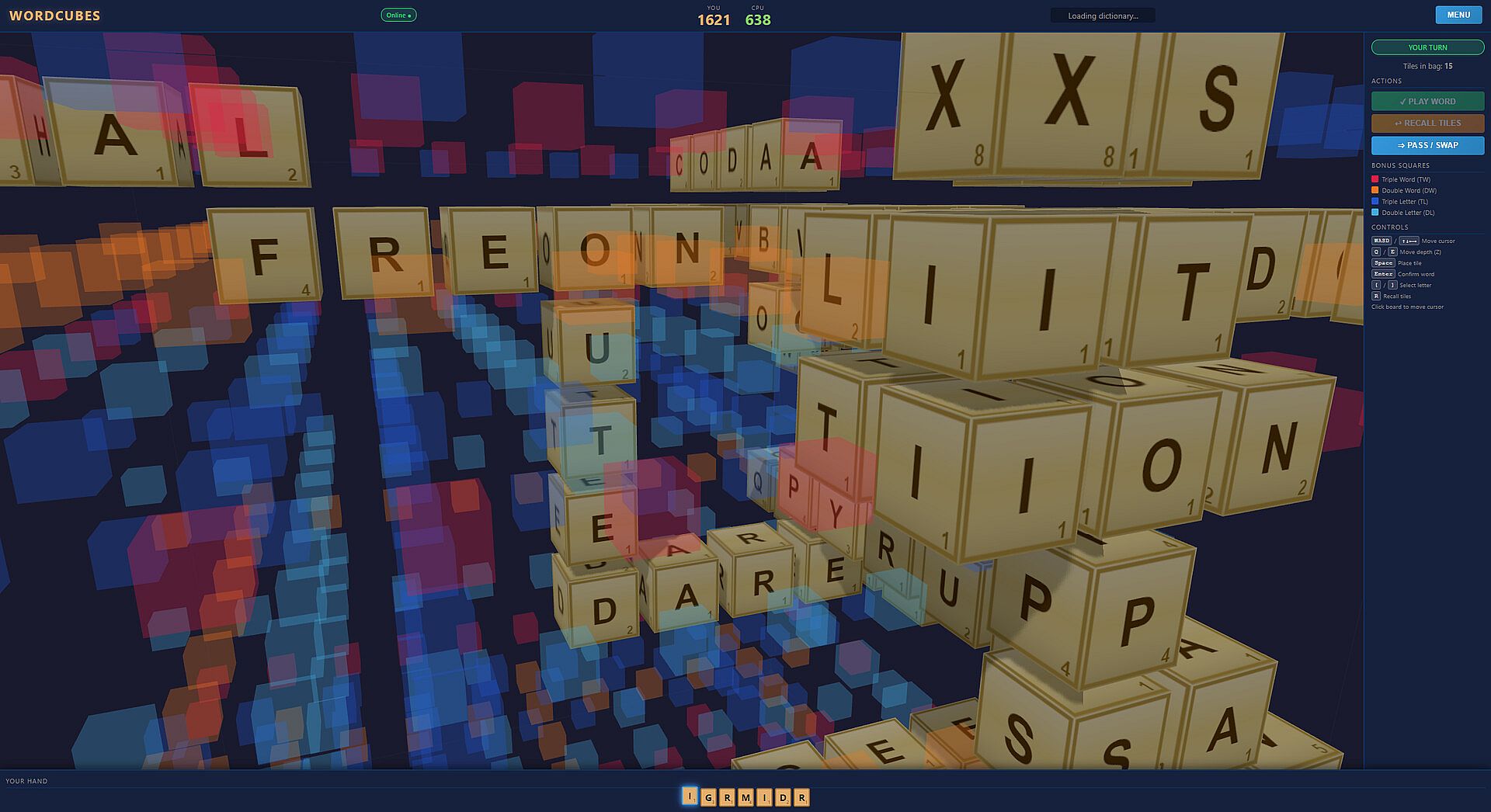
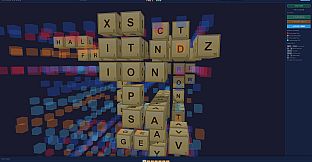
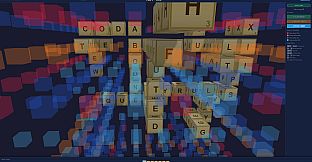
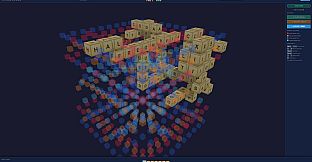
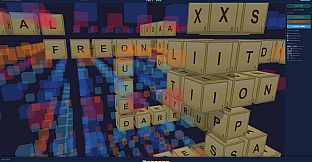
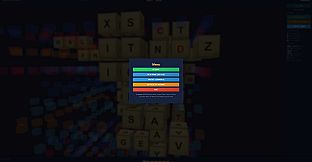
Word Cubes is a strategy and casual 3D word game developed for PC that transforms the familiar tile placement mechanic into a spatial challenge on a cubic grid. Players position letter tiles to form intersecting words along multiple axes while competing against an artificial intelligence opponent to achieve the highest score.
Gameplay
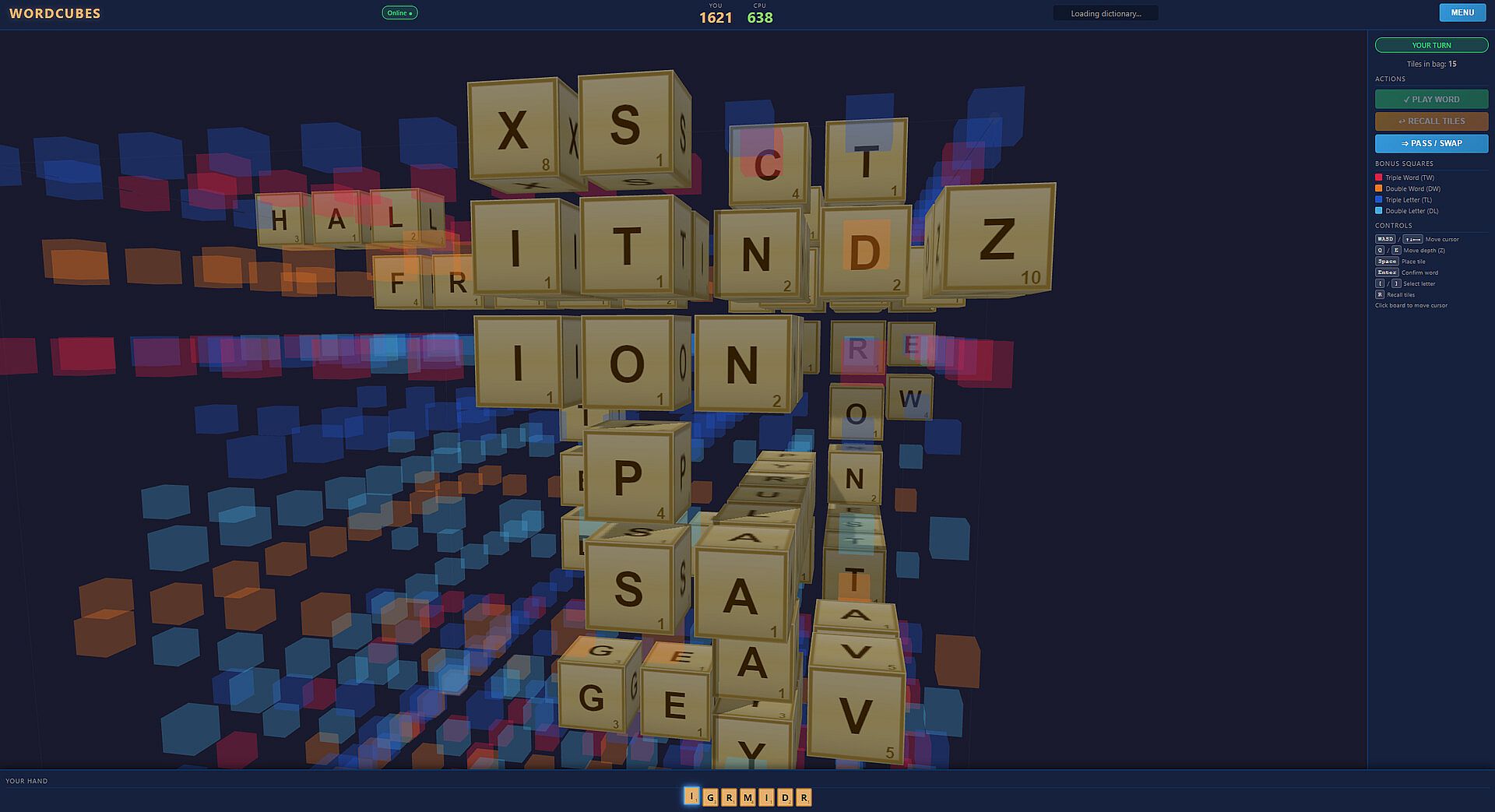
The core loop centers on managing a rack of seven tiles drawn from a standard English letter distribution. Each turn requires selecting a tile and positioning it on the three-dimensional board so that it contributes to valid words along the X, Y, or Z axis. The first placement must cover the center cube, after which every subsequent move must connect to at least one existing tile to maintain board continuity.
Bonus squares scattered across the cube faces apply multipliers such as double word, triple word, double letter, and triple letter scores. These positions reward careful planning because a single placement can activate several multipliers simultaneously when words intersect in three dimensions. Real-time validation displays whether a word meets dictionary standards and shows the projected point total before the move is confirmed.
Resource management adds another layer. When options run low, players may swap tiles back into the bag for a new draw, though this action consumes a turn. Passing is also available but carries the same cost, encouraging players to weigh short-term sacrifices against potential future high-value plays. The match concludes once the tile supply is exhausted or repeated passes occur, with the higher total determining the winner.
Game Modes
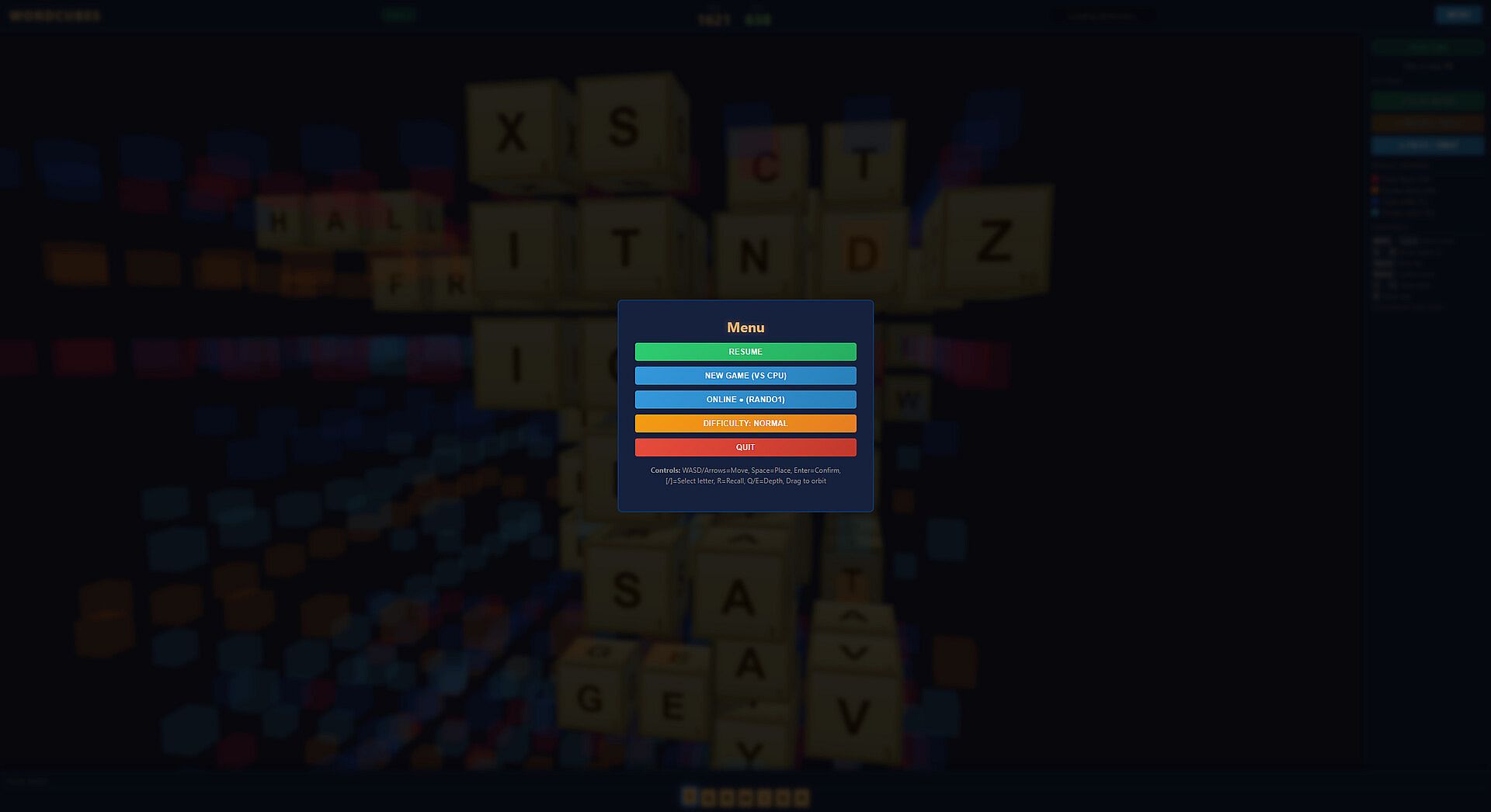
Word Cubes centers on single-player matches against adjustable-difficulty artificial intelligence. The AI evaluates the board state, prioritizes high-scoring opportunities, and adapts its strategy to counter the human player. Difficulty settings allow newcomers to learn the three-axis system while experienced players face more aggressive opponents that maximize multipliers and block advantageous positions.
No additional named modes appear in the available information. The experience remains focused on head-to-head scoring contests against the computer, with the same core rules and victory conditions applying across all difficulty levels.
Visual Presentation and Controls
The cubic board renders with clean lines and distinct faces that make spatial relationships easy to read. Players can rotate the view freely, zoom in on specific sections, and inspect potential intersections from any angle before committing a tile. This flexibility supports the mental shift required to track words forming simultaneously on horizontal, vertical, and depth planes.
Tile selection and placement follow a straightforward cursor-based system. Once a tile is chosen from the rack, the player moves the cursor across the grid, locks the intended direction, and confirms the action. Pending score information updates continuously, helping maintain awareness of both immediate gains and longer-term board control.
Is It Worth Playing?
Word Cubes suits players who enjoy word formation games and want a spatial twist that demands three-dimensional thinking. The combination of familiar letter values with bonus multipliers and AI opponents of varying strength creates a self-contained puzzle experience that scales with skill. Those who appreciate strategic tile placement and intersection building will find the cubic format adds meaningful depth without altering the fundamental vocabulary challenge.
Because the title remains in development ahead of its August 2026 release, no player reviews or long-term update history exist yet. The described systems emphasize single-player progression through repeated matches against increasingly capable AI, making it a candidate for anyone seeking a portable mental workout on PC rather than competitive multiplayer ladders.