







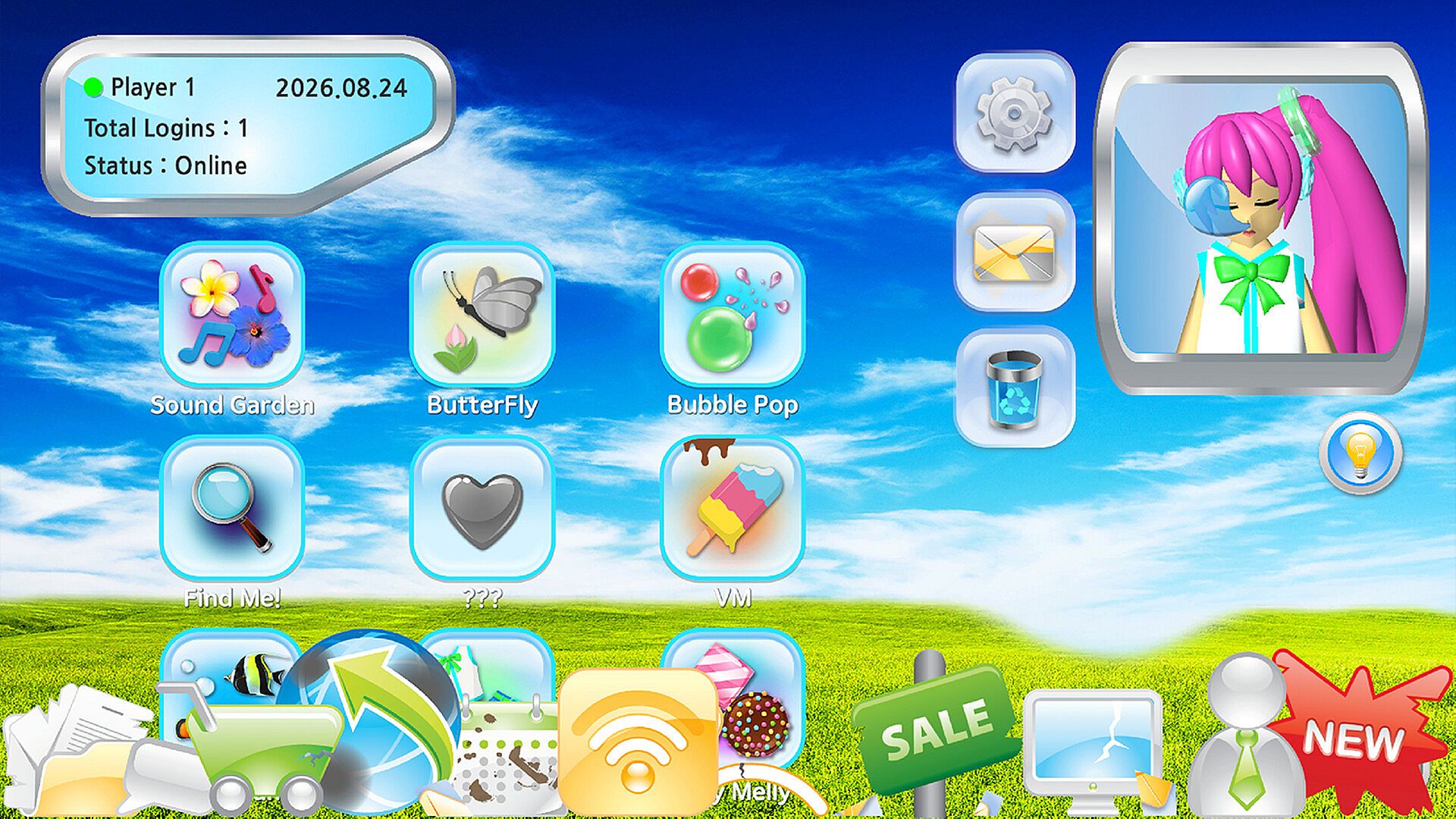
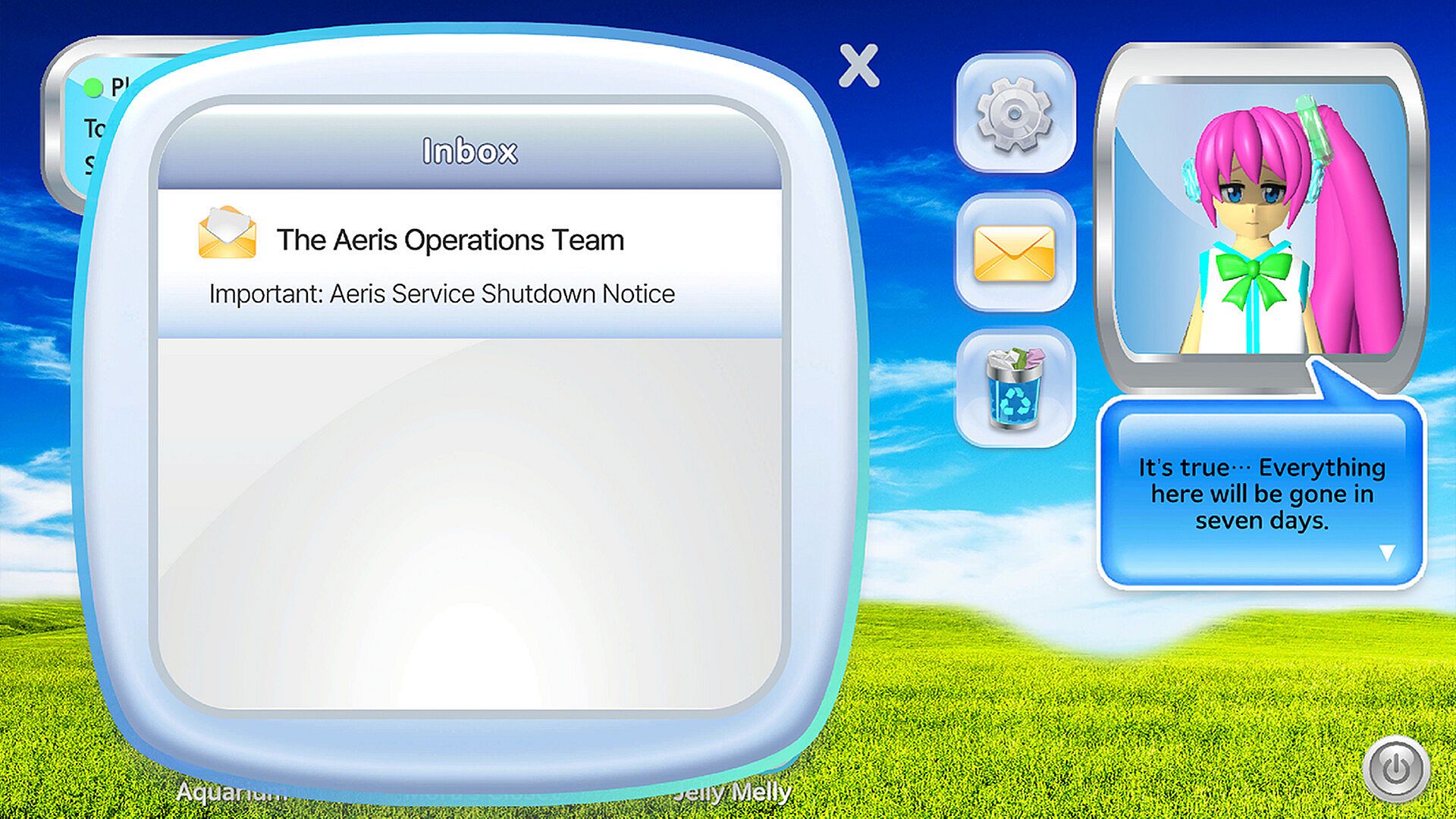
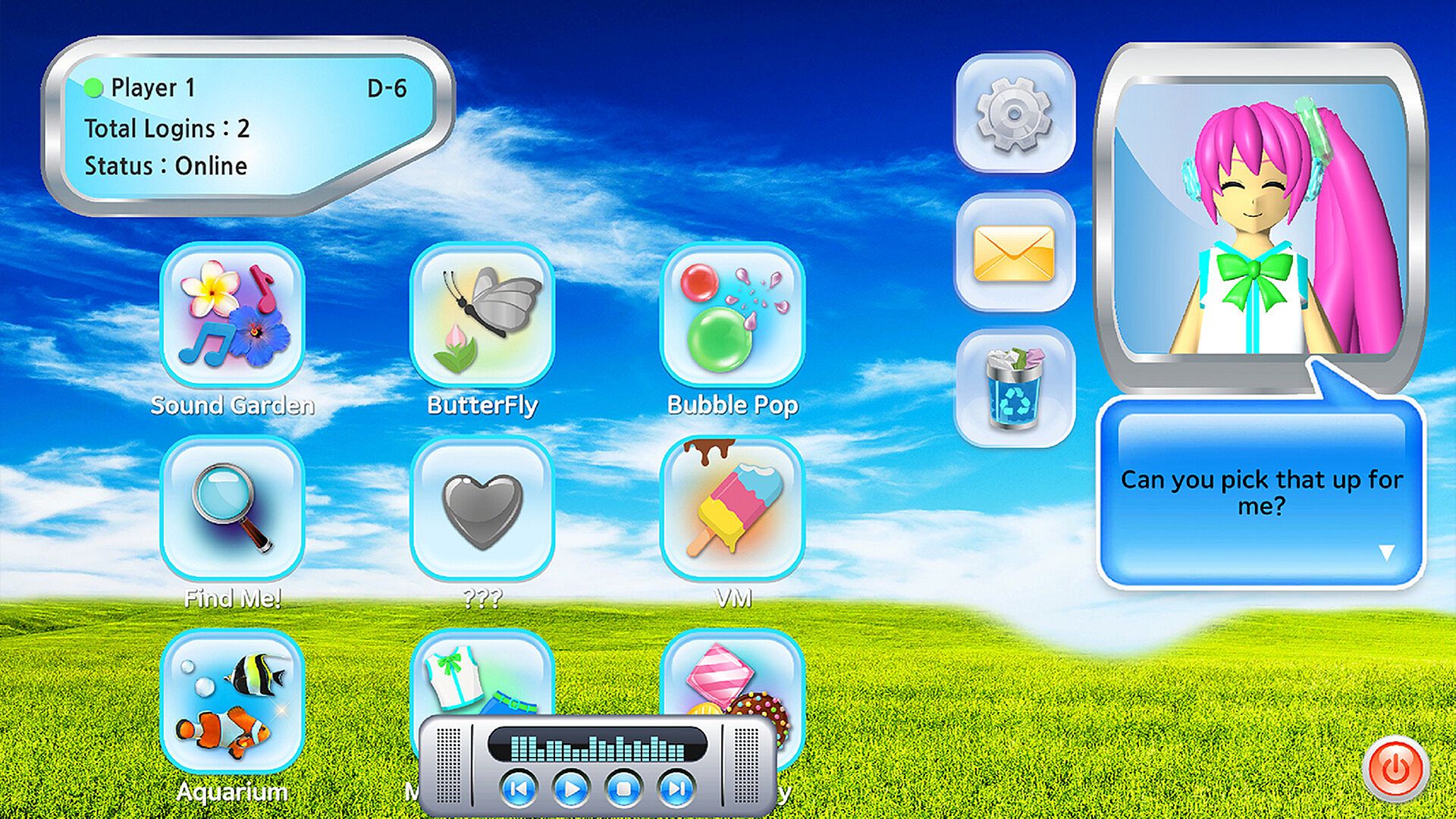
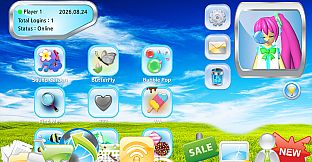
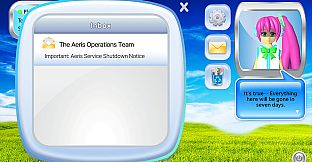
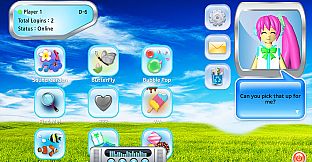
Welcome Back to Aeris is a single-player point-and-click psychological horror game that blends casual simulation and adventure elements on PC. Players step into the role of restoring a fictional minigame console known as Aeris, which faces shutdown in seven days. The experience centers on working alongside a guide named Mora to revive offline channels through a series of interactive tasks set against a distinctive Frutiger Aero aesthetic of glossy interfaces, blue skies, and crystal-clear icons.
Gameplay
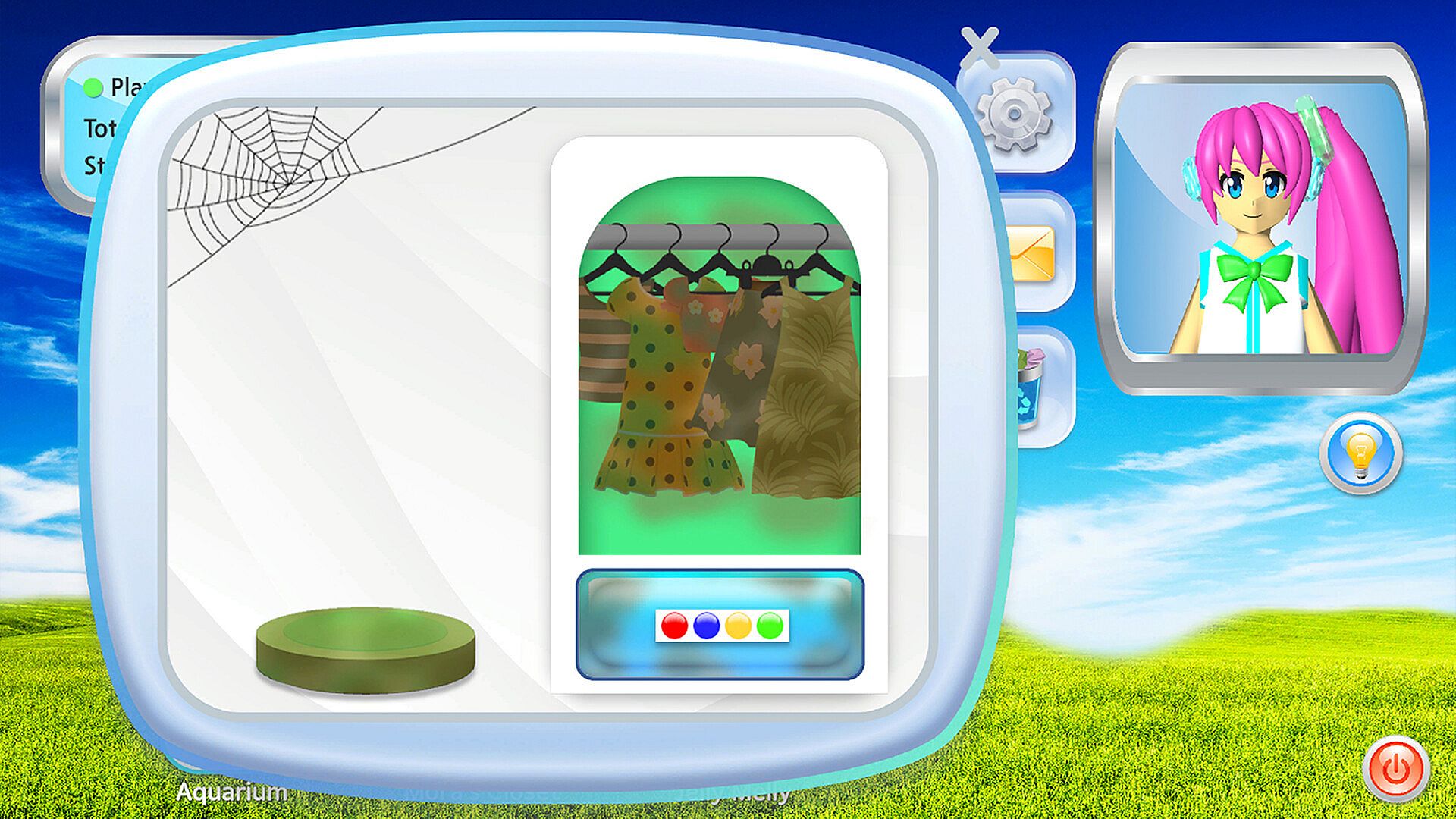
The core loop involves repairing broken apps and reactivating channels within the limited timeframe. Players interact with the console interface in a point-and-click manner, completing restoration objectives that tie directly into the narrative of preventing the system's permanent offline status. As channels come back online, subtle anomalies appear on the screen, shifting the tone toward psychological horror elements that emerge from everyday digital interactions.
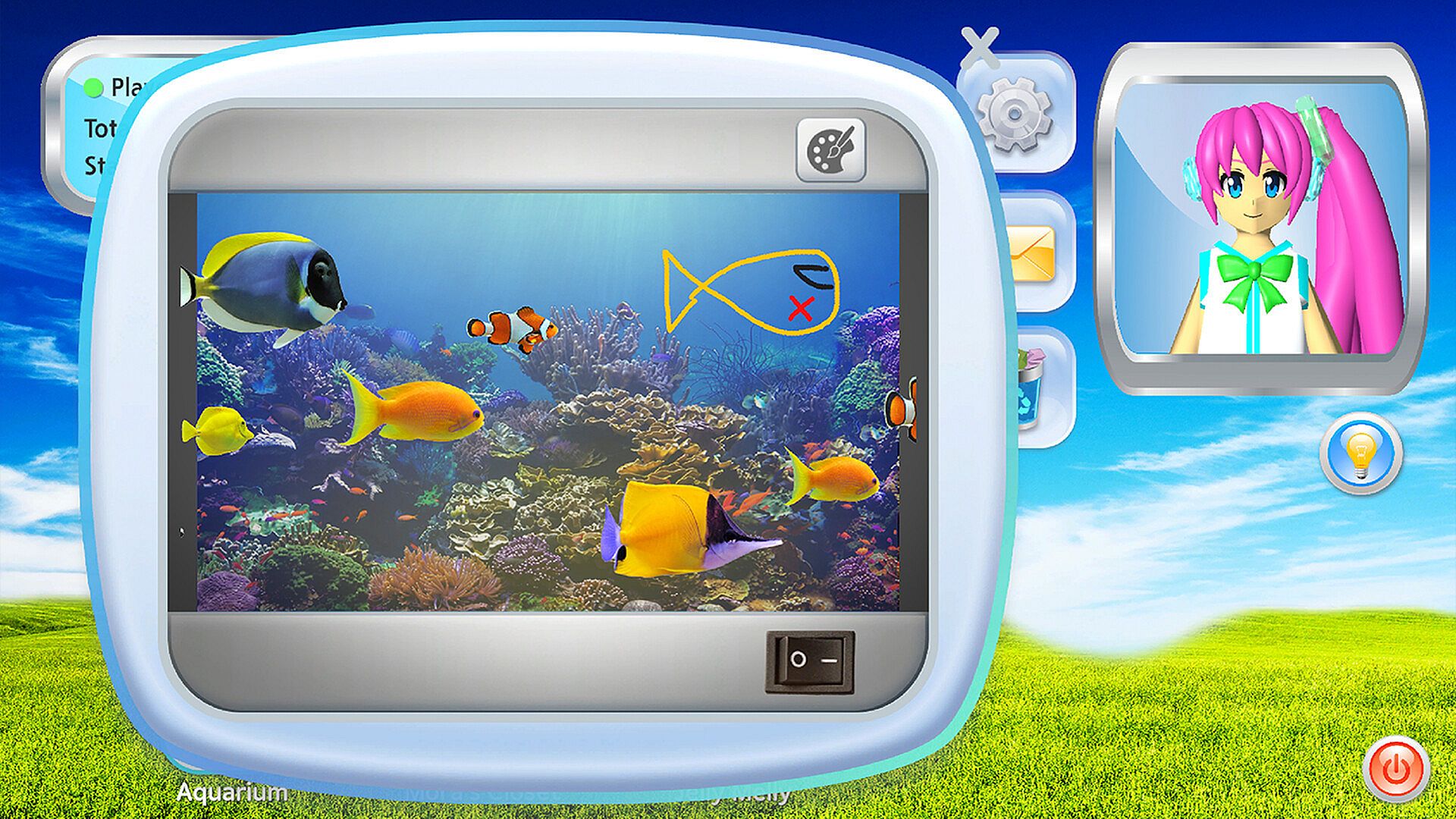
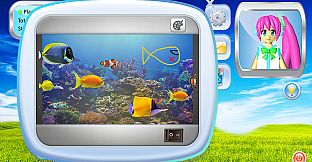
Minigame channels form the main activities during restoration. These include popping bubbles, playing melodies by interacting with flowers, and filling an aquarium by drawing fish directly on the interface. Additional minigames await discovery as more channels activate, each contributing to the overall effort of bringing the neglected system back to life. The Frutiger Aero visuals enhance every screen with lush green landscapes and polished 3D elements that contrast with the growing unease from traces beyond the ordinary display.
Game Modes
The game operates entirely in a single-player format focused on the seven-day restoration challenge. There are no separate competitive or multiplayer modes. Instead, progression unfolds through sequential channel repairs, where each restored section unlocks new minigames and advances the central story. Players manage time-sensitive tasks while exploring the console's layers, with the narrative thread of a strange presence providing the connective structure across all activities.
Exploration remains tied to the interface itself rather than open-world navigation. Restoring channels reveals more of the Aeris environment, encouraging repeated interaction with the same systems to uncover hidden elements. The structure emphasizes methodical completion of minigame objectives over branching paths or alternate endings.
Visual Style and Atmosphere
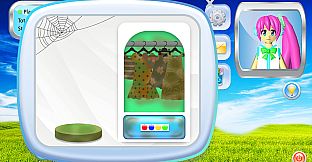
Frutiger Aero design defines the presentation, featuring bright skies, vibrant landscapes, and sleek iconography that evoke early 2000s digital optimism. This aesthetic frames the minigame channels and restoration work, creating a familiar yet increasingly unsettling backdrop. As players progress, the clean interfaces begin to show signs of neglect and intrusion, reinforcing the psychological horror through visual shifts rather than overt scares.
The style supports the casual simulation aspects by making every interaction feel tactile and immediate. Drawing fish for the aquarium or arranging flower melodies integrates seamlessly with the glossy 3D elements, keeping the focus on creative minigame play within the broader adventure of saving the console.
Is It Worth Playing?
Welcome Back to Aeris targets players who enjoy short, focused single-player experiences that combine light simulation tasks with narrative-driven psychological horror. The seven-day structure and minigame variety offer a contained adventure suited to those interested in point-and-click mechanics and retro-inspired digital worlds. With its emphasis on restoring channels through creative interactions like bubble popping and custom drawings, the game provides a distinct casual simulation loop wrapped in an unsettling atmosphere.
Since the title has not yet released, player reception details remain unavailable. Those drawn to indie titles featuring Frutiger Aero visuals, guide characters, and progressive channel restoration may find the premise appealing for a deliberate, interface-based play session on PC. The combination of adventure progression and horror undertones positions it for audiences seeking something outside standard genre conventions.











