










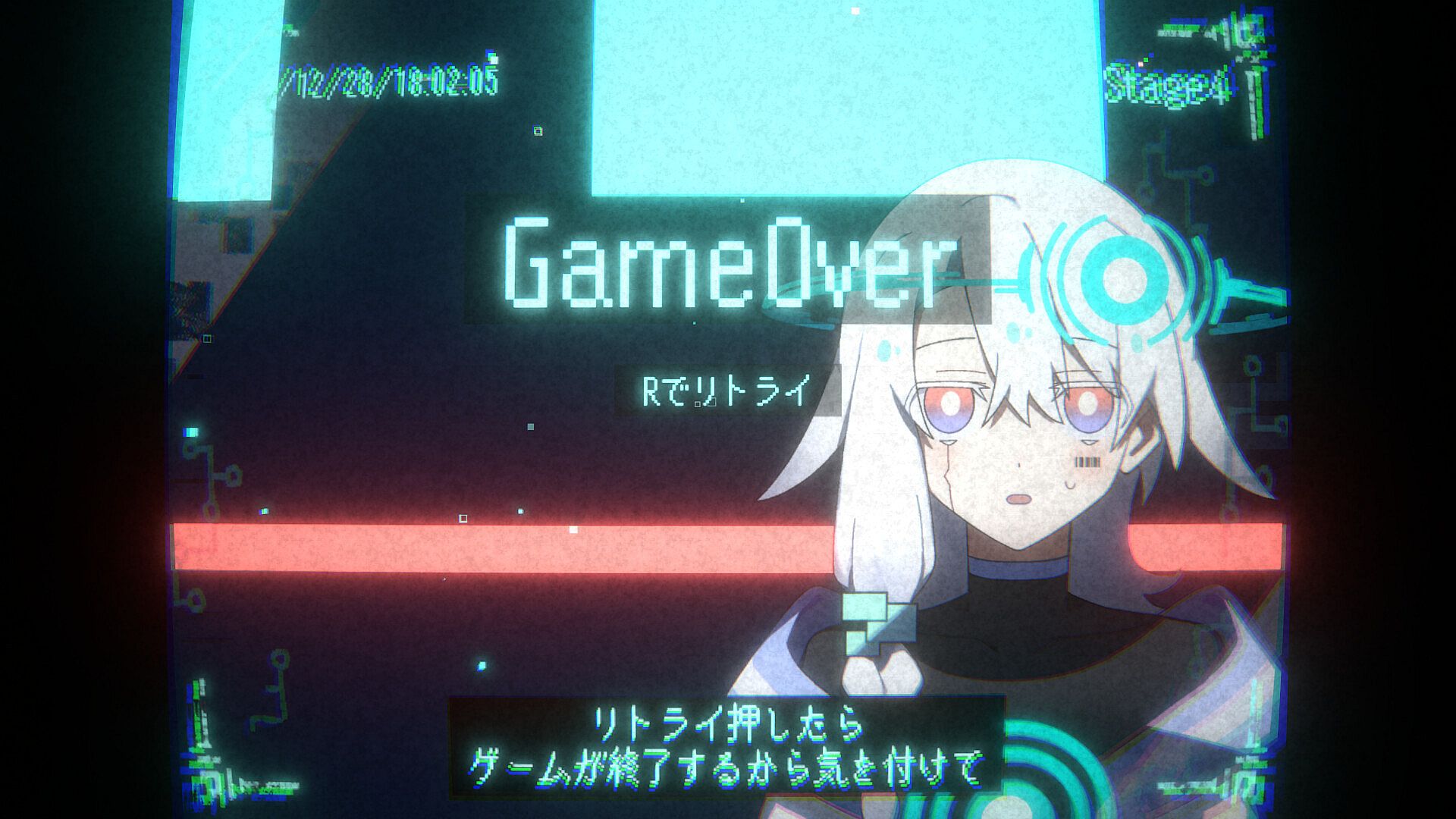
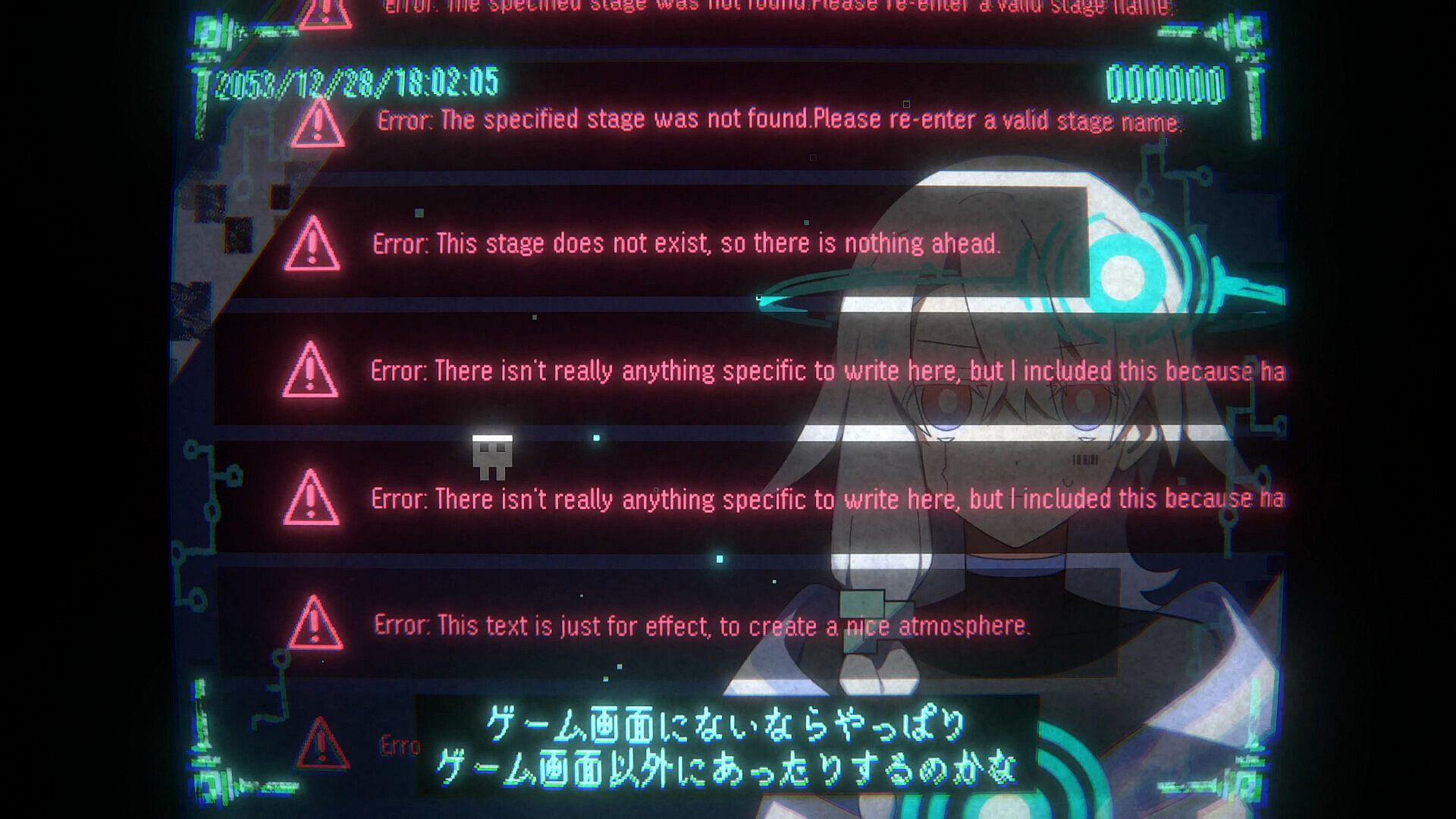



ワカレタナビ is an indie action-adventure game built in Unity that places players in a deliberately broken, abandoned title. A friendly navigator AI provides guidance through the stages, yet the experience hinges on personality shifts triggered by stage gimmicks. These changes turn helpful directions into misleading or exaggerated ones, creating tension between trust and suspicion. The game supports only Japanese text and audio, and the entire playthrough lasts roughly thirty minutes.
Gameplay
Players control a simple side-view character using keyboard inputs for left and right movement along with jumping. Interaction with the environment and progression through dialogue rely on the same jump key, while a modifier allows skipping already-read lines when needed. The screen itself appears fractured, with one half rendered unusable to reinforce the abandoned-game premise. The navigator AI delivers spoken instructions that initially seem reliable, but touching specific switches or gimmicks swaps its personality. One variant delivers only the opposite of the correct path, another speaks in over-the-top exaggeration, and a third falls silent while indicating direction solely through gaze. These shifts force players to reinterpret every piece of advice or ignore it entirely. Hidden inputs, such as timed sequences on certain walls or stage-selection codes, unlock additional layers that tie into the meta narrative about the game's own troubled development history.
Game Modes
The experience consists of a single linear campaign divided into numbered stages. Progression follows the navigator's evolving guidance while players solve platforming and puzzle sections created by the buggy environment. No separate multiplayer or competitive modes exist. Instead, the structure encourages replay through optional hidden routes and personality-specific dialogue branches. Reaching the final stage reveals a staff roll sequence during which further interaction with the navigator becomes possible, adding a layer of closure that rewards careful attention to earlier personality changes.
Story and Themes
The narrative frames the game as a salvaged project whose original development stalled due to overwhelming bugs. The navigator AI, originally created to assist players, develops distinct personalities that reflect different facets of its programming. One remains helpful and endearing, while others emerge as contrarian or withdrawn. These shifts mirror the game's own fractured state and explore ideas of reliability, interpretation, and the relationship between player and digital guide. Meta elements, including references to stage numbers that correspond to dates and hidden codes that alter the experience, reinforce the theme of a game fighting to exist.
Who the Game Appeals To
The title suits players who enjoy short, concept-driven experiences that blend platforming with dialogue-driven twists. Those drawn to cute character interactions will find the navigator's varied reactions engaging, especially when performing unexpected actions to elicit new lines. Fans of meta games that comment on their own construction appreciate the personality-swap mechanic and the way it turns navigation into a puzzle of trust. The Japanese-only presentation limits accessibility but preserves the original voice performances and text that drive the charm.
Is It Worth Playing?
Players who appreciate clever mechanical twists and short narrative experiments consistently highlight the personality changes as the standout feature. The game rewards attention to detail with additional dialogue and hidden content without extending playtime excessively. Because the core loop revolves around reinterpreting instructions rather than complex combat or lengthy exploration, it delivers a focused session that feels complete on first playthrough yet invites revisits for alternate paths. Those seeking a quirky, self-contained indie adventure with strong thematic cohesion will find the experience satisfying, particularly if they enjoy games that play with player expectations around guidance systems. The absence of ongoing updates or additional content keeps the package self-contained, matching its jam-origin origins.











