






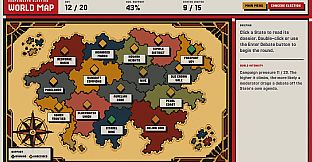





VoxPrinceps: The Political Game is a single-player strategy title centered on the mechanics of political debate and electorate persuasion. Players navigate a series of timed confrontations where each decision shapes support across different states, with an opponent always ready to counter any gains made.
Gameplay
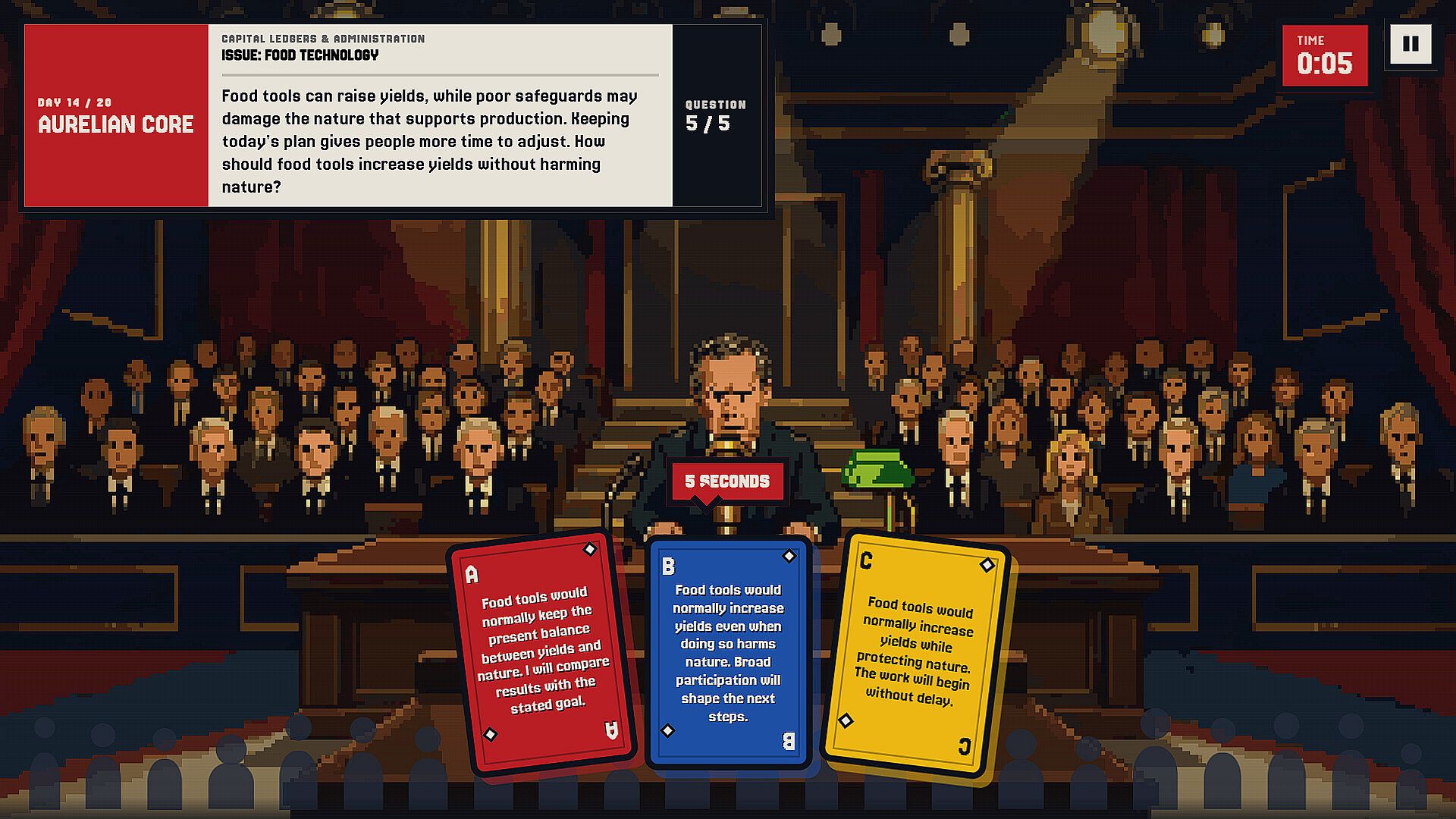
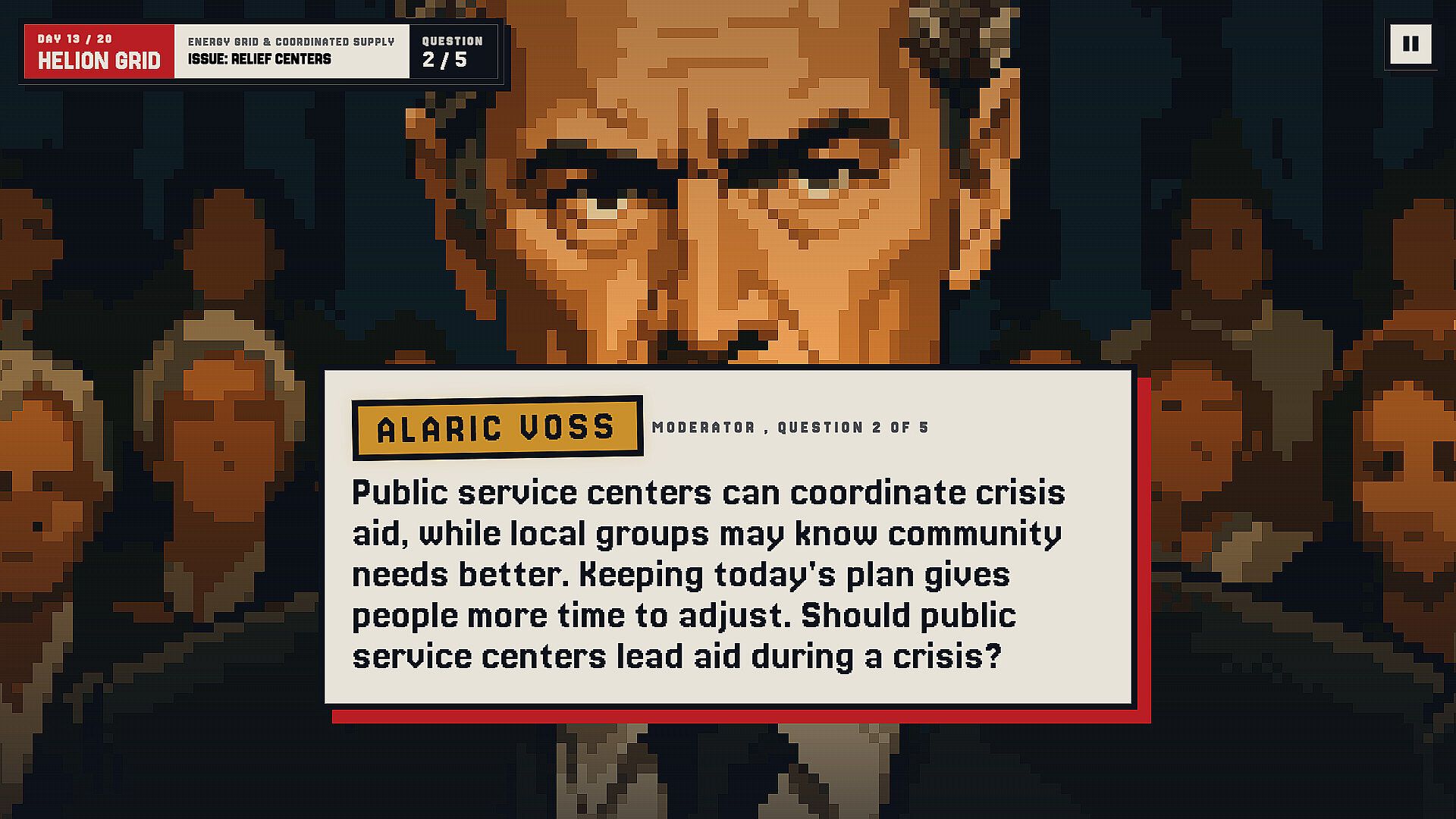
The core loop revolves around reading an electorate's specific pressures and selecting responses under a strict 45-second limit. Each state presents a dossier of priorities that cannot be ignored and fears that must be addressed. Answers fall into categories that shift from clear distinctions early on to greater ambiguity as rounds progress, forcing sharper analysis of how each option aligns with the audience at hand. A wrong choice erodes support, while a well-matched one builds it, and silence registers as a negative result.
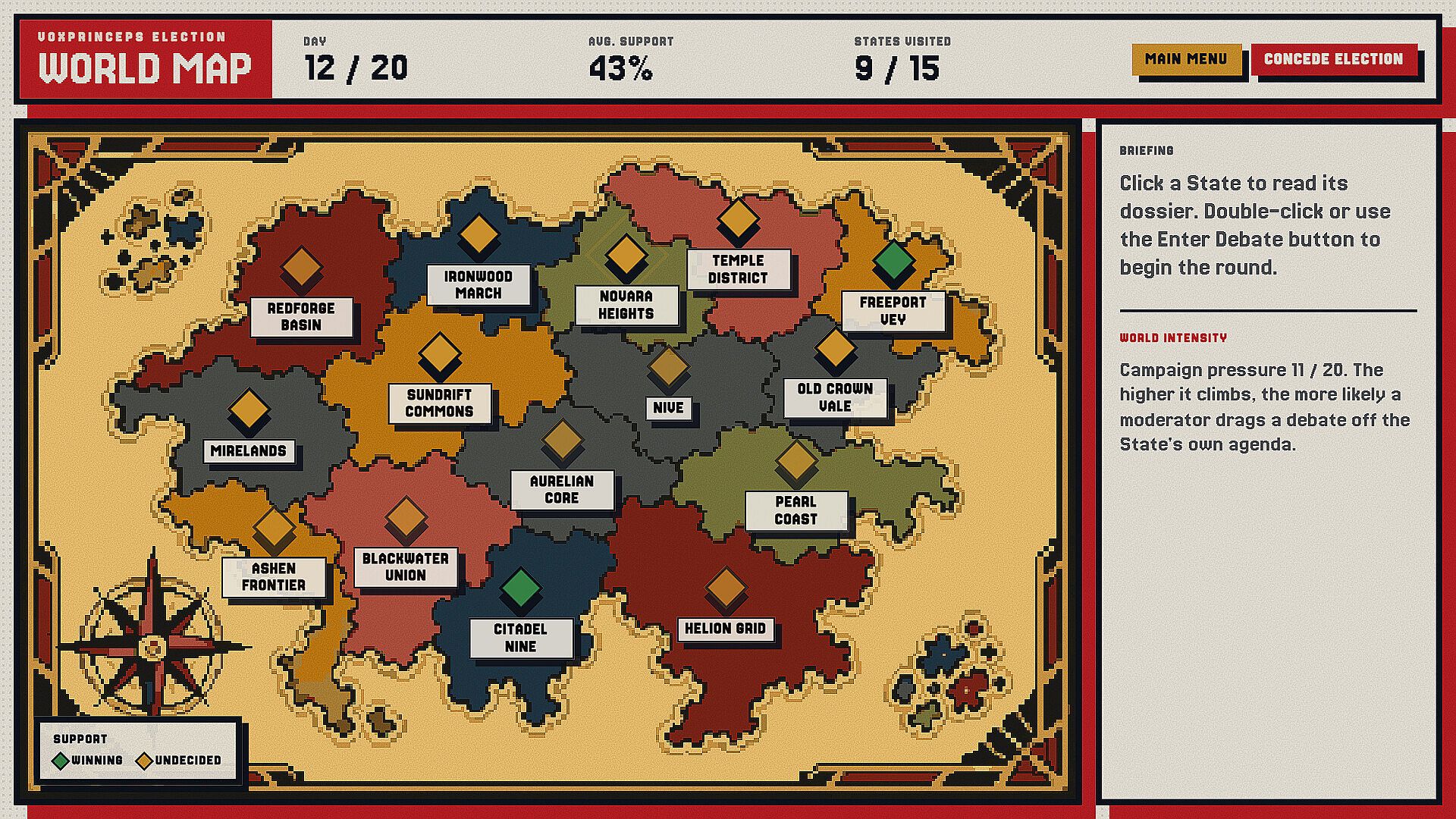
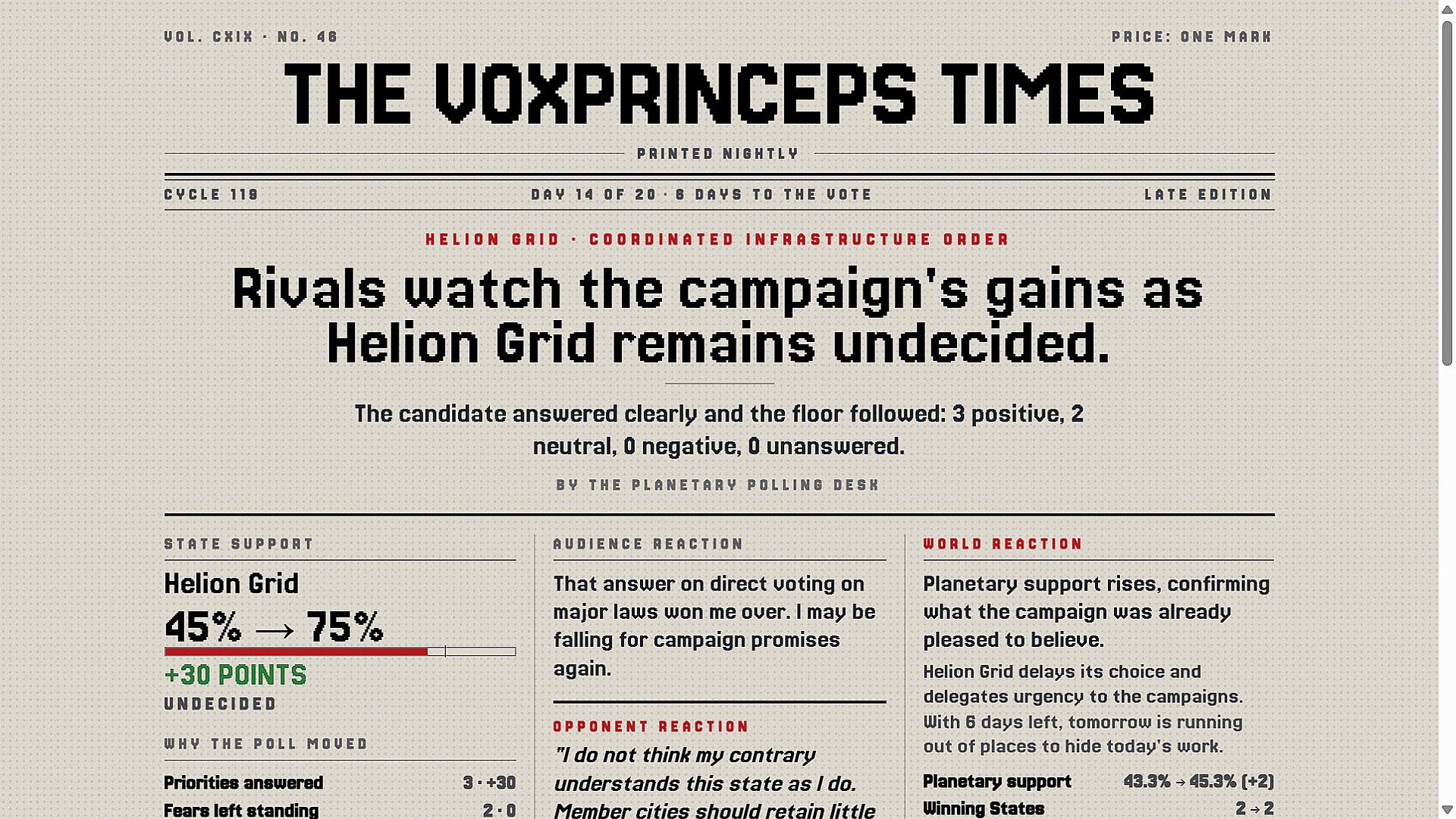
After a player commits to an argument, the opponent receives an immediate opportunity to respond. This retaliation phase exposes every point secured so far, allowing recovery of lost ground or further damage to the position. The exchange continues until both sides have delivered their statements, at which point the debate concludes and support totals update. Progression involves traveling between states, each with its own set of pressure points, to accumulate enough backing for overall victory.
Game Modes
The experience centers on a single-player structure where participants advance through a sequence of states, applying lessons from prior debates to new electorates. No separate competitive or cooperative modes appear in the available details, keeping the focus on individual judgment against an AI opponent that mirrors the player's actions in real time. The format emphasizes repeated practice with the same core systems rather than branching variants.
Key Mechanics
Precision stands as the central challenge. Multiple answer options exist for every question, yet only those calibrated to the current state's documented concerns deliver positive movement. Early debates offer clearer signals for positive, neutral, or negative outcomes, while later ones blur those lines and reward players who track patterns across rounds. Mistakes become teaching tools because the same electorate or similar pressure points recur, encouraging adaptation without repetition of errors.
Support accumulation ties directly to these exchanges. Building a lead in one state carries forward, but each new location resets the immediate tactical demands while testing whether prior insights transfer. The opponent's counterplay ensures no advantage lasts without defense, creating a back-and-forth rhythm that mirrors the source material's emphasis on retaliation.
Is It Worth Playing?
The game targets players who enjoy deliberate, time-pressured decision-making within a political strategy framework. Its systems reward careful study of electorate profiles and consistent improvement in reading subtle cues, without relying on external progression systems or additional content layers. Because the title remains unreleased with no player feedback available yet, any assessment rests on how well the described debate loop matches individual preferences for focused, single-player strategy. Those drawn to mechanics that punish imprecise choices and reward pattern recognition may find the structure engaging once it launches.