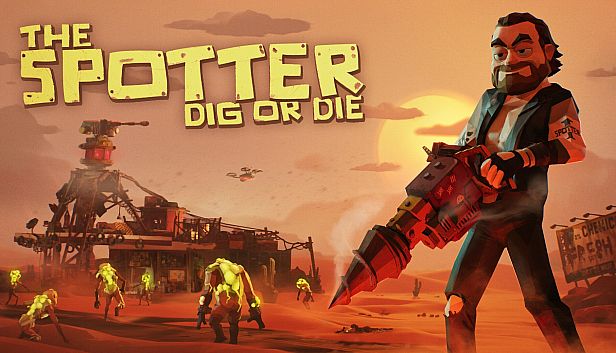




































The Spotter: Dig or Die is a single-player action, indie, simulation, and adventure game set in a post-apocalyptic Nevada wasteland. Players take on the role of a lone spotter defending a rundown gas station against waves of mutants while scavenging resources underground to repair a critical receiver and receive a message from the President. The experience blends meditative resource gathering with intense defensive stands in a loop that emphasizes preparation, adaptation, and personal involvement in combat.
Gameplay
Daytime focuses on descending into mines beneath the gas station to extract ores and other materials needed for upgrades. Players manage fatigue while using tools that start basic and improve through progression, including jetpack enhancements and deeper excavation capabilities. Expeditions carry risk as time limits pressure decisions on how much to carry back versus pushing further for better rewards.
Nighttime shifts to base defense where automated turrets, barriers, traps, and mines form the initial line against mutant attacks. Players can intervene directly by manning the primary turret to adjust targeting or unleash special attacks during peak assaults. The gas station serves as the fixed defensive position that must hold until dawn.
Progression occurs through three separate tech trees covering character abilities, turret enhancements, and base fortifications. These systems allow customization of defense layouts and personal combat options. Roguelike artifacts appear during runs and introduce rule-changing effects such as projectile slowing, drone deployment, or protective shields that alter subsequent attempts.
Game Modes
The core structure revolves around repeated day-night cycles within roguelike runs. Each cycle begins with resource collection and base improvements before transitioning to survival against escalating mutant hordes. Failure ends the current run, but accumulated knowledge and artifacts encourage new strategies on restarts.
No separate multiplayer or competitive modes exist. The single-player focus centers on completing the story objective of restoring the receiver while surviving as many nights as possible through iterative upgrades and artifact synergies.
Progression and Customization
Three weapon specializations define combat approaches during defense phases. The Hunter path emphasizes precision long-range shots with a railgun. The Suppressor role deploys sustained beams from a Tesla cannon to control groups. The Artillerist option launches cluster grenades for area denial and high damage output.
Artifacts provide run-specific modifiers that stack with tech tree choices. Examples include adding crowd control to existing defenses or granting temporary base-wide abilities. This combination ensures varied playstyles across multiple attempts without repeating identical setups.
Is It Worth Playing?
Player reception on Steam stands at Very Positive overall with 85 percent approval from 1,685 reviews, while recent feedback sits at Mostly Positive from 152 reviews. The game suits those who enjoy hybrid experiences that alternate between calm exploration and high-pressure defense without requiring constant action.
Its short-session friendly structure and clear progression systems appeal to players seeking a self-contained post-apocalyptic survival loop. The emphasis on personal turret control and artifact variety adds replay incentive for those who appreciate roguelike elements in a tower defense framework. Availability on PC makes it accessible for anyone matching this preference profile.