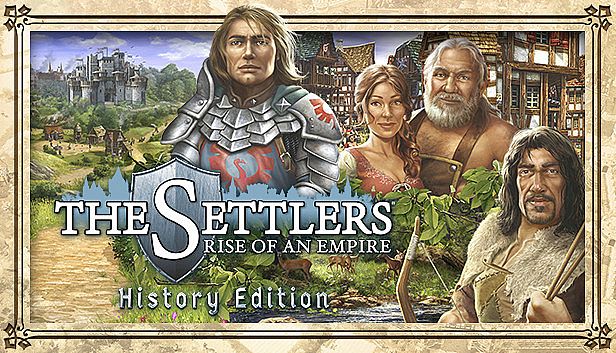













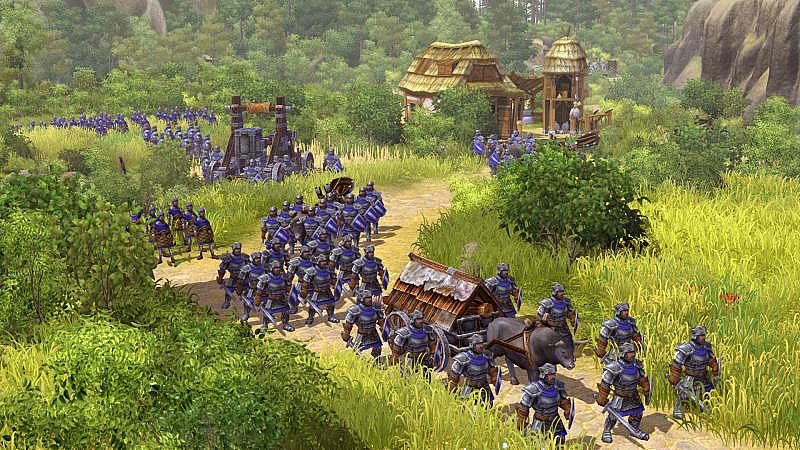
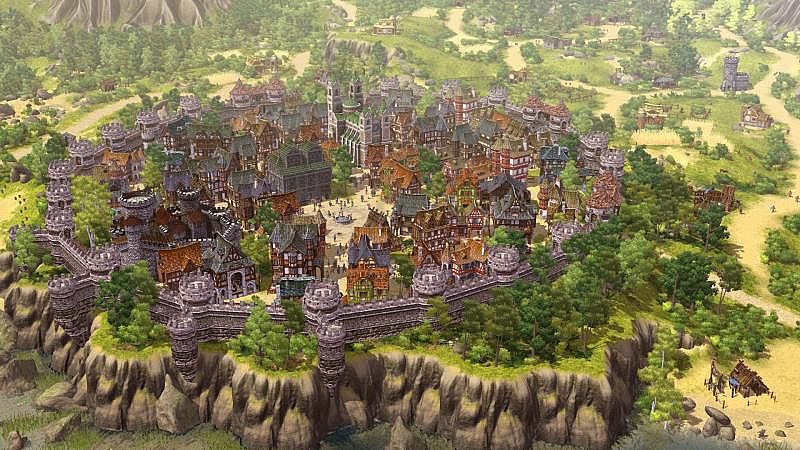
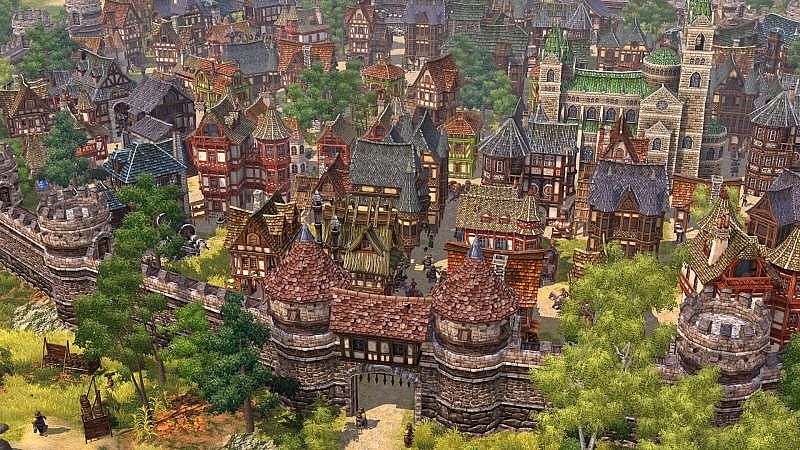
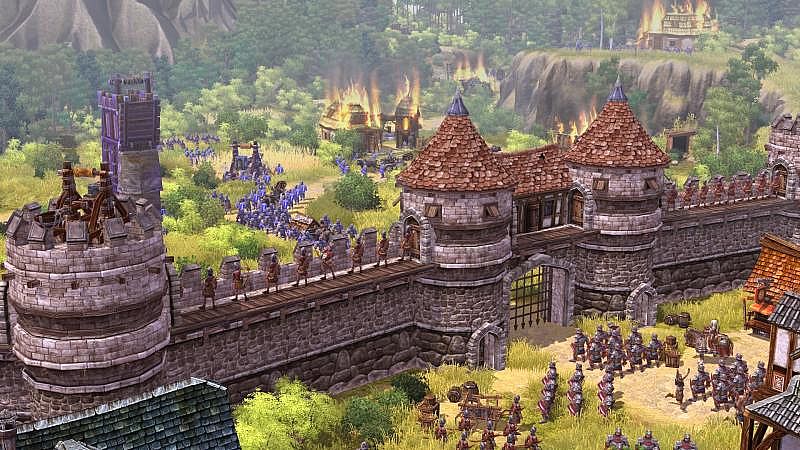

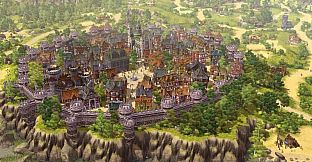
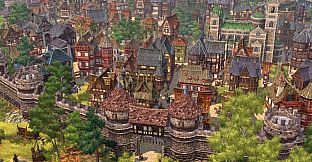
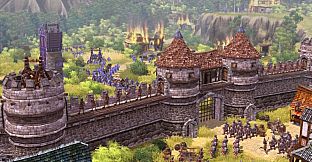
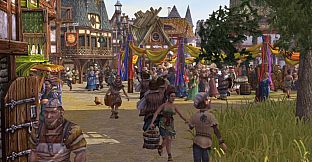
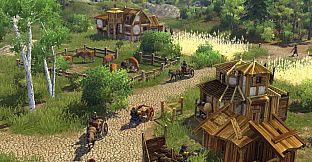
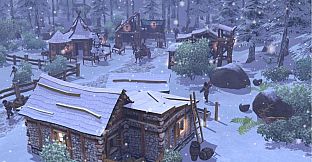
The Settlers: Rise of an Empire - History Edition is a city-building strategy game set in a medieval world. Players construct and manage settlements to grow an empire, balancing economic production, settler needs, and limited military expansion. The History Edition bundles the original 2007 title with its Eastern Realm expansion, adding new campaign missions, maps, and features while ensuring compatibility with modern Windows systems and supporting online multiplayer.
Gameplay
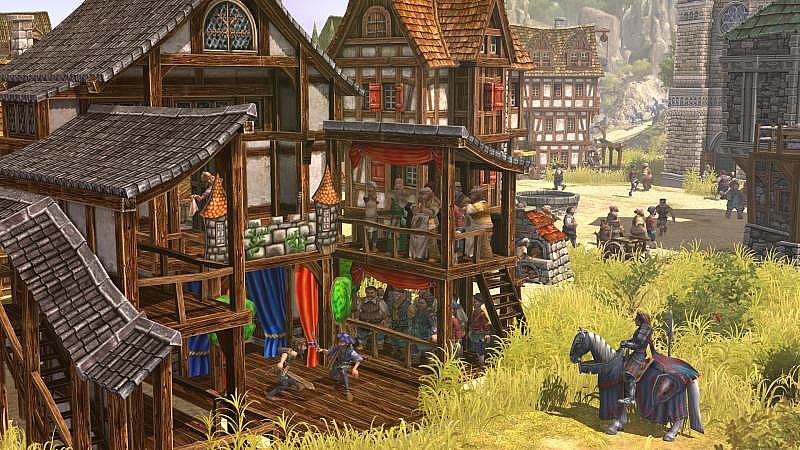
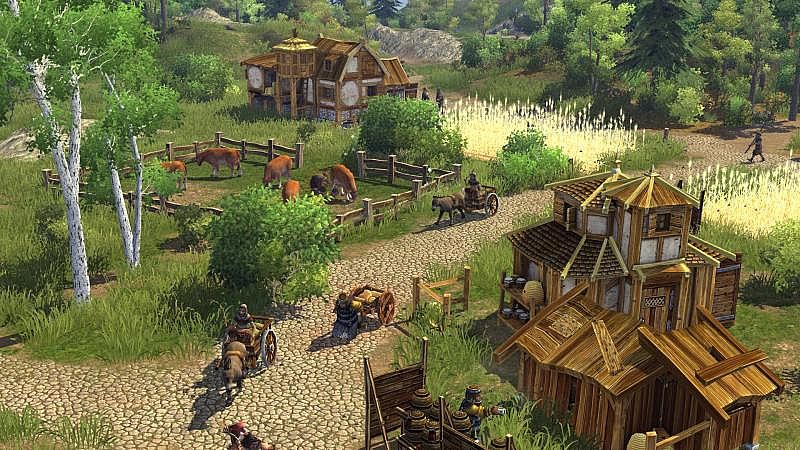
Core gameplay centers on settlement construction and economic management. Each map starts with key structures including a castle for taxes and military limits, a cathedral for settler capacity and income from sermons, and a storehouse with an attached marketplace. Settlers automatically handle building, resource gathering, and production without direct control, though players set tax rates, soldier pay, and organize festivals to boost productivity and population growth through pairings.
Economy relies on a streamlined system where resource buildings gather materials and produce buildings create goods for sale. Settlers have needs for food, clothing, cleanliness, and entertainment, plus wants tied to prosperity and decoration. Meeting these prevents strikes, while gold from taxation funds upgrades, military outposts, and festivals. Climatic zones and seasons affect farming, fishing, and other activities, with the expansion introducing a Far East zone featuring monsoons. Trade occurs through diplomatic relations ranging from enemy to allied states, and the expansion adds trading posts for recurring exchanges.
Military elements remain secondary. Territory expands via outposts in unoccupied areas, with combat simplified to outpost attacks or knight-led actions. A controllable thief steals resources or information, and the expansion introduces a geologist to replenish depleted mines. Players observe individual settlers going about daily routines as the settlement evolves through building upgrades that increase capacity and improve transport methods.
Game Modes
Single-player options include a campaign of sixteen missions focused on reuniting a divided empire through economic targets, promotions, and occasional trade requests. The Eastern Realm expansion extends this with eight additional missions involving new threats and locations. Non-campaign single-player games allow free play on custom maps with specific victory conditions.
Multiplayer supports online or LAN sessions where participants select maps and compete or cooperate. Victory conditions include destroying an opponent's special buildings, advancing a knight to the highest promotion level, or invading a city to trigger a citizen strike that cripples its economy. Maps vary by climate, resources, and objectives, with the expansion providing additional options and an enhanced editor for creating custom content.
Settler Life and Observation
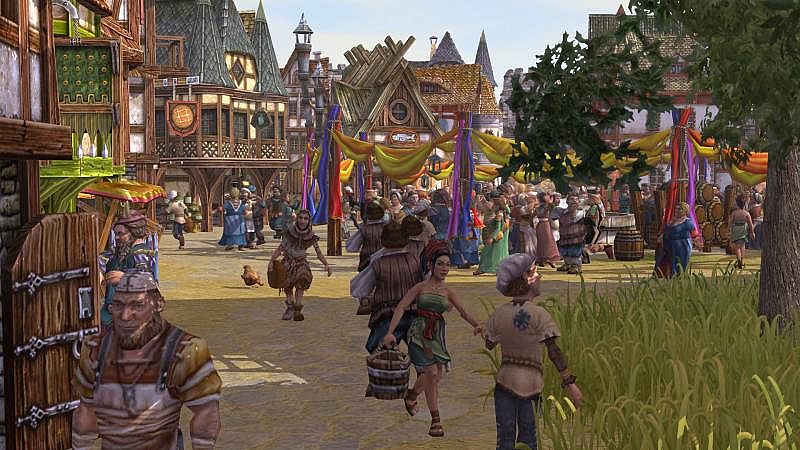
Settlers function as autonomous residents who live, work, and interact within the settlement. Resource workers gather materials and deliver them, while produce workers transform goods for sale. Upgrades to buildings bring in additional settlers who reside and labor on site, improving efficiency with better transport tools. Festivals at the marketplace encourage social pairings that increase the workforce and output. Players can watch these daily activities unfold in real time, from construction and trade to leisure, providing a living simulation layer to the economic strategy.
Is It Worth Playing?
This edition suits players who enjoy deliberate city-building strategy with emphasis on economic chains and settlement growth rather than intense combat. The Mostly Positive reception on its platform reflects appreciation for the accessible pace and visual presentation, though some note the simplified mechanics compared to earlier series entries. It remains available as a complete package with the expansion content, Windows 10 support, and multiplayer functionality intact. Those seeking a relaxed medieval empire management experience with observable settler routines will find it aligns well with that preference, while fans of deeper micromanagement or frequent updates may look elsewhere.