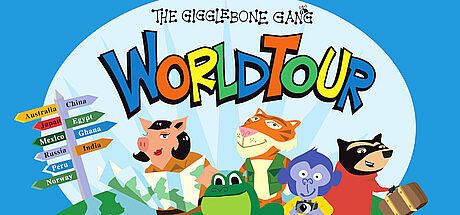


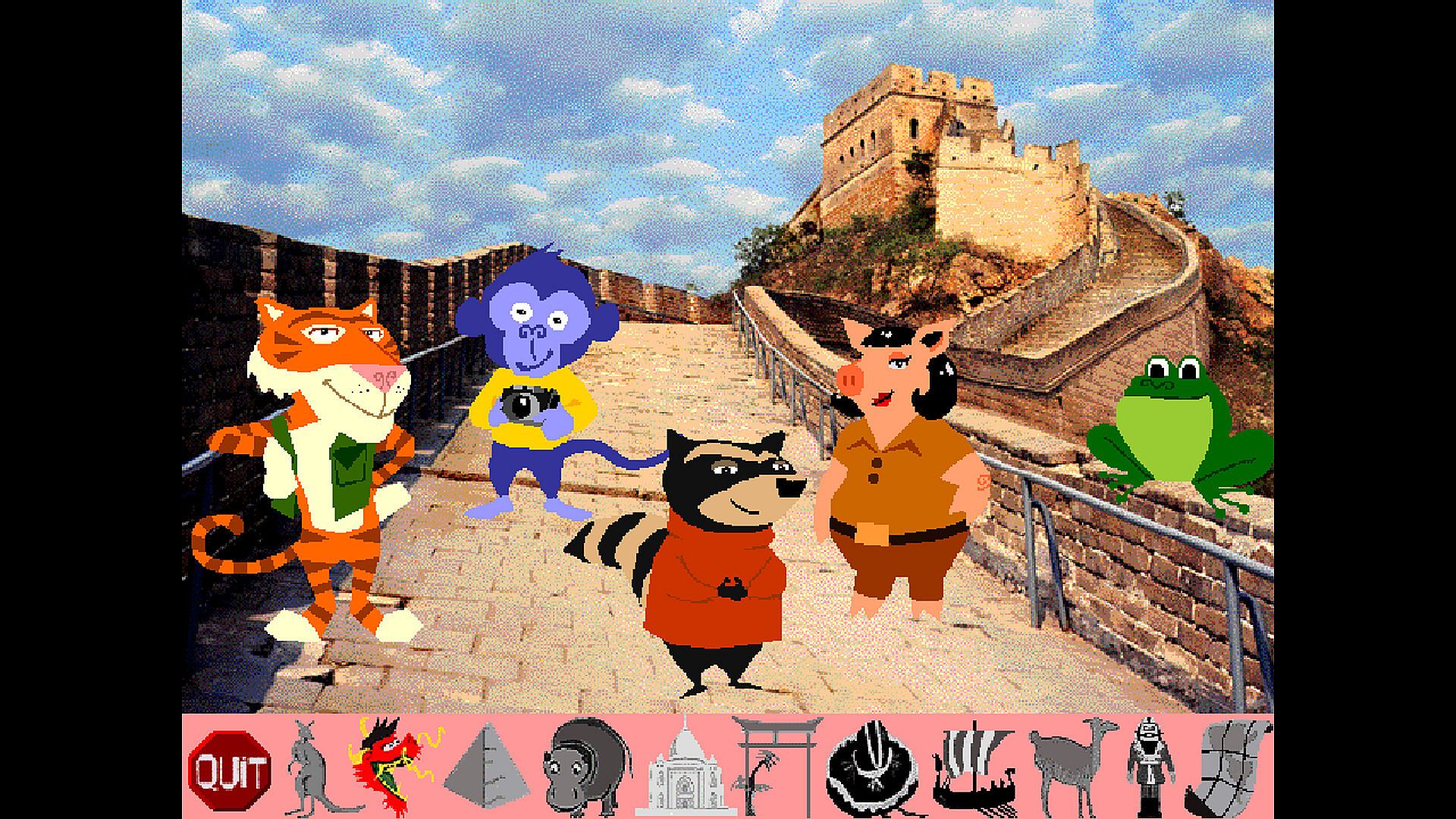
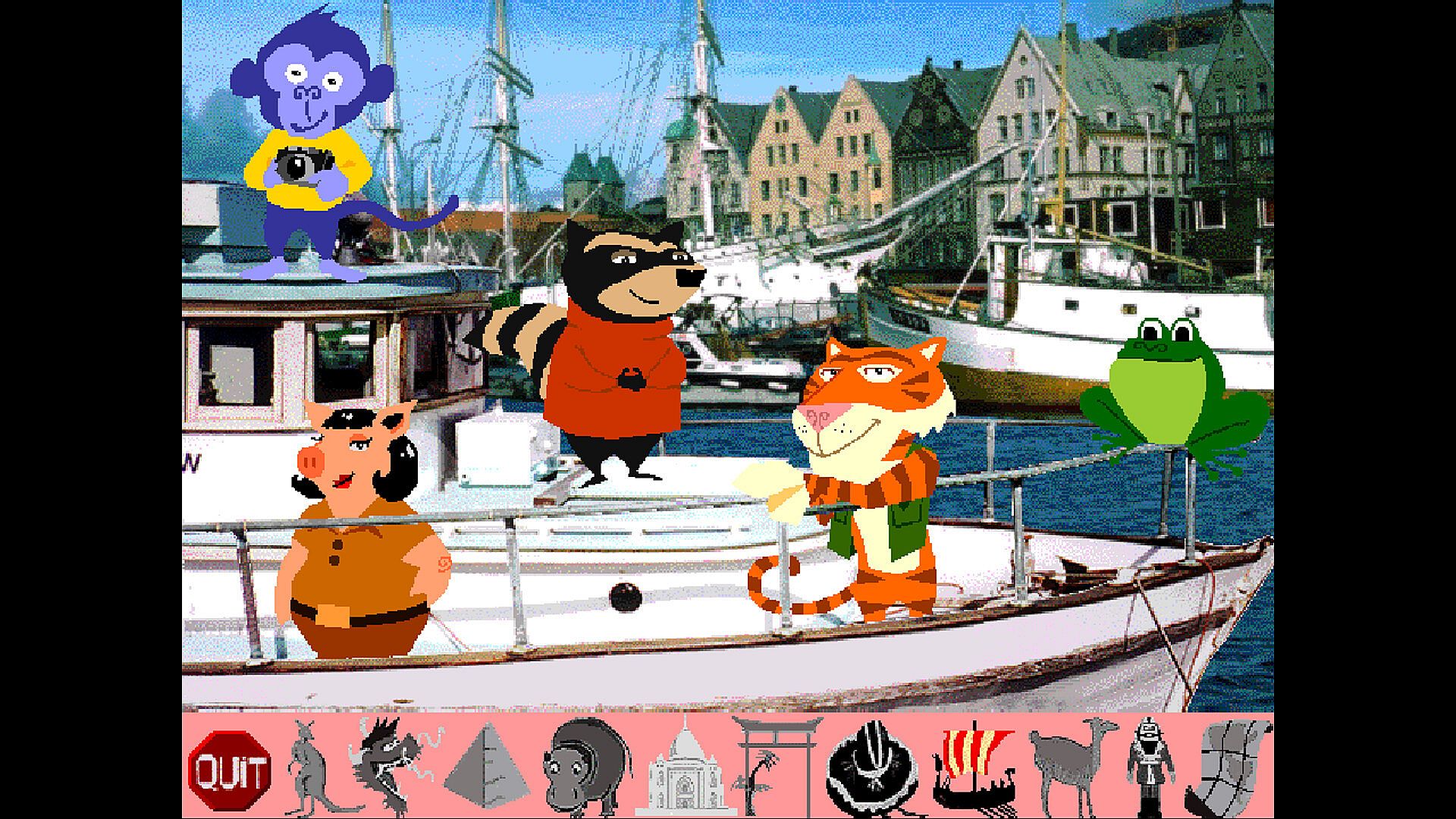

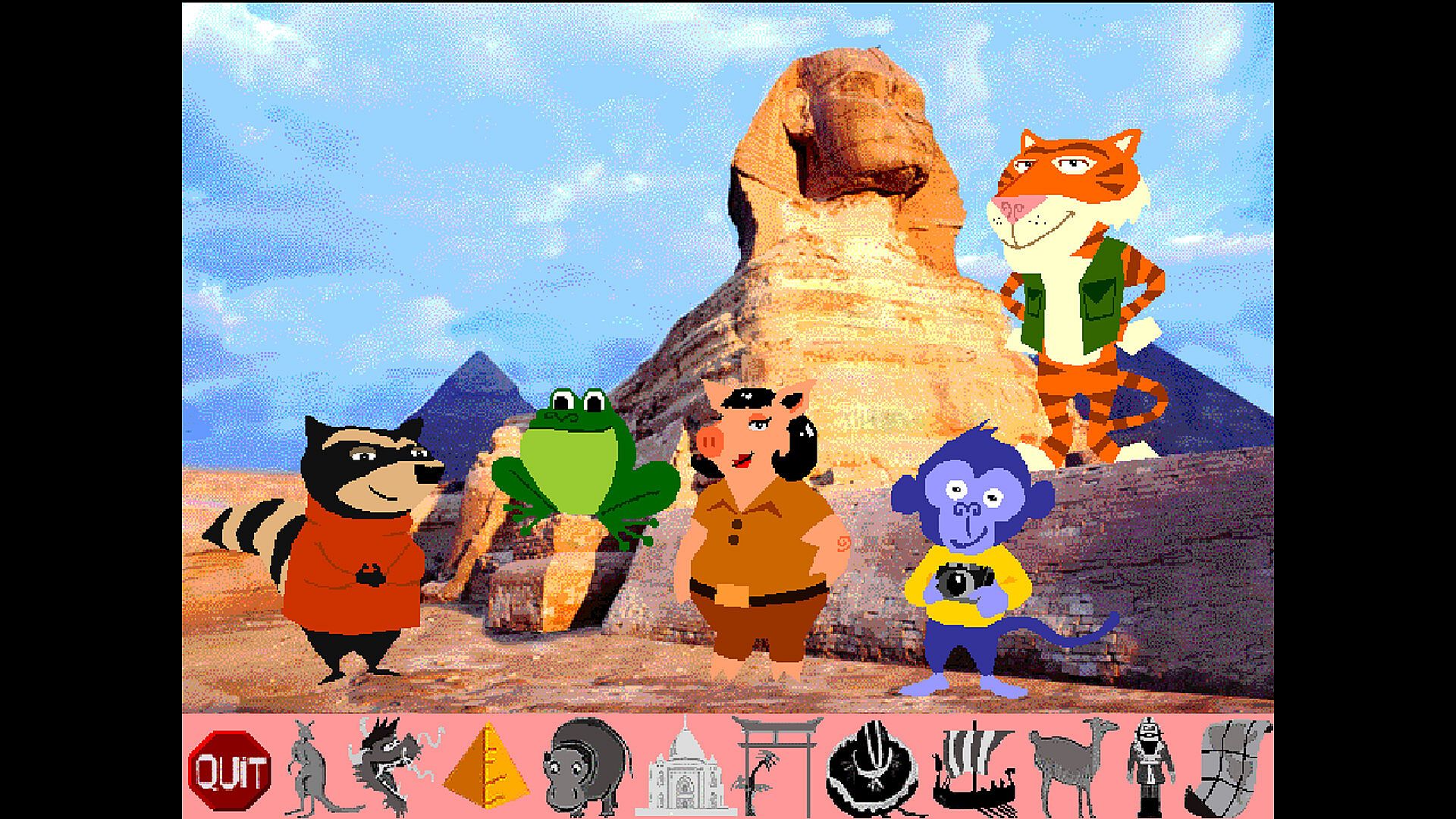

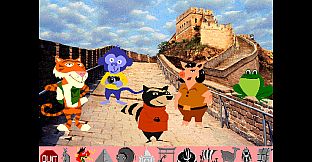
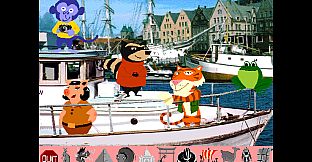


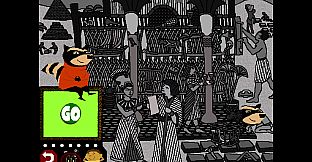
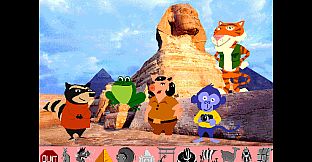


The Gigglebone Gang World Tour is a casual adventure game built around educational exploration for young children. Players join Rapu the tiger and the rest of the Gigglebone Gang on visits to ten countries, completing interactive activities that introduce geography, culture, language, and traditions without any reading required.
Gameplay
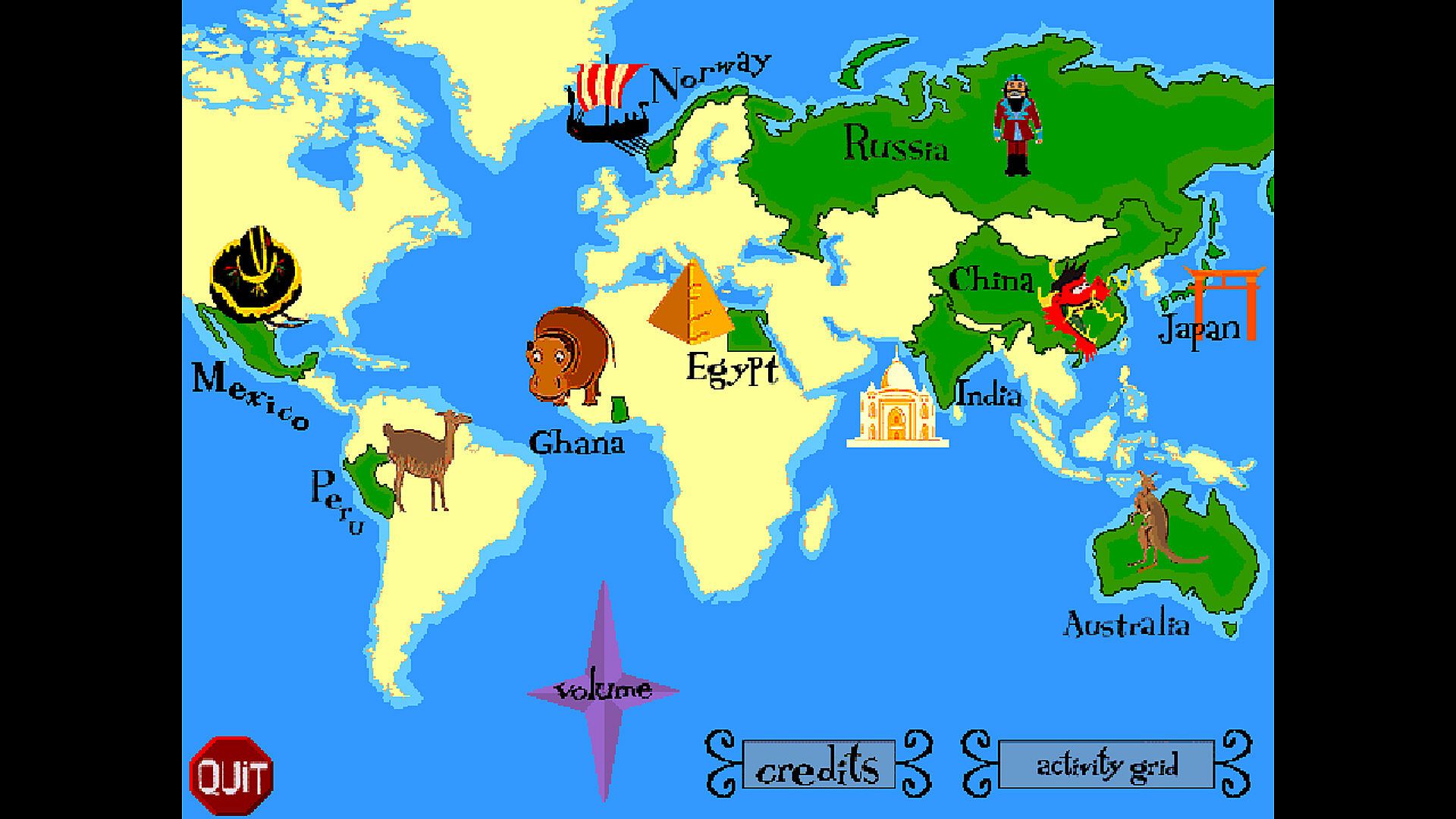
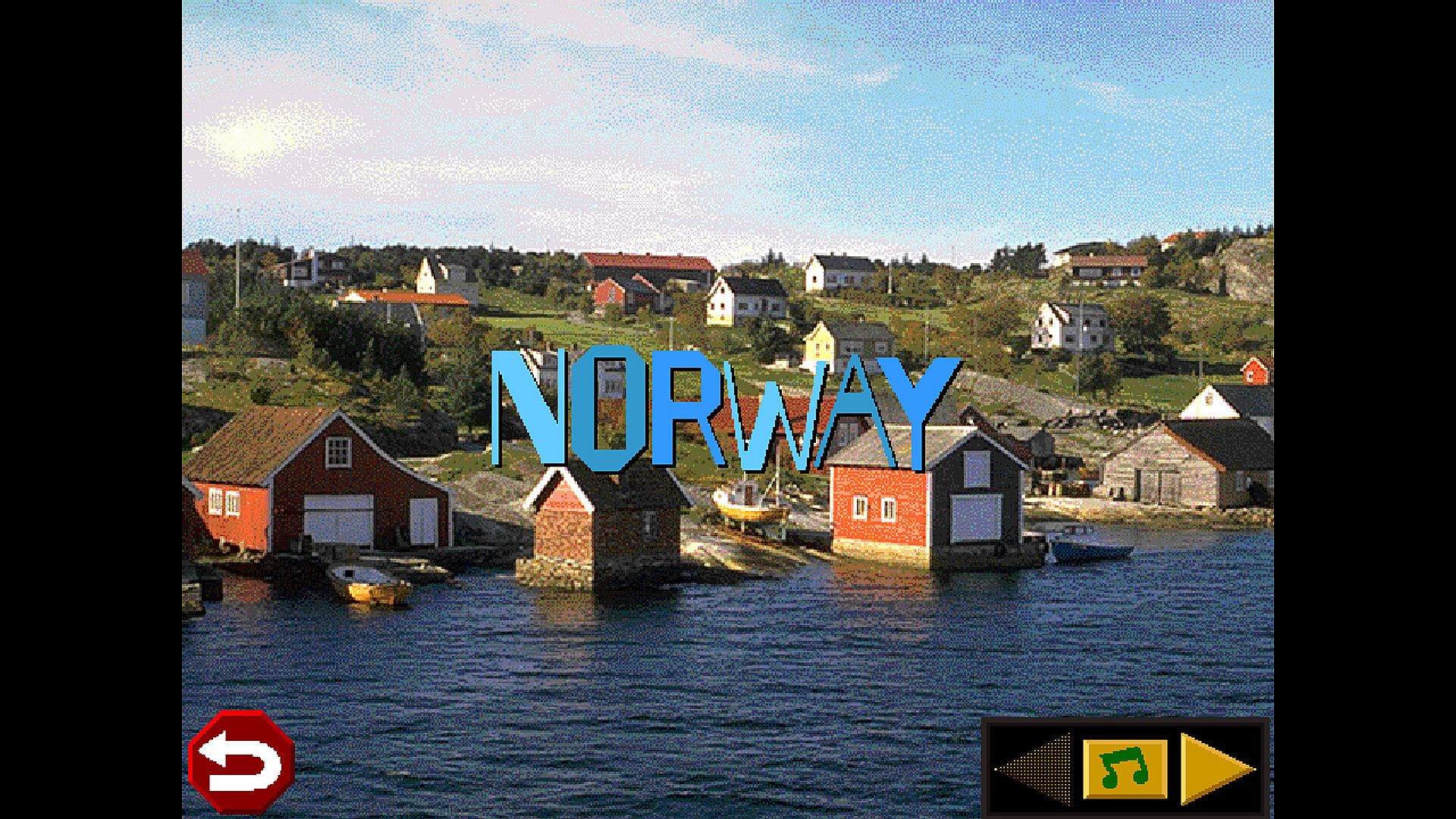
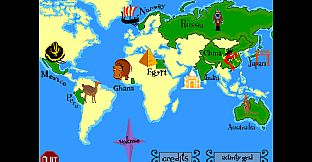
Children select countries from a world map and travel with the full gang. Each destination features a photographic backdrop paired with hand-drawn cartoon characters and animations. Activities emphasize clicking, matching, and simple interactions that respond immediately to player choices. A progress grid records completed tasks, allowing free selection of any remaining activity in any order. The experience runs natively on modern systems with restored 1996 visuals, full voice acting, and original songs for each country.
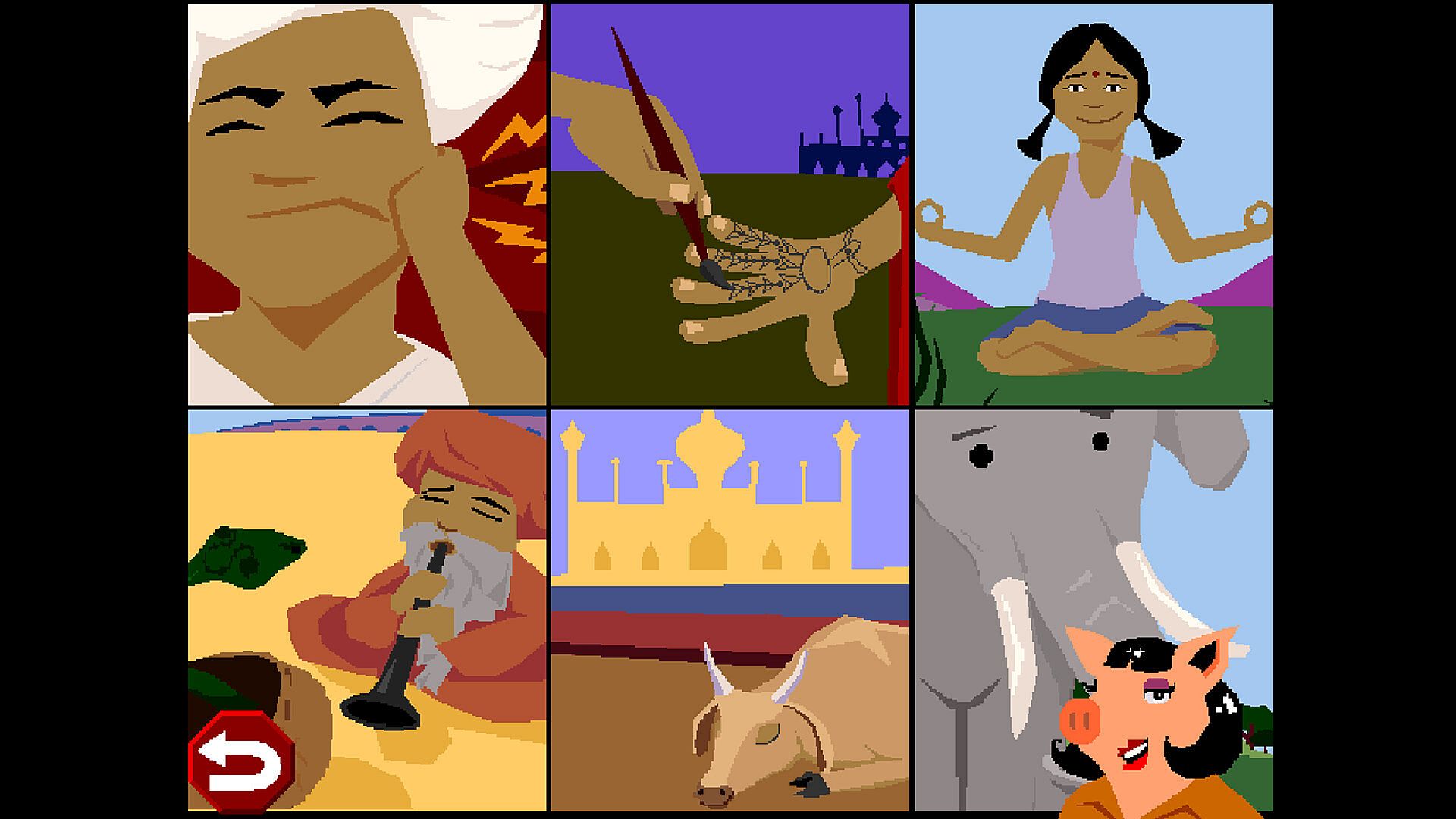
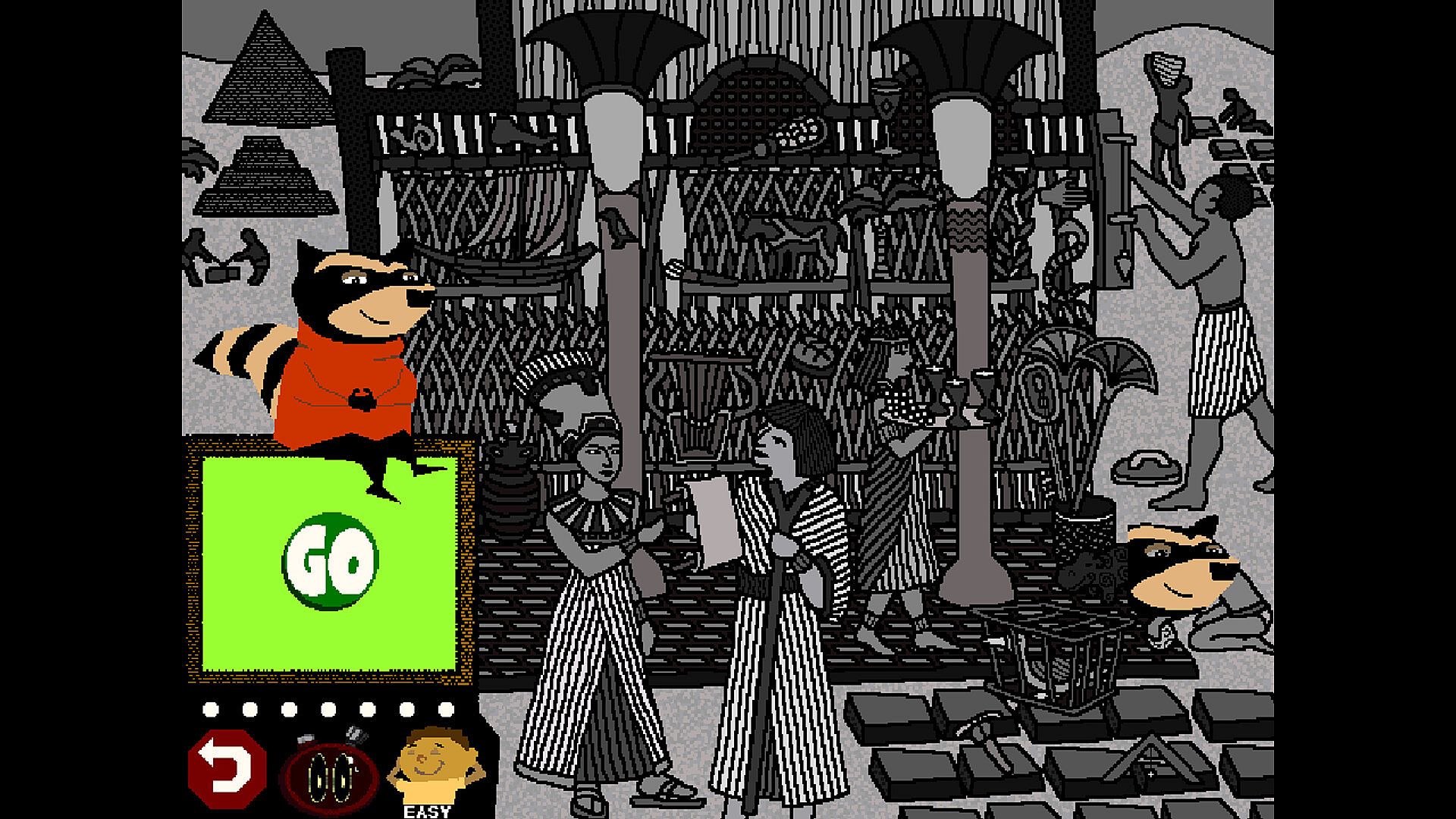
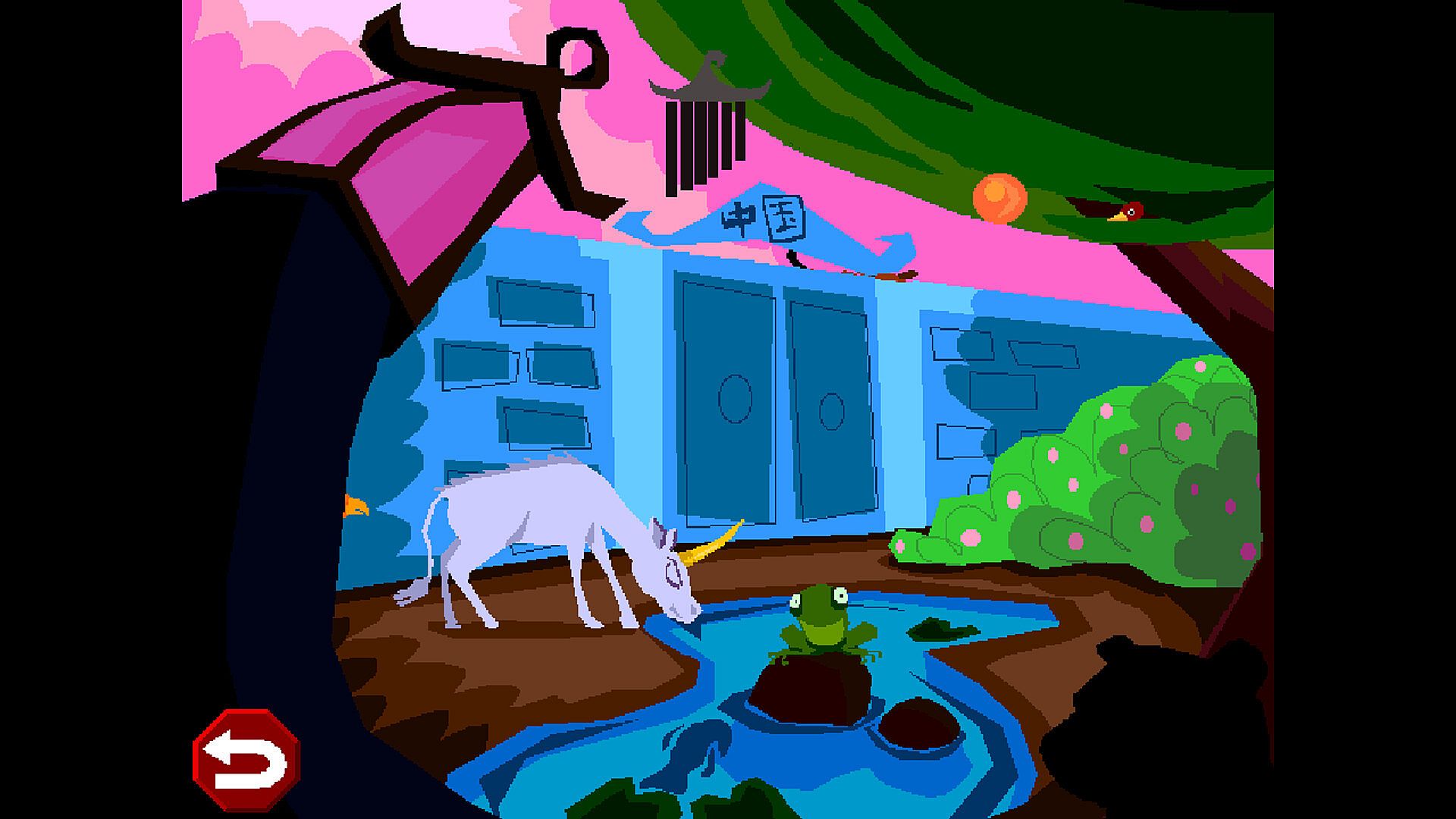
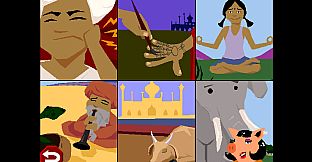
Rapu guides narrated picture stories that span three countries and include clue-based hunts. The final choice in each hunt determines the story ending. Velma presents six statements about the current country for players to judge as fact or fib. Chester hosts mix-and-match challenges using seven objects drawn from a pool of twenty, with optional hints, easy or hard difficulty, and a timed mode. Bunji offers ten interactive toy boxes, one per country, where poking or prodding objects triggers reactions and reveals details. Additional tasks cover language matching, such as pairing pictures with Hindi words, designing a Russian music box, and assembling fireworks displays in China.
Game Modes
The game contains no separate competitive or multiplayer modes. All content operates as single-player activities accessed through the world map and character selection. Five core activity types repeat across the ten countries for a total of fifty experiences. These include story hunts with Rapu, fact-or-fib quizzes with Velma, object matching with Chester, freeform poking with Bunji, and varied cultural tasks such as language practice and creative construction. Players may repeat activities or switch countries at any time, with the grid providing an overview of progress.
Countries and Activities
The ten destinations are Australia, China, Egypt, Ghana, India, Japan, Mexico, Norway, Peru, and Russia. Each location delivers five distinct activities drawn from the recurring set. Examples include sailing the Nile while watching for crocodiles in Egypt, learning local slang in Australia, celebrating a national holiday in India, and building fireworks in China. Songs and voice narration accompany every stop, reinforcing cultural elements through repetition and play.
Is It Worth Playing?
The restored version targets children ages four to eight who enjoy point-and-click exploration and light learning. It preserves the original structure of fifty activities across ten countries while updating the presentation for current computers. Parents seeking screen-based cultural exposure without text reliance will find the character-driven format straightforward. The upcoming release on PC and Mac continues the 1996 design with no added layers or changes to the core loop. Those looking for open-ended creative tools or competitive elements may find the fixed activity set limiting, while families focused on short, repeatable sessions aligned with geography and customs will match the intended audience closely.